My Final Will and Testament – Insights – Reflection #5

transfrom-data-actionable-insights

Last year at my 40th Demontreville Retreat, one of the exercises that we were given by the Retreat Master included a very challenging set of thoughts.  The worksheet for the activity was labeled as “A Testament.” I took the worksheet and instructions home with me.  It had fourteen tasks or reflections to complete.  I did not desire to complete them during the retreat.  It is now almost a year since my retreat, and I have decided to make the mental and emotional effort necessary to complete this “Testament.”

The worksheet started with these instructions:

Imagine that this is the last day of your life on earth.  In the time that you have left, you want to leave a “Testament” for your family and friends.  Each of the following could serve as chapter headings for your “Testament.”

5.  These are ten of the greatest Insights that I have gained in the School of Life.

Friends are like flowers:

I have realized that friends are like flowers.  They grow, they bloom and then some of them wither away over time.  Some friends are like Perennials.  They live for more than two years. They grow back each year as we renew them.  They may bloom for many seasons.  Over and over again.  Other friendships are more like Annuals.  Annuals have a much more limited life cycle.  Sometimes, they are over in less than a year.  They are beautiful when they last but somehow they are never destined for longevity.

Cowards die many times before their deaths:

A line from Shakespeare’s “Julius Caesar” that I have used my entire life to remind me that fear can be death.  Fear can stop us from trying new things, going to new places and enjoying life.  True, fear is a warning.  However, fear can also be paralyzing.  You have heard it said that some people are afraid of their shadows.  As we get older, life closes in on us.  Unless we can keep pushing back the boundaries, we will end up in a coffin long before it is our time.

Live for today.  Take one day at a time: 

So easy to say.  So hard to do.  All the great prophets in history have given paeans to the virtue of living one day at a time.  Jesus said “”Therefore do not worry about tomorrow, for tomorrow will worry about its own things.  Sufficient for the day is its own trouble.”— Mathew, 6:34.  Buddha said, “Don’t get caught in the past, because the past is gone.  Do not get upset about the future, because the future is not yet here.  There is only one moment for you to be alive, and that is the present moment.” — Knowing the Better Way to Live Alone.  The Muslim preacher, Hasan al-Basri said, “The world is three days: Yesterday, with all that was in it, has gone.  Tomorrow, you may never see it.  As for today, it is yours, so work on it.”  There are many more admonitions to live in the moment.  Still, easier said than done.

I wake up making my lists each day.  I plan some of them one week, one month, and even years out.  Will those days ever come?  The older I get, the less likely it is that a ten-year plan will ever come to fruition.  It makes sense to live in the moment.  Except, what about the grasshopper and the ants?  They stored up grain for the future, while the grasshopper fiddled and danced.  Who starved?  A good friend of mine complains that it is not fair that state parks and other such venues do not operate on a first come first served basis.  Today, if you do not plan for the future, you may not get a campground.  Not planning for a future can mean even more dire prospects than not getting a campsite.  It might mean not having any retirement money.  It might mean not having any resources for health care and other necessities.  There must be a balance between living for today and planning for tomorrow.  Does anyone know a sure fire way to find that balance?  Here is what ChatGPT said in response to my query:

Balancing living for today and planning for tomorrow can be a delicate act, but it is achievable with mindful practices and habits.  Here are some strategies that can help:

Set Clear Goals: Define your long-term goals and break them down into smaller, manageable steps.  This helps you focus on the present while keeping an eye on the future.

Prioritize Your Time: Make a list of your daily activities and prioritize them based on importance and urgency.  This ensures you are spending time on what matters most, both for today and for your future.

Practice Mindfulness: Mindfulness techniques, such as meditation and deep breathing, can help you stay present and enjoy the moment without constantly worrying about the future.

Create a Balanced Schedule: Allocate specific times for work, relaxation, hobbies, and social activities.  This ensures that you are enjoying life now while also dedicating time to your future goals.

Financial Planning: Save and invest wisely to secure your future, but also set aside some money for leisure and experiences that bring you joy today.

Stay Flexible: Life is unpredictable, and plans may change.  Being adaptable allows you to enjoy the present while being prepared for future changes.

Reflect Regularly: Take time to reflect on your progress and adjust your plans as needed.  Regular reflection helps you stay aligned with your goals and make necessary changes.

Seek Balance in Health: Take care of your physical and mental health through regular exercise, a balanced diet, and sufficient rest.  Good health enables you to enjoy the present and ensures longevity.

Enjoy Small Moments: Find joy in everyday moments and appreciate the present.  Whether it’s a walk in the park, a good meal, or time with loved ones, these moments are valuable.

Continuous Learning: Invest in your personal and professional growth by learning new skills and acquiring knowledge.  This not only prepares you for the future but also enriches your present life.

By integrating these practices, you can create a harmonious balance between living in the moment and planning for the future.

It took ChatGPT all of about one minute to come up with the above list.  Pretty amazing isn’t it.  I only wish I were as smart as she/he is.

Kindness is more important than knowledge:

This is a lesson that has taken me many years to learn.  “Chicken Soup for the Soul” was a pivotal event in my life.  The stories started me thinking more about kindness and less about acquiring a great deal of knowledge.  I once thought that knowledge was everything.  Knowledge was the path to virtue according to the Bible.  Knowledge was power according to Sir Thomas Hobbes.  Knowledge comes from a different place than kindness.  Knowledge is necessary to make a living, but kindness is necessary to make a life.  A human being must be more than just a collection of ideas and theories.  We must be able to show compassion and empathy for other human beings and other creatures.  Kindness will make more of a difference to the world than the Encyclopedia Britannica ever did.

We do not age like a fine wine, we age like bananas:

Whoever came up with the trope about aging and fine wine must never have grown old.  The older I get, the more wizened I get.  My wine is getting moldy.  My face is getting wrinkled.  Like an aging banana, I now am getting more and more black spots on my skin.  Nobody throws a fine old wine away, but in a few years, just like a rotten old banana, my carcass will be disposed of.  I am softer and mushy now.  I once was firm and hard.  Who likes a mushy old banana?

Don’t rely on Hope:

Hope may spring eternal in the human breast but hope never accomplished anything.  It takes effort to make a life.  It takes effort to go to work every day.  It takes effort to do anything worth being done.  You can hope your life away.  Hope is a seasoning for life.  You can season the meat, but you must then cook it.  Hope can help you to have faith that you can change the world, but hope is not enough to get the job done.  Patrick Henry spoke about “hugging the delusive phantom of hope.”

You can hope to win the lottery but unless you buy a lottery ticket, you have no chance of winning the jackpot.  Hope can be a motivator, but running the 100-meter dash of life takes moving your legs to get to the finish line.  Keep hope in perspective but don’t let hope become your whole life.

Life is about trying to make a difference:

We wake up each morning and what do we do?  We say a prayer maybe.  Maybe we have breakfast.  We take a shower.  We write a few lines.  We go to work.  What is the purpose of our life?  If it is not to make a difference in the world, I don’t know what it is for.  Is it simply to live another day?  Is it just to have fun? “God Forbid” to quote Patrick Henry again.  If the meaning of our lives is not to make a difference in the world, I don’t know what we exist for.

Sadly, we may never know if we make a difference.  We are not born with a difference gauge that tells us which of our efforts is the most effective.  Faith can make a difference here.  Mother Teresa was once challenged by a reporter who asked her, “How do you know you are making any difference with all your poverty and charity work?”  Mother Teresa replied, “I am not called upon to make a difference, I am called upon to have faith.”  Faith guides us down the path of hope but we must be propelled by a desire to see a better world if not for ourselves than for our children.

Progress is made by people, ideas, and technology:

There are many theories of human progress.  Karl Marx believed that materialism was the prime motivator and engine for change.  “The essential condition for the existence, and for the sway of the bourgeois class, is the formation and augmentation of capital; the condition for capital is wage-labor.” — The Communist Manifesto, Karl Marx.  Despite the fact that Marx has been refuted more times than I can count, his problem came not from his perspective, it came from his limitations of perspective.  He was not able to see the difference that ideas, people, and technology could and do make on the world.

The argument as to which drives progress is really a chicken and egg dilemma.  Or maybe it is more like a giant Mobius strip.  Great men come up with great ideas which create great technology which creates new material goods which lead to new leaders who have new ideas for more progress.  Around and around we go, but we always remain in one plane.  A Möbius strip is a one-sided surface with no boundaries that looks like an infinite loop.  Progress comes from going around and around and around.  All the elements of the universe help motivate us around this single plane.

Whatever can be done, can also be undone:

The pundits are telling us that if Trump gets reelected he will abandon and even destroy all the foundations for democracy that still exist in the USA.  His first attempt at doing so fell short but together with his minions, he will take another shot at it.  Americans are deluded into thinking that democracy is indestructible.

Democracy is a set of ideas which when put into action creates a system of government.  Sometimes this system works very well but often it is dysfunctional.  Democracy has no guarantee of success if people no longer believe in the set of ideas that defined their democracy.  There are only twenty or so true democracies in the world today out of over 180 different governments.  “The Economist Democracy Index rates countries on the state of their governing system each year.  In the latest published edition, corresponding to the year 2022, only 24 countries in the world have been rated as ‘full democracies’, representing 8% of the world’s population.”The State of Democracy, April 2023

It is by no means inevitable that democracies will be created in the world or that they will be sustained.  History has shown us over and over again that great empires fall, and democracies may not survive.  Human beings seem to have an equal propensity to favor authoritarian governments as they do democratic governments.  Recent events in the USA cannot be denied.  America is full of people who do not believe in democracy and who would favor a tyrant and bully like Trump being elected for life.

Love surpasses everything:

If making a difference is the ultimate purpose of life than love is the ultimate meaning of life.  We often love not too well and not too wisely, but love is the soul of our existence.  Deprive humans of love and you deprive humans of the only thing that really matters in this world.  A lonely life is one that saddens all of us.  How many people live such lives?  What can we do to help others who are not loved or who cannot share love with others?  If we can stop manufacturing bombs and bullets to murder others, we might be able to work towards creating a world based on love.  We may have faith and we may have hope, but unless we mix the ingredients for love and share them with others, love will remain only a dream.

Next Reflection:    

6.  These are the Risks I took.


My Final Will and Testament – Convictions – Reflection #3

download

Last year at my 40th Demontreville Retreat, one of the exercises that we were given by the Retreat Master included a very challenging set of thoughts.  The worksheet for the activity was labeled as “A Testament.” I took the worksheet and instructions home with me.  It had fourteen tasks or reflections to complete.  I did not desire to complete them during the retreat.  It is now almost a year since my retreat, and I have decided to make the mental and emotional effort necessary to complete this “Testament.”

I am going to complete one or two reflections every other day for the next few weeks.  I would love it if you would do these tasks along with me.  If you would like to share your thoughts, that would be great, but I am not expecting anyone to do so.  I would like to know if you find any benefit in completing these activities.

The worksheet started with these instructions:

Imagine that this is the last day of your life on earth.  In the time that you have left, you want to leave a “Testament” for your family and friends.  Each of the following could serve as chapter headings for your “Testament.”

  1. These are the Convictions that I have lived by.

I do not like the sound of the word Convictions.  I think I have lived by too many Convictions in my life.  There are of course two somewhat very different meanings that can be attached to this word.  Dictionary.com provides the following two definitions.  Let us look at these for a second.

  1. A formal declaration that someone is guilty of a criminal offense, made by the verdict of a jury or the decision of a judge in a court of law:  “She had a previous conviction for a similar offense”
  2. A firmly held belief or opinion:  “She takes pride in stating her political convictions”

maxresdefault

Regarding the definitions, one can see where a person might have some anxieties about the first association of Conviction with jail and prison.  I assure you that this is not where my anxiety comes from.  I am pretty sure it stems from the second definition.  “A firmly held belief.”  When I look back upon my life, I have had too many firmly held beliefs.  Behind my back, I know that I have been called “A know it all” many times.  I am still a very opinionated person as any of my readers can probably attest.  However, I would like to think that seldom if ever do I get into robust arguments any more with other people.  I even gave up trying to convince Trump supporters who include veterans, evangelicals, businesspeople, college graduates, relatives, and friends that Trump is a total scumbag with no morality or ethics.

I am trying hard to find any Convictions now that I am so dedicated to that I let them rule my life.  All of the great quotes, aphorisms, metaphors, analogies, theories, and ideas that I know of would fill an old encyclopedia Britannica.  But not one that I can think of would I waste five minutes defending.  I think that there are pro’s and con’s to everything in life.  For every up there is a down.  For every night, there is a day.  For every light, there is a dark.  For every right, there is a wrong.  Perhaps, Ecclesiastes comes as close to a Conviction as I want to live with today.

“For there is no lasting remembrance of the wise, just as with the fool, seeing that both will be forgotten in the days to come.  Alas, the wise man will die just like the fool!  So, I hated life, because the work that is done under the sun was grievous to me.  For everything is futile and a pursuit of the wind.” — Ecclesiastes 2

Is the above a Conviction or is it simply a belief?  Not sure it even matters.  Everything we do is blowing in the wind.

Custom-Made-Golden-Mountain-Landscape-Oil-Painting-on-Canvas

One story I like very much was told by OSHO about a mighty king who died.  This King believed that he was the greatest King on earth and also that he was the greatest King who ever lived.  The King died and found himself in the realm of the Golden Mountains.  These mountains were higher than the Himalayans and more vast than the entire Asian continent.  Here the King met the Caretaker of the mountains.  The Caretaker gave the King a magic pen and told him that he could write his name in the mountains.  This was permitted because he was a mighty King.  A few days later the King came back to the Caretaker and complained, “I have walked for many miles through the Golden Mountains and everywhere I went to sign my name, some other person had already signed their name.  Who are all these people?”  The Caretaker replied, “These are all the other mighty Kings before you who died.”

  • Convictions are more dangerous foes of truth than lies.”
  • “Tolerance is the virtue of the man without convictions.”
  • “Men never do evil so completely and cheerfully as when they do it from religious conviction.”

I would rather live by a set of virtues and values than a set of convictions. 

Next Reflection:    

  1. These are the things that I have lived for.


What is a Humanitarian?

maxresdefault

It is not unusual to hear someone refer to the need for more humanity.  We often hear about “Calls” for humanitarian needs.  But what does it mean to exercise humanity?  What are our humanitarian needs?  Who is a real humanitarian?  Should we all strive to be humanitarians?  Can you get a diploma or a degree in humanitarianism?  My Google AI program gave me the following definition for a “humanitarian”:

A humanitarian is a person who is concerned with the welfare of others.  They may work to improve the happiness and health of people.    Humanitarians can be volunteers or paid employees.”

Humanitarian-Charter-cartoons-6

The last few years in the USA, Humanitarians and humanitarianism seem to be in scarce supply.  More people are concerned with how much they can buy and the fact that “Black Friday” is fast approaching than they are with improving the happiness and health of other people.  I find it very confusing that a large portion of Americans claim that the USA is a Christian Nation or that it should be.  My reading of the Bible gives me a different understanding of what a Christian is and how they behave.  Recently, I discovered the term “Cultural Christians.”  A “Cultural Christian” is a Christian by birth.  Someone who is born into a family of Christians or is baptized into a Christian denomination shortly after their birth.

Calling upon my AI program again, a “Cultural Christian” is defined as, “Someone who identifies as a Christian but doesn’t have a personal relationship with Jesus.”  In other words, a Cultural Christian does not have a clue as to the teachings of Jesus Christ or any other Christian prophet, Saint, or proselytizer.  Ironic isn’t it that many of these same people call on the name of Jesus to save them.  I suspect that if Jesus were alive today, he would ask them to repent before they went to hell.  A song (You Don’t Love God If You Don’t Love Your Neighbor) that I recently heard by Rhonda Vincent has the following lines:

There are many people, who will say they’re Christians

And they live like Christians on the Sabbath day

But come Monday morning, till the coming Sunday

They will fight their neighbor all along the way

Oh, you don’t love God

If you don’t love your neighbor.

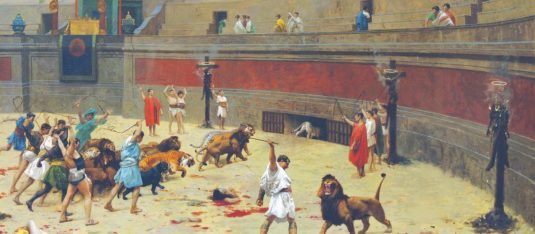
Gérôme_-_La_rentrée_des_félins_1902-1-of4o8rppoxx3zn8toq8ws79zz8zqsftfoxkhwq8olkTwo thousand years ago, the Roman Empire started its decline after having been the greatest empire that the world had yet seen.  Many historians point to the decadence of the Roman Empire during its decline.  “Decadence” is defined by the Oxford On-Line Dictionary as, “Moral or cultural decline as characterized by excessive indulgence in pleasure or luxury.”  The Romans had their “Bread and Circuses.”  The Oxford Dictionary defines “Bread and Circuses” as, “A diet of entertainment or political policies on which the masses are fed to keep them happy and docile.”  For many, football and politics are the bread and circuses or our American Empire.  I think the rot and decay in America today goes much deeper than that.  Here is my list of some of the decadence that I see in the USA today:
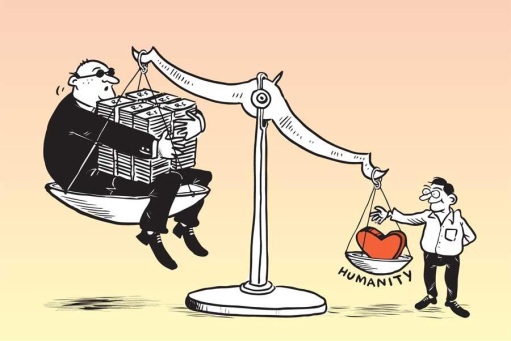

  • Excessive consumerism and a frenzy to have bigger and bigger stuff
  • Excessive shopping till we drop, more and more stuff
  • Excessive eating leading to mega levels of obesity in America
  • Excessive time spent watching TV, movies, and other entertainment
  • Obsession with sports and team affiliation from grade school to the NFL
  • Excessive casino gambling
  • Pull tabs, scratch offs, lotteries
  • Drugs and alcohol addiction
  • Greed and more greed. Forever, cutting taxes so the greedy can have even more and the poor and needy can have even less
  • And now we have added “On-line Sports Betting.”

You Don’t Love God If You Don’t Love Your Neighbor

If you gossip about him, if you never have mercy

If he gets into trouble, and you don’t try to help him

Then you don’t love your neighbor

greed versus humanity

The more I write this blog, the more I think of the prophet Jeremiah.  Jeremiah constantly called upon the Israelites to turn away from their wicked ways and dependence upon idols and false gods and return to God.  For his troubles, Jeremiah was stoned to death.  But Jeremiah did more than just rail against sin and evil.  He also tried to give hope to his countrymen.  He promised that a “New Covenant” was coming to all those who followed God’s laws.  This covenant would supersede the old Mosaic Covenant.  Instead of inscribing his law upon tablets of stone as in the Mosaic Covenant, God would write his law upon the hearts of men.  Jesus said at the last supper, “This cup is the new covenant in my blood.”  — (Luke 22:20)

In the holy Bible, in the book of Matthew

Read the 18th chapter in the 21st verse

Jesus plainly tells us that we must have mercy

There’s a special warning in the 35th verse

Oh, you don’t love God

If you don’t love your neighbor

If you gossip about him, if you never have mercy

If he gets into trouble, and you don’t try to help him

Then you don’t love your neighbor

And you don’t love God.

neighbor_slide_title

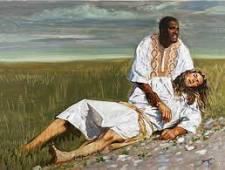
You may well ask, Well “Who is my neighbor?”  Jesus answered this question in his story about the Good Samaritan.  Jesus tells the parable of the Good Samaritan (Luke 10:29–37) and makes it clear in this parable that our neighbor is anyone around us, regardless of their ethnic, religious, or socio-economic status.  I have a T-Shirt that I like which reads, “God Bless Everyone:  No Exceptions.”  I have had many people come up to me and tell me how much they like this blessing.

the good samaritanI have another T-Shirt where I list the “No Exceptions” groups that somehow seem to be conveniently overlooked by many Cultural Christians.  The major fallacy that many Christians seem to observe is to define their neighbors as either someone in their own church or in their own social group.  When Jesus included the Samaritans who were an outcast group at the time as his neighbors, this should have made it clear that you must go beyond your tribe or friends to include other nations, other ethnicities, other religions, and other people with different beliefs as your neighbor.

There’s a God Almighty, and you’ve got to love him

If you want salvation and a home on high

If you say you love him while you hate your neighbor

Then you don’t have religion, you just told a lie

Oh, you don’t love God

If you don’t love your neighbor.

Well, we are almost at the end of my story.  Not much else to say is there?”  Just one last thought to leave you with.  Please feel free to share this with others.

  • If you love things more than you love people,
  • if you love money more than you love people,
  • if you love ideology more than you love people,
  • if you love tv, gambling, sports, and movies more than you love people,
  • If you love drugs and alcohol more than you love people,
  • then I think Jesus would say that:
  • “You Don’t Love God.”

 My thanks to Rhonda Vincent for her song and the lyrics in this blog.  You may listen to her song at:  https://www.youtube.com/watch?v=IR2rpVd5Lwo


Inner Versus Outer Spirituality:  What is the Difference and Why it Matters?

download (1)Despite attending forty 3-day Jesuit retreats and regularly going to church with my spouse, I remain adamantly somewhere between an Atheist and an Agnostic.  See my blog “75% Atheist and 25% Agnostic.”   One of the concerns I share with a few friends is organized religions apparent lack of concern for many social issues.  I have attended Catholic, Presbyterian, and Lutheran churches in the past few years, and I have yet to hear a pastor or priest in the pulpit denounce climate change, sexism, racism or White Supremacy in the USA.  I have thought about this lack of social assertiveness by too many pastors.  Even if many of the congregations in these mainstream churches are conservative if not right wing, do not their church leaders have a responsibility to address social problems?  I have two theories why they do not.

My first theory is that they do not venture to oppose these social ills because they would lose bunches of their church members if not their actual ministerial jobs.  It has happened before that church leaders have been kicked out by their congregations for preaching politics too strongly.  On the positive side here, many church leaders would argue that they do address social issues.  They give to the poor and needy with food banks and outreach efforts to help destitute families.  Unfortunately, this is like throwing water on a burning house.  You are dealing with the symptoms and not the causes.

download (2)

My second theory why church leaders do not vocalize more contempt for egregious social problems is this.  Perhaps they see their job as converting the inner spirituality of their congregation.  Thus, leaders focus on helping members become better people and lead better lives.  Gandhi said, “Be the change you want to see.”  By focusing on inner spirituality, they can convert the soul of their church members and perhaps help them to become the person that loves according to the Commandment of Jesus.  “Thou shalt love thy neighbor as thyself” (Matthew 22:37–39).

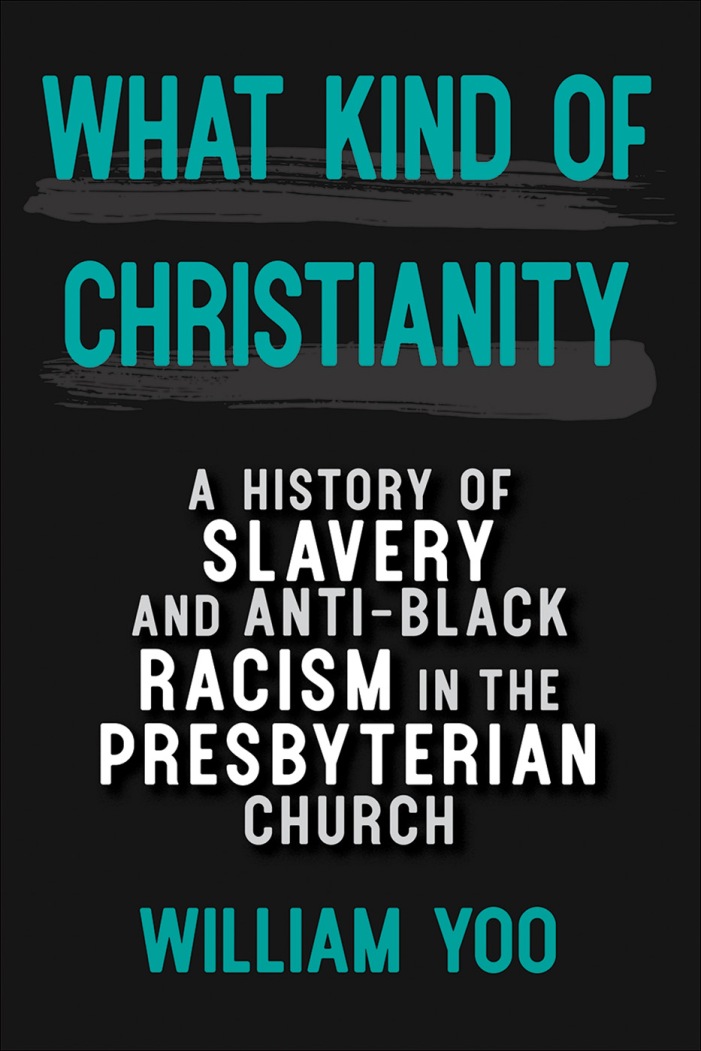
0664264670I can see some positive sides to a church ideology that addressee inner spirituality, but I think it has serious drawbacks.  You can focus too much on what I will call the “inner spirituality” of church members.  The reasoning behind the emphasis on inner spirituality can be faulty.  The theory is that if each member becomes a better Christian, they will be better neighbors towards others.  If they feed the hungry and cloth the poor, they will be ridding the world of the evils that Jesus preached against.  Unfortunately, these propositions are not evidenced by historical fact.  For hundreds of years many Christians supported slavery and sexism by doing little or nothing to condemn or speak out against it.  Furthermore, many Christians were major protagonists of racism and sexism.  If their ministers spoke out against it, it obviously made little difference.  Being a card carrying member of a Christian church never seems to correlate with ending war, sexism, racism, homophobia or even poverty. I think without an equal emphasis on “Outer Spirituality” Christianity is a worthless religion.
large

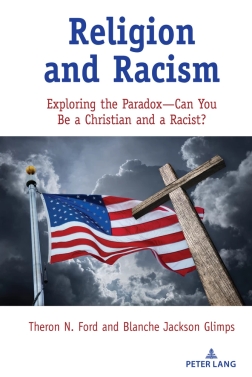
This issue which I call “Inner Spirituality versus Outer Spirituality” brings up a major conundrum in Christian thinking which has been the subject of many a lecture and paper.  This dilemma is whether a Christian can be saved by faith alone or are good works also necessary.  The apostle James says:

“So you see, faith by itself isn’t enough. Unless it produces good deeds, it is dead and useless. Now someone may argue, ‘Some people have faith; others have good deeds.’ But I say, How can you show me your faith if you don’t have good deeds?” — James 2:17-26 NLT

The viewpoint promoted by James has been dissected many times by the followers of Paul who argue almost the opposite.  Paul wrote the following:

“For by grace are ye saved through faith; and that not of yourselves: it is the gift of God:  Not of works, lest any man should boast.  For we are his workmanship, created in Christ Jesus unto good works, which God hath before ordained that we should walk in them.”  — Ephesians 2:8-9 KJV

Most mainstream Protestants as well as evangelicals cling to the opinion of Paul.  I have a deep skepticism over this acceptance of Paul’s opinion for two reasons.  First, it is very self-serving.  It is a lot easier to say “I believe in Jesus” than to walk in Jesus’s shoes or to commit to action that saves others rather than just faith.  Secondly, Paul was never as close to Jesus’s teachings as James was.  Why should Paul have more credibility than James who was one of the 12 apostles living with Jesus during his ministry?   Again, I see Christians taking the easy way out.  Jesus said:

“Not every one that saith unto me, ‘Lord, Lord’, shall enter into the kingdom of heaven; but he that doeth the will of my Father which is in heaven.” — Matthew 7:21-23 KJV

If you have ever been to an Evangelical church meeting, you will hear the name of Jesus dripping so often from the lips of parishioners that you might think they are all going straight to heaven after they leave church.  The practices or works of many of these “devout” Christians is enough to make anyone divorce themselves from any association with Christianity.  During President Obama’s term in office, the head pastor of the Westboro Baptist church repeatedly called for God to strike Obama dead.  Finally, he was condemned and ostracized by many other Baptist preachers.  Nevertheless, Baptists have never been known for condemning racism or sexism from the pulpit.  I think the argument over faith versus works is a false dichotomy and strictly speaking no one can be a Christian unless they practice both.  Whether or not this will get them to heaven is an open question since I do not believe heaven or hell exists.

This brings me back to the concepts of inner and outer spirituality.  Much like the faith versus works argument it is a false dichotomy.  However, I prefer to think in secular terms.  In secular terms, spirituality does not mean practicing Christianity or any other religion.  I don’t need faith to be saved.  I need both an inner and outer spirituality.

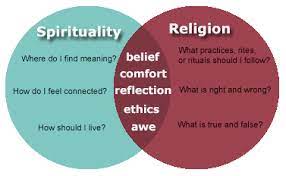
download (3)There are many definitions of spirituality.  What does it mean to be a spiritual person?  Some people lean towards accepting a higher being or creator.  Some lean towards accepting a more conventional religious perspective.  Many on-line definitions list several factors necessary to be a spiritual person.  My own definition is much simpler.  I think being a spiritual person involves two elements.  The first is seeking meaning in one’s life.  The second is seeking purpose.  Meaning is inner spirituality.  Purpose is outer spirituality.  Meaning and purpose must go beyond what is simply good for oneself and must embrace what is good for humanity and the universe.  Thus, a truly spiritual person is one who finds and balances inner and outer spirituality.

My understanding of the great prophets like Buddha, Moses, Jesus, Mohammed, Guru Nanak, and Baha’u’llah are that they all preached  a concern for humanity and the universe that went well beyond what was simply good for the individual.  Some quotes illustrate what I am talking about:

Buddha: “If you light a lamp for somebody, it will also brighten your path.”

Moses was a lawgiver who gave the Israelites the Ten Commandments  “You shall not steal, nor deal falsely, nor lie to one another.”

Jesus: “Love your neighbor as yourself.”

Mohammed: “The best among you is the one who doesn’t harm others with his tongue and hands.”

Guru Namak: “He who regards all men as equals is religious.”

Baha’u’llah: “Do not be content with showing friendship in words alone, let your heart burn with loving kindness for all who may cross your path.”

I think you can see from the above quotes that each of these great prophets embraced the idea of a goodness that extended beyond the self to all of humanity.  There are many other great prophets as well as great philosophers.  What has made them all great is a burning desire to help the world become a better place than they found it.

images

We all have a choice.  We can take care of ourselves and acquire as much money, fame, and power as we can.  Or we can let go of stockpiling material things and help the world be a healthier place.  A place where everyone can live in peace and harmony with nature and its other species.   In some ways it is a matter of choosing life or death.  The present path is destroying us.  The Club of Rome report called “Limits to Growth” was ridiculed when it was published in 1972.  Over fifty years later and no one is laughing at the climate catastrophes that materialism and over consumption have brought upon the earth.  We were warned fifty years ago to start dealing with the problem now.  Is it too late?  Perhaps, but we lose nothing by trying.  We will surely lose our souls if we do not try.

Moral Policy versus Economic Policy: Its Role in the Decline of America

1_uRHonpgf6FtDoIf2DG-feQ

Something is seriously wrong in the United States today.  Why is the first question that comes to mind, and it has received many answers.  Some experts will tell us that it is because Americans are angry.  Some will say it is because of income inequality.  Other reasons have been given as: persistent racism, policy divides between urban and rural areas, massive immigration, too many guns, climate change, a move towards authoritarianism, continuous military misadventures, narcissism, and of course greed.

None of these would be wrong, but none of them are really the underlying cause which some see as the decline of the American dream.  The end of the idea of America as the shining city on the hill or the last great hope of the world.  The light of America today is blinking on and off.  Fewer people see hope in America.  More people see the USA as a scourge on the world.  A country only interested in pushing its agenda on other countries whether through economic war or military war.

The decline of America lies in a very simple problem.  A failure to balance Moral Policy with Economic Policy.  A problem that may be simple to describe but extremely difficult to solve.  This failure began as soon as this country had its first pilgrims.  America was born out of a dream of prosperity and equality.  The equality did not have its roots in DNA but in the idea that all people (white and male at the time) through hard work and education could become prosperous and equal.  Equality would not depend on being lords, or barons or some other type of royalty as had been the norm in Europe.  This prosperity is still enthralled in some religions where it is promoted as “The Prosperity Gospel.”  An idiotic idea that the more you are favored by God, the more he/she will bless you with wealth and success.

Unfortunately, there is one rule in the Universe which cannot be undone or avoided.  It is the rule of balance.  What goes up must come down.  For every pushing force there is a pulling force.  Antagonist muscles must be developed equally with protagonist muscles.  The Chinese might call what I am describing here as the principle of Yin and Yang.  The Greeks called it the Golden Mean.

“The golden mean or golden middle way is the desirable middle between two extremes, one of excess and the other of deficiency. It appeared in Greek thought at least as early as the Delphic maxim “nothing in excess”, was discussed in Plato’s Philebus.”  — Wikipedia

Since the beginning of America, we have ignored this rule of balance.  It is the main reason that we are in a crisis today.  Ironically, it is the separation of Church and State, perhaps the greatest innovation in America which has led to its decline.  Let me explain further by starting with an analogy.  We will say that there is a continuum in terms of policy needed for an efficient and effective country.  An efficient country is one where most citizens are well fed, well clothed and well housed.  An ongoing effort is made to insure that more and more citizens meet these criteria.  An effective country is one where most citizens are safe, happy and content with there lives.  Effort is also made to see that more and more people meet these criteria.

money

Economic Policy drives efficiency.  It is the main determinant of how wealthy and prosperous a nation is.  Economic policy puts the food on the table, pays for the overhead and allows people to buy things.  Americans today buy and buy and buy.  They shop till they drop.  On weekends they stage flea markets, garage sales, and church sales to try to get rid of the STUFF that they have accumulated.  Economic Policy gone unabated by Moral Policy has stuffed people until they are fat and bloated with too much stuff.  More is the anthem in America.  “He who has the most toys wins.”

Our politicians are troubadours for the American dream of “More.”  There is no secret to their being elected.  It is a very simple formula.  1.  Promise voters more stuff by way of the trickle-down theory.  2.  Promise to lower taxes to give people more money to buy more stuff.  3.  Raise more money than your competitor so that you can sell your promises to more potential voters.  4.  Find a way to scare voters into thinking that your competitor will not be able to deliver on the same promises.

Economic Policy in America has become a Frankenstein.  Without a balance of Moral policy, it is a monster which is destroying this country.  It has been destroying this country for many years now.  However, people are so blinded by the promises for greater prosperity that they have ignored the essential balance provided by Moral Policy.

Moral Policy looks outward.  While Economic Policy looks inward and asks what can my country do for me, Moral Policy asks what can I do for my country.  Moral Policy asks what can I do for other people.  I noted above that a great inspiration for our founders was to separate church and state.  While this was a truly great political idea, morally it was a disaster.

Prior to the emergence of America, most people received a balance between Economic Policy and Moral Policy through a balance between their obligations to their state or nation and their obligations to their church or religion.  They would go to jail if they ignored their state obligations and go to hell if they ignored their religious obligations.  Their church laid out its obligations in its Moral Policy.  For some, this was thought of as religious doctrine.  Perhaps the best example of a Moral Policy is the Eight Beatitudes described in Christianity and formulated by Jesus of Nazareth.

  1. Blessed are the poor in spirit: for theirs is the kingdom of heaven.
  2. Blessed are the meek: for they shall possess the land.
  3. Blessed are they who mourn: for they shall be comforted.
  4. Blessed are they that hunger and thirst after justice: for they shall have their fill.
  5. Blessed are the merciful: for they shall obtain mercy.
  6. Blessed are the clean of heart: for they shall see God.
  7. Blessed are the peacemakers: for they shall be called the children of God.
  8. Blessed are they that suffer persecution for justice’ sake, for theirs is the kingdom of heaven. —-  Matthew 5:3–12

There is no question, that Jesus was describing a moral responsibility to others.  Jesus talked about greed often and the “cure” to greed lay in giving as much as taking.  Jesus constantly talked about taking care of others who were less fortunate.

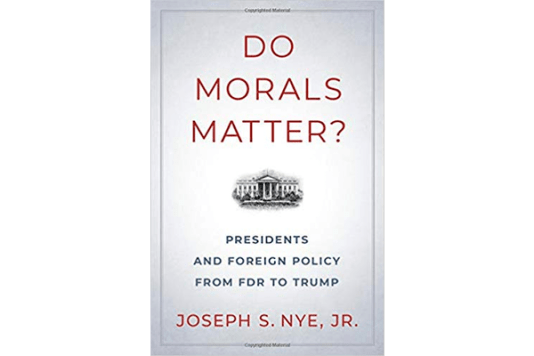
174018-domoralsmatterThus, the uncoupling of Church and State in the constitution of the United States set the stage for a catastrophic imbalance between Moral Policy and Economic Policy.  Over the years, the lack of influence in organized religions at the political level was abetted by the horrendous influence and power of Economic Policy.  If Moral Policy was once the heart of a religion, it was supplanted by an Economic Policy which has become the main religion in America.  This policy states that more is better and that you can never be too rich or have too much stuff.

Ultimately as with all imbalances, they eventually lead to a disaster.  America has gone over the tipping point.  The decline of the American Dream, the schism between conservatives and liberals, the rural versus urban divides, the dissatisfaction with the current political system and the rise of fascism in the USA are all symptoms of this imbalance.

51junioCbqL._AC_SY780_What we once believed was a great political innovation to separate Church and State has led to this imbalance.  There was no place in the state for religion and no place in religion for politics.  America’s dominant dream for peace, justice and equality was replaced with a dream for more money, more power and more fame.  The push by the State for this dream dwarfed any efforts by religion to provide a moral balance and the State had no legitimacy for morality.  People are cast adrift amidst a chaotic and vicious ocean of competition for more and more stuff.  No moral anchors exist that are powerful enough to counterbalance the tide of greed that this has brought to our shores.  Guns have replaced morality as citizens arm themselves to prevent imagined attacks at taking away their STUFF.


Is there an answer to the problems facing America?  I will discuss this question in my next blog. 


Let’s All Kill Buddha!

download

Years ago, I spent some time studying Zen Buddhism.  Some of this was the “fad” of the day during the sixties and seventies.  Zen was so different than the Christianity or Catholicism that I had grown up with.  Zen spoke in koans and paradoxes.  A koan is a paradoxical anecdote or riddle, used in Zen Buddhism to demonstrate the inadequacy of logical reasoning and to provoke enlightenment.  For instance, “what is the sound of one hand clapping?”  Christianity has its parables and well renowned truths, but Zen teaches one to be skeptical of everything.   

Perhaps the most famous “truth” of Christianity is that Jesus was God incarnate.  In other words, Jesus was born a man but was actually a God.  This claim is indisputable among followers of Christianity.  Buddha never claimed to be a God.  Buddha never claimed to have any absolute truths.  One of the most famous lines that I have used many times was “If you meet the Buddha on the road, Kill Him!”  This message might seem bizarre to some people, but it makes absolute sense to many Zen followers.  Even Buddha’s message is not to be taken as “gospel” truth but instead examined and questioned with an open mind. 

quote-question-everything-learn-something-answer-nothing-euripides-9-13-07

I think about “Killing Buddha” quite frequently.  In this day of lies, misinformation, disinformation, and deliberately confusing legalese, we see more and more people taking sides about issues that they have seldom spent much time thinking or questioning about.  Emotions rule conversations today rather than facts, data, or logic.  We believe doctors, salespeople, lawyers, reporters, and politicians despite the fact that they have a vested interest in making money off of us.  Doctors with their often-needless surgeries, reporters more interested in advertising revenue than the truth, politicians trying to be reelected for life, lawyers with few or no ethics dedicated to winning at all costs, and salespeople trying to make as much money as they can on each sale.  They all want you to think that they know the absolute truth.  Jesus said, “The Truth will set you free”, but where will you find the truth?  Ask a politician.  Ask a doctor,  Ask a lawyer.  Only if you are delirious.

maxresdefault

Can you imagine if I said, “When you meet a politician or lawyer on the road, kill him or her.”  On the contrary, the public keeps re-electing politicians to office.  It does not seem to matter to people that Congressional approval ratings are some of the lowest they have been in history; they keep electing the same liars back to office.  The reelection rate of incumbents is nearly ninety percent.

Congressional stagnation is an American political theory that attempts to explain the high rate of incumbency re-election to the United States House of Representatives.  In recent years this rate has been well over 90 per cent, with rarely more than 5-10 incumbents losing their House seats every election cycle.”Wikipedia

207579

We have some very interesting challenges ahead of us.  Climate change, excessive militarization, corporate capitalism, assaults on democracy and the obfuscation of legitimate information in favor of bias and distortion.  I have not even mentioned sexism, homophobia, racism, xenophobia and the decline of education and the media.  Many of the people I know think that these problems are insurmountable and that they herald the decline of America.  Some believe that they represent the decline of humanity and civilization.  Optimist or pessimist or realist, I doubt very much that we can overcome these problems if we do not have the will or desire to start dialogues that question everything.  A quote by Einstein that I much admire goes:

“We cannot solve our problems with the same level of thinking that created them.”

EintsteinQuestionEverythingI have often been accused of being a pessimist but there is nothing about this quote that is pessimistic.  It is simply a fact that we must use our imaginations to see a different world and to believe that a different world can exist.  As long as we are stuck in the same thinking that generated our problems, we are not free to consider alternative realities.  We need more thinking about possibilities and the future.  We are bogged down with what Dr. Deming called the “problems of today.”  Deming said, “We must balance the problems of today with the problems of tomorrow.”

What if we taught our children in school to “Kill Buddha?”  What would tests look like?  What would a successful student look like?  What would schools look like?  Can you imagine students going around and killing Buddhas all over the place?  Imagine for a second if all the lawyers, doctors, politicians, and salespeople were challenged.  I suppose there are many who would be horrified at this idea.  Isn’t the role of education to teach facts and knowledge?  How would students get a job if all they knew how to do was “kill” Buddha? 

maxresdefault (1)

Hope springs eternal in the human breast.  But what is hope without a plan?  We need positive direction from our leaders, but we also need more transparency and innovation on the part of our leaders.  Supporters and leaders should be in a dance together.  A dance of rhythm and harmony.  Leaders must be open and honest with their supporters and supporters must be willing to challenge their leaders at every turn and nuance that life puts forward.  There is too little dancing together today.  Demagoguery is not dancing nor are spell binding speeches excoriating the opposition. 

One has only to watch or read the political advertising to see the worst of American politics.  Political ads one after another spewing lies and misinformation about the opposition.  No one can tell what any politician stands for or what their plans are because they are so busy bashing their opponents.  Benjamin Franklin once said, ”We must, indeed, all hang together or, most assuredly, we shall all hang separately.”  I will paraphrase Franklin by saying, “Either Americans will all join together to destroy the problems facing us or we will all be destroyed together by these problems.”   That is the simple truth. 


Can Birds Really Save My Soul?

bird feeders

I am looking out my back window.  The headlines from another senseless tragedy still scroll across my video screen.  But my backyard is serene and peaceful.  I have a clothesline pole with three bird feeders and two suet feeders.  A minute or so ago, there were more birds than I could count.  Throughout the day, Karen and I watch the birds come and go.  Sometimes there are more than twenty birds all taking turns at our feeders.

Yesterday, we saw hummingbirds, ravens, woodpeckers, finches, doves, grackles, robins, and several other species that we could not identify.  Karen keeps a bird guide and binoculars at the ready and is always on the lookout for a new species to add to the list that we keep.  We are not true birdwatchers, but we enjoy watching the birds.  Amidst the carnage of life with its murders and wars, the birds are our escape.  They help us to remember that there is indeed sanity in the universe.

Some of the birds we see are using the water fountain for a drink after an appetizer of suet.  Several species prefer to eat the seeds that fall on the ground from the feeders.  Birds are not always neat eaters.  Eventually a few squirrels will come around.  We never chase them away and they always appear happy to rummage about on the ground for food.  We have never had a bear problem with the feeders, but we have had some raccoons that like to take the feeders down and enjoy a hardy meal.  It does not bother Karen and me.  We just reload the feeders and put them back up.  In our daily scheme of things, bird feed is very economical.  Even if it meant eating less red meat to buy more bird seed, we would gladly make the sacrifice.

1200x0

Today, with the thoughts of yet another school massacre still running through my mind, I can’t help but notice the birds and how they interact.  In all our years of watching the birds outside our kitchen window, I have never seen any bird fights.  I see many birds of different species and they all get along.  They take turns at the feeders.  They come and they go but none attack any other birds.  If there is such a thing as “bird discrimination” or “bird racism,” I have not witnessed any evidence of it.

Jesus told his disciples:

“See the birds of the sky, that they don’t sow, neither

do they reap, nor gather into barns. Your heavenly Father

feeds them.  Aren’t you of much more value than they?”  — Matthew 6:26

This translates for me as an admonition to worry more about my soul than about physical things.  I do not need to acquire, accumulate, hoard, and stow away toys, stuff, and merchandise because God will take care of these things.  She/he does it for the birds, so it will be done for me.  With less concern for worldly things, I must turn my attention to my soul.  I need to do the things that will make my soul worthy of continuing existence after I leave this third rock from the sun.

Now, those of you who know me will be pondering my above words with some confusion.  I thought John was an atheist some of you will say.  Others will say, I thought John was an agnostic.  One of my best friends who is a pastor, says that I am more Christian than many of the people in his congregation.  In truth, I disavow religion.  I claim no knowledge to prove or disprove the existence of something or someone that created the food and earth that I survive with.

I write the above words from the perspective of an individual who wonders why so many people who profess to be Christians do not take Jesus’s words to heart.  Call them hypocrites.  They are in many religions.  It frequently seems to me that religion is one large stew of hypocrites.  A pot full of different denominations that unlike the birds cannot get along.  A big stew that does not mix well with other stews.  The Christian stew does not mix well with the Islamic stew.  The Islamic stew does not mix well with the Jewish stew.  Even within the same stew we find acrimony and bigotry.  “My religion and my God are the one true and righteous paths to salvation.  I will slaughter anyone who disagrees with me” says the “true believer.”

33024bf4f3ed26fd56bcc4d9dc5793e7

Before this blog becomes too negative, I need to go back to my bird watching window.  The birds will restore my equanimity and smooth out the hills and valleys of my life.

Birds are the saviors of our souls.

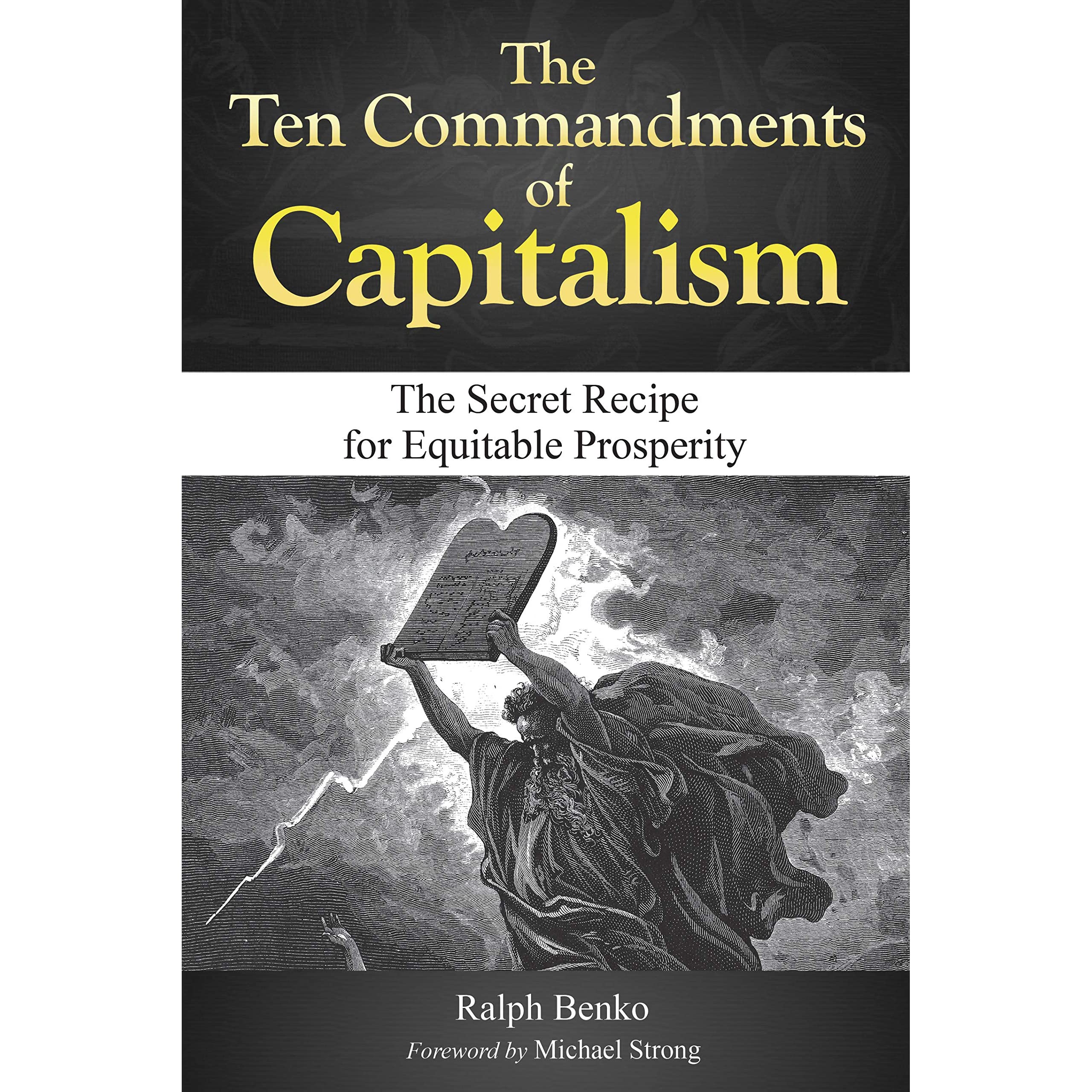
The Ten Commandments of Capitalism

55602411._UY2560_SS2560_

People don’t go to church anymore.  They go shopping.  Capitalism is America’s new religion.  A religion is a set of profound beliefs that one hopes will lead to a better life.  The Christian religion has its Ten Commandments which embody some of these beliefs.  No one actually practices these beliefs anymore but that does not stop devout Christians from insisting that their commandments should be enshrined throughout America.  The only problem with this is that these are not the beliefs that people follow today.

I was laying in bed the other night and thinking about how Capitalism has become the real religion of Americans.  I suddenly realized that there was no explicit set of rules, precepts, or commandments that the faithful should follow.  There are many implicit or implied rules.  The implicit rules of Capitalism are somewhat obvious even if they are not etched on two tablets.

I have decided to take these implicit commandments believed by most Americans and make them more obvious.  I recommend that these be put up in bronze or stone or cement in every capital throughout the USA.  Following are my Ten Commandments for Capitalism.

51SItiy5GjL._AC_SX355_

  1. You can never have enough

As they say, “He who has the most toys wins.”  You can never have enough.  Life is about getting what you deserve.  When you do get it, then you need to get more.  More money, more cars, more jewelry, more land, more clothes, the more you have, the more people will admire you and declare you a success.  Success in America means having more than anyone else.

Burger-King-1

  1. Bigger is always better

From hamburgers to houses to car and even people, things in America are getting bigger.  People now own 5,000 square foot homes with three car garages, six bedrooms and four baths even though they only have 1.7 children and a spouse.  Hamburgers at Burger King weigh about ½ lb. and car engines put out in excess of 500 hp.  Americans are the most obese people in the world.  Capitalism makes everything bigger and fatter.  Hooray for Capitalism.

8-3GreedisGood-2

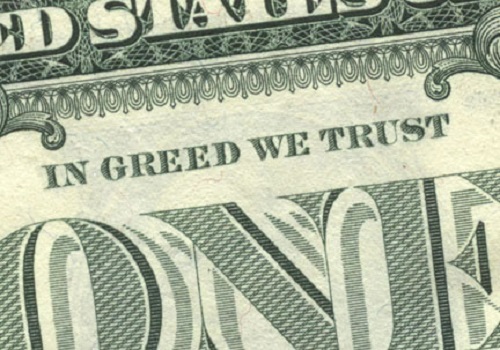
  1. Greed is good

Ivan Boesky said it and Americans gave him a standing ovation.  Michael Douglas in the movie “Wall Street” paraphrased Boesky’s speech and exhorted his stockholders:

“The point is, ladies and gentleman, that greed, for lack of a better word, is good.  Greed is right, greed works.  Greed clarifies, cuts through, and captures the essence of the evolutionary spirit.  Greed, in all of its forms; greed for life, for money, for love, knowledge has marked the upward surge of mankind.  And greed, you mark my words, will not only save Teldar Paper, but that other malfunctioning corporation called the USA.”  

I could not have said it any better.  The greedier we get, the more we get.  The more we get, the more we want.  The more we want the greedier we get.  It is the American way.  From politicians to business people to lobbyists, to car salespeople to real estate developers, the stated norm is to “maximize profits.”  To hell with the tree huggers and climate change advocates.  Success is predicted on greed.  Greed is human nature.  Greed is not good, it is great.

Shop-till-you-drop

  1. Shop till you drop

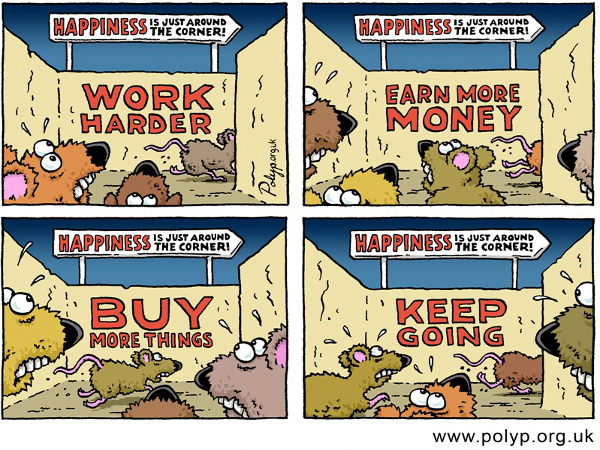
My half-sister every year gets up at 3 AM on the morning of Black Friday with a map, a schedule of stores, coupons, and snacks.  Like a general, she plots out her strategy, enlists her friends and relatives and launches a preemptive invasion.  Her goal is to get it before anyone else.  “It” does not really matter.  The process is what counts.  Shopping is the sacrament of Capitalism.  You must take your pennies and dollars and put them in the store where you can get the most for your money.  Saving is for fools.  Shop, shop, shop.  Superbowl Sunday is a prime time for shopping since many Americans are glued to their TV sets soaking up ads on what to buy the next time they go shopping.  Go to fashion stores, go to thrift stores, go to malls, go to Walmart, go to flea markets, go to garage sales.  But for heavens sake, shop until you drop.

materialism

  1. Stuff will make you happy

There is only one reason for all that shopping.  It fulfills you.  It puts meaning and purpose in your life.  Without meaning and purpose, life is shallow.  We are all born with a hole in us that must be filled up.  You could fill it with religion, education, or philosophy but you can’t touch these things.  You can touch a new air fryer and you can soak in a new hot tub.  You can call all your Facebook friends on your new I-Phone 98. Nothing is quite as satisfying as stuff at filling the hole in our hearts.  Nothing until the next generation of I-Phones or Air Fryers come out.  But of course, then you can go shopping for the newest and latest and greatest.  You will never be so happy as when you have more stuff than you need.

What-Exactly-Is-the-Prosperity-Gospel

  1. Prosperity builds character

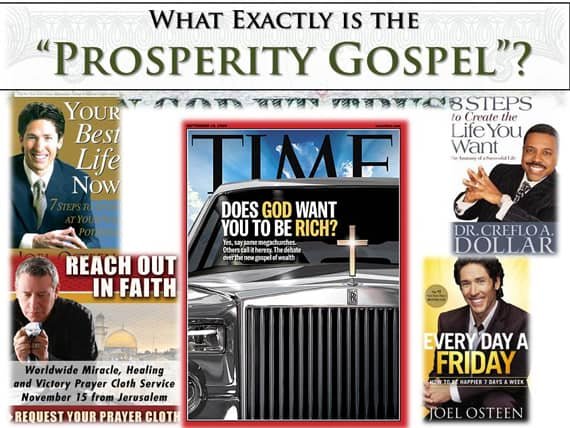
Those who believe in the Prosperity Gospel say that the richer you are the better, smarter, and more deserving you are.  God rewards good people with money and bad people get lumps of coal in their stockings not just at Christmas but throughout most of the year.  God wants everyone to be rich.

Being rich is a choice.  Poor people don’t really like money, so they choose to be poor.  They do not want to be  bothered with having to carry tons of cash and credit cards.  Rich people don’t mind carrying all this cash because they have chauffeurs, butlers, and nannies to help with the work.  Many people say that “money is the root of all evil.”  This is a lie spread maliciously by the Internet to deter people from going after the gold.  Jesus said that “It is easier for a camel to go through the eye of a needle than for a rich man to get to heaven.”  If Jesus was alive today, I think he might be preaching a different message.  Something like, “Forget what I said two thousand years ago, times have changed.  There are few camels left in life and you can always take a taxi if you have enough money.”

z44jk4nm-1363560065

  1. Don’t worry about tomorrow

There is a great song by Van Morrison which goes as follows:

Don’t worry about tomorrow

That ain’t gonna help you none

Don’t worry about tomorrow

That ain’t gonna help you none

You’ve gotta live and take each day as it comes.

A great deal of wisdom is centered around the idea of living one day at a time and not worrying about the future.  Too many people fail to live in the present because they are too worried about what will happen tomorrow.  Doris Day sang the famous song Que Sera Sera,

When I was just a little girl

I asked my mother, what will I be

Will I be pretty

Will I be rich

Here’s what she said to me

… Que sera, sera

Whatever will be, will be

The future’s not ours to see

Que sera, sera

What will be, will be

 Capitalism is a system that follows much the same line of reasoning.  Don’t worry about the climate.  Don’t worry about the weather.  Don’t worry about pollution.  Don’t worry about water.  Don’t worry about the environment.  Live for today.  Get whatever you can today.  You might not be alive tomorrow, so why worry?  Remember Alfred E. Neumann from Mad Magazine.  His motto was “What, me worry?”  We need to worry less.  Don’t worry about whether the world will still be there for your kids or grandchildren.  Let them worry about it.

quote-money-is-the-most-important-thing-in-the-world-you-know-money-can-buy-you-happiness-marie-lu-118-51-99

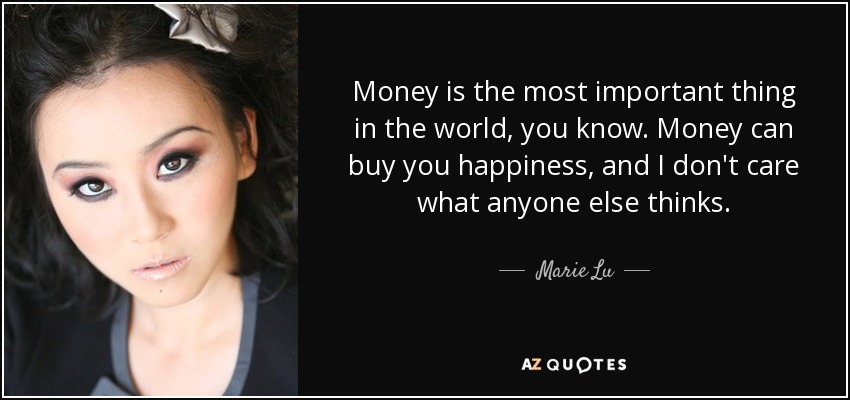
  1. Nothing is more important than money

If capitalism had a beating heart, instead of “thump, thump, thump,” it would go “money, money, money.”  Love may make the world go round, but money greases the wheels.  Remember the Beatles song “Money?”

Now give me money, (That’s what I want)

That’s what I want

(That’s what I want)

That’s what I want, (That’s what I want), oh, yeah

(That’s what I want)

Money don’t get everything, it’s true

What it don’t get, I can’t use

Now give me money, (That’s what I want)

That’s what I want.

 I propose that more people think about money than anything else in the world, including sex.  To test my theory, I typed in “Sex” on Google.  Then I typed in “Money.”  Following are my results:

Sex:  10,590,000,000         

Money:  11,920,000,000

Money received 1.33 billion more hits than sex.  This result shows what the real priorities of most people are.  First it is money, then it is sex.

nice-guys

  1. Never let anyone get in your way

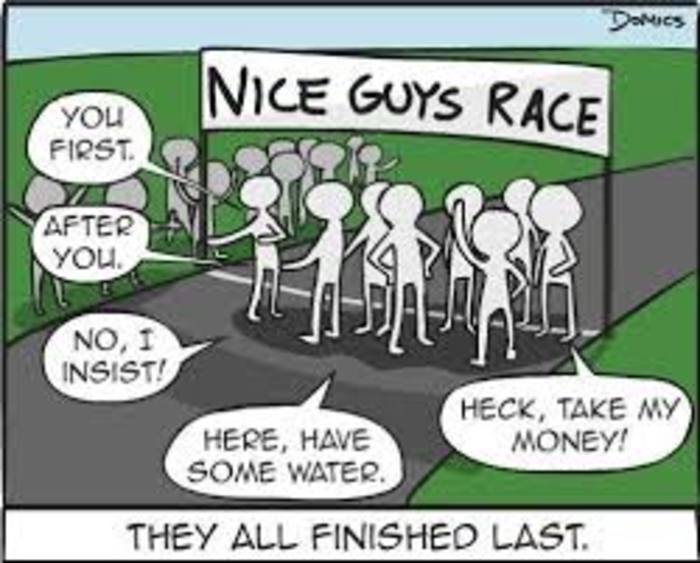
 Let’s be real.  Nice guys and good women finish last.  If you want to get ahead in business, you must be ruthless.  You must be cut throat.  You must play ethical roulette (a business version of Russian roulette).  Machiavelli and Sun Tzu were too soft.  Read the “Mafia’s Guide to Getting Ahead.”  You must have no morals or ethics or qualms about being the bad guy.  Never do anything illegal or at least get caught doing anything illegal.  There is plenty of room for amoral activities that skirt the line between legal and illegal.  If in doubt, call a lawyer.

611iwzUWo7L

 10.  Put some money aside for a rainy day

By rainy day, I mean a time in your life when you no longer have any friends, loved ones or anyone who cares whether you live or die. You will be on your death bed waiting for Lucifer to take you to your just rewards.  Like Herod, the day will come when you must pay the piper.  It won’t matter how much you have in stocks or your bank account.

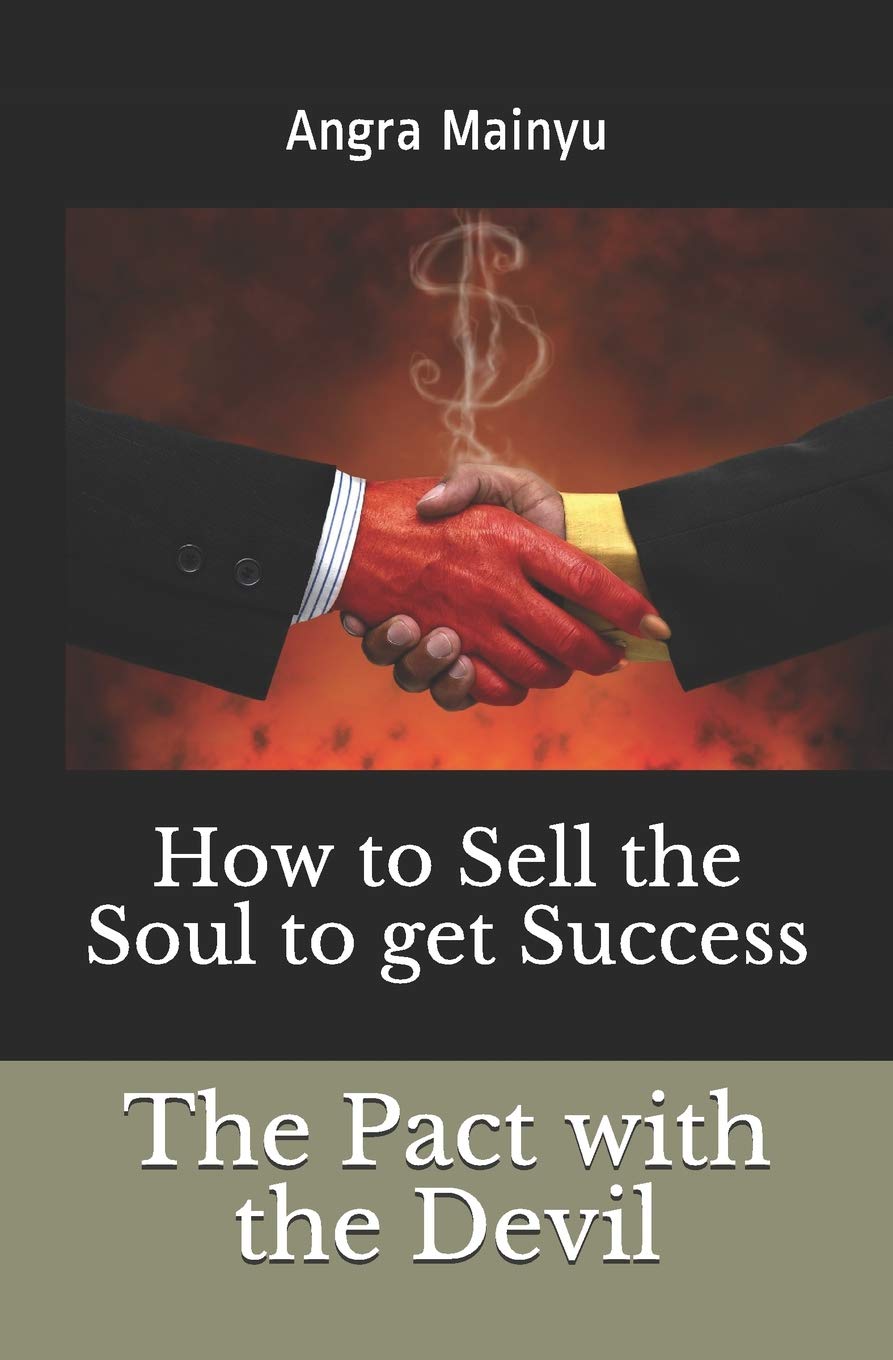
The devil won’t have a signed contract for your soul but he will not need it.  You will have bought and paid for your place in hell many times over.  Every dollar, every ruble, every peso, every euro, every yen you coveted will have helped you to earn your place in hell.  Your funeral marker on earth may say some nice things about you but down in hell, you will be one of many who sold their soul to the highest bidder.

Jesus wisely said “What doth it profit a man if he gains the whole world but suffer the loss of his own soul?”  Profoundly put, but alas seldom followed.

After Thoughts:

When I came home recently from a vacation to Europe, I had 5,865 spam messages in my promotions email folder on Gmail.  That equals 217 junk emails per day.  Never before in history, has so much been marketed and sold to people under the assumption that the marketplace is a dispenser of happiness.  I have written a five-part series on the evils of Corporate Capitalism, and I have written many posts about the dangers facing our civilization today from the excess of greed and profiteering which infest and assail too many cultures and societies all over the world.

My spouse Karen felt that many of the things that I was saying in this blog were too harsh.  If you felt this way when you read my blog, consider that 162 golf course owners in Phoenix did not want to accept a recent recommendation for a 3.1 percent cut in water usage.  (Some Arizona golf courses are pushing back against the state’s plan to reduce water use)  They proposed a counter recommendation for a 1.6 percent cut.  This on the heels of an unprecedented drop in the water feeding much of the Southwest from Lake Mead and a record drought with significant increases in heat.  What have we come to when water for golf courses is more important than water for crops and drinking?

In Wisconsin, where I live during the summer, the residents have been fighting the siting of a CAFO for the feeding of 26,000 hogs.  The operators of the “Concentrated Animal Feed Operation” do not care about the water, trees, odors, property values, soil, bacteria, or any other repercussions for their operation.  They are only concerned about the ability to make a profit.

The local residents have been fighting this potential development for nearly three years now.  It is big money against the little farmer and little land owner who object to the spoilage of their land, water, and lifestyle.  The property owners in Barron, Burnette and Polk County Wisconsin are fighting not only corporate money and greed but also elected politicians.  Politicians at both the local level and state level, many who support the development of “free enterprise” regardless of the externalities caused by the business operation.

Everywhere I turn, I see greed, waste, and short-term thinking based on profitability guiding human decisions.  The sad part is that Corporate Capitalism has become a religion.  And whereas faith in the old religions has waned dramatically in the past fifty years, faith in Capitalism to save us from hell has only grown.  Like some sort of communicable disease, the belief that Capitalism will provide a heaven on earth has become almost indisputable among a large majority of Americans.  I think the time is long past for soft pedaling the dangers of Capitalism.  I only hope that it is not too late.


The Ten Greatest of Everything – To Me Anyway

1_BF7Q_kXqzl3IsxDrnerpyA

What does it mean to be the “Greatest?”  Is the “Greatest” the same as the “Best?”  I tried rolling both off my lips in sentences as follows, “He was the best person in the world.”  “She was the greatest person in the world.”  “Would you rather be the greatest or the best?”  “Usain Bolt is the greatest 100-meter sprinter who ever lived.”  “Usain Bolt is the best 100-meter sprinter who ever lived.”

I give up.  They seem different but I cannot tell why.  Let’s see what the good old dictionary has to say about this conundrum.  (Definitions from Oxford Languages.)

Best:  of the most excellent, effective, or desirable type or quality.

Great:  of an extent, amount, or intensity considerably above the normal or average.

As Winnie the Pooh says, “It hurts my head.”  Somehow I like “Great” better than “Best” so I will leave the distinctions and arguments to the linguistic experts.  For now, my list will be looking at people and things that I find are the “Greatest” to have ever existed.  I would hazard that if they were the “Greatest” that they are also the “Best.”

One further caveat before we dive or is it delve into my list.  No one is expected, must, should, or probably will agree with me.  That is fine.  You should create your own list.  Variety is what makes life interesting.

For each of my “Greatest”, I will list the criteria that I use in making my selection.  I presume that there are many different criteria that one could use.  Some of my criteria will be very subjective posing grounds for wonderful arguments.  As Tevye (in Fiddler on the Roof) said, “Posing problems that would cross a rabbi’s eyes!  And it won’t make one bit of difference if I answer right or wrong.  When you’re rich, they think you really know!”

So here goes.

jesus-rembrandt-paintingjpg

  1. Greatest Prophet – Jesus Christ
  • Criteria: Most followers
    • 2.1 billion followers worldwide
  • Honorable Mention: Muhammed
    • 1.5 billion followers worldwide

download

  1. Greatest Book – The Bible
  • Criteria: Most sold
    • 3.9 billion copies over the last fifty years
  • Honorable Mention: Quotations from the Works of Mao Tse tung
    • 820 million copies sold

1200px-Gilbert_Stuart_Williamstown_Portrait_of_George_Washington

  1. Greatest General – George Washington
  • Criteria: Most Heroic Activity
    • Passed on the offer to be crowned king or ruler for life
  • Honorable Mention: Simon Bolivar
    • A great military leader. He took the title of dictator but voluntarily resigned after leading numerous battles to liberate South America from Spain

Okay, go ahead and scream over my picks.  Tell me that computers, rating experts, number of battles and so on would show that Napoleon, Caesar, Hannibal, Alexander, Genghis Khan, Khalid Bin Walid or Subutai were the greatest.  However, I challenge you to show me one of these Generals who after winning battles against great odds and then becoming the country’s leader also voluntarily stepped down and did not take the mantle of dictator that his nation wanted to crown him with.

egypt-gettyimages-1085205362

  1. Greatest Empire – Egypt
  • Criteria: Longevity
    • From 3100 BCE to 30 BCE
  • Honorable Mention: The Pandyan Empire
    • This society of Southern India is considered by some to be the longest-lasting empire in history.

A criteria based on land mass would have yielded, The Mongol Empire, The British Empire, and the Roman Empire.  However, I think longevity is a better criteria of greatness than size.

1_omubHP3AmKqSsJQO6OZ5bg

  1. Greatest Leader – Mahatma Gandhi
  • Criteria:  Most admired
    • Almost every list of greatest leaders has Gandhi on it. He might not always be in first place but if you averaged his position out, he would easily be number 1 as most admired leader in the history of the world
  • Honorable Mention: Nelson Mandela
    • Easily the second most admired leader in history. President Mandela’s struggles are epic as was his sense of forgiveness and charity.

william-shakespeare-194895-1-402

  1. Greatest Writer – Shakespeare
  • Criteria: Most influence on literature
    • In the English language, no one outside the Bible is quoted more than William Shakespeare
  • Honorable Mention: Plato
    • This is a difficult pick. Many would choose Homer, Dostoyevsky, Twain, Richard Wright, Kant, Goethe, Machiavelli, or Karl Marx.

So here is how I resolved Honorable Mention:  I typed in Google each of the following names to see how many hits I would get.  These are my results:  Plato, 185 million; Goethe, 69 million; Marx, 24.4 million; Homer, 80 million; Dostoyevsky, 6.2 million; Thomas Paine, 4.1 million; Twain, 60 million; Richard Wright, 3 million; Machiavelli, 12 million. Plato won by a long stretch.

01booktalkconfucius

  1. Greatest Philosopher – Confucius
  • Criteria: Most impact on human thought/behavior
    • Tricky here to distinguish between a writer and a philosopher since they are obviously two sides of the same coin. However, given the population of Chinese in the world and the number of times that Confucius is quoted, I have to give the mantle of greatest to Confucius.  My sentimental favorite is Socrates, but I am not sure that he had the same impact on humanity.
  • Honorable Mention: Gautama Buddha
    • Leader of the fourth largest religion in the world.  The influence of Buddhism is felt in every genre of literature, in every religion and in the daily lives of every person living on the planet earth.  Some might see it as an esoteric religion since it is so different than the monotheistic religions.  However, it is just this difference which provides for so much of its influence on the world.  I cannot conceive of a world not balanced by both God and Non-God religions.

VSGZHGib_400x400

      8.  Greatest Scientist – Albert Einstein

  • Criteria: Most lists of the greatest scientists
  • Honorable Mention: Marie Curie
    • Madame Curie comes up on almost all the lists of greatest scientists. She is one of the few people to ever win two Nobel Prizes in Science.  She is the only person to ever win two Nobel Prizes in two different scientific disciplines: Physics and Chemistry.

mm

  1. Greatest Athlete – Alexander Karelin
  • Criteria: Most wins by an individual, not a member of a team.  Over the period of his active wrestling, Karelin won 887 matches and only lost 2.
  • Honorable Mention: Serena Williams
    • To date, Williams has won 346 of her tennis matches. She is the winner of 23 major singles titles, most of any man or woman in the Open Era of tennis.

bach_beethoven

     10.  Greatest Composer – Bach or Beethoven

  • Criteria: Most pieces composed, or most pieces played
    • I really could not decide on this one. Neither man had the most composed pieces but when you look at most played and how many each composed, there is little question that the two composers are the greatest of all time.
  • Honorable Mention: Wolfgang Amadeus Mozart
    • I personally like Mozart better than any other composer in the history of the world. I like Verdi, Puccini, and Bizet a great deal, but they are nowhere near as prolific or popular as Mozart.

Well, there you have it folks.  My list of the “Greatest” in the world.  I had fun doing this list.  It was a real challenge.  Too many choices making it very difficult to pick.  Looking up the criteria to use and looking at all the different opinions made it a very interesting task.

“Never underestimate the power of dreams and the influence of the human spirit. We are all the same in this notion: The potential for greatness lives within each of us.” — Wilma Rudolph

The Seven Greatest Appreciations of Life: Peace

download

“Peace I leave with you; my peace I give unto you: not as the world giveth, give I unto you. Let not your heart be troubled, neither let it be fearful.” — John 14:27

Peace is perhaps the second most spoken word in the English language as well as the second most misunderstood. 

546ad58cbe260aa3bb2946b2a7c566acA Rabbi, Iman, Pastor and Buddhist Priest were all discussing the issue of peace in the world and in particular peace in the Mideast.  The Rabbi said there could only be peace in the Mideast if all the Muslims left.  The Iman said that there could only be peace if all the Jews left.  The Pastor jumped into the argument and said there would only be peace if all the non-Christians left.  The Buddhist cleared his throat to interrupt the argument and said, “There will never be peace anywhere as long as there are Muslims, Jews, Protestants, Catholics and even Buddhists in the world.” 

Peace is the nexus that links politicians and religious leaders.  Peace drips from the lips of religious leaders and politicians so often that I would be a billionaire if I had a quarter for each time one of them uttered the word peace.  There is a symbiotic relationship between religious leaders and politicians.  We have hundreds of years of racism, greed, sexism, discrimination, and militarism pursued by political leaders and blessed by religious leaders all over the world.  Politicians need religious leaders to sanction their immoral behaviors.  Religious leaders need politicians to foster behaviors that are not endorsed in their official religious teachings.

We have a world that needs peace.  Peace is to the soul as food is to the body.  Peace sustains us spiritually and mentally.  When we think of peace, we think of such phrases as “Peace in the valley.”  “A life of inner peace.”  “Go in peace.”  “Let there be peace between our people.”  “It was a peaceful day.”  “Peace begins with a smile.”  Racism, sexism, greed, discrimination, and militarism all destroy peace.

conflict-art-scroll

Happiness and joy are two of the sought-after states in the world, but neither state can exist without a foundation of peace.  Jesus said, “Blessed are the peacemakers, for they shall be called the children of God,”: Matthew 5:9.  You would think that those who say they are called to be Priests, Ministers and Pastors in the Christian religion would understand that Jesus expected them to be peacemakers.  Sadly, that seldom seems to be the case.  It is even sadder that the idea of peace is blasphemed by these same people whose vocation is to foster peace.  The concepts of spirituality and peace go hand in hand.  One cannot be a spiritual person and sanction the wanton and needless destruction of life.  Peace is meaningless if it is just a word.  If we really want peace it must be a way of life for all of us.  You cannot preach peace in the pulpit on Sunday and then support racism, sexism, discrimination, greed, and militarism the rest of the week.     

Mens-Peace-guins-Long-Sleeve-Crusher-Tee_70962_1_lgThe peaceful person does not use violence against others.  The peaceful person is a diplomat who solves problems with his/her brain and not with tools of aggression.  The peaceful person is confident because they have integrity.  The peaceful person has serenity because they have no fear.  Fear is the enemy of peace.  When the world is on red-alert, people live in fear.   People become fearful of others and fearful of living.  Racism, sexism, discrimination, greed, and militarism create fear.  With fear, no one can be at peace. 

We can only appreciate peace if we are carriers and messengers of peace.  The person who endorses violence, abuse or discrimination against others can never be at peace because they have no peace in their heart.  Such people live on violence and thrive on aggression.  They reap what they sow.  By sowing death and destruction, they ensure that they will never know peace. 

51qBtOmrIgL._SS500_We should all be grateful for peace.  This means we need to appreciate peace and understand that it cannot be taken for granted.  Peace is up to us to create.  It is too important to leave to religious leaders and politicians.  If we want peace in our lives and peace in the world, we must create it.  There can never be peace for anyone if there is not peace for everyone. 

Think about peace today.  Do you live in a land of peace?  When you get up or go to bed today, do you feel peaceful?  Are you at ease with life or are you anxious, nervous, and fearful?  Do you appreciate what or how peace in your life would feel?  What would it take for your life to be more peaceful?  Do you think the world deserves peace?  If peace is everyone’s responsibility, what will you do to sow peace today? 

Peace starts with living peacefully. 

Mark Twain wrote a short story called the War Prayer.  It has been made into a ten minute video.  It is very moving and something everyone should see.  The link is below:

Previous Older Entries Next Newer Entries