
- Teamwork is essential
- Sometimes you have to go it alone
- The possibility of pain and death is ever present in our lives
- You will never know when you are too old
- No one is expert at everything
- Life is full of ups and downs
- Some days you will be on top of the world and others you will not
- Energy output varies from person to person, but we all run out at some point
- You have to get up every day to stay in the race
- Quitting does not define a loser
In my younger days, I did a few bike races. I raced a criterion, a hill and dale and a double century. I was only an amateur and never had the time to race more. I enjoyed bicycling and did a number a bicycle tours. At one point, I was averaging almost 450 miles a week in riding. I gave up riding in my later thirties and concentrated more on running. It was faster and cheaper to get my exercise running. I could no longer use a bicycle for transportation as I was commuting distances that made bicycle riding less practical. I was a good bicycle mechanic and I worked in two different shops doing bicycle repair work.
Every year, I noted when the Tour de France came around, but I did not pay much attention to the race or the racers. This year, (2021), I watched the Tour races in the morning on my computer and then each evening Karen and I watched a video summary of the Tour stage for that day. It was exciting watching the riders and I learned a great deal about bicycle racing and life in general. I have identified ten key ideas that I want to share with you. These are some of the insights about life that I had from watching the Tour. I suppose one could get such insights from sitting under an apple tree or watching a baseball game. Life offers many lessons if we simply open our minds.

- Teamwork is essential
No one can win the Tour de France without the support from their team. I do not care how good you are, you will not win without a team. Much of the reason for this comes from the support that the team gives to its designated “leader.” The “domestiques” are the team members who help the leader out in a variety of ways. Running errands to get food or drink; providing technical support in case of a breakdown; and drafting or helping rein in other racers.
Every potential winner needs a team to provide support and assistance.
- Sometimes you have to go it alone
 A winner will need to rely on their team, but great riders will often find that they are suddenly alone and need to finish the race on their own. Perhaps their support riders are worn out or perhaps it is evident that the leader needs to charge ahead to gain time or prevent an adversary from gaining too much advantage. The great riders know when you to use their team and when to go it alone.
Sometimes you have to strike out on your own and depend on your own resources.

- The possibility of pain and death is ever present in our lives
Crashing and falling happen quite regularly in the Tour. Perhaps a rider is hit by another rider or as in the race this year, a spectator ran out with a sign and knocked a rider down. This caused a chain reaction knocking several other riders down. Getting hurt is inevitable. Falling down at nearly 30 miles an hour is painful. Riders have helmets but no other pads. How badly a rider is hurt is simply how unlucky they are. The possibility of pain and serious injury is the price we pay in life for almost any endeavor that we undertake. Everything that we do in life has risks.
There is no way to avoid risks in life unless you stop living.
- You will never know when you are too old
 Mark Cavendish when he was at his peak was considered the best sprinter who ever lived. This year for the 2021 Tour de France he was almost not selected by any of the teams. At 36 years old, most thought that his racing days were over. To the surprise of all, Mark secured a contract with one of the Tour teams. Even more of a surprise was his winning four stages in the Tour to tie the record of Eddy Merckx for most stage wins in the Tour de France. Mark did not know he was too old to win. There is a time to hold em and a time to fold em, but it is very difficult to know when that time is. One thing is for certain, never listen to other people.
Don’t let chronological age define what you can and cannot do.
- No one is great at everything
 The Tour de France is comprised of three main types of riders. There are the sprinters who are best on flat ground. There are the mountaineers who excel at hills and mountains. There are the general classification (GC) riders who are good at both hills and flat ground but are not usually as good as the sprinters and mountaineers at their respective terrain. The GC riders are most likely the best all-around riders and may be able to win a few stages in both the flats and the hills. However, the GC riders are much more concerned with their overall time and will generally forego racing with sprinters or mountaineers who may break with the Peloton in an attempt to win a stage. There is lots of strategy involved in winning the Tour and I do not have the time or knowledge to say more about it.
The main point here is that you can be good but not great at anything and still be successful in life.

6. Life is full of ups and downs
The Tour de France is a bicycle race comprised of 21 stages. It is run mostly in France. The first Tour was run in 1903. One stage is run each day and two days are inserted for rest days. Some stages are mountainous and hilly while others are flat and curvy. The mountainous stages can be almost 10,000 feet high. One or two stages will be set aside as sprint runs. Many stages are combinations of both flat and hilly terrain. Overall, 200 of the best bicycle racers in the world will race for nearly 2200 miles. The Tour is considered one of the most demanding and difficult races in the world.
Watching these races, you can see that the world is physically up and down. Mountains, hills, valleys, flats, and curves. Some days will be rainy and cold, other days will be hot and humid. However, in some sense the ups and downs are metaphorical as well. The riders who are up one day will be down the next. One day a sprinter will win the stage, the next day a mountain rider will win. The General Classification riders (Tour leaders usually) will change the “yellow jersey” day by day until one finally emerges as the front runner. The winner is never certain as falls, bad ride days and simple exhaustion take their toll on each rider.
Accept that life is going to be full of ups and downs. Just remember that after it rains, the sun will come out.
- Some days you will be on top of the world and others you will not
 No rider on the Tour de France has ever won all the stages. Two or three riders have captured the Polka Dot (Best Mountain Rider), Green (Best Sprinter) and Yellow (Overall time leader) jerseys in the same Tour but no rider has ever won all 21 stages in one race. We all have good days and bad days. Some days we wake up full of energy and other days we should just stay in bed.
Karen my wife mentioned yesterday that being able to pick which days she gets up and which days she can linger in bed is one of the joys of being retired. She noted that some days she just is not able to bounce out of bed like Tigger and meet the world with a full-on burse of energy. She takes it easy some days and usually the next day, her energy returns, and she is out weeding the garden or trimming hedges.
Common wisdom tells us to honor the cycle of our lives, but most people are too busy being busy or rushing to get someplace to pay attention to this bit of wisdom.
- Energy output varies from person to person, but we all run out at some point
 Tour riders line up maybe 2 miles or so before the actual start line. Two hundred riders will be almost welded together behind a pace car as they casually ride up to the start. As soon as they reach the start line, they are off in a rush of cycles jostling for position. A large mass of cyclists is called the Peloton and most riders will try to stay with this group for reasons of riding efficiency and aerodynamics. Riding alone is more effort and energy wasteful than riding in a group. Nevertheless, some game or crazy rides will try to leave the pack. It may happen soon in the race or half way through the race, but eventually a breakaway group or individual will try to go it alone. The boldness of these breakaway riders is thrilling. Daring to challenge the best riders in the world by themselves.
You watch these riders, and the computer will show you how many are in the breakaway group and how far ahead they are from the Peloton in terms of time and distance. Almost inevitably, (you could bet odds on it) the breakaway riders will one by one fall off the pace and be reeled in by the Peloton riders. Seldom if ever does the lone breakaway rider stay in the lead for the entire stage. The strongest riders in the world are in this race and there is undoubtedly a bell-shaped curve of stamina, endurance, and conditioning among the two hundred riders. Nevertheless, no rider short of superman can stay out front each race for the entire race. The advantage of a riding in a group, drafting and avoiding wind currents is too great for the individual loner to keep up a winning pace for an entire stage.
Respect your energy levels and do not try to be superman or superwoman.

- You have to get up every day to stay in the race
This sounds so platitudinous that I am almost ashamed to say it. Every year a few riders in the Tour de France will drop out for one reason or another. Sometimes it is injury, sometimes it is just giving up. We all have days when we do not feel like we can go on anymore.
Yet, it seems as though we continually find excuses to drop out of the race. The going gets tough and we quit. We fall down and we don’t get up. We get rejected and we give up. We did not get the results we expected so we abandon our goal. I once asked a friend who was an editor of several magazines what I needed to do to have a “Best Seller.” He replied, “I could not tell you. But I can tell you one thing, if you don’t write you will never have a best seller.” I have never forgotten his advice. Buying a lottery ticket does not ensure that you will win the lottery, but you can never win the lottery without a ticket.
I once heard that there are three kinds of people. Those who do not know that there is a parade coming. Those who will watch the parade. Those who are in the parade. Live gives us the possibility to choose which of the three people we want to be. If you are going to be in the parade, you will have to get up and do something. The parade will never come to you.
The race does not always go to the swiftest. Often it goes to the steadiest.

- Quitting does not define a loser
Primož Roglič was the leader in the 2020 Tour de France. He was almost certain to win the Tour. He had held the Yellow Jersey for the last half of the race. His lead seemed insurmountable. Then came a time trial day. Tadej Pogačar, a rider from another team, did such an outstanding job in the time trial that he ended up ahead of Roglic. Pogačar won the 2020 Tour de France.
Now it is time for the 2021 Tour. Both Primoz and Tadej are back again. This year Tadej is favored to win but Roglic still has a chance. Roglic has a bad spill in the race during stage 3 and receives some injuries. He gets up and continues the race the next day. A few days go by, and it is clear that he is off pace. After stage 8 Roglic quits. He leaves the race. Is Roglic a loser? They say only losers quit.
Less than a month later, Roglic finishes 28th at the Tokyo Olympics road race. Four days later, Roglic competes in the individual time trial. 39 cyclists from 31 nations compete in the race. Roglic wins the gold medal in the time trial with a winning margin of 1’01”.
Sometimes it makes sense to quit. It is not true that only losers quit. Some of the greatest people of all time have had days when they quit. It is not quitting that defines a loser, it is never starting again.
Be realistic about those times when pressing on is not as smart as quitting. History is full of examples of people who pressed on and were never heard from again.
Conclusions:
There you have it. The ten things I learned about life from this years Tour de France. Rest assured I will be back next year to see what else I can learn. I may even dust my bicycle seat off, oil my chain, pump up my tires and take a ride down the Gandy Dancer Trail. If you see me coming, you should step aside as I am sure that I will be quite wobbly.
Dix choses que j’ai apprises sur la vie du Tour de France 2021
- Le travail d’équipe est essentiel
- Parfois, vous devez faire cavalier seul
- La possibilité de la douleur est toujours présente dans nos vies
- Vous ne saurez jamais quand vous serez trop vieux
- Personne n’est expert en tout
- La vie est pleine de hauts et de bas
- Certains jours, vous serez au sommet du monde et d’autres non
- La production d’énergie varie d’une personne à l’autre, mais nous sommes tous à court d’énergie à un moment donné
- Il faut se lever tous les jours pour rester dans la course
- Abandonner ne définit pas un perdant
Dans ma jeunesse, j’ai fait quelques courses de vélo. J’ai couru un critère, un monticule et un double siècle. Je n’étais qu’un amateur et je n’ai jamais eu le temps de courir plus. J’aimais faire du vélo et j’ai fait un certain nombre de tours à vélo. À un moment donné, je parcourais en moyenne près de 450 milles par semaine en équitation. J’ai abandonné l’équitation à la fin de la trentaine et me suis concentré davantage sur la course à pied. C’était plus rapide et moins cher de faire mon exercice. Je ne pouvais plus utiliser un vélo pour me déplacer car je parcourais des distances qui rendaient le vélo moins pratique. J’étais un bon mécanicien vélo et je travaillais dans deux ateliers différents pour faire des réparations de vélos.
Chaque année, je notais quand arrivait le Tour de France, mais je ne prêtais pas beaucoup d’attention à la course ou aux coureurs. Cette année (2021), j’ai regardé les courses du Tour le matin sur mon ordinateur, puis chaque soir Karen et moi avons regardé un résumé vidéo de l’étape du Tour ce jour-là. C’était passionnant de regarder les coureurs et j’ai beaucoup appris sur les courses cyclistes et la vie en général. J’ai identifié dix idées clés que je veux partager avec vous. Ce sont quelques-unes des idées sur la vie que j’ai eues en regardant le Tour. Je suppose que l’on pourrait obtenir de telles informations en s’asseyant sous un pommier ou en regardant un match de baseball. La vie offre de nombreuses leçons si nous ouvrons simplement notre esprit.
- Le travail d’équipe est essentiel
Personne ne peut gagner le Tour de France sans le soutien de son équipe. Peu m’importe à quel point vous êtes bon, vous ne gagnerez pas sans une équipe. Cela s’explique en grande partie par le soutien que l’équipe apporte à son « leader » désigné. Les « domestiques » sont les membres de l’équipe qui aident le leader de diverses manières. Faire des courses pour acheter de la nourriture ou des boissons ; fournir une assistance technique en cas de panne; et rédiger ou aider à maîtriser d’autres coureurs.
Chaque gagnant potentiel a besoin d’une équipe pour fournir soutien et assistance.
- Parfois, vous devez faire cavalier seul
Un vainqueur devra compter sur son équipe, mais les grands coureurs découvriront souvent qu’ils sont soudainement seuls et doivent terminer la course par eux-mêmes. Peut-être que leurs cavaliers de soutien sont épuisés ou peut-être est-il évident que le leader doit foncer pour gagner du temps ou empêcher un adversaire de prendre trop d’avantages. Les grands cavaliers savent quand utiliser leur équipe et quand faire cavalier seul.
Parfois, il faut se débrouiller tout seul.
- La possibilité de la douleur est toujours présente dans nos vies
Les chutes et les chutes se produisent assez régulièrement sur le Tour. Peut-être qu’un coureur est heurté par un autre coureur ou comme lors de la course cette année, un spectateur est sorti en courant avec une pancarte et a renversé un coureur. Cela a provoqué une réaction en chaîne qui a renversé plusieurs autres coureurs. Se blesser est inévitable. Tomber à près de 30 milles à l’heure est douloureux. Les cavaliers ont des casques mais pas d’autres protections. À quel point un coureur est blessé est simplement à quel point il est malchanceux. La possibilité de douleurs et de blessures graves est le prix que nous payons dans la vie pour presque tous les efforts que nous entreprenons. Tout ce que nous faisons dans la vie comporte des risques.
Il n’y a aucun moyen d’éviter les risques dans la vie à moins d’arrêter de vivre.
- Vous ne saurez jamais quand vous serez trop vieux
Mark Cavendish, lorsqu’il était à son apogée, était considéré comme le meilleur sprinteur qui ait jamais vécu. Cette année pour le Tour de France 2021, il n’a quasiment été sélectionné par aucune des équipes. À 36 ans, la plupart pensaient que ses jours de course étaient révolus. À la surprise de tous, Mark a obtenu un contrat avec l’une des équipes du Tour. Encore plus surprenant a été sa victoire sur quatre étapes du Tour pour égaler le record d’Eddy Merckx pour le plus grand nombre de victoires d’étape sur le Tour de France. Mark ne savait pas qu’il était trop vieux pour gagner. Il y a un temps pour les tenir et un temps pour les plier, mais il est très difficile de savoir quand est ce moment. Une chose est sûre, n’écoutez jamais les autres.
Ne laissez pas l’âge chronologique définir ce que vous pouvez et ne pouvez pas faire.
- Personne n’est bon en tout
Le Tour de France est composé de trois principaux types de coureurs. Il y a les sprinteurs qui sont les meilleurs sur terrain plat. Il y a les alpinistes qui excellent dans les collines et les montagnes. Il y a les coureurs du classement général (GC) qui sont bons à la fois sur les collines et sur terrain plat, mais ne sont généralement pas aussi bons que les sprinteurs et les alpinistes sur leur terrain respectif. Les coureurs GC sont probablement les meilleurs coureurs polyvalents et peuvent être en mesure de gagner quelques étapes à la fois dans les plats et les collines. Cependant, les coureurs GC sont beaucoup plus soucieux de leur temps global et renoncent généralement à courir avec sp les coureurs ou les alpinistes qui pourraient rompre avec le Peloton pour tenter de remporter une étape. Il y a beaucoup de stratégie impliquée pour gagner le Tour et je n’ai pas le temps ni les connaissances pour en dire plus.
Le point principal ici est que vous pouvez être bon mais pas excellent dans tout et réussir dans la vie.
- La vie est pleine de hauts et de bas
Le Tour de France est une course cycliste composée de 21 étapes. Il se déroule principalement en France. Le premier Tour a été couru en 1903. Une étape est courue chaque jour et deux jours sont insérés pour les jours de repos. Certaines étapes sont montagneuses et vallonnées tandis que d’autres sont plates et sinueuses. Les étapes montagneuses peuvent atteindre près de 10 000 pieds de haut. Une ou deux étapes seront réservées aux courses de sprint. De nombreuses étapes sont des combinaisons de terrain plat et vallonné. Au total, 200 des meilleurs coureurs cyclistes du monde courront sur près de 2 200 milles. Le Tour est considéré comme l’une des courses les plus exigeantes et difficiles au monde.
En regardant ces courses, vous pouvez voir que le monde est physiquement de haut en bas. Montagnes, collines, vallées, plaines et courbes. Certains jours seront pluvieux et froids, d’autres jours seront chauds et humides. Cependant, dans un certain sens, les hauts et les bas sont également métaphoriques. Les coureurs qui sont debout un jour seront à terre le lendemain. Un jour, un sprinter remportera l’étape, le lendemain un coureur de montagne la remportera. Les coureurs du Classement Général (les leaders du Tour en général) changeront le « maillot jaune » jour après jour jusqu’à ce que l’un d’entre eux ressorte enfin en tête. Le gagnant n’est jamais certain car les chutes, les mauvaises journées de conduite et le simple épuisement font des ravages sur chaque cycliste.
Acceptez que la vie soit pleine de hauts et de bas. N’oubliez pas qu’après la pluie, le soleil se lèvera.
- Certains jours, vous serez au sommet du monde et d’autres non
Aucun coureur du Tour de France n’a jamais remporté toutes les étapes. Deux ou trois coureurs ont remporté les maillots Polka Dot (Meilleur coureur de montagne), Vert (Meilleur sprinteur) et Jaune (Meilleur temps global) dans le même Tour, mais aucun coureur n’a jamais remporté les 21 étapes d’une course. Nous avons tous de bons et de mauvais jours. Certains jours, nous nous réveillons plein d’énergie et d’autres jours, nous devrions simplement rester au lit.
Karen ma femme a mentionné hier que pouvoir choisir les jours où elle se lève et les jours où elle peut s’attarder au lit est l’une des joies d’être à la retraite. Elle a noté que certains jours, elle n’était tout simplement pas capable de rebondir hors du lit comme Tigrou et de rencontrer le monde avec une pleine énergie. Elle se calme certains jours et généralement le lendemain, son énergie revient et elle est en train de désherber le jardin ou de tailler des haies.
La sagesse commune nous dit d’honorer le cycle de nos vies, mais la plupart des gens sont trop occupés à être occupés ou à se précipiter pour trouver un endroit où prêter attention à ce morceau de sagesse.
- La production d’énergie varie d’une personne à l’autre, mais nous sommes tous à court d’énergie à un moment donné
Les coureurs du Tour s’alignent peut-être 2 miles environ avant la ligne de départ réelle. Deux cents coureurs seront presque soudés ensemble derrière une voiture de course alors qu’ils monteront avec désinvolture jusqu’au départ. Dès qu’ils atteignent la ligne de départ, ils s’élancent dans une ruée de cycles qui se bousculent pour se positionner. Une grande masse de cyclistes s’appelle le Peloton et la plupart des coureurs essaieront de rester avec ce groupe pour des raisons d’efficacité de conduite et d’aérodynamisme. Rouler seul est plus un gaspillage d’efforts et d’énergie que de rouler en groupe. Néanmoins, certains gibiers ou manèges fous tenteront de sortir du peloton. Cela peut arriver bientôt pendant la course ou à mi-parcours, mais éventuellement un groupe ou un individu échappé essaiera de faire cavalier seul. L’audace de ces échappés est passionnante. Oser défier les meilleurs cavaliers du monde par eux-mêmes.
Vous regardez ces coureurs, et l’ordinateur vous indiquera combien sont dans l’échappée et à quelle distance ils sont par rapport au Peloton en termes de temps et de distance. Presque inévitablement, (vous pouvez parier là-dessus), les coureurs échappés perdront un à un le rythme et seront rattrapés par les coureurs du Peloton. Il est rare, voire jamais, que le coureur solitaire de l’échappée reste en tête pendant toute l’étape. Les coureurs les plus forts du monde participent à cette course et il existe sans aucun doute une courbe en forme de cloche d’endurance, d’endurance et de conditionnement parmi les deux cents coureurs. Néanmoins, aucun coureur à court de superman ne peut rester en tête de chaque course pendant toute la course. L’avantage de rouler en groupe, de dessiner et d’éviter les courants de vent est trop grand pour que le solitaire puisse maintenir un rythme gagnant pendant toute une étape.
Respectez votre niveau d’énergie et n’essayez pas d’être un surhomme ou une superfemme.
- Il faut se lever tous les jours pour rester dans la course
Cela semble si banal que j’ai presque honte de le dire. Chaque année, quelques coureurs du Tour de France abandonnent pour une raison ou une autre. Parfois c’est une blessure, parfois c’est juste abandonner. Nous avons tous des jours où nous avons l’impression de ne plus pouvoir continuer.
Pourtant, il semble que nous trouvions continuellement des excuses pour abandonner la course. Les choses se corsent et nous abandonnons. Nous tombons et nous donnons ne te lève pas. On se fait rejeter et on abandonne. Nous n’avons pas obtenu les résultats escomptés alors nous abandonnons notre objectif. J’ai demandé une fois à un ami qui était rédacteur en chef de plusieurs magazines ce que je devais faire pour avoir un « Meilleur Vendeur ». Il a répondu : « Je ne pourrais pas vous le dire. Mais je peux vous dire une chose, si vous n’écrivez pas, vous n’aurez jamais de best-seller. Je n’ai jamais oublié ses conseils. L’achat d’un billet de loterie ne garantit pas que vous gagnerez à la loterie, mais vous ne pouvez jamais gagner à la loterie sans billet.
J’ai entendu une fois qu’il y a trois sortes de personnes. Ceux qui ne savent pas qu’il y a un défilé à venir. Ceux qui regarderont le défilé. Ceux qui sont dans le défilé. Live nous donne la possibilité de choisir laquelle des trois personnes nous voulons être. Si vous allez être dans le défilé, vous devrez vous lever et faire quelque chose. Le défilé ne viendra jamais à vous.
La course ne va pas toujours au plus rapide. Souvent, il va au plus stable.
- Abandonner ne définit pas un perdant
Primož Roglič était le leader du Tour de France 2020. Il était presque certain de remporter le Tour. Il avait détenu le maillot jaune pendant la dernière moitié de la course. Son avance semblait insurmontable. Puis vint une journée de contre-la-montre. Tadej Pogacar, un coureur d’une autre équipe, a fait un travail si remarquable dans le contre-la-montre qu’il a terminé devant Roglic. Pogacar a remporté le Tour de France 2020.
Il est maintenant temps pour le Tour 2021. Primoz et Tadej sont de retour. Cette année, Tadej est favori pour gagner mais Roglic a encore une chance. Roglic a une mauvaise chute dans la course lors de l’étape 3 et reçoit quelques blessures. Il se lève et continue la course le lendemain. Quelques jours s’écoulent, et il est clair qu’il est à contre-courant. Après l’étape 8, Roglic abandonne. Il quitte la course. Roglic est-il un perdant ? Ils disent que seuls les perdants abandonnent.
Moins d’un mois plus tard, Roglic termine 28e à la course sur route des Jeux olympiques de Tokyo. Quatre jours plus tard, Roglic participe au contre-la-montre individuel. 39 cyclistes de 31 nations participent à la course. Roglic remporte la médaille d’or du contre-la-montre avec une marge gagnante de 1’01”.
Parfois, il est logique d’arrêter. Il n’est pas vrai que seuls les perdants abandonnent. Certaines des plus grandes personnes de tous les temps ont eu des jours où elles ont arrêté. Ce n’est pas d’arrêter qui définit un perdant, ce n’est jamais recommencer.
Soyez réaliste à propos des moments où il n’est pas aussi intelligent d’appuyer que d’arrêter de fumer. L’histoire est pleine d’exemples de personnes qui ont insisté et dont on n’a plus jamais entendu parler.
Conclusion :
Voilà. Les dix choses que j’ai apprises sur la vie de cette année Tour de France. Soyez assuré que je serai de retour l’année prochaine pour voir ce que je peux apprendre d’autre. Je peux même dépoussiérer ma selle de vélo, huiler ma chaîne, gonfler mes pneus et faire un tour sur le Gandy Dancer Trail. Si vous me voyez venir, vous devriez vous écarter car je suis sûr que je serai assez bancal.




 When I grew up, the only art in our house was an Elvis on velvet painting that my mother had hanging over the living room sofa. We also had a wooden ship with metal sails and a clock that did not work built into the side of the ship. It was featured prominently on the mantle over our fake fireplace. Our furniture would have done the Salvation Army proud. I do not remember any other art besides Elvis displayed on our walls, floors, or ceilings. Neither my father or mother had any interest in art. My mother liked Elvis and that is why she got the painting.
  When I think back upon my schooling, I do not recall ever having had a single class in art appreciation. We would occasionally go on field trips but usually to a library or a science museum. No one in my schools acknowledged the world of art. For blue collar kids like myself, the world of art had little relevance or practical use. Everyone knew that artists died poor. The great Van Gogh sold only one picture in his lifetime and that to a relative. The purchase of art was for the rich, spoiled, eccentric scions of old aristocratic families with more money than they knew what to do with.
  When Karen and I first moved down to Arizona, we took a day to go and visit Scottsdale. Scottsdale is a wealthy upper-class community. Scottsdale is generally considered the most affluent large city in Arizona. The average income of a Scottsdale resident is $51,564 a year. The US average is $28,555 a year. According to Zillow.com, the typical price of a home in Scottsdale is $582,292. We walked around the downtown portion of Scottsdale and expected to see the usual mix of clothing stores, jewelry shops, antique shops, and restaurants. We were not surprised except when it came to the antique shops.

 Art reflects the beauty that life holds. Paintings portray ideals and impressions that intrigue and magnify the senses. Sculptures mirror the objects in our world that mystify us or that remind us of magnificent events. Pictures bring us to other places and times that would be forgotten without the images the photographer captures. Art does not attempt to simply mirror reality; it attempts to augment and enhance reality. Art can be a caricature which like a Rorschach text enables us to see many different visions. Art is a realization of values, norms, pain, happiness, the past, the present and the future. Art can simultaneously create fantasy and reality.
 You may be rightly thinking, “But what good does art do me if I cannot afford to even walk into an art shop?” I often asked myself this same question. Why look at stuff that I could not afford? It took me years before I even ventured into an art museum. I have since visited the Louvre while in Paris and many other museums in the USA and in Europe. My attitude is now one of gratefulness that someone has purchased these magnificent works of art to share with the public. The vast majority of us could never begin to afford the pricelessness of these museum pieces. I strongly encourage you to visit an art museum sometime.
  When it comes to art that I would like to own, it is simply a matter of what I can afford. The art world is full of overpriced works of art. Many would rebel at my labeling art this way. My critics would say that it was high priced and not “over” priced. That may well be. I have talked to a number of artists and the vast majority do not get paid for the value of their efforts and creativity. However, just like in athletics, a few stand out and are disproportionally rewarded for their efforts.


 I thought I would start the year of 2021 off with a positive slant. Namely, some things we can all do or practice to be better people. However, before anyone should pay any attention to what I am about to say, there are several questions they must ask themselves. I would advise you that the veracity and hence credibility of an author is critical to your acceptance of what the author is trying to sell you or convince you of. Do not buy an argument from someone who cannot be trusted. Think about the comment that “If you see the Buddha on the road, kill him.” An uncritical acceptance of any idea is dangerous to your own integrity and responsibility. Hence, the questions I would want answered (If I were you) would be as follows: Who is this writer to say what the “greatest” virtues for a human are? How did he come up with these Seven Virtues? What is the difference between a virtue and a value? Is this an important difference or is he about to sell me another new religion?
 I would like to answer that I am a seeker of truth and knowledge. I am very opinionated, often highly judgmental and have frequently been accused of being a “know it all.” Many people would write my opinions off as being too liberal while others would say that I am too rational. I place great value on being logical and trying to stay open to many possibilities. I have been studying philosophy and religion since I was eighteen. I have no degrees in either. But the number of books and articles and stories that I have read number in the hundreds. I have attended many different worship houses and types of religious services. I was brought up as a Catholic until I rejected its teachings at about the age of 10. When no one would give me a good answer for “Who made God?” I more or less decided that most religions were based on superstitions.
 Given that one could easily comprise a list of ten or perhaps one hundred important virtues, why do I believe that my seven are the seven greatest and most important? How do I have the audacity to make such an assertion? I might have been sitting under an apple tree one day, or perhaps simply thinking about life at one of my yearly silent retreats at the Demontreville Retreat Center, when I compiled a list of seven virtues. While I truly “value” these ideas, I understand them more as virtues than values. I will address this difference later. I decided that I want to live by these virtues. Each day for the last fifteen or more years, I have selected one of these seven virtues to help guide me through the day. Whether it is patience, kindness or courage, each day I start by reflecting on this virtue and trying to make it a part of my life.
 The danger in this discussion lies in your taking a sectarian or religious approach to my writings. I assure you that I am not a religious person. I may be a spiritual person but I do not think of myself in either of these categories. I am an agnostic who wants to live a better life and help build a world that is a better place to live for future generations. Living by these seven virtues is one way I believe I can contribute to this goal.
 If I have satisfactorily answered the questions that I posed above respecting my integrity and credibility, I will now set off to address each of my Seven Virtues and explain why they are so important and the difference that I think they can make in our lives. Look for my virtues over the next several weeks in my blogs.


 brought sorrow to my heart over the years. Life does not always end happily. Lives do not always find the justice and honor they merit. I have felt sorry for the heroes and heroines who did not get the fates they deserved. If only I could somehow right all the wrongs and set history on the paths it should have taken. I find books tell me about my shortcomings and highlight areas where I need improvement. It is always sorrowful to find that I am not as good as I would like to be.
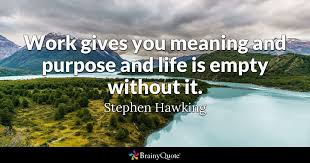
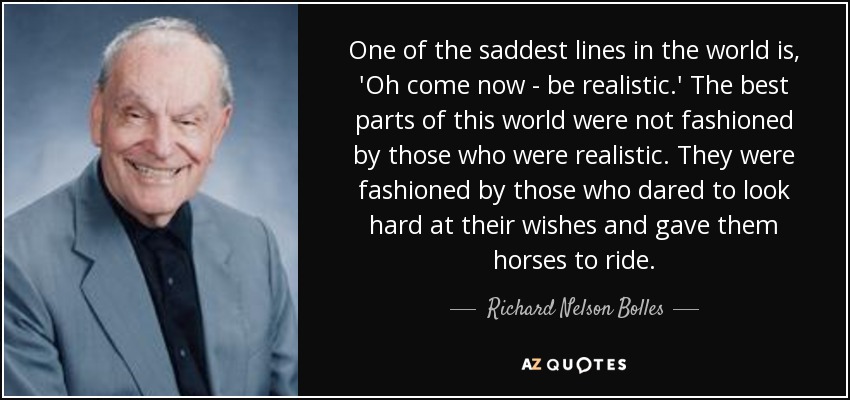 Ostensibly, it was just another book to help job seekers find work. However, Bolles wrote more than just tips on writing resumes and job letters and where to find work, he wrote a bible on how to live a better life and what work could really mean for us. Bolles gave us a broader vision of work and the role it could play in our lives. Bolles vision of work was more than just the idea of productivity and pay. At the core of Richard’s concept of life was his idea that life could be divided into three boxes: Work, Play and Education. But there is a novel twist to Bolle’s ideas about work, play and education that no one had ever put forward before. Before we go into his unique idea, let’s examine each of the three boxes. After this, I will present the truly revolutionary idea that Bolles had about them. Finally, I will discuss the implications of Bolles ideas to the present coronavirus crisis that we are facing today throughout the world.

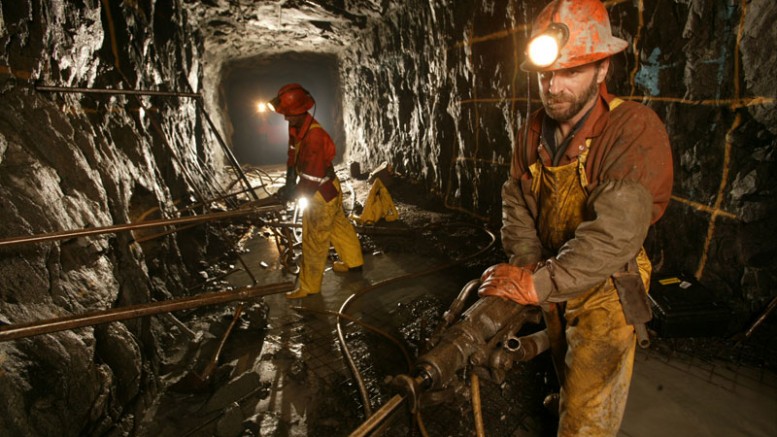 I posed a general question to the miners’ present. “What if we integrated work, education and play in your jobs. What would life be like for you,” I asked. There was silence for a moment. I did not know if I would get a response. Suddenly a hand shot up. I recognized the man and asked him what he thought. I never would have guessed his reply in a million years. It was perfect but it still astounded me. He said very simply “I would not know whether it was Monday or Friday.” To this very day, I cannot think of a more profound or telling comment than that.
 Our work activities at home are generally allocated towards improving our living conditions. We work on repairing our appliances, roofs, etc. because we either enjoy doing it or because we are trading our time for money. If we hire someone to do it, it will cost us money that we might not be able to afford. We may not have the skills to so some work that needs to be done, so we are often forced by necessity to contract out needed repairs. Some people have never learned how to cook and so either spend extra
 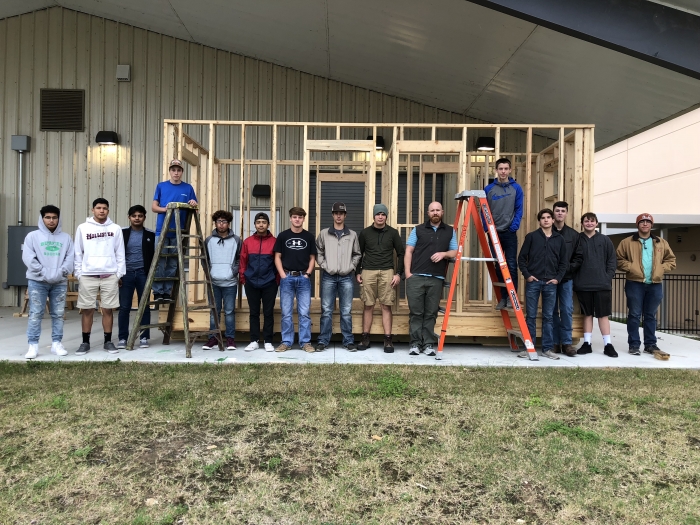 money on prepared meals or they often eat out. I never learned any wood working skills when I was in high school because these classes were deemed “general education” and I was in the “college track.” The home economics classes mostly dealt with sewing and cooking and were largely populated by girls. Even today in most high schools, girls dominate the home economics classes and boys dominate the construction related classes. There is admittedly more cross over then when I was in school in the sixties, but it is by no means 50-50 in gender distribution.
 From teachers and many educators, we hear the lament that children will miss three or more months of schooling. Unfortunately for the teachers that feel this way, students may miss out on “schooling”, but I think not on learning. Many studies have shown that students home taught learn more and score higher on standardized tests than public school students. I have been working in high schools as a substitute teacher for three years now and much of the work I see being done in classrooms can easily be accomplished from home. Whether or not students working from home are less bored with the subject matter remains to be seen. Nevertheless, there are plenty of opportunities for children to learn from home at their own pace and to some extent be more excited by a custom curriculum which suits their needs. There is obviously a great deal more that can be done in this area to create customized education programs.







 Aging Capriciously