The Epidemic of Selfishness in America

Introduction:

We are living through a moral epidemic.  An epidemic of selfishness.  Selfishness has become the new normal — disguised as independence, celebrated as authenticity.  In the moral epidemic of which I speak, we are plagued by not one but several symptoms.  Selfishness is a disease that can be seen in many manifestations.  In this blog, I want to explore how ego, narcissism, ingratitude, denial of responsibilities, entitlement, demand for rights, and isolation are each contributing to a disease that is redefining the American character.  The remedy may lie in reviving gratitude, duty, responsibilities and connection.

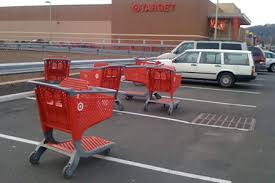
A few nights ago, I went to a Hobby Lobby store with Karen.  She needed to pick up some quilt squares for her Thursday quilting guild.  Each week they have a contest, and the prize is a bundle of fat quarters provided by all the members.  They change the color of the fat quarters that members must bring to each meeting.  I left the store early and told Karen that I would wait for her in the car.  The parking lot was mostly dark and deserted.  As I walked to my car, I noticed that there was about a dozen or so shopping carts just randomly scattered around the lot.

I assumed that there were no cart bins available but upon further looking around, I noticed many bins where you could leave a shopping cart.  Instead, customers had just dropped the carts anywhere they wanted to.  As it was late at night, it would be really easy to hit one of these carts either by backing into them or hitting them as you tried to pull out of the parking lot.  This fact did not matter to the individuals who were TOO LAZY to just push their carts over to a bin and drop them off.

Karen is normally a very positive person.  When she came back to the car, I pointed the situation with the carts out to her.  I challenged her to find some “Good Reason” that these customers could not just push their carts over to an available bin.  My suggested reasons, “They were in a hurry and had to get to an emergency ward.”  “They needed to get to the airport, and they were late.”  “They did not have time to find one of the available bins to put their carts in because the football game was starting.”  “They were being chased by predators who wanted their Hobby Lobby stuff.”   “They were blind, or it was too dark to see the bins.”  These were my facetious reasons.  Karen laughed at my lame attempt at humor.  My conclusion:  Lazy and Selfish.    

Ego:

The age of the collective has given way to the empire of the self.  Every opinion feels sacred, every desire urgent.  Technology, consumerism, and politics all whisper the same message: “You deserve everything, instantly”.  But when self-interest becomes the ultimate good, the moral commons collapses. “You do your thing, and I do my thing” was part of the famous Gestalt prayer by Fritz Perls that became popular in the 70’s.  The attitude behind this prayer has morphed into the epidemic we see today where “shopping till you drop” and “he who has the most toys wins” now defines our National character.  A character suffused by obsession for buying things to help build our egos up.  But it is not enough to have more, our toys have to be bigger and better.  Better is defined by the brand name stamped on the purchase or the neighborhood that you live in.  Bigger is a 60-inch color tv or a car with 900 hp or a house with five bathrooms or a  Wendy’s Pretzel Bacon Pub Triple with 1530 calories.

Narcissism:

Narcissism is the psychological heart of the new selfishness.  My friend Bruce has mentioned this a million times to me whenever we discuss Trump and his followers.  I concede that it now exists and is more pervasive than at any time in history.  “I matter more than you do.”  “I am more important than you are.”  The unflattering title of a “Karen” (my wife’s name is Karen) is depicted in thousands of short videos and TV shows such as “Bridezilla” where a would-be bride is screaming “It’s all about me, it’s all about me.”  This has become our national motto, “It’s all about me.”

Narcissism feeds on admiration but rejects intimacy.  The narcissist seeks reflection, not relationship — an audience, not a community.  Social validation replaces self-knowledge, and performance replaces sincerity.  We have built a society of mirrors where no one truly sees anyone else.  In Greek mythology,  Narcissus was a strikingly beautiful young man who rejected the love of others.  He sat all day looking at himself in a pool of water and thought how beautiful he was.  He fell in love with himself.  Punished by the gods for his vanity, he wasted away out of despair because he could not be with his love.  Our country is wasting away from a virus that seems to be pervasive.  A virus of narcissism.  But it is only one of several symptoms killing us.

Ingratitude:

It took me over thirty Jesuit retreats to finally notice a quote by Saint Ignatius Loyola.  Loyola said that  “Ingratitude is the sin most offensive to Heaven.  It is the cause, beginning, and origin of all sins and misfortunes as it is the forgetting of God’s blessings and gifts.”  He described it as “The most abominable of sins”. 

The more I reflected on this thought, the more I realized exactly what he meant.  Ingratitude corrodes the soul from within.  It blinds us to the gifts of others, the sacrifices of those who came before, and the simple blessings of daily life.  When we stop saying “thank you”, we begin to believe that everything owed to us was earned — and that no one else deserves the same.  Gratitude is the soil of empathy; ingratitude is a cancerous rot.

I try to remind myself each day of the need for gratitude.  It is not always an easy virtue to arouse.  In these challenging times, it can seem to me that I have little to be grateful for.  I would never have believed forty years ago that I (WE) would have had to deal with Climate Change, a major Covid Epidemic, Trumpism and now heart problems, all in my seventies.  I once thought that like any good cowboy or cowgirl, I would simply ride off into the sunset after years of a peaceful meditative retirement.  Added to my woes is the fact that our national character seems to be eroding and replaced with a desire for a despot who would be king.

Denial of Responsibilities:

Freedom divorced from responsibility is not liberty; it is chaos.  We live in an era where accountability feels like oppression to many people.  People say that they hate the government. “Too much big government” is a rallying cry for right-wing fanatics.  Civic, moral, and even legal obligations are dismissed as optional, or outdated.  How many people do you see running green lights or ignoring posted speed limits these days?

Thus, we have the movement for “Less government.”  Let’s obliterate the agencies and organizations that might hold us responsible for something.  But something is always overlooked when it is convenient to make money or power.  How many people have ever been prosecuted for the preventable disaster that we call “Climate Change?”  Denial of responsibility led to continued use of fossil fuels which accelerated any potential changes in our global climate.  Denial of responsibility breaks the invisible threads that hold society together: trust, reliability, and mutual care.  “I don’t care what my thirst for money does to you as long as it benefits me!”

Entitlement:

“Man is not, by nature, deserving of all that he wants.  When we think that we are automatically entitled to something, that is when we start walking all over others to get it.” — ― Criss Jami

Entitlement is selfishness institutionalized.  It is a step beyond responsibility.  Now I am not only irresponsible, but I am entitled to be irresponsible.  I have a legal right to be irresponsible.  It is my right to leave my shopping cart wherever the hell I want to.  I bought a product at this store.  This entitles me to do whatever I want with this shopping cart.  It is the conviction that one’s desires are moral imperatives.  The entitled person measures fairness by outcomes, not effort; comfort, not contribution.  When entitlement becomes culture, excellence disappears — because effort no longer earns respect.  It is taken for granted that some people are born superior and effort has nothing to do with success or failure.

Demand for Rights:

I want my rights.  I want my rights!  It is my right!  I know my rights!  Everywhere you look today someone is screaming about their rights.  I learned years ago (I wrote a blog about this issue) from Sister Giovanni of Guadalupe Area Project, that for every right there is a responsibility.  Have you heard anyone screaming for their responsibilities?

The modern cry is for rights — to speak, to choose, to consume, to be seen — but rarely for the responsibility that sustains those rights.  Rights without duties are like currency without value.  When everyone demands and no one contributes; liberty itself becomes unsustainable.  A functioning democracy requires not just the assertion of rights, but the acceptance of responsibilities.  See the short film on “Indigenous Rights vs Responsibilities” for a refreshing view of the two.

https://www.youtube.com/watch?v=w43j30S1yDI

Isolation — The Logical End

Isolation and loneliness are epidemics of their own in America today.  A Cigna Group survey from June 2025 found that more than half (57%) of Americans are lonely.  Data shows that the amount of time the average American spends alone has increased significantly over the past decades, while time spent socializing with friends has decreased — “Why are we so lonely?”— by John Wolfson, Winter 2024, Boston Magazine

When ego, narcissism, ingratitude, entitlement, and denial of responsibility take root, the harvest is isolation.  When I count and you don’t count, I become estranged from you.  When I live in a community where there are insiders and outsiders, I become distant from humanity.  Back porches have replaced front porches in America.  I can walk down a village street or sit on my front step and not see anyone come by for hours.  We may live side by side with so-called neighbors, but we feel profoundly alone.  Digital life gives us constant connection but no communion.  Isolation breeds despair, polarization, and apathy — subtle diseases beneath our prosperity.

Conclusion — The Return of the Connected Self

The cure for selfishness is not suppression of the self but expansion of it — seeing the self as part of a larger whole.  To belong but not to a group of xenophobic fanatics.  To see the value of Inclusiveness not exclusiveness, diversity not homogeneity.  To see all people as equal before the law.  The foundations of DEI which seem so despised by people on the right .  We rediscover meaning when we give, not when we grasp.

Jesus gave us the parable of the Good Samaritan and the Sermon on the Mount to remind us to take care of others.  It is still better to give than to receive.  In the New Testament of the Bible, (Acts 20:35), the apostle Paul recalls these words of Jesus.  “In everything I showed you that by working hard in this manner you must help the weak and remember the words of the Lord Jesus, that He Himself said, ‘It is more blessed to give than to receive'”

To rebuild our moral ecology, we must learn again the language of gratitude, duty, humility, and compassion.  You can start by reading any of the following works by the late Pope Francis: Whether you are Christian, Atheist, Buddhist, I think you will find some useful ideas in these writings.

  • The Name of God Is Mercy
    • Pope Francis emphasizes that God’s primary attribute is mercy, not judgment. He encourages the Church to become a “field hospital” for the wounded, emphasizes human sin, invites humble openness to forgiveness, and urges believers to extend compassion and reconciliation to all.
  • Fratelli Tutti – (All Brothers):
    • Published in 2020, this encyclical addresses fraternity and social friendship, calling for greater solidarity on a global scale.
  • Laudato Si’ – (Praise Be to You):
    • Published in 2015, this encyclical focuses on environmental issues and our responsibility to care for the Earth
  • Let Us Dream: The Path to a Better Future
    • Pope Francis’s “Let Us Dream” urges readers to see crises—like the pandemic—as opportunities for moral renewal and solidarity. He calls for compassion, social justice, environmental care, and inclusive reform, inviting humanity to rebuild a more equitable, sustainable, and spiritually grounded world guided by conscience and the common good.

The age of the isolated self and the Disease of Selfishness can end only when we remember that: “When I am not the center of the universe, people become human.”

PS: This Epidemic of Selfishness is the heart of the leadership and its cult of followers and sycophants that is leading the USA today. There will be no turning away from the direction that they are taking us, unless the citizens in the USA reject the elements that I have described in the above blog. We must return our country to a place where fear and greed do not guide our actions but instead we are motivated by love, kindness, charity, mercy and compassion. Not just for our friends and relatives and social circle but for everyone in the world. My God is their God as well.

Reflections on Humanism: A Father and Daughter in Conversation

This year, after my 42nd silent retreat at Demontreville, I found myself reflecting over a different kind of lesson — one not from the retreat master, but from a conversation with my daughter.

My daughter Chris and I could hardly be further apart politically.  I lean toward policies that support immigrants, the poor, minorities, and the sick.  She supports Trump and the Republican agenda, which I believe diminishes those very groups.  Our conversation was brief, but it revealed something that I have been mulling over ever since.

When it comes to personal interactions, my daughter is tactful, gracious, and considerate.  She knows how to get along with people, soften conflict, and maintain civility.  I, by contrast, am often blunt and confrontational.  When I disagree, I rarely hide it.  I leave enemies in my wake since I have little tolerance for greed and immoral people.  She accuses me of being harsh, even inhumane, in my manner.

And yet, when I step back, I see an irony.  My brusque words are often in service of a vision of justice for the many.  Her gentle tone exists alongside a commitment to policies that, in practice, withdraw support from those most in need.  In fact, the Trumpian policies she supports will result in starvation, disease and death for millions.

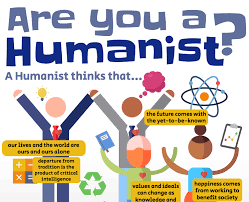
This tension raises a deeper question: what does it mean to be a true humanist?

Is it the ability to show kindness in the moment, face-to-face, even if one’s broader commitments bring harm to many unseen lives?  Or is it the willingness to fight for systemic justice, even if the style of delivery offends, unsettles, or disturbs?

I think of Christ, who could be gentle with the broken and the poor, yet fierce with the powerful and the hypocritical.  He healed with a touch, but he also overturned tables.  His humanity was both intimate and systemic.

Perhaps that is the lesson I am being given now.  Humanism is not one thing.  It asks us to be kind in the small circle of our relationships but also bold in the larger circle of society.  Without the first, justice grows cold.  Without the second, kindness becomes complicity.

I wonder if my daughter and I — so different in politics, so different in style — are each holding half of a larger truth.

Yinandyang GIFs | Tenor

The Perfect Day When Everything Went Right!

Did you ever have a day when “everything” went right.  A day when you got up on the right side of the bed.  The phone rang all day with calls from good friends instead of spam and telemarketing messages.  Everyone just called to chat, and no one had any problems or issues to face.  A day when the sun was shining and the weather was perfect.  There were no bugs or mosquitoes to be found anyplace in your town.  You felt like a million dollars with no aches or pains.  No one you knew was going  to the doctor for cancer treatments or therapy of any kind.  It was as the younger generation like to say “Perfect.”

Now as you are reading this, you are probably thinking “He must be daydreaming, such days do not exist.”  Or maybe you are thinking that it is my birthday.  I concede the possibility that such days are perhaps rare, but then again should they be any more rare than days where “Everything that could go wrong” did go wrong.  Or is it just our perspective which is goofed up.  We are more likely to remember the days when our dog disappeared or when the doctor told us to come in and see her as soon as possible than days when our dog reappeared or the doctor called to tell us everything is fine.  Cognitive scientists have a term for our propensity to remember the bad more than the good.

“Negativity Bias” is a cognitive bias that refers to the tendency to remember negative events and information more vividly and with greater impact than positive or neutral ones.  I will not bore you with the reasons for this propensity.  I am sure that you recognize that it exists.  Thus, if the Yin/Yang of the world is an accurate theory of our existence, we should have at least as many of the Perfect Days as we do the Shitty days.

I ask you to stop reading this blog for a few seconds.  I challenge you to see if and when you can remember the last perfect day that you have had.  Now I would like for you to describe that day in my comments section before reading the rest of this blog.  Think of the happiness you will bring to me as well as the rest of our readers.  What if the news carried as much good information as they do bad information?  What would your world be like if you only remembered and had perfect days.

At this point, you are probably ready to skewer me as some deranged Pollyanna or Don Quixote. A nutcase who sees everything through rose colored glasses.  Someone who is madly optimistic that there is hope for a better world.  That Donald Trump will not get a statue on Mount Rushmore and that he and his sycophantic followers will soon disappear in the abyss of forgotten history.  I assure you that I go to sleep every night praying to a god that I do not believe exists that these latter events will happen while I am still alive to witness them.  Instead, I wake up every morning to more bad news from the front line of the independent media I subscribe to. Thus, either giving me less hope for humanity or making me feel guilty by asking me for more money that I do not have.

See, you thought I was going to write some really optimistic idealistic treatise that would make you feel like your existence meant something and life was worth living.  Instead, I refer you to Ecclesiastes from the Bible:

Everything Is Meaningless

1 The words of the Teacher,[a] son of David, king in Jerusalem:

2 “Meaningless! Meaningless!”

    says the Teacher.

“Utterly meaningless!

    Everything is meaningless.”

3 What do people gain from all their labors

    at which they toil under the sun?

4 Generations come and generations go,

    but the earth remains forever.

5 The sun rises and the sun sets,

    and hurries back to where it rises.

6 The wind blows to the south

    and turns to the north;

round and round it goes,

    ever returning on its course.

7 All streams flow into the sea,

    yet the sea is never full.

To the place the streams come from,

    there they return again.

8 All things are wearisome,

    more than one can say.

The eye never has enough of seeing,

    nor the ear its fill of hearing.

9 What has been will be again,

    what has been done will be done again;

    there is nothing new under the sun.

10 Is there anything of which one can say,

    “Look! This is something new”?

It was here already, long ago;

    it was here before our time.

11 No one remembers the former generations,

    and even those yet to come

will not be remembered

    by those who follow them.

However, I refuse to finish this blog on a nihilistic note.  I want to finish on a crescendo of hope and faith and happiness.  A belief that one idea, one word spoken, one action taken, one step forward can change the course of humanity.  We can look back to the past and find untold mistakes and failures that have eclipsed the sunlight of joy for the world.  But we can also look forward to a future that we can create because the vast majority of human beings are decent peace-loving equality seeking individuals.  The Negativity Bias blinds us to the positive outcomes that prevail every day in our lives.  At the end of each day, we seem destined to remember the bad things that happen in the world.  This effort is reinforced by a negative biased media which thrives on horror and destruction and pain.  I love the words from this song by Peter Paul and Mary,  “Light One Candle”

Light one candle for the terrible sacrifice

Justice and freedom demand

And light one candle for the wisdom to know

When the peacemaker’s time is at hand


Don’t let the light go out!

It’s lasted for so many years

Don’t let the light go out!

Let it shine through our love and our tears


Light one candle for the strength that we need

To never become our own foe

And light one candle for those who are suffering

Pain we learned so long ago                                                                                                               

Light one candle for all we believe in

Let anger not tear us apart!

Light one candle to bind us together

With peace as the song in our heart


Don’t let the light go out!

It’s lasted for so many years! (lasted for so many years!)

Don’t let the light go out!

Let it shine through our love and our tears

We need to counter this tendency for negative bias by reinforcing the positive “perfect” days of our lives.  Here is a checklist that ChatGPT created from my query:

It is a printable daily practice checklist to help overcome negative bias.  You can use it as a daily or weekly tracker to build habits that shift your mindset toward balance and resilience.

🌞 Daily Practice Checklist: Overcoming Negative Bias

Practice Done Today? Notes or Reflections
1. Morning Gratitude: List 3 things you’re grateful for.
2. Reframe 1 Negative Thought: Catch a negative thought and reframe it positively.
3. Notice the Good: Write down one positive thing that happened today.
4. Kindness Practice: Do one kind thing for someone else.
5. Mindful Moment: Spend 5+ minutes in meditation or quiet reflection.
6. Move Your Body: Take a walk, stretch, or exercise.
7. Limit Negative Input: Avoid or reduce exposure to toxic media or conversations.
8. Evening Reflection: What went well today? What did you learn?

🗓️ Weekly Reflection (Use at the end of the week)

  • What patterns of negative bias did I notice?
  • What helped me shift my mindset the most?
  • What’s one small thing I want to improve next week?

The End Folks. 

Hope you enjoyed this blog.  Let me know what your perfect day was. 

It’s the most Stressful time of the year

I decided to do a little take off on the classic Andy Williams song “The Happiest Time of the Year.”  Did you know there are more suicides in December than any other month in the year?  Actually, that is not true. Suicides peak in the Spring.  It is a myth held by many people that suicides peak at Christmas time.

( https://www.asc.upenn.edu/news-events/news/suicides-dont-spike-around-holiday-season-americans-think-they-do)

One major study of suicides done Internationally found that suicide risk was highest on Mondays and increased on New Year’s day in most countries. However, the risk of suicide on weekends and Christmas varied by country and territory.  This study stated that:

“Public holidays seem to provide a protective association with suicidal events, however, several studies have reported an increase in risk in the immediately following days.812 However, a few other studies reported no strong linkage between suicide and general holidays.”1314

“The broken-promise effect theory has been widely adapted to explain short term temporal variations in suicide. It states that individuals may postpone committing suicide due to the hope of a “new beginning” when the cycle ends (e.g., weekends and the end of the year),810 while people may be prone to suicidal reactions when they encounter a sense of hopelessness from a new cycle” (eg, Monday and New Year). —- Association of Holidays and the Day of the Week with Suicide Risk.  A Multicountry Study.  BMJ 2024387 doi: https://doi.org/10.1136/bmj-2024-077262 (Published 23 October 2024)

This is probably much more technical than you wanted to think about today.  Perhaps my song will cheer you up.  Grab a cup of eggnog, dump some rum in it, put on your favorite Christmas carols and be lulled to sleep while humming my song.

IT’s the Most Stressful Time of the Year. 

It’s the most Stressful time of the year

With the kids out of school

Everyone expecting you to be of good cheer

It’s the most stressful time of the year

It’s the worst season of all

With fake holiday greetings

So called friends come to call

Relatives you can’t stand

It’s the worst season of all

There’ll be Christmas parties for finding gifts

Artery clogging Junk foods for getting obese on

Than slogging out to shovel the snow

There’ll be old family stories

And boring tales of the glories of

Christmases long, long ago

It’s the most stressful time of the year

There’ll be much flues and colds

And phones will be chiming

When loved ones get sick

Just to tell you they’re not coming

It’s the most stressful time of the year

There’ll be parties for pay for

Crowds to fight through

Numerous debts will be accrued

With bank accounts depleted

There’ll be worries about spending

Endless pleas for donations

And advertising never ending

It’s the most stressful time of the year

There’ll be much grousing and moaning

For who to buy presents

And how much to spend

For gifts to throw in their garbage bin

It’s the most stressful time

Yes the most stressful l time

Oh the most stressful time

Of the whole fucking year

My Apologies to those of you who love Christmas

My Final Will and Testament – Regrets – Reflection #11

0_ZoCuoHrsdojaIQIt

Last year at my 40th Demontreville Retreat, one of the exercises that we were given by the Retreat Master included a very challenging set of thoughts.  The worksheet for the activity was labeled as “A Testament.” I took the worksheet and instructions home with me.  It had fourteen tasks or reflections to complete.  I did not desire to complete them during the retreat.  It is now almost a year since my retreat, and I have decided to make the mental and emotional effort necessary to complete this “Testament.”

The worksheet started with these instructions:

Imagine that this is the last day of your life on earth.  In the time that you have left, you want to leave a “Testament” for your family and friends.  Each of the following could serve as chapter headings for your “Testament.”  This is Reflection Number 11 on the worksheet.

  1. These are the things that I Regret about my life.

I would rather not write this section, but I am going to anyway.  I have thought about it for several weeks now.  I dreaded when I would reach this reflection.  I had one friend who said he had “No regrets” before he died.  How I envy that perspective.  I still wonder whether he was telling the truth or whether there was something wrong with him.  Perhaps, if he is telling the truth, he may someday be canonized as a Saint.

There will be no sainthood for me.  I have more regrets than I can count.  Some days, I feel like my entire life is one big series of regrets.  Instead of being a serial killer, I am a serial regreter.  If I could go back into the past and try to undo some of the things I did, I would not know where to start.  I have decided to lump my Regrets into three categories.  Each category has some common traits.  The first is Regrets due to a lack of patience.  The second is Regrets due to a lack of compassion.  The third and final category is Regrets due to a lack of kindness.

Let us get started on this task of sorrowful confessions.  In my defense, I hope I have learned over the years many things to mitigate making the same mistakes that I did when I was younger.  I would like to think that I am a very different person now than I was forty years ago.  Many of my Regrets are in the past.  My biggest Regret is that I cannot go back and rewind the past.

patience-498-x-498-gif-k8tzla3s8ut1qerf

Regrets Due to a Lack of Patience:

A lack of patience may just be one of the most destructive traits that anyone can have.  You can defend it if you want to, but I have too often been impatient to see much virtue in it.  Most good things come to those who, if not willing to wait, at least have the patience to persevere in a task or mission that could take years.  We keep reminding ourselves that Rome was not built in a day but neither did it fall overnight.  History is replete of antecedents to subsequent events proving that most of the problems of today actually started many years if not decades or centuries earlier.

There are certain calculations I should like to make with you,

To be sure that your deductions will be logical and true;

And remember, ‘Patience, Patience,’ is the watchword of a sage,

Not to-day nor yet to-morrow can complete a perfect age.  

— From  Sarah Williams, Twilight Hours: A Legacy of Verse

I was not a patient person.  I had a great many talents but foolishly I thought that these talents gave me the right and ability to circumvent practice, dedication, training and experience.  I wanted everything today or at least by next week.  I expected that my brains and intellect gave me the privilege to neglect what all the great writers, artists, musicians, athletes and other talented people know.  There is no greatness without hard work and discipline.

1_KMWUekxMKn2M4Bbm1ZbTHQ

Regrets Due to a Lack of Compassion:

I grew up believing that emotions were somehow evil.  Thinking and brains and knowledge and intellect were everything.  Emotions led us astray.  Somewhere in life, I learned that unless you suffer the same emotions as other people do, you cannot empathize with them.  Until you experience what pain and heartbreak and sorrow and Regret, and joy and love feel like you cannot understand what other people are going through in their lives.  Without empathy, there is no compassion.  Without compassion there is no forgiveness or mercy.  You end up becoming hard like a rock but with about as many feelings.  You protect yourself by eliminating feelings, but that process creates an unscalable wall between you and other human beings.

You eventually are doomed from this lack of feelings to acquiring perhaps the most horrible feeling of all.  That is the feeling of absolute loneliness.  You are no longer part of the human race or anything else.  You exist in a vacuum.  You neither care about anyone nor does anyone care about you.  Loneliness kills.  There is evidence that dying early is linked to loneliness and social isolation.  Suicides due to loneliness are well known to be one of the major causes of death in the USA.

“A meta-analysis of 90 studies examined the links between loneliness, social isolation and early death among more than 2 million adult.  They were followed for anywhere from six months to 25 years.  Participants who reported feeling lonely were 14% more likely to die early than those who did not.  People who experienced social isolation had a 32% higher risk of dying early.”  —  Kristen Rogers CNN, December 24, 2023

“Men who often experienced loneliness, or those who were lonely and living alone, or with a non-partner, were found to have three times higher risk for death by suicide compared to those who were cohabiting.”  — How living alone, loneliness and lack of emotional support link to suicide and self-harm

Loneliness has been found to be different by the generation we are born with as well as by race and gender.

Generation Z (ages 18-22) is the loneliest generation, with 79% reporting feelings of loneliness according to a study by Cigna.

Millennials (ages 23-37) also report high levels of loneliness, with 71% saying they feel lonely at times in a survey by YouGov.

According to a study by YouGov, women are more likely to report feeling lonely than men, with 72% of women saying they feel lonely at times compared to 60% of men.

According to a study by the National Academies of Sciences, Engineering, and Medicine, Black Americans report feeling lonely more often than white Americans, with 44% of Black adults reporting feelings of loneliness compared to 37% of white adults.

Looking back on my life, I see many people who I pushed away because I would not let my feelings show.  Over the years, I have lost friends and relatives because I did not care enough about maintaining the relationships to reach out and “touch someone.”  It was often easier for me to just ignore my feelings and assume others would do likewise.  I have written several blogs where I say, “Don’t wait.”  “Tell them you love them now.”  “Tell them you admire them.”  “Tell them how important they are to you.”

Do it now.  Don’t wait until you are full of Regrets.

tumblr_60bf231c542f31141e336d1957c19437_2bac72bf_640

Regrets Due to a Lack of Kindness:

Kindness is not the same as compassion.  Though I think without compassion there can probably be no kindness.  I might be wrong here but I think kindness (at least physical kindness) like opening doors for people or letting another person sit down first can simply be good manners.  A robotic reaction taught by habit and custom and enforced by upbringing that might have little or nothing to do with compassion. Kindness of whatever stripe involves action.  You must demonstrate kindness by your behavior towards others.

I do not think that emotional kindness can exist without empathy and compassion.   Emotional kindness is a nurturing of the spirit whereas physical kindness is a nurturing of the body.  I think I have always been good at the latter but seldom good at the former.  As I think more about the matter, my regrets come from the emotional and spiritual harm I have done to others by ignoring their emotional and spiritual needs.

For instance, when my daughter was growing up, I took her skiing, bicycling, swimming and camping.  All activities where I spent time in physical empathy with what I assumed were fun and enjoyable needs of my daughter.  As for her emotional needs, I cannot say that I ever really recognized any.  Mores the pity, because that is where I did the damage.  Like a bull in China shop, I treated her in ways that I can reflect back on now and realize led to a suicide attempt and two failed marriages for her.  On the few times in the past years that we have been together, I can see that she is a hard person.  The kind of person I thought it was great to be.  A person who could (to paraphrase Hamlet) “suffer the slings and arrows of outrageous fortune and take up arms against a sea of troubles, and by opposing end them.”

I did not realize that sometimes a person needs a shoulder to cry on more than they need arms and arrows.  Could I go back and be a different dad, I would do so in a heartbeat.  Alas, I have not found the time machine to take me back to undo the many hurts I caused by trying to ignore feelings.  I wish I could say that I never do so anymore, but that would make everything in my final will and testament “One Big Lie.”  If nothing else, I want to tell the truth.  Perhaps the truth that I tell can set someone else free.

Next Reflection:    

  1. These are my life’s Achievements

My Final Will and Testament – Life’s Lessons – Reflection #8

Life Lessons sign with sky background

Last year at my 40th Demontreville Retreat, one of the exercises that we were given by the Retreat Master included a very challenging set of thoughts.  The worksheet for the activity was labeled as “A Testament.” I took the worksheet and instructions home with me.  It had fourteen tasks or reflections to complete.  I did not desire to complete them during the retreat.  It is now almost a year since my retreat, and I have decided to make the mental and emotional effort necessary to complete this “Testament.”

The worksheet started with these instructions:

Imagine that this is the last day of your life on earth.  In the time that you have left, you want to leave a “Testament” for your family and friends.  Each of the following could serve as chapter headings for your “Testament.”

  1. These are the lessons that life has taught me.

Ironic that the greatest Lesson I have learned in life is one that I have not mastered.  I have been (and probably still am) one of the most impatient people in the world.  I hate lines.  I hate regressions.  I hate delays.  I hate redundancies.  I hate process inefficiencies.  I hate waiting for Trump to get his just deserts.  I hate waiting to see his sycophantic followers crying in their beer when he goes to jail.

Martin Luther King said that, “The moral arc of the universe is long, but it bends towards justice.”  I wish every day that I could speed the arc up.  I eat fast.  Brush my teeth fast.  Get ready fast.  But I am working on slowing down.  A good friend of mine once told me while we were canoeing to, “stop and smell the roses more often.”  Patience is one of my seven cardinal values.  I devote time each week to reflecting on and thinking about patience.  I certainly need as much practice as I can get with being patient.

images

Patience is a prerequisite for a happy and healthy life.  I say it and I believe it even if I don’t always manage to practice it.  Patience is the foundation for everything we ever achieve in life.  I know this is true and I know I will probably be working on patience for the remainder of my life.  But please do not let my inconsistencies and lack of progress rob this virtue from your consideration.  Don’t take my word for it.  Here are some others, much wiser than I am, who have extoled the virtues and benefits of patience:

  • “He that can have patience can have what he will.” — Benjamin Franklin
  • “The strongest of all warriors are these two — Time and Patience.” — Leo Tolstoy
  • “A man who is a master of patience is master of everything else.” — George Savile

images (1)

Perhaps the second most important Lesson I have learned in life is that if you speak out against injustice, if you stand up to injustice, if you rage against unfair and hypocritical institutions, you will not be safe.  Bernadine Dohrn famously said, “You can say whatever you want in America, until someone starts listening to you”  Once you start being heard, you will be viciously assaulted.  You may lose your job, lose your prestige and even lose your life.

Today, protesters against the genocide and murders taking place in Gaza are being labeled as terrorists, unpatriotic and of course Anti- Semites.  The establishment (including most of the Democratic Party) is attacking the integrity and courage of these young student protestors with some of the worst slander and insults to free speech that I have heard since the Vietnam War and Civil Rights protests.  Dohrn also said “Dissent is the highest form of patriotism.”  It is obvious that this is not believed by Biden and his supporters and most of the Republicans in office.  My lesson here is to have the courage and integrity to speak your truth but don’t expect a standing ovation.

I have learned many other Lessons in my few years on this earth.  Here are some that I believe are important.  I may have already talked about these in other reflections:

  • Time is more valuable than money.
  • Kindness is more important than knowledge.
  • Love makes the world go round but it won’t pay the bills.
  • Power corrupts but money is a more powerful drug.  Money can destroy you even faster than any drug will.
  • If you want to be healthy, keep moving.  Have an exercise plan and work it.  Never give up but adjust to your circumstances.
  • We choose our attitudes. I can wake up mean or I can wake up kind.  I can go to bed mean or I can go to bed kind.  God has nothing to do with my attitude.
  • I need to be grateful, thankful, and charitable to all for the life that I am living.

  Next Reflection:    

  1. These are the influences (people, events, experiences, books) that have shaped me.

My Final Will and Testament – Things – Reflection #4

og_image

Last year at my 40th Demontreville Retreat, one of the exercises that we were given by the Retreat Master included a very challenging set of thoughts.  The worksheet for the activity was labeled as “A Testament.” I took the worksheet and instructions home with me.  It had fourteen tasks or reflections to complete.  I did not desire to complete them during the retreat.  It is now almost a year since my retreat, and I have decided to make the mental and emotional effort necessary to complete this “Testament.”

The worksheet started with these instructions:

Imagine that this is the last day of your life on earth.  In the time that you have left, you want to leave a “Testament” for your family and friends.  Each of the following could serve as chapter headings for your “Testament.”

  1. These are the Things that I have lived for.

In my first reflection, I declared that “Things” were never very important to me.  However, this reflection forced me to look at some “Things” that have mattered to me in my life.  It is hard to admit that any things were ever really important since “Things” are so trivial in many respects.  Nevertheless, it is hard to exist without a few “Things.”  Thus, what are those “Things” which have really mattered to me, and a bigger question is why?  Here are a few of my favorite things and why they matter to me.

Raindrops on roses and whiskers on kittens

Bright copper kettles and warm woolen mittens

Brown paper packages tied up with strings

These are a few of my favorite things — By Julie Andrews, “My Favorite Things”

2613402398_e39a38b665_b

I love rain and stormy days:  I figured the “why out years ago.  On a nice day, my father would say “Get your ass outside and go play.  It’s too nice to be inside.”  Thus, I could only engage in my favorite activity (which was curled up with a good book) when it was raining, and I did not have to go outside.  To this day, I get a thrill when a rainstorm approaches.  I can’t tell you how happy it makes me to see the rain and feel the raindrops on my head.

I love books:  I buy more books than I will ever finish in my lifetime.  I have already at  every move given hundreds of books away.  Just holding a book gives me a sense of excitement that nothing else in life does for me.  The book pulses in my hand like a living thing saying, “Read me and learn.”  “Let me tell you about a million things that you do not know.”

200w

I love a nap:  2 PM in the afternoon and I have nothing to do and no place to be.  I will take a nap.  I close my eyes wondering if I can really get to sleep and forty minute or so later, I wake up feeling energized and ready to continue taking on the woes of the world.  I am not sure where I get my joy of napping from.  Karen is not a napper, and I seldom can get her to take a nap with me.  It is a solo activity, but I guess it gives me a temporary respite from the trials and tribulations of everyday living.  Maybe it is just fun.

Good_Food_Display_-_NCI_Visuals_Online

I love food:  I have never met a food that I did not like.  One of the great joys of life is going someplace different and trying foods out that I have never eaten before.  I have eaten the local foods in all 44 countries that Karen and I have traveled to.  I will try anything though I draw the line if it is still moving.  I have eaten several unknown species of Arthropoda (Bugs) in China and Korea.  I have had rattlesnake in Texas, fresh eel in Japan and one of my favorite Italian foods, Scungilli salad whenever I get back to visit my sister in Rhode Island.

I love music:  Is music a thing?  Generative AI has the following to say about this query:

“Music is a cultural universal that is a human-created meaning, not a fact or thing in the world.  It is the arrangement of sounds to create a combination of form, harmony, melody, rhythm, or other expressive content.  However, definitions of music vary by culture and throughout history, and there is no consensus on the precise definitions of the elements that define music.”

Nice to know what AI thinks.  Not sure it settled anything though.

Moving on with my thoughts, I find music sometimes soothing as with a Strauss waltz.  Sometime exciting as with the “Toreador Song” from Carmen.  Sometimes, a song reflects how I feel about life as with Ricky Shelton’s “I am a simple man.”  Sometimes, music reflects my sense of devotion for certain things.  I am always moved by national anthems like the “Star-Spangled Banner” and the “Marseillaise.”

I love what some call “World Music.”  I can spend hours surfing the various music offerings on YouTube.  I am always amazed at how much great music never seems to find its way into the US music stations.  As with food, I have never met a music genre that I did not like.  From Baroque to Grigorian Chants, to Asian, Latin, Hip Hop, Reggae and a hundred other music genres, I can always find an artist or musical piece that I fall in love with.  In Japan, it was Enka music.  In Portugal, I was Fado music.  In Spain it was the Tango music.  I could go on and on but every place in the world contributes to the store of great music that is out there.

Well, there you have it.  A few of my favorite things.  Perhaps I should add a few.

“Cream-colored ponies and crisp apple strudels

Doorbells and sleigh bells and schnitzel with noodles

Wild geese that fly with the moon on their wings

These are a few of my favorite things.”  By Julie Andrews

Next Reflection:    

  1. These are the insights that I have gained in the school of life.


I Am an Inconsistent Man

inconsistencyOver time, I have noticed that the most popular post I have on my blog site is my Home page “Who is Dr. John Persico Jr.?”  I realize that most readers want to know my credentials to see if anything I am going to say has any credibility.  Am I someone you can trust?  Can you depend upon my words or my facts?  Am I just another wannabe Guru so full of my own opinions that I have no room for other points of view?

Upon re-thinking my Home page, I realized that it really does not do justice to describe who I am.  It does not answer the questions that I raised above.  In fact, if you take it at face value, it could be very dangerous for you.  It could lead you to paradoxes and quandaries which are unsettling.  It might lead you “circulus in probando” down a path that flows around until it comes right back to where it started.

A discussion with a friend the other day led me to realize that I am a very inconsistent man.  Sometimes I say one thing, but then I change my mind.  I am a very erratic person.  Sometimes, I am very logical and at other times I am very illogical.  Many of the ideas competing in my mind are incompatible.  In fact, not only are they incompatible, but they are genuinely irreconcilable.  This creates an uncertain and unpredictable me.  If you are looking for consistency, if you want certainty in an uncertain world, I do not have much of it to give to you.  I am capricious and arbitrary.

images rrr

I am changeable and often at odds with my own beliefs.  My life is discordant.  Many of my friends would say discrepant.  I subscribe to the motto that, “A foolish consistency is the hobgoblin of little minds.”  I prefer the incongruous and incoherent.  The fickle and dissonant are the music of my life.  Boring is living with certainty and sameness.  God, please surround me with temperamental unstable mercurial and out of step people.  James Bond said that “Boredom” is the worst curse of all.  What could be more boring than a life whose patterns show no variability?  Only sameness.  All White motifs.  No mosaics struggling with each other for our attention.

images rrrr

I have a friend who wants to be called at definite hours and with a pattern of hours that are predictable.  “Let’s set a time to talk each day.”  “No, No, I am a serendipitous caller.  Let fortuosity guide our conversations.”    The unforeseen and the unpredictable make life more interesting.  Do we want to be rats on a treadmill?  Sometimes, I walk by a health club and ten people are all sitting on exercycles facing the window and pedaling furiously to go nowhere.  In my mind, I make faces at them and tell them, “Get a real bike and go ride in the traffic.”   

It is these same people who say “I don’t like fish.  They taste too fishy.”  I try not to reply “Do you also dislike mollusks, cephalopods and crustaceans or is it just members of the  Gadidae family that you don’t like?”

imagesThose who march to the proverbial beat of a different drummer live with risk, but they also are not bored.  We only experience life when we are open to the unknown and the unpredictable.  Walk through a cemetery at midnight.  Take a train or bus to someplace you have never been before.  Read a book in a new genre.  Watch a movie that is offbeat.  Try some foods that you think you might not like.  Meet some new people.  Embrace the strange and esoteric.  Life is not a cherry; it is a seething caldron of uncertainty and innumerable possibilities.  You will never truly live if you simply stand at the edge of the caldron and wait for it to stop bubbling.

God save me from consistency, constancy, periodicity, routine, steadiness, regularity, and invariability.  Give me a life with syncopation.

download


Onwards Towards Death and Dying:  Part Two on Aging

1140-disrupt-truth-and-cliches.imgcache.rev0f0ffd5aa6721febae57ead93c524860

This is the second part of a blog that I wrote a few weeks ago.  Part one dealt with the issue of death.  I was surprised by how many reader comments noted that people do not usually talk about this subject.  I realized from listening to several remarks that not only do we face death inevitably as we age but that there is a “journey” to death that we all take.  It is the final years of our lives.  These final years are perhaps the most important years for many of us.  They will certainly be the most difficult.

In this second part, I would like to discuss some ideas for making these last years or twilight years of our lives as happy and successful as they can be.  By success, I am not talking about making a lot of money or winning the lottery.  Being successful in old age is about living our final years with dignity and integrity.  It is not about recapturing our youth, but it is about capturing the maturity that many of us (myself included) never captured when we were younger.  There is no merit to the comment that you cannot teach an old dog new tricks.  I know too many older people who are continually learning and growing in their twilight years.

Letting Go versus Giving Up

Many people confuse letting go with giving up.  I know many people who cannot quit work, hobbies, sports etc., that they are no longer capable of doing.  A woman friend of mine (who is my age) has recently bought a new motorcycle after crashing her last one.  She has for many years had difficulties handling her bikes, but she still insisted after her last accident on buying a new two wheeled bike.  Many older people who do not want to give up the sport finally realize that they will be better off with a trike or a three-wheeled motorcycle.  They are not giving up the sport, but they are letting go of something that they can no longer do.  You are all familiar with the adage of the aging boxer who cannot give up his dreams of becoming a champion again.  It is a dangerous dream based on not being willing to let go.

There are going to be many things that we once did as we get older that we either can no longer do or that we cannot hope to do at our former level of performance.  Giving up is to quit.  I am not advocating quitting.  Quitting is a formula for simply accepting death and waiting patiently for it.  I have no desire to share such a counsel.  I am advising that we realistically appraise our abilities and decide when it is time for us to hang up our spurs or gloves and perhaps pursue some other activity.

never give up

I have been running for nearly fifty years now.  I know that it gets harder to run each year, but I am still able to comfortably continue my outdoor runs.  When the time comes that it becomes too dangerous or too hard, I will either buy a treadmill, switch to bicycling or simply go out for long walks each day.  I will let go of running but I will not give up exercising.  Not letting go is generally motivated by too much pride and in the case of old age, pride definitely goes before a fall.  Witness the number of elderly people who still insist on climbing up on their roofs or getting up on that ladder to fix something.  The outcome is too often sadly predictable.  As Pete Seeger sang “When will they ever learn.”

Coping

When we were young, we did not put much effort into coping.  As we get older, it often becomes more difficult to cope with life.  We can become burdened by physical problems, problems with our loved ones, monetary problems, or many other social issues.  We need to have ways to cope with these issues as we get older.  I have found that we can break coping strategies into two categories:  Mental Fitness and Physical Fitness.

  • Mental Fitness

Perhaps the most difficult mental challenge we face as we age is to stay engaged in life.  Once we are no longer employed, it can seem that life has no meaning.  Suicide rates among the elderly are very high and attest to this loss of meaning and purpose as we age.

“Many associate suicides with young people, like troubled teens or twenty somethings who never quite got their lives off the ground.  In fact, it is much more common among older adults.  According to new figures just released this week from the U.S. Centers for Disease Control, the highest rate of suicides in America is among people age 45 to 64. There were more than 232,000 suicides in this age group from 1999 to 2016.”  — Forbes, 2018, Older Adults at Greatest Risk For Suicide

I believe that there are three keys to mental fitness.  We must stay interested in life, involved in life and active in life.

Staying interested might involve becoming interested.  Perhaps when you were working, you were so busy that you had no other outside interests.  You now have time to go to the library and find some area of knowledge that you are excited about.  The best way to stay interested in life is to keep learning.  It might mean continuing to read the paper or read some books or write some papers.  Write your memoirs for your family.  Too few elderly leave anything behind when they die except a box of lifeless pictures.  What about telling your children who, what and why you did the things you did when they were growing up.  Chances are they never went to work with you or really understood what you did when they were growing up.

My wife Karen has taken up playing the dulcimer.  She plays with a group of other dulcimer players (mostly retired women in Tucson) who go by the name of the Tucson Dulcimer Ensemble.  They play at churches, festivals, nursing homes and assisted living centers.  I have attended many of these sessions and I can safely say that Karen and her group are deeply appreciated by the older people at these centers who may be too frail to get out to concerts anymore.

learn-something-new

Staying involved might mean finding a charity or volunteer group to work with.  It might mean taking more time with your family and grandchildren.  A good friend of mine who is 86 has become quite involved with several groups including the Rotary, SCORE and a Marine Corp Honor Guard.  He told me this past week that he has participated at 451 funerals for former Marines.  Lou is involved in life and still making a difference in the lives of others.

Staying active.  I am not talking about physical activity here, but activity aimed at exploring the world.  Activity aimed at opening your mind to the world around you.  One way to stay active mentally is to go someplace you have not been before.  Go to a meeting of your political party.  Go to a church.  Go to a new restaurant.  Go to a park, museum, zoo or famous tourist sight.  Go anyplace, just don’t sit at home.  Become an explorer of life.  It is never too late.

Mental health experts will tell you that the best way to fight depression and thoughts of suicide is to stay active.  I know many people my age who are finally getting out to see the world.  They are taking Senior Classes at their local college, going on cruises, joining hiking clubs or other clubs that help them get out and explore the world.

Karen and I have been to thirty-three countries.  We are planning to go to Russia next year.  I know neither of us has the energy for the trips that we took forty years ago, but I cannot imagine my life without exploring some new places that I have not been before.  We cannot afford to go as frequently as we used to but with some foresight and planning, we can still manage to make a trip every few years.  By the way, almost every time we have planned a trip, someone has said “Don’t you think it is dangerous to go there.  What about the terrorists?”  I assure you that I would rather be shot by a terrorist then die a craven coward in my bed.

  • Physical Fitness

There are three components of physical fitness.  These are Exercise, Diet and Discipline.  I do not have to tell you why physical fitness is important.  I doubt if anyone in the world denies the importance of fitness.  However, let me tell you a story which I think (sadly) exemplifies the American approach to exercise and diet and discipline.

I walked into a Circle K one morning (Very typical for me each day) and poured a cup of decaf coffee.  I walked up to the cashier.  She was in her late twenties and quite obese.  She must have been following a protocol because she asked me (as all cashiers at Circle K usually did) if I wanted a donut.  I replied that “Yes, I wanted a donut, but I did not want the calories.”  She answered very solemnly “I used to care but I don’t care anymore.”

The gyms and athletic clubs joke each year about the New Year Goals Effect.  Right after New Years (every year) the parking lots at the gyms will be filled to overflowing with new members.  Newly minted exercise addicts who have decided to lose fifty pounds, build fantastic muscle and look like Supergirl or Superman.  The joke among the fitness crew is that this will only last about six weeks and then the parking lot will return to normal as the new members go back to watching sports and eating potato chips during the “big game.”  Every weekend there is a big game.  Americans have become the fattest and (dare I say) physically laziest people in the world.

  • Exercise:

It does not matter whether you are eight or eighty.  Physical exercise is good for you.  A good physical regime includes:  stretching, strength, balance and cardio.  An hour a day, four or five days a week for anyone over sixty is enough to keep you feeling fit and looking fit.  The problem you are going to face is that too many regimes are designed for younger people.  The idea of “exercise goal setting” is highly overrated for anyone over sixty.  I have written a blog on this aspect of fitness which has a great deal of useful information on setting up a realistic exercise program when you are over sixty.  Go to How Can We Set Realistic Exercise Goals as We Age?

maxresdefault

  • Diet:

Moderation and common sense are the two keys here.  Every other day some expert or study is telling you that something is good for you or bad for you.  Today, eggs are bad.  Tomorrow eggs are good.  Today gluten is bad.  Tomorrow gluten is good.  Today alcohol is bad.  Tomorrow alcohol is good.  Today butter is bad, tomorrow butter is good.  The conflicting studies, reports and information are enough to drive anyone crazy.  What I have found over the years is the adage “All things in moderation” is generally a good way to go.

True, some things are definitely bad for some people, even many people.  Smoking has no health benefits.  Excessive alcohol consumption is not going to do any good for your health.  In fact, though, excessive anything from donuts to beef to fish may not be good for you.  Our bodies seem to thrive on a balanced diet.

I am a calorie counter.  Every day, I enter my calories in an online software program called “Fatsecret.”  This program allows me to research calories for thousands of food items, enter them in a calorie spreadsheet and at the end of the day, it tells me how many fat, carbs, proteins and total calories I have ingested.  It is easy to use, and I find that when I use it faithfully, I can keep my weight and body measurements in acceptable ranges.  I use a weight scale at home which measures about six different body factors to monitor my health.  These scales are cheap to purchase and easy to use.  I calculate my body indexes about every six months or so.  It takes less than one minute on the scale and then I enter the data in an Excel Spreadsheet.   As of this month, my latest data is:

Body fat: 18.1

Muscle:  29.9

Bone:  4.6

TBW:  67

BMI:  24

Weight:  Average for this month – 149.42

I enter the following data from my annual physical into my spread sheet as well to help me track trends and to see whether I am maintaining, declining or improving.  Trend data is much more relevant for determining health priorities than single data points taken once per year.  Few if any doctors routinely track trend data for their patients.  My latest annual physical gave me the following data:

Glucose:  92

Total Cholesterol:  211

HDL:  71

LDL:  128

Blood pressure:  115/70

Resting pulse rate:  60

  •  Discipline:

 The last factor in staying physically fit is discipline.  You might think that some of the above is “overkill.”  What you need to remember is that you do not have to enter data every day.  If you manage to do two out of every three days in the month, you will still have plenty of data to manage your diet and health.  There are many days when Karen and I are traveling, when I forget, when we are busy with friends or when we are at someone else’s house, that it is difficult to chart any data.  I do not worry.  Just like you do not have to exercise every day to be healthy, you do not have to chart data every single day.  If you manage to get sixty percent of your days charted, you will be doing great.  I set my goal at sixty percent for the month in terms of charting as well as days to exercise.  If I miss my goal, I simply try again next month.  The secret is to keep trying and not to give up.  If I have a bad month, I get up and try again next month.

Thinking back to the joke about health wannabees on New Year’s Day trying to get fit in less than six weeks.   It probably will not happen.  Some will make it to fitness, but it is not a six-week project, it is more likely (depending on your present level of fitness) a two to three-year project.  What will separate the winners in this battle from the “wannabees”, is simply the factor of discipline and determination.  Can you get up today and go to the gym?  If not, can you get up tomorrow and go to the gym?  Can you manage to go to the gym at least 35 percent of the days in this month?  Can you manage 25 percent?  My goal is sixty percent.   Many months I do not make this goal.  I try again the next month.  Goals are not etched in stone.  You need to be determined and disciplined but you also need to be flexible and fallible.  We are all only human and we will fail, time and time again.  It takes discipline to keep trying and not to give up.

michael jordan

There are two more segments to aging that I would like to cover, but I fear that this blog has become too long.  In part three, we will look at what I call “Facing Reality” issues as well as the problem of “Economics.”  This latter issue will address money problems, budgets and finances as we age.  I specifically want to deal with those of us who are not rich and did not set aside enough to simply live happily ever after with no worries about money.  I for one need to be concerned about money every day, but I do not use the term worry since I generally have some things under control.  I want to share with you some of my strategies in these areas next blog.

Time for Questions:

What did you find helpful in my blog?  What ideas will you try?  What strategies have you found that you think help you to age gracefully?  Can you share your ideas in the comments section?

Life is just beginning.

“Age has no reality except in the physical world. The essence of a human being is resistant to the passage of time. Our inner lives are eternal, which is to say that our spirits remain as youthful and vigorous as when we were in full bloom. Think of love as a state of grace, not the means to anything, but the alpha and omega. An end in itself.”  ― Gabriel Garcia Marquez