If you have been following my series on searching for the Truth, you will now understand the role of Facts, Data and Evidence in Truth seeking. Unfortunately, understanding these concepts is not enough. Regardless of how many Facts or how much Data and Evidence you collect, it is no guarantee that you will find the Truth. The problem is that there are some substantial roadblocks that often blind us to the Truth. In the final part of my series on Truth Searching, I will review some of the major roadblocks that hinders or obscures our search for the Truth.
Overview:
A further constraint to Truth searching is that we almost always rely on one of four ways of knowing before we accept the Truth. I have discussed these in previous blogs, but will briefly touch on them again to demonstrate how they both help and hinder our search for the Truth.
There are four general ways that have been identified which could be called methods or strategies for seeking and accepting the Truth. Collecting Facts, Data and Evidence are generally indicative of rational thinking, but that strategy is not the only pathway to the Truth. Many people rely on one or more of these other methods. The four stratagems to Truth searching are:
- By Authority (Someone in authority tells you what to believe)
- By Experience ( Some life experience you had conditioned your thoughts)
- By Rational Thinking (You have some Facts, Data or Evidence you trust)
- By Tradition (Your tribe, family, culture etc., has always done it this way)
For a more detailed discussion of these four strategies, please see my blog “How Do I Know What to Believe”
There are strengths and weaknesses to each of these strategies. By themselves, they are not roadblocks to the Truth but they carry the potential for obscuring the Truth. These strategies become barriers to the Truth when they are distorted by the numerous biases and roadblocks. The majority of the ones that I will discuss fall under the following headings:
- Denial
- Delusion
- Heuristics/Cognitive Biases
- Fallacies
- Ideology
- Emotional Biases
Denial:
 Denial generally means that we refuse to accept any logic, evidence, experience, data, facts, authority or any other means of Truth finding. It is an outright refusal to accept anything that will change the deniers mind. One example of this is the current debate (at least among some) as to the issue of global warming. Climate deniers argue that there is no change in the overall earth’s temperatures and that the warming is simply consistent with overall weather patterns in the earth’s history. Those opposed to this view point to a considerable stockpile of evidence, facts and data to show that the weather changes are not part of a historical pattern but are indeed a change in past weather patterns. Nevertheless, climate deniers refuse to change their minds.
Two questions arise from this issue. First, why do they so consistently refuse to accept any logic? Second, how can we change their minds?
The answer to the first question is simple. People who deny the obvious are protecting their self-image. For these people to change their minds is to admit that they are wrong. This is not easy for many people. An article by The Mojo Company identifies the following five reasons why people will not admit that they are wrong: “Why is it so hard for people to admit they’re wrong?”
- Defensiveness
- Equating identity and actions
- Pride
- Experiencing shame instead of guilt
- Believing apologizing equals absolution for everyone else
Some other reasons that could be added to this list include:
- Avoidance of negative emotions
- Lack of empathy
- Lifestyle protection
This brings us to the second question: “How can we change their minds.” It should be quite obvious that no amount of rational or cognitive argument is going to be persuasive with such people. Research into this question has been ongoing. Here is one answer to the question:
“A comprehensive study published in 2015 in Nature surveyed 6,000 people across 24 countries and found that emphasizing the shared benefits of climate change was an effective way of motivating people to take action—even if they initially identified as deniers. For example, people were more likely to take steps to mitigate climate change if they believe that it will produce economic and scientific development. Most importantly, these results were true across political ideology, age, and gender.” —- You need to get inside the mind of a climate change denier if you want to change it — Neha Thirani Bagri
What is our “take away” then in terms of dealing with someone who is engaged in Denial? I think some points might be helpful to remember:
- You cannot argue them out of their positions.
- Facts, evidence and data are useless.
- Empathy for others may be impossible or fruitless.
My final answer to the second question based on recent research as well as years of fruitless arguments, is that the primary path to change for someone engaged in Denial is what might be called “Enlightened Self-Interest.” Self-interest may be the only path to a productive solution. Meaning that if you want to change someone’s mind, you might as well forget about it. However, if you want to change someone’s behavior, then the solution is to find a path for them to change based on their own self-interest. E.g. lower their taxes, create jobs for their children, raise their income levels, or improve their lifestyle. Sad but true, much change in the world is not based on logic or facts or even empathy.
Delusion:
When we say that someone is delusional, it usually means that we think they are out of their mind or that they are engaging in some fantasy. We ignore what they are saying because it is too remote from reality to even consider. It is drastically over the top thinking. The Google dictionary definition of Delusion is:
“An idiosyncratic belief or impression that is firmly maintained despite being contradicted by what is generally accepted as reality or rational argument, typically a symptom of mental disorder.”
 Thus, we typically ignore or give a pass to someone who is “delusional” because we think either they are sick or that they are not in a good state to make decisions. No sane person would try to talk or argue a person who is delusional out of their Delusions. However, what if the person is sane and they engage in Delusions? This seems impossible but it happens all the time. One example will suffice: Anderson Cooper was interviewing some Trump supporters on his show. He asked one young woman what it was she liked about Trump. Her response was “He is just like us, except he is a billionaire.” Millions of Americans seemed (if voting was any indication) to agree with this statement. To any logical person looking at the background, upbringing and behavior of Trump, this statement would seem ludicrous. It would seem to indicate an extreme case of delusional thinking. But, by all standards of psychiatric analysis, this woman and her supporters are not insane.
I use the above example to show that delusional thinking is not only the property of insane people, but it is actually a common state for millions of people all over the world. Here are some other examples:
- Lottery ticket buyers
- Gamblers
- People who think that places like heaven and hell exist
- People who believe in ghosts and spirits
- People who love to believe in conspiracy theories
- People who automatically accept every urban myth on the Internet
- People who believe implicitly in horoscopes or astrology
- People who believe implicitly in the power of science to save the world
Looking at my list, you have probably found yourself in one of the above groups. In fact, most of the human race fits in one or more of the above examples. But, you answer: “I am not delusional. Your system and concept is all wrong. Everyone else does the same thing. The casinos and churches are full of people who think just like I do.” Yes, you are right. Millions of people engage in delusions every day. Delusions are often what helps us get through the day. Delusions are fed by hope that some reality is going to change. But if we consider a belief in a horoscope as a fact, we are delusional. Facts, Evidence and Data all show that Horoscopes are phony, bogus, irrelevant superstitions that have no basis in reality. My mother loved to read her horoscope and also to occasionally go to a fortune teller. My mother was convinced that she would be rich some day and leave all her children a million dollars each. When my mother died, all she left us were bills for her funeral.
“A delusion is a belief that is held with strong conviction despite superior evidence to the contrary. As a pathology, it is distinct from a belief based on false or incomplete information, confabulation, dogma, illusion, or other effects of perception.” — Wikipedia
Based on the above definition, I could argue that anyone who thinks they will win the Lottery is delusional. If the evidence is a 100,000,000 million to one against you winning and you still buy a ticket, are you being logical or delusional? If you believe in heaven and hell, but no one in the history of the human race has been there and back, are you being logical or delusional? I state these points to demonstrate the utter impossibility of changing anyone’s mind who is delusional or who subscribes to some Delusion. Whether it is you who are sane or your crazy cousin, anyone who is subscribes to some delusion is beyond rational experience and logic. No amount of arguing will change your mind or your cousin’s mind.
“There is some wisdom in the adage not to attempt to argue a delusion away. By definition, delusions are tenaciously held despite presentation of contrary evidence. How certain are we of anything? How might you respond if someone told you, you are not who you believe yourself to be? Most people are likely to defend their belief about who they are and this is also true for delusions.” — Responding therapeutically to disturbing beliefs, By Richard Lakeman © 2003
What is the take away then here? Can we find a way to the Truth through a Delusion? The simple answer is that we are all going to face people who have one or more delusions in their lives. Whatever the Delusion they hold, it is the absolute Truth to them. I do not believe there is any way you are going to talk or argue them out of it. If anyone can find an antidote to delusional thinking, I hope you will share your solution in my blog comments area.
Heuristics:
In 1984, while I was in my Ph.D. program at the University of Minnesota, I discovered the book Judgment Under Uncertainty: Heuristics and Biases by D. Kahneman and A. Tversky. It was one of the most influential and important books I have ever read. In 2002, Daniel Kahneman won the Nobel Prize in Economics for his work on decision making. Kahneman was one of the pioneers in the emerging discipline of Behavioral Economics. This discipline would go on to show that the concept of rationality in economic decision making was severely flawed.
 The basic premise of the work by Kahneman and others in his field is that while most of us try to be logical and rational, our decision making is often flawed by biases and heuristics that influence our decisions. The book Judgment Under Uncertainty catalogs the major types of cognitive errors that we make and gives many examples of each. One of the most common ones that many people recognize has been called the “Gamblers Fallacy.” Let us say that you are rolling a dice. The odds of any one number being rolled are 6 to 1. So let us say that you roll four three times in a row. What are the odds that you will roll a 4 on your next toss? Higher or lower than 6 to 1? Many if not most people would now assume the odds against rolling another four might be 30 or even 40 to one. In fact, the odds for rolling a four on the next toss are still 6-1. This fact would surprise many people. Mentally, we confuse the odds of an individual toss with the odds of running a series. The odds of rolling four in a row on a dice are much greater than the odds of rolling any particular number. What are the odds of rolling a number four times in a row on a dice? We can calculate it as follows:
There are 6 possible outcomes where the dice are all the same:
1-1-1-1
2-2-2-2
3-3-3-3
4-4-4-4
5-5-5-5
6-6-6-6
There are a total of 1296 outcomes for any four dice –> 6 x 6 x 6 x 6 = 1296. So the probability is 6/1296 or 1/216. In other words, the probability is over 200 to 1 against rolling any number four times in a row. The probability of rolling a number on any particular throw though does not change. It is still and always will be 6 to 1.
There are too many biases to list in this blog, in fact over a hundred different biases exist and more are being found on a regular basis. Wikipedia has a list at: “List of Cognitive Biases.” This list is broken down into the following three categories of cognitive biases:
1 Decision-making, belief, and behavioral biases
2 Social biases
3 Memory errors and biases
There is a great deal of information on these biases but the key issues and thus questions that concerns us is how do these biases affect our search for the Truth and what can we do to overcome these biases?
The answer to the first question is simple. They hide and distort the Truth from us. If we misperceive the possibility or likelihood of anything happening, we fail to make accurate judgements.
The answer to the second question, whether or not we can overcome their biases can be summed up by the following reply: Yes and No.
Yes, we can provide information and education that can help to show the bias or error in their thinking. Keep in mind that it will be hard for some people to accept what you are telling them. For instance, in explaining the Gambler’s Fallacy, the more number oriented a person is the easier it will be for them to understand the fallacy.
No, you cannot change anyone’s bias with new information when you are talking about things that are outside their belief system. They must have a framework in which to incorporate the Data, Evidence and Facts that you try to provide them. Such frameworks vary in complexity but they can be taught.
Fallacies:
A fallacy is an error in reasoning. However, so is a faulty heuristic; so how can we tell them apart? In fact, I don’t know if you always can and I am not sure it really is important. Looking at the online Internet Encyclopedia of Philosophy, it states that:
“Researchers disagree about how to define the very term “fallacy.” Focusing just on fallacies in sense (a) above, namely fallacies of argumentation, some researchers define a fallacy as an argument that is deductively invalid or that has very little inductive strength.”
No doubt many biases can fall in either category as a heuristic or a fallacy. An error in reasoning or a bias can be due to many causes. The common denominator to both categories is that we are talking about errors in cognition or cognitive biases rather than emotional biases. You would think that would make these types of biases more subject to rationale argument but as I have noted above, that does not seem to be the case. People hold on to their biases whether cognitive or emotional with an iron fisted tenacity.
The Internet Encyclopedia of Philosophy lists approximately 218 different fallacies. Many of these, I confess to never having heard of. It would probably take another Encyclopedia to catalog all of the reasons for the different fallacies. I am surprised there are no Ph.D. degrees for Fallacy Finding.
 After even a slight perusal of these fallacies, you might be thinking: “Why bother, we can never find the Truth, there are too many roadblocks out there.” It probably seems like a hopeless task, something akin to finding the Holy Grail or the Ten Commandments. I admit that the recent Presidential election and its results would seem to support the invincible nature of stupidity and ignorance. The world seems overwhelmed with those who would dwell in biases, bigotry and hypocrisy and have little interest in finding the Truth. The Truth becomes whatever they are told or choose to believe. The media parrots disinformation, misinformation and outright lies. How can anyone find the Truth amidst this forest of propaganda and distortion?
Nevertheless, if I succumbed to total despair, I would not be writing this. As the line goes:
“Hope springs eternal in the human breast;
Man never is, but always to be blest.
The soul, uneasy, and confined from home,
Rests and expatiates in a life to come.” — Alexander Pope, An Essay on Man
So, I have hopes that if even one person out there reading my blog has a second thought or an insight garnered by my somewhat tedious prose, I will be blest and perhaps have made a slight difference.
Ideology:
An ideology is something you believe in. Dictionary.com defines an ideology as:
- The body of doctrine, myth, belief, etc., that guides an individual, social movement, institution, class, or large group.
- Such a body of doctrine, myth, etc., with reference to some political and social plan, as that of fascism, along with the devices for putting it into operation.
 One of the most unnerving but interesting books I have ever read was the book “True Believer” by Eric Hoffer. This book explains the thinking or lack of thinking behind zealots, fanatics and what Hoffer calls “True Believers.” After reading this book, it was clear to me that ideologies, whether left wing, right wing, fascist or even liberal could be dangerous. The Greek Golden Mean “All things in moderation” kept coming to my mind. A “True Believer” will not tolerate or listen to dissent or argument. They are so convinced that their way is the only way that dialogue and discussion with them is fruitless. In fact, many “True Believers” will happily kill you for their ideology.
Most ideologies seem to revolve around either religion or politics. Probably one reason why people always say not to discuss these subjects with strangers. The strong feelings that these subjects evoke have been the cause of much violence throughout history. Many blame religious ideologies as the main cause for wars in history. However, there is a dissenting view that says non-religious ideologies bear the blame for the most wars and the most deaths throughout history.
“The truth is, non-religious motivations and naturalistic philosophies bear the blame for nearly all of humankind’s wars. Lives lost during religious conflict pales in comparison to those experienced during the regimes who wanted nothing to do with the idea of God – something showcased in R. J. Rummel’s work Lethal Politics and Death by Government.” — The Myth that Religion is the #1 Cause of War
People steeped in an ideology have natural blinders on to the Truth. They are convinced that they already have the Truth and they have no interest in Truth seeking. In the history of wars in the USA, we can see the impact of American ideology on the world. We seem to be constantly involved in wars to spread Democracy and Free Enterprise. We are blinded to the downsides of both these ideologies. In fact, most Americans do not see them as ideologies but as virtues that they want to share with the rest of the world.
 Furthermore, because our ideologies are so good, we cannot believe that anyone has the right to reject them. We do not care if the rest of the world does not want to share them, we will bomb and kill you until you see how good our ideologies are. We are totally closed minded in our belief that Democracy and Free Enterprise are truly universal virtues that the rest of the world must adopt. We have become a nation of True Believers in the “American Dream.”
What is the antidote to Ideological Thinking? Can we talk someone into seeing a new gestalt or world view? I would never want to say it is impossible, but it is damn difficult. Nevertheless, examples abound throughout history of people who have changed their mind. Some examples in America include:
- Abraham Lincoln (Believed that slavery was evil but changed his mind about what to do about it)
- Malcolm X (Who once believed that all White people were devils)
- George Wallace (Who believed in racial segregation)
- Robert McNamara (Who believed in the value of the Vietnam War)
- Barack Obama (Changed his position on Gay marriage
Jeff Bezos founder of Amazon believes that consistency of thought is not particularly a positive trait. It is better, even healthier in fact, to have an idea that contradicts one you had before. Smart people constantly revise their understandings of a matter. They reconsider problems they thought they had solved. They are open to new points of view, new information, and challenges to their own ways of thinking. — The Smart People Change Their Minds
Emotional Biases:
We have come to the last category in my list of obstacles to Truth seeking. In many respects, this is the largest category in terms of biases and also encompasses the biases that are the most difficult to change. Someone who has an emotional bias is usually beyond the pall of argument and rational dialogue. To understand this, let us take the following example. We have Chloe who is in love with Michael. Chloe plans to marry Michael and her parents are dead against it. Michael in their view is unreliable, untrustworthy and prone to anger and unpredictable acts. They can see no reason why Chloe loves Michael. Question: What arguments or logic, or Facts, or Data or Evidence do you think they could bring forth to change Chloe’s mind? If you answered NONE, you are in sync with my thoughts. You have all heard themes similar to this: “Love is blind despite the world’s attempt to give it eyes.”
― Matshona Dhliwayo
 Emotional biases are formed by experiences or ideas derived from each of the four categories of knowing and believing that I briefly discussed earlier. We can derive an emotional bias from a strong attachment to anything and it does not matter whether we have Facts, Data, and Evidence. An emotional bias comes from the heart as opposed to a cognitive bias which comes from the brain. Of course, in practice both sets of biases tend to overlap and support each other. Someone with a strong cognitive bias can become very emotional about their beliefs and someone with a strong emotional bias may tend to only accept Facts which support their bias. In either case, we face the same difficulties with trying to get the individual to seek the Truth. Notice, I did not say see the Truth. Perhaps, some or more of what they already believe is the Truth or at least part of the Truth.
For instance, to return to Chloe and Michael. Michael may indeed be all the things that Chloe’s parents believe about him but he may also be all the things that Chloe loves about him. He may often be kind, thoughtful, generous and fun loving. The Truth is seldom single faceted and is much more analogous to a multi-faceted diamond. Think of Truth as having hundreds of shimmering glittering surfaces. You turn it one way and you see some facets. You turn it another way and you see other facets. Some facets shine more than others. Some are larger and more apparent than others. You cannot see the Truth without seeing all of the facets. That is what makes Truth seeking so challenging. The number of facets in a diamond may be difficult to count but the number of facets in the Truth may be close to infinite. Furthermore, unlike a diamond, the Truth keeps changing. The Truth you may be seeking now will be a great deal different then the Truth you might find ten or twenty years from now.
In Conclusion: Some final thoughts to share:
“A desire to know the truth does not endow one with the ability to understand or accept the truth.” — Joseph Crosby Mecham
“Walk with those seeking truth… Run from those who think they have found it.” — Deepak Chopra
This has been a very long blog. Thank you for reading it. I hope it has helped you to think about ways to seek and search for the Truth. I was more certain when I started this blog that I could help describe a concrete definitive path to the Truth. Writing this blog has made me realize how difficult the search is and the near impossibility of ever finding an absolute Truth about anything much less a concrete path to the Truth.
I have found one Truth for now though that I can accept and that is that we must try our best to keep an open mind and an open heart in our search for the Truth. Perhaps I will change my mind about this in ten or twenty years. 🙂
Time for Questions:
When was the last time you searched for the Truth? Did you find it? If so, what helped you to find the Truth? What roadblocks did you have to overcome? What do you think would help more people to find the Truth?
Life is just beginning.
“We awaken by asking the right questions. We awaken when we see knowledge being spread that goes against our own personal experiences. We awaken when we see popular opinion being wrong but accepted as being right, and what is right being pushed as being wrong. We awaken by seeking answers in corners that are not popular. And we awaken by turning on the light inside when everything outside feels dark.” — Suzy Kassem, Rise Up and Salute the Sun: The Writings of Suzy Kassem
“I may be wrong in regard to any or all of them; but holding it a sound maxim, that it is better to be only sometimes right, than at all times wrong, so soon as I discover my opinions to be erroneous, I shall be ready to renounce them.” — Abraham Lincoln, Speeches and Writings, 1832-1858


 To dream the impossible dream, to fight the unbeatable foe, to go where no one has gone before is courage. To stand up for what you believe, to right the unrightable wrong, to boldly speak out against injustice. This is courage. There is physical courage as is manifested in a war or sports or extreme athletic challenges. Moral courage is of the heart and soul. Bothe moral courage and physical courage result in action. One of my favorite quotes is as follows:
 Moral reasoning occurs when you question right and wrong. Moral reasoning is a cognitive action that takes place when you question standards, conventions, group reasoning, and crowd think. Moral reasoning is the questioning of social and cultural standards. Jesus of Nazereth gave many examples of moral reasoning during his life.
 Kung’s life demonstrates a strong moral believe in the universal principles that underlie all religions. My religion is not better than your religion and all of the worlds’ great religions have a core of morality and ethics which are admirable and worth following. When we find one religion fighting with another religion or one advocate maintaining the superiority of their religion over another, we have a counter example of moral universality.
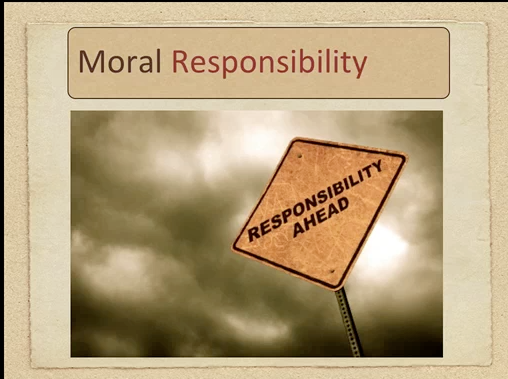 The famous poet John Donne is perhaps best known for one of his lines that goes: “Never send to know for whom the bell tolls, it tolls for thee.” Donne well understood the idea that we are all interconnected and we all have an incomprehensible interdependency such that anyone’s death affects us all. The same is true with morality. A key tenet of Buddhism is the moral responsibility that everyone on the earth faces for social and political actions.
 There are beauty products, breast enhancements, hair implants, plastic surgery, expensive cars, perfume, jewelry, large homes, designer clothes, college degrees and many other products or services designed to help you feel less inadequate and more adequate. We all want to feel adequate which means we must somehow learn to escape or jettison our inadequacy paradigms. The marketplace strategy involves spending huge amounts of money on a regular basis to escape the “inadequacy paradigm.” This strategy is often a failure as money and products cannot provide for real happiness or address some of the cultural biases, prejudices, racism and bigotry that contribute to the “inadequacy paradigm.”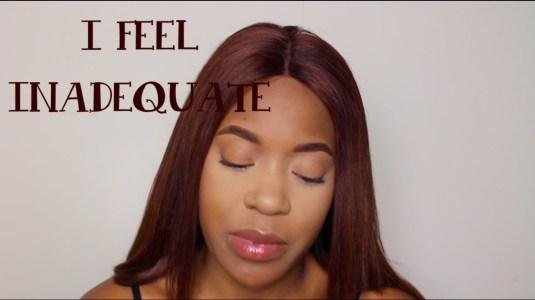
 If you have not read Hofstadter’s “Anti-Intellectualism in America Life” I heartily recommend it. I have often joked that the worst discrimination in America seems to be saved for people who think. Many companies trumpet their desire for “out of the box” thinkers. This is usually nothing more than a well parroted display of self-deception. What Human Resources and the company are really looking for is “people who fit in.” People who are iconoclasts, people who are critical thinkers, people who rock the boat “need not apply here.”
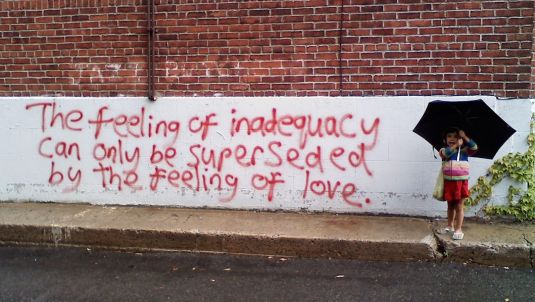 We have a pervasive problem that I labeled the “Inadequacy Paradigm.” Much of it is caused by racism, xenophobia, prejudice, stereotypes and bigotry. The majority of it is systemic and will need major changes in policies and institutions in this country to eliminate. However, it is felt on a very personal level. Feelings of inadequacy may be conveyed by others and cultural mores but they are received by an individual who assimilates these feelings into their psyche. Thus, inadequacy becomes a personal problem and not simply a social problem. Inadequacy is not “out there” it is right inside. The vast numbers of suicides in our society are testament to the inadequacy that many of our fellow citizens feel. This includes Whites as well as minorities.
 Marching forward in time to the period of the Revolutionary war when George the III was ruler of the American Colonies, what did they think of King George? Here is what is written in the Declaration of Independence:


 Crime bosses get eliminated or changed in a number of ways. Some die. Some are murdered. Some are arrested. Few if any ever simply retire. This last fact is good for our law enforcement agencies, since it helps keep them occupied with finding and catching Mafia leaders.

 Each time we kill one of their leaders, another one pops up to take their place. Each enemy group we defeat seems to be immediately replaced by another enemy group. Our Army, Navy Air Force, Marines, armament industries and politicians never seem to get tired of playing the “Whack a Mole” game. Keep in mind, that while the game might be great fun for these groups, there is a cost to the game. To date the financial and human costs are:


 Karen says that I should start our annual holiday letter off because I write better than she does. Well, since it is the holiday season, I will let her slide. For my part, (Karen will add hers in a short while), I promise not to talk about politics, religion or philosophy. We are all sick of politics and you are probably only marginally interested in the latter two topics. What’s left then? Well, I was thinking that I just turned 70 in September. I never believed that I would see 30 years of age. Now here I am 4 decades later pondering the same mysteries of life that I pondered forty years ago. Feeling a little nostalgic, I got to thinking about the “firsts in my life.” For instance, my first kiss and my first job. So how about participating in a little nostalgia here and fire up your memories as well. I have posted a list of “my firsts” with my responses to each item. List is on the left with my responses to each one on the right. Can you remember your answers to my list? I would love to hear your list of firsts. Please post your FIRSTS in the comments section if you can remember what they are and don’t mind sharing.
 Hi all. I think I’ll stick with my firsts for the past year. My first Dulcimer Jamboree in April, 2016 in Mountain View AR where I met the dulcimer 9 years ago. A fateful meeting it was. My first chromatic travel dulcimer which I took with me to New York in Nov. My first raised bed garden this past summer made from old discarded stock tanks. It produced more food than we could eat and it was so easy to weed and harvest. My first grandson, Garrick, getting married to Kat this coming spring. My first viewing of an opera at the Metropolitan Opera in NYC. My first concert in Carnegie Hall. My first trip up the Statue of Liberty and out to Ellis Island to look for ancestors.
 It’s been a full, fun and sometimes exhausting year. We still work part time to support our “snow birds” lifestyle. I’m working with start-up home care agencies, teaching and consulting, and ICD 10 coding. John has taught both on-line and residence classes. We escaped our part time work with trips down to Kentucky for Kentucky Music Week, trips to the ocean in Puerto Penasco, Mexico, and a fall anniversary trip to Bayfield, WI. And, of course, the trips back and forth from WI to AZ where John tries to find new unspoiled routes each time we go.

 Jesus talked about the three classes of good people. The first class hears his message but has little time to do anything about it. The second class hears the message and when convenient they try to help others and spread the message of Jesus. The third class commits their body and soul to sharing Jesus’s message. The third class of men/women make a commitment to doing this year round and 24/7. For the third class, it is not a onetime thing or something to be done when they have time or are not busy. It is a lifetime commitment to share his message with the world.
 The Joy of Christmas is a state of fulfillment, contentment and gratitude. Through the love of others who give selflessly of themselves, we can all be free to experience a Joy that cannot be bought or traded. It is one of the reasons that giving and not receiving is said to be the true path to happiness. During the holidays, we are excited about the chance to give to others. And nowhere is that feeling of giving more delightful than in watching the face of a young child receive something that we know they really wanted. However, Joy to the World should mean more than just giving toys to tots. There are physical gifts which we can give but there are also emotional and spiritual gifts as well.
 I am frequently critical of all the toy drives that I see going on at Christmastime. Not just because I think most kids in America have more toys than they know what to do with, but because of the message that this sends. Why not I ask, have a “books for tots” drive? Why not give books for a present? Why is it always about toys? We become so narrowly focused that we lose sight of the larger picture.
 Thus, Jesus did not come to replace the commandments but he did come to go beyond the commandments. God brought the commandments to Moses but the message that Jesus brought to us is in addition to the commandments. Jesus extended the Ten Commandments with a list that has come to be known as the Eight Beatitudes. A beatitude is something that gives one both happiness and blessedness. Jesus gave these Eight during his famous Sermon on the Mount:
 I am continually surprised by so-called Christians who seem to revel in the Ten Commandments but treat the Eight Beatitudes as though they were bastard children of Satan. When was the last time you heard anyone wanting to put up a statue or sculpture or sign with the Eight Beatitudes on it? The Message of Christmas is the Eight Beatitudes. The Joy that Jesus wanted to bring to the world can only come by following the Eight Beatitudes. If you call yourself a Christian but you do not practice these in you daily life, then you are not spreading the Gospel of Jesus.
 words of the Beatitudes go beyond any one religion. They speak to a way of being in the world and a way of treating other human beings. Just as I have found valuable teachings in other religions, I think more Christians should be willing to share the Message of Jesus in the Eight Beatitudes. Keep in mind though, that sharing this message will never work unless you also live by the message. You must be the change you want to see in others. Do you know what the famous Indian Chief Sitting Bull said when asked what he thought of Christianity? Chief Sitting Bull replied: “I have read your Bible and the religion seems good but I do not see many White people practicing it.”

 Satan: “Do you want to concede and I will just take them all down to Hell?”
 God: “The interesting thing about humans is not their stupidity and evilness. It’s the surprising amount of love that they can sometimes show for others. I am ever the optimist. That is my role, to be the Eternal Optimist. I have had hopes since the first cave men and since Moses and Socrates and Jesus and Mohammed and Gandhi and King and Mandela that humans have a spark in them. A spark that when ignited can change themselves and the world into something beautiful. Something that is so beautiful, it is even beyond anything I might have created.”
 Satan: “You know I don’t care one way or the other. I have no feelings to be hurt. I cannot gloat or feel any satisfaction. Whenever, a new soul comes down to Hell, it is no sense of pride or satisfaction to me. These humans seem to mistake my logic and justice for evil. I am the parent who dispenses the discipline and they see me as the mean and cruel one.”
 Satan: “But they never learn. They are shortsighted, petty, vindictive and greedy. Do you really think they care about your teachings or precious commitment to love and peace? They would rather fight wars and dominate others. They even fight wars in your name. Their religions scream for violence over other religions. Their leaders preach victory over other nations. Their minion’s rape and pillage in the name of some esoteric ideology. They all believe they are superior to each other. They send their own children to die in wars of so called freedom and liberation. They abuse and murder their own spouses at alarming rates. They teach their offspring at an early age to be intolerant of other races. And they pray in your name for the power to be successful in all of these efforts. They invoke prayers to you before murdering millions. How can you listen to these prayers and want to help these hypocrites.”
 God: “You count them out too fast. The clock was close to 12 with nuclear weapons but as you noted, they carefully avoided destroying themselves. They are often very shortsighted and many of them will never be long-term thinkers. However, there are enough who care and who are passionate enough about others to help save humanity. I can’t help being filled with astonishment at the love that humans frequently have for each other.”
 I am working to prepare for a chess match with my neighbor. I happen to note in the paper the Fact that tomorrow will be a quarter moon. Does this Fact have any relevance to my playing chess? I don’t think so. Thus, I don’t really care that there will be a quarter moon. As far as my limited cognition or perception, I can see no relevance between the Fact of a quarter moon and my preparing for my chess match. I could be wrong. We can always mis-perceive the relevance of some information to an issue. This is often done in science and in police work. We don’t see the connection between two issues and we misjudge the outcomes. This provides one good reason for diversity and numbers in problem solving. You have less chance of being blindsided if you have a variety of opinions rather than just your own.
 Let us look at another example where the issue of relevance is more salient. I am planning to go on a trip to England in 2017. I want to plan my trip for the best possible time of the year. I hypothesize that two Facts or Data points are very important to my planning. The first is the temperatures at various times of the year in England. The second is the rain fall. I found the ranges for this data on a weather site and used the information to plan my trip. Of course, some of the decisions anyone makes will depend on their own weather preferences. I wanted to minimize rainfall and also keep the temperature in a moderate range. What I call sweater weather. Thus, both these set of factors were relevant and important to my planning. I would call them Evidence to support the time of year that I decided to go.
 On the other hand, if you like rain, you might have picked a different time of the year than I did. There were other mitigating factors which played a role in my decision making. These factors included costs for lodging during the year and transportation costs during the year. In general, off season times have better rates but are somewhat the worse for weather. Another factor was the value of the pound to the dollar. I considered the value of the dollar to the pound post Brexit but concluded that I did not have enough information to effectively evaluate the impact of this data on my decision. I am assuming that with the volatility involved in the situation, the value of the dollar might go either way against the pound. My best guess is that I will benefit if I go as soon as possible. The news has recently noted that after Brexit the value of the pound fell 14 percent against the dollar. This would mean I could get a significant cost advantage if I purchase anything in England. I am hoping this situation will continue until after my trip but there are too many variables at play here for me to use this information. I can only hope.
 A more common example of relevance can be found by looking at police work. We are all familiar these days with what is called Forensic science. I am sure most of you reading this have watched some police show. As soon as a crime is discovered, the Crime Scene Unit (CSI) is brought in to collect Evidence. Keep in mind that everything at a crime scene is not Evidence. Only what may have a possible relationship to the crime. This can be a real problem. The CSI unit is going to be limited by their assumptions concerning what might be relevant. For instance, I doubt any Crime Scene Investigator will care whether or not the light bulbs are “bright” or “soft white” in the kitchen or bathroom. It is impossible to collect all the “Evidence” of stuff that might be related to the crime. Thus, relying on experience and training, the police investigators do their best to collect Facts and Data that appear to be relevant to the crime. The relevant Data and Facts are not just interesting, they are Evidence. The more they relate to the crime, the stronger the Evidence will be.
 An eyewitness can provide Evidence via his/her testimony as to the events of a crime. The relevance of any eyewitness is high but the reliability of an eyewitness can be much lower. Second hand testimony is not as relevant as first hand testimony and is thus weaker Evidence. Testimony that might be compromised by some factors such as police record, bias, discrimination, physical disabilities might be relevant but will be weaker Evidence because the validity of the Evidence is suspect. That is why lab procedures and chain of custody is so important to police work. They may have the most relevant Evidence imaginable but if the validity of the Evidence can be comprimised because of sloppy police work, the Evidence will be useless.
 It is seldom that findings of Evidence in police work or business are subjected to as much scrutiny as occurred in the so called development of cold fusion. Perhaps, since this was a finding of great scientific importance, it was held to a more rigorous standard than would occur in many other scientific studies. I am thinking in particular of findings in the health field, nutrition field and drug field. In each of these fields we often have much less rigor before results are posted or accepted. Business is even worse with advertisers spouting outright lies and fabrications. Little known phenomenon are routinely heralded as being highly reliable Evidence of the benefit of some product or service that someone wants to sell you. All kinds of spurious Facts and Data are then marshaled as Evidence to support the phony claims by Madison Avenue advertisers.
 Aging Capriciously