The Perfect Day When Everything Went Right!

Did you ever have a day when “everything” went right.  A day when you got up on the right side of the bed.  The phone rang all day with calls from good friends instead of spam and telemarketing messages.  Everyone just called to chat, and no one had any problems or issues to face.  A day when the sun was shining and the weather was perfect.  There were no bugs or mosquitoes to be found anyplace in your town.  You felt like a million dollars with no aches or pains.  No one you knew was going  to the doctor for cancer treatments or therapy of any kind.  It was as the younger generation like to say “Perfect.”

Now as you are reading this, you are probably thinking “He must be daydreaming, such days do not exist.”  Or maybe you are thinking that it is my birthday.  I concede the possibility that such days are perhaps rare, but then again should they be any more rare than days where “Everything that could go wrong” did go wrong.  Or is it just our perspective which is goofed up.  We are more likely to remember the days when our dog disappeared or when the doctor told us to come in and see her as soon as possible than days when our dog reappeared or the doctor called to tell us everything is fine.  Cognitive scientists have a term for our propensity to remember the bad more than the good.

“Negativity Bias” is a cognitive bias that refers to the tendency to remember negative events and information more vividly and with greater impact than positive or neutral ones.  I will not bore you with the reasons for this propensity.  I am sure that you recognize that it exists.  Thus, if the Yin/Yang of the world is an accurate theory of our existence, we should have at least as many of the Perfect Days as we do the Shitty days.

I ask you to stop reading this blog for a few seconds.  I challenge you to see if and when you can remember the last perfect day that you have had.  Now I would like for you to describe that day in my comments section before reading the rest of this blog.  Think of the happiness you will bring to me as well as the rest of our readers.  What if the news carried as much good information as they do bad information?  What would your world be like if you only remembered and had perfect days.

At this point, you are probably ready to skewer me as some deranged Pollyanna or Don Quixote. A nutcase who sees everything through rose colored glasses.  Someone who is madly optimistic that there is hope for a better world.  That Donald Trump will not get a statue on Mount Rushmore and that he and his sycophantic followers will soon disappear in the abyss of forgotten history.  I assure you that I go to sleep every night praying to a god that I do not believe exists that these latter events will happen while I am still alive to witness them.  Instead, I wake up every morning to more bad news from the front line of the independent media I subscribe to. Thus, either giving me less hope for humanity or making me feel guilty by asking me for more money that I do not have.

See, you thought I was going to write some really optimistic idealistic treatise that would make you feel like your existence meant something and life was worth living.  Instead, I refer you to Ecclesiastes from the Bible:

Everything Is Meaningless

1 The words of the Teacher,[a] son of David, king in Jerusalem:

2 “Meaningless! Meaningless!”

    says the Teacher.

“Utterly meaningless!

    Everything is meaningless.”

3 What do people gain from all their labors

    at which they toil under the sun?

4 Generations come and generations go,

    but the earth remains forever.

5 The sun rises and the sun sets,

    and hurries back to where it rises.

6 The wind blows to the south

    and turns to the north;

round and round it goes,

    ever returning on its course.

7 All streams flow into the sea,

    yet the sea is never full.

To the place the streams come from,

    there they return again.

8 All things are wearisome,

    more than one can say.

The eye never has enough of seeing,

    nor the ear its fill of hearing.

9 What has been will be again,

    what has been done will be done again;

    there is nothing new under the sun.

10 Is there anything of which one can say,

    “Look! This is something new”?

It was here already, long ago;

    it was here before our time.

11 No one remembers the former generations,

    and even those yet to come

will not be remembered

    by those who follow them.

However, I refuse to finish this blog on a nihilistic note.  I want to finish on a crescendo of hope and faith and happiness.  A belief that one idea, one word spoken, one action taken, one step forward can change the course of humanity.  We can look back to the past and find untold mistakes and failures that have eclipsed the sunlight of joy for the world.  But we can also look forward to a future that we can create because the vast majority of human beings are decent peace-loving equality seeking individuals.  The Negativity Bias blinds us to the positive outcomes that prevail every day in our lives.  At the end of each day, we seem destined to remember the bad things that happen in the world.  This effort is reinforced by a negative biased media which thrives on horror and destruction and pain.  I love the words from this song by Peter Paul and Mary,  “Light One Candle”

Light one candle for the terrible sacrifice

Justice and freedom demand

And light one candle for the wisdom to know

When the peacemaker’s time is at hand


Don’t let the light go out!

It’s lasted for so many years

Don’t let the light go out!

Let it shine through our love and our tears


Light one candle for the strength that we need

To never become our own foe

And light one candle for those who are suffering

Pain we learned so long ago                                                                                                               

Light one candle for all we believe in

Let anger not tear us apart!

Light one candle to bind us together

With peace as the song in our heart


Don’t let the light go out!

It’s lasted for so many years! (lasted for so many years!)

Don’t let the light go out!

Let it shine through our love and our tears

We need to counter this tendency for negative bias by reinforcing the positive “perfect” days of our lives.  Here is a checklist that ChatGPT created from my query:

It is a printable daily practice checklist to help overcome negative bias.  You can use it as a daily or weekly tracker to build habits that shift your mindset toward balance and resilience.

🌞 Daily Practice Checklist: Overcoming Negative Bias

Practice Done Today? Notes or Reflections
1. Morning Gratitude: List 3 things you’re grateful for.
2. Reframe 1 Negative Thought: Catch a negative thought and reframe it positively.
3. Notice the Good: Write down one positive thing that happened today.
4. Kindness Practice: Do one kind thing for someone else.
5. Mindful Moment: Spend 5+ minutes in meditation or quiet reflection.
6. Move Your Body: Take a walk, stretch, or exercise.
7. Limit Negative Input: Avoid or reduce exposure to toxic media or conversations.
8. Evening Reflection: What went well today? What did you learn?

🗓️ Weekly Reflection (Use at the end of the week)

  • What patterns of negative bias did I notice?
  • What helped me shift my mindset the most?
  • What’s one small thing I want to improve next week?

The End Folks. 

Hope you enjoyed this blog.  Let me know what your perfect day was. 

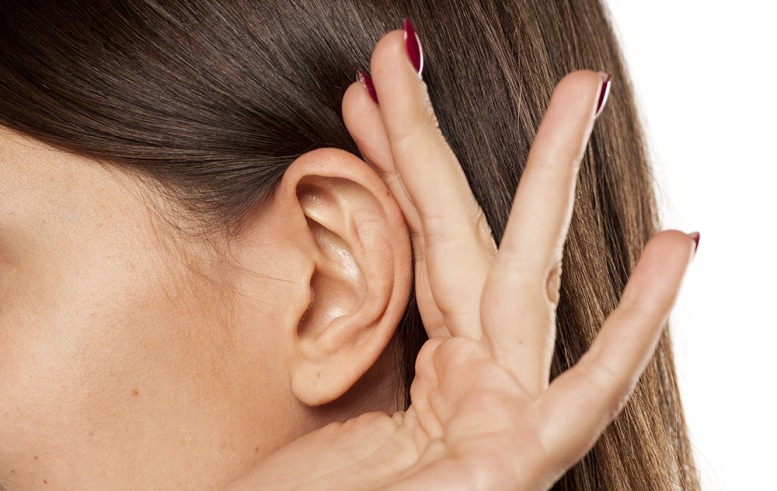
Ears – by Miriam Mladinov

hand-and-ear-6

A good friend of mine wrote the following piece about Ears and Hearing.  It is quite cute and relevant as many of us are getting older.  Being heard and being understood sometimes becomes quite problematic.  She gave me permission to post the following piece.  I think you will enjoy it.  I know I did.

EARS 

By Miriam Mladinov

We are born with two ears, one of each side of our head.  They are not beautiful, fleshy, curly, or naked.  The shape is best described like ear shaped.  If they were covered in fur, or at least fuzzy hairs like cat’s or dog’s, they would be prettier.  Cats and dogs have another advantage because they can turn theirs in the direction of sound to hear better.  By having two ears, spaced by a head in between, they are the first stereo equipment which gives us the direction and spatiality of sound: a really clever invention.

Ears also serve as a carrier of all kinds of trinkets for beautification. This is an ancient practice and many Egyptian, Roman, Aztec, even prehistoric human remains, sport some precious, ornate thing attached to their ears.  These decorations were often made of gold, silver bronze, and decorated with colorful beads or stones.  The practice is alive today and we call them earrings.  If they are round we call them redundantly hoop earrings.  They desperately cling to a fleshy lobular, dangling.  Some people choose to have holes all around the ear lobe usually filled with small studs or tiny loops.  One might think that the neat row of holes, like on a shoe, would be made to tie them together around the head with a shoelace.  Other people choose to have a large hoop inserted in the fleshy part stretching it out like an elastic band.

Growing up I thought that piercing ears was a barbaric practice.  It probably came from my mother’s belief because she kept her ears intact.… but I inherited a beautiful diamond set earrings from my grandmother and wanted to wear them.  When I went to a place to get my ears pierced, I wore an old shirt in case the blood would gush over it and brought my earrings with me to insert them in the new openings.  The girl wiped the area with alcohol and click, click inserted two studs like with a staple gun.  Not a drop of blood.  It was almost a letdown because it was so easy.  Now I have a whole collection of earrings.  My favorite are two little hoops made from my parents wedding rings.

Ears have another important function: TO HEAR.  It is one of our five senses.  We never think about it until it fails.

At first a friend tells you:

 “Do not get offended, but I think that you might need a hearing aid.”   

 “WHAT?”

Three men were sitting on a bench in a park.

“It is windy.”  The first said.

“No, it is Thursday.” Said the second.

“I am thirsty too.  Let’s get a beer.”  Said the third.

My neighbor approached me with a question:

“Do you have a problem with roses?”

“No.  I did not pay much attention this year.”

“We had an invasion.”

“Invasion of roses?”

“We were gone for a while and roaches were coming out from the sewer.”

She never realized the confusion because she might be hard of hearing herself.  After I went home, I could not stop laughing.  Roses – roaches, quite a difference.

If I don’t actively listen, I often miss the first part of what is said to me, the second I get.  That results in often missing the subject of the sentence and asking: Who or what?

The worst part is with names. 

We shake hands and a person tells me: “Aaoouu .”

I say my name and politely ask him/her to repeat the name: “Aaoouu.”

“Nice to meet you.”

Then I run into the same person a few weeks later.  I still do not know his/her name because I never heard it in the first place.

“Oh, sure I remember you.  We met a few weeks ago.  Sorry, can you tell me your name again?”

“Aaoouu!”

Another time at a gathering, I approached a guy and asked him about his sick wife.  He gave me a blank look and said that he had a problem hearing.  I said that I too have the problem and moved away realizing that I approached the wrong guy.  I waved at him and smiled in a way of apology.  He probably blamed himself for not understanding.  Poor guy.

I got my first set of hearing aids.  The small peeps go inside the ear and the minuscule computer sits discreetly behind.  The set is very light.  When I wear them, I forget about them until they get hungry and start to squeal.  Time to change batteries.

My dad, who became completely deaf when he turned 90 and had hearing aids, managed to accumulate used and new batteries all mixed in a pile in a box.  It was a big mess.  Talking to him face to face was somewhat possible, but over the phone was hopeless.  It caused several misunderstandings.  The worst one was when I called him from NY telling him that I had arrived after a month-long trip, and that I would stay for a few days in NY.  He expected me the next day back in Boston, and when I did not show up his panic escalated to gigantic proportion.  I was kidnapped.  I was murdered at the Port Authority.  Police were engaged and searched for his lost daughter who was having a good time with a friend in NY, completely oblivious to the upheaval that the call has caused.

Incidentally my NY friend tends to choose the nosiest corner on a street in NY to call me.  The traffic is clanking, the sirens are tooting, and she is expecting me to hear her soft-spoken voice.  She also likes to call me from the car while her husband is driving through the mountains or a tunnel.  Afterwards, she texts me how sorry she was that the line was interrupted.

The hearing aids help.  They help a lot if I am in a quiet place and talk to one person.  Great!  We can have a coherent conversation, but I am lost anywhere there are drones and noises.  At my exercise class where there is always some music going on, I never hear a joke, or a comment flaunted spontaneously by someone.  I try to find a place in front to hear the instructor, who does have a lousy diction (not only my opinion).  I get a lot by observing.  If I am on my back and we circle the ankle of the left foot, I often miss the clue to switch the leg.  It is not the end of the world if one ankle gets more rotations than the other, under the conditions that the next time with start with the other leg.

One unexpected consequence of wearing hearing aids is that I lost the sense of direction of the sound. That clever stereo quality is gone.  When my phone rings, I run all over the house to find it and usually when I get it, it stops.  I think that it does it on purpose.  Or when something beeps, I run to microwave to see what is ready.  Nothing.  I check the dishwasher.  It also calls when is done.  Nothing.  I run to the door.  Nothing.  I give up, and then realize that it was outside, the garbage truck backing up.

There are some helpful inventions like Bluetooth.  I wonder who named it that way.  It is an electronic miracle which beams the sound from your other miraculous devices straight to your hearing aids.  Mine are not that smart, so they gave me another gadget for additional cost, which I had to hang around my neck like a necklace, called Dongo.  It rings when my phone rings and I can activate the conversation from it, only if my phone is within a reasonable distance.  If it is not, I must do the same exercise of running around to locate it.  The Dongo is also designed to help with a conversation in a noisy restaurant if your company talks to Dongo instead to you.  We got into a competition.  This cumbersome little animal hanging from my neck did not last long.  My friend whose husband had one told me that his Dongo did not work too.

For watching TV, I have a pair of earphones clasping over my hearing aid.  I can control the volume on the TV remote, on earphones and on my hearing device.  This triple enhancement actually works.  It would make a dead person hear.

There are other means to bypass this handicap. I am not embarrassed to say that I have a hearing problem.  It is better that people know that, than thinking that I am stupid.  On an occasion when I was giving a presentation there were no problems with me doing it because I was the one who was talking.  Anticipating questions, I asked the guy who introduced me to repeat the questions out loud.  It helped me, and I think that it also helped many aging people in the audience.  Win-win.

A friend of mine who was a speech pathologist told me that deaf people had harder problems to adjust to socially than the blind.  Being hard of hearing is not the same as being deaf, but it also conditions one’s life.  I avoid large gatherings, do not enjoy theater and any place where there are extraneous noises.  I still enjoy the concerts.  I probably miss something, but I am not aware of it.  I love Japanese Taiko drummers.

Ears are precious.

The Obesity Epidemic in the USA Meets the Drug Epidemic

191218155510-obesity-rates-by-state

Everyone knows or has heard that there is an epidemic of obesity in the USA.  The statistics are staggering.  The health problems associated with obesity are well known and cited often enough that if Tchaikovsky were alive, he would have written Symphony No. 7 in B Minor: Op. 74 “Obesity”“Physiologically, adolescents with obesity have an increased risk of developing adverse health outcomes such as type 2 diabetes, hypertension, elevated serum cholesterol and triglyceride levels, respiratory disorders such as asthma, and joint problems.”  — “Obesity Stigma and Bias

I was at a party in Prague over 25 years ago and I was approached by a younger woman who sat down next to me.  She promptly asked me, “Why are so many Americans overweight?”  I gave the usual uninformed answer and replied, “Because they are lazy and do not exercise enough.”  This was part of my belief system back then and is probably still shared by many Americans today.  Since that time, Karen and I have traveled to several other countries.  I think we are at about 43 now.  Over the past few travels, we have noticed that not only the USA, but many other countries are also suffering from the same “Epidemic of Obesity.”  If it is a psychological problem of motivation and willpower, than a whole bunch of countries are suffering from the same lack of motivation and willpower.

“Obesity is a complex physiologic condition influenced by genetics, hormones, sleep, environment, cultural norms, and economics.  The oversimplistic assumption that obesity is a choice and can be “fixed” by moving more and eating less is outdated and inaccurate in the current science of obesity.  Over the last 20 years, researchers have begun to shed light on the multifaceted complexity of obesity.”  — “Obesity Stigma and Bias”

images

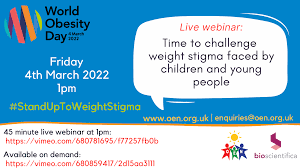
I started thinking about this problem more recently after observing some of the children in my high school classes.  I am a substitute at three high schools in Casa Grande Arizona.  I noticed that many of the kids are overweight.  Back sixty years ago when I was in high school, there might have been one or two overweight children in the entire high school.  Today the statistics say that as of 2023, 1 in 5 children in the United States are obese, and this number is increasing yearly.  The rates of obesity are higher for Latino (43%) and Black (40%) youth. — Obesity or Oveweight Now Affect 1 In 3 Youth: How Experts Are Responding.

I wondered how these children deal with this problem.  Has obesity become acceptable?  We now have many stores with Plus Size clothes and there is an entire industry of “Plus Size Models.”  Do these children feel the weight stigma that is allegedly associated with obesity?  If they do feel it, how does it impact their socialization, personal image, and mental health?  Are they blamed for being overweight as much of the research suggests?

“As the rates of overweight and obesity rise, weight discrimination in America has increased by 66% over the past decade and is equivocal to racial discrimination.  Perceived provider weight discrimination often causes individuals with overweight and obesity to be reluctant to seek medical help, not only for weight reduction but also for any health-related problems…Bias against those with obesity appears to be socially acceptable and is reinforced by the media.  Mass media has stigmatized obese individuals.  A review of research over the past 15 years related to weight bias in media has reported that many media sources such as animated cartoons, movies, situational comedies, books, weight loss programming, news coverage, and YouTube videos have represented individuals who are overweight and obese in a stigmatizing manner.” —  Obesity Stigma and Bias

How Can We Help People with an Obesity Problem?

Someone once told me that we are either part of the solution or we are part of the problem.  I have noticed that I am part of the Obesity Problem.  I have looked many times at obese people and thought “They need to get out and exercise more.”  I have been less than empathetic to their problems and less than supportive of their physical and mental state.  I have not been helpful.

“Obesity stigma is characterized by prejudiced, stereotyped, and discriminatory views and actions towards people with obesity, often fueled by inaccurate ideas about the causes of obesity.  Despite decades of research supporting the dominant influence of genetic and environmental factors in the development of obesity, in the public consciousness, obesity continues to be viewed as a result of individual-level decision-making.”Obesity Stigma: Causes, Consequences, and Potential Solutions

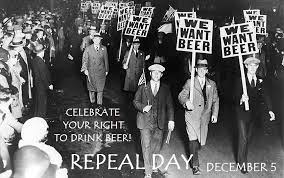
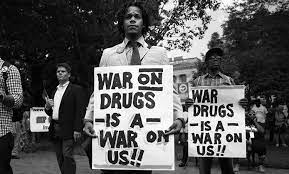
In my opinion, the health experts have not been very helpful nor have our politicians.  We allow many of the sources of the problem to continue to add fuel to the fire.  These include inappropriate media images, stereotypes of obese people, purveyors of low-quality high-fat junk foods, poverty conditions, lack of health education in poor and rural areas and overall a political system that almost totally ignores the “Epidemic of Poverty” but is more than happy to spend billions of dollars on any war against drugs.  Starting with the war on heroin, then the war on alcohol, the war on pot, the war on cocaine, the war on crack, the war on methamphetamine, the war on oxycodone and now the war on fentanyl, we spend billions of dollars on drug enforcement and drug incarceration for those convicted of selling the drugs.  How much do we spend on health education in our schools?

download (1)

“This summer, the war turned 52 years old.  It was June 1971 when President Richard Nixon declared drug abuse to be “public enemy No. 1” that required a “new all-out offensive” and additional government funding.

Since then, the country has spent more than a trillion dollars fighting drug use, according to some estimates.  That includes more than $39 billion the federal government spent last year alone, according to the Government Accountability Office. 

And, of course, illegal drugs and drug abuse are still very much with us.  In 2021, a Gallup Poll found 64% of Americans said the nation’s drug problem was “extremely serious” or “very serious,” though the primary scourge changes.  In the 1980s, cocaine and crack cocaine were the dominant stories.  In 1989, President George H.W. Bush held up a bag of crack cocaine during his first White House address and announced the war on drugs would be a primary focus of his time in office.” — Costs in the war on drugs continue to soar, NBC News

This article does not say anything about the costs spent fighting heroin or pot or alcohol long before some of these other drugs became “epidemic.”  I wonder what “prohibition” would have cost in today’s dollars?  As for health education, who has ever heard of a “War on Obesity.”  The obesity problem kills more people than drugs, but it would not benefit our economy to wage such a war.  “According to the National Institutes of Health, the obesity epidemic is responsible for an estimated 300,000 deaths per year.  The World Health Organization (WHO) estimates that at least 2.8 million people die from being overweight or obese each year.”  As for the comparison figures for the “Fentanyl Epidemic” the overdose death rate topped 112,000 in a 12-month period ending in December 2023 according to the Centers for Disease Control and Prevention.

download (2)You may wonder where I am going.  From obesity to drugs and back to obesity.  Well, what if the two epidemics are related?  What if there is not really two epidemics but one huge epidemic?  What if one is correlated with the other or what if one even causes the other?  Could the stigma of obesity lead to more drug use or could more drug use lead to more obesity?  What if all the money we spend on arresting drug users adversely impacts the health of poorer communities where most drug abusers seem to come from?  Is there any possibility that the two epidemics are related?  Consider the following:
“Since the declaration of the U.S. drug war, billions of dollars each year have been spent on drug enforcement and punishment because it was made a local, state, and federal priority.  For the past half century, the war on drugs has subjected millions to criminalization, incarceration, and lifelong criminal records, disrupting or altogether eliminating access to adequate resources and supports to live healthy lives.

Drug offences remain the leading cause of arrest in the nation; over 1.1 million drug-related arrests were made in 2020, and the majority were for personal possession alone.  Black people – who are 13% of the U.S. population – made up 24% of all drug arrests in 2020.”  — How the war on drugs impacts social determinants of health beyond the criminal legal system, published online 2022 Jul 19.

Do you think it is a coincidence that Black people suffer the highest rates of obesity in the USA and are also targeted the most for drug related offences?  It is much sexier to arrest, try and convict a person for a drug related offence than to work to change a system that systematically poisons people with unhealthy foods.  Our drug enforcement system keeps lawyers, police, and judges employed.  Our nutrition system if you can call it that employs millions of people to sell junk foods in fast food restaurants and grocery stores.  Obese people are part of a system that promotes obesity and drug use.  Make no mistake at that.  As my mentor Dr. Deming used to say, “Put a good person in a bad system and the system will win every time.” 

downloadWe need more than a drug war and more than health education to fix the ONE large epidemic in America.  We need to have a war on a callous system that condemns millions of people to prison and death all in the name of selling things.  Our purveyors of unhealthy foods are just as guilty of being “Drug Pushers” as anyone selling fentanyl in a back alley.  The only difference is that “Fruit Loop” cereal is legal and legally spends millions of dollars on advertising each year while fentanyl is illegal and unadvertised.


How to Lose Weight Without Even Trying!

marthas-vineyard-detox-diet

I wrote this blog five years ago.  It seems a good one to help you start the New Year off right.  I know lots of us will want to shed those pounds that we put on during the holiday season.  This NEED and DESIRE makes us easy pickings for all of the “diet programs” that promise us how little effort it will be too lose weight if we only buy their book and follow their rules.  I start off this blog with two rules of my own.  I have updated most of the health data in this blog for 2023 but I have no doubt that the data would be the same or even more depressing if you looked it up today and compared it to ten years ago.  So lets get to it so you can find out how to “How to  Lose Weight Without Even Trying!”

There are two rules of wisdom that I think most of us believe in.  They are:

  1. If it is too good to be true, it probably isn’t
  2. There are no free lunches

I have found the above precepts to be good guideposts for my life.  They are so often noted that we begin to take them for granted.  It could be argued that perhaps they are not true in every situation, but I believe that they are more often true than not true.  This brings us to the issue of diet programs.  Consider the following statistics:

  • An estimated 45 million Americans go on a diet each year. (BMC)
  • Americans spend $33 billion each year on weight-loss products. (BMC)
  • A higher percentage of women (56.4%) than men (41.7%) have tried to lose weight. (CDC, 2018)
  • Nearly half of adults (49.1%) attempted to lose weight within the last year. (CDC, 2018)
  • Obesity is more common among lower-income individuals, those with less education, and some ethnic/racial minorities. (Wiley, 2009)
  • 82% of respondents considered that weight loss was completely their own responsibility, while only 5% did not agree. (Wiley, 2017( Fitness for Weight Loss)

(Statistics are from Weight Loss Statistics and Health Benefits for 2023)

HT_rocco_dispirito_book_jef_140109_16x9_608

If I go to Amazon.com and type in “diet books”, I find that there are 184,291 books available to sell me on a strategy for losing weight.  There were 424 “Diet Best Sellers” in 2016 and 209 “Best Sellers” published already in 2017.  These are only the “Best Sellers.”  There were a total of 39,673 diet books listed as published in 2016.  Many if not most diet books do not make the “Best Seller” lists.  In terms of magazines dealing with diets and weight loss, there are over a dozen magazines that you can buy each week at your local grocery store (that you will find stocked right next to the chocolates) that will tell you how to lose weight “without even trying.”

fad-diet-ads

However, the above statistics are only the tip of the proverbial iceberg.  If I go to Google and type in the words “diet strategies”, I find that there are over 75,000 listings concerning various diets, stratagems, plans, tips, secrets, etc., that will show you how to lose weight “without even trying.”

Here are some typical headlines that you will find as you peruse any of the above information that is offered for those of us that need to lose weight “without even trying”:

  • The Harcombe Diet 3-Step Plan: Lose 7 lbs. in 5 days and end food cravings forever
  • 1200 Calorie Diet Menu – 7 Day Lose 20 Pounds Weight Loss Meal Plan
  • Win at Slim: New Secrets to Lasting Weight Loss
  • Outsmart Your Cravings: Sweet, Salty, Crunchy
  • How I Lost 42 lbs.
  • Eat, Drink, Shrink: No Diet Ways to Fight Holiday Gain
  • No More Guilt: Stop Dwelling, Start Enjoying

no exercise or dieting

The beauty of all these weight loss schemes is that you can lose weight “without (you guessed it) even trying.”  Any half-way intelligent person would regard these titles and by applying either of the two rules noted earlier decide that they were pure bunko.  Lose weight without trying!  End food cravings forever!  Lose 7 lbs. in 5 days!  No sane person would believe any of this BS.  Nevertheless, the diet magazines, diet plans and diet books sell like crazy.  Every year a plethora of new diet strategies replace last year’s models.  Why do people continue taking the bait when they know that it is a sucker’s game?  The simple answer is that when it comes to looking like Margot Robbie, Jessica Alba, Dwayne Johnson or any of the Kardashians, all brain power and rational thinking goes down the drains.  Everyone in America wants to be thin and beautiful or have six pack abs “without even trying.”

SUPER-SHRED-DIET-ROTATOR-617x241

Every new diet strategy renews hope for the downtrodden and overweight oppressed masses.  Every new diet plan offers the possibility that beauty and slimness might be had before Christmas or at least before our next birthday.  Every new weight loss scheme provides the potential to become the person that we dream of being.  Hope springs not just eternal in the human breast, but perpetually, irrationally and beyond all measures of logic or intellect:  To hell with “no free lunches!”  To hell with “it probably is not true!”

If even the remotest opportunity exists that I can lose weight “without even trying”, I will take the bait like a mouse eats peanut butter or a cat eats catnip or a bear eats donuts.  “Dam the torpedoes, full speed ahead.”  Who cares about logic?  Who cares that no evidence exists to back many of these claims up?

before and after maleSo now we come to the real issue.  You wanted to know if there actually might be a method for losing weight “without even trying.”  My answer is YES!  But there is even better news.  I will send you the secret strategy for my quick weight loss “Without Even Trying” plan that I have developed for only $9.95 plus postage and handling.  I will give you a money back guarantee that in six weeks or less, you will lose twenty pounds “without even trying” or I will send you a full refund.  This offer is good for only thirty days after you read this blog and it will then expire.  The following stipulations also apply:

  • You must reside on a lake
  • You must be over 99 years of age
  • You must have been born in Last Chance, New Mexico
  • You must be at least 100 lbs. overweight at the start of this offer
  • You must believe everything you read or hear

Time for Questions:

Do you need to lose weight?  Have you been trying to lose weight?  How successful have your efforts been?  What has worked for you?  What did not work for you?  What would you like to change in your diet?

Life is just beginning.

“I believe that parents need to make nutrition education a priority in their home environment. It’s crucial for good health and longevity to instill in your children sound eating habits from an early age.” — Cat Cora

Que Sera, Sera

QueSeraSera-MakingitLovely

I think that I am a coward.  I don’t want to grow old.  They say that growing old is not for the faint of heart.  Every day, I understand that aphorism more and more.  In the last thirty days, four friends have passed away.  Mickey, Glen, Bill, and Dick.  I could write a blog about each of them.  They were all just nearing 80 years of age.  Not one of them died of Covid.  Had you known any of them, you would have been truly fortunate.  Perhaps, one of my greatest blessings in life has been to have people like this for friends.  People who lived life to the fullest and cared about other people.  Men who went out of their way to help not just family but strangers.

Two weeks ago, we found out that Karen’s oldest daughter Julie had five brain tumors.  For the past year or so, she had been acting very strange.  She had frequent bouts of forgetfulness along with severe headaches and neck pain.  Doctors had been treating her for an enzyme imbalance for several months, but she kept getting worse.  Her husband thought it might be the onset of early dementia.

Finally, someone decided to do an MRI for her.  At first, it looked like one large brain tumor but a neurosurgeon looking more closely at the scan found four other tumors.  Julie had been diagnosed with leukemia when she was six years old and for ten years had undergone frequent trips to the hospital for chemo and radiation treatment.  They believed that the tumors were related to the radiation treatments.

Julie is now fifty-three years old.  She went in for surgery on Tuesday of this past week.  She was in surgery for nearly seven hours.  They chose to remove the largest tumor but indicated that they would need to go in for another one at a later date.  They were not able to remove the entire tumor since it was awfully close to the optic nerve and they were afraid of damaging it and causing blindness.  Ironically, they want to use radiation therapy to try and remove the rest of the tumor.

Karen flew out Friday night thinking that she could try and help Julie when she returned from the hospital to her home.  Only one person could be in the hospital each day with Julie and her husband was the obvious choice.  Karen worried all week as complications arose each day and Julie did not seem any closer to coming home.  As I write this, it is now five days past surgery and Julie is still in the hospital.  She has been in and out of intensive care since the surgery.  Karen and Rob (Julie’s husband) have agreed to alternate days spent with Julie at the hospital.  So Karen is in Minnesota now and I am watching the home front here in Arizona.

mountain-oyster-logo-6

I am growing old, but I am growing more tired of seeing people I care about either get sick or dying.  I went to a concert last night with two friends Evelia and Angie.  Karen originally was going to go but being with her daughter was the greater priority.  The concert was put on by the True Concord Singers and Orchestra in Tucson.  It was held outside on a patio at what appeared to be an old mansion that had become a private men’s club.  It was called the Mountain Oyster Club.  Since it was members only, they would not let us dine there.  I had originally thought that after the concert we could dine at this exclusive club but that was not to be.  We ended up going to a resort called the El Conquistador.  My two companions are both Latina and I wondered what they thought about dining at a place called El Conquistador.

113031193

The concert was called “The Trailblazers” and consisted of songs arranged by women composers and based on the works of noted women writers and artists.  Some of the composers included Judith Weir, Hildegard von Bingen, Emma Lou Diemer, Ysaye Barnwell and Alice Parker.  The writers and poets included Emily Dickinson, Maya Angelou, and Edith Franklin Wyatt.

True-Concord-singers-2-350x233-300x200

The fifteen songs performed were arranged along a series of themes.  One set of the songs was called “Remembering Those We’ve Lost.”  Thinking back to my lost friends while these songs were performed brought tears to my eyes.  Reflecting on what it might mean to me if Karen should pass away before I do, I could not bear the thought.  Coward that I am, I am hoping to pass from this world without too many more losses of those I love.  Here are a few of the lyrics from the songs in the concert.  It is of course quite different and much more moving hearing these sung but the lyrics themselves are quite compelling.

From: “My Companion” by Edith Franklin Wyatt (1873-1958)

Let the roadside fade:

Morning on the mountain top,

Hours along the valley,

Days of walking on and on,

Pulse away in silence,

Let the world all fade,

Break and pass away,

Yet, will this remain,

Deep beyond all singing,

Beautiful past singing.

We are here together,

You and I together,

Wonderful past singing.

From: “Wanting Memories” by Ysaye Barnwell (1946- Present)

I am sitting here wanting memories to teach me,
To see the beauty in the world through my own eyes.
I am sitting here wanting memories to teach me,
To see the beauty in the world through my own eyes.

You used to rock me in the cradle of your arms,
You said you’d hold me till the pains of life were gone.
You said you’d comfort me in times like these and now I need you,
Now I need you, and you are gone.

I am sitting here wanting memories to teach me,
To see the beauty in the world through my own eyes.
Since you’ve gone and left me, there’s been so little beauty,
But I know I saw it clearly through your eyes.

maxresdefault

I finished a run this morning in the mountains.  Saw a large coyote on the trail and thought at first it was a deer.  You are not likely to see a deer in the desert, but the coyote was large and brown and from a distance it did look like a small deer.  As I ran, I could not help but thinking of the song by Doris Day “Que Sera, Sera.”  The lyrics that go “Whatever will be, will be.  The futures not ours to see, Que Sera, Sera.”

We scheme, we plan, we strategize, we organize, we bribe, we cajole, we blackmail so that we can control the future.  We pray to whatever god or gods we believe in to keep our loved ones safe from harm or pain.  I am sure that every one of you reading this would rather suffer death or pain before seeing your family, friends or children suffering.  Jesus said, “Greater love hath no man than this, that a man lay down his life for his friends.” John 15:13

But as written in Ecclesiastes, it is all vanity.  Nothing but vanity.  I can’t stop a single person I know from dying or suffering pain.  The best that I can do is to be there for them during their suffering.  This is the role that my spouse has chosen to take with her oldest daughter.  It is a role that I would gladly have pass by me since coward that I am, I find it harder to watch my family, friends and others suffer then to deal with my own suffering.

I once loved the poem that admonished us to: “Grow old along with me, the best is yet to be.”  Now I wonder, what could Robert Browning have been thinking?  I am waiting for “the best that is yet to be.”  I must be missing something.  As each day goes by and as yet another friend leaves this earth, I am more and more wondering what I will have left when they are all gone, and I am the only one here.

Nothing I have ever worked for, saved for, bought, owned, or possess will have any meaning without the ability to share it with those I love.  I think about walking through the house where I am now sitting without my spouse or friends or family and it is by far a fate worse than death and dying.  I won’t rage into the night.  I am reflecting upon death as a comforting blanket than I can pull over my head and use to hide from the sorrows of the world.  I will not rush it, but as many have realized that have gone before me, at some point, we all know that our time has passed, and that we must leave this world.  As for what will come after, I can only say “Que Sera, Sera.”

I think you will enjoy this song:  https://youtu.be/xZbKHDPPrrc 

Que Sera, Sera

When I grew up and fell in love
I asked my sweetheart, what lies ahead
Will we have rainbows
Day after day
Here’s what my sweetheart said

Que sera, sera
Whatever will be, will be
The future’s not ours to see
Que sera, sera
What will be, will be

The Seven Greatest Appreciations of Life:  Physical Health and Fitness

healthy_lifestyle_heart-

There is a lot to be appreciative for in this category.  Sadly, too many people ignore or take these elements of life for granted.  Many people confuse good health with the health that they are born with.  Nature gives us a health plan when we are born.  Some of us get a better plan than others.  Fortunately, happiness and success are not totally dependent on the plan we are born with.  There is a large category of mental health which I am not going to talk about.  It is important to recognize though that mental health and physical health while no doubt correlate to some degree are not perfectly correlated.  There are many instances of people with major disabilities who are quite happy and quite successful.  The element of mental health and mental fitness are essential to overall happiness regardless of your physical conditioning.

Physical fitness or PHY ED classes are remembered by most former students as either something they tolerated or something they hated when they are were in high school.  The lessons if any that they learned in GYM classes were promptly forgotten when they left high school.  Those that excelled in sports and loved the extracurricular sports confuse sports with fitness.  I have met many former athletes who played football, soccer, baseball, or basketball and thought that was enough to be fit.

There is a great deal more to being fit than simply exercising or playing sports.  If you look at the people around you today, you will see a nation of unfit people.  Years ago, the obese person in your high school was a minority.  Today, they are a majority.  Walk down most any street in America and you will see a nation of fat and overweight people.

When I taught college, I would see entering freshmen coming in many of whom would have met health guidelines for weight.  Four years later, these same students had joined the ranks of obese Americans.  All too many had no fitness plan.  High school never gave them a fitness plan and neither did college.

But I want this blog to be about appreciation and not about how to do a health program.  If you need a fitness plan, you can search my blogs and find a great deal of information about starting such a plan.  Today, lets look at the fun and value in each of the six major elements of physical health.

I have put together a model based on my experience that includes six elements I think are essential to overall physical fitness.  These include:  Stamina, Strength, Balance, Flexibility, Nutrition and Weight Control.  Each of these elements are interdependent with the other five elements but each are unique in many ways.  I think there is great joy and fun in all six of them and I want to share some of my appreciation of each with you.  Let’s start with stamina.

hqdefault

Stamina

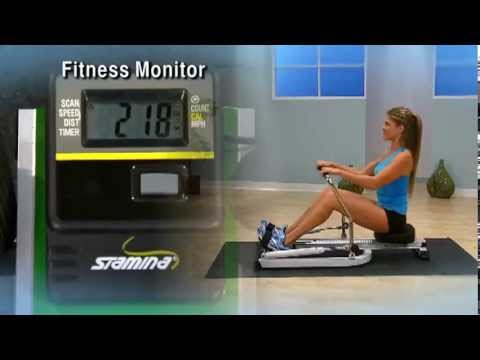
Instead of talking about Cardio or Cardiovascular activities, I chose to call this group Stamina.  Stamina activities build endurance and also build a strong heart and vascular system.  People can be overweight and still have good stamina.  I was in a bike race and I looked over my competition.  It was my first race, and I selected a few guys with muscles on their legs that looked like basketballs.  I was sure one of them would take first place.  Two hours later, the winner was this skinny kid from the University of Connecticut who looked like he could not punch his way out of a paper bag.

Activities like running, swimming, biking, skiing, roller blading, ice skating, all build stamina.  Experts call them aerobic activities as opposed to anaerobic activities.  I have met many overweight men who see me running and say, “I wish I could run but I blew my knee out playing football in high school.”  I want to say “Bullshit.  There are many other stamina activities that put less stress on the knees, and you could use to get in shape.”  The truth of the matter is that most of these guys would rather sit on the couch and watch football than get out and exercise.  Walking is a great stamina activity, and you can walk with extra knee support and it will improve your conditioning without doing more damage to your knees.

You can and should appreciate the range and variety of stamina activities that have been developed and that are available today.  They offer variety and fun and surely beat sitting on your couch remembering the “good old days.”

0905HotYoga_SC

Flexibility

Can you touch your toes?  Can you manage a day without your back aching?  Do you get aches and pains whenever you do any physical activity?  Over the years, I have noticed when going to the gym or involved in some sports that men gravitate towards weights while women gravitate towards flexibility exercises.  Karen and I started doing Yoga about 25 years ago and we do it together about 2 or three times per week.  Most of the Yoga instructors are women.  We use Yoga tapes that are on DVD or now on Amazon Prime.  It is rather sad that many men think flexibility training is something for women and that “real” men lift weights.  The two are not mutually exclusive and in fact, the two are essential.  They have a Yin and Yang relationship.

I can’t say that I ever liked stretching.  After thirty years of doing Yoga, I am still not much more flexible than I was when I was forty.  I would rather lift weights and I can see more progress when I do.  I have been running for nearly 45 years now.  About 25 years ago, I started developing back problems.  Back aches, back pain and back spasms would hit me at the oddest times.  I did not see the relationship between tight hamstrings and low back pain.  I finally made the connection and started doing Yoga.

For the past ten years of so, I have seldom had any back problems.  I can’t do many of the Yoga postures like the instructors.  I often wonder if my muscles could ever be that flexible.  I don’t know the answers to these questions, but both Karen and I will swear that Yoga has helped us over the years to avoid back, hip, knee, and shoulder surgery.  If you look at the list of surgeries, these are epidemic today.  The medical profession makes more money doing surgery than referring people to Yoga classes.

I appreciate Yoga and I am thankful that there are so many great teachers who will put their classes out on Amazon, YouTube, or other media.  Yoga is actually fun if you don’t try to imitate your instructor or compete with your spouse.

Weight-Training-Women-Dumbbell-Circuit-Workout

Strength

Lift that bag!  Tote that bale!  Pick up that grandkid!  Strength looks like big muscles to many people.  Everyone wants a six pack abs, bulging biceps and great triceps.  The funny thing is that I have seen many really strong people who don’t fit the stereotype.  There are different types of strength training.  Years ago I would focus on power training to build large muscles and lift large weights.  Now Karen and I use small dumbbells and focus on endurance training by doing higher reps with lower weights.  I don’t need to pick up a 100 lb. bag of cement.  I will leave that to the people that are twenty or thirty years old.  But there are days when I will need to do some yard or garden work and the ability to shovel a ton of dirt, or more is very much appreciated.

20210324_143136Just a few weeks ago, I put a new rock river in our home here.  I had a yard or about 1600 lbs. of river rock loaded into my pickup truck.  I got home with it and used a large Home Depot red bucket to scoop the rock up and put the river rock down.  It took me about two hours of steady work, but I had no aches or pains the next day.  I was quite surprised, and I give credit to one of our strength trainers that we use a lot.  Her name is Cindy, and we purchased her DVD on Amazon.
maxresdefault

Balance

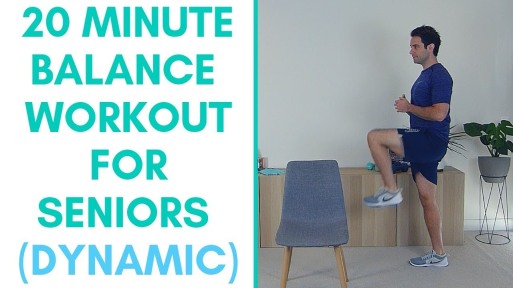
Balance is probably not something that you think about or much appreciate when you are young.  You take your balance for granted.  As you age, balance becomes more salient in your life.  More and more experts are telling elderly people that balance is essential to preventing falls and broken bones.  Karen and I added some balance DVDs to our exercise regimen a few years ago.  I thought at first that these “silly” exercises would be easy.  I run four or five times a week on rugged mountain trails, “What do I need balance exercises for?”  Then the instructor said, “If this is too easy, try doing it with your eyes closed.”  I closed my eyes and fell into my wife.  I still have not been able to do many of these exercises with my eyes closed.

I have noticed that some of our friends have had bad falls resulting in broken bones.  The older you get, the longer it takes for anything to heal.  I have had three falls so far this year since returning to Arizona and running the mountain trails.  I thank both my flexibility training and balance training with preventing any serious injuries when I fell.  The most I have received has been some scrapes and minor bruising.  As the years go by, we will focus more on balance training.  It may look silly, but it is another one of those elements that have improved our lives and that we can be appreciative for.

medical-weight-loss-graphic-V1

Weight Control

Do you like McDonald’s fries, fish sandwiches, or biscuit with sausage, egg, and cheese?  Do you enjoy Olive Garden’s Lasagna?  Do you go to the Golden Corrals’ breakfast buffet or do you prefer the Saturday night fish buffet at your local casino?  Do you expect me to tell you that these are all high fat options and that you should eliminate them from your diet?  Are you waiting for me to tell you that a garden salad full of greens and tomatoes is a much better option?  If so, you will have a long wait.  I love all of the aforementioned.

20210324_150814I now weigh 139 lbs. and am 5’ 7” inches tall.  You might think that my running and exercise is what keeps me thin.  OF course, exercise helps but let me tell you a secret.  If I run for 60 minutes, which is an exceptionally long run for me, I will burn up maybe 600 calories.  A McDonald’s Sausage, Egg and Cheese McGriddle is equal to 550 calories.   A large fries at McDonalds is 490 calories.  I can go through a buffet at Ak-Chin’s Casino and on my third trip to the buffet will easily have eaten enough calories for three runs in the mountains.  I can get an apple fritter at the Circle K after my run, and it will give me back 450 to 600 of the calories that I have just spent an hour or so losing.  I can eat a McDonald’s sandwich in about ten minutes and the apple fritter in less than five.  Here is John’s Law: “You cannot exercise off more calories than you can eat.”
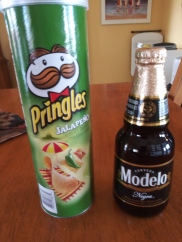
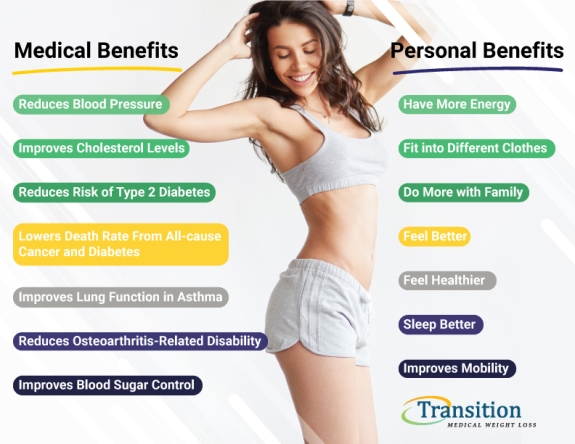
Weight control is essential to good health.  A host of health problems are associated with obesity and being overweight.  We live in a society of food abundance and higher than ever before calories per item in the supermarket.  The supermarket should be called “The fat Market” because of the high calories food you will find there.  A standard box of Pringles holds 900 calories.  If I wash that down with a Modelo beer, I will have just consumed 1100 of my daily allotment of 1800 calories.  You want to know another secret?  In two hours I will be hungry again.  My wife made me a Mexican cheesecake the other day.  Ninety grams for a standard size piece of this cheesecake gives me almost 450 calories but “Oh, is it delicious.”

20210324_131838Weight control is not about good nutrition.  It is about balancing the calories that you get in with the calories that you put out.  You can get 2000 calories of good food or you can get 2000 calories a day of bad food.  You can drink yourself to death by consuming a bottle of alcohol a day.  You can eat fatty foods that will give you high blood pressure and high cholesterol and increase your chances of a heart attack.  Foods that they say are “bad for you” are also foods that we enjoy eating.

I started off by saying that I would not tell you to avoid certain foods.  That is still true.  What I will tell you is that you will enjoy these foods even more if you eat them in moderation.  Rosie Greer the famous football player had to watch his weight.  He loved ice cream sundaes.  He did not give them up, but he would make a mini-ice cream sundae with a fifth of the calories of a full ice-cream sundae.  I often use the “Rosie Greer” strategy in my eating.  Instead of eating a large amount of something, I will dish out a smaller plate and put the rest away and out of temptation.

Scale_Feet_732x549-thumbnailTwo items are excellent for weight control.  One is a health scale.  This is more than just a scale that tells you your weight.  Mine tells me such things as muscle percentage, bone density, body fat and BMI.  I put these down in a log and every few months or so, I add the updated information to my log.  This way I can track how I am doing over time.  You can purchase a good scale for about fifty dollars.

The second essential item is a food scale.  Karen and I keep one on our counter and use it at dinner to weigh out our portions.  It is easy to eat a sixteen-ounce steak.  Instead after weighing it out, we might only eat six ounces and save the rest for a second dinner. Looking at how much we are putting on our plate helps us deal with the number of calories we are putting in.  We lose it when we go for third helpings at the casino, but our casino trips are much less frequent than our dinners at home.  If it were the other way around, I would probably weigh 1000 lbs.  Last Sunday we went to the Angry Crab Shack in Phoenix for lunch.  We had a two hour wait and missed lunch but had dinner.  When I came home, I calculated that my one meal there with two beers, fried oysters and soft-shelled crabs on a po’boy sandwich was over 1700 calories and I took ½ of my sandwich home.  Nevertheless, it tasted mighty good.

FEATURED-IMAGE-19

Nutrition

Nutrition and weight control are another balancing act or Yin Yang relationship.  I mentioned above that all things in moderation is a good strategy for eating but good nutrition should also be on your scheme of things.  It is important to eat food that provides a balanced diet with the right amount of fats, carbs, protein, vitamins, and minerals.  It is much easier to do this with fresh foods.  The world is full of “diet” plans and most of them seem designed to sell you some book or program.  There is plenty of good information freely available on what constitutes healthy nutrition.

You do not have to be a nutritionist or doctor to form a plan for good nutrition.  I have heard it said that being poor leads to lower nutrition and higher fat and sugar intakes.  I have also heard it said that a mobile society has no time to prepare healthy foods from scratch.  I do not believe that either of these two constraints cannot be overcome.  Both Karen and I have worked all of our married lives with two full-time jobs and now two part-time jobs.  Both of us are very frugal and look for bargains at the grocery store.  We minimize the number of high-priced cuts of meat or fish that we purchase and do the same with vegetables.  If I can get Mexican squash for ninety-nine cents a pound, I will purchase that over asparagus that sells for 4.99 a bunch.  We will purchase chicken at 1.39 a pound with bone in rather than 3.99 chicken filets.  We will seldom buy frozen pre-cooked foods.

Here are some of my simple principles for good nutrition. 

  • Learn the difference between healthy and unhealthy foods.
  • Look for healthy foods in the grocery store that are bargains.
  • Some grocery stores are more expensive for some things than others, explore your local stores to find the best deals.
  • Measure your portions to your desired weight.
  • Don’t buy “junk” food except in moderation. Think of it as a special treat.
  • Always eat leftovers. Use first in first out to eat leftovers before they spoil.
  • Cook meals that will last a few days in the refrigerator. Such meals as
    • Crock pot pork roast
    • Chicken soup
    • Turkey stew
    • Chili
    • Fried rice
  • Freeze any leftovers before they go bad. Use a marker to put title and date on the container.

I love eating.  It is one of my greatest appreciations of life.  I love eating exotic or interesting foods.  I love trying new restaurants.  Food is more than just a way to live.  Food brings us companionship and adventure.  New places to visit and new tastes to acquire.  Eating a balanced healthy diet should be thought of as a challenge.  Life seldom offers us as many challenges that are as important to living as eating.

“Eating is not merely a material pleasure.  Eating well gives a spectacular joy to life and contributes immensely to goodwill and happy companionship.  It is of great importance to the morale.” — Elsa Schiaparelli

Reflections on the Corvid 19 Virus by a Prime Target

corona virus

Someday I am sure we will look back on this time with wonder and amazement.  Each of us no doubt has strong feelings about what is happening now and how it is happening.  For some it is fear and dread while for others it is a time for retreat and reflection.  Millions buy out every roll of toilet paper, face masks, gloves, hand sanitizers, white flour, bottled water and handy wipes.  Scalpers take advantage of a dire situation and a dearth of moral inhibitions to make a profit while health care officials try to “flatten the curve” so that the worst cases can get the medical treatment they need.

The media and other “experts” regale us alternately with paradoxical entreaties.  “Don’t panic, it won’t be that bad!”  “It will be the worst epidemic in history since the Spanish Flu or maybe even the Black Plague.”  “The death rate is 20 or thirty times that of a regular flu.”  “We don’t really know much about this flu.”  “It may take years to develop an effective vaccine.”  “We may have a vaccine very soon.”

the corona virus

Wash your hands!  Wash your hands!  Wash your hands! 

I have many conflicting feelings myself.  I am seventy-three years of age and have lived a good life.  I can hear John the Baptist saying “Repent, Repent.  The end is near.”  Am I ready for the end?  Is my immortal soul as important as my physical body?  I see people hoarding food and I think people are more afraid of starving to death than dying of the flu.  Everything seems to be closing.  Schools, churches, sporting events, concerts, libraries, meetings and much more.  We are exhorted to continue spending but to keep going to work by politicians worried about the economy crashing while health care officials tell us to practice “social distancing” and stay home.  We are repeatedly told that we must flatten the curve.  The unknown is what this will mean for each of us personally in terms of combating this hidden menace.  Who will get the virus in a flatter curve and who will die in a flatter curve are unanswered questions.

525px-Covid-19-curves-graphic-social-v3

Stay home!  Stay home!  Stay Home!  Stay Home!  Stay Home!

Yet, I cannot help but think how amazing viruses are!  Can you imagine something that is barely visible under a microscope and that has no brain or ability to reproduce on its own, but it can reduce a human being to death and dust.  The pain and misery that this little thing can create is beyond belief.  The greatest science fiction writers in history could not come up with anything as insidious and menacing to the human race as a virus.  The movies are full of superheroes defeating the likes of mega villains like:  Galactus, Thanos, Ultron and the Dark Phoenix.  Yet, we have yet to come up with a superhero who can destroy a single lowly virus.  What is more exciting, watching Spider Man beat the Green Goblin or watching a nerdy scientist working in a laboratory trying to find a vaccine that will paralyze a virus?

Virus:  An infective agent that typically consists of a nucleic acid molecule in a protein coat that is too small to be seen by light microscopy and is able to multiply only within the living cells of a host.

Corona-deaths-March-9_170bdd867f4_original-ratio

On the political scene, everyone is trying to blame everyone else for the state of affairs that exists.  Paranoia seems to reign in Congress particularly with an election fast approaching.  The Commander in Chief of the largest most powerful military force in the world is powerless to stop the Corvid 19 virus from spreading.  Yet he has the temerity or stupidity to suggest that his “Border Wall” might help staunch the spread of Corvid 19.  His stooge in waiting Mitch McConnell can block every bill in the Senate, but he can’t block the virus.  Other Trumpists like Representative Gaetz of Florida vote against a bill to provide paid sick leave but then take paid sick leave himself.  It has been noted by the opposition that President Trump did not do much to help our medical research capabilities during his reign of horror:

“President Trump’s third budget request, released Monday, again seeks cuts to a number of scientific and medical research enterprises, including a 13% cut to the National Science Foundation, a 12% cut at the National Institutes of Health and the termination of an Energy Department program that funds speculative technologies deemed too risky for private investors.” — March 12, 2019 – Washington Post

A friend of mine likes to remind me that we catch more flies with sugar than vinegar.  People want to hear positive things during a time of crisis.  We need to have hope and inspiration.  Yet to put out shmaltzy homilies when the reality does not support such optimism may simply be a case of too rosy colored glasses.  I wonder if I am an optimist or a pessimist?  I like to think that I am a realist.  Whether the glass is half empty or half full depends to me on whether the glass is filling up or going down.

Total-Death-Toll-Over-Time-of-COVID-19-12

I look at some statistics that say perhaps 40 to 70 percent of Americans will get this virus.  The statistics are based on estimates from the Center for Disease Control.  Their estimates are based on some modeling methods.  For instance,  if the population of the US is approximately 330 million people and the death rate of this virus is estimated at 2 percent it will mean that between 200,000 and 1.7 million people will die from this virus.  Calculations based on the C.D.C.’s scenarios suggest an additional 2.4 million to 21 million people in the United States could require hospitalization, potentially crushing the nation’s medical system, which has only about 925,000 staffed hospital beds.

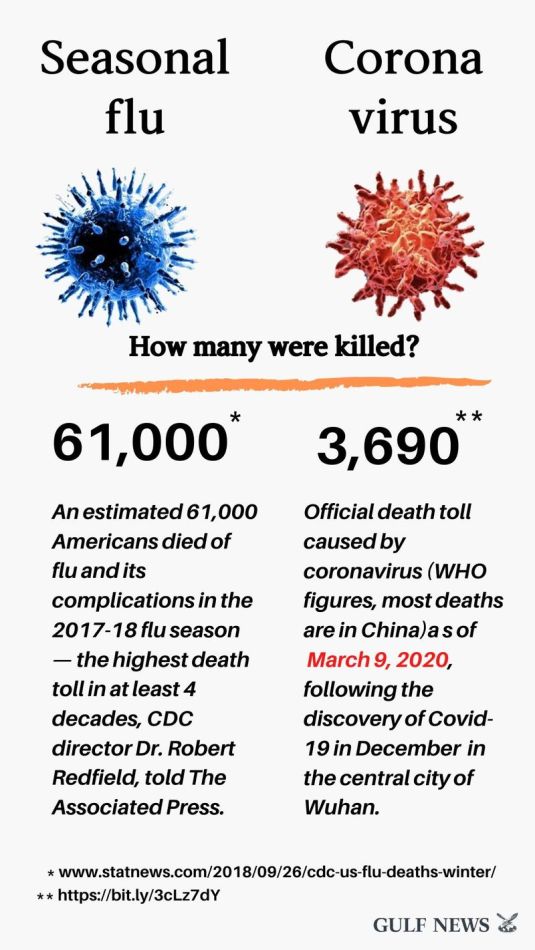
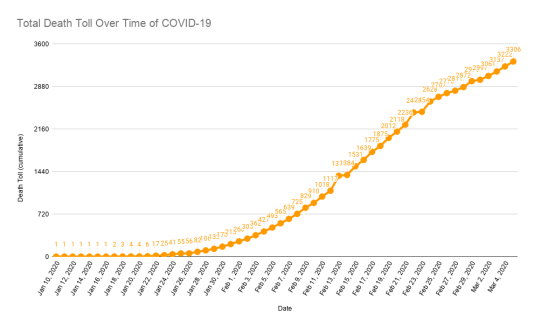
On the other hand, current data from China shows the rate of viral infection declining in China and the total number of deaths to be 3,199.  This suggests a death rate per capita that is considerably lower than estimates given by many experts.  If you figure that there are 1.4 billion people in China and that there were 3,200 deaths to date, this is a death rate of 1 per 438,000 people.  Extrapolating to the USA, this would mean a total of 750 deaths.  This is a death rate that is considerably lower than most pundits are predicting.  Keep in mind that China is where the disease started and where it took some time to identify the virus.  On the other hand, China also reacted very rapidly to containing and isolating cases of the virus.

1024px-Illustration_of_SARS-COV-2_Case_Fatality_Rate_200228_01-1

The figures I present are incredible.  The range of deaths vary between 750 and 1.7 million.  Who is right?  Why are the ranges so great?  Are we seeing a battle between optimists and pessimists or is it simply another case of the media hyping worst case scenarios to sell advertising?  Very large gaps between 1. 7 million deaths and 750 deaths suggest a lack of accurate facts and evidence.  Which will prove to be true?  What should the average citizen do?  As a wise person once said, “Pray to the lord but row for the shore.”  This means that we should hope for the best but prepare for the worst.

Say your prayers for others and wash your hands as frequently as you can.  I think this is the best than anyone can do.  I wish I had better advice.


3494– Monday, October 7, 2019 — Can We Really Grow Old Gracefully? – Part 2

persico family with names

This is the continuation of an article I started which might have been called the “Top Ten Attributes for Growing Old Gracefully.”  In Part 1, I described attributes 1 through 5.  I also noted that two of my very good friends had been ill for some time and were not expected to live out the year.  One of these good friends, died two days after I published Part 1 of this article.  He was a unique individual about whom I wrote the following to some common friends the day after he died:

“I will always remember Sam for his brilliance and intellectual rigor.  I do not think I have ever met anyone with a greater knowledge of the world than Sam.  He was my first mentor out of graduate school, and I learned almost all I know about consulting from the work that we did together at International Nickel in Canada.  He was kind and gracious to a fool that knew little or nothing about the consulting world.  Over the years, we had our ups and downs, but Sam always helped me when I was in need of advice or guidance.”

“The world is truly less of a place for me and many others without Sam.” 

I must say a word about the validity and reliability of the ideas that I am presenting here.  I believe in them with my whole heart and soul.  Everything about life that I have learned up to this point says that they are the keys to a happy old age.  A friend whom I have found since writing my blogs left a comment in Part 1 where she said: “I hope you are following this excellent advice, John!  I replied: “Jane, I wish I could honestly say that I always do but that is not always the case.”

For me, I am somewhat like the alcoholic with good intentions who occasionally falls off the bandwagon.  Looking at each of these attributes, I have good days and bad.  But somehow, I climb back up out of whatever is bothering me, and I start again.  I have days when I am not grateful or have very little sense of humor.  I have days when I can find no joy in life and days when I can find no purpose or meaning in what I am doing.  But I know that “this too will pass” and that it is important not to give up.  Growing old is a journey that only ends when it will be too late for you to do anything about it.  But as long as we are alive, we can do our best to enjoy the journey.  So, here are the rest of the key attributes that will help you grow old gracefully and enjoy the trip.  Following are attributes six through ten.

one_kind_word

  1. Kindness

This is a simple one.  Do something kind for someone each day.  Make someone else happy by sharing your good fortune, knowledge, skills or abilities with another.  It is often easier said than done though.  We get so busy with our own problems that it is easy to forget the needs of those around us.  Very few people will wake up today and jump out of bed with joy at being alive.  For many people, the kind word or deed that you can do for them will give them the strength to live another day or to have a day with joy and happiness.

A funny thing happened to me this afternoon while I was on my way to see a play called Pipeline at Penumbra Theater in St. Paul.  An old rumpled homeless looking man on a bicycle asked if I could give him a few bucks for a meal.  I was feeling generous, so I pulled out my wallet and took a peek in it.  I had a five, a twenty and three one-dollar bills.  I grabbed the fiver and handed it to the old man.  He took it and thanked me, and I impulsively decided to give him another single.  He took the second bill I gave him and let out a rather exuberant exclamation of thanks and gave both me and Karen hugs.

He set off down the street and said that he was heading right to McDonald’s to get a meal to eat.  I was still surprised at his extreme gratefulness.  Later on, when I went to look in my wallet for some money to pay for some stuff, I found that I still had the three singles but no twenty.  I suddenly realized why the old feller had been so ecstatic.  I had given him the five-dollar bill and the twenty-dollar bill.  I could have kicked myself in the butt.  I told Karen about my unexpected generosity and we both laughed and wondered what he was going to get to eat for the money we gave him.  I felt a little stupid giving this much money away but on the other hand, how many times have I wasted three or four times this amount on some impulse purchase that I did not really need.  It felt good knowing that I had made somebodies day a little brighter even if it was by accident.

“Beginning today, treat everyone you meet as if they were going to be dead by midnight.  Extend to them all the care, kindness and understanding you can muster, and do it with no thought of any reward. Your life will never be the same again.” — Og Mandino

benifits-of-physical-fitness

  1. Physical Fitness

What is the secret to living a long and health life?  Ask anyone who fits this qualification and who is in their nineties and do you know what they will say?  “Keep moving!”  “Keep moving!”  Stay active!  Garden, run, swim, bicycle, play Pickleball, walk, do Zumba, do Yoga, do anything but keep your body moving!

I have talked about the need for an exercise plan in many of my other blogs.  You have a choice.  If you live long enough and stay somewhat reasonably fit, then like our friend Joan, you can still play golf when you are ninety.  Or you can sit all day watching TV and become more and more dependent on walkers and canes and surgeries for your ailing joints.  Some of the problems of old age are unavoidable but some are due to a lack of good nutrition and good exercise.  Keep all things in moderation.  You will not be an Arnold Schwarzenegger at 80 but you can still be healthy enough to take trips and spend active time outdoors.  The key?  Right!  Keep moving!

For me, I love having an exercise plan that will adapt to my changing circumstances and that is fun.  If you are interested in more information on developing an exercise plan, see my blog at:  How Can We Set Realistic Exercise Goals as We Age?

“Those who think they have no time for bodily exercise will sooner or later have to find time for illness.” — Edward Stanley

friendship

  1. Friendships

There is a story told about Thomas Jefferson who supposedly attended a fiftieth anniversary party for the signing of the Declaration of Independence in 1826.  According to the story, Jefferson was not recognized by anyone at the party.  He was one of only three surviving members of the original signers who were still alive.  The other two being John Adams and Charles Carroll.  Jefferson died on July 4th, 1826 as did John Adams, so I am not sure when the party was actually held.  Nevertheless, Jefferson is reported to have said that he felt like a ghost.  That he felt like someone living in a time when he no longer belonged.

This story made an impact on me since as we age, we see more and more of our loved ones, relatives and friends pass away.  In the picture (top of blog) taken at a wedding for my father’s youngest sister, I am standing to the right in the picture.  The wedding was held in 1957.  The most remarkable thing about this photo (For me anyway) is that I am the only one left alive in the photo.  My sister died of lung cancer several years ago and my two cousins in the photo both passed away.  One died of a stroke and the other died younger of suicide.

My Aunt Mary, who is on the right in the picture, (She was my Godmother) died at the age of 103 about four years ago.  She too outlived almost everyone in the photo except me.  She outlived two of her sons and her husband who are in the picture.  I asked my Aunt a few years before she died if she felt like she no longer belonged and that her time had passed.  Her answer surprised me.  She said “No.”  I asked how she managed, and she told me that you must keep making friends.  She said that she had made many new friends who cared about her and helped enrich her life.  Could this be how she made it to 103 years of age?

The attribute of “Friendship” was mentioned at the Caregiver Conference I attended as one of the most important factors for a happy old age.  We cannot bury ourselves in pity or sorrow for the past.  Life must go on.  As someone said: “Life is for the living.”  You are never too old to make new friends.

“If you go looking for a friend, you’re going to find they’re very scarce.  If you go out to be a friend, you’ll find them everywhere.” — Zig Ziglar

chronic_pain_treatment_continuum_jpeg

  1. Pain Management

Yes, you better believe it.  Pain management is a key attribute of growing old gracefully.  The older you get, the more pains you will have.  You will have pain and if you cannot deal with it, life will be one endless day of misery.  The sad fact is that people seem to only know two ways to deal with pain.  The first is to see a doctor who will often prescribe surgery.  The second is similar, you go to see a doctor, only in this case, the doctor prescribes some sort of pain killer.  If you want to know what is causing the pain, which should be the first step towards any diagnosis or remedy, the doctor will be very reluctant to order a Ct scan or MRI due to the cost of such diagnostics.  He/she might do some blood tests or other tests that will probably not tell you very much.

More than likely though, your doc will just tell you that the cause of your pain is “Old Age” and your remedy is to live with it.  The older you are, the more likely the latter will be your diagnosis and prescription.  A few years ago (until the opioid epidemic which doctors and pharmaceutical companies created), they would probably have given you an abundant supply of Oxycontin or Vicodin and told you to go home and swallow a pill.

Now the first step towards pain management is preventive.  You guessed it.  Exercise and weight control.  However, even with diligent exercise you will encounter problems.  The chronic pain treatment diagram (I have included above) is one that best fits my ideas of how we should deal with pain.  You start with the lowest possible tier with the least side effects and you work up.  You do not immediately accept that surgery is the solution.  There are more surgeries done in this country that are unneeded than I can count.  If you doubt my assertion, then see my blog on the subject where I have written about the epidemic of surgeries which serve only to make more money for doctors.  “Should we be cautious when seeing our family doctor?”

I could tell you true story after true story of pains that I have dealt with over the years.  Yes, I had prostate surgery and hernia surgery.  These required invasive medical procedures and some respite from exercising.  But I have had Plantar Fasciitis, Sesamoiditis, Morton’s Neuroma, knee pain, hip pain, shoulder pain, back pain and several other neuromuscular pains.  I have not had surgery for any of these.  While several of these problems managed to derail my exercise program for some months, I have managed to deal with each of these without surgery and am still running and exercising regularly.

In all cases, I have used the pain management continuum as noted above.  Starting with diagnosis (sometimes seeing a doctor but often doing research on the web) and moving up to the first level of diet, exercise and nutrition.  My second level would include OTC drugs, lotions like Tiger Balm or now CBD cream and diet supplements like Glucosamine and Turmeric.  I have managed to avoid opioids except in one case of dental problems where some implants became infected.  My second level also includes things like knee braces and elbow braces to help stabilize the joint until the inflammation went away.  My favorite second tier cure is a great massage which if I appear to be in enough pain, my spouse will usually proffer.  A massage will not cure the pain, but it helps to alleviate the pain and with other pain management techniques can speed recover.

I will not say anymore about pain management except to be wary of surgery until you have exhausted other less invasive possibilities.

“I’ve dealt with a lot of physical pain, with a lot of emotional pain; anybody’s who’s ever been an alcoholic has handled both of those in extreme.” — Jason Isbell

hope and optimism

  1. Hope and Optimism

I have saved these two attributes for graceful aging for last.  I believe these are essential for a happy and complete life.  I also believe they are the most difficult to acquire and maintain.  How can we be optimistic or have hope when death surrounds us and is the most inevitable fact of our lives?  What is there to be hopeful for when your friends and loved ones are dying and you see a future where you are left alone?  Sounds pretty bleak doesn’t it?

They say hope springs eternal in the human breast but a simple observation of the people you know, will tell you that is a lie.  People give up hope when they are continually beaten down by the daily toil and challenges of life.  It should be a great deal easier to be optimistic when you are twenty than when you are eighty, but I doubt whether hope and optimism are linked to aging.  (True, the suicide rate for the aged is very high, but some of that may reflect practicality rather than hopelessness. The suicide rate for teenagers is nearly as high as that for the aged.)  The simple fact is that some people are more optimistic than others.  Some are more hopeful than others.

But hope and optimism are a choice we each can make in how to see life.

I can’t tell you what your hope should be.  My hope is that my writing will help you to lead a better life. I am hopeful that something I say and someone who reads what I say will find some value in my ideas.

I can’t tell you what to be optimistic about.  I am optimistic about my trip to Russia this coming year.  It will be a new adventure and I will go again with my spouse to our 40th new country.  I have always dreamed of taking an express train across Europe and we are going to take the Paris to Moscow Express for our trip into Russia.  There are a million things that could go wrong between now and then, but what gain do I have from being negative and pessimistic?

Find your hope and find your optimism.  Perhaps they will change each day but without them, your life will be like a life without sunshine

“We must accept finite disappointment, but never lose infinite hope.” — Martin Luther King, Jr.


Onwards Towards Death and Dying:  Part Two on Aging

1140-disrupt-truth-and-cliches.imgcache.rev0f0ffd5aa6721febae57ead93c524860

This is the second part of a blog that I wrote a few weeks ago.  Part one dealt with the issue of death.  I was surprised by how many reader comments noted that people do not usually talk about this subject.  I realized from listening to several remarks that not only do we face death inevitably as we age but that there is a “journey” to death that we all take.  It is the final years of our lives.  These final years are perhaps the most important years for many of us.  They will certainly be the most difficult.

In this second part, I would like to discuss some ideas for making these last years or twilight years of our lives as happy and successful as they can be.  By success, I am not talking about making a lot of money or winning the lottery.  Being successful in old age is about living our final years with dignity and integrity.  It is not about recapturing our youth, but it is about capturing the maturity that many of us (myself included) never captured when we were younger.  There is no merit to the comment that you cannot teach an old dog new tricks.  I know too many older people who are continually learning and growing in their twilight years.

Letting Go versus Giving Up

Many people confuse letting go with giving up.  I know many people who cannot quit work, hobbies, sports etc., that they are no longer capable of doing.  A woman friend of mine (who is my age) has recently bought a new motorcycle after crashing her last one.  She has for many years had difficulties handling her bikes, but she still insisted after her last accident on buying a new two wheeled bike.  Many older people who do not want to give up the sport finally realize that they will be better off with a trike or a three-wheeled motorcycle.  They are not giving up the sport, but they are letting go of something that they can no longer do.  You are all familiar with the adage of the aging boxer who cannot give up his dreams of becoming a champion again.  It is a dangerous dream based on not being willing to let go.

There are going to be many things that we once did as we get older that we either can no longer do or that we cannot hope to do at our former level of performance.  Giving up is to quit.  I am not advocating quitting.  Quitting is a formula for simply accepting death and waiting patiently for it.  I have no desire to share such a counsel.  I am advising that we realistically appraise our abilities and decide when it is time for us to hang up our spurs or gloves and perhaps pursue some other activity.

never give up

I have been running for nearly fifty years now.  I know that it gets harder to run each year, but I am still able to comfortably continue my outdoor runs.  When the time comes that it becomes too dangerous or too hard, I will either buy a treadmill, switch to bicycling or simply go out for long walks each day.  I will let go of running but I will not give up exercising.  Not letting go is generally motivated by too much pride and in the case of old age, pride definitely goes before a fall.  Witness the number of elderly people who still insist on climbing up on their roofs or getting up on that ladder to fix something.  The outcome is too often sadly predictable.  As Pete Seeger sang “When will they ever learn.”

Coping

When we were young, we did not put much effort into coping.  As we get older, it often becomes more difficult to cope with life.  We can become burdened by physical problems, problems with our loved ones, monetary problems, or many other social issues.  We need to have ways to cope with these issues as we get older.  I have found that we can break coping strategies into two categories:  Mental Fitness and Physical Fitness.

  • Mental Fitness

Perhaps the most difficult mental challenge we face as we age is to stay engaged in life.  Once we are no longer employed, it can seem that life has no meaning.  Suicide rates among the elderly are very high and attest to this loss of meaning and purpose as we age.

“Many associate suicides with young people, like troubled teens or twenty somethings who never quite got their lives off the ground.  In fact, it is much more common among older adults.  According to new figures just released this week from the U.S. Centers for Disease Control, the highest rate of suicides in America is among people age 45 to 64. There were more than 232,000 suicides in this age group from 1999 to 2016.”  — Forbes, 2018, Older Adults at Greatest Risk For Suicide

I believe that there are three keys to mental fitness.  We must stay interested in life, involved in life and active in life.

Staying interested might involve becoming interested.  Perhaps when you were working, you were so busy that you had no other outside interests.  You now have time to go to the library and find some area of knowledge that you are excited about.  The best way to stay interested in life is to keep learning.  It might mean continuing to read the paper or read some books or write some papers.  Write your memoirs for your family.  Too few elderly leave anything behind when they die except a box of lifeless pictures.  What about telling your children who, what and why you did the things you did when they were growing up.  Chances are they never went to work with you or really understood what you did when they were growing up.

My wife Karen has taken up playing the dulcimer.  She plays with a group of other dulcimer players (mostly retired women in Tucson) who go by the name of the Tucson Dulcimer Ensemble.  They play at churches, festivals, nursing homes and assisted living centers.  I have attended many of these sessions and I can safely say that Karen and her group are deeply appreciated by the older people at these centers who may be too frail to get out to concerts anymore.

learn-something-new

Staying involved might mean finding a charity or volunteer group to work with.  It might mean taking more time with your family and grandchildren.  A good friend of mine who is 86 has become quite involved with several groups including the Rotary, SCORE and a Marine Corp Honor Guard.  He told me this past week that he has participated at 451 funerals for former Marines.  Lou is involved in life and still making a difference in the lives of others.

Staying active.  I am not talking about physical activity here, but activity aimed at exploring the world.  Activity aimed at opening your mind to the world around you.  One way to stay active mentally is to go someplace you have not been before.  Go to a meeting of your political party.  Go to a church.  Go to a new restaurant.  Go to a park, museum, zoo or famous tourist sight.  Go anyplace, just don’t sit at home.  Become an explorer of life.  It is never too late.

Mental health experts will tell you that the best way to fight depression and thoughts of suicide is to stay active.  I know many people my age who are finally getting out to see the world.  They are taking Senior Classes at their local college, going on cruises, joining hiking clubs or other clubs that help them get out and explore the world.

Karen and I have been to thirty-three countries.  We are planning to go to Russia next year.  I know neither of us has the energy for the trips that we took forty years ago, but I cannot imagine my life without exploring some new places that I have not been before.  We cannot afford to go as frequently as we used to but with some foresight and planning, we can still manage to make a trip every few years.  By the way, almost every time we have planned a trip, someone has said “Don’t you think it is dangerous to go there.  What about the terrorists?”  I assure you that I would rather be shot by a terrorist then die a craven coward in my bed.

  • Physical Fitness

There are three components of physical fitness.  These are Exercise, Diet and Discipline.  I do not have to tell you why physical fitness is important.  I doubt if anyone in the world denies the importance of fitness.  However, let me tell you a story which I think (sadly) exemplifies the American approach to exercise and diet and discipline.

I walked into a Circle K one morning (Very typical for me each day) and poured a cup of decaf coffee.  I walked up to the cashier.  She was in her late twenties and quite obese.  She must have been following a protocol because she asked me (as all cashiers at Circle K usually did) if I wanted a donut.  I replied that “Yes, I wanted a donut, but I did not want the calories.”  She answered very solemnly “I used to care but I don’t care anymore.”

The gyms and athletic clubs joke each year about the New Year Goals Effect.  Right after New Years (every year) the parking lots at the gyms will be filled to overflowing with new members.  Newly minted exercise addicts who have decided to lose fifty pounds, build fantastic muscle and look like Supergirl or Superman.  The joke among the fitness crew is that this will only last about six weeks and then the parking lot will return to normal as the new members go back to watching sports and eating potato chips during the “big game.”  Every weekend there is a big game.  Americans have become the fattest and (dare I say) physically laziest people in the world.

  • Exercise:

It does not matter whether you are eight or eighty.  Physical exercise is good for you.  A good physical regime includes:  stretching, strength, balance and cardio.  An hour a day, four or five days a week for anyone over sixty is enough to keep you feeling fit and looking fit.  The problem you are going to face is that too many regimes are designed for younger people.  The idea of “exercise goal setting” is highly overrated for anyone over sixty.  I have written a blog on this aspect of fitness which has a great deal of useful information on setting up a realistic exercise program when you are over sixty.  Go to How Can We Set Realistic Exercise Goals as We Age?

maxresdefault

  • Diet:

Moderation and common sense are the two keys here.  Every other day some expert or study is telling you that something is good for you or bad for you.  Today, eggs are bad.  Tomorrow eggs are good.  Today gluten is bad.  Tomorrow gluten is good.  Today alcohol is bad.  Tomorrow alcohol is good.  Today butter is bad, tomorrow butter is good.  The conflicting studies, reports and information are enough to drive anyone crazy.  What I have found over the years is the adage “All things in moderation” is generally a good way to go.

True, some things are definitely bad for some people, even many people.  Smoking has no health benefits.  Excessive alcohol consumption is not going to do any good for your health.  In fact, though, excessive anything from donuts to beef to fish may not be good for you.  Our bodies seem to thrive on a balanced diet.

I am a calorie counter.  Every day, I enter my calories in an online software program called “Fatsecret.”  This program allows me to research calories for thousands of food items, enter them in a calorie spreadsheet and at the end of the day, it tells me how many fat, carbs, proteins and total calories I have ingested.  It is easy to use, and I find that when I use it faithfully, I can keep my weight and body measurements in acceptable ranges.  I use a weight scale at home which measures about six different body factors to monitor my health.  These scales are cheap to purchase and easy to use.  I calculate my body indexes about every six months or so.  It takes less than one minute on the scale and then I enter the data in an Excel Spreadsheet.   As of this month, my latest data is:

Body fat: 18.1

Muscle:  29.9

Bone:  4.6

TBW:  67

BMI:  24

Weight:  Average for this month – 149.42

I enter the following data from my annual physical into my spread sheet as well to help me track trends and to see whether I am maintaining, declining or improving.  Trend data is much more relevant for determining health priorities than single data points taken once per year.  Few if any doctors routinely track trend data for their patients.  My latest annual physical gave me the following data:

Glucose:  92

Total Cholesterol:  211

HDL:  71

LDL:  128

Blood pressure:  115/70

Resting pulse rate:  60

  •  Discipline:

 The last factor in staying physically fit is discipline.  You might think that some of the above is “overkill.”  What you need to remember is that you do not have to enter data every day.  If you manage to do two out of every three days in the month, you will still have plenty of data to manage your diet and health.  There are many days when Karen and I are traveling, when I forget, when we are busy with friends or when we are at someone else’s house, that it is difficult to chart any data.  I do not worry.  Just like you do not have to exercise every day to be healthy, you do not have to chart data every single day.  If you manage to get sixty percent of your days charted, you will be doing great.  I set my goal at sixty percent for the month in terms of charting as well as days to exercise.  If I miss my goal, I simply try again next month.  The secret is to keep trying and not to give up.  If I have a bad month, I get up and try again next month.

Thinking back to the joke about health wannabees on New Year’s Day trying to get fit in less than six weeks.   It probably will not happen.  Some will make it to fitness, but it is not a six-week project, it is more likely (depending on your present level of fitness) a two to three-year project.  What will separate the winners in this battle from the “wannabees”, is simply the factor of discipline and determination.  Can you get up today and go to the gym?  If not, can you get up tomorrow and go to the gym?  Can you manage to go to the gym at least 35 percent of the days in this month?  Can you manage 25 percent?  My goal is sixty percent.   Many months I do not make this goal.  I try again the next month.  Goals are not etched in stone.  You need to be determined and disciplined but you also need to be flexible and fallible.  We are all only human and we will fail, time and time again.  It takes discipline to keep trying and not to give up.

michael jordan

There are two more segments to aging that I would like to cover, but I fear that this blog has become too long.  In part three, we will look at what I call “Facing Reality” issues as well as the problem of “Economics.”  This latter issue will address money problems, budgets and finances as we age.  I specifically want to deal with those of us who are not rich and did not set aside enough to simply live happily ever after with no worries about money.  I for one need to be concerned about money every day, but I do not use the term worry since I generally have some things under control.  I want to share with you some of my strategies in these areas next blog.

Time for Questions:

What did you find helpful in my blog?  What ideas will you try?  What strategies have you found that you think help you to age gracefully?  Can you share your ideas in the comments section?

Life is just beginning.

“Age has no reality except in the physical world. The essence of a human being is resistant to the passage of time. Our inner lives are eternal, which is to say that our spirits remain as youthful and vigorous as when we were in full bloom. Think of love as a state of grace, not the means to anything, but the alpha and omega. An end in itself.”  ― Gabriel Garcia Marquez


How Can We Set Realistic Exercise Goals as We Age?

time to set goals concept clock
Goal setting is as American as mom, God and apple pie.  Every exercise book, life improvement book and management book has a section on goal setting and accolades for the process.  I also once subscribed to the philosophy that those who did not set goals for their life were losers, losers and bigger losers.  Winners set goals.  When winners reach their goals, they up the bar and set them even higher.  That is the American Way.  Set unreachable goals and if you should meet those goals, then move the bar up, ever up, ever higher.

Well, I am going to tell you that everything in the above paragraph is STUPID advice.  Most of the wisdom around goal setting is simply dumb.  Unfortunately, when it comes to your health, it is not only dumb, it is dangerous.  It was not until 1986 that I met the man who would change my mind and my attitudes towards setting goals.  This man was the renowned quality expert and statistician Dr. W. E. Deming.

demingI had just finished my PhD program in Training and Organization Development and joined the consulting firm of Process Management International.  One of the founders Lou Schultz was a follower and friend of Dr. Deming and I was soon introduced to Dr. Deming and his world.  It was a world based on 14 Principles of Management which defied everything I had been taught in my business classes at the University of Minnesota.  Dr. Deming, upon meeting me, challenged me with the comment that “Everything they taught you in your business classes is wrong.”  I was stunned and somewhat chagrined by his comment.  It struck me as rude and extremely arrogant.  In six months, I learned that Dr. Deming was more than fifty percent right.  Inside of three years, I learned that he was at least ninety nine percent right.  Do not think I was brain washed.  I have always verified new knowledge by theory and personal experience.  Considering the hypothesis that Deming threw out, I was provided a new theory.  I became religious about testing his ideas to see if he was wrong.  Time and time again, Deming proved correct.

Deming’s 14 Points for Management are as follows:

  1. Create constancy of purpose for improving products and services.
  2. Adopt the new philosophy.
  3. Cease dependence on inspection to achieve quality.
  4. End the practice of awarding business on price alone; instead, minimize total cost by working with a single supplier.
  5. Improve constantly and forever every process for planning, production and service.
  6. Institute training on the job.
  7. Adopt and institute leadership.
  8. Drive out fear.
  9. Break down barriers between staff areas.
  10. Eliminate slogans, exhortations and targets for the workforce.
  11. Eliminate numerical quotas for the workforce and numerical goals for management.
  12. Remove barriers that rob people of pride of workmanship, and eliminate the annual rating or merit system.
  13. Institute a vigorous program of education and self-improvement for everyone.
  14. Put everybody in the company to work accomplishing the transformation.

Note number eleven above, where he says to eliminate quotas and numerical goals.  How can he advocate this when every single expert in the world says to do the opposite?  Setting goals and establish quotas and targets is the refrain most often heard in business.   Dr. Deming says that following the traditional rules on goal setting is counterproductive.

“Management by numerical goal is an attempt to manage without knowledge of what to do, and in fact is usually management by fear.”  — W. E. Deming

Problems with Goal Setting:

exercising

There are several problems with goal setting which I would like to discuss.  You need to understand these problems to understand why goal setting my hurt your health.  If you have some knowledge of the statistical concepts that Dr. Deming puts forth so much the better.  However, I will try to explain Deming’s opposition to goal setting for the reader that has no statistical background.  The four major problems are:

  1. Where did your goals come from and how realistic are they?
  2. Is your system/body capable?
  3. What is your apex?
  4. Are your goals sustainable?

I will try to explain how each of these four problems impacts the goal setting process.  I hope you will have a better idea of the pros and cons of goal setting after reading this blog.

  1. Where did your goals come from and how realistic are they?

Dr. Deming always said that if you do not know what a process is capable of (measured by standard deviation and CPK) than any attempt to set a goal would be foolish.  Under these conditions, it would just constitute wishful thinking.  For instance, organizations will often set sales goals by simply decrying that they want a 10 percent increase in sales over the previous year.  The first question I would have is why 10 percent?  Why not 1,000 percent?  Ridiculous you might say to a 1,000 percent increase but it is no more ridiculous than 10 percent if I do not have a system that can handle or produce that kind of an increase.  Any goal is ridiculous if you do not have a system and a process capable of achieving that goal.  Unfortunately, too many goals are simply pulled out of thin air and have no roots in reality.

  1. Is your system/body capable?

set huge goalsLet me illustrate the problem addressed by this question with an example from my own life.  Several years ago, I had just turned sixty years of age and I thought it would be cool to be able to do twenty pullups.  I could usually do about ten or so and so I thought it would be a snap to increase my routine and get to the goal of twenty.  At first, I simply increased the number of pull-ups I did each week but this did not work very well as I soon plateaued.  I then decided to find some “established” routines.  These established routines generally involved doing at least three sets three times per week and having the number of repetitions in each set increasing each week.  The formula upon which these increases were based was never disclosed.

recon ron

I tried several different routines including the Marine program, a program called Recon Ron and several online programs that outlined a systematic way to reach twenty pull-ups.  In each case, I followed the program but after six or so weeks, I would reach a point at which I could not advance to the next level.  Sometimes the number of reps required for the next level was down right ridiculous.  For instance, one day my total repetitions might be five sets of 10- 13 pull-ups each set.  The next day, they would have five sets of between 13-16 pull-ups.  The jump between 13 and 16 was like trying to jump across a mile-wide chasm.  No way could I make the transition.

myth of sisyphusIn hopes of salvaging the program, I would often drop back to the previous level and try to continue my progress.  However, every time I started to progress again, I would reach a point where my body could not obtain the increases dictated by the regime I had selected.  I once reached as high as sixteen pull-ups before I crashed.  The crashes would usually take the form of having an acute muscle pain or sometimes getting sick and not feeling like I had the energy to continue.  Laying off for two weeks or so to recover, I would find that when I tried to start the program again, I had now dropped down to a much lower level than I had previously attained.  It was like starting all over again.  Over the years, trying to reach my twenty pull up goal, I have felt like Sisyphus pushing the rock up the hill and nearly reaching the top only to have the rock roll all the way down again.

exercise-stress_640-480

I am now of the belief that first, at my age, I may not have the system or body capability to achieve twenty pull-ups and second, (more importantly) that I am not doing my body any good by trying to push it to some arbitrary goal.  What is magic about twenty pull-ups?  Am I going to be any healthier or fitter?  Furthermore, trying to achieve some arbitrary goal, I could end up doing real damage to my shoulders or back.

  1. What is your apex?

hippo to unicorn

An apex is the top or highest part of anything.  Most athletes reach their physical peak at about twenty-nine years of age.  This is true for many but not all sports.  I did my best 10K run of 38:48 when I was thirty years old.  Since then, my running times have become slower and slower.  Some athletes, particularly swimmers may maintain their peaks for many years past their apex.  This is not the general rule.  It is more likely that whatever sport you excel in your apex performance will deteriorate with age.

The importance of one’s apex performance lies in the recognition that it will be impossible to maintain this performance over time.  Moreover, it is foolish and unproductive to try to use such prior performance measures as goals for one’s fitness.  The outcome will likely be pulled muscles or worse.  What makes more sense is to set “maintenance goals” that are well within your reach and work towards or with them.

A maintenance goal is much different than a stretch goal.  Most books on physical fitness emphasize stretch goals.  This concept of stretch goals represents a state wherein you are constantly setting lofty goals and moving them forward as you accomplish them.  This is very dangerous and frustrating.  The first problem with the stretch goal strategy is that they are arbitrary and have no empirical relationship to how fit you are or want to be.  The second is the danger of hurting yourself as you constantly try to increase the number, weight or time involved with each goal.

In a maintenance goal, you decide first on the level of fitness that you think makes sense.  For instance, do I want to be able to bench press 150 lbs. or do I want to be able to bench press 50 lbs. three or more times?  If I am working to become a champion weight lifter than lifting large weights is a must.  If I am working to have good muscle tone, flexibility and a relative level of arm strength necessary for normal every day lifting, then being able to life 25 lbs. ten or twenty times will make much more sense than being able to bench press 300 lbs. once.  Furthermore, with maintenance goals, I am much less likely to injure myself by tearing or pulling a muscle.

Perhaps you have never had an apex performance in any sport.  This is not important.   An apex performance simply gives you a relative benchmark based on your best ability at a certain age.  If you have never worked out a day in your life, then simply start with what I call a 1-1-1 program.  I developed this concept when I was being discharged from the Air Force after serving four years.  I had to go in for a discharge physical with 12 other men.  After the physical, the doctor called us all together and told us we were all overweight and fat.  I was so embarrassed, I determined to start exercising the next day.

The following day after my physical, I had my wife drive the car about a mile down a dirt road and drop me off.  I told her to drive down to the end of the road and wait for me.  I started to jog down the road.  I did not even make it half way down the road before I became sick to my stomach.  I walked the rest of the way to the car and asked my wife to take me home.  Once home, I went to bed and stayed there until the next morning.

I knew right then and there that I had to start off small and work up.  I decided to walk about a block each day.   Do one push up each day and attempt one pull up each day.  Eventually, I shed my excess weight and got back into the best shape I had seen in three years.  I labeled my program, the 1-1-1 program after my three goals or starting points.  I allowed myself to progress naturally and not to adopt any outlandish and wishful stretch goals.  Later, I started competing regularly in running, biking, swimming, canoeing and skiing events.  I continued this competing until I burnt out on the extra load that competing places on one’s body.  As the years went by, I could clearly see I was not going to win any gold medals.  Based on a knowledge of my body and the realization that my goals needed to adapt over time, I set a series of basic maintenance goals which over the past ten years I still try to follow.   My goals are:

  • 4 or 5 runs per week with an average run of 30 minutes for the month. Average 60 percent “days run per month” based on 30 days in the month. 
  • 10 Pullups 3x per week
  • 200 bicep curls with five lb. weights, 3x per week
  • 45 Triceps presses, 3x per week
  • Calf stretch and knee bends, 3x per week, 3 minutes stretches with 1 minute for knee bends
  • Yoga 25 minutes, 3x per week
  • Ab exercises 8 minutes, 3x per week

The above routine is my basic routine which I do each week.  I do not increase my goals.  I do not try to stretch myself.  I measure and monitor my routines each week to accomplish what I consider to be my maintenance goals.  I call them maintenance goals because I am focused on simply maintaining my present state of fitness.  This is a level of fitness that enables me to do the activities I enjoy and not feel exhausted or overly worn out.  I can hike, bike, canoe or do a relative amount of physical labor without my body protesting too much.  Just a few weeks ago, I helped my stepdaughter move into her new home.  Her boyfriend and I rented a U-Haul truck and did all the furniture moving ourselves.  I had no unusual aches or pains the next day.

Some experts would say that I am going to decline in fitness since my body will acclimate to these goals and then my level of fitness will deteriorate.  My reply would be to have them wait until they are 70 years old and see if they still believe this.  The truth of the matter is, I occasionally must adjust my goals downward some months.  If I have been sick, been traveling or had company and not able to exercise, I may not be able to make my maintenance goals.  I will set my sights lower for a while and then work towards getting back to my maintenance level of activity.

  1. Are your goals sustainable?

fitness goalsThe fourth question you will want to address concerns the sustainability of your goals.  I raise this question since the Second Law of Thermodynamics says that all systems will deteriorate unless energy is put into them.  Our bodies are simply physical and biological systems interacting with our environment.  Over time the energy that we can put into our systems will inevitably decrease with age.

The effects of this decline will mean that any goals, maintenance or otherwise that you have set for your body will be that much harder to attain.  Just like a clock runs down when the battery gets weak, your body is going to run down as your energy level declines.  This decline will be caused by a combination of age, physical condition, life style, motivation and illness. There is no escaping this.  However, this does not mean that you need to give up.  The goal you need to have for your body is to be in the best physical condition possible given the exigencies facing you each day.  This is going to be different for each of us.  My goals, your best friend’s goals, the goals in some exercise book are not going to be the right goals for you or anyone else.

Conclusions:

Don’t let me tell you what your goals should be.  Don’t let anyone else tell you either.  Decide what your priorities are in life and set your goals or exercise program to match your priorities.  Keep in mind that if good health is your priority, you will need to spend some time in physical activities that promote good health.  How long and how hard your time and activities will need to be will depend on how you feel and how you want to feel.  Start small and remember that progress is not always upwards.

Time for Questions:

Do you exercise?  Do you have a written exercise program?  Do you have goals?  What has been your experience with goals?  Have you ever had any bad experiences with goal setting?  Can you share them in the comments section?  As you age, how have your goals changed?

Life is just beginning.

“An individual will of course have his own goals.  A man may set his heart on a college education.  He may resolve to finish this chapter by morning: I give myself a deadline.  Goals are necessary for you and me, but numerical goals set for other people, without a road map to reach the goal, have effects opposite to the effects sought.” — Dr. W. E. Deming

“A goal such as “improve throughput by 20%” or “reduce lead time from 10 days to 5 days” is incomplete or worse, unachievable or irrelevant, because it doesn’t relate to the process capability. The danger of setting goals without understanding the process capability is twofold.

  1. If the goal was set beyond the process/system’s capability (or expected range of performance), the only way to achieve the goal is to change the process. However, in many cases, the critical variables in the process are outside the control/scope of the people who are tasked with achieving the goal.

For example, you are getting 25 miles per gallon from your car in the last 3 fill-ups. If you don’t know the capability of 20-30 MPG fuel efficiency, it doesn’t matter if your goal is set at 35MPG (because of your desire or economic need). You might try to change driving habits, keep tires properly inflated, use some additives, or perform more routine maintenance. You might even get rid of some stuff in the car or pick a route with less stop and go traffic. What you will find is that despite great effort, your MPGis still below 30. In some rare occasions, you might achieve 35 MPG or greater because it’s mostly downhill. But you know you would give up the gain when coming back uphill.

  1. If the goal was set within the process capability, there is always a finite probability of achieving it without any effort or change in the process. The goal without an associated probability target is pointless.” —- Goals and Process CapabilityFang Zhou


Previous Older Entries