
She does it for the “Love of It.”
This just might be the most remarkable comment that anyone can make today about anyone else. It is more than a comment. It is adulation. It is respect. It is devotion. It is a singularly exemplary behavior when you think about it. I am not going to say that there are not lots of people who warrant such a compliment. But in many respects, they are unsung heroes and heroines.
 We are surrounded by people who only do things because they get paid for it or because they will be rewarded by power, fame, or fortune. If the highest calling we can have in the world is to love others, then the next highest calling must be to perform some task or effort simply for the “Love of It.” Not because we are going to receive any payment for it. Not because we expect to get a promotion for it. Not even because we expect to get a pat on the back for it. Simply because we do it for the “Love of It.”
I would like to see an evening news report which starts off by honoring people who perform many thankless tasks simply for the “Love of It.” The world is full of such people. While I await such a news program, I would like to share a few of the stories and thankless tasks friends I know perform that have touched my life. I would love to hear about stories or such efforts that you are familiar with in my comments section.
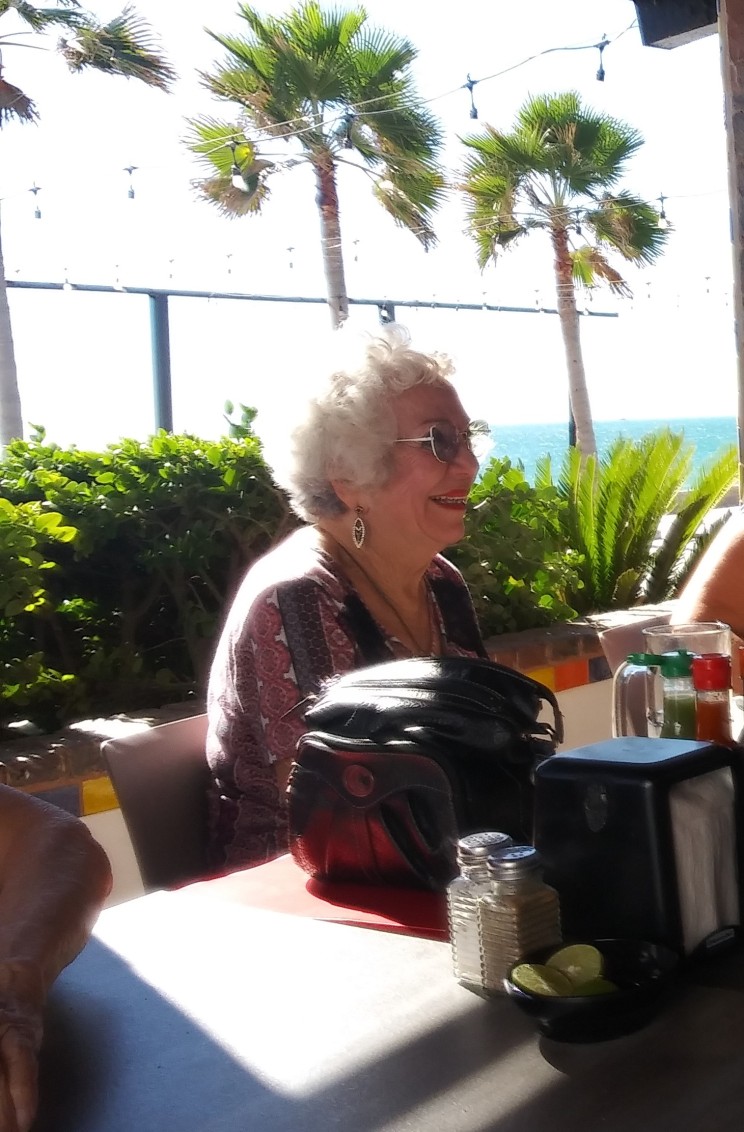
Evelia Zajac
We first met Evelia through a mutual friend in Arizona City. Evelia then told us about a good dentist she went to in Sonoita, Mexico. Evelia is a Mexican citizen who has lived in the USA for over 60 years now. Like many Americans, we now go down to Mexico for good dental service that is affordable. We decided that since Evelia and Karen were both needing more dental service that we would carpool with Evelia to the dentist. It is about a three-hour drive from our home to the dentist’s office.
Over time we discovered that Evelia did not only go to the dentist in Sonoita, but she also took supplies and food to an orphanage in the town. Furthermore, she organized “caravans” at least twice a year to go down to Puerto Penasco in Mexico. Puerto Penasco or Rocky Point has been called the Arizona Riviera. Beautiful beaches, beautiful town, and a beautiful ocean. It is a favorite destination point for USA tourists with a nice selection of waterfront hotels.
Evelia would stockpile clothes, food, and other materials during the year for both the orphanage in Sonoita and a St. Vincent DePaul charity center in Puerto Penasco. Through her church and word of mouth many people learned of her charity trips. Twice a year ten or more cars will show up at Evelia’s house on a Friday morning. We will load all our trunks with her goods and other products that we all contribute and proceed together across the border in Lukeville and on first to the orphanage in Sonoita. We will unload lots of food and sundries at the orphanage and then spend a little time visiting with the young children that live there. Next, it is on to the St. Vincent DePaul in Puerto Penasco. The remainder of our goods will be deposited at the donation center. Often the people there will have a big pot of stew and we will sit around for some time talking to them before going on to our destination.
Our destination is most often the Hotel Playa Bonita. Evelia will take care of reservations. This is a beautiful hotel right on the beach with a very nice restaurant. Most of the caravanners will spend the weekend eating, dancing, and listening to nightly music on the patio. Some will go back on Sunday and some of us will stay until Monday. Karen and I always like to go visit the old town section of Puerto Penasco with its many markets and tourist goods. We never fail to help contribute to the Mexican economy. We look forward to these trips every year.
If you are asking what Evelia does this for and why she does this, I will tell you. It is simply for the “Love of It.” We have known Evalia for over 12 years now and she is one of the most charitable and caring people you will ever meet. She has no thoughts of remuneration or rewards for her efforts. No matter where she sees anyone needing help, she extends her effort to help them. Karen and I have been blessed to meet such a wonderful woman who always steps up when help is needed.
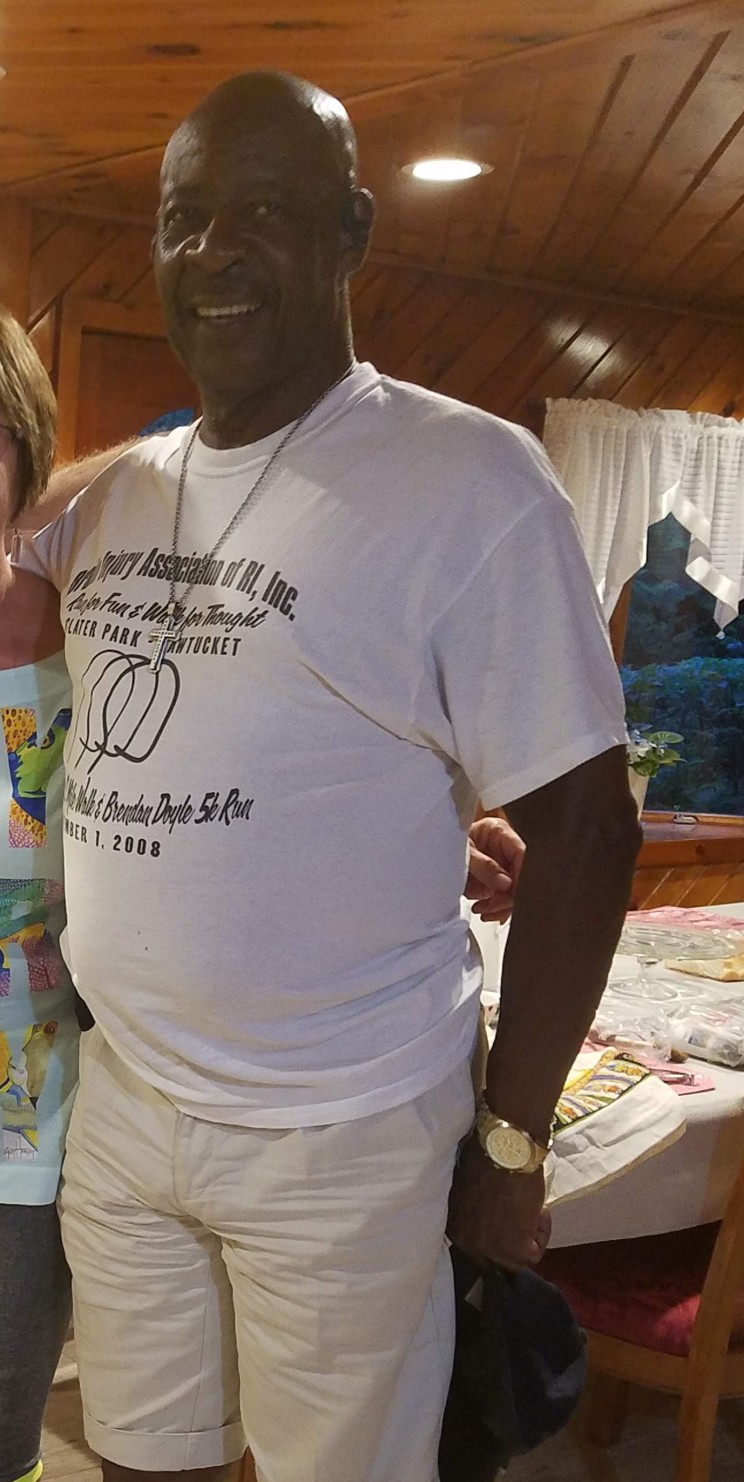
S. Kwame Rice
Sylvester Kwame Rice is one of my best friends. Kwame and I met when we were undergraduates together at Rhode Island College in 1971. I was 25 and Kwame was 27. We were both veterans, both in our first year of college and both attending on the GI Bill. Kwame was a Navy veteran, and I was an Air Force veteran.
We had both signed up for one of the mandatory electives required for a B.S. degree. I will never forget the class. I do not remember the instructors name, but it was an intro 101 class in sociology. The instructor had wanted to have a class with lots of discussion (or so he said.) Well, we had quite a diverse group of students. Gay students, African American students, White students, and Latino students. We anxiously awaited the group discussion topic. During the second class, the instructor announced that we would discuss Anti-Semitism. We were astounded and appalled. To the best of our knowledge, there were no Jewish students in the class. We challenged our Professor but to no avail.
Several of us met after class and with Kwame and I as ringleaders we decided we were not going to stick with only discussions of Anti-Semitism. We would bring up discussions of racism, sexism, homophobia, and any other type of discrimination we could think of. We had not spent four years in the military to simply lay down and ignore what was happening in our own country. Our discussions over the next semester proved quite enlightening and challenging. Kwame and I became best friends and have remained so ever since. I do not know what became of our instructor, but I think he might have decided to change career fields. 😊
Now if you do not know how Kwame received his middle name and the name he goes by, I want you to think about who Kwame Nkrumah was:
“Francis Kwame Nkrumah (21 September 1909 – 27 April 1972) was a Ghanaian politician, political theorist, and revolutionary. He was the first Prime Minister and President of Ghana, having led the Gold Coast to independence from Britain in 1957.[1] An influential advocate of Pan-Africanism, Nkrumah was a founding member of the Organization of African Unity and winner of the Lenin Peace Prize from the Soviet Union in 1962.” —- Wikipedia
My friend Kwame is also a fighter for freedom and justice. He became a teacher, principal and is now a minister. Kwame has spent the better part of his life trying to help make the message of Dr. Martin Luther King a reality. An America where racism and prejudice does not exist. Kwame could have made a great deal of money in many other career fields, but he never backs down from a challenge or speaking out when he thinks he should. Now retired he still preaches regularly, and he serves as a minister at a Veterans Center in Rhode Island. He is not paid for these efforts. He does them for the “Love of It.”
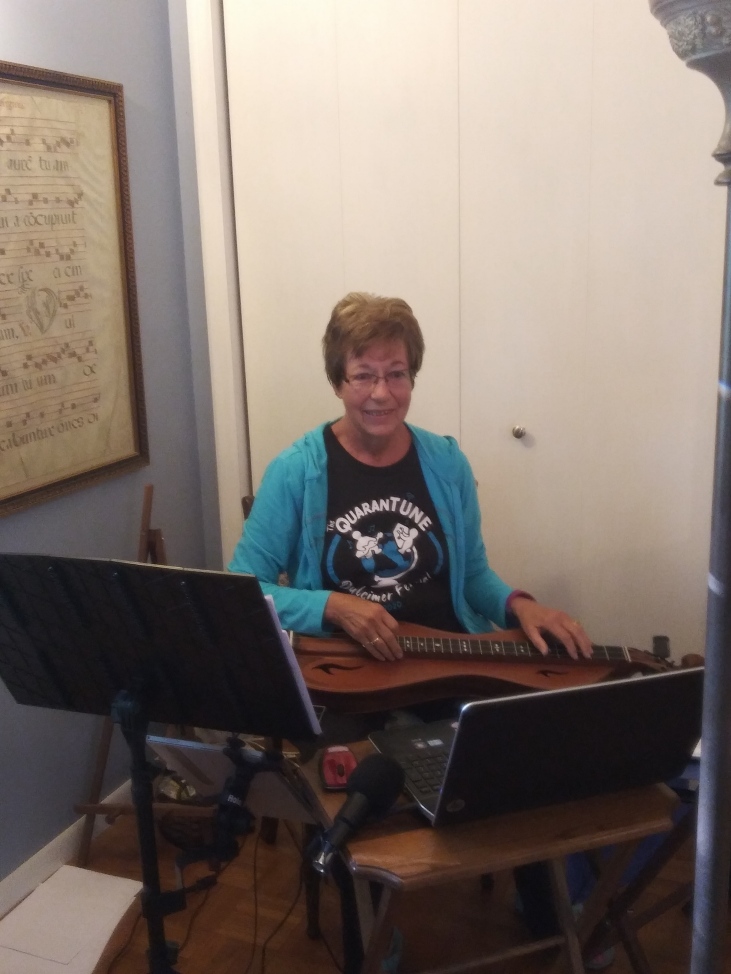
Karen Yvonne Persico
Karen is my wife and my best friend. Karen spent fifty-five years as a nurse and 40 of those years as a Home Health Care nurse. Fifty years ago, you did not go into nursing for the money. Karen is one of the most frugal people I know. Even if we have the money, she would rather shop at Goodwill than a Norstrand or Macys. I have a hard time convincing her to buy herself anything. While she may be frugal when it comes to spending money on herself, she is the opposite when it comes to spending it on other people. Whenever I ask her about a donation to a charity, she is always ready to share what we can. Not once in our thirty-three years of marriage, has she ever said that we could not afford a donation to help other people or causes. She is always ready to help someone in need with time or money.
About fifteen years ago, while we were on a motorcycle trip to Arkansas from Minnesota, we stopped in a small town in Arkansas called Mountain View. Upon arriving we found that the town was known as the Folk Music Capital of the World. The middle of the town is organized around a park known as the Pick’in Place. Every weekend, people from all over the countryside gather here to play mountain music together on guitars, violins, mandolins, and a rather interesting instrument called the Mountain Dulcimer.
The Dulcimer is a four or three stringed instrument somewhat like a guitar that you play on your lap. It is relatively easy to make one and inexpensive to purchase. It is a small lightweight instrument. While watching the various groups that self-organize to jam together at the park, Karen immediately recognized the value of such an instrument. Light weight, good sound quality, and relatively inexpensive, it would make an excellent instrument to take on our many trips together. No problem to store it or carry it.
Karen spent some time trying to teach herself to play but finally found an instructor back home in Minnesota. Since then, we have been to many music festivals together and the highlight for Karen is learning and playing with other Dulcimer people.
The costs to date for Karen’s musical hobby have included travel, instruction, dulcimer strings, tuners and of course the few dulcimers that Karen has acquired over the years. You must have at least a baritone and a standard if you are going to play in a group. I used to ask Karen when we were going to get our money back. But you see, money was never the issue. Karen plays for the “Love of It.” She loves music and with being in a choir and playing with a Tucson Dulcimer Ensemble, she has the best of two worlds. She plays music and helps others enjoy the music.
About every few months, the Tucson Dulcimer Ensemble plays at venues that include churches, assisted living centers, nursing homes, senior centers, hospitals. Many of these venues do not have a budget for music but that is no concern for Karen and her friends in the Tucson Dulcimer Ensemble. You see they don’t play for money. You guessed it, they play for the “Love of It.”
Now just for a second what if politicians, lawyers, auto salespeople and real estate developers worked for the “Love of It?” Can you imagine what a different world it would be?

If you liked this blog and it evoked memories of someone whom you really admire for their ability to do things for the “Love of It”, I would really appreciate your leaving a short story or message about this person and why you feel they warrant this description.




 Compassion is the most important of the seven virtues. Compassion is just one stroke short of love. Compassion leads to love but it takes some doing to get there. The journey involves a number of steps each predicated on a trait or behavior that is uniquely human. In this blog, I want to describe the journey to compassion and beyond to love. Each step of the journey is a commitment to humanity. If you do not care about others, you will not be interested in the journey. Compassion is the opposite of narcissism. A narcissist loves them-self. A person with compassion loves others. With a narcissist, it is “all about me.” With a compassionate person, it is “all about them.”
 The journey starts with sympathy. We think of sympathy as “feeling sorry for someone.” It is the ability to have feelings for another person. We see another person who looks hungry or unhappy or ill and we feel some sense of remorse or regret for the other person. We might be distressed for them or we might simply be glad that we are not in their shoes. A part of us hurts or aches for the other person, but we do not identify with them on a deeper level. Our sorrow goes no further than to perhaps wonder what had befallen them to bring such misery.
 Our next step in our journey to compassion takes understanding. We need to try to understand others and to put ourselves in their shoes. We must avoid separation and thinking that we are so different from others. We must avoid judging others. When you couple understanding with sympathy, you have taken the next step. You have now arrived at empathy. To have empathy for others, is to combine sympathy and understanding. You are sorry for those who are less well-off then you are, but you do not separate yourself from them and instead you seek to find the common ground that links you to the other person. Sympathy involves the heart. Empathy involves both the heart and the mind.
 The next step in our journey is action. All of the empathy in the world will not make a difference if we do not take action. Empathy + Action = Compassion. Compassion is the way we make a difference to others. Jesus said “Feed my sheep.” He did not say to just take pity on them or to simply have empathy for them. Empathy by itself does not clothe the poor, feed the hungry or help the weak. We must make action and doing a part of our empathy for others. This is true compassion.
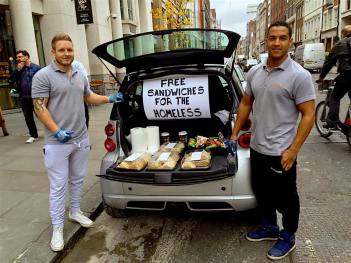
 Bob’s actions made a great impact on me, since I had seldom gone further in my life than either waiting to be asked for help or sometimes asking others if they needed help. It would never have occurred to me to just show up and help. Perhaps, you might think that simply showing up and helping someone is going too far. However, think about yourself. Would you really ask others for help? I know I probably would not. Pitching in to help when not asked may not always be warranted but I now see it as something worth endeavoring to do more often than not.
 Compassion is a much more useful and practical virtue for my life. I can deal with compassion and I can be more compassionate if I really aspire to. I am not sure I can be more loving. I have a hard time “loving” others whom I dislike or who do unkind things to people I do like. I more often “love” others who think and act like I do. I may be taking the easy way out, but if I can be more compassionate to others and if someday I am thought of as a compassionate person, that will be enough for me. If you are further along in your journey through life, then you should consider including love as one of your “most” important virtues. No one will be a worse person for it. For me today, compassion for others is enough of an effort.

 Love is a word used in many semantic constructions. People associate love with sex, marriage, partnership, and other types of relationships between human beings. It is also common for the word love to be associated with inanimate objects and other animals. For instance, people say “I love my car” or “I love my dog.” These uses of the word trivialize the meaning of love. Romantic novels (think Romeo and Juliet) portray love as undying or “dying” passion but seldom show the hard work required to keep love burning. TV and movies feature continuous images of love based more on lust rather than what real love is. Even Jesus the greatest prophet of love did not get the idea of love right.
 Jesus gave one example of “true love” but missed the most significant example in his life. Jesus said, “Greater love hath no man than this, that a man lay down his life for his friends.” — John 15:13. Many soldiers have given up their lives to save others in the course of war. Often these soldiers were friends with the men they died for. However, to say that they loved them is quite off the mark. A number of years ago, I dove into a river to save a guy who was being dragged down the St. Croix River by its current. He did not know how to get out of the current and was fighting it instead of going with it. I swam out and brought him to shore. He was very grateful. I risked my life for this man. I did not know this man and I certainly did not love him. Many acts of heroism have been done by people out of a sense of responsibility or compassion, but I would not call these “acts of love.”
 I propose that the greatest acts of love are to stand by someone when the world is bent on destroying them and you risk being destroyed along with them. The love of a mother for a son convicted of a heinous crime is one of these acts. Jesus’s mother Mary stood by the cross and watched her son die, never deserting his side. I am sure she suffered insults and criticisms and was blamed for his behavior. A mother who will feel love for her son or daughter no matter how grievous the crimes they have done is committing an act of love.
 A few months ago, the news carried a story about a young man who had been in and out of trouble. He went into a dinner with a gun, robbed several patrons and was shot in the back as he was leaving. No charges were brought on the shooter. As it turned out the gun that he used in the robbery was a water pistol. The mother was questioned as to her thoughts. She did not attack her son’s killer, nor did she defend her son’s behavior. She did wonder if he really needed to be shot in the back as he was leaving. I was struck by the mother’s sadness and love for her son. It did not matter that he was a bad kid or that the whole of the media was gleeful about his being shot in the act; his mom’s (like Mary’s) love remained firm.
 One of the most common tropes in movies and shows concern what I call the “Two Ships Passing in the Night Love Model.” Individuals who seem to resonate with each other go about their daily business and never tell the other person how they feel. This has been a part of so many shows that I have watched that I am losing count. You sit there and wonder episode after episode if they will ever say anything before it is too late. It is frustrating as you want them to get together and say, “I love you.”
 I thought about this problem for a while. Many would say it was just a writer’s trick to get you to keep coming back for the next episode. You get hooked on whether or not they will ever consummate their love either physically or emotionally. It is a rather good hook but the more I thought about it, the more I realized that it was really art mimicking life. I have been guilty of the same behavior and many people I know have also been guilty of the same behavior. We fail to say I love you when it counts the most. We can say that we love our new shoes or that we love our cat easily enough, but we have a hard time telling friends and relatives that we love them. We often abbreviate the sentiment with “Love you” or we use the term generically. “See you later folks, love all of you.” The simple act of looking someone in the eyes and saying “I love you” is perhaps one of the most difficult tasks that many of us face.
 But what is true love anyway? Is loving a person in the same ballpark as loving your dog or your new shoes? Would you give up your life for your cat or your shoes? There are many elements that are part of true Love. A life without true love is rather sad but more common than many people realize. How many people do you know who took marriage vows only to divorce within ten years or less? How many of these people were willing to go to a marriage counselor before they divorced? How many of them just gave up on the other person before giving them a chance to change or giving themselves a chance to change? My elements of true love include:

 In the next few weeks, I want to add four other searches to Dr. Frankl’s search. I believe that these are equally important to most of us. In fact, I might argue that to the average person, some of these other searches will dictate most of their lives. A particular search might take precedence over all others and drive how the person behaves, what goals they have and how they organize the daily activities of their lives.
 When you adopt the Packers, you become a member of the Green Bay Packer Fan Club. Being accepted gives you a new identity. You are a Packer Backer, a Cheese Head. Being accepted means you now represent something great. You are part of one of the best football teams of all time. You can put your Packer shirt on proudly and everywhere you go in Wisconsin, you will be admired. You are no longer just Jane Doe.
 The first question anyone must answer is what do they expect to get out of the group? What kind of acceptance are you looking for? To borrow from Maslow’s Hierarchy of Needs, I think we must ask what need we are trying to fulfil by joining this group. Are we hoping to get an acceptance that will meet our needs for basic survival, our need for security, our need for love and friendship, our need for self-esteem or our need for self-development. Many groups yield benefits in all these areas once a person is accepted into the group. However, I think it is very important to be clear from the start what you expect to get by joining any group. This first question is a prelude to the second question.
 What will gaining acceptance into this group cost me? The line from Matthew, 16:26 reminds us that, “What doth it profit a man if he gains the whole world but suffer the loss of his own soul?” Every human endeavor or activity comes with some cost. In business terms, we use a Cost Benefit Analysis to determine if the benefits will justify the costs. In terms of acceptance there may be costs beyond money to joining any group or club. You may find social and emotional costs attached to a membership. Will the benefits of acceptance by this group justify these costs? Do you have to sell your soul to the devil to get the benefits? The Mafia makes members take an oath never to “rat” on anyone regardless of what they have done. Many organizations have rules and codes which put the good of the group ahead of the good of society. Partisanship in politics is another example of where loyalty to a party soon negates the very reason that many people went into politics. Good intentions often go down the drain when a person is faced with losing acceptance in their identity group.
 Despite attending forty 3-day Jesuit retreats and regularly going to church with my spouse, I remain adamantly somewhere between an Atheist and an Agnostic. See my blog
 I can see some positive sides to a church ideology that addressee inner spirituality, but I think it has serious drawbacks. You can focus too much on what I will call the “inner spirituality” of church members. The reasoning behind the emphasis on inner spirituality can be faulty. The theory is that if each member becomes a better Christian, they will be better neighbors towards others. If they feed the hungry and cloth the poor, they will be ridding the world of the evils that Jesus preached against. Unfortunately, these propositions are not evidenced by historical fact. For hundreds of years many Christians supported slavery and sexism by doing little or nothing to condemn or speak out against it. Furthermore, many Christians were major protagonists of racism and sexism. If their ministers spoke out against it, it obviously made little difference. Being a card carrying member of a Christian church never seems to correlate with ending war, sexism, racism, homophobia or even poverty. I think without an equal emphasis on “Outer Spirituality” Christianity is a worthless religion.
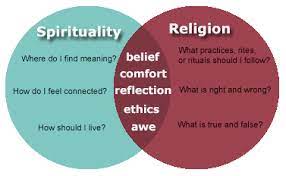 There are many definitions of spirituality. What does it mean to be a spiritual person? Some people lean towards accepting a higher being or creator. Some lean towards accepting a more conventional religious perspective. Many on-line definitions list several factors necessary to be a spiritual person. My own definition is much simpler. I think being a spiritual person involves two elements. The first is seeking meaning in one’s life. The second is seeking purpose. Meaning is inner spirituality. Purpose is outer spirituality. Meaning and purpose must go beyond what is simply good for oneself and must embrace what is good for humanity and the universe. Thus, a truly spiritual person is one who finds and balances inner and outer spirituality.


 Nevertheless, we still have the occasional spat, and they usually leave us both feeling quite depressed and disappointed. I am mostly disappointed with myself for not handing things well. It seems I too often say things or discuss things very differently than we have agreed on. We have found and used many models for dealing with conflict. One of our favorites is the “DESC” model. This stands for “Describe” what is happening in neutral terms. Talk about how this makes you feel in terms of “Emotions.” “Specify” what you would like to see happen differently. Define what the “Consequences” will or could be for change. Consequences are best provided that are positive, such as we will feel closer together. When we stick to this model things seem to go well. Our discussions stay on track and our resolutions come more effortlessly. When we stray from the model, accusations and insinuations escalate and the discussion becomes difficult if not painful.
 The other kind of kindness I will call “Emotional Kindness.” This is not doing things but saying things either verbal or non-verbal that honor and appreciate the other person. It respects their feelings more than their actions. It might be “I love you” or it might be an appreciation of something the other person says or thinks. It is building up the other person’s self-esteem and not putting down anything they might express or care about.
 Once upon a time a mother had two daughters. The Mom’s name was Teresa. The oldest daughter was named Romela, and the younger daughter was Amelia. At the time of this story, the oldest daughter was 20. Amelia had just turned 18. Teresa was 45 and a single mom. Their father had been gone for ten years after running off with their babysitter. Teresa never remarried or even dated. She was a rather plain looking woman. Marriage had taught her that men preferred sex appeal over brains, beauty over character and youth over age. She tried to teach these lessons to her daughters and kept a close watch on both.


 Aging Capriciously