If you enjoy reading my blog today, please see another blog I wrote dealing with this issue from the opposite perspective: Ingratitude: How it destroys our minds and hearts and souls
 I want to talk about Gratefulness today. It is the first in my list of the Key Seven Virtues that I think are worth developing. Gratefulness is the opposite of ingratitude. It is easy to fall into the trap of being ungrateful. The world besieges us with evidence of our incompetence and faults. Hollywood glamorizes the mundane and makes the rest of us feel inferior in comparison. American Idol becomes the graven image that we now worship. It is not an image of a gold calf or a prophet or a saint. It is the image of success and fame and fortune that we all desire. Even as I write this, millions of people are buying a lottery ticket in the hope of achieving instant wealth. How many of these people are grateful for what they have? I suspect many of them are very grateful in their daily lives, but it makes you wonder how grateful most people are when they will spend their money against all odds to become an overnight millionaire. What don’t they have that they will buy if they do win?
Every Monday morning I start my day and my week with the following prayer:
- I am Grateful for this new day and a new start. I give thanks for everything I have – especially my health, my friends, my family and my wife Karen.
I also say a prayer that my wife Karen will be healthy and happy. She once mentioned to me that she appreciated my praying for her, so I have made it a part of my Monday morning start to the week. My goal is to try to keep the thought of being grateful in my mind throughout most of the day. I confess, I am usually able to keep it in my mind for about ten minutes at the most and then my day commences with the usual busyness and trivia that soon makes me forget my admirable goal.
If I were to rate myself on a scale of 1-10 of gratefulness, with 10 being the highest amount of gratefulness possible, I would probably give myself about a 2. Nevertheless, I refuse to succumb to the Siren of Desire that drives one to buy a lottery ticket. I do not want to win any money in a lottery. I do not want to get any free money through a class action lawsuit. I do not want to inherit any money from a dead relative or friend. I admit I occasionally go to a casino and will play the penny slots for about fifteen minutes. Karen has more patience and will play for as long as an hour. We both allocate about ten dollars when we go for our “chance to win a fortune.” We are usually at a casino for the entertainment or food.
My father was a gambler when I was young who lost a good portion of his earnings each week betting on the horses. I learned from him that most gamblers were liars since they will only tell you when they win and never when they lose. I still begrudge the fact that when I was growing up, my cousins (whose fathers were no richer) always had a nicer house, better clothes and more expensive toys. My mother would regularly buy a lottery ticket and promise me that when she won, we would all be rich and never have to work again. I always replied to my mother that if she put her dollar in the bank, she would have $1.01 at the end of the year. It was kind of a joke. When my mother died, my sisters and I had to cover the additional costs for her funeral.
I was reading a news article about two days ago about the continued recovery of former Arizona Representative Gabby Giffords. I was struck by a comment that was attributed to her in the article. She said:
“I wake up every day grateful that I have a second chance at life and a second chance at service.”
When, I read this, I thought there could not be much more I could add to the subject. Here is a woman who could be bitter and angry. She could rightfully complain about her physical and mental handicaps. She could endorse stronger sentences for criminals. She could lobby for fewer guns in society. She could preach for more prisons. Instead, she continues to pursue a life dedicated to service and to doing the best she can every day of her life to help other human beings. We all need role models like this to really understand what gratefulness means.
One of my favorite blog readers is my sister Jeanine. I think she is perhaps my most faithful reader, usually reading and commenting on my blogs each week. Last week she posted a comment which included the following quote.
“I shall pass this way but once; any good that I can do or any kindness I can show to any human being; let me do it now. Let me not defer nor neglect it, for I shall not pass this way again.” — Etienne de Grellet
She mentioned that one of her friends wrote this in her high school yearbook and she has never forgotten it. She noted that she has tried to live by this quote in her daily life. Judging by her friends and what they think of her and the efforts she puts out to help others, I believe my sister is also a person who does what she can to help others and who is also grateful for her life.
Let us pose the question: What does it take to be grateful?
I would say that the virtue of gratefulness is composed of the following three abilities:
- Appreciating what we have. Savoring your life, your food, your health and your friends. Like you would savor a tasty dish or appreciate a good song. Appreciating the good and the bad. Realizing that the bad makes the good better.
“Without pain, there would be no suffering, without suffering we would never learn from our mistakes. To make it right, pain and suffering is the key to all windows, without it, there is no way of life.” — Angelina Jolie
- Living in the present. If we worry too much about the past or think too much about the future, we are never able to just accept what is. Violence is caused by too much dwelling on what happened yesterday. Greed is caused by dreaming about what life would be like “if only.” When we refuse to live our lives one day at a time, we inevitably get lost in a wilderness of whys, what ifs, and maybes.
“Do not dwell in the past, do not dream of the future, concentrate the mind on the present moment.” — Buddha
- Service to others. I am not sure that I can ever overcome the lure of fame and fortune and success. They are constantly in my mind. Except when I am serving others, particularly those who are less fortunate than I am. Perhaps the only path to developing the virtue of gratefulness is by seeing and helping the down trodden, oppressed, sick, dying, wounded and poor of the earth. There is no doubt that seeing the misfortunes of others up close has a salubrious effect on our mental attitudes. It is hard to feel sorry for yourself when you witness people like Gabby Giffords, Steven Hawking, and Malala Yousafzai and see what they managed to achieve despite handicaps much more severe than any we might have.
“Too much self-centered attitude, you see, brings, you see, isolation. Result: loneliness, fear, anger. The extreme self-centered attitude is the source of suffering.” — Dalai Lama
I have a little device that I learned in my studies, a long time ago. It is an algorithm for change. You can use it for changing an organization or for changing your own life. It goes like this:
- Awareness precedes choice
- Choice precedes decision
- Decision precedes action
- Action precedes change
If we want to develop the virtue of gratefulness, we must first be aware of what it means to be grateful. We must be aware of what we should be grateful for. We must also be aware of our ungratefulness and ask ourselves why we feel this way and where it comes from. Once we are aware of our feelings in this area, we must continue to maintain this awareness.
Next, we must use our awareness to make a choice. The choice is simple. Am I going to be a grateful or ungrateful person? Am I going to see life as full of opportunities and a place of unlimited possibilities or am I going to see life as a living hell on earth? The choice is always ours. The choice to be grateful means that we must make a decision. To live gratefully or ungratefully.
If we accept the decision to live gratefully, then we must take action on this decision. We must express gratitude whenever possible. But more than just words, we also need to help others who are not as fortunate as we are. Regardless of how unfortunate you feel you are there are always people who are less fortunate. Start looking for these people and ask yourself “How can I help them.”
The final step in the process will occur if you follow the above heuristic. You will find that there are more and more things in your life to be grateful for. You will start enjoying life more than you ever thought possible. You will become grateful for the little things in your life and stop waiting for the big things. You will become a person who appreciates every day that is given to you on earth. Each day will become the best day of your life. Don’t trust me! Try it and see. Age, death, diseases will still be difficult but you will find that gratitude can replace the sorrows of life with an outlook that can find joy in even the most difficult of times.
Time for Questions:
What are you grateful for? What are you ungrateful for in your life? How do you cope with the inevitable blitz of commercials telling you how inferior you are? What do you do to help other people who are less fortunate than you are?
Life is just beginning.
“We are told that people stay in love because of chemistry, or because they remain intrigued with each other, because of many kindnesses, because of luck. But part of it has got to be forgiveness and gratefulness. ” — Ellen Goodman
 I thought I would start the year of 2021 off with a positive slant. Namely, some things we can all do or practice to be better people. However, before anyone should pay any attention to what I am about to say, there are several questions they must ask themselves. I would advise you that the veracity and hence credibility of an author is critical to your acceptance of what the author is trying to sell you or convince you of. Do not buy an argument from someone who cannot be trusted. Think about the comment that “If you see the Buddha on the road, kill him.” An uncritical acceptance of any idea is dangerous to your own integrity and responsibility. Hence, the questions I would want answered (If I were you) would be as follows: Who is this writer to say what the “greatest” virtues for a human are? How did he come up with these Seven Virtues? What is the difference between a virtue and a value? Is this an important difference or is he about to sell me another new religion?
 I would like to answer that I am a seeker of truth and knowledge. I am very opinionated, often highly judgmental and have frequently been accused of being a “know it all.” Many people would write my opinions off as being too liberal while others would say that I am too rational. I place great value on being logical and trying to stay open to many possibilities. I have been studying philosophy and religion since I was eighteen. I have no degrees in either. But the number of books and articles and stories that I have read number in the hundreds. I have attended many different worship houses and types of religious services. I was brought up as a Catholic until I rejected its teachings at about the age of 10. When no one would give me a good answer for “Who made God?” I more or less decided that most religions were based on superstitions.
 Given that one could easily comprise a list of ten or perhaps one hundred important virtues, why do I believe that my seven are the seven greatest and most important? How do I have the audacity to make such an assertion? I might have been sitting under an apple tree one day, or perhaps simply thinking about life at one of my yearly silent retreats at the Demontreville Retreat Center, when I compiled a list of seven virtues. While I truly “value” these ideas, I understand them more as virtues than values. I will address this difference later. I decided that I want to live by these virtues. Each day for the last fifteen or more years, I have selected one of these seven virtues to help guide me through the day. Whether it is patience, kindness or courage, each day I start by reflecting on this virtue and trying to make it a part of my life.
 The danger in this discussion lies in your taking a sectarian or religious approach to my writings. I assure you that I am not a religious person. I may be a spiritual person but I do not think of myself in either of these categories. I am an agnostic who wants to live a better life and help build a world that is a better place to live for future generations. Living by these seven virtues is one way I believe I can contribute to this goal.
 If I have satisfactorily answered the questions that I posed above respecting my integrity and credibility, I will now set off to address each of my Seven Virtues and explain why they are so important and the difference that I think they can make in our lives. Look for my virtues over the next several weeks in my blogs.


 brought sorrow to my heart over the years. Life does not always end happily. Lives do not always find the justice and honor they merit. I have felt sorry for the heroes and heroines who did not get the fates they deserved. If only I could somehow right all the wrongs and set history on the paths it should have taken. I find books tell me about my shortcomings and highlight areas where I need improvement. It is always sorrowful to find that I am not as good as I would like to be.
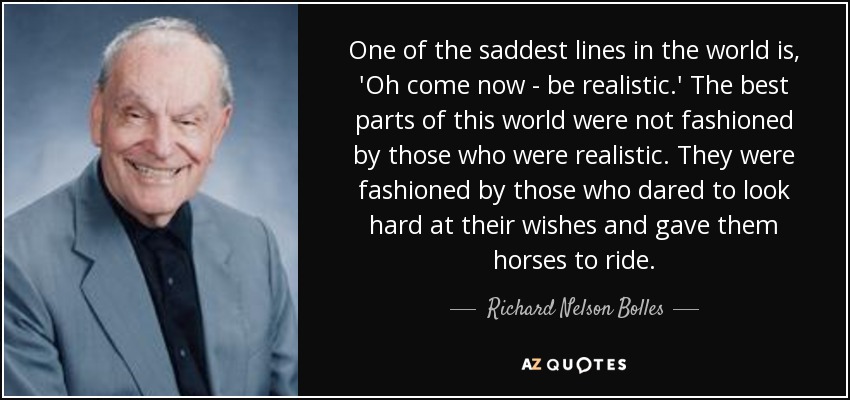 Ostensibly, it was just another book to help job seekers find work. However, Bolles wrote more than just tips on writing resumes and job letters and where to find work, he wrote a bible on how to live a better life and what work could really mean for us. Bolles gave us a broader vision of work and the role it could play in our lives. Bolles vision of work was more than just the idea of productivity and pay. At the core of Richard’s concept of life was his idea that life could be divided into three boxes: Work, Play and Education. But there is a novel twist to Bolle’s ideas about work, play and education that no one had ever put forward before. Before we go into his unique idea, let’s examine each of the three boxes. After this, I will present the truly revolutionary idea that Bolles had about them. Finally, I will discuss the implications of Bolles ideas to the present coronavirus crisis that we are facing today throughout the world.

 I posed a general question to the miners’ present. “What if we integrated work, education and play in your jobs. What would life be like for you,” I asked. There was silence for a moment. I did not know if I would get a response. Suddenly a hand shot up. I recognized the man and asked him what he thought. I never would have guessed his reply in a million years. It was perfect but it still astounded me. He said very simply “I would not know whether it was Monday or Friday.” To this very day, I cannot think of a more profound or telling comment than that.
 Our work activities at home are generally allocated towards improving our living conditions. We work on repairing our appliances, roofs, etc. because we either enjoy doing it or because we are trading our time for money. If we hire someone to do it, it will cost us money that we might not be able to afford. We may not have the skills to so some work that needs to be done, so we are often forced by necessity to contract out needed repairs. Some people have never learned how to cook and so either spend extra
 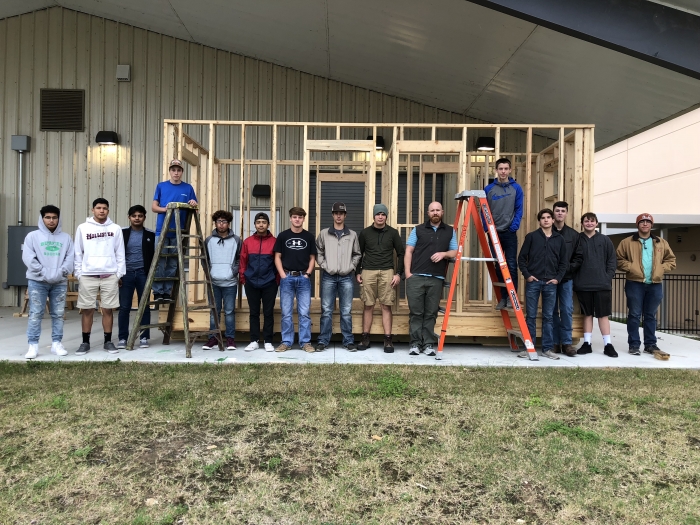 money on prepared meals or they often eat out. I never learned any wood working skills when I was in high school because these classes were deemed “general education” and I was in the “college track.” The home economics classes mostly dealt with sewing and cooking and were largely populated by girls. Even today in most high schools, girls dominate the home economics classes and boys dominate the construction related classes. There is admittedly more cross over then when I was in school in the sixties, but it is by no means 50-50 in gender distribution.
 From teachers and many educators, we hear the lament that children will miss three or more months of schooling. Unfortunately for the teachers that feel this way, students may miss out on “schooling”, but I think not on learning. Many studies have shown that students home taught learn more and score higher on standardized tests than public school students. I have been working in high schools as a substitute teacher for three years now and much of the work I see being done in classrooms can easily be accomplished from home. Whether or not students working from home are less bored with the subject matter remains to be seen. Nevertheless, there are plenty of opportunities for children to learn from home at their own pace and to some extent be more excited by a custom curriculum which suits their needs. There is obviously a great deal more that can be done in this area to create customized education programs.


 The first day that Michael and Joshua spent together turned into weeks and the weeks turned into months. Each week, Michael and Joshua would spend at least an hour together. Some days, Michael would play video games with Joshua and other days they would do “walk and talks.” Inez would drop Joshua off and Michael would take Joshua home. Michael looked forward each week to seeing Joshua and spending time with him. Michael often tried to buy Joshua some of the things that he wanted, but Joshua’s parents were very proud and explained that they would prefer that he did not. Michael accepted their request but would take Joshua out for a hamburger or pizza whenever possible. His parents did not mind this as Joshua had a prodigious appetite.


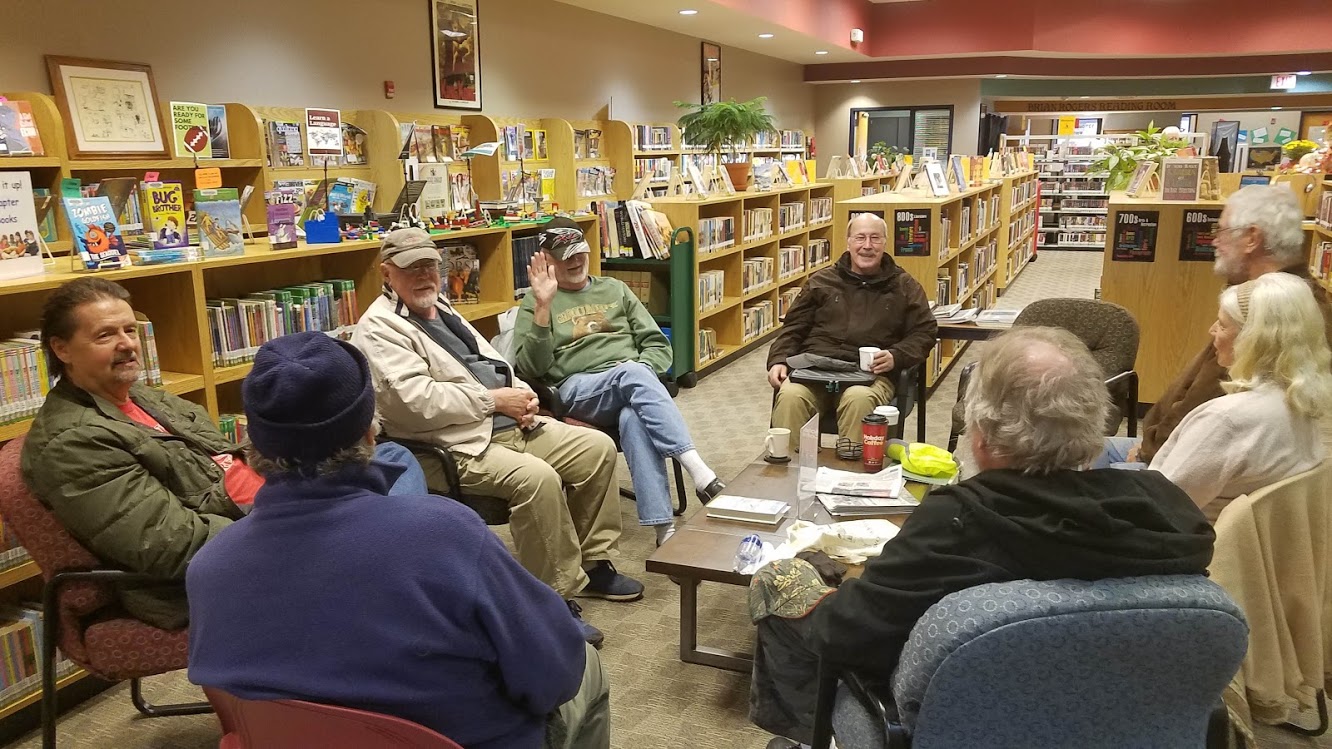

 Now less this sound too much like a soap opera, I should point out some of the character flaws that are obvious with Dick. He once had a battle with some beavers that resided on his property. These beavers were adept at building a dam using a stream that flowed near a road leading to Dick’s house. The dam would cause the water to back up flooding the road. Dick would go out there and break up the dam but faster than you could say “Dick the Stick” the beavers would rebuild the dam. I asked Dick why he did not shoot the suckers. Dick replied that he promised Gladys that he would not kill them but try to get them to relocate. So periodically Dick would come in with his back aching from breaking up the dam and I would say “Give me your rifle and I will shoot the suckers for you.” Dick would never do this. I finally bought him a t-shirt with “Beaver Advice” on it.
 I mentioned that Dick does not want to travel anywhere (Except maybe Duluth). I would attribute his “been there, done it” to a possible birth or brain defect but to be fair Dick did go to England, Peru and a bunch of other countries when he was younger. Furthermore, unlike some people, he is always interested in hearing about the travels of Gladys and others in the group. I am going to Russia this coming year and I keep telling him that I am going to have an audience with President Putin. Dick often jokes about Putin and his strong political resolve. I may bring him a Putin t-shirt when I come back from Moscow, assuming that I am allowed to leave the country.
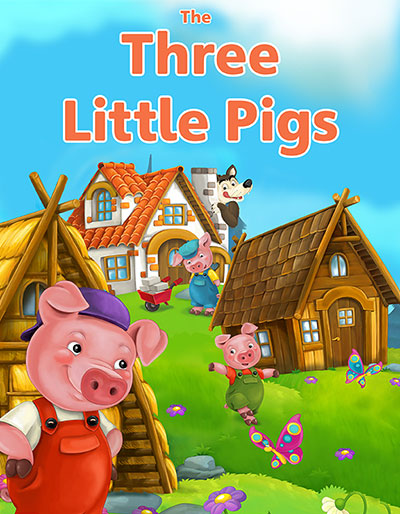 If you think about the ideas or premises or nostrums that guide your life, you will soon notice that we have many ideas that along our journey we have adopted. The sources of these ideas are vast. Fairy tales and children’s stories give us ideas such as “A stitch in time saves nine” or the “The race does not always go to the swift” or “Those who do not plan ahead may starve in the winter.” Many of our ideas about living no come from our parents and family. My mother used to say such things as “Ignorance is bliss” and “If you give them enough rope, they will hang themselves.” My father was fond of saying “Believe nothing of what you hear and only half of what you see.” He also used to like to say, “You have nothing to fear from the dead, only the living.” These two later beliefs have guided a great deal of my life.






 Aging Capriciously