My Final Will and Testament – Scriptures – Reflection #10

images

Last year at my 40th Demontreville Retreat, one of the exercises that we were given by the Retreat Master included a very challenging set of thoughts.  The worksheet for the activity was labeled as “A Testament.” I took the worksheet and instructions home with me.  It had fourteen tasks or reflections to complete.  I did not desire to complete them during the retreat.  It is now almost a year since my retreat, and I have decided to make the mental and emotional effort necessary to complete this “Testament.”

The worksheet started with these instructions:

Imagine that this is the last day of your life on earth.  In the time that you have left, you want to leave a “Testament” for your family and friends.  Each of the following could serve as chapter headings for your “Testament.”  This is Reflection Number 10 on the worksheet.

  1. These are the Scripture Texts that have touched and helped me.

My being an Atheist some people might think that I would have a hard time with finding Scriptures that have touched me.  In truth, it is one of the easiest reflections for me to think about.  I have so many wonderful parables from the New Testament and many proverbs and wisdom from the Old Testament that I use to guide my life and decisions.  I see the Bible as another source of great wisdom that has been compiled over the ages.  It is a combination of history, storytelling and profound thoughts compiled into one large book.  I do not view the Bible as infallible or “The Word of God” unless I use that interpretation very loosely.  If there is a God, perhaps he does reside in all of us and all of us are “Children of God.”

In 1775, Thomas Paine wrote a short essay criticizing slavery and reflecting on “Pretended” Christians who could support such a practice.  His words were:

“to catch inoffensive people, like wild beasts, for slaves, is a height of outrage against humanity and justice, that seems left by heathen nations to be practiced by ‘pretended’ Christians.” — African Slavery in America, 1775

Today we have a system that seems somewhat analogous to the system of “Pretended Christians” that Thomas Paine described 250 years ago.  “Pretended Christians” who can support a man and party that attacks, insults, abuses, and maligns minorities, immigrants, women, disabled people, and veterans.  A man who swears vengeance against the people who disagree with his policies.  A man who pays no attention to Scripture which says:

“Dearly beloved, avenge not yourselves, but rather give place unto wrath: for it is written, Vengeance is mine; I will repay, saith the Lord.  Therefore, if thine enemy hunger, feed him; if he thirst, give him drink: for in so doing, thou shalt heap coals of fire on his head.  Be not overcome of evil but overcome evil with good.”Romans 12:19-21 King James Version

Many of the people insulted by this man continue to feel that he is some sort of Christian Savior.  A man who will restore Christianity as the Mother Religion of America.  A position for religion that not one of the 56 signers of the Declaration of Independence, our Founding Fathers either desired or supported.  We have a country full of people who want to call America a Christian nation but who neither practice nor believe in one iota of what Jesus of Nazareth taught and died for.  We have a nation full of “Pretended Christians.”  I do not pretend to be a Christian or a Saint or a Holy Man.  God (If he/she exists) save me from these “Pretended Hypocritical Christians.”

The following are four of the scripture quotes that have had the most influence on my life.  I will briefly describe the impact that each has had on my thoughts and behaviors.
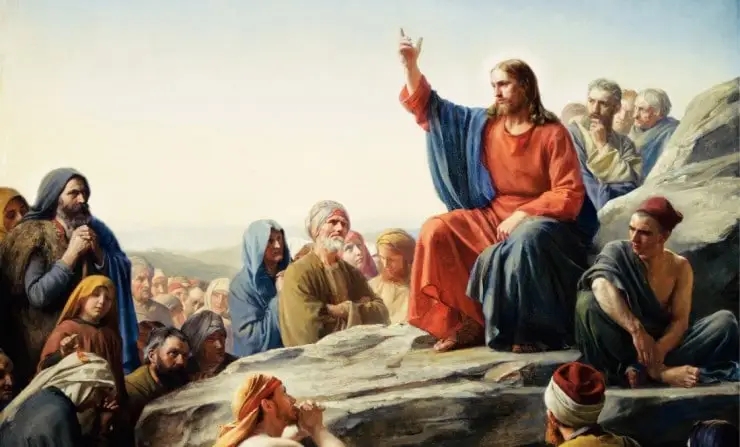
How-to-Understand-and-Interpret-the-Parables-of-Jesus

  1. What doth it profit a man if he gain the whole world but suffer the loss of his own soul? — Matthew 16:26

The first Jesuit retreat that I did at Demontreville in 1984, upon entering the grounds I saw the larger-than-life sized statue of Saint Ignatius Loyola, the founder of the Jesuit Order.  He stands on a large concrete pedestal.  I was forty years old at the time and just finishing my Ph.D. degree.  I was hungry for fame and fortune and success.  During the retreat, I walked up to the statue and discovered the words “What doth it profit a man if he gain the whole world but suffer the loss of his own soul?’ written on the base of the pedestal.  These words are perhaps the most profound words I have ever heard in my life.  I went back several times during the retreat to read and reflect on these words.  Over the past forty years or so, despite these words being etched in my brain, I always go to see the statue of St. Ignatius and silently repeat these words to myself several times.

My first visit to these words did not stop me from chasing what some call the elusive gods of fame and fortune.  Over the years, my chasing has become less vigorous, but the goal posts still exist in my mind.  Part of me longs to carry the football over the goal line and to hear the roar of the crowd and bask in shouts of “hurrah” and “you’re the greatest.”  The fortune part has never really mattered as much to me as the adulation and recognition that I still thirst for.  Thus, every year that I go back to Demontreville, (this will be my 41st retreat), I will make my pilgrimage to the statue to restore my commitment to the fact that fame and fortune are no substitute for the real nutrients that nurture the soul.  No amount of fame and fortune can substitute for integrity, compassion, kindness and charity towards others.

Version 1.0.0

  1. Therefore, do not worry about tomorrow, for tomorrow will worry about its own things. Sufficient for the day is its own trouble. — Matthew 6:34

Another phrase from the teachings of Jesus as marked down by Matthew.  Throughout history, this same thought has been voiced by most of the great prophets, thinkers and philosophers.  “Live each day one moment at a time.”  “Live in the now.”  “Be mindful of today.”  Doing so is akin to walking a tightrope.  It requires a sense of balance.  We must plan for the future, but we must also live one day at a time.  How to find that balance is a Herculean task.  A second Herculean task is maintaining our balance.   These two tasks are by far more difficult in the modern world than slaying the Nemean lion or capturing the Cretan bull.  Hercules managed to complete 12 very difficult tasks.  I have yet to manage completing even one of my two challenges.  I suppose I will be working on “Living in the Now” for the rest of my days.

GettyImages-185181132-5bdf5e1dc9e77c00512d517b

  1. Vanity of vanities, says the Preacher, vanity of vanities!  All is vanity.  — Ecclesiastes 1

The Book of Ecclesiastes is reported to have been written by King Solomon.  Solomon as you know was one of the wisest men in history.  He was granted wisdom by God because Solomon did not ask for fame or fortune.

“And God said to Solomon: Because this was in your heart, and you have not asked for riches or wealth or honor or the life of your enemies, nor have you asked for long life; but you have asked for wisdom and knowledge for yourself, that you may judge My people over whom I have made you king.”  — (2 Chronicles 1:11-12 NKJV)

Buddhism, Advaita, Zen and other religions talk about the major problem that leads to all of humanities other problems being what psychologists call our Ego.  Solomon called it vanity.  Some might call it self-conceit, narcissism, self-centeredness, self-absorption, me-ism or egotism.  Its all the same.  People become the center of the universe.  I saw a sign the other day that read “When I am not the center of the universe, people become human.”  This is another difficult battle to overcome.  We can focus only on our own needs or desires, or we can expand our awareness to notice the needs and desires of other people.

The Eight Beatitudes given by Jesus in his famous Sermon on the Mount are the greatest exposition of our responsibility to other people that has ever been written.  Jesus elucidated what are called the Eight Beatitudes.  I will not list them all as they are easy to find on Google.  These eight thoughts clearly define how we should treat other people.  I often wonder why so many “Pretended Christians” want to put up the 10 Commandments from the Old Testament, when their Jesus gave them the 8 Beatitudes to obey.   I have actually read that many “Evangelicals” believe that the 8 Beatitudes are wimpy.  The lack of respect for the man that founded Christianity is beyond belief.

I try ever day to remember that I am not the center of the universe.  The world does not revolve around me.  For every one of my rights, there is a responsibility.  I need to look out for others and to help those in need, be they gay, women, immigrants, minorities or even right-wing bigots.  They are all part of the human race.  To paraphrase Ben Franklin, “Either we all work together for a better world, or we shall surely all perish together in ways that none of us desire.”
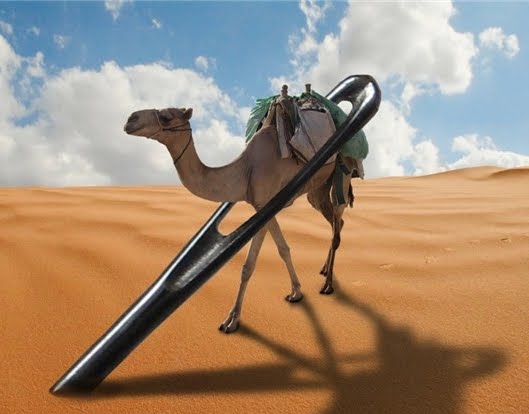
eye-of-the-needle

  1. It is easier for a camel to go through the eye of a needle than for a rich man to go to heaven. — Mark 10:25

My friend Kwame says that we should be grateful that we are not rich.  Money is a corrupting influence.  It is somewhat like a drug.  It is addictive.  The more you get the more you want.  The more you have the more you need.  Another friend of mine whom I met in China told me before we left Shanghai in 1989 that we were rich.  I explained that we were not rich, but very middle class.  In fact, we were definitely not even upper middle class.  Xibo said, “you are rich to us in China.  You have nice house, and you can afford to travel to distant countries.”  Xibo’s comments were very accurate, and they had the effect of making me realize just how selfish I often am.  I am bemoaning my mundane middle-class status when to most of the rest of the world, I am regarded as rich.  Never mind regarded.  I am rich to possibly 90 percent of the world.

I am told by biblical interpreters that Jesus never said “rich people were bad” or that rich people could not go to heaven.  What Jesus did say and used many parables to illustrate the fact was that it would be hard for rich people to get to heaven.  Money is a heavy load to carry, and it corrupts.  Lord Acton said that “Power corrupts, and absolute power corrupts absolutely.”  The same can be said of money, “Money corrupts, and excessive money corrupts excessively.”

Regard the quest for money in the USA today.  Everyone wants more than they have.  We worry about Inflation, about immigrants stealing our jobs, about the Chinese sending too many products to us.  On the other hand, billions of dollars are now spent on people trying to get rich quick through pull-tabs, lotteries, online gambling and now sports betting.  The mania for money is fueled by the incessant celebrities, media influencers and TV shows touting the “Lifestyles of the Rich and Famous.”  The airwaves, newspapers, Internet and all of our media are full of non-stop advertising.  “Shop till you drop” should be the title of a song or at least put on the US dollar bill right under George Washington’s picture.

To be mindful of what I have I keep repeating this thought in my head.  ‘It is easier for the camel than the rich man to get to heaven.”  By the way, I do not believe in heaven or hell but I take it metaphorically that it is better for the human race if I try to be the camel and not rich and greedy.

Next Reflection:    

  1. These are things that I Regret about my life.

My Final Will and Testament – Insights – Reflection #5

transfrom-data-actionable-insights

Last year at my 40th Demontreville Retreat, one of the exercises that we were given by the Retreat Master included a very challenging set of thoughts.  The worksheet for the activity was labeled as “A Testament.” I took the worksheet and instructions home with me.  It had fourteen tasks or reflections to complete.  I did not desire to complete them during the retreat.  It is now almost a year since my retreat, and I have decided to make the mental and emotional effort necessary to complete this “Testament.”

The worksheet started with these instructions:

Imagine that this is the last day of your life on earth.  In the time that you have left, you want to leave a “Testament” for your family and friends.  Each of the following could serve as chapter headings for your “Testament.”

5.  These are ten of the greatest Insights that I have gained in the School of Life.

Friends are like flowers:

I have realized that friends are like flowers.  They grow, they bloom and then some of them wither away over time.  Some friends are like Perennials.  They live for more than two years. They grow back each year as we renew them.  They may bloom for many seasons.  Over and over again.  Other friendships are more like Annuals.  Annuals have a much more limited life cycle.  Sometimes, they are over in less than a year.  They are beautiful when they last but somehow they are never destined for longevity.

Cowards die many times before their deaths:

A line from Shakespeare’s “Julius Caesar” that I have used my entire life to remind me that fear can be death.  Fear can stop us from trying new things, going to new places and enjoying life.  True, fear is a warning.  However, fear can also be paralyzing.  You have heard it said that some people are afraid of their shadows.  As we get older, life closes in on us.  Unless we can keep pushing back the boundaries, we will end up in a coffin long before it is our time.

Live for today.  Take one day at a time: 

So easy to say.  So hard to do.  All the great prophets in history have given paeans to the virtue of living one day at a time.  Jesus said “”Therefore do not worry about tomorrow, for tomorrow will worry about its own things.  Sufficient for the day is its own trouble.”— Mathew, 6:34.  Buddha said, “Don’t get caught in the past, because the past is gone.  Do not get upset about the future, because the future is not yet here.  There is only one moment for you to be alive, and that is the present moment.” — Knowing the Better Way to Live Alone.  The Muslim preacher, Hasan al-Basri said, “The world is three days: Yesterday, with all that was in it, has gone.  Tomorrow, you may never see it.  As for today, it is yours, so work on it.”  There are many more admonitions to live in the moment.  Still, easier said than done.

I wake up making my lists each day.  I plan some of them one week, one month, and even years out.  Will those days ever come?  The older I get, the less likely it is that a ten-year plan will ever come to fruition.  It makes sense to live in the moment.  Except, what about the grasshopper and the ants?  They stored up grain for the future, while the grasshopper fiddled and danced.  Who starved?  A good friend of mine complains that it is not fair that state parks and other such venues do not operate on a first come first served basis.  Today, if you do not plan for the future, you may not get a campground.  Not planning for a future can mean even more dire prospects than not getting a campsite.  It might mean not having any retirement money.  It might mean not having any resources for health care and other necessities.  There must be a balance between living for today and planning for tomorrow.  Does anyone know a sure fire way to find that balance?  Here is what ChatGPT said in response to my query:

Balancing living for today and planning for tomorrow can be a delicate act, but it is achievable with mindful practices and habits.  Here are some strategies that can help:

Set Clear Goals: Define your long-term goals and break them down into smaller, manageable steps.  This helps you focus on the present while keeping an eye on the future.

Prioritize Your Time: Make a list of your daily activities and prioritize them based on importance and urgency.  This ensures you are spending time on what matters most, both for today and for your future.

Practice Mindfulness: Mindfulness techniques, such as meditation and deep breathing, can help you stay present and enjoy the moment without constantly worrying about the future.

Create a Balanced Schedule: Allocate specific times for work, relaxation, hobbies, and social activities.  This ensures that you are enjoying life now while also dedicating time to your future goals.

Financial Planning: Save and invest wisely to secure your future, but also set aside some money for leisure and experiences that bring you joy today.

Stay Flexible: Life is unpredictable, and plans may change.  Being adaptable allows you to enjoy the present while being prepared for future changes.

Reflect Regularly: Take time to reflect on your progress and adjust your plans as needed.  Regular reflection helps you stay aligned with your goals and make necessary changes.

Seek Balance in Health: Take care of your physical and mental health through regular exercise, a balanced diet, and sufficient rest.  Good health enables you to enjoy the present and ensures longevity.

Enjoy Small Moments: Find joy in everyday moments and appreciate the present.  Whether it’s a walk in the park, a good meal, or time with loved ones, these moments are valuable.

Continuous Learning: Invest in your personal and professional growth by learning new skills and acquiring knowledge.  This not only prepares you for the future but also enriches your present life.

By integrating these practices, you can create a harmonious balance between living in the moment and planning for the future.

It took ChatGPT all of about one minute to come up with the above list.  Pretty amazing isn’t it.  I only wish I were as smart as she/he is.

Kindness is more important than knowledge:

This is a lesson that has taken me many years to learn.  “Chicken Soup for the Soul” was a pivotal event in my life.  The stories started me thinking more about kindness and less about acquiring a great deal of knowledge.  I once thought that knowledge was everything.  Knowledge was the path to virtue according to the Bible.  Knowledge was power according to Sir Thomas Hobbes.  Knowledge comes from a different place than kindness.  Knowledge is necessary to make a living, but kindness is necessary to make a life.  A human being must be more than just a collection of ideas and theories.  We must be able to show compassion and empathy for other human beings and other creatures.  Kindness will make more of a difference to the world than the Encyclopedia Britannica ever did.

We do not age like a fine wine, we age like bananas:

Whoever came up with the trope about aging and fine wine must never have grown old.  The older I get, the more wizened I get.  My wine is getting moldy.  My face is getting wrinkled.  Like an aging banana, I now am getting more and more black spots on my skin.  Nobody throws a fine old wine away, but in a few years, just like a rotten old banana, my carcass will be disposed of.  I am softer and mushy now.  I once was firm and hard.  Who likes a mushy old banana?

Don’t rely on Hope:

Hope may spring eternal in the human breast but hope never accomplished anything.  It takes effort to make a life.  It takes effort to go to work every day.  It takes effort to do anything worth being done.  You can hope your life away.  Hope is a seasoning for life.  You can season the meat, but you must then cook it.  Hope can help you to have faith that you can change the world, but hope is not enough to get the job done.  Patrick Henry spoke about “hugging the delusive phantom of hope.”

You can hope to win the lottery but unless you buy a lottery ticket, you have no chance of winning the jackpot.  Hope can be a motivator, but running the 100-meter dash of life takes moving your legs to get to the finish line.  Keep hope in perspective but don’t let hope become your whole life.

Life is about trying to make a difference:

We wake up each morning and what do we do?  We say a prayer maybe.  Maybe we have breakfast.  We take a shower.  We write a few lines.  We go to work.  What is the purpose of our life?  If it is not to make a difference in the world, I don’t know what it is for.  Is it simply to live another day?  Is it just to have fun? “God Forbid” to quote Patrick Henry again.  If the meaning of our lives is not to make a difference in the world, I don’t know what we exist for.

Sadly, we may never know if we make a difference.  We are not born with a difference gauge that tells us which of our efforts is the most effective.  Faith can make a difference here.  Mother Teresa was once challenged by a reporter who asked her, “How do you know you are making any difference with all your poverty and charity work?”  Mother Teresa replied, “I am not called upon to make a difference, I am called upon to have faith.”  Faith guides us down the path of hope but we must be propelled by a desire to see a better world if not for ourselves than for our children.

Progress is made by people, ideas, and technology:

There are many theories of human progress.  Karl Marx believed that materialism was the prime motivator and engine for change.  “The essential condition for the existence, and for the sway of the bourgeois class, is the formation and augmentation of capital; the condition for capital is wage-labor.” — The Communist Manifesto, Karl Marx.  Despite the fact that Marx has been refuted more times than I can count, his problem came not from his perspective, it came from his limitations of perspective.  He was not able to see the difference that ideas, people, and technology could and do make on the world.

The argument as to which drives progress is really a chicken and egg dilemma.  Or maybe it is more like a giant Mobius strip.  Great men come up with great ideas which create great technology which creates new material goods which lead to new leaders who have new ideas for more progress.  Around and around we go, but we always remain in one plane.  A Möbius strip is a one-sided surface with no boundaries that looks like an infinite loop.  Progress comes from going around and around and around.  All the elements of the universe help motivate us around this single plane.

Whatever can be done, can also be undone:

The pundits are telling us that if Trump gets reelected he will abandon and even destroy all the foundations for democracy that still exist in the USA.  His first attempt at doing so fell short but together with his minions, he will take another shot at it.  Americans are deluded into thinking that democracy is indestructible.

Democracy is a set of ideas which when put into action creates a system of government.  Sometimes this system works very well but often it is dysfunctional.  Democracy has no guarantee of success if people no longer believe in the set of ideas that defined their democracy.  There are only twenty or so true democracies in the world today out of over 180 different governments.  “The Economist Democracy Index rates countries on the state of their governing system each year.  In the latest published edition, corresponding to the year 2022, only 24 countries in the world have been rated as ‘full democracies’, representing 8% of the world’s population.”The State of Democracy, April 2023

It is by no means inevitable that democracies will be created in the world or that they will be sustained.  History has shown us over and over again that great empires fall, and democracies may not survive.  Human beings seem to have an equal propensity to favor authoritarian governments as they do democratic governments.  Recent events in the USA cannot be denied.  America is full of people who do not believe in democracy and who would favor a tyrant and bully like Trump being elected for life.

Love surpasses everything:

If making a difference is the ultimate purpose of life than love is the ultimate meaning of life.  We often love not too well and not too wisely, but love is the soul of our existence.  Deprive humans of love and you deprive humans of the only thing that really matters in this world.  A lonely life is one that saddens all of us.  How many people live such lives?  What can we do to help others who are not loved or who cannot share love with others?  If we can stop manufacturing bombs and bullets to murder others, we might be able to work towards creating a world based on love.  We may have faith and we may have hope, but unless we mix the ingredients for love and share them with others, love will remain only a dream.

Next Reflection:    

6.  These are the Risks I took.


Everybody is in a Hurry Today to go Fast

download

Everybody is in a hurry today.  Nobody has any time today.  We do everything we can to keep busy today.  The hell with everyone else.  The hell with tomorrow.  The hell with life.  I am busy so you can just get out of my way.  The roads are full of maniacs passing on double yellow lines.  Other maniacs riding your bumper to the next stop sign about 100 yards away.  Passing on the right, then left, then right again until they wind up next to you at the next red light.  Where are the cops these days.  Speed limits and time seem to have no meaning anymore.

When I first came down to Arizona, I would ask people “How are you doing?”  “Living the dream” was a common reply.  “What is living the dream?” I would ask them.  “Well, I can golf everyday now.”  Ah, yes, you retired so that you could stay busy hitting a little round ball around 18 holes.  So that you could try like hell to hit the tiny ball into the tiny hole eighteen times.  What a life!  At first I did not understand.  When you retire, shouldn’t you make some time to just relax?  Karen says well maybe they relax by swinging their expensive golf clubs.  I doubt it.

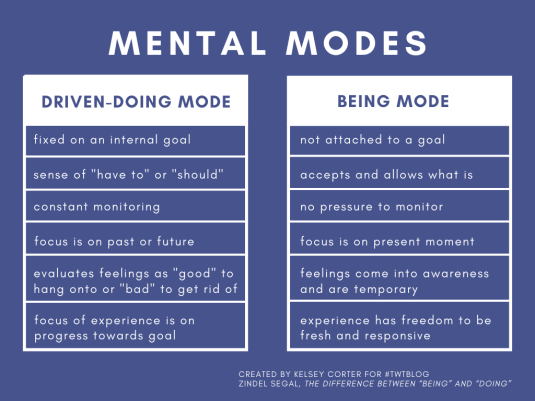
Years ago, I learned that one can be or do and life is a balance between each.  Being involves spiritual activities that make us better people.  It is meditating.  It is going on a retreat.  It is praying.  It is reading a good book.  Doing is moving.  Doing is animated.  Doing is hitting a pickle ball back and forth over a net.  Nothing is wrong with doing but something is wrong with a life that is filled only with doing.  I have met too many people that spend time doing but spend no time being.

“Hi, Paul, would you like to get together for a coffee next week?” “Gee, John, I would love to, but I am really busy next week.”  “Well, than how about the week after that?”  “Sorry, but my great aunt and her son are coming over that week and I need to get the house cleaned.  Tell you what I will check my calendar and get back to you.  Not sure but I think I have an opening next year.”

cyan-minimalist-t-chart-3

There is a mania in this country with going nowhere fast and doing something all the time.  I rush to get somewhere so I can get busy staying busy.  The business of America is more about staying busy than doing anything really useful.  The country band Alabama penned a song many years ago which went as follows:

I’m in a hurry to get things done

Ohh I rush and rush until life’s no fun

All I really gotta do is live and die

Even I’m in a hurry and don’t know why?

Don’t know why?  I have to drive so fast

My car has nothing to prove

It’s not new

But it’ll do zero to sixty in five point two

Ohh, I hear a voice

That says I’m running behind

I better pick up my pace

It’s a race and there ain’t

No room for someone in second place

 I wonder what life would be like in America if more people meditated and less people were in a hurry.  What if people spent more time praying than watching TV?  I would give you better than ten to one odds that if more people prayed and/or meditated that we would have less crime, less war, and less violence.  Society and the world would be more peaceful if people spent more time meditating.  We would have more time for friends.  More time for settling differences peacefully.

The average USA citizen spends the following amount of time in each of these activities each day: — Bureau of Labor Statistics, 2022

Sleeping                      9.02 hours

Eating:                         1.23 hours

Shopping:                   .66 hours

TV:                               2.79 hours

Religious/Spiritual      .13 hours

Volunteering:             .10 hours

Educational:               .44 hours

Working:                     3.23 hours

You can see from the above chart that the average USA citizen spends approximately 8 minutes per day in religious or spiritual activities.  I wonder whether this statistic would find any greater amount of time spent by the religious right in America doing prayers or meditating than for the average person.  The time spent per person is just about enough time to say a blessing at supper time.  To repeat what I said above “What if people spent more time meditating and praying and less time rushing to get somewhere?”  Would we have a better country?  I believe we would.  We would probably have:

  • Less road rage
  • Less drug use
  • Less alcoholism
  • Less traffic accidents
  • Less wars
  • Less violence

On the positive side, just imagine how relaxed people would be.  If people were more relaxed, there would be nicer people walking around.  Imagine the following scenarios:

Ariana:  “You just took the parking spot I was going to drive into.”

Alex:  “Oh, I am very sorry.  I did not see you waiting there.  Just give me a second and I will pull out and park elsewhere.”

Ariana:  “No, that’s ok, I can find another spot.  There is plenty of spaces in the parking lot.”


President Biden:  “Look, President Putin.  I am sorry for all the names I called you in the past.  I have so much on my plate and too much to do.  Sometimes, my age gets in the way.”

President Putin:  “I did not want a war with Ukraine, but you kept bad mouthing us and surrounding our country with more and more NATO members.  We just want to survive like you do.”

President Biden:  “I think it is time for peace talks now.  We can back off and leave Ukraine alone if you can promise to pull troops out and restore Ukraine to its former territories.” 

President Putin:  “Lets start the peace talks now and see what agreements we can come to.”

Well, you can call me Pollyanna and laugh if you want but if Putin and Biden could sit down and meditate together and then pray together for peace, I seriously think the world would be a different place.  Maybe we could even get Netanyahu to pray and meditate some.


To Hope or Not to Hope?  That is the Question

  •  Hope is the most useless concept in the English language!
  •  Without Hope people will perish!

Which of the two above ideas is true?  Is Hope a useless idea or is Hope essential for human progress and prosperity?  In my blog this week, I would like to explore each of these ideas and then you can make up your mind which point of view you choose to accept.

2813565-Sydney-Lee-Quote-What-is-hope-but-futility-for-moments-stood-on

Hope as Useless Concept:

If you believe in Hope, you have to believe in God or a higher power because Hope nullifies any effort on your part to change anything.  For instance, I say “I Hope to win the lottery.”  This is nothing short of wishing for a miracle or wishing that a higher power will take favor on me and overcome the billion to one odds against my ticket winning.  Or I might say “I Hope my children will grow up and be happy and prosperous.”  What power can make this happen except an all-powerful entity that many call God?  If I am hoping for my children to be happy it appears that I can do nothing more to make this happen than to sit on a rock and repeat “Hope, Hope, Hope, over and over again.

When did Hope ever change anything.  Change takes effort both mentally and physically.  Hope relies on something ephemeral that will happen to spontaneously make things better.  “I Hope I will do well on the test tomorrow.”  As Yoda said about the word “Try”, “There is no try, there is either DO or DO NOT.”  Hoping will never get you good grades.  Study, practice, and more study are the only things that have ever led to good grades.  Do you get to Carnegie Hall by Hoping?  The trope that Carnegie Hall puts on their refrigerator magnets and tote bags reads “How do you get to Carnegie Hall?  Practice, Practice, Practice.”  It does not say “How do you get to Carnegie Hall?  Hope, Hope, Hope.”

Perhaps Hope is an idea supported by those who want to keep the masses quiet and lazy.  Karl Marx said that “Religion is the opiate of the Masses.”   I have often said that today “Sports is the opiate of the masses.”  Hope is simply another opiate.  We can keep hoping that Donald Trump will not be elected.  We can keep hoping that the Israeli Palestinian problem will be resolved.  We can keep hoping that our lives will be healthy.  We can hope all day long and nothing is going to happen unless we get off our butts and fight to change things.

Generative AI defines Effort as follows:

“Effort is the physical or mental activity needed to achieve something.  It can also refer to the use of energy to get something done, or the exertion of strength or mental power.”

Effort means doing something.  Either you use your brain, or you use your muscles, but you do something that leads to a desired outcome.  Hope does not imply any such effort.  Here are three AI definitions of Hope:

“As a noun, hope is a feeling that something good will happen or be true.  It can also mean a desire accompanied by expectation, or the thing that one has a hope for.”

“As a verb, hope means ‘to expect with confidence’ or ‘to cherish a desire with anticipation’.”

“In the Bible, hope is a confident expectation of what God has promised.  It is a confident expectation and desire for something good in the future, with moral certainty.”

So, Hope comes down to an expectation or feeling.  An expectation or feeling that without any effort on your part, God, or something else is going to provide you with some desired outcome.  To win that lottery, all you need to do is Hope long and hard enough and you will be rewarded with tons of cash.  I only Hope you do not spend it all in one place.

To sum up, those who Hope for what they want are living in a fool’s paradise of dreams and wishes.  I would expect that the same people who put all their faith in Hope also believe in the Tooth Fairy, the Easter Bunny and Santa Claus.  I have already mentioned a belief in a benevolent God that begs credibility and reality.

download (1)

Hope as Essential for Happiness and Progress:

How could we ever make progress without dreams and wishes?  Who would ever have the motivation to try anything or to make any effort if they were not fueled by Hope.  By a belief that their efforts would and could achieve a desired effect.  The Bible says that “Without Hope, the people will perish.”  Can you imagine a life without Hope?  It would be a sad cruel world if people could not at least believe that tomorrow may be better than today.  That tomorrow could bring an end to the wars and violence that plague our world.

All good things must have Hope behind them.  I married my present wife with the Hope that I could do a better job on this marriage than I did on the first.  I started college after being a terrible student in high school with the Hope that I would have the focus and discipline at 25 years of age that I did not have when I was fourteen years old.

There are many pragmatic concepts that we can use as rules or guides for our lives.  Some of them make good sense.  Some do not.  Hope does not lend itself well to pragmatism.  Hope is of the soul and spirit and not of the brain and intellect.  Great minds may say that Hope is for fools, but many of our “great minds” tend to be bigger fools because they ignore the emotional needs of people.  Hope is food for the spirit and soul just as ideas and theories are food for the mind.  People need both a heart and a brain to live.  Without Hope, there is no heart.

I am sure that you are familiar with the popular author Robert Fulghum.  I think his first book was “All I Really Need to Know I Learned in Kindergarten.”  This was a book of short essays written with some great insights and a very imaginative sense of humor.  One of the quotes from this book that pertained to the concept of Hope was this bit of wisdom:

“I believe that imagination is stronger than knowledge.  That myth is more potent than history.  That dreams are more powerful than facts.  That Hope always triumphs over experience.  That laughter is the only cure for grief.  And I believe that love is stronger than death.”

To sum up, Hope comes from the heart.  Without Hope we are not human beings.  With no hope we are little more than automatons.  Robots will probably never be able to hope.  They are quite logical.  A robot can waste no effort on Hope.  Can you imagine Commander Spock from the original Star Trek series exclaiming, “Gee, I Hope we can get back to the ship in one piece.”  Spock would never have issued such a plea, but Bones or Dr. McCoy would be quite comfortable with the sentiment.  Kirk on the other hand would be too busy dashing about to worry about Hope either for better or worse.

Conclusions:

What do you think friends?  Do we strike Hope from our vocabulary and set off for a brave new world with logic and knowledge or do we take a moment each day for a prayer of Hope.  What if a prayer blended both points of view?  In case you do want such a prayer, here is a Buddhist prayer that I think would help your soul and spirit without stepping too hard on your faith in logic and knowledge.   — Sorrow & Hope: Prayer to Kuan Yin, Mar 31, 2018,  Dharma Insights, News

news-kuanyin-prayer-apr18-longer3

Is the Other Evil?

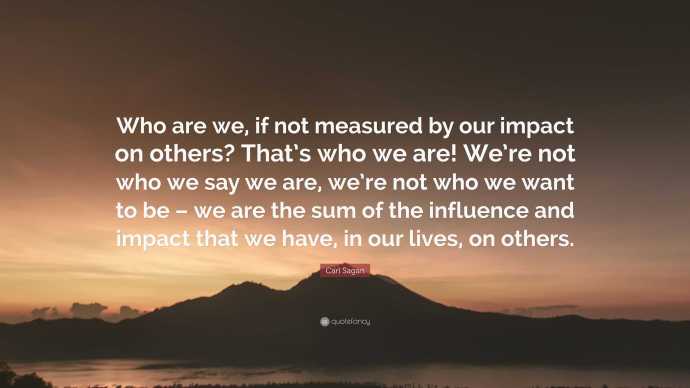
2034877-Carl-Sagan-Quote-Who-are-we-if-not-measured-by-our-impact-onThe other is anyone who you do not identify with.  It is anyone who is on the other side of the fence.  It is anyone who does not belong to your tribe, religion, political party, sports team, demographics, ethnicity, country club, neighborhood, gated community, state, country, or hemisphere.  It is someone who looks different than you do.  It is someone who thinks differently than you do.  It is someone who behaves differently than you do.  It is a stranger from a strange land.  It is a poor person who needs a handout.  It is a rich person who does not have to work hard.  It is a very educated person or perhaps a very uneducated person.

Other people do not belong.  Other people do not understand.  Other people do not get it.  Other people are often stupid.  Other people are often immoral and unethical.  Other people are probably evil.

I know these things about other people are true because everybody I know says so.  I know they are true because Fox News or CNN said that they were true.  I know they are true because my leader said that they were true.  I think I read it somewhere so it must be true or else I saw it on TV.

I don’t want to live near other people.  I don’t want other people to live near me.  I don’t want my kids playing with the children of other people.  I don’t want my children growing up thinking like other people.

Why can’t more people be like us?  What is wrong with these other people?  Do these other people read too much or spend too much time in school or maybe they don’t read enough or don’t spend enough time in school.  Where do these other people get these crazy ideas from?

I just wish we could all get along.  I try to treat everyone the same, just as long as they are not any of these other people.  I have told my kids to be polite and respectful to everyone just as long as they are not any of these other people.  My spouse and I always go to Sunday service and we pray for these other people when we are there.  One of my favorite prayers is as follows:

Lord, please hear my prayer,

I want to pray for these Other people.

Please help them to see the evil of their ways.

Please help them to find a way to believe in the same God that I do.

Please help them to be more like me.

Lord, if they refuse to repent the evil of their ways,

Could you please strike them dead?

download 1111One of my best friends and I were recently discussing the current mania with “Identity.”  There has been much talk these past few years over the issue of Identity politics.  Identify politics has been defined as:
“A tendency for people of a particular religion, ethnic group, social background, etc., to form exclusive political alliances, moving away from traditional broad-based party politics.”

age of identityThis mania with identity presents a problem in the political arena where compromise has long been a foundation of good government.  The concept of Identity has so polarized people that they now view the “other” side as having no validity and even in many cases being EVIL.  The problem of Identity has metastasized from the political arena to the wider social arena which includes almost every aspect of life on the planet.  I think it is safe to say that Identity has always been at the heart of conflicts since the Tower of Babel and perhaps Adam and Eve.  Did Eve feel inferior to Adam and want to one up him?  Some recent headlines about the concept of Identity include:
  • LGBTQ groups sue over Iowa law banning library books and gender identity discussions
  • Stop Identity Attacks: Discover the Key to Early Threat Detection
  • Is Buffy Saint-Marie Indigenous? Ancestry Questioned
  • How Media, Politics, and Identity Drive Our Appetite for Misinformation
  • Israel’s political identity crisis: Right divided, left reevaluating
  • Why Democrats Lose When They Play Identity Politics
  • Brexit as an Identity: Political Identities and Policy Norms
  • How Does Geography Play a Part in Rural Identity and Politics?
  • Gender identity and political evil

My friend Bruce is not a naïve person, and he is very well read.  He wondered if we could ever get along with others without the need to resort to Identity.  Could the Crusaders and Muslims have avoided fighting over which God would be worshipped?  Could England and France have settled their differences without the 100 Years War?  Could Lee Harvey Oswald have simply written a letter to JFK expressing his disagreements or whatever animosity he had towards Kennedy? 

The famous guru and Indian philosopher Osho believed that war could never be eliminated from the planet because of how it was valued by humans.  Osho wrote:

“It has never happened.  Man has never found peace exciting.  It seems that is the way man is, war certainly will remain exciting, because the peace that you know is not the real peace; it is the peace of a cemetery, not the peace of this mandir!”  (Note: A mandir is a Hindu temple or place of worship)

We might argue whether Osho is right but consider the many long and frequent wars that have punctuated any peace on this earth.  My guess is that most of these wars had to do with Identity.  A very important question might be to better understand the role that Identity plays in life and how the negative aspects of this role can be eliminated or at least mitigated.  For instance, when we sing school fight songs that extol our virtues over the virtues of our rival schools.  Here is the University of Michigan fight song:

Hail! to the victors valiant

Hail! to the conquering heroes

Hail! Hail! to Michigan

The champions of the west

One of the high schools that I substitute at has their mascot as, “The Spartan Warriors.”  Their fight song goes:

Bravely, we fight to win the test

Nothing to fear for we are the best

Fight on Spartans to the end

And bring home the victory

download yyyyy

Perhaps you find these fight song references trivial but when our young people get a constant never-ending chorus of exhortations to fight on and to fight to the end, it makes me wonder what impact this has on their psyches.  Combine this with the fights on cinema and the violent video games and I would argue that the Spartans had nothing on our society when it comes to training their youth for violence and warfare.

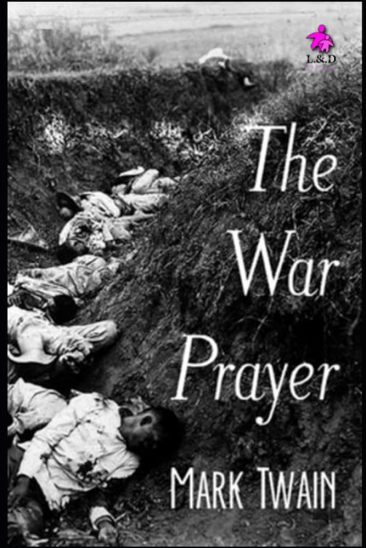
71S4w-+PgrS._AC_UF1000,1000_QL80_Mark Twain wrote a famous story which he asked not to be published until after his death.  The story was called “The War Prayer.”  A church service is being held at which several soldiers are getting ready to go off to war.  The chaplain has just given a prayer for the soldiers welfare and victory.  A stranger enters the church and asks the chaplain to say a few words.  Reluctantly the chaplain agrees.  The stranger starts off by referring to the war prayer that the chaplain gave to instill morale in the soldiers.  The stranger notes that there are really two prayers that have been said.  One has been spoken and the second one unspoken.  The stranger then says that he will speak what was really asked for in this prayer:

“O Lord our Father, our young patriots, idols of our hearts, go forth to battle — be Thou near them! With them — in spirit — we also go forth from the sweet peace of our beloved firesides to smite the foe.  O Lord our God, help us to tear their soldiers to bloody shreds with our shells; help us to cover their smiling fields with the pale forms of their patriot dead; help us to drown the thunder of the guns with the shrieks of their wounded, writhing in pain; help us to lay waste their humble homes with a hurricane of fire; help us to wring the hearts of their unoffending widows with unavailing grief; help us to turn them out roofless with little children to wander unfriended the wastes of their desolated land in rags and hunger and thirst, sports of the sun flames of summer and the icy winds of winter, broken in spirit, worn with travail, imploring Thee for the refuge of the grave and denied it — for our sakes who adore Thee, Lord, blast their hopes, blight their lives, protract their bitter pilgrimage, make heavy their steps, water their way with their tears, stain the white snow with the blood of their wounded feet! We ask it, in the spirit of love, of Him Who is the Source of Love, and Who is the ever-faithful refuge and friend of all that are sore beset and seek His aid with humble and contrite hearts.  Amen.”

images (1)We have a world where humans have begun to take war for granted.  It is either too easy to do nothing about war as we watch our favorite sports teams fight it out or Osho is right, and we crave the excitement that death and destruction bring to the planet.  If we truly want to end war and violence, we must start to see everyone on the planet as a people that we are part of.  There must be no “others.”  We are all part of one large tribe.  Just as the water, soil and air are part of a seamless whole, so is humanity.  Benjamin Franklin said, “Either we all hang together, or we all hang separately.”  I think we might say something similar for humanity.  Either we all live together peacefully, or we shall all die separately apart.”

download hhhh


Chad and the Central African Republic – I Want You!

download

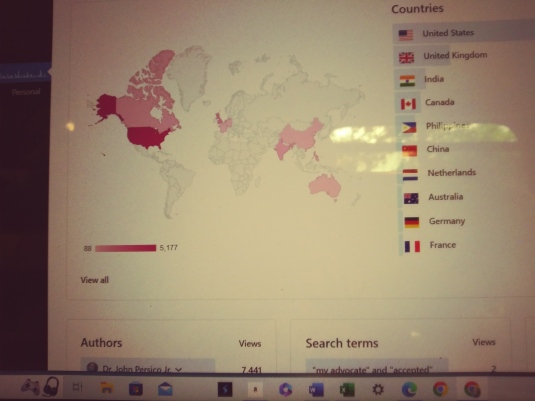
As many of my fellow bloggers on WordPress know, there are free statistics available which give us a wide range of data and information on who is reading our blogs and where they are from.  One statistic that I have followed for my fifteen years or so of blogging is the various countries that have visited my blog.  There is a data map which shows me which countries have visited and how many visitors from each country.  As you would expect, most of my visitors come from the USA.  For 2023 to date, I have had 5,115 USA visitors.  The next highest numbers (2023 to date) for the top countries that have visited my blog are as follows:

  • United Kingdom
    • 1,073
  • India
    • 588
  • Canada
    • 488
  • Philippines
    • 371
  • China
  • 184
  • Netherlands
    • 138
  • Germany
    • 95
  • Australia
    • 95
  • France
    • 87

20230713_110703

When I look at the data map since the start of my blogging, it looks like I have had visitors from every country in the world except Chad and the Central African Republic (CAR).  I guess as a point of pride, I want to get at least one visitor from each of these countries.  How do I do this?  What can I say that will get the attention of Chadians and Central Africans?  Wait?  I know.  I will Google, “What do Chadians and Central Africans Care About?”  Having done this, most of the data that popped up concerned demographics and health indicators.

download (1)

Country Overview:

“Chad is consistently ranked as one of the five poorest countries in the world by the Annual United Nations Human Development Report. The measure of the country’s underdevelopment is staggering.  Only about 6 percent of the population has access to electricity, and only 8 percent has access to basic sanitation.  Adult literacy is 22 percent. Life expectancy is only 53 years.  Around three-quarters of all births take place without the attendance of a skilled health professional.” — US Aid for the American People.

Chad Health Indicators:

  • Life Expectancy (Female, Male): 57, 54
  • Infant Mortality Rate: 67 deaths per 1,000 live births (6th Highest in the World)
  • Child Mortality Rate: 111.5 deaths per 1,000 live births (3rd Highest in the World)
  • Maternal Mortality Rate: 1140 deaths per 100,000 live births (New Zealand is 1.7 per 100,000 live births
  • 9 million people need humanitarian assistance.
  • 7 million people suffer from critical food shortages, of whom more than 1 million face severe food shortages.

“Chad’s health indicators are relatively worse than other countries in Sub-Saharan Africa due to many reasons such as civil conflict, healthcare shortages, and lack of maternal and child health. Child and Infant mortality have decreased significantly in the last few decades, but numbers are still extremely high.” — Columbia University, School of Public Health

I was struck by the data on Chad since it made me realize how little I know about Chad or the CAR (Statistics were equally stark for the CAR).  It also brought out the point that not only did I not know much about them but never in my life have I done a single thing to help either country live better.  I wondered whether my country did much to help them.  Time to Google again.  This time I Googled, “USA aid to Chad and the CAR.”  Here is what I found for USAID to Chad in 2022:

USAID provided $73.6 million to the people of Chad for food assistance, relief commodities, and other support during fiscal year 2022.  The U.S. stands with communities in Chad as they continue to recover from devastating floods.”

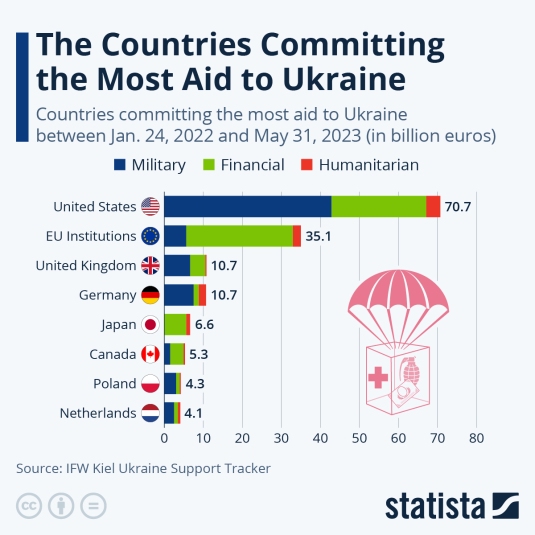
Just for comparison’s sake, since the Ukrainian War began about 1 ½ years ago, the Biden administration and the U.S. Congress have directed more than $75 billion in assistance to Ukraine, which includes humanitarian, financial, and military support.  — Kiel Institute for the World Economy, May 19, 2023.  Compare this to the amount of aid that we gave to Chad, and you might find it shocking.  I did.

28489

Now you can tell me that this is like comparing apples to oranges or cluster bombs to F16’s or the M142 High Mobility Artillery Rocket System to M1 Abrams Tanks.  We are saving the world for democracy.  We are helping American values to survive in the Ukraine.  My response is that we have sent the Ukraine more for war than we care to spend for peace and health in Chad.  If you like some numerical comparisons, we have sent 1013 times more aid during the past 16 months to the Ukraine than we have to Chad.  74 million for Chad.  75 billion for the Ukraine.  That equals per capita aid for a Chadian at $4.31 per year (US 74 million in aid divided by 17.18 million Chadians).  This compares to per capita aid for a Ukrainian at $1,713 per year (US 75 billion dollars in aid divided by 43.79 million Ukrainians).

I wonder what this says about our values and priorities.  Is winning a war more important than helping people not die of starvation?  Are Ukrainians more important than Chadians?  Are we simply protecting American interests in Ukraine that do exist in Chad?  Is the war in Ukraine about democracy and we do not have the same goals in Chad?  Is it all just a game and the other countries in the world are pawns to be sacrificed for American interests? You tell me.  But I am also going to make sure that my charitable donations this year include Chad and the Central African Republic.

download (2)

I started this blog out somewhat facetiously.  The more I delved into the history of Chad, the more appalled I became at what we say we value and where we spend our taxpayer’s money.  Money that I and millions of other Americans contribute to the government.  I want my money to be spent on peace and not destruction.  I want it to help improve the standard of living of other people in the world regardless of their political or religious beliefs.  I do not accept that everyone must have the same political and religious philosophies as we have in the US to benefit from our help.  Call me naïve, but I think that our aid should be based more equitably on need and not on our political self-interests.  In no case do I want our aid to go to help another country wage a war.  What ever happened to the vaunted diplomacy in our State Department and diplomatic Corp?  Based on their efforts and results in both the Ukraine and Chad, they should all be fired and replaced with a new team.

Add_a_heading_(1)

Can Birds Really Save My Soul?

bird feeders

I am looking out my back window.  The headlines from another senseless tragedy still scroll across my video screen.  But my backyard is serene and peaceful.  I have a clothesline pole with three bird feeders and two suet feeders.  A minute or so ago, there were more birds than I could count.  Throughout the day, Karen and I watch the birds come and go.  Sometimes there are more than twenty birds all taking turns at our feeders.

Yesterday, we saw hummingbirds, ravens, woodpeckers, finches, doves, grackles, robins, and several other species that we could not identify.  Karen keeps a bird guide and binoculars at the ready and is always on the lookout for a new species to add to the list that we keep.  We are not true birdwatchers, but we enjoy watching the birds.  Amidst the carnage of life with its murders and wars, the birds are our escape.  They help us to remember that there is indeed sanity in the universe.

Some of the birds we see are using the water fountain for a drink after an appetizer of suet.  Several species prefer to eat the seeds that fall on the ground from the feeders.  Birds are not always neat eaters.  Eventually a few squirrels will come around.  We never chase them away and they always appear happy to rummage about on the ground for food.  We have never had a bear problem with the feeders, but we have had some raccoons that like to take the feeders down and enjoy a hardy meal.  It does not bother Karen and me.  We just reload the feeders and put them back up.  In our daily scheme of things, bird feed is very economical.  Even if it meant eating less red meat to buy more bird seed, we would gladly make the sacrifice.

1200x0

Today, with the thoughts of yet another school massacre still running through my mind, I can’t help but notice the birds and how they interact.  In all our years of watching the birds outside our kitchen window, I have never seen any bird fights.  I see many birds of different species and they all get along.  They take turns at the feeders.  They come and they go but none attack any other birds.  If there is such a thing as “bird discrimination” or “bird racism,” I have not witnessed any evidence of it.

Jesus told his disciples:

“See the birds of the sky, that they don’t sow, neither

do they reap, nor gather into barns. Your heavenly Father

feeds them.  Aren’t you of much more value than they?”  — Matthew 6:26

This translates for me as an admonition to worry more about my soul than about physical things.  I do not need to acquire, accumulate, hoard, and stow away toys, stuff, and merchandise because God will take care of these things.  She/he does it for the birds, so it will be done for me.  With less concern for worldly things, I must turn my attention to my soul.  I need to do the things that will make my soul worthy of continuing existence after I leave this third rock from the sun.

Now, those of you who know me will be pondering my above words with some confusion.  I thought John was an atheist some of you will say.  Others will say, I thought John was an agnostic.  One of my best friends who is a pastor, says that I am more Christian than many of the people in his congregation.  In truth, I disavow religion.  I claim no knowledge to prove or disprove the existence of something or someone that created the food and earth that I survive with.

I write the above words from the perspective of an individual who wonders why so many people who profess to be Christians do not take Jesus’s words to heart.  Call them hypocrites.  They are in many religions.  It frequently seems to me that religion is one large stew of hypocrites.  A pot full of different denominations that unlike the birds cannot get along.  A big stew that does not mix well with other stews.  The Christian stew does not mix well with the Islamic stew.  The Islamic stew does not mix well with the Jewish stew.  Even within the same stew we find acrimony and bigotry.  “My religion and my God are the one true and righteous paths to salvation.  I will slaughter anyone who disagrees with me” says the “true believer.”

33024bf4f3ed26fd56bcc4d9dc5793e7

Before this blog becomes too negative, I need to go back to my bird watching window.  The birds will restore my equanimity and smooth out the hills and valleys of my life.

Birds are the saviors of our souls.

Happy? Happy? Happy? or Why Ain’t I Happier?

Key-to-Happiness (1)

We all feel that we are entitled to be happy.  The Bill of Rights lists happiness as one of our inalienable rights.  Actually, it lists the “pursuit of happiness.”  Just like chasing a rabbit or health or winning the lottery, you are assured of no guarantee that you will catch happiness.  But that won’t stop most of us from trying.  The sad part is that most of us will probably fail.

Failure in any endeavor is always assured if you don’t know what you are doing or if you don’t have a strategy.  But voila, that is where John and his Magic Blog come in.  I am here to give you six methods for catching happiness.  Furthermore, I will not charge you one cent for learning how you can be happy for the rest of your life.  So, listen closely, pay attention, and take notes if you have to.  I may only keep this blog up for a week, just in case I get inundated with requests from Fox News, MSNBC, the Today Show and/or Jimmy Kimmel.  Fame is not really conducive to happiness regardless of what they try to tell you.

Let’s start with one basic fact.  There are multiple theories about happiness.  What this means to me is that there is more than one road to happiness.  I have identified six different secrets or theories for obtaining happiness.  I will share each one of these secrets with you and give you the pros and cons as I see them.

Ooops, I almost forgot.  Some things will not make you happy even if the experts tell you that they will.  The following is a list of things that “ain’t necessarily so” when it comes to finding happiness. I list these so you can stay on track and not get seduced by what so many of your friends and neighbors think will make them happy.

  • Money
  • Good health
  • Fame
  • Power
  • Lots of friends
  • Family
  • Gourmet food
  • Long life
  • Sports
  • Reading
  • Taking naps
  • Sex
  • Children

41PAJDRHFML._SY291_BO1,204,203,200_QL40_ML2_

 1.  Absolute Theory of Happiness 

This theory says that happiness is a permanent trait that you too can find or acquire if you only try hard enough.  Happiness is an attribute like integrity or honesty.  Once you find it or get it, all you have to do is hold onto it.  It exists like a pot of gold somewhere buried and if you search long enough and hard enough you can find it.  People in search of happiness try many of the items on my above list in the hope that one of these will give them happiness.

Pros:

  • Treats happiness as a journey or quest.
  • Looks at happiness as a trait that can be acquired.

Cons:

  • Endless searching for something that is usually a dead end.
  • Happiness is not usually outside but more often inside.
  • Happiness is seldom if ever permanent.
  • Having things will not make you happy.

 2.  Contingency Theory of Happiness

imagesThis theory says that happiness is dependent on other things happening in your life.  You must have these other things going on or you will not be happy.  If you have a good family, or good job or you have meaningful work, you will be happy.  Contingency is like a correlation in statistics.  The process of having a good family correlates with happiness but having a good family does not make you happy.  Some things have a higher correlation with happiness than other things.  Some people believe that having less things is more conducive to happiness than owning a bunch of things.

Pros:

  • There is some correlation between happiness and living or doing the right things.
  • Doing the right things may result in some temporary happiness.

Cons:

  • Finding happiness is more complex than simply doing the right things.

3.  Outcome Theory of Happiness

downloadThis could also be called the “Cause and Effect” theory of happiness.  This theory says that certain things or activities will lead to the outcome of happiness.  For instance, becoming an Olympic Gold Medalist may lead an athlete to happiness.

Pros:

  • Great achievements and meaningful accomplishments can lead to happiness.

Cons:

  • No matter how much you have accomplished or how great your accomplishments are, the satisfaction you will receive and the happiness you may derive will only be temporary.

4.  Relative Theory of Happiness

xKgn9039You will always be happy in proportion to how happy others are around us.  If I have a great deal of money but my friends have more, I will be unhappy.  However, if I have a bigger office than anybody else in the company, I will be happier than they are.  The state of being happy will always be relative or in comparison to some other standard that I mark my happiness by.

Pros:

  • Humans have a great propensity to compare themselves to others.  If you are better, you may achieve a sense of happiness from your pride at being better.

Cons:

  • Pride and comparisons will always change. You may be on top for awhile but soon you will be on the bottom.  When you are on the bottom your happiness will disappear.

what-percentage-of-people-say-they-are-happy-ipsos

5.  Average Theory of Happiness

Happiness is viewed as an average state of being.  You can never be beyond some mean of happiness.  Perhaps your mean will be different than mine, but you will not be able to go much above or below your limits.  Just as everyone has different physical limits, everyone has different limits to their happiness.  Some people are just happier than others and there is nothing that you can do or change to alter your happiness mean.  You are just going to be average happy and that is that.

Pros:

  • It may be more realistic to be satisfied with life as you know it.  Satisfaction and gratitude will convey a sense of happiness even if you are never the happiest person in the world.
  • You may never be exceptionally happy but you may never be exceptionally unhappy.

Cons:

  • Life may never have peak experiences for you in terms of being happy, happy, happy.

6.  Exceptional Theory of Happiness

bigstock-jumping-happy-young-man-12752945This theory views happiness as something that has no limits.  The sky is the limit.  Extraordinary happiness awaits anyone willing to go for it.  Every day will bring more and more happiness if you only believe it is possible.

Pros:

  • A joy that exceeds all others may come from feeling exceptionally happy.  The best day of your life may be one that you will remember forever.

Cons:

  • Best days are inevitably followed by worst days. Nothing stays up forever.  Or whatever goes up will go down and the further up you are the further down you will fall.

Conclusions:

You are probably thinking about now “Well, I don’t get it.”  Where is the secret that will give me perpetual ecstatic happiness?  Frankly, I have not found it.  Most of my journey through life has taught me that everything has its ups and downs.  There are no absolute truths that exist for all time.  There is no one path to happiness or samadhi.  Life is a cycle.  Today I find happiness, tomorrow my mother or best friend dies.  Can I be happy when they die?  I may not go out and commit Hari-kari, but I doubt that I will be feeling joyous for the next few weeks or perhaps even months.

CNX_Psych_14_05_Happiness

I think one mistake we make starts at the very beginning.  We assume or treat life as though it were about the pursuit of happiness.  I don’t think it is.  But I do believe we can be happy for cycles or minor periods in our life when things just seem to be going right.  My formula for achieving these brief periods of happiness is as follows:

  • Live each day the best that you can
  • Do the most that you are able to spread joy and peace in the world
  • Treat everyone you meet and know with love and respect
  • Respect yourself and your accomplishments
  • Do not look for never-ending happiness
  • Never pursue things or accomplishments as a means to happiness

Now and then it’s good to pause in our pursuit of happiness and just be happy. — Guillaume Apollinaire

PS:

One of the comments by a reader noted the “Bluebird of Happiness.”  This reminded me of the famous song by Jan Peerce.  I had not listened to this song in ages and I just went back and listened to it.  The lyrics are wonderful and if my blog has not inspired you to “happiness” maybe the lyrics from the song will.

The Bluebird of Happinesscomposed in 1934 by Sandor Harmati, with words by Edward Heyman and additional lyrics by Harry Parr-Davies. Click the link to hear Jan Peerce sing this wonderful song. 

The beggar man and the mighty king are only different in name,
For they are treated just the same by fate.
Today a smile and tomorrow a tear, we never know what’s in store.
So learn your lesson before it is too late.

So be like I, hold your head up high ’til you find the bluebird of happiness.
You will find greater peace of mind, knowing there’s a bluebird of happiness.
And when he sings to you, though you’re deep in blue
You will see a ray of light creep through
And so remember this, life is no abyss
Somewhere there’s a bluebird of happiness.

The poet with his pen, the peasant with his plow,
It makes no different who you are, it’s all the same somehow.
The king upon his throne, the jester at his feet,
the artist, the actress, the man on the street.

It’s a life of smiles and a life of tears It’s a life of hopes and a life of fears.
A blinding torrent of rain and a brilliant burst of sun,
A biting tearing pain and bubbling sparkling fun.
And no matter what you have, don’t envy those you meet.
It’s all the same, it’s in the game, the bitter and the sweet.

And if things don’t look so cheerful, just show a little fight.
Fore every bit of darkness, there’s a little bit of light.
For every bit of hatred, there’s a little bit of love.
Fore every cloudy morning, there’s a midnight moon above.

So don’t you forget, you must search ’til you find the bluebird.
You will find peace and contentment forever, if you will be like I.
Hold your head up high, ’til you see a ray of light appear.
And so remember this, life is no abyss
Somewhere there’s a bluebird of happiness.

The Seven Greatest Appreciations of Life: Peace

download

“Peace I leave with you; my peace I give unto you: not as the world giveth, give I unto you. Let not your heart be troubled, neither let it be fearful.” — John 14:27

Peace is perhaps the second most spoken word in the English language as well as the second most misunderstood. 

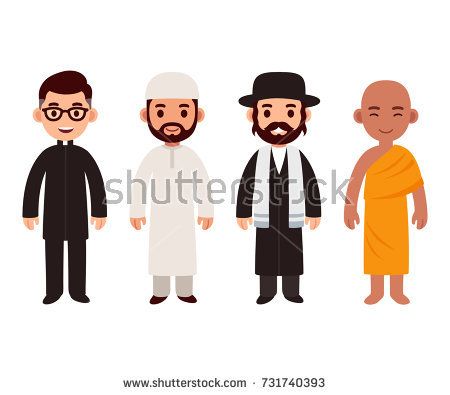
546ad58cbe260aa3bb2946b2a7c566acA Rabbi, Iman, Pastor and Buddhist Priest were all discussing the issue of peace in the world and in particular peace in the Mideast.  The Rabbi said there could only be peace in the Mideast if all the Muslims left.  The Iman said that there could only be peace if all the Jews left.  The Pastor jumped into the argument and said there would only be peace if all the non-Christians left.  The Buddhist cleared his throat to interrupt the argument and said, “There will never be peace anywhere as long as there are Muslims, Jews, Protestants, Catholics and even Buddhists in the world.” 

Peace is the nexus that links politicians and religious leaders.  Peace drips from the lips of religious leaders and politicians so often that I would be a billionaire if I had a quarter for each time one of them uttered the word peace.  There is a symbiotic relationship between religious leaders and politicians.  We have hundreds of years of racism, greed, sexism, discrimination, and militarism pursued by political leaders and blessed by religious leaders all over the world.  Politicians need religious leaders to sanction their immoral behaviors.  Religious leaders need politicians to foster behaviors that are not endorsed in their official religious teachings.

We have a world that needs peace.  Peace is to the soul as food is to the body.  Peace sustains us spiritually and mentally.  When we think of peace, we think of such phrases as “Peace in the valley.”  “A life of inner peace.”  “Go in peace.”  “Let there be peace between our people.”  “It was a peaceful day.”  “Peace begins with a smile.”  Racism, sexism, greed, discrimination, and militarism all destroy peace.

conflict-art-scroll

Happiness and joy are two of the sought-after states in the world, but neither state can exist without a foundation of peace.  Jesus said, “Blessed are the peacemakers, for they shall be called the children of God,”: Matthew 5:9.  You would think that those who say they are called to be Priests, Ministers and Pastors in the Christian religion would understand that Jesus expected them to be peacemakers.  Sadly, that seldom seems to be the case.  It is even sadder that the idea of peace is blasphemed by these same people whose vocation is to foster peace.  The concepts of spirituality and peace go hand in hand.  One cannot be a spiritual person and sanction the wanton and needless destruction of life.  Peace is meaningless if it is just a word.  If we really want peace it must be a way of life for all of us.  You cannot preach peace in the pulpit on Sunday and then support racism, sexism, discrimination, greed, and militarism the rest of the week.     

Mens-Peace-guins-Long-Sleeve-Crusher-Tee_70962_1_lgThe peaceful person does not use violence against others.  The peaceful person is a diplomat who solves problems with his/her brain and not with tools of aggression.  The peaceful person is confident because they have integrity.  The peaceful person has serenity because they have no fear.  Fear is the enemy of peace.  When the world is on red-alert, people live in fear.   People become fearful of others and fearful of living.  Racism, sexism, discrimination, greed, and militarism create fear.  With fear, no one can be at peace. 

We can only appreciate peace if we are carriers and messengers of peace.  The person who endorses violence, abuse or discrimination against others can never be at peace because they have no peace in their heart.  Such people live on violence and thrive on aggression.  They reap what they sow.  By sowing death and destruction, they ensure that they will never know peace. 

51qBtOmrIgL._SS500_We should all be grateful for peace.  This means we need to appreciate peace and understand that it cannot be taken for granted.  Peace is up to us to create.  It is too important to leave to religious leaders and politicians.  If we want peace in our lives and peace in the world, we must create it.  There can never be peace for anyone if there is not peace for everyone. 

Think about peace today.  Do you live in a land of peace?  When you get up or go to bed today, do you feel peaceful?  Are you at ease with life or are you anxious, nervous, and fearful?  Do you appreciate what or how peace in your life would feel?  What would it take for your life to be more peaceful?  Do you think the world deserves peace?  If peace is everyone’s responsibility, what will you do to sow peace today? 

Peace starts with living peacefully. 

Mark Twain wrote a short story called the War Prayer.  It has been made into a ten minute video.  It is very moving and something everyone should see.  The link is below:

My Four Best of Everything:  – Part 2         

il_570xN.863536951_q2uk

I started this blog two weeks ago and became sidetracked what with Trumps possible impeachment and all.  Alas, my dreams did not come true.

In Part 1, I listed my four favorite fiction writers and my four favorite non-fiction writers with an explanation of how and why I picked each of them.  In Part 2, I am going to list my four favorite writings.  I will finish in Part 3 with my 4 favorite ideas.

For those of you who missed Part 1, this was my introduction.

This week I am doing what I call my four best of everything.  Everything that matters to me anyway.  Perhaps I should say it is my four favorites of everything I admire in the literary world because best is such a qualitative term.  There may be little difference between the word favorite and the word best, however, using the term best is more provocative and usually ends up in arguments or debates.  Since I do not want to be judgmental, I will use the term favorites in the text of this blog.

I am sure that each of you reading this will have some ideas concerning your favorites in these areas.  I invite you to put your ideas or thoughts concerning your favorites in my comment sections.  The more ideas you have the better.  Don’t be shy.  Use any language you want to share your ideas with the rest of the world.  Let us know what you like and why you like it.  Plenty of room in the blogosphere.

My Four Favorite Writings:

Ecclesiastes: 

1600x685_porgy

Was the author of this bible book being a nihilist, a skeptic or an idealist?  I think it will depend on your own interpretation.  For me, the message of this book is summed up in four words “Vanity, all is vanity.”  We are driven by vanity and ego.  Our society relishes fame, fortune and power.  Those who have them, guard them jealously.  Those who don’t will fight and die for them.  And what are the results of this obsession?

Famous people hide from those that made them famous because they can no longer live a public life.  In many cases, they are hunted by nutcases who believe that they can be famous by an association with the famous no matter what kind of a bizarre twist it might involve.  The death of John Lennon comes to my mind as I write these words.  Often fame itself is fleeting and the aftermath can be a feeling of abandonment, loneliness and worthlessness.  Witness the number of famous people who take their own lives.

Power corrupts and absolute power corrupts absolutely.  The quest for power destroys the soul of the power holder.  Power becomes an end in itself rather than a means to obtain some good.  We can see this problem when we look at the US Congress.  The power that these congressmen hold is all too often corrupted by their desire to hold on to this power regardless of the moral and ethical conundrums such desire involves.

Fortune hunters think that they can achieve happiness by becoming millionaires or billionaires.  Many see wealth as a pathway to freedom without realizing the chains that wealth forges for them.  The following refrain that Porgy sings in Porky and Bess sums this up very well:

De folks wid plenty o’ plenty

Got a lock an dey door

‘Fraid somebody’s a-goin’ to rob ’em

While dey’s out a-makin’ more

What for?

Porgy had the sun and the moon and the deep blue sea and that was plenty of nuttin for Porgy.  Porgy exemplified the wisdom that is at the core of Ecclesiastes.

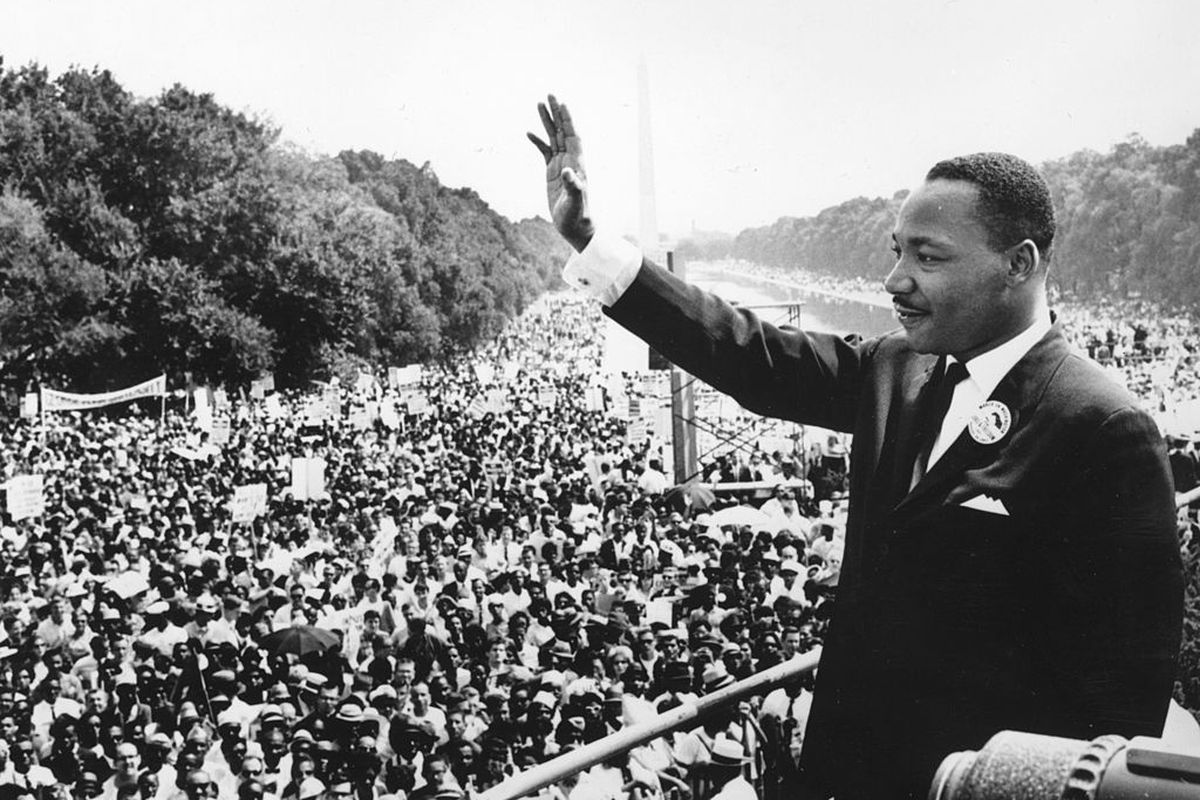
Martin Luther King’s “I have a Dream Speech”:

GettyImages-2674125.0.0.0.0

The only other speech that comes close to this one is Dr. King’s famous Eulogy speech.  The passion, cadence, rhyming, metaphors and ideology embodied in his “I have a Dream Speech” is matched by no other that I can think of.  Even more remarkable is that a large portion of this speech was impromptu.  Dr. King did not write all of this speech before he gave it.  Someone mentioned that he should tell them about his dream and he then went into the most memorable part of his speech.

“I have a dream that my four little children will one day live in a nation where they will not be judged by the color of their skin but by the content of their character.”

Dr. King goes on to describe many more parts of his dream.  Each one is spellbinding in that they speak to the possibilities that one day racism may no longer darken the doorsteps of American life.  I never get tired of hearing this speech because it embodies the hope that we can all live together some day as brothers and sisters and not race haters.

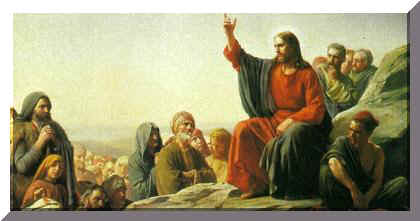
Jesus’s “Sermon on the Mount”:

unnamed

Jesus was a revolutionary and a radical.  He died for his beliefs that righteousness and justice and mercy and peace should not be tied to status and power.  In each of the eight beatitudes that he gave on the mount is the idea that you cannot buy your way into heaven.  We will be judged on the mercy and compassion that we show to others and not on how big our house is or how many diplomas we have.  I often wonder why some Christians are so determined to plant the 10 Commandments on public lawns, but I have yet to find one that wants to plant even one of the following eight beatitudes:

  • Blessed are the poor in spirit, for theirs is the kingdom of heaven.
  • Blessed are they who mourn, for they will be comforted.
  • Blessed are the meek, for they will inherit the land.
  • Blessed are they who hunger and thirst for righteousness, for they will be satisfied.
  • Blessed are the merciful, for they will be shown mercy.
  • Blessed are the clean of heart, for they will see God.
  • Blessed are the peacemakers, for they will be called children of God.
  • Blessed are they who are persecuted for the sake of righteousness, for theirs is the kingdom of heaven.

Ryūnosuke Akutagawa’s “In a Grove”:        

4941topRash

This story was the basis for the film Rashomon by the great Japanese filmmaker Akira Kurosawa.  It demonstrates what is perhaps one of the most important and often most ignored of all psychological concepts.  What we have increasingly realized is that different people see things very differently.  The idea that absolute facts exist beyond the minds of human beings is put into question by what has been called the Rashomon Effect.  Seeing is not always believing and sometimes believing is seeing.

The validity and reliability of eyewitnesses is an example of the “Rashomon Effect.”  Clarence Darrow knew how unreliable eyewitnesses were and even said “There is nothing as unreliable as an eyewitness.”  In this story, a tale of rape and murder unfolds.  A perpetrator is captured and put on trial.  Each “eyewitness” tells a very different story in terms of what happened.  This is significant to the fate of the defendant since the difference between murder and self-defense is acquittal and the same judgment will apply to the difference between consensual sex and rape.

Death row has been populated with about 1 in 25 people who were judged guilty on the basis of an eyewitness or some “indisputable” piece of evidence that turned out not to be so indisputable.  (A study, published in Proceedings of the National Academy of Sciences determined that at least 4% of people on death row were and are likely innocent.)  Since 1973, more than 165 people who had been wrongly convicted and sentenced have been exonerated. The next time you think you have the facts or are quite certain of something because of what you heard or saw, you should think twice.

I hope you have enjoyed or at least found my list of favorite writings interesting.  I will follow up with Part 3 which will deal with my four favorite “Ideas.”  Until then, try singing the following song when you are feeling down or unhappy and substitute your “favorite things.”

“My Favorite Things” by Rodgers and Hammerstein

Raindrops on roses

And whiskers on kittens

Bright copper kettles and warm woolen mittens

Brown paper packages tied up with strings

These are a few of my favorite things


Cream-colored ponies and crisp apple strudels

Doorbells and sleigh bells

And schnitzel with noodles

Wild geese that fly with the moon on their wings

These are a few of my favorite things


Girls in white dresses with blue satin sashes

Snowflakes that stay on my nose and eyelashes

Silver-white winters that melt into springs

These are a few of my favorite things


When the dog bites

When the bee stings

When I’m feeling sad

I simply remember my favorite things

And then I don’t feel so bad.

Previous Older Entries Next Newer Entries