Ears – by Miriam Mladinov

hand-and-ear-6

A good friend of mine wrote the following piece about Ears and Hearing.  It is quite cute and relevant as many of us are getting older.  Being heard and being understood sometimes becomes quite problematic.  She gave me permission to post the following piece.  I think you will enjoy it.  I know I did.

EARS 

By Miriam Mladinov

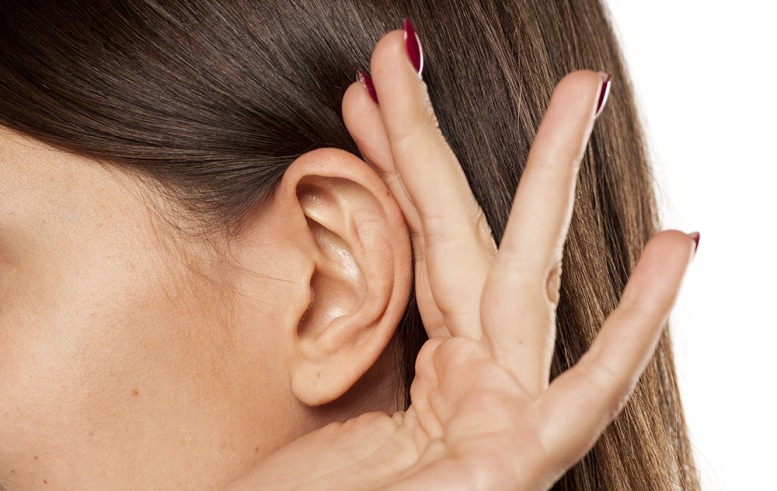
We are born with two ears, one of each side of our head.  They are not beautiful, fleshy, curly, or naked.  The shape is best described like ear shaped.  If they were covered in fur, or at least fuzzy hairs like cat’s or dog’s, they would be prettier.  Cats and dogs have another advantage because they can turn theirs in the direction of sound to hear better.  By having two ears, spaced by a head in between, they are the first stereo equipment which gives us the direction and spatiality of sound: a really clever invention.

Ears also serve as a carrier of all kinds of trinkets for beautification. This is an ancient practice and many Egyptian, Roman, Aztec, even prehistoric human remains, sport some precious, ornate thing attached to their ears.  These decorations were often made of gold, silver bronze, and decorated with colorful beads or stones.  The practice is alive today and we call them earrings.  If they are round we call them redundantly hoop earrings.  They desperately cling to a fleshy lobular, dangling.  Some people choose to have holes all around the ear lobe usually filled with small studs or tiny loops.  One might think that the neat row of holes, like on a shoe, would be made to tie them together around the head with a shoelace.  Other people choose to have a large hoop inserted in the fleshy part stretching it out like an elastic band.

Growing up I thought that piercing ears was a barbaric practice.  It probably came from my mother’s belief because she kept her ears intact.… but I inherited a beautiful diamond set earrings from my grandmother and wanted to wear them.  When I went to a place to get my ears pierced, I wore an old shirt in case the blood would gush over it and brought my earrings with me to insert them in the new openings.  The girl wiped the area with alcohol and click, click inserted two studs like with a staple gun.  Not a drop of blood.  It was almost a letdown because it was so easy.  Now I have a whole collection of earrings.  My favorite are two little hoops made from my parents wedding rings.

Ears have another important function: TO HEAR.  It is one of our five senses.  We never think about it until it fails.

At first a friend tells you:

 “Do not get offended, but I think that you might need a hearing aid.”   

 “WHAT?”

Three men were sitting on a bench in a park.

“It is windy.”  The first said.

“No, it is Thursday.” Said the second.

“I am thirsty too.  Let’s get a beer.”  Said the third.

My neighbor approached me with a question:

“Do you have a problem with roses?”

“No.  I did not pay much attention this year.”

“We had an invasion.”

“Invasion of roses?”

“We were gone for a while and roaches were coming out from the sewer.”

She never realized the confusion because she might be hard of hearing herself.  After I went home, I could not stop laughing.  Roses – roaches, quite a difference.

If I don’t actively listen, I often miss the first part of what is said to me, the second I get.  That results in often missing the subject of the sentence and asking: Who or what?

The worst part is with names. 

We shake hands and a person tells me: “Aaoouu .”

I say my name and politely ask him/her to repeat the name: “Aaoouu.”

“Nice to meet you.”

Then I run into the same person a few weeks later.  I still do not know his/her name because I never heard it in the first place.

“Oh, sure I remember you.  We met a few weeks ago.  Sorry, can you tell me your name again?”

“Aaoouu!”

Another time at a gathering, I approached a guy and asked him about his sick wife.  He gave me a blank look and said that he had a problem hearing.  I said that I too have the problem and moved away realizing that I approached the wrong guy.  I waved at him and smiled in a way of apology.  He probably blamed himself for not understanding.  Poor guy.

I got my first set of hearing aids.  The small peeps go inside the ear and the minuscule computer sits discreetly behind.  The set is very light.  When I wear them, I forget about them until they get hungry and start to squeal.  Time to change batteries.

My dad, who became completely deaf when he turned 90 and had hearing aids, managed to accumulate used and new batteries all mixed in a pile in a box.  It was a big mess.  Talking to him face to face was somewhat possible, but over the phone was hopeless.  It caused several misunderstandings.  The worst one was when I called him from NY telling him that I had arrived after a month-long trip, and that I would stay for a few days in NY.  He expected me the next day back in Boston, and when I did not show up his panic escalated to gigantic proportion.  I was kidnapped.  I was murdered at the Port Authority.  Police were engaged and searched for his lost daughter who was having a good time with a friend in NY, completely oblivious to the upheaval that the call has caused.

Incidentally my NY friend tends to choose the nosiest corner on a street in NY to call me.  The traffic is clanking, the sirens are tooting, and she is expecting me to hear her soft-spoken voice.  She also likes to call me from the car while her husband is driving through the mountains or a tunnel.  Afterwards, she texts me how sorry she was that the line was interrupted.

The hearing aids help.  They help a lot if I am in a quiet place and talk to one person.  Great!  We can have a coherent conversation, but I am lost anywhere there are drones and noises.  At my exercise class where there is always some music going on, I never hear a joke, or a comment flaunted spontaneously by someone.  I try to find a place in front to hear the instructor, who does have a lousy diction (not only my opinion).  I get a lot by observing.  If I am on my back and we circle the ankle of the left foot, I often miss the clue to switch the leg.  It is not the end of the world if one ankle gets more rotations than the other, under the conditions that the next time with start with the other leg.

One unexpected consequence of wearing hearing aids is that I lost the sense of direction of the sound. That clever stereo quality is gone.  When my phone rings, I run all over the house to find it and usually when I get it, it stops.  I think that it does it on purpose.  Or when something beeps, I run to microwave to see what is ready.  Nothing.  I check the dishwasher.  It also calls when is done.  Nothing.  I run to the door.  Nothing.  I give up, and then realize that it was outside, the garbage truck backing up.

There are some helpful inventions like Bluetooth.  I wonder who named it that way.  It is an electronic miracle which beams the sound from your other miraculous devices straight to your hearing aids.  Mine are not that smart, so they gave me another gadget for additional cost, which I had to hang around my neck like a necklace, called Dongo.  It rings when my phone rings and I can activate the conversation from it, only if my phone is within a reasonable distance.  If it is not, I must do the same exercise of running around to locate it.  The Dongo is also designed to help with a conversation in a noisy restaurant if your company talks to Dongo instead to you.  We got into a competition.  This cumbersome little animal hanging from my neck did not last long.  My friend whose husband had one told me that his Dongo did not work too.

For watching TV, I have a pair of earphones clasping over my hearing aid.  I can control the volume on the TV remote, on earphones and on my hearing device.  This triple enhancement actually works.  It would make a dead person hear.

There are other means to bypass this handicap. I am not embarrassed to say that I have a hearing problem.  It is better that people know that, than thinking that I am stupid.  On an occasion when I was giving a presentation there were no problems with me doing it because I was the one who was talking.  Anticipating questions, I asked the guy who introduced me to repeat the questions out loud.  It helped me, and I think that it also helped many aging people in the audience.  Win-win.

A friend of mine who was a speech pathologist told me that deaf people had harder problems to adjust to socially than the blind.  Being hard of hearing is not the same as being deaf, but it also conditions one’s life.  I avoid large gatherings, do not enjoy theater and any place where there are extraneous noises.  I still enjoy the concerts.  I probably miss something, but I am not aware of it.  I love Japanese Taiko drummers.

Ears are precious.
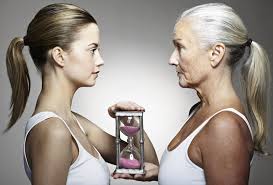
Only the Old Understand Aging

images (1)There are going to be those of you who will say that the title of this blog is preposterous.  A few years ago, I would have called “Bullshit.”  Funny how aging changes ones perspective.  I asked four friends all over the age of 70 what they thought about my proposition.  They all nodded sagely and said that they agreed 100 percent.  I then went to my spouse Karen who as a Home Care nurse spent many years working with the elderly.  I expected her to deny my proposition.  I was quite surprised when she also agreed.  I asked her why.  She explained as follows:
“I spent forty years working as a home health care nurse.  Most of my patients were elderly.  I think I helped many of them lead better lives.  However, when I look back, I can see that I did not really understand what they were going through with the aging process.  I only realized it when I had to go through it myself.”

1460411495-beauty-timeline-3-1

In January of this year, I decided to stop running the mountain trails that I had been running four or five times a week for the past 12 years.  I had fallen many times and six months earlier I had a fall and broke my finger.  I still ran for the next six months but suddenly I could just not bring myself to go up the mountains running anymore.  I experienced both pain and pleasure with this decision.  In some ways, it felt like a big weight had been lifted off my shoulders.  On the other hand, I missed the challenge and excitement of running rocky mountain trails.  I decided to stick to the flatlands and less rugged running trails.

old surferI mentioned this to some running friends of mine.  One of the younger ones asked me what I had done to prevent falling or to somehow adjust my attitude so that I could continue running.  I explained that over the years I had started running with knee pads, elbow pads, shatterproof glasses, and hand guards like roller bladers used.  I had the best trail running shoes that I could afford.  He asked if I would be willing to look for some new ideas so that I could return to the mountain trails.  I told him that I appreciated the offer but that I was finished with running rocky mountain trails.

Upon reflection, I realized that his attitude was like what many of us elderly experience from a wide range of sources.  From doctors to other “expert” advice givers, younger people assume that much of what afflicts the elderly is simply a state of mind.  How often have you heard any of the following”

  • You are only as old as you think you are.
  • Aging is an attitude.
  • Age is just a number. Life and aging are the greatest gifts that we could possibly ever have.
  • Aging is just another word for living.
  • Aging is an extraordinary process where you become the person you always should have been.
  • As soon as you feel too old to do a thing, DO IT.
  • Nobody grows old merely by living a number of years.

ce6d57f956855bc7341a1e26ed4f8b70

The above quotes may be inspiring.  They may be motivating.  They may sound profound.  However, there is an element of denial in each of them.  A little like the quote “When the going gets tough, the tough get going.”  Something missing is the element of empathy.  We may not all be tough.  We may have lived a wonderful and useful life.  However, like a beautiful flower we all reach the end of our journey in this world.  Many of us may reach this end without ever really knowing “What kind of a person we should have been.”  We may be too sick, too fragile or simply too old to “Just do it.” 

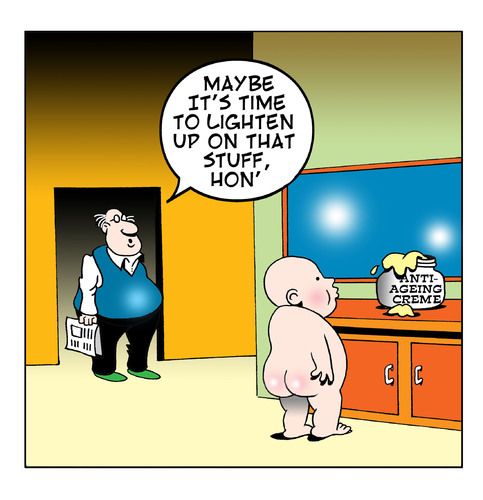
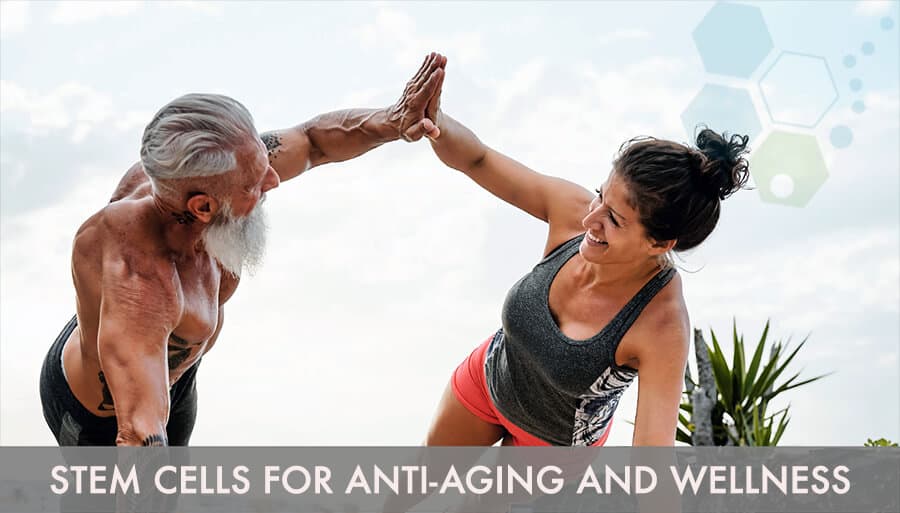
We are told that we can stave off aging by yoga, senior fit exercises, strength exercises, cardio exercises, good diet, and nutrition.  We should give up smoking, overeating, and drinking.  All these suggestions are useful to some extent.  However, none of them will stop the aging process.  Aging is a process by which the body gradually loses its energy.  The cycle of life is birth, growth, and decline.  No species of animal or plant that ever graced this earth has escaped this cycle.  For some of us the cycle is shorter than for others.  Inspiring motivational quotes will not help you to avoid this cycle.  Nor will the many over the counter remedies for aging.  I did find this advertisement for five ways to look younger which exemplifies what my message here is.  I am dubious of the “modern solutions” that they suggest to combat aging.

“With the right solutions and strategies, we can lessen these signs (of aging) and stay looking our youthful best for longer.  Here, we’ll explore five key challenges men face as they age and the modern solutions available to help combat them.  — 5 Things That Make Men Look Old And What You Can Do To Look 10 Years Younger

stemcells-anti-aging-wellness

Aging is not combat.  There is a reconciliation that must inevitably come for all of us.  I once thought this was something to be avoided.  I now realize that only by embracing the inevitable can we live our last years on this earth with a sublime equanimity that would make Buddha proud.  We are going to age.  We are going to decline.  We will eventually succumb to death.  We can live our life to the fullest with a paradox that we must accept.  The paradox is that we should never give up, but we should also be prepared to let go.  The two processes are never black and white.  We need to hold on as long as we can, but we also need to gradually let go.  Life has always been a trial of balancing complex and competing priorities.  Aging presents us with one last trial.  You can go raging into the night if you like, but I would prefer to walk steadily towards whatever awaits me after this life is over.

download

For some very poignant and moving pictures about aging, I have found none better than those by Tom Hussey. The following link will take you to some of his pictures. They will touch your heart.

https://tomhussey.com/STORIES/REFLECTIONS/16

Writing the Big Lie

johnson.image_2

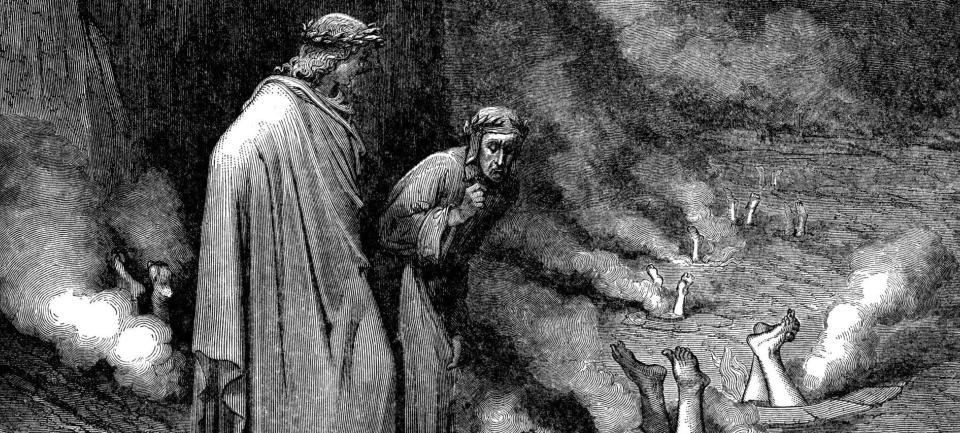
The eighth circle of Hell in Dante’s Inferno is for the sin of fraud. Generally, this includes counterfeiting, hypocrisy, lying, stealing, and more.

 What is the punishment in circle 8?

Circle 8 of Hell in Dante’s Inferno has ten different areas for fraudsters. Dante describes these as separate ditches or trenches within the circle. In the first ditch, demons whip pimps and seducers. In the second, flatterers are buried in sewage and feces. In the third, “simonists” – those who abuse church power – are buried upside down and their feet are burned. In the fourth, sorcerers or fortune tellers are forced to walk around with their heads on backwards. In the fifth, the politically corrupt are buried in boiling tar. In the sixth, religious hypocrites are forced to wear torturously heavy church robes. In the seventh, snakes bind thieves’ hands behind their backs and torture them in various other ways. In the eighth, those who lied for personal gain are turned into living flames. In the ninth, people who sowed division walk in a circle. When they pass a certain demon, it chops their head or limbs off – their wounds slowly heal as they walk around again, and the demon chops them again when they come back around. In the tenth and final ditch, counterfeiters are punished with various afflictions like scabies, itching, or thirst.  —- From Study.Com by Angie Armendariz, Arielle Windham, and Jenna Clayton.                         

Christians believe that everyone is a sinner.  That is why every week at a Christian church you will hear an aisle full of practitioners asking forgiveness for their sins.  The times I accompany my spouse to church, I am reluctant to confess any sins or to ask for any forgiveness.  I can’t help but wonder what I should ask forgiveness for.  Many the day I regret something I have said or done but seldom do I think this makes me a sinner.  When they say that Christ died for my sins, I wonder how he could have known the stupid and sometimes malicious things I actually have done?  Perhaps this is an example of a Big Lie.

Writers all lie.  Some more than others.  There are lies of omission.  There are lies of commission.  There is hyperbole.  There is obfuscation.  Writers of course are not the only ones who lie.  The government lies.  The army lies.  The CIA lies.  Even your parents probably lied to you more than you think.  Sometimes we lie to get our point across.  Sometimes we lie to protect another.  Sometimes we lie to protect ourselves.  Sometimes we lie because of erroneous beliefs, common but false tropes, misinformation, and disinformation.

The media today is one big melting pot of lies.  CNN, MSNBC, FOX News, Breitbart and all the other major networks are cesspools of daily lies.  Left wing, right wing, Democrats, Independents, Republicans, John Birchers all lie.  Studies show that average people also lie fairly regularly.  “Do as I say and not as I do” is one form of lying.  The biggest lies we engage in are lies to ourselves.  Self-talk is full of lies.  “I would never do that.”  “I get better every day.”  “I get enough exercise.”  “I am a follower of Jesus Christ.”  Some studies such as noted below show that the assumption that most people are liars is not exactly true.  Many people are opportunistic liars.

“People also have good and bad lie days, when they tell more or fewer lies than is typical for them, Levine says.  People do not lie for the most part, he says, a few pathological liars aside. Also, for the most part, people do not lie unless they have a reason to.  Our daily communication demands are a big driver for most of us on how honest or dishonest we are,” Levine said.New research shows most people are honestby Shannon Thomason

On the subject of writers as liars, I include advertisers, marketers, political speech writers, media script writers and even blog writers.  We are all guilty of Big Lies.  The following quote is attributed to the Nazis Joseph Goebbels, but it was also written in Hitler’s Mein Kampf:

“If you tell a lie big enough and keep repeating it, people will eventually come to believe it. The lie can be maintained only for such time as the State can shield the people from the political, economic and/or military consequences of the lie. It thus becomes vitally important for the State to use all of its powers to repress dissent, for the truth is the mortal enemy of the lie, and thus by extension, the truth is the greatest enemy of the State.”

Upon reading the above quote, it might give you some pause when it comes to believing anything that comes out of the mouth of a press secretary or any other official State representative.  To repeat “The Truth is the greatest enemy of the State.” My father once said, “Believe nothing of what you hear and half of what you see.”  This might have been the best advice that I have ever received.  This is why all teachers today say that they believe Critical Thinking skills are the most important tools we can teach students.  Unfortunately, this is also a Big Lie.  It is something that might be believed but it is not practiced.

I call a Big Lie something that is truly and wonderfully believed either by the writer or speaker.  Unfortunately, they may not adhere to it in practice or in their daily lives.  They talk and write a good game, but they do not deliver.  As Martin Luther King said about the “Declaration of Independence”,

“When the architects of our republic wrote the magnificent words of the Constitution and the Declaration of Independence, they were signing a promissory note to which every American was to fall heir. This note was a promise that all men — yes, Black men as well as White men — would be guaranteed the unalienable rights of life, liberty, and the pursuit of happiness.  It is obvious today that America has defaulted on this promissory note insofar as her citizens of color are concerned. Instead of honoring this sacred obligation, America has given the Negro people a bad check, a check which has come back marked insufficient funds.”

9780996883252_p0_v1_s1200x630Our Founding Fathers wrote a Big Lie and African Americans have been paying for it ever since.  Women and other minorities were not even mentioned in the Big Lie, but it applied to them as well.  Lies can be committed because people believe things that do not mesh with reality.  Lies are a coverup for many government actions that our politicians do not see as palatable for the public.  The Gulf of Tonkin incident, the overthrow of Salvador Allende, the weapons of mass destruction in Iraq are only a few of the lies that have been fed to the American people.  Of course, our politicians would have us believe it is for our own good.  The really sad part is that the media is always complicit in these lies by reporting them with little or no verification of their truthfulness.  Some of these lies fall into what I call the “Realm of Taboos.”  Taboos are a good place to look for Big Lies.
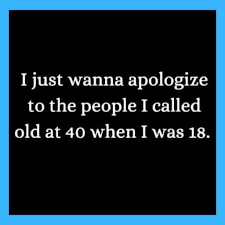
A Taboo is defined by the Online Oxford dictionary as, “A social or religious custom prohibiting or forbidding discussion of a particular practice or forbidding association with a particular person, place, or thing.”  Taboos arise when reality clashes with Big Lies.   For instance, it is a Big Lie to think that Americans always fight a virtuous war.  Our government wants us to believe that any war we fight is to protect the right to Life, Liberty, and the Pursuit of Happiness.  It would not do any good to let the public know that most of our wars have been wars of aggrandizement.  Wars fought to protect our economic interests.  Thus, we develop Taboos that prohibit subjects from being discussed.  This saves government and politicians from being exposed as Big Liars.

One particularly egregious lie is that someone is never too old to hold public office.  We have a plethora of “old” politicians and judges who would be better retired.  The average age of senators in the 118th Congress is 64 years old.  There are 54 senators older than 65.  I am 77 years old in two weeks and my days have dwindled down to about four to five ENERGY hours per day.  The rest of my day is spent napping, reading, watching TV, or just enjoying a good Bourbon.  Many of the politicians holding office probably cannot say that they could do any better than I could.  But no one has yet disputed their right to run for office.

“American society on the whole fears aging. It is a culture that works overtime to stave off death, even while having one of the lowest life expectancies in the world compared to the amount spent on health care every year. It is considered taboo to bring up age in a variety of contexts, including whether or not someone is still hardy enough for the rigors of public service after more than eight decades on the planet.” — Aug. 31, 2023, by Hayes Brown, MSNBC Opinion Writer/Editor

imagesSo, we tell a Big Lie that age does not matter.  And we have no one willing to challenge that lie.  However, it is not only physical aging that puts people at a disadvantage, but mental aging as well.  Many older people are stuck in a past generation of ideas and values that are no longer relevant today.  Values and cultures change over time and people born in the 40’s and 50’s are less likely to understand and adapt to the changes that daily life brings.  If you can only see the “Good Old Days”, you may be suffering from old age.  The average age of Nobel Prize winners when they conducted their prize-winning research is 44.1 years.  As for writing, “According to experts, we start becoming more creative and prolific in whatever field of art or study we work, around the age of 25.  Most people reach their peak after the age of 35 or in their 40s. This is when they produce their most valuable work.  After the age of 45, most artists’ prolificity starts slowly declining.” — The Adroit Journal

Conclusions:

  • Big Lies are part of reality.
  • People often do not want to know the truth.
  • Politicians believe that people cannot handle the truth.
  • Big Lies are told to conceal realities that will adversely impact governments.
  • We all lie sometimes. Some of us more than others.
  • Writers have a responsibility to tell the truth as much as possible.
  • We cannot always see the culture of lies that we are caught in.
  • Follow my father’s advice: “Believe nothing of what you hear and half of what you see.”
  • When you do not believe something, gain insights from 360 Degree Thinking.

360 Degree Thinking can be defined as, “being cognizant of ideas and insights coming from a variety of sources, both internally and externally, and understanding the critical interconnectedness of these ideas.” It is about your ability to view ideas and information coming from all sides and on all levels in all timeframes (for example, short, medium and long-term priorities).   —- Ideas for Action

Four Old People Talking about Aches, Pains, God, Death, Dying and Aliens

download (2)

If you are old, you might not want to read this.  If you are young, you probably won’t care about this story.  Years ago, I decided I hated to listen to “old” people or any people for that matter bellyache about their aches and pains.  I swore that when I got old or older or whatever comes when each month passes by, I would never sit down and importune anyone with my medical stories.  As we age, our number of trips to doctors, dentists, and optometrists increase exponentially.  Many of these visits recall vivid pictures of blood, surgeries, diagnoses, CAT scans, MRIs, and Ultrasounds.  To the storyteller, these episodes are a significant part of growing old. To the listener, (unless it is your mother) they are generally boring as hell.

download (4)

So today, I find myself sitting on a patio at the Dock Restaurant in Stillwater overlooking the St. Croix River with two dear friends and my wife Karen.  I am drinking a draft amber ale.  Karen has a glass of tea.  Jane has a coffee, and her husband Roger has a draft IPA.  The server is giving us time to decide what we want to order.  I know from the start that I will have their Walleye sandwich.  Karen orders a BLT.  Jane also goes for the Walleye sandwich and Roger orders a Reuben sandwich.

images (3)

As we sip our drinks and await our food, we watch the boats on the St. Croix River.  Large and small speedboats, houseboats, canoes, kayaks, and a great big old fashioned side paddle wheeler can be seen meandering back and forth from out vantage point.  The temperature is near 90 degrees, but we are in the shade of a large umbrella.  We are also sitting right next to the river where a cool breeze is blowing over us.  We could not be happier or more comfortable.  Four retirees with enough money to eat out every so often, pay our bills and spend a Friday afternoon perusing the Stillwater tourist and antique shops for things that we do not need.

Suddenly out of the clear blue sky, Roger says “My hip has been giving me some trouble lately.”  Roger is an avid bicyclist who at the age of 81 can no longer drive due to an eye condition called Macular Degeneration.  He stays in trim shape by bicycling everywhere.  You do not need a drivers license to drive a bicycle.

Jane laughs and says, “heck, every day, I have a pain somewhere.  If it isn’t here it is there.  I think they will only get more frequent as we get older.”  Karen notes that she has been having back spasms for the past few months, but her recent senior exercise class is helping her cope with them.  I bring up my knee pain which seems to come and go.  “Sometimes it takes several months to deal with the pain, but I keep trying new remedies.  I think it is very much a trial-and-error process.”

Roger rejoins, “It won’t really matter what you do, you will never get back to where you were when you were younger.”   I reply that I have no illusions about getting back to the younger John.  “I still think we do not have to accept all the problems that come with aging as inevitable. I think too many doctors see an older person presenting symptoms of pain and tell them ‘Well, you are old so you should expect that you will have some pain as you age.’  I don’t expect that I will have a life without pain, young or old but I know that some pains can be treated and others I must live with.   But don’t write me off before you know which is which.”

Karen switches the subject to some recent bites that she has received out at our campsite.  She attracts bug bites like Kim Kardashian attracts media attention.  Mosquitos, hornets, wasps, deer flies, chiggers and more all love her smooth delicate skin.  I try to stick close to her when we are outside.  From experience, I know that they will go to her first.  I guess I give up my husbandly protection when it come to bug bites.

I step out of myself for a minute to survey the four of us sitting at a table taking turns talking about our various aches and pains over the past ten years.  Here I am doing exactly what I said that I would never do.  Trading stories about medical issues mostly associated with growing old.  Roger is 80.  Karen will be 79 in July.  Jane is 75 and I will be 77 in September.  We are all college educated but in many ways none of us was ever really prepared for the travails of old age.  I remember hearing years ago that we age like “Fine wine.”  This is a load of BS.  More realistically we age like bananas.  We grow squishier and squishier and eventually get black spots then turn totally black and attract flies.  Finally, someone throws us out as we are no longer edible or useful.

images (1)I come back into myself and say, “Let’s take a walk.”  It is a beautiful day and a beautiful town, and everyone likes the idea.  We pay our respective bills, head to the bathrooms, and meet outside.  I suggest we walk the path alongside the river to PD Pappy’s than turn left onto Main Street where we can walk by the various tourist shops.  We head to an old antique store that we last visited almost a year ago to the day.  We spend a good hour or so in the store.  We see oodles of things that bring back memories from our childhoods, our old dreams and our wish-we-had-done that pasts.  We leave having bought nothing except a wistful yearning for the “Good Old Days.”  Pre-Trump.  Pre-Covid.  Pre-Climate Change.  Pre-Divisive Partisanship.  A time when we could still believe in the American Dream.

download (3)

The subject of death and dying is next on our agenda.  As we walk, we discuss some of the various friends who have recently passed away.  A regular part of our lives is now friends and relatives who have gone to another place or simply become fertilizer.  Roger is a proclaimed Agnostic.  Jane is Jewish.  Karen a Lutheran.  I declare myself to be 75 percent Atheist and 25 percent Agnostic.  I suppose I am hedging my bets just in case a god really does exist.

In the past three months, Karen and I have been to three funerals of friends.  I just finished planning a “Celebration of Life” for my friend Dick who took his life in January.  We will hold the celebration next month in the park where we used to meet for coffee several times each week.  Funerals as any old person will tell you become ubiquitous in our lives.  I should mention that even though we never met them we are also deeply saddened by the death of so many ICONS from our lives who we have fond memories of.  This past month saw Tina Turner, Treat Williams, Daniel Ellsberg, and Cormac McCarthy pass away.  These four are only a few of the recent celebrities who impacted my life in more ways than I can describe in this blog.  Each of these four people (as have many others) raised hopes and expectations that the world could be a better place than it now is.

My good friend Bruce was working this week on a set of Advance Directives for his wife Perm who has had major health problems over the past ten years or so.  No one over seventy takes death for granted even though we all know it is coming.  How, when, and where are unknown for many of us but WHY is easily explained.  Perhaps we each have our own whys, but medical science seems to point to the inevitability of death.  Immortality is reserved for the gods.

images (2)As we walk down main street, Roger tells me that he has seen a show recently that looks at the symbolism in the Catholic Church with a deep sense of skepticism.  He asks me if I think the Catholic belief in Jesus would be much different if Jesus had been garroted or beheaded rather than crucified.  I confess that I have never thought about this question, but I do find it intriguing.

I reply that my thoughts on religion deal more with the issue of theodicy, meaning “Vindication of God.”  “Theodicy is defined as a theological construct that attempts to vindicate God in response to the problem of evil that appears inconsistent with the existence of an omnipotent and omnibenevolent God (See Theodicy, Wikipedia).”  I do not see how there can be any god associated with omnipotence, omnibenevolence, and omniscience when there is so much evil in the world.

Many theologians have tried to defend the idea of God by invoking a “Free Will defense” which argues that God is possible because of “man’s free will.”  I am still not buying this argument.  “Why”, I ask “would any benevolent God make smoking and drinking and gambling bad for us if he was also omnipotent?”  I have ignored war, famine, poverty, disease, and pestilence since these have not really impacted my life directly.  Nevertheless, these latter problems do not reflect well on the idea of an omnipotent God who loves humanity.

downloadIt is now almost three hours since we met for dinner.  We are talked and walked out.  I am ready for my afternoon nap.  Karen wants to get back to her sewing.  Jane is tired of listening to us and wants some peace and quiet.  Roger is still thinking about God and whether there is other life in the universe.  We both seem to have come to the same counter-intuitive conclusion that there is not.  We are all alone in the universe except for a few Martians left over from the great Martian cataclysm.
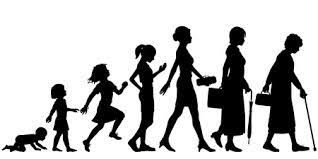
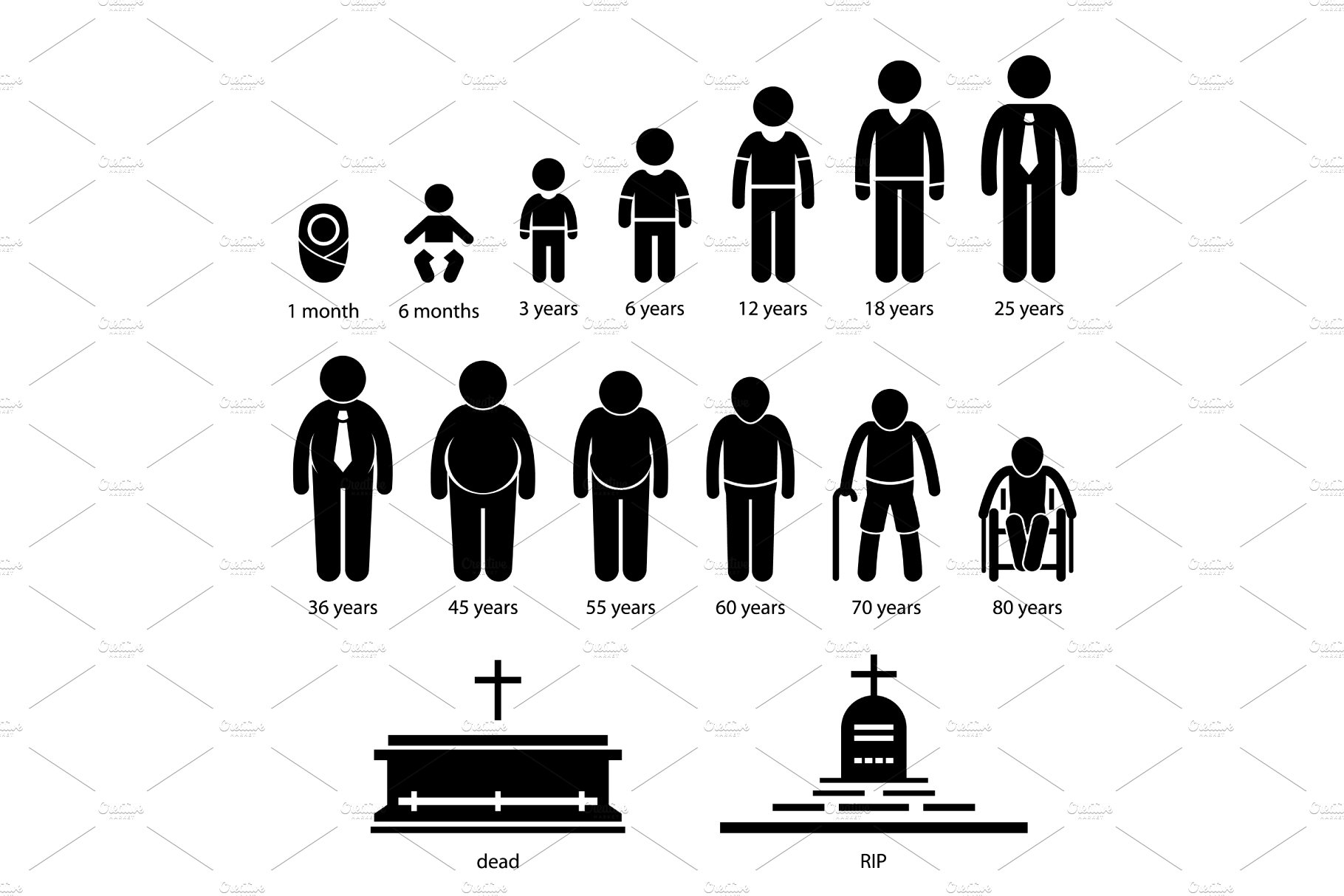

Today we have touched Mars. There is life on Mars, and it us us-extensions of our eyes in all directions, extensions of our mind, extensions of our heart and soul have touched Mars today. That’s the message to look for there: We are on Mars. We are the Martians!  — Ray Bradbury

Stages of Aging

images

For many years now, I have wondered about the way we live life as we get older.  Psychologists and scientists have studied the “growing” process for children and young adults but little or nothing has been done to look at the aging process for older adults.  You can look at developmental stages for infants, children, young adults and to some extent adults through middle age.  These stages describe changes in motor skills, social skills, cognitive skills, and language skills.  The changes in skills are described chronologically.  As one goes from infant to adult our skills in these areas undergo profound changes.  People like Haim Ginott, Jean Piaget, Arnold Gesell, Eric Erikson, Lawrence Kohlberg and many others have all contributed to our understanding of how we develop from infants to adults.

Unfortunately, there are few if any studies that show how people age after they become adults.  It is assumed that adults simply grow old and die.  My wife who worked in home care for many years described three stages that were used by home care people to relate to the aging population.  They were active elderly, pre-frail elderly and frail elderly.  These stages describe differences in physical capacity, cognition, and quality of life.  The problem with these stages is that they are too broad and do little to describe the developmental pattern of many aging adults.

icons0228cm-

Over the years, I have thought about a way to describe the changes that I see many of my aging friends going through.  I can see why it is difficult to find any uniform stages because illness and other problems of the aged impact any linear timelines that can be uniformly ascribed to getting older.  We see people who are still active when they are in their nineties and people who are sick and bedridden in their sixties.  Differences in lifestyle have a major impact on how people age.

However, I have recently thought of one series of changes that I see many aging people going through.  These changes do not center or focus on physical change although they parallel to some extent the changes that are taking place both physically and cognitively.  The changes I refer to are based on domicile.  As we age, we change our living arrangements in terms of scope and scale.  We change the size of the place where we live and we change the amenities that are offered in our living places.

I want to describe one pattern of changes that I have seen happen many times now with friends and relatives and neighbors.  My caution to you is that not all aging people will go through these domicile changes.  For reasons dealing with incomes, social arrangements, ethnicity, culture and health, many aging people may remain in one place for all of their lives.  The ideal way to die is often described as to be in bed with no pain and surrounded by your loved ones in your own home.  I have seen this happen but perhaps not as often as we would hope for.  Thus, the following sequence of “stages” in aging that I describe are centered on changes in residency and are by no means immutable or universal.

Dates are approximate for each of my stages.

GettyImages-170882674-5ada98281f4e1300382fbb0f

Empty Nest:  44-60

Your children are off to college or jobs, and you are still working.  You have this entire house to yourself except for when your kids stop by to drop their laundry off or for a free meal.

23575_btc5255extentryroadoct2018email

Downsizing Home and Snow Birding:  60-70

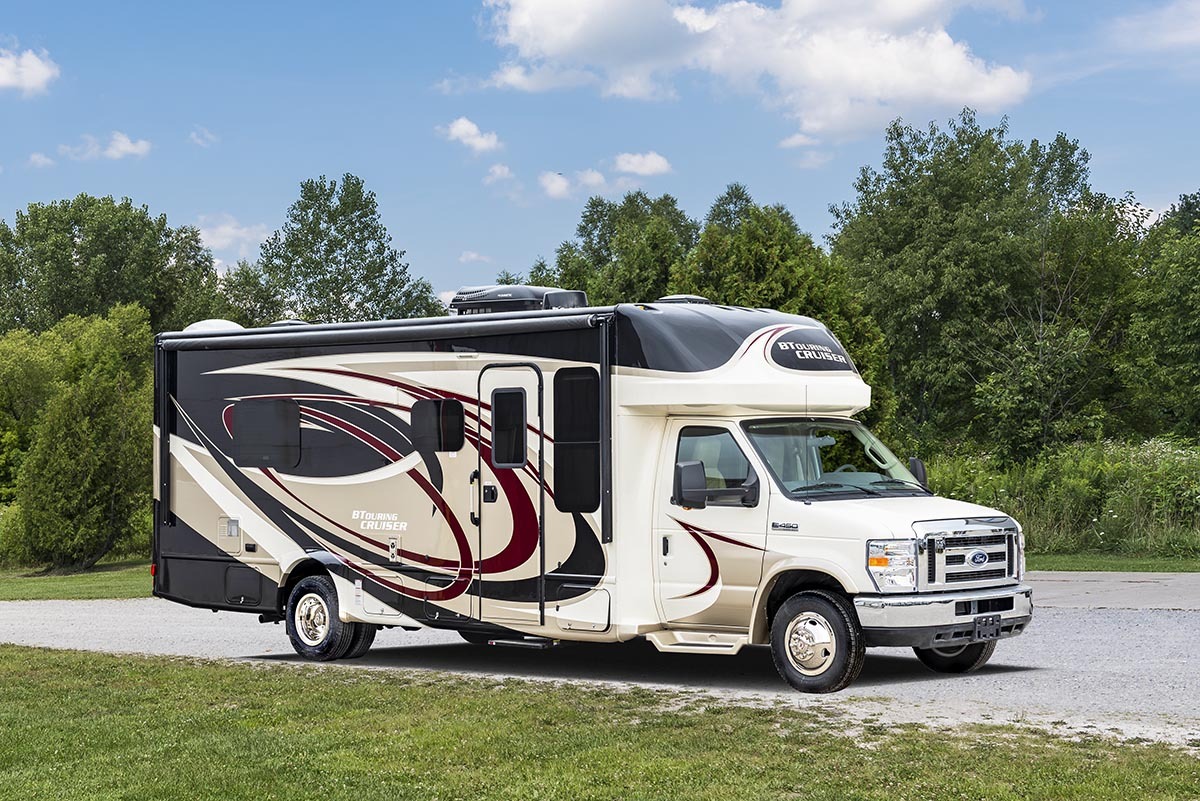
You have either retiring or are getting ready to retire.  The house that you have lived in for many years now seems much too big.  Your children have moved away to follow their jobs and you hardly see them anymore.  You decide to purchase a new home or condo and simplify your life.  You get rid of much clutter, move to a less crowded location.  You now spend winters going down to Arizona, Florida, Texas, or California.  The old bones do not seem to like the cold weather and the tropical breezes feel great on your arthritis.

Gated Community

No More Snow Birding:  70-75

Going back and forth has gotten to be too much.  You had to make a choice and your chose the tropical weather over the snow and cold of your old home.  You moved down south permanently, and you decide to stick it out through the really hot weather.  You crank the air-conditioning up when needed and stay inside.  It is still easier with no snow or ice to deal with, and the humidity is low and that feels good.  Your new home is small, but it is comfortable and easier to maintain.  Taxes are lower and upkeep is lower as well.

a546f93b2a7048a61cec9c7a2a1ec5fb--small-farmhouse-plans-white-farmhouse

Aches and Pains and Missing the Kids:  75-80

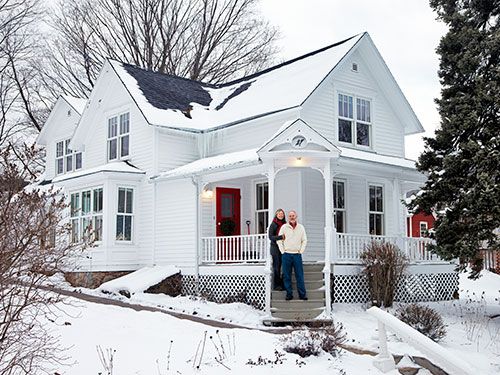
Even a smaller home is hard to manage on your own.  You decide to move back to your roots.  Most of your children also seem to be there now.  You sell your tropical paradise, and you find an apartment or small home close to your kids.  You are back in the cold and blustery winter weather, but you really do not get out much.  You get to see your children more and they are there to help you when you need it.  Much of your time is spent in doctors’ appointments.

730x450#

Assisted Living Home:  80-85

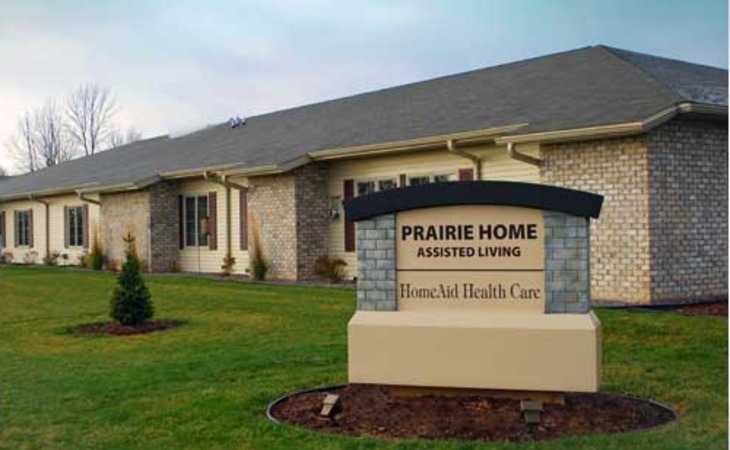
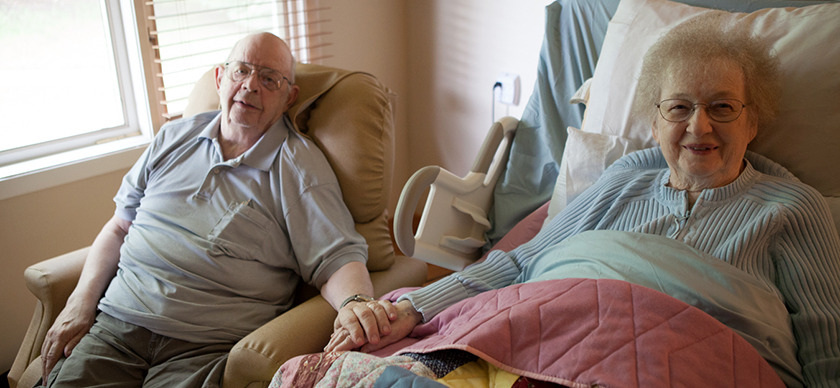
You just can’t do the things that you used to do.  Even a small apartment is too much to manage on your own.  The kids do not feel that you are safe by yourself.  They convince you to move into an assisted living center.  It is a beautiful place with birds and fish tanks and many activities for seniors.  You really did not want to go but you had no choice.

0x0

Nursing Home:  85-90

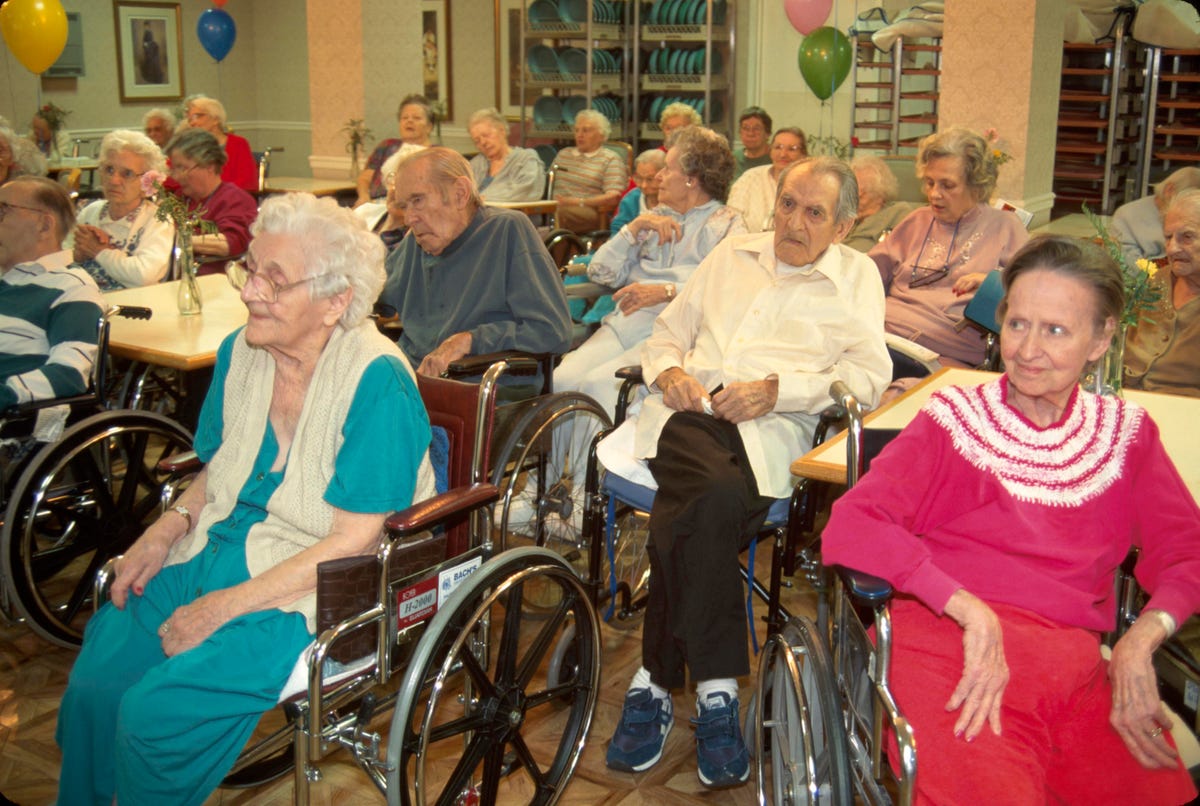
You can’t get around on your own.  You can no longer prepare your own meals.  You have a hard time even getting dressed.  Your kids felt it was for the best.  Everyone seems sleepy and somnolent.  You don’t like the ambiance at all.  They bring in entertainment once a week and when you are able you participate.  Your children stop by every so often.

What-Is-Hospice

Hospice Care:  Near the End of Life

It just seems like yesterday that you were a little kid.  Your mom and dad would take you to the beach in the summer and you would build castles in the sand.  Your grandmother would take care of you sometimes and tell you stories about life when she was growing up.  You were always getting into a fight with your older brother.  Where are they now you wonder?  It has been so long since you have seen them.

granate_marker

Cemetery:  The End

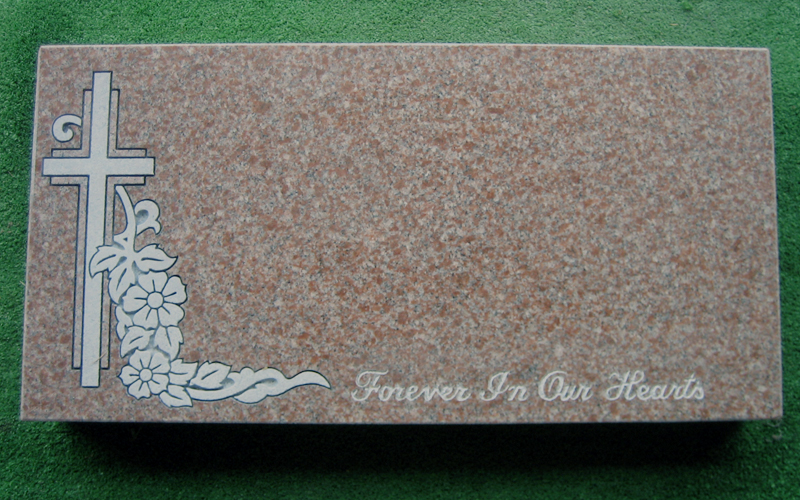
I never thought it would be like this when I died.  I understand why no one ever came back to tell me.  All my old friends are here along with my mom, dad, brother, and grandparents.  It is like a great big reunion.  I don’t feel old anymore and all my arthritis is gone.  I don’t know why I was so hesitant to come here.  It is a beautiful happy peaceful place.  It is my favorite place of all.

photo-1596510915124-38eaa5517966

PS: 

I realize that the scenarios I am sketching are highly restrictive and do not apply to a large majority of the human race.  I am describing my experiences to date as a middle class, white somewhat educated male with a wife and several children.  The above stages are related to my experiences and while I believe that many people will identify with them, they are far from being a definitive description of the stages that all humans on this planet will experience.

The Man Who Wanted to Die Last

3783894-Swami-Vivekananda-Quote-To-be-unselfish-perfectly-selfless-is (1)

Most men I know when you start talking about death and dying usually say that they hope they die before their partner.  The motive is quite obvious.  Who wants to be alone.  There is almost nothing worse than loneliness for human beings.

Now imagine spending forty or fifty years living with someone.  You eat together, sleep together, travel together, make love together, raise children together, work together, talk together, and laugh together.  This goes on for year after year.  In a happy marriage or partnership, the relationship is one of joy and delight.

269318614.galleryNow suddenly your partner for one reason or another is gone.  She or he passes away.  You come back to your home after the funeral and well-wishers have left, and you are now alone.  You are more alone than you have ever been in your entire life.  You go from room to room and no one else is there.  The bedroom is empty.  The kitchen is empty.  The living room is empty.  You notice the picture of you and your spouse at your anniversary party hanging on the wall.  It brings back memories and tears.  Every day for many days, objects, thoughts, and reflections will bring back good times and bad times that you shared with your lover.  You will reflect over and over again about these past times.  No doubt you will feel remorse about some things that you did and wish you could undo.  You will also miss the fun things that you enjoyed together and the many good times that you had together.

The above scenario is very sad.  But there is one way you can avoid it.  You can pray that you pass away before your spouse or partner or loved one does.  Leave the planet earth sooner than they do and avoid the pain and heartache that comes with the death of your beloved.  This is the solution that I have hoped for many times.  I have always planned to leave my wife financially well off so that when I do go to the vast beyond, she can continue to live a happy life.  I thought this sounded like a grand plan until the following incident occurred.  It left me feeling selfish and self-centered.

59f9f476459e4.image

It all began with a mission retreat that Karen and I started going on several years ago.   A good friend organizes the trip twice a year to bring food and needed items to an orphanage in Sonoita, Mexico and a Saint Vincent de Paul center in Puerto Penasco, Mexico.  We have as many as 15 cars in an auto caravan bringing items down.  Volunteers from Casa Grande, Eloy, and Arizona City (many from local churches as well as friends of Evelia) will join the caravan each year.  We typically leave on a Friday and come back on a Monday.  While down in Mexico, we stay at Puerto Penasco and enjoy the beach, ocean, and seafood for a few days before coming back across the border.

IMG_5379Each evening after dinner, we enjoy food, dancing, and music at the Playa Bonita restaurant.  It is right on the beach and while enjoying shrimp cocktails, we watch the most beautiful sunsets I have seen anywhere.  As night falls, a band or singer will begin entertaining our group.  Evalia loves to dance and will make sure that we all have a spin with her on the dance floor.  The dance floor is outside where we eat.  Almost always the weather is balmy and comfortable.  Infrequently one might need a shawl or a sweater but an active time on the dance floor will mitigate any night chills.

rocky-point-wedding-photographer-006

One night after dinner and drinks, three of us, Steve, Alexandro, and myself decided to go sip some tequila and smoke some cigars where it would not impose on anyone’s sense of smell.  We typically go out to the back of the restaurant.  There are a few round tables there and it is quite secluded.

mohd-jon-ramlan-ItGeEBMBurE-unsplash-scaled

Steve is Evelia’s son, and he often comes on the mission tours.  He is a real nice guy who was studying to be a deacon in the Catholic Church.  He married an Italian woman who is a medical doctor but after several years of trying she has been unable to acquire a permanent work visa for the USA.  Steve and Julia now reside in two countries.  Steve in the USA and Julia in Italy.  They reunite frequently in either Italy or the USA.  I think it is Steve’s plan to eventually join Julia in Italy.  Steve owns a management consultant firm and does not want to retire yet.

I had never met Alexandro before.  This was his first time on a mission retreat, and I never saw him again after this night.  We did some brief introductions, shared the bottle of tequila, and lit our cigars.  We chatted about the usual subjects, politics, wives, sports etc.   As the conversation became deeper and more serious, we started talking about aging and the impacts it was having on each of our lives.

Alexandro told us that his wife was an invalid and severely disabled.  She required considerable medical care.  He was the primary caregiver as they had no provision for medical assistance in the home.  It was evident form our conversation that Alexandro spent a large amount of time and effort in providing compassionate care for his wife.

I began thinking about how much love we all seemed to have for our spouses.  I started thinking about what I would do without Karen who provides so much compassion for me when I am sick or when I need support.  I could not imagine a life without her.  I stated emphatically that I hoped I did not ever have to deal with a life alone.  It was my desire to die first to avoid the pain of heartache and loneliness.

Alexandro spoke up and his words surprised me.  He said, “I hope my wife dies first.”  I could not believe what I had just heard.  My immediate thought was “What a selfish bastard!  He wants his wife to die before he dies so that he will not have to take care of her anymore or deal with her problems.”  I remained silent for a minute or so while I wondered how any person could be so heartless.  My curiosity finally got the better of me and I asked Alexandro “Why do you want your wife to die first?”  He replied “My wife needs so much care and there is no one else around who could provide enough care for her.  I do not want to think of her alone and without me to provide the care.”

501424-Sri-Chinmoy-Quote-Sacrifice-does-not-mean-that-by-giving-we-lose

I heard Alexandro’s explanation and suddenly I was inundated by a tsunami of guilt and an earthquake of self-reproach.  How could I have thought so miserably of a man with so much character that he would sacrifice himself for his spouse?  On the other hand, how could I be so selfish that all I could think of was that I wanted to die first to avoid the feelings of loneliness and heartache that accompany the death of a loved one.

I sat speechless for quite a while as I reflected on my thoughts about what I had just heard.  Never before had I heard anyone say anything like Alexandro did.  It never occurred to me that my life and my feelings are not the hub of the universe.  The sun does not rise and set by how I feel or how I should feel.  “Compassion literally means “to suffer together.”  When we are confronted with the suffering of another, it means that we will take steps to help relieve that suffering.  Perhaps suffering for another person may not mean dying for them, perhaps it means living for them.

maxresdefault (1)

The Old Woman Who Wanted to Be a Pilot

Little girl dreaming of becoming a pilot

I would like to tell you a story that led me to a principle that I have used over and over again in my life.  The story begins in 1979.  I had just received my M.S. degree in Counseling from the University of Wisconsin – Stout.  I began applying for jobs where I could use my degree.  I also took the Wisconsin test for state employment. 

I did well on the state employment test and after an interview process, I was hired by what was then the Department of Industry, Labor and Human Relations (DILHR) as a Manpower Counselor 2.  I was officially a counselor in the Work Incentive Program (WIN).  I would be in charge of the WIN Program as well as a number of other programs including, Labor Education Advancement Program (LEAP), Indochinese Refugee Assistance Program (IRAP) and the Job Training Partnership Act (JTPA).  I would have offices in two counties.  One office was in Ellsworth, Wisconsin in Pierce County.  The other office was in Hudson, Wisconsin in St. Croix County.  I was then living in River Falls, Wisconsin which was almost dead center between my two offices. 

2111

Each day my job consisted of basically trying to help people find employment.  Depending on their ages, genders, skill levels and aptitudes, I had a variety of resources to help them find a job.  Some of my resources included, employer incentives, apprenticeship training, on-the-job-training, education benefits and a variety of tools to help my clients gain the needed skills to find and seek employment.  I also had a large data base of employment openings that were furnished daily by the head office in Madison, Wisconsin.   

My counseling program at Stout was led by a grand educator named Evelyn Rimel.  She was dedicated to the counseling program and would do anything she could to help her students learn the skills they needed to become good counselors.  Dr. Rimel was born in September 1911 and died in August 2009 one month shy of her 98th birthday.  She was a remarkable woman.  The following poem which she wrote expresses her ideas and goals in life.  She was 42 years old when she wrote this poem and numerous people will vouch for her devotion to this vision.

aac54f3a-b1b5-11de-9fb3-001cc4c03286.imageI’d like to think when life is done,

That I had filled a needed post;

That here and there I’d paid my fare,

With more than idle talk or boast;

 That I had taken gifts divine,

The breath of life and womanhood mine,

And tried to use them, then and now,

In service to my fellow man.

Evelyn received many awards during her lifetime.  When she died she was the oldest living and longest-serving member of the American Association of University Women, a national organization to which she belonged for more than 75 years.

Evelyn was the prime mover in the counseling program at Stout and no one who was accepted into the program could ignore her influence on what they would learn.  For instance, employment and school counselors are taught to use many tests such as the GATB, SATB, Kuder Richardson and Strong Campbell to help profile job applicants and identify their strengths and weaknesses.  Dr. Rimel would hear nothing about weaknesses.  She told us that these tests were only pointers and not conclusive evidence of what someone could or could not do.  I still remember what Evelyn said but at the time it seemed very theoretical.  I would not learn the real meaning of her message until I met this client who came into my life a year or so later.

employment-counseling-2-638

The year was 1980 and I was in my office in Hudson when an older woman came in to see me.  She asked if I could help her find a job.  I was 34 years old at the time and it was early in the year 1980.  The economy was not doing so well, and it was difficult to find decent paying employment in our area.  I asked her to take a seat and how could I help her?  She told me that her name was Margaret and that her husband had recently passed away.  They had raised four children and she had been a stay-at-home mom.  She had no schooling or formal training beyond high school.  She was 68 years old and did not have enough money to live on.  She needed to find a job to supplement her social security income. 

FYC.adviser.0020-16x9-1-1024x576I asked her if she had any idea what she could do.  She replied that she did not.  I suggested that she take an employment aptitude test to see what kinds of work she might find interesting.  It was all very theoretical to me, but I could not imagine what kind of work I could find for her in the local area that would pay enough for her to live on.  She did not have any current job experience and no goals for a career.  The aptitude test was simply an effort to do something even though I did not believe that I could help her much.

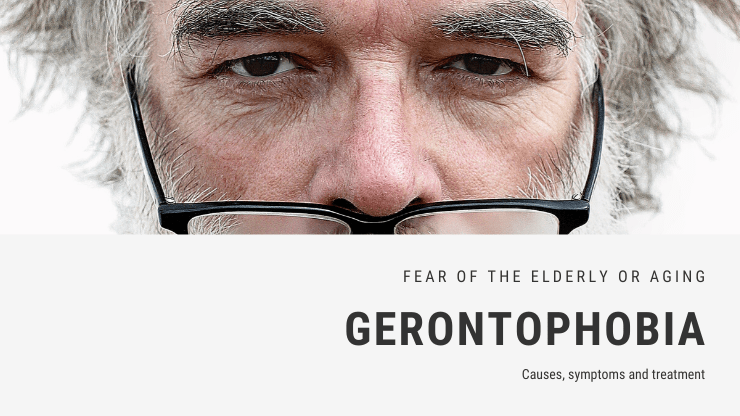
She agreed to take the test which I then administered.  When she had finished the test, I told her that I would need to have the test scored.  We setup an appointment for the following week to meet again.  I sent the test in to be scored and the results came back before our next appointment.  When I reviewed the results, I was incredibly surprised.  I even laughed at the findings of the test.  The test showed Margaret’s highest aptitude to be that of an airline pilot.  I laughed because in 1980 there were few women finding employment in the commercial airline industry as a pilot and even fewer who were 68 years of age.  Not to mention, a woman with no prior flight experience or military experience.  Back in the 80’s, many commercial airline pilots came from the ranks of retired or former military pilots. 

I chalked Margaret’s results up to a curious irregularity in the testing results or an anomaly that could probably not be explained.  I was not willing to put any credence into the test and totally ignored Evelyn’s caveat about using employment tests as pointers and not as conclusive evidence.  When Margaret arrived at my office for her appointment we sat down to discuss her results and what our next steps might be.  I started the conversation off by a dismissal of the test findings.   “Margaret, these tests are frequently not accurate.  This test showed your number one aptitude to be that of an airline pilot.”  She looked down at the floor and then up at me.  Speaking directly into my face, she solemnly said, “When I was a little girl, I wanted to be an airline pilot, but my parents and teachers all told me it was impossible.  Girls could never be commercial airline pilots.”    

maxresdefault

I don’t really remember the rest of the conversation that day or whether or not I ever found a good job for Margaret.  What I do remember and will never forgot was my narrow mindedness and smugness.  I had totally written off the possibility that Margaret could ever be an airline pilot. 

c2d1d8ecded27a0c66583ebd41628dab

I mentioned at the start of this story that I gained a principle from this episode that I have used the rest of my life.  The principle was this:  I would never ever tell anyone, client, student, relative or friend that they could not do something or be something.  From Margaret, I realized that one of the things that holds us back are other people who tell us what we can or cannot do.  I have previously told the story of my spouse Karen who was advised by her high school guidance counselor that she could never be a nurse because of her low science aptitude scores.  Karen ignored this “helpful” advice and spent over 55 years in the medical field as a registered nurse and nurse manager. 

 “Love what you do and do what you love. Don’t listen to anyone else who tells you not to do it.  You do what you want, what you love.  Imagination should be the center of your life.”  —Ray Bradbury.


The Fear of Aging or the Aging of Fear

fear-elderly-aging-phobia-gerontophobia

Have you noticed that some of your friends are less bold than they used to be?  The older people get, the more things they seem to be afraid of.  Some people are afraid of aging, but many more people exhibit what I call the “Aging of Fear.”  Wise people tell us that fear is natural and healthy, but it can also be unnatural and unhealthy.  The healthiness of fear depends on two things.

First, how realistic are your fears?  The reality of fear can be thought of as a form of risk analysis.  We all conduct our lives with an intuitive analysis of the risks that our behaviors either entail or might entail.  Frequently, these risks are distorted by emotions and perceptions.  If I live in Wisconsin, I should be more worried about bee stings or a tick bite than a shark attack or a tiger eating me.  It would be unrealistic to worry about things that are less likely to happen.  Surprisingly, many people are more afraid of things that have a low-risk potential than things that have a higher risk potential.  (What’s the Risk?)

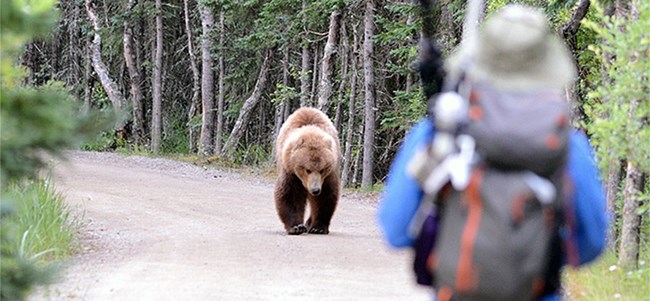
bearsafety_3_1Second, what are you going to do about your fears?  Fear is an adaptive mechanism.  It helps to keep you alive.  If you are in the woods and walking down a trail and see a large bear or cougar coming towards you, it is quite healthy to have some degree of fear.  But fear alone is not going to save your life.  If you are paralyzed with fear you may just be eaten.  Fear is an alarm.  An alarm sounds to wake us up.  The next step is to do something.  Doing something is a risky effort with no guarantee of success.  Sadly, there are few guaranties in life, but the evidence seems to suggest that doing nothing is worse than doing something.  This is where forethought and preparedness come in.  One of my favorite quotes is by the Roman philosopher Seneca (died 65 CE) who once said that “Luck is what happens when preparation meets opportunity.”
titanic-feat1

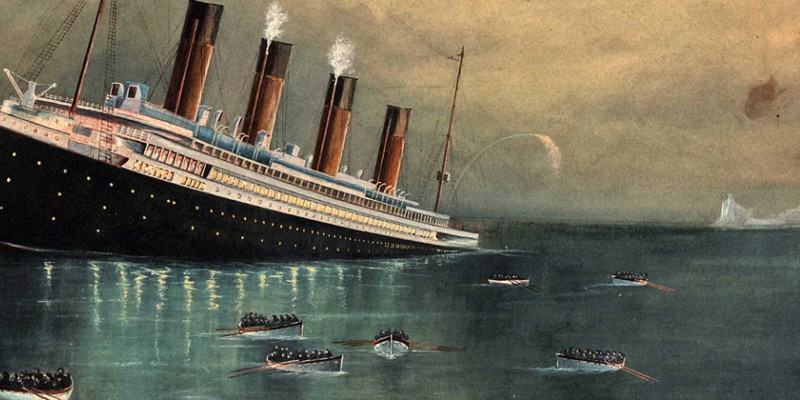
People who think ahead and try to identify potential negative consequences of their actions have a better chance of survival than people who do not plan ahead.  The Titanic is a great example of poor planning brought on by hubris.  They were so confident that the spotter in the Crows Nest did not even have a pair of binoculars.  In chess, a good player looks at lines of play to see what might happen given any particular move on their part.  Strategic thinking entails looking into the future to see how our behaviors or actions will play out.  If I do this, what might happen?  The more we look into the future the greater the odds become in our favor for getting the results we want.  It is of course impossible to identify every conceivable consequence either intended or not of our actions.  Life is frequently about dealing with unintended consequences but there is little doubt that the Boy Scout motto of “Be Prepared” has a lot going for it.

young man looking at an older himself in the mirror

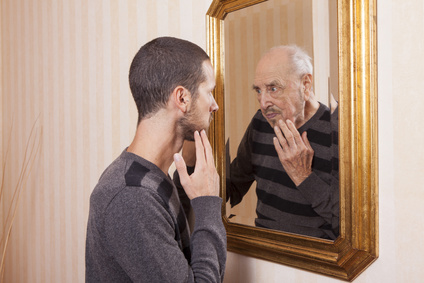
The “Aging of Fear” is what I see in so many people who grow more and more afraid of life with each passing day.  I have friends who will not travel anymore.  Some of my friends are afraid to travel by plane.  Some have purchased concealed carry permits to protect themselves against an unknown assailant.  Every day more and more people in America seem afraid of something.  There are efforts to protect ourselves as we get older that make sense.  I have given up motorcycling.  Most of the people I used to ride with have also given the hobby up.  Falling off a motorcycle at the age of 75 or older will likely bring many more injuries to the human body than falling off the same motorcycle at the age of 25.  Anybody over sixty getting up on a roof in winter needs to have their head examined.  Older bodies are not as resilient as younger bodies.

Knowing when to hold them and when to fold them is one of the secrets of growing older gracefully and living a long and healthy life.  But planning for unintended consequences is equally as important.  There is a balance here that we need to find, adjust, and continually readjust as we get older.  It is a not a static effort that you do today and that is the end of it.  Each day requires rethinking and readjusting what we can do and what we should do.  The conscious reflective activity is crucial.  Without an intelligent appraisal of life, fear can put us in an early coffin.

hqdefault

The coffin might be our bed or our home or our neighborhood.  A coffin is a metaphor for a set of boundaries.  The realism of our boundaries is vital.  Too many boundaries and we are not living but too few and our lives can be cut short much sooner than then they need to be.  One of my favorite motorcycle aphorisms was “If I ride like there is no tomorrow, there won’t be.”  I would tell myself this each time I got in the saddle of my Yamaha Super Sport R1 and went for a ride.

downloadDylan Thomas said, “Do not go gentle into that good night.” I don’t know about the raging part of his poem.  I prefer thinking about my life as I get older and not raging.  But he makes a good point.  It is all too easy to give up on life as we age.  We can live in memories of what we used to do, or we can find new activities and new levels to pursue old activities at.  For instance, I may not have the stamina to play tennis or racquet ball anymore, but I can still play pickleball or go for a short ride on my bicycle.  I used to do six-minute miles in road races.  My personal best was 38.48 on a 10K.  The race I ran for Frederic Family days this year on June 12, 2021, I averaged 10.14 per mile for a 5k.  Quite a bit off of my pace from years ago but I still got my t-shirt.  I run for t-shirts these days and not trophies.
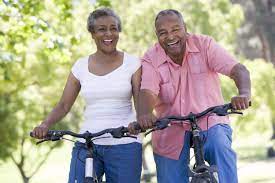
Senior-couple

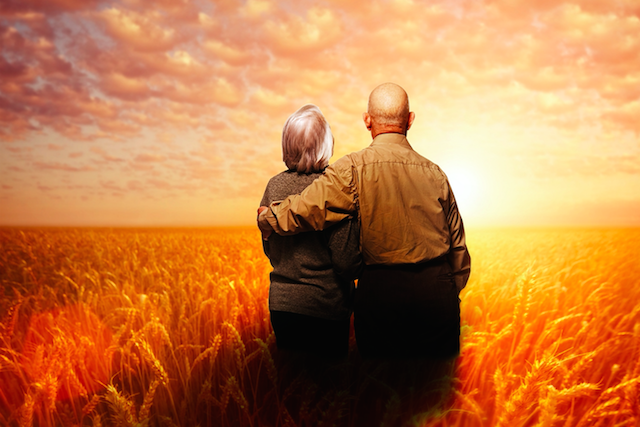
To conclude.  Don’t let aging or fear rob you of living.  Well thought out days with lots of contingency plans can help you to continue to live a full and happy life.  Look around you for the 80, 90 and even 100-year-old elders who are still out there enjoying life.  What keeps them ticking is not giving up but meeting each day as a challenge to live life to the fullest.

3494– Monday, October 7, 2019 — Can We Really Grow Old Gracefully? – Part 2

persico family with names

This is the continuation of an article I started which might have been called the “Top Ten Attributes for Growing Old Gracefully.”  In Part 1, I described attributes 1 through 5.  I also noted that two of my very good friends had been ill for some time and were not expected to live out the year.  One of these good friends, died two days after I published Part 1 of this article.  He was a unique individual about whom I wrote the following to some common friends the day after he died:

“I will always remember Sam for his brilliance and intellectual rigor.  I do not think I have ever met anyone with a greater knowledge of the world than Sam.  He was my first mentor out of graduate school, and I learned almost all I know about consulting from the work that we did together at International Nickel in Canada.  He was kind and gracious to a fool that knew little or nothing about the consulting world.  Over the years, we had our ups and downs, but Sam always helped me when I was in need of advice or guidance.”

“The world is truly less of a place for me and many others without Sam.” 

I must say a word about the validity and reliability of the ideas that I am presenting here.  I believe in them with my whole heart and soul.  Everything about life that I have learned up to this point says that they are the keys to a happy old age.  A friend whom I have found since writing my blogs left a comment in Part 1 where she said: “I hope you are following this excellent advice, John!  I replied: “Jane, I wish I could honestly say that I always do but that is not always the case.”

For me, I am somewhat like the alcoholic with good intentions who occasionally falls off the bandwagon.  Looking at each of these attributes, I have good days and bad.  But somehow, I climb back up out of whatever is bothering me, and I start again.  I have days when I am not grateful or have very little sense of humor.  I have days when I can find no joy in life and days when I can find no purpose or meaning in what I am doing.  But I know that “this too will pass” and that it is important not to give up.  Growing old is a journey that only ends when it will be too late for you to do anything about it.  But as long as we are alive, we can do our best to enjoy the journey.  So, here are the rest of the key attributes that will help you grow old gracefully and enjoy the trip.  Following are attributes six through ten.

one_kind_word

  1. Kindness

This is a simple one.  Do something kind for someone each day.  Make someone else happy by sharing your good fortune, knowledge, skills or abilities with another.  It is often easier said than done though.  We get so busy with our own problems that it is easy to forget the needs of those around us.  Very few people will wake up today and jump out of bed with joy at being alive.  For many people, the kind word or deed that you can do for them will give them the strength to live another day or to have a day with joy and happiness.

A funny thing happened to me this afternoon while I was on my way to see a play called Pipeline at Penumbra Theater in St. Paul.  An old rumpled homeless looking man on a bicycle asked if I could give him a few bucks for a meal.  I was feeling generous, so I pulled out my wallet and took a peek in it.  I had a five, a twenty and three one-dollar bills.  I grabbed the fiver and handed it to the old man.  He took it and thanked me, and I impulsively decided to give him another single.  He took the second bill I gave him and let out a rather exuberant exclamation of thanks and gave both me and Karen hugs.

He set off down the street and said that he was heading right to McDonald’s to get a meal to eat.  I was still surprised at his extreme gratefulness.  Later on, when I went to look in my wallet for some money to pay for some stuff, I found that I still had the three singles but no twenty.  I suddenly realized why the old feller had been so ecstatic.  I had given him the five-dollar bill and the twenty-dollar bill.  I could have kicked myself in the butt.  I told Karen about my unexpected generosity and we both laughed and wondered what he was going to get to eat for the money we gave him.  I felt a little stupid giving this much money away but on the other hand, how many times have I wasted three or four times this amount on some impulse purchase that I did not really need.  It felt good knowing that I had made somebodies day a little brighter even if it was by accident.

“Beginning today, treat everyone you meet as if they were going to be dead by midnight.  Extend to them all the care, kindness and understanding you can muster, and do it with no thought of any reward. Your life will never be the same again.” — Og Mandino

benifits-of-physical-fitness

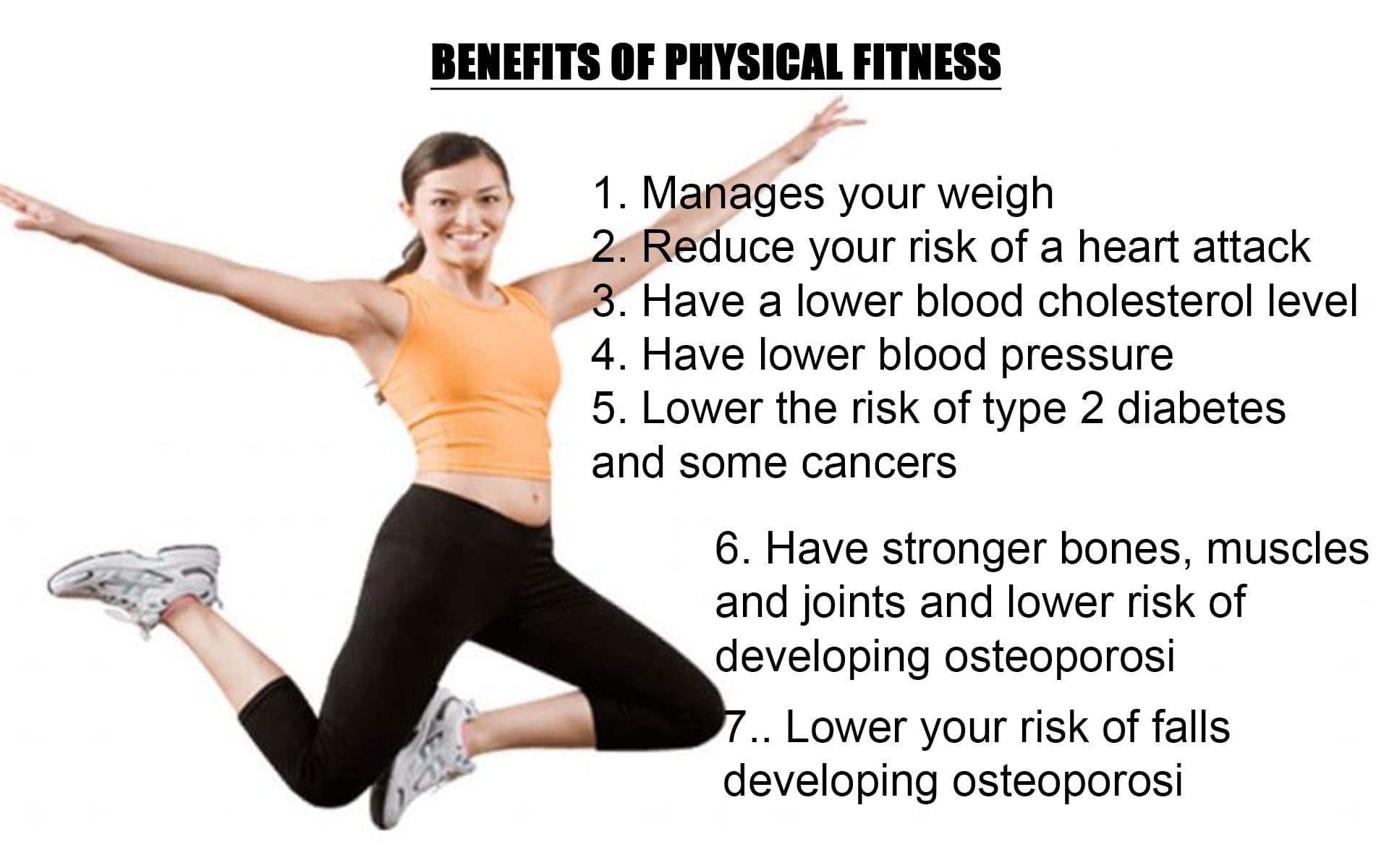
  1. Physical Fitness

What is the secret to living a long and health life?  Ask anyone who fits this qualification and who is in their nineties and do you know what they will say?  “Keep moving!”  “Keep moving!”  Stay active!  Garden, run, swim, bicycle, play Pickleball, walk, do Zumba, do Yoga, do anything but keep your body moving!

I have talked about the need for an exercise plan in many of my other blogs.  You have a choice.  If you live long enough and stay somewhat reasonably fit, then like our friend Joan, you can still play golf when you are ninety.  Or you can sit all day watching TV and become more and more dependent on walkers and canes and surgeries for your ailing joints.  Some of the problems of old age are unavoidable but some are due to a lack of good nutrition and good exercise.  Keep all things in moderation.  You will not be an Arnold Schwarzenegger at 80 but you can still be healthy enough to take trips and spend active time outdoors.  The key?  Right!  Keep moving!

For me, I love having an exercise plan that will adapt to my changing circumstances and that is fun.  If you are interested in more information on developing an exercise plan, see my blog at:  How Can We Set Realistic Exercise Goals as We Age?

“Those who think they have no time for bodily exercise will sooner or later have to find time for illness.” — Edward Stanley

friendship

  1. Friendships

There is a story told about Thomas Jefferson who supposedly attended a fiftieth anniversary party for the signing of the Declaration of Independence in 1826.  According to the story, Jefferson was not recognized by anyone at the party.  He was one of only three surviving members of the original signers who were still alive.  The other two being John Adams and Charles Carroll.  Jefferson died on July 4th, 1826 as did John Adams, so I am not sure when the party was actually held.  Nevertheless, Jefferson is reported to have said that he felt like a ghost.  That he felt like someone living in a time when he no longer belonged.

This story made an impact on me since as we age, we see more and more of our loved ones, relatives and friends pass away.  In the picture (top of blog) taken at a wedding for my father’s youngest sister, I am standing to the right in the picture.  The wedding was held in 1957.  The most remarkable thing about this photo (For me anyway) is that I am the only one left alive in the photo.  My sister died of lung cancer several years ago and my two cousins in the photo both passed away.  One died of a stroke and the other died younger of suicide.

My Aunt Mary, who is on the right in the picture, (She was my Godmother) died at the age of 103 about four years ago.  She too outlived almost everyone in the photo except me.  She outlived two of her sons and her husband who are in the picture.  I asked my Aunt a few years before she died if she felt like she no longer belonged and that her time had passed.  Her answer surprised me.  She said “No.”  I asked how she managed, and she told me that you must keep making friends.  She said that she had made many new friends who cared about her and helped enrich her life.  Could this be how she made it to 103 years of age?

The attribute of “Friendship” was mentioned at the Caregiver Conference I attended as one of the most important factors for a happy old age.  We cannot bury ourselves in pity or sorrow for the past.  Life must go on.  As someone said: “Life is for the living.”  You are never too old to make new friends.

“If you go looking for a friend, you’re going to find they’re very scarce.  If you go out to be a friend, you’ll find them everywhere.” — Zig Ziglar

chronic_pain_treatment_continuum_jpeg

  1. Pain Management

Yes, you better believe it.  Pain management is a key attribute of growing old gracefully.  The older you get, the more pains you will have.  You will have pain and if you cannot deal with it, life will be one endless day of misery.  The sad fact is that people seem to only know two ways to deal with pain.  The first is to see a doctor who will often prescribe surgery.  The second is similar, you go to see a doctor, only in this case, the doctor prescribes some sort of pain killer.  If you want to know what is causing the pain, which should be the first step towards any diagnosis or remedy, the doctor will be very reluctant to order a Ct scan or MRI due to the cost of such diagnostics.  He/she might do some blood tests or other tests that will probably not tell you very much.

More than likely though, your doc will just tell you that the cause of your pain is “Old Age” and your remedy is to live with it.  The older you are, the more likely the latter will be your diagnosis and prescription.  A few years ago (until the opioid epidemic which doctors and pharmaceutical companies created), they would probably have given you an abundant supply of Oxycontin or Vicodin and told you to go home and swallow a pill.

Now the first step towards pain management is preventive.  You guessed it.  Exercise and weight control.  However, even with diligent exercise you will encounter problems.  The chronic pain treatment diagram (I have included above) is one that best fits my ideas of how we should deal with pain.  You start with the lowest possible tier with the least side effects and you work up.  You do not immediately accept that surgery is the solution.  There are more surgeries done in this country that are unneeded than I can count.  If you doubt my assertion, then see my blog on the subject where I have written about the epidemic of surgeries which serve only to make more money for doctors.  “Should we be cautious when seeing our family doctor?”

I could tell you true story after true story of pains that I have dealt with over the years.  Yes, I had prostate surgery and hernia surgery.  These required invasive medical procedures and some respite from exercising.  But I have had Plantar Fasciitis, Sesamoiditis, Morton’s Neuroma, knee pain, hip pain, shoulder pain, back pain and several other neuromuscular pains.  I have not had surgery for any of these.  While several of these problems managed to derail my exercise program for some months, I have managed to deal with each of these without surgery and am still running and exercising regularly.

In all cases, I have used the pain management continuum as noted above.  Starting with diagnosis (sometimes seeing a doctor but often doing research on the web) and moving up to the first level of diet, exercise and nutrition.  My second level would include OTC drugs, lotions like Tiger Balm or now CBD cream and diet supplements like Glucosamine and Turmeric.  I have managed to avoid opioids except in one case of dental problems where some implants became infected.  My second level also includes things like knee braces and elbow braces to help stabilize the joint until the inflammation went away.  My favorite second tier cure is a great massage which if I appear to be in enough pain, my spouse will usually proffer.  A massage will not cure the pain, but it helps to alleviate the pain and with other pain management techniques can speed recover.

I will not say anymore about pain management except to be wary of surgery until you have exhausted other less invasive possibilities.

“I’ve dealt with a lot of physical pain, with a lot of emotional pain; anybody’s who’s ever been an alcoholic has handled both of those in extreme.” — Jason Isbell

hope and optimism

  1. Hope and Optimism

I have saved these two attributes for graceful aging for last.  I believe these are essential for a happy and complete life.  I also believe they are the most difficult to acquire and maintain.  How can we be optimistic or have hope when death surrounds us and is the most inevitable fact of our lives?  What is there to be hopeful for when your friends and loved ones are dying and you see a future where you are left alone?  Sounds pretty bleak doesn’t it?

They say hope springs eternal in the human breast but a simple observation of the people you know, will tell you that is a lie.  People give up hope when they are continually beaten down by the daily toil and challenges of life.  It should be a great deal easier to be optimistic when you are twenty than when you are eighty, but I doubt whether hope and optimism are linked to aging.  (True, the suicide rate for the aged is very high, but some of that may reflect practicality rather than hopelessness. The suicide rate for teenagers is nearly as high as that for the aged.)  The simple fact is that some people are more optimistic than others.  Some are more hopeful than others.

But hope and optimism are a choice we each can make in how to see life.

I can’t tell you what your hope should be.  My hope is that my writing will help you to lead a better life. I am hopeful that something I say and someone who reads what I say will find some value in my ideas.

I can’t tell you what to be optimistic about.  I am optimistic about my trip to Russia this coming year.  It will be a new adventure and I will go again with my spouse to our 40th new country.  I have always dreamed of taking an express train across Europe and we are going to take the Paris to Moscow Express for our trip into Russia.  There are a million things that could go wrong between now and then, but what gain do I have from being negative and pessimistic?

Find your hope and find your optimism.  Perhaps they will change each day but without them, your life will be like a life without sunshine

“We must accept finite disappointment, but never lose infinite hope.” — Martin Luther King, Jr.


3498– Thursday, October 3, 2019 — Can We Really Grow Old Gracefully? Part 1

growing old gracefully_main

Let’s be honest.  Growing old is not like fine wine aging.  Growing old is not “golden years.”  Growing old means infirmity.  Growing old means watching friends and loved ones suffer and die.  Growing old means dealing with pain, doctors, medications, surgery and increasing illness.  In short, growing old sucks or does it?  Can growing old bring true happiness and meaning to our lives?  Can we really grow old gracefully?

Last week I went to a conference on care-giving.  My spouse Karen went with me.  It was held at the Wisconsin Indianhead Technical College in New Richmond, Wisconsin.  The title of the conference was “A Positive Approach to Care.”  The keynote speaker and also a workshop presenter was a remarkable woman named Teepa Snow.  To paraphrase a famous quote, I would say that the conference was “Not for the faint of heart.”  The participants seemed to be divided between professional caregivers like nurses and aides and family members who had care-giving responsibilities thrust on them due to the illness of a loved one.  Many more women than men were in attendance, but the demographics of the attendees included young and old alike.

The conference was a challenge for me because it touched on many topics that I would rather ignore.  If I can only keep my head down or buried in the ground perhaps the things that they discussed would never happen to me or anyone I love.  Of course, this last thought is fake.  These things are already happening to many people I know and love.  Two of my good friends are in homes as I speak with increasing dementia and not expected to live out the rest of the year.  They can no longer recognize old friends or deal with life in the forceful energetic manner that was once typical of them.  Before these things can happen to me, I want to run and hide someplace.  But there is no where to hide, is there!  The alternative is to find a way to succeed in dying and not to let dying succeed in diminishing us.  Death can take our bodies, but it cannot take our spirits.

I found ten attributes at the conference from listening to the speakers and observing and studying the stories that were told that I think can help our spirits as we age.  I am calling these “The Ten Attributes for Growing Old Gracefully.”  I have created a checklist for these attributes which I am going to use on a weekly basis to see how well I have done at following them.  If you prefer, think of these ten attributes as a multi-vitamin for emotional aging.  You may not need all ten of them each day, but at least one of these each day will certainly do you no harm and may help to make your life easier and happier.  The order of these is of no importance.

meaning and purpose

  1. A sense of purpose and meaning

You may well ask “What is the difference between purpose and meaning?”  Purpose is the things that you plan to do each day or with the rest of your life.  Purpose should be something you enjoy doing and are good at.  You get up in the morning with a purpose.  Meaning concerns the usefulness or strength of feeling that you have for your purpose.  Meaning comes from making a difference in the world or trying to make a difference.  Meaning comes from helping others or giving back to the world.  Meaning provides the world with beauty and grace.  Purpose without meaning is boring.

I like to think that my purpose now is writing.  I believe that I write well, and I enjoy writing very much.  The meaning of my writing comes from the sense that I hope my writing will help others find peace and joy in their lives.  I often receive comments attesting to the fact that others are helped by my writing.  This keeps inspiring me and helping me to continue.

“There is not one big cosmic meaning for all; there is only the meaning we each give to our life, an individual meaning, an individual plot, like an individual novel, a book for each person.”  ― Anaïs Nin,

courage

  1. Courage

If you are growing old, there are no doubt days when you wish you could just leave this world.  We all have days of depression, misery and pain.  Suicide is highest among the elderly.  Who among us has not thought of suicide as a viable option to growing old?  Thus, the saying that “Aging is not for the faint of heart.”

I have written about my good friend Brian who committed suicide about four years ago.  He was 68 at the time.  There are many things that could be said about why he chose this path, but they all seem irrelevant now.  I miss him and so do many other people.  Brian was one of the most positive people you could ever meet.  Nevertheless, the prospect of growing old in a nursing home dictated his actions.

Why, you might ask should we have courage when we are going to lose the battle anyway?  I guess it all comes down to how you want to face the foe.  Do you want to go to your death on your knees or with dignity and grit?  I prefer the route of true grit.  I try to keep in mind the famous quote from Shakespeare’s Julius Caesar: “Cowards die many times before their death, the valiant only die once.”

Perhaps a better reason for courage are the people that love you and care about you.  Would they choose that you leave the world earlier or later?  What difference can you make to them by choosing courage and the will to live?

“Being deeply loved by someone gives you strength, while loving someone deeply gives you courage.”  ― Lao Tzu

humor

  1. Humor

Did you have any fun today?  Did you see any humor is some recent news or event where others only see doom and gloom?  It is very easy to get all wrapped up in the misery and disasters that plague our daily news.  We live in a society that seldom seems to present us with much humor.  But what would any life be without some humor.

Each day when I get together with our local library group, we have some fun by laughing at some of the stupidity that surrounds us.  A social group that can laugh at the world is helpful to my sanity.  One of the guys is always good for laughs since he has a “fun meter” that he uses to gauge our group conversations.  It goes from blue to red.  When he is enjoying or having fun in a discussion, he moves his fun meter to red.  When conversations turns bleak or sometimes idiotic, he moves his meter to blue.  Not only is his meter a good source of laughs but he is always good for laughs with some of his other antics.

Can you find one thing each day to laugh about?  Do you build some fun into your life?  If your answer is no to either of these questions, you really need to start today to have some fun.

“And the sun and the moon sometimes argue over who will tuck me in at night.  If you think I am having more fun than anyone on this planet, you are absolutely correct.”   ― Hafiz

Finding-Joy

  1. Finding joy in your life

Sounds like the same as finding humor but it is not.  Finding joy in your life means to find things each day that you enjoy doing or just simply being.  For many people, it means finding ways to help others.  It is related to finding a purpose or meaning in life since it is hard to find joy without finding a purpose that makes you happy.

However, finding joy can mean simply enjoying a rainy day.  It can mean enjoying a good book or sitting on a beach and watching the tide roll in.  I can find joy in doing nothing, but it takes reflection to find joy.  You must think about what you are doing.  At some point, I say “Wow, I will really enjoy doing this or maybe today I will enjoy doing nothing.”  I don’t need a widget or gadget to make my life.  I am responsible for my own joy and happiness.  It is a thought that makes one miserable or happy and you can find joy in life when you choose joyful thoughts.

“Sometimes your joy is the source of your smile, but sometimes your smile can be the source of your joy.”  ― Thich Nhat Hanh

grateful

  1. Gratitude

St. Ignatius believed ingratitude to be “The cause, beginning, and origin of all evils and sins.”  Ingratitude makes us look at things that others have and want them.  Ingratitude makes us unhappy and miserable with our own lives.  Growing old, it is always easy to look at what others have and find a deficit in our lives.  Friends may have more money, bigger homes, better retirement living, more vacations, nicer cars, better physical condition and even “better” grandchildren.

No matter what the world brings, you can always find something or someone who is better, smarter and probably happier than you are.  It is not observing these things which will bring you unhappiness.  It is forgetting to see the good things in your own life.  No matter how bad life is or the cards we are dealt, there is always something that we can find to be grateful for.  I love flowers and every day; I look at the flowers that my wife has planted, and I am grateful for her taking the time and effort to try to make our home beautiful.  I can easily find people with nicer gardens, more flowers, less weeds, better displays but forgetting to appreciate what I have makes for an unhappy existence.

At the end of each day, see if you can find one thing to be grateful for.  If you start thinking about such a list, you will undoubtedly find several things to be grateful for.

“Do not spoil what you have by desiring what you have not; remember that what you now have was once among the things you only hoped for.”   ― Epicurus

Part 2 – To Be Continued.

I will share my 6 through 10 attitudes for graceful aging in the next blog I post.

Previous Older Entries