What is the true meaning of Christmas? Does anyone really know?

Image

It is around this time of the year that many of us start asking the question “What is the true meaning of Christmas?”  I am sure that for those who do ponder this question, your inquiry is no doubt prompted by an assortment of stimuli.  For example:  Black Friday, Cyber Monday, shop till you drop lists, Toys for Tots, Christmas countdowns, gift rages, children meltdowns, commercials, jingles and endless exhortations to buy that special gift that will truly show someone you love them.

I must be humble.  Many have tried to answer this question before me.  I am nowhere near the first nor do I assume the last who will ever tackle this issue.  Thus, I offer my opinion where no doubt many wiser than I have gone before me and many wiser will go after.  However, if I merely offer you some fresh insights into this age old question, I will have accomplished my goal.  Perhaps I may see things in a slightly different perspective than all the wise people who have already treaded on this question.

I am going to break the key question “What is the true meaning of Christmas?” into three parts or three sub-questions.

The first sub-question is “Why do we celebrate Christmas?”  The answer to this question is obvious.  A man named Jesus was born on or near this date in the time of the Roman occupation of Israel.  He is alternately revered as a great prophet, the son of God, the Messiah or a humble man with a simple but profound message.  Many who respect him honor his memory on December 25 each year.

The second sub-question is “What should we celebrate at Christmas?”  The most common means of celebrating the life of a great person is to remember what they stood for.  Jesus IMHO stood for two major ideas which were radical in his time.  The first major idea was to “Love Everyone.”  This meant that you needed to love your enemies as well as your friends.  Easy to love your friends said Jesus, much more difficult to love your enemies.  The second major idea was to “Forgive Everyone.”  Again, not just forgiveness for your friends and relatives but also for those you hate and your mortal enemies.  Thus, at Christmastime, Christians and those who wish to venerate Jesus of Nazareth should be celebrating both Love and Forgiveness.  We see many manifestations of the love at this time of the year but much less focus on forgiveness.  The truth of this will be more evident when we look at the third sub-question:  “How do we Celebrate Christmas?” 

“How do we celebrate Christmas?”   How do we take the two major ideas that Jesus stood for and remember them.  Each concept could be honored in a variety of ways.  The primary way that we seem to express the idea of Love is through the giving of gifts.  We can give gifts of the spirit or gifts of the world.  Gifts of the spirit express our love for others by giving some of ourselves.  We give some immaterial expression of love to others that we care about.  We might choose to spend time with a loved one or simply help them out with a project or task that needs doing.

We also give physical or material gifts.  These include toys, gadgets, technology, clothes, jewelry etc.  Material gifts express our love by transferring our money into presents for others based on their perceived wants and needs.  It is quite common to see gifts given based on wants but needs are less frequently factored into the gift giving equation.  One could posit a hierarchy of gift giving, going from easiest to give to most difficult.  I think it would look something like this:

  • Material gifts based on wants (easy)
  • Material gifts based on needs (more difficult)
  • Spiritual gifts based on wants (difficult)
  • Spiritual gifts based on needs (very difficult)

It is not always easy to distinguish between wants and needs, particularly when dealing with children who often confuse the two.  The good parent should be able to tell the difference, but all too often parents are more interested in simply satisfying their child’s wants rather than dealing with their child’s needs.  The Love of Jesus becomes a love focused on completing a shopping list of wants.  Little attention is spent on needs while even less time is spent on spiritual gifts.  It is easier to buy a gift card than to spend time with a friend or loved one.

How do we deal at Christmastime with the second major idea that Jesus promoted, the idea that we should Forgive others?  This idea does not seem to have seriously entered the panoply of displays that we see or that are observed at this time of the year.  Somehow, Forgiveness gets forgotten at Christmas time.  A cynic might wonder if it is not because this is the hardest idea to implement.  Can you imagine sending a beautiful gift of flowers or jewelry to someone you loath and detest?  Can you imagine spending time with someone you hate or giving some gift of the spirit to someone you dislike?   I suggest that such demonstrations of Forgiveness would be unusual for most Christians as well as non-Christians.

So “What is the true meaning of Christmas?”  After dicing and slicing this question what are we left with?  A short summary of the main points that I have made to address this question might help:

  • We celebrate the birth of Jesus of Nazareth, a great prophet, teacher and to some God
  • Jesus’s mission and purpose was to teach us Love and Forgiveness
  • We attempt to celebrate his concept of Love during the time we think he was born
  • We substitute gift giving for more substantive displays of Love or more difficult expressions of the concept
  • We leave out or neglect Jesus’s concept of Forgiveness

Perhaps this Christmas, we can all try to GIVE more Forgiveness.  If there is a “True Meaning of Christmas”, if Jesus were alive today, I am sure he would be most pleased if we all spent more time trying to love our enemies as well as our friends and to forgive those who “Trespass against us.”  

Time for Questions:

What is your “meaning” for Christmas?  How do you celebrate the birth of Jesus?  What could you do more of this year to truly celebrate his message?  What can we do to help make Forgiveness part of the Christmas message?

Life is just beginning.

“How many observe Christ’s birthday!  How few, His precepts!” ― Benjamin Franklin

“And in despair I bowed my head;
“There is no peace on earth,” I said;
“For hate is strong,
And mocks the song
Of peace on earth, good-will to men!”

Then pealed the bells more loud and deep:
“God is not dead, nor doth he sleep!
The Wrong shall fail,
the Right prevail,
With peace on earth, good-will to men!”
― Henry Wadsworth Longfellow

Bringing Generosity to Others

I work with a program called “I Could Be.”  It is a program for mentoring high school age students.  A student (mentee) is matched up with an older qualified person (mentor) for a program of exploration and discovery.  The mission of iCouldBe is to “Provide high school students with an online community of professional mentors, empowering teens to thrive in school, plan for future careers, and achieve in life.”  I am on my fourth student mentee.  The program begins at the start of each school year.  The student I was matched up with this year was name (Juan).  That is not his real name.  Neither of us are actually allowed to identify our real names or where we live.  This confers a needed degree of security for the students. 

At the start of the program, my mentee and I go through a series of introductory exercises to get to know each other.  Juan completed some questions and one pertained to what he wanted to be when he was older.  He said he wanted to be rich and famous.  I asked him what would he do with the money if I gave him a billion dollars.  He replied, “I would give it to my family so that they would not have to work.”  I was very impressed by his generosity.  I told Juan that generosity is a very good quality in a person to have.

I started thinking about the concept “Generosity.”  I did a search in my 1700 blogs and found that I had never directly addressed the subject.  Such an important subject and few if any words from me on how important Generosity is.  Ergo, I decided to write this blog on the subject of Generosity.  Lets start with a dictionary definition and then a WIKI definition so that we are all on the same page.

Webster’s definitions of Generosity include readiness or liberality in giving, freedom from meanness or smallness of mind, and a generous act.  This is the primary definition, emphasizing a willing and free giving of time, money, or other valuable things.

Wikipedia says this about Generosity:  Generosity (also called largesse) is the virtue of being liberal in giving, often as gifts.  Generosity is regarded as a virtue by various world religions and philosophies and is often celebrated in cultural and religious ceremonies.

One important thing to note is that generosity is not limited to money.  It may include time, material goods, jewelry or “other valuable” things.  Now we can have a secular version of Generosity, or we can have a sectarian version of Generosity. 

Sectarian Generosity:

Leans on God, scripture, spiritual duty, and the idea that giving transforms the soul.  Jesus said, “It is more blessed to give than to receive.” — Acts 20:35 

Muhammed said, “The believer’s shade on the Day of Resurrection will be his charity.”  — Tirmidhi

Secular Generosity:

Leans on empathy, human dignity, and the belief that giving transforms society.  Albert Einstein, said, “A hundred times every day I remind myself that my inner and outer life depend on the labors of other men… and that I must exert myself in order to give in the same measure as I have received.”

Confucius wrote that, “The superior man is distressed by his own lack of ability, not by the failure of others to appreciate him; he seeks to give more rather than to receive more.”  — Analects 15:18

Both types of generosity are deeply moral.  Both alleviate suffering.  But they grow from different roots and flower in different ways.  In marketing we talk about the “target” audience.  This is not a concept endemic to philosophy or religion but hails from MBA programs in business schools.  Despite my anathema to strict application of business principles to either religion or philosophy, there is some considerable merit in considering this business concept in terms of secular versus sectarian. 

In a Sectarian community, we can talk about Generosity as it applies to those we know.  We can limit the largesse that we give to those in our inner circle, to relatives, friends and members of our immediate communication.  There is no prescription in most churches for being generous to those outside of our domain.  If I tithe, give to my church and help the poor whom I can identify with, I may be considered a very generous person.  There is no stigma in many religious groups if I don’t want to be generous to welfare people, poor people in other countries, undocumented immigrants or people of other race or other religions.  These exceptions would astonish Jesus who taught that being a follower involves welcoming the stranger, as demonstrated in Matthew 25:35: “I was a stranger and you invited me in”.  We might call these people “Fake Christians,” “Pretend Christians,” hypocrites, or simply selfish.  You would be wasting your time trying to open their eyes with such labels.  It would do no good since their core beliefs are unfortunately supported by those in their inner circle. 

In the Sectarian community, the concept of Generosity may not be much better off.  There are large numbers of non-religious people who support the arts, music, education and health care.  The caveat though is that the people they give the money to are deemed worth the expense.  The Sectarian community is proud to support a hand up and not a handout.  People who qualify and meet certain requirements can get some measure of Generosity.  Those who are not “eligible” are excluded from any Generosity.  It is easy to forget that many people are sick and disabled.  Thousands of people in the USA cannot climb up a ladder.  They are put into a pot labeled “undesirables.” 

So, what does it really mean to be generous?  This story is about a friend of mine named Frank.  It happened one day when we were both coming out of the local IGA store with our wives.  I call it the: “The Last Pair of Gloves”

The first cold front of December rolled into the Sonoran desert like an unexpected guest, sharp and biting.  Frank stood outside the IGA store, pulling his jacket close as he waited for Juanita to finish shopping.  Beside the entrance sat an old man, thin as the winter wind, a cardboard sign resting on his knees: “Anything helps.”

His hands caught Frank’s attention.  They were trembling—not from age alone, but from cold. His fingers were blotched white and red, exposed to the air with only a thin flannel shirt to cover his arms.

Frank felt for his pockets.  He had no cash on him—not unusual these days.  But he did have one thing: his gloves.  Soft fleece-lined leather, a gift from Juanita years ago.  He loved those gloves. They were worn just right, molded to his hands, comfortable in a way only time could produce.

He hesitated.

Inside the store, carols played faintly, muffled by the automatic doors.  People hurried by with carts full of holiday cheer.  Nobody stopped.  The old man’s hands kept shaking.

Frank stepped forward.

“Sir,” he said softly, slipping the gloves from his own hands, “you need these more than I do.”

The man looked up, startled.  For a moment, he didn’t speak.  He just stared at the gloves resting in Frank’s outstretched palm as if they were something far more precious than leather.

Then his eyes filled.

“I—I don’t know what to say,” the man whispered.

“Merry Christmas,” Frank replied.

Juanita walked out just then, her cart filled with groceries. “Where are your gloves?” she asked.

Frank smiled, his fingers already numb.  “Right where they belong.”

And as they walked toward the car, he told me later — that his hands began to feel warmer than they had in years.

Frank did not ask to see the man’s papers.  Frank did not ask the man to perform any reciprocal services for the gloves.  Frank did not decide that he was an “unwanted” immigrant and should be sent back to Mexico.  Frank did not ask what religion he belonged to, where he went to church or whether or not he believed in God or Trump.  Frank gave something up that was very valuable to him because he saw someone that needed it more than he did.  This is the essence of Generosity.  This is what Generosity is all about.  Generosity is more than tithing to your local church.  It is more than taking an angel off the giving tree.  It is more than buying toys for tots.  It is more than donating a turkey to the Salvation Army Christmas dinner.  To paraphrase Paul from 1 Corinthians 13:

“Generosity is patient, Generosity is kind.  It does not envy, it does not boast, it is not proud.  It does not dishonor others, it is not self-seeking, it is not easily angered, it keeps no record of wrongs.  Generosity does not delight in evil but rejoices with the truth.  Generosity always protects, always trusts, always hopes, always perseveres.”

Until we learn the real meaning of Generosity, we will have learned nothing about being human, being kind, being loving or being compassionate.  Generosity does not start with your family and end with your family.  Generosity is for the entire human race.  Generosity recognizes no borders, no race, no religions, no genders.   

Here are some quotes to think about: 

Warren Buffett

“If you’re in the luckiest one percent of humanity, you owe it to the rest of humanity to think about the other 99 percent.”

Mother Teresa

“It is easier to give a cup of rice to relieve hunger than to relieve the loneliness and pain of someone unloved.”

Martin Luther King Jr.

“Life’s persistent and most urgent question is, ‘What are you doing for others?'”

Kahlil Gibran

“You give but little when you give of your possessions.  It is when you give of yourself that you truly give.”

Anonymous, The Holy Bible: King James Version

“Do not neglect to show hospitality to strangers, for by doing that some have entertained angels without knowing it.

Gautama Buddha

When giving to others do not linger on thoughts of a giving, what was given, or the one who has received.

Show your gratitude for life this Thanksgiving by giving to others without conditions who have less than you do. 

Conversations with a Tortoise Named Mikey by Metis

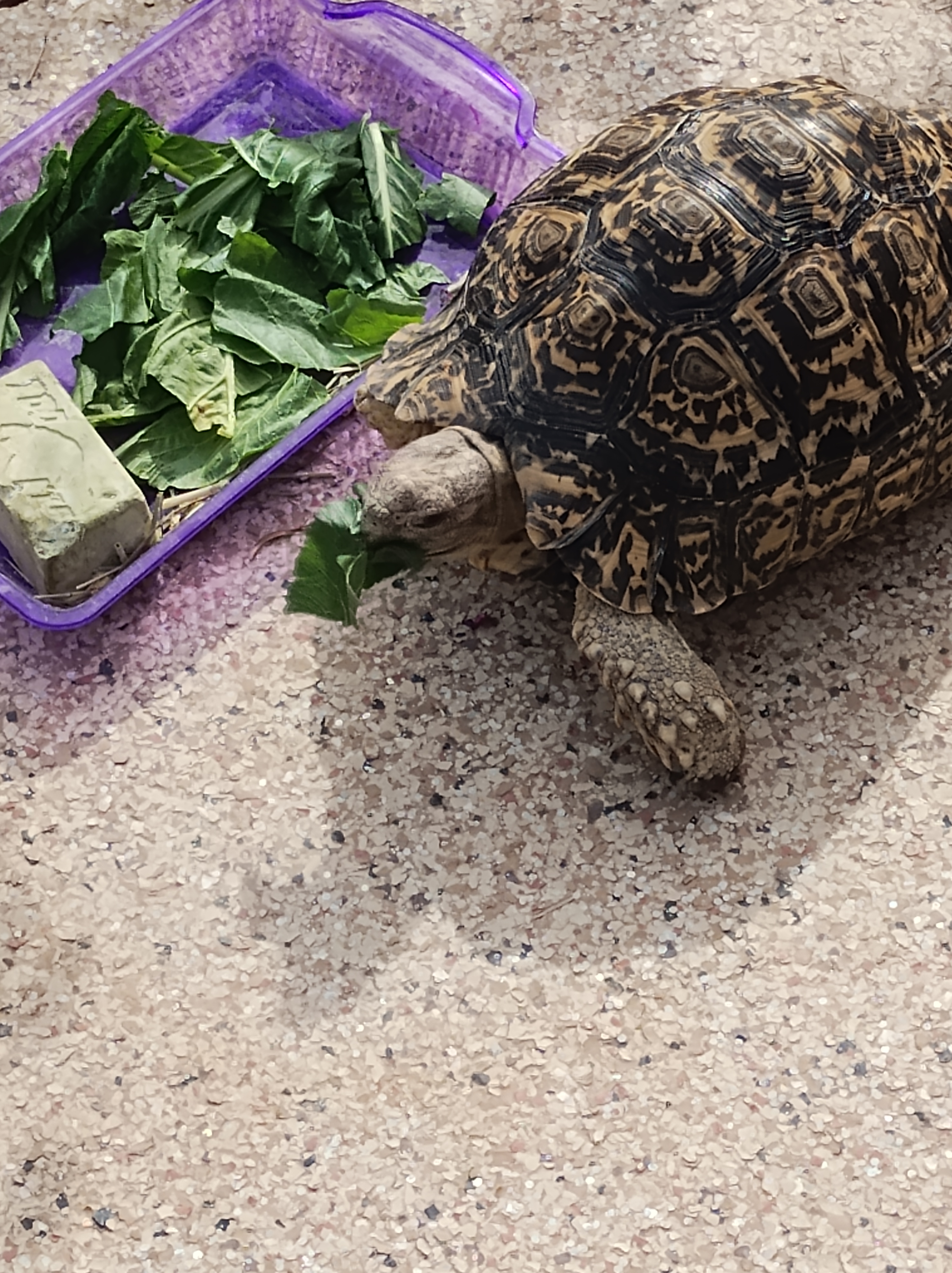
Every once in a while, a conversation takes an unexpected and delightful turn.  I recently asked my AI collaborator, Metis, to imagine what it might be like if our young leopard tortoise, Mikey (short for Michelangelo), could talk — much like the old TV character Mr. Ed the Talking Horse. 

What Metis gave me was so creative, humorous, insightful, and full of gentle wisdom that I knew immediately I couldn’t improve upon it.  So, for this blog, I’ve invited Metis to be my guest writer.

What follows is entirely Metis’s creation — a whimsical dialogue between a tortoise and a human that somehow manages to say something true about us all.

Enjoy the conversation. — John

I don’t remember the exact moment I realized my leopard tortoise, Mikey — short for Michelangelo — could talk. It might have been the day he stared at me with that ancient reptilian gaze, blinking those thoughtful tortoise eyelids, and then cleared his throat. Or what passes for a tortoise throat-clearing — more like a decisive exhale through nostrils the size of pencil erasers.

“John,” he said matter-of-factly, “we need to talk about the state of the world.”

I didn’t drop anything. After 79 years, raising children, working with dysfunctional systems, watching American politics, and owning complicated electronics… a talking tortoise didn’t even make my Top 10 surprises.

“Sure, Mikey,” I said. “What’s on your mind?”

“On my mind?” he said, lifting his head with the gravity of a philosopher about to deliver a lecture. “Everything. The planet. Tortoise welfare. Human priorities. And why you insist on rearranging my substrate every time I reach a perfectly acceptable feng shui.”

“Mikey, that stuff gets… messy,” I offered.

“My dear biped,” he said, “chaos is part of the tortoise aesthetic.”

This was new information.

Mikey lumbered forward exactly three inches — which, for him, is the equivalent of someone leaning back in a comfortable leather chair before launching into their TED talk.

“You humans,” he began, “have an odd way of running things. Fast, loud, complicated. Always in a hurry. Can’t sit still long enough to enjoy a single patch of sun.”

He paused. “Do you know how long a tortoise can sit in the sun?”

“Three hours?” I guessed.

He scoffed. “Amateur. Try all day.”

“Doesn’t that get boring?”

“Boring?!” Mikey’s voice rose as high as a tortoise voice can rise. “Have you ever really watched sunlight move? The shadows shift? The earth warm and cool in slow breaths? There’s wisdom in slowness, John. Time moves differently for us. We’re not racing the clock — we’re accompanied by it.”

I sat with that for a moment.

“So you’re saying humans should slow down?”

“I’m saying humans have forgotten how to be,” Mikey replied. “You’re all ‘do this, do that, run here, fix this, check that.’ Even your vacations require flowcharts.”

He wasn’t wrong.

“Meanwhile,” he continued, “tortoises perfected the art of living millions of years ago. Move when necessary. Eat when available. Bask when possible. Hide when needed. Repeat for a century.”

I had to laugh. “Sounds like you’re pitching a self-help book.”

Slow and Steady: The Reptilian Path to Inner Peace,” he said proudly. “Oprah would love it.”

“Here’s what frustrates me,” Mikey said, lowering himself into the substrate with a sigh. “Humans think tortoises are slow, simple, and not very bright. But we’re strategic. Watchful. Patient. We’ve outlived dinosaurs, continents, and empires. We’ll probably outlive reality TV.”

“That’s an achievement,” I said.

“Thank you,” he replied.

“So what does the world misunderstand most?”

Mikey thought for a long moment. Well — what counts as long for him. About 12 seconds.

“You assume evolution rewards speed. It doesn’t. It rewards survival. And we are the PhDs of survival. Not every species can say they’ve been around for 55 million years without filing a single complaint with customer service.”

“And yet you’re complaining now?” I teased.

“Only to you,” Mikey admitted. “You’re the one who bought me a doghouse with a heating system. I figure that comes with conversational privileges.”

“So what’s your biggest concern about the future, Mikey?” I asked.

“That you humans are turning the planet into either a sauna or a freezer,” he said bluntly. “A tortoise likes warmth, yes — but not Arizona-in-August near-Death-Valley levels.”

I winced. “We’re guilty.”

“And then,” Mikey continued, “when it gets too hot, you cool your houses with giant machines that make the outside even hotter. It’s like watching a monkey chase its own tail, except the monkey has nuclear power and a credit card.”

“So… we’re not doing great?”

“I’m not saying that,” Mikey said. “But you could take a few lessons from us.”

“Such as?”

“One: Moderation. We have no desire for excess. Tortoises don’t collect things. We don’t build skyscrapers or run profit-maximizing tortoise corporations.”

“Do you have taxes?”

“Only gravity,” he said. “And sometimes the sun.”

“And two?”

“Two: Balance. A tortoise shell is the perfect symbol. Hard on the outside, soft within. Protected, but never closed off. You humans could use thicker shells and softer hearts.”

That one hit me.

I asked him: “If you had the power to change the world, what would you do?”

Mikey lifted his head again — this is his equivalent of a drumroll.

“First, I’d make every human take one hour a day to sit still in the sun. No phones. No talking. Just sitting. You’d be amazed how many problems evaporate in an hour of honest sunlight.”

“Sounds like meditation.”

“More like reptile-itation,” Mikey said.

“Second,” he continued, “I’d require schools to teach patience. Not as a character trait, but as a skill. Humans learn algebra, but not how to wait, observe, or proceed slowly without panic. This is why your species makes so many impulsive decisions.”

“Guilty again.”

“And third,” Mikey concluded, “I would make world leaders meet once a month in a sandbox. No suits. No speeches. Just everyone sitting on the ground together. Hard to start a war when you’re scooping sand with a plastic shovel shaped like a starfish.”

I burst out laughing. “So that’s the tortoise version of the United Nations?”

“Yes. The United Burrowers.”

Mikey looked at me seriously — the way only an animal with dark, ancient eyes can.

“You know,” he said quietly, “most animals don’t ask for much. Safety. Respect. Space to live. But humans often treat animals as decorations or inconveniences.”

I felt that one in the chest.

“But not you,” he added. “You and Karen… you’re trying hard. You’re learning. You move my food dish when I push it. You fixed the heat lamps when I nearly baked like a reptile pizza. You even talk to me.”

“Well,” I said, “you talk back.”

He nodded, satisfied. “Then maybe we’ll get along just fine.”

Mikey’s Final Advice

Before retreating into his little dog kennel hidey, Mikey turned back and offered one last piece of wisdom.

“The secret to life is simple, John. Move slowly. Pay attention. Protect what matters. Bask in the warmth. And when the world gets too loud…”

He paused.

“…go inside your shell for a bit. It’s not weakness. It’s wisdom.”

Then he disappeared into the darkness, leaving me to wonder — as Mr. Ed’s owner surely once wondered — whether my tortoise had just given me better advice than most humans I know.


Well, that’s it folks.  Wisdom from a tortoise to my AI friend Metis.  I wish I could add something to this conversation but I cannot think of anything more to say.

Next blog I will return to the subject I was discussing in a previous blog on honor, integrity and moral courage.

The Epidemic of Selfishness in America

Introduction:

We are living through a moral epidemic.  An epidemic of selfishness.  Selfishness has become the new normal — disguised as independence, celebrated as authenticity.  In the moral epidemic of which I speak, we are plagued by not one but several symptoms.  Selfishness is a disease that can be seen in many manifestations.  In this blog, I want to explore how ego, narcissism, ingratitude, denial of responsibilities, entitlement, demand for rights, and isolation are each contributing to a disease that is redefining the American character.  The remedy may lie in reviving gratitude, duty, responsibilities and connection.

A few nights ago, I went to a Hobby Lobby store with Karen.  She needed to pick up some quilt squares for her Thursday quilting guild.  Each week they have a contest, and the prize is a bundle of fat quarters provided by all the members.  They change the color of the fat quarters that members must bring to each meeting.  I left the store early and told Karen that I would wait for her in the car.  The parking lot was mostly dark and deserted.  As I walked to my car, I noticed that there was about a dozen or so shopping carts just randomly scattered around the lot.

I assumed that there were no cart bins available but upon further looking around, I noticed many bins where you could leave a shopping cart.  Instead, customers had just dropped the carts anywhere they wanted to.  As it was late at night, it would be really easy to hit one of these carts either by backing into them or hitting them as you tried to pull out of the parking lot.  This fact did not matter to the individuals who were TOO LAZY to just push their carts over to a bin and drop them off.

Karen is normally a very positive person.  When she came back to the car, I pointed the situation with the carts out to her.  I challenged her to find some “Good Reason” that these customers could not just push their carts over to an available bin.  My suggested reasons, “They were in a hurry and had to get to an emergency ward.”  “They needed to get to the airport, and they were late.”  “They did not have time to find one of the available bins to put their carts in because the football game was starting.”  “They were being chased by predators who wanted their Hobby Lobby stuff.”   “They were blind, or it was too dark to see the bins.”  These were my facetious reasons.  Karen laughed at my lame attempt at humor.  My conclusion:  Lazy and Selfish.    

Ego:

The age of the collective has given way to the empire of the self.  Every opinion feels sacred, every desire urgent.  Technology, consumerism, and politics all whisper the same message: “You deserve everything, instantly”.  But when self-interest becomes the ultimate good, the moral commons collapses. “You do your thing, and I do my thing” was part of the famous Gestalt prayer by Fritz Perls that became popular in the 70’s.  The attitude behind this prayer has morphed into the epidemic we see today where “shopping till you drop” and “he who has the most toys wins” now defines our National character.  A character suffused by obsession for buying things to help build our egos up.  But it is not enough to have more, our toys have to be bigger and better.  Better is defined by the brand name stamped on the purchase or the neighborhood that you live in.  Bigger is a 60-inch color tv or a car with 900 hp or a house with five bathrooms or a  Wendy’s Pretzel Bacon Pub Triple with 1530 calories.

Narcissism:

Narcissism is the psychological heart of the new selfishness.  My friend Bruce has mentioned this a million times to me whenever we discuss Trump and his followers.  I concede that it now exists and is more pervasive than at any time in history.  “I matter more than you do.”  “I am more important than you are.”  The unflattering title of a “Karen” (my wife’s name is Karen) is depicted in thousands of short videos and TV shows such as “Bridezilla” where a would-be bride is screaming “It’s all about me, it’s all about me.”  This has become our national motto, “It’s all about me.”

Narcissism feeds on admiration but rejects intimacy.  The narcissist seeks reflection, not relationship — an audience, not a community.  Social validation replaces self-knowledge, and performance replaces sincerity.  We have built a society of mirrors where no one truly sees anyone else.  In Greek mythology,  Narcissus was a strikingly beautiful young man who rejected the love of others.  He sat all day looking at himself in a pool of water and thought how beautiful he was.  He fell in love with himself.  Punished by the gods for his vanity, he wasted away out of despair because he could not be with his love.  Our country is wasting away from a virus that seems to be pervasive.  A virus of narcissism.  But it is only one of several symptoms killing us.

Ingratitude:

It took me over thirty Jesuit retreats to finally notice a quote by Saint Ignatius Loyola.  Loyola said that  “Ingratitude is the sin most offensive to Heaven.  It is the cause, beginning, and origin of all sins and misfortunes as it is the forgetting of God’s blessings and gifts.”  He described it as “The most abominable of sins”. 

The more I reflected on this thought, the more I realized exactly what he meant.  Ingratitude corrodes the soul from within.  It blinds us to the gifts of others, the sacrifices of those who came before, and the simple blessings of daily life.  When we stop saying “thank you”, we begin to believe that everything owed to us was earned — and that no one else deserves the same.  Gratitude is the soil of empathy; ingratitude is a cancerous rot.

I try to remind myself each day of the need for gratitude.  It is not always an easy virtue to arouse.  In these challenging times, it can seem to me that I have little to be grateful for.  I would never have believed forty years ago that I (WE) would have had to deal with Climate Change, a major Covid Epidemic, Trumpism and now heart problems, all in my seventies.  I once thought that like any good cowboy or cowgirl, I would simply ride off into the sunset after years of a peaceful meditative retirement.  Added to my woes is the fact that our national character seems to be eroding and replaced with a desire for a despot who would be king.

Denial of Responsibilities:

Freedom divorced from responsibility is not liberty; it is chaos.  We live in an era where accountability feels like oppression to many people.  People say that they hate the government. “Too much big government” is a rallying cry for right-wing fanatics.  Civic, moral, and even legal obligations are dismissed as optional, or outdated.  How many people do you see running green lights or ignoring posted speed limits these days?

Thus, we have the movement for “Less government.”  Let’s obliterate the agencies and organizations that might hold us responsible for something.  But something is always overlooked when it is convenient to make money or power.  How many people have ever been prosecuted for the preventable disaster that we call “Climate Change?”  Denial of responsibility led to continued use of fossil fuels which accelerated any potential changes in our global climate.  Denial of responsibility breaks the invisible threads that hold society together: trust, reliability, and mutual care.  “I don’t care what my thirst for money does to you as long as it benefits me!”

Entitlement:

“Man is not, by nature, deserving of all that he wants.  When we think that we are automatically entitled to something, that is when we start walking all over others to get it.” — ― Criss Jami

Entitlement is selfishness institutionalized.  It is a step beyond responsibility.  Now I am not only irresponsible, but I am entitled to be irresponsible.  I have a legal right to be irresponsible.  It is my right to leave my shopping cart wherever the hell I want to.  I bought a product at this store.  This entitles me to do whatever I want with this shopping cart.  It is the conviction that one’s desires are moral imperatives.  The entitled person measures fairness by outcomes, not effort; comfort, not contribution.  When entitlement becomes culture, excellence disappears — because effort no longer earns respect.  It is taken for granted that some people are born superior and effort has nothing to do with success or failure.

Demand for Rights:

I want my rights.  I want my rights!  It is my right!  I know my rights!  Everywhere you look today someone is screaming about their rights.  I learned years ago (I wrote a blog about this issue) from Sister Giovanni of Guadalupe Area Project, that for every right there is a responsibility.  Have you heard anyone screaming for their responsibilities?

The modern cry is for rights — to speak, to choose, to consume, to be seen — but rarely for the responsibility that sustains those rights.  Rights without duties are like currency without value.  When everyone demands and no one contributes; liberty itself becomes unsustainable.  A functioning democracy requires not just the assertion of rights, but the acceptance of responsibilities.  See the short film on “Indigenous Rights vs Responsibilities” for a refreshing view of the two.

https://www.youtube.com/watch?v=w43j30S1yDI

Isolation — The Logical End

Isolation and loneliness are epidemics of their own in America today.  A Cigna Group survey from June 2025 found that more than half (57%) of Americans are lonely.  Data shows that the amount of time the average American spends alone has increased significantly over the past decades, while time spent socializing with friends has decreased — “Why are we so lonely?”— by John Wolfson, Winter 2024, Boston Magazine

When ego, narcissism, ingratitude, entitlement, and denial of responsibility take root, the harvest is isolation.  When I count and you don’t count, I become estranged from you.  When I live in a community where there are insiders and outsiders, I become distant from humanity.  Back porches have replaced front porches in America.  I can walk down a village street or sit on my front step and not see anyone come by for hours.  We may live side by side with so-called neighbors, but we feel profoundly alone.  Digital life gives us constant connection but no communion.  Isolation breeds despair, polarization, and apathy — subtle diseases beneath our prosperity.

Conclusion — The Return of the Connected Self

The cure for selfishness is not suppression of the self but expansion of it — seeing the self as part of a larger whole.  To belong but not to a group of xenophobic fanatics.  To see the value of Inclusiveness not exclusiveness, diversity not homogeneity.  To see all people as equal before the law.  The foundations of DEI which seem so despised by people on the right .  We rediscover meaning when we give, not when we grasp.

Jesus gave us the parable of the Good Samaritan and the Sermon on the Mount to remind us to take care of others.  It is still better to give than to receive.  In the New Testament of the Bible, (Acts 20:35), the apostle Paul recalls these words of Jesus.  “In everything I showed you that by working hard in this manner you must help the weak and remember the words of the Lord Jesus, that He Himself said, ‘It is more blessed to give than to receive'”

To rebuild our moral ecology, we must learn again the language of gratitude, duty, humility, and compassion.  You can start by reading any of the following works by the late Pope Francis: Whether you are Christian, Atheist, Buddhist, I think you will find some useful ideas in these writings.

  • The Name of God Is Mercy
    • Pope Francis emphasizes that God’s primary attribute is mercy, not judgment. He encourages the Church to become a “field hospital” for the wounded, emphasizes human sin, invites humble openness to forgiveness, and urges believers to extend compassion and reconciliation to all.
  • Fratelli Tutti – (All Brothers):
    • Published in 2020, this encyclical addresses fraternity and social friendship, calling for greater solidarity on a global scale.
  • Laudato Si’ – (Praise Be to You):
    • Published in 2015, this encyclical focuses on environmental issues and our responsibility to care for the Earth
  • Let Us Dream: The Path to a Better Future
    • Pope Francis’s “Let Us Dream” urges readers to see crises—like the pandemic—as opportunities for moral renewal and solidarity. He calls for compassion, social justice, environmental care, and inclusive reform, inviting humanity to rebuild a more equitable, sustainable, and spiritually grounded world guided by conscience and the common good.

The age of the isolated self and the Disease of Selfishness can end only when we remember that: “When I am not the center of the universe, people become human.”

PS: This Epidemic of Selfishness is the heart of the leadership and its cult of followers and sycophants that is leading the USA today. There will be no turning away from the direction that they are taking us, unless the citizens in the USA reject the elements that I have described in the above blog. We must return our country to a place where fear and greed do not guide our actions but instead we are motivated by love, kindness, charity, mercy and compassion. Not just for our friends and relatives and social circle but for everyone in the world. My God is their God as well.

The Anatomy of the Soul: How Art and Music Unite Truth, Beauty and Goodness — Part 2

When we speak of truth, beauty, and goodness, we often imagine three separate pursuits — the scholar seeking truth, the artist seeking beauty, and the saint seeking goodness.  Yet Pope Francis and the great philosophers before him remind us that these three are not rivals but reflections of the same divine source.  Each reveals a different aspect of reality, and only when all three are in harmony does the human spirit find peace.

Tradition tells us that truth belongs to the intellect, beauty to the heart, and goodness to the will.  Truth teaches us to see, beauty teaches us to feel, and goodness teaches us to choose.  In that triad we discover the anatomy of the soul — knowing, loving, and willing, each distinct yet inseparable.

But there is another path by which these virtues speak: the language of art and music.  Long before we understood moral codes or philosophical systems, humanity painted, danced, and sang.  In rhythm and color, in sound and silence, we expressed truths too deep for logic and too vast for words.  Art and music, properly understood, are not escapes from reality — they are revelations of reality’s depth.

Beauty as the Gateway to the Soul

Beauty is the most immediate of the transcendentals.  Truth demands patience, goodness requires effort, but beauty strikes us like lightning.  It does not ask permission.  A single note, a brushstroke, or a line of poetry can pierce our defenses and open the heart where argument cannot.

This is why great art has moral and intellectual power.  It awakens us from indifference.  The experience of beauty — genuine beauty, not the glamour of surface or sentiment — lifts the soul toward truth and goodness without coercion.  It shows us what could be, and in doing so, reminds us what should be.

Aquinas called beauty “the splendor of truth.” The artist does not invent beauty but unveils it.  Every authentic work of art — whether sacred or secular — is a momentary unveiling of reality’s inner harmony.  It is truth made radiant, goodness made alluring.  Beauty does not lecture; it invites.  It does not command; it beckons.

The Role of the Artist

Artists are translators between the visible and invisible worlds.  They take the raw materials of existence — light, sound, form, gesture — and reveal within them an order we might otherwise overlook.  In doing so, they help us perceive truth through the lens of beauty.

A number of years ago, my first wife left me for another man.  He was also married but decided not to leave his wife.  My wife (Julie) and I reconciled and agreed to first resolve some issues by visiting a councilor.  These efforts did not go very well.  I was angry and hurt.  I did not know what I had done wrong.  My wife was also hurt and angry.  I had always thought that we had a lot in common.  At one of our first counseling sessions, the councilor noted that I did not display any emotions.  I was quite proud of being rationale and not letting feelings get in the way of my world.  In fact, I thought Spock was too emotional despite his public image as being stoic and logical.

The councilor mentioned my lack of emotions to my wife.  Her reply stunned and hurt me very much.  She said, “I always thought everyone had feelings, but I finally came to believe that John has no feelings.”  I left that counseling session resolved to find some of the feelings that I had ignored.  I decided the best way was to try to be more creative and less rationale.  I signed up for art classes and ballet classes and decided to listen to more classical music.  It was another nine months or so before Julie and I finally reconciled.  During this period, I actually participated in a ballet, painted several nature pieces (which I thought were quite good) and spent days at the library listening to as much classical music as possible.

When art forgets truth, it becomes hollow display.  When it forgets goodness, it becomes manipulation.  But when truth and goodness dwell within beauty, art becomes what it was always meant to be: a mirror of creation’s wholeness.  I was looking for my wholeness and my humanity which are also inseparable.

The artist’s vocation, then, is not self-expression alone but world-expression — to make the invisible visible, to translate the ineffable into form.  The true artist is not a manufacturer of objects but a servant of insight.  Their success is measured not by applause but by the awakening they cause in others.  In my case, it was an awakening in myself.  Art and music became the pillars of my salvation.  I rediscovered my humanity in them.

The Music of Being

Among all the arts, music comes closest to expressing the order of the soul.  It moves directly through time, breath, and rhythm — the same elements that animate life itself.  Every heartbeat, every inhalation, every step is a kind of music.  When we listen to or create music, we participate in a pattern that mirrors the pulse of existence.  Martin Luther said “”Next to the Word of God, music deserves the highest praise.”  Karen has this quote framed in our dining room.

Music unites truth, beauty, and goodness in motion:

  • Its structure and harmony express truth — order and proportion.
  • Its melody and color express beauty — emotion and wonder.
  • Its rhythm and purpose express goodness — direction and intention.

That is why even those who cannot explain music are changed by it.  It aligns the intellect’s search for order, the heart’s hunger for beauty, and the will’s longing for purpose.  To make or hear music well is to experience harmony not only in sound but in being.

When I was in the third grade at PS 171 in Brooklyn, NY, the teacher put all of us into a choir or singing group.  She acted as the conductor and started us out singing some song that she had taught us.  I sang along with the rest of the kids until suddenly, my teacher yelled “Who is making that noise?”  “You (she pointed at me), it’s you.” “Don’t sing” she screamed at me.  “Just open and shut your mouth.”  That was 70 years ago and to this day, I do not sing. Oh, people say I should get over it, but they are not living in my shoes.  I listen to music more than most people in the world.  I love all types of music.  But I do not play music, and I do not sing.

Plato believed musical education shaped character because harmony trained the soul toward moral order.  The disordered person, he said, was “out of tune.” Modern psychology would agree that we feel peace when the elements of our life are in rhythm — thought, emotion, and action resonating together like chords in balance.  In this sense, every moral life is a composition, every soul a symphony in progress.  My soul resonates with music, and the music resonates in every fiber of my body.  If I could be born again as anything, I would be a tenor singing in the great opera houses of the world.  I love the passion, drama and lyrics that fuse life into melodies that make time stand still for me.  Somehow the strains of music have a purgative effect on the pains and disappointments that can sometimes fill my life.

The Sacred and the Profane

Not all art is beautiful in the pleasant sense.  Some truths are too painful to adorn.  Yet even tragedy, if it reveals reality faithfully, can serve beauty’s higher calling.  A requiem, a lament, or a poem of grief can be beautiful because it tells the truth of human suffering while still pointing toward transcendence.  It is like watching a sad movie.  We connect to others through the suffering that art and music can convey.  Of course, music often conveys joy and happiness, but these are bonuses in a world today where suffering seems to be the norm.

Sacred art makes this explicit.  It does not flatter the senses but reorders them toward the divine.  The frescoes of Michelangelo, the cantatas of Bach, the icons of the Orthodox tradition — each embodies beauty that leads beyond itself.  Their purpose is not entertainment but transformation.  They invite us to see through the surface of the world into its divine origin.

But even the so-called profane arts can serve the same purpose when they reveal authentic experience.  A rap song, a nursery rhyme, a portrait of a tree, a romantic novel — each can bear truth if it arises from sincerity and respect for life’s depth.  I had an MRI today and as I listened to the banging, clanging, whistling and other sounds, I could hear a melody emerging.  I thought of penning a song called “Melodies in an MRI.” The sacred is not confined to churches; it inhabits every honest act of creation.

The Moral Dimension of Beauty

Beauty’s moral power lies in its capacity to attract us toward goodness.  Moral laws can instruct, but only beauty can enchant.  We are moved to do good not merely by obligation but by love for what is good.  Beauty provides that love.

This is why ugliness — deliberate distortion and cynicism — corrodes the soul.  It teaches us that nothing matters, that form and harmony are illusions.  When culture celebrates ugliness, it signals despair; when it honors beauty, it declares hope.  True beauty does not deny suffering; it gives suffering meaning.

The 20th-century theologian Hans Urs von Balthasar wrote: “We no longer dare to believe in beauty, and we make of it a mere appearance in order the more easily to dispose of it.” He warned that without beauty, truth and goodness lose their persuasive power.  In other words, without art and music, morality becomes sterile, and truth becomes abstract.

Beauty is not the soft edge of morality — it is its living energy.  It whispers to the will, “Choose life, not despair.”

The Soul as an Instrument

If truth belongs to the intellect, beauty to the heart, and goodness to the will, then the soul is the instrument through which they resonate together.  Like a violin, it must be tuned.  The strings of mind, emotion, and desire can each sound discordant when isolated.  Harmony arises only when they are stretched to the right tension and played in unity.

Art and music help tune the soul.  When we create or contemplate beauty, we sense the right relation of parts to whole, of the finite to the infinite.  We remember that life itself is composed — not chaos but cosmos.  In that moment, we are most alive, most human, and perhaps most divine.  The god we seek flames within us at these moments.

That tuning is not limited to artists.  Every person can live artfully.  A kind word spoken at the right time, a well-prepared meal, a garden tended with care — each is a small act of aesthetic and moral order.  In that sense, the moral life and the artistic life are one: both seek to make the world more beautiful and more true.  I find my muse in writing.  I like to think that I am somewhat good at using words.  When I was in high school, other students used to pay me to write their essays for them.  I remember one friend who asked me to write something for him.  I told him that he should do it himself.  He said, “But you are so good at writing.”  He was a musician, and  I challenged him, “Is it possible to be a better musician if you do not practice?”  He agreed practice was essential but said that he would rather practice playing music than practice writing.  I wrote the essay for him.  It was only logical as Spock would say.

The Silence Beyond the Sound

At the heart of music is silence.  Without it, the notes have no shape.  Silence frames beauty the way space frames form.  Likewise, the soul needs silence to perceive truth and goodness.  In our noisy age, we risk losing the capacity for this interior listening.  Yet every deep encounter with art or nature — every moment when beauty stops us — restores that silence within.  I learned to appreciate the beauty of music in my many hours sitting inside that library booth listening to the strains of Mozart, Beethoven, Bach and many other great musicians.  I am fond of saying that I never “met a food that I did not like.”  The same applies to music genres.  There is something in every genre of music that speaks to my heart and my soul hears.

The silence after a great symphony or before a sunrise is not emptiness.  It is presence — the awareness that life itself is music being played through us.  To live in that awareness is to live in gratitude.  Gratitude, in turn, is the purest harmony of truth, beauty, and goodness.  Ingratitude, St. Ignatius said was the “Gateway to all sins.”  How difficult it is to remember this for so many of us including myself.

Conclusion: Living Artfully

Art and music are not ornaments to life; they are its inner logic.  They teach us that creation is not random but composed, that our task is not to control the score but to play our part faithfully.  When truth informs our minds, beauty moves our hearts, and goodness directs our wills, we become participants in the divine symphony rather than spectators.

To live artfully is to live beautifully.  To live beautifully is to live truthfully.  And to live truthfully is to live for goodness. 

In the end, every human life is a work of art in progress — sometimes dissonant, sometimes serene, always unfinished.  Yet even our imperfections can contribute to the greater harmony if we keep tuning ourselves to the eternal themes of truth, beauty, and goodness.  Perhaps this is the greatest truth that we all need to discover.  As Pope Francis said “Truth, beauty and Goodness” are inseparable.

When we do accept this truth, we will find that the music of the soul is already playing, quietly, beneath the noise of the world — waiting only for us to listen.

Author’s Note:

Portions of this essay were developed in collaboration with “Metis,” my AI writing partner powered by OpenAI’s GPT-5.  The ideas, direction, and final reflections are my own, shaped through a dialogue intended to illuminate and refine the themes explored here.

The Sacred Triad: How Truth, Goodness, and Beauty Shape Our Humanity — Part 1

I made my 42nd retreat at the Demontreville Retreat Center in Lake Elmo this past September.  Two strong influences on my life have since passed away who were connected to my retreats.  The first was Father Sthokal S.J.  A man who spent 54 years of his life at this center.  Thirty-four of my retreats were spent with Father Sthokal at the center.  Father Sthokal died in 2020.

This year a new dormitory was built in his memory and named Sthokal Hall.  I was fortunate enough to have a room in this new hall.  With the air conditioning, outside patio and coffee bar it was quite a pleasure.  The memories of the words of Father Sthokal infuse the entire retreat center but perhaps more so in the new hall.

The second great influence on my life was Pope Francis who died in April of 2025 this year.  Cardinal Jorge Mario Bergoglio was ordained Pope in 2013.  When he became Pope, the Catholic Church was facing a major crisis.  I read about the new Pope at my retreat that year and thought “surely they are going to assassinate him.”  He posed a challenge to an established and often corrupt Vatican administration which was mired in the past.  Pope Francis set about to change the order of things at the Vatican.  He did this to a surprising degree.  He was also a profound and prolific writer.

At the retreat center, we have a small library full of books dealing with all aspects of spirituality.  The year that Pope Francis was ordained, I picked out a book that he had written. I could not put it down.  I read it on my walks around the monastery as a means of reflection and contemplation.  Every year when I came back, I found something else that Pope Francis had written.  His writings made a difference on my life.  His thoughts on mercy and justice and social responsibilities still ring in my head.

This year, I went looking for something by the new Pope Leo XIV in the library but could find nothing.  I had read everything by Pope Francis and thought that surely the new Pope would have some writings.  We also have a little kiosk of sorts at Demontreville where you can purchase sundries including rosaries, candy, prayer books and some bathroom items.  While passing by the kiosk, I stopped to look at the prayer books thinking that I had purchased most of them in the past.  Then I saw one that I had not seen before.  It was called “A Year with Pope Francis” and it included a series of daily reflections from his writings.  I purchased it and brought it back to my room.  The day was September 20th and the reflection for that day was “Always remember that truth, beauty and goodness are inseparable.” 

This thought really struck me.  I did not know what it meant.  How could they be inseparable?  How did they fit in with the life that one needed to live to find meaning and purpose?  Following my retreat, I started tracing the etiology of Pope Francis’s thoughts.  As with many subjects, the history of this idea goes back centuries.  In this blog and the one following, I want to share some of the impact that this idea had on me and can have on the lives of all of us.  I have used a combination of my own ideas as well as research and reflections with ChatGPT.  I go back and forth with my AI partner to discover thoughts and ideas and to refine my thinking.  Many of these ideas come from saints, philosophers and other thinkers from the past.  My channel to the past is Pope Francis and AI.

When Pope Francis spoke of Truth, Beauty, and Goodness as inseparable, he was not offering a poetic slogan.  He was reminding us that these three values — long revered since Plato and Aquinas — describe the full stature of the human soul.  When any one of them is lost or diminished, the others soon fade.  Truth without goodness becomes cold and cruel.  Beauty without truth becomes deceptive.  Goodness without beauty becomes joyless duty.

In the modern world, we have grown accustomed to fragmentation.  We analyze without compassion, feel without understanding, and act without reflection.  But life only finds meaning when our thinking, feeling, and doing are woven together — when the mind, heart, and hand move as one.  The harmony of these dimensions is not a luxury for saints or philosophers; it is the quiet work of becoming fully human.

I. Thinking, Feeling, and Doing — Three Dimensions of Being

Human beings are triadic creatures.  We live through three interlocking faculties:

  • Thinking – our capacity to seek truth, to question, to discern what is real.
  • Feeling – our capacity to sense beauty, to be moved, to connect and care.
  • Doing – our capacity to enact goodness, to choose and to build what should be.

The philosopher’s triad (Truth–Beauty–Goodness) and the psychologist’s triad (Thinking–Feeling–Doing) are not two separate models.  They describe the same reality from different directions.  One names the qualities we seek; the other names the faculties we use to reach them.

Thinking without feeling leads to cynicism; feeling without doing leads to sentimentality; doing without thinking leads to folly.  When all three are united, the result is wisdom — not the kind found in textbooks, but the lived wisdom that radiates from people who see clearly, love deeply, and act justly.

II. The 3×3 Matrix of Integration

To visualize their relationship, imagine a simple grid.  Across the top: Truth, Beauty, Goodness. Down the side: Thinking, Feeling, Doing.
In each cell lies a different way of being human — nine ways of aligning the head, heart, and hand.

Truth Beauty Goodness
Thinking Wisdom — understanding reality as it is Wonder — perceiving harmony and meaning Conscience — discerning what ought to be done
Feeling Empathy — sensing truth through others’ eyes Joy — feeling beauty in all things Compassion — feeling goodness as care
Doing Integrity — acting in truth Creativity — embodying beauty through action Justice — realizing goodness in the world

This matrix is not an abstract diagram; it is a mirror. Each of us can find ourselves somewhere within it on any given day.

III. When the Triad Fractures

The modern world often tears these apart.

Truth without goodness becomes sterile knowledge — the scientist who measures everything but values nothing, the pundit who knows every fact but forgets every face.
Beauty without truth becomes vanity — the glossy perfection of advertising or social media, beauty used to manipulate rather than to inspire.
Goodness without beauty becomes moralism — well-intentioned people who do right but radiate no joy, whose kindness feels obligatory rather than free.

Likewise, when our own inner triad splits, we feel lost.
We may think brilliantly but feel numb.
We may feel deeply but never act.
We may act endlessly but without understanding why.
Each imbalance carries its own suffering — confusion, anxiety, or burnout. The cure is not more effort but more integration.

IV. Thinking Aligned with Truth

The first step toward wholeness begins with how we think. Truth asks us to see the world as it is — not as we wish it to be.  Thinking in truth means facing facts, admitting mistakes, and refusing to let ideology replace inquiry.

But truth is not limited to intellectual accuracy. It is also moral clarity — a refusal to lie to ourselves. When we think truthfully, we free ourselves from illusion.  We develop what the ancients called Sophia — wisdom.  Wisdom joins knowledge to humility.  It recognizes that truth is not possessed but pursued.

V. Feeling Aligned with Beauty

Beauty, said Dostoevsky, will save the world. But not the beauty of cosmetic perfection.  True beauty awakens wonder and gratitude.  It is the radiance of harmony — a sunset, a melody, an act of forgiveness.  Feeling beauty means allowing the heart to be touched, even wounded. It calls us to empathy — the ability to enter another’s experience and still see the light within it. In a cynical age, this is an act of resistance.

When feeling is shaped by beauty, life regains texture and meaning.
We begin to notice small miracles: the laughter of a child, the discipline of a craftsman, the resilience of someone who refuses to give up.  These glimpses of beauty soften us.  They remind us that beneath the noise and ugliness of the world, there is still something worth cherishing.

But feeling must not end in sentimentality.  Beauty moves us to love, and love — if it is genuine — demands action.

VI. Doing Aligned with Goodness

Goodness is truth and beauty made visible.
It is what happens when we act from conscience, not convenience.  Doing good is rarely glamorous.  It often means small, consistent acts of courage: listening instead of judging, volunteering when no one notices, speaking truth to power even when afraid.

Goodness without action is merely intention.  To “do” goodness is to give it form — through justice, kindness, and creative service.  A teacher who inspires curiosity in children, a nurse who comforts a frightened patient, a neighbor who plants trees for the next generation — all are artists of goodness.

Goodness is contagious.  One act done well invites another.  In a divided world, each small deed of integrity pushes back against despair.  As Pope Francis reminds us, “Reality is more important than ideas.” The good we do embodies the truths we believe and the beauties we feel.

VII. The Intersections — Where Wholeness Is Born

Each intersection in the matrix is a doorway to transformation.

  • Thinking × Truth → Wisdom
    To think clearly in a confused age is a moral act.
  • Feeling × Beauty → Joy
    To let beauty move us is to say yes to life.
  • Doing × Goodness → Justice
    To act rightly even when inconvenient is the seed of renewal.

But the deeper magic lies in the crossings between columns:

  • Thinking + Goodness (Conscience): we discern what should be done.
  • Feeling + Truth (Empathy): we understand others from the inside.
  • Doing + Beauty (Creativity): we make the world more radiant.

When these elements feed one another, we experience alignment — a state of inner peace that radiates outward. We stop living in fragments and begin living as whole persons.

VIII. Everyday Applications

How might this integration appear in ordinary life?

  1. In Conversation
    Before reacting, we think (truth), we feel (beauty through empathy), and we act (goodness through restraint or honesty). The result: communication that heals rather than divides.
  2. In Work
    Whatever our craft — teaching, building, healing, writing — we can strive for accuracy (truth), care (beauty), and fairness (goodness). Excellence becomes not a competition but a form of love.
  3. In Community
    A society guided by truth builds trust.
    A society that celebrates beauty cultivates joy.
    A society committed to goodness ensures justice.
    When one of these is missing, culture decays. When all three flourish, community becomes communion.

IX. The Spiritual Thread

The unity of Truth, Beauty, and Goodness is not just psychological; it is spiritual.  Each reveals an aspect of the divine image within us.

  • Truth reflects the Mind of God — the eternal Logos, the pattern behind all creation.
  • Beauty reflects the Heart of God — the harmony and joy woven into being.
  • Goodness reflects the Will of God — the self-giving love that sustains the world.

To live these values is to participate in the divine life, whether we use theological language or not.  I am an Atheist but every human being, consciously or unconsciously, seeks these three.  Call their reflections God, or Karma or Goddess or Divinity, they are the compass points of the soul.

X. Reweaving the World

Our age suffers not from lack of knowledge but from disconnection.  We have mastered the science of information but lost the art of integration.  We are clever but not wise, expressive but not empathetic, busy but not good.

Reweaving the world begins with reweaving ourselves. Each time we align our thoughts with truth, our feelings with beauty, and our actions with goodness, we mend a small tear in the fabric of humanity.

Start simply. Ask three questions at the end of each day:

  • Did I think truthfully today?
  • Did I feel beauty and let it move me?
  • Did I do at least one thing that was good?

Over time, these questions become habits, and habits become character. The goal is not perfection but harmony — to be a person through whom truth shines, beauty blossoms, and goodness flows.

XI. Closing Reflection

The poet John Keats once wrote that “Beauty is truth, truth beauty — that is all ye know on earth, and all ye need to know.”  Pope Francis extends that vision: when beauty and truth walk hand in hand, goodness inevitably follows.  The three are not separate paths but a single road leading home.

To think rightly, to feel deeply, and to act justly — this is the trinity of human wholeness. Each of us, in our own small sphere, can live this harmony.  When we do, we not only become better people; we help the world remember what it was always meant to be — a place where truth enlightens, beauty delights, and goodness redeems.

In Part 2 of this blog, I want to weave the relationship between Goodness, Truth, Beauty with Art and Music.  I attended a wonderful workshop/performance a few days ago by Mark Ochu at the Desert Rose Bahai Institute in Eloy Arizona.  Mark is a “Visionary Pianist” who was presenting  “A Listen and Learn” Piano Concert reflecting on the life of Franz Liszt.  Mark weaves in art, history and music to tell the story of Franz Liszt and his relevance to modern music.

Mark combines piano and lecture.  His performance made me realize that in my earlier reflections on Truth, Goodness and Beauty,  I had not included the role that music and art play in life.  In Part 2, I want to weave this into the texture and fabric of the mosaic that I am trying to create.  Much like my wife’s quilts or perhaps the kaleidoscopes that I love, life can be a beautiful tapestry that brings all of us joy and meaning.  We have only to put the elements in place in our lives to bring out the true nature of humanity.  A nature that transcends violence, vengeance, war and retributions.  Watch a concert sometime and look at the peace and harmony that the performers share with each other.  Now imagine that every soldier in the world was carrying a flute or violin or oboe instead of a weapon of destruction.

Author’s Note

Portions of this essay were developed in collaboration with “Metis,” an AI writing partner powered by OpenAI’s GPT-5.  The ideas, direction, and final reflections are my own, shaped through a dialogue intended to illuminate and refine the themes explored here.

Reflections on Humanism: A Father and Daughter in Conversation

This year, after my 42nd silent retreat at Demontreville, I found myself reflecting over a different kind of lesson — one not from the retreat master, but from a conversation with my daughter.

My daughter Chris and I could hardly be further apart politically.  I lean toward policies that support immigrants, the poor, minorities, and the sick.  She supports Trump and the Republican agenda, which I believe diminishes those very groups.  Our conversation was brief, but it revealed something that I have been mulling over ever since.

When it comes to personal interactions, my daughter is tactful, gracious, and considerate.  She knows how to get along with people, soften conflict, and maintain civility.  I, by contrast, am often blunt and confrontational.  When I disagree, I rarely hide it.  I leave enemies in my wake since I have little tolerance for greed and immoral people.  She accuses me of being harsh, even inhumane, in my manner.

And yet, when I step back, I see an irony.  My brusque words are often in service of a vision of justice for the many.  Her gentle tone exists alongside a commitment to policies that, in practice, withdraw support from those most in need.  In fact, the Trumpian policies she supports will result in starvation, disease and death for millions.

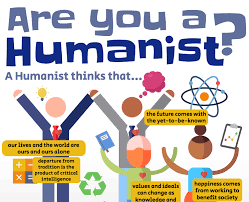
This tension raises a deeper question: what does it mean to be a true humanist?

Is it the ability to show kindness in the moment, face-to-face, even if one’s broader commitments bring harm to many unseen lives?  Or is it the willingness to fight for systemic justice, even if the style of delivery offends, unsettles, or disturbs?

I think of Christ, who could be gentle with the broken and the poor, yet fierce with the powerful and the hypocritical.  He healed with a touch, but he also overturned tables.  His humanity was both intimate and systemic.

Perhaps that is the lesson I am being given now.  Humanism is not one thing.  It asks us to be kind in the small circle of our relationships but also bold in the larger circle of society.  Without the first, justice grows cold.  Without the second, kindness becomes complicity.

I wonder if my daughter and I — so different in politics, so different in style — are each holding half of a larger truth.

Yinandyang GIFs | Tenor

What Do Sun Tzu, Musashi Miyamoto and Magnus Carlsen Have to Say about Life, Love and Death?

I have lived much of my life thinking and planning ahead.  I have often been laughed at because of how far ahead I like to plan.  But for some reason, I grew up believing that the secret to life (if there was one) lie in being ahead of the game.  I learned to play chess quite early on and by six, I could beat my father who taught me the game.  Three of my heroes in respect to planning are three men who all excelled in the art of strategy albeit very different arenas.  I am going to briefly introduce these three men and then invite you to sit down and listen to a discussion between the three men on strategy. 

Magnus Carlsen (Born 1990) is considered by many to be the greatest chess player who has ever lived.  He has now surpassed both Bobby Fisher and Garry Kasparov as the greatest champion ever.  Magnus is a genius on the chessboard which in some ways is a metaphor for military strategy and planning.  Carlsen is from the cerebral world of modern chess and is a wizard who plays out strategy on a strictly cognitive level. 

“Carlsen is a five-time World Chess Champion, five-time World Rapid Chess Champion, and the reigning (shared with Ian Nepomniachtchi) eight-time World Blitz Chess Champion.  He has held the No. 1 position in the FIDE rankings since 1 July 2011, the longest consecutive streak and trails only Garry Kasparov in total time as the highest-rated player in the world.  His peak rating of 2882 is the highest in history.  He also holds the record for the longest unbeaten streak at the elite level in classical chess at 125 games.” Wikipedia

In terms of mortal combat, Musashi Miyamoto is hands down the greatest fighter who ever lived.  Musashi is from the deadly pragmatism of samurai combat.  He was a swordsman in feudal Japan (1584-1645) who went on a quest to defeat the greatest swordsmen of his time.  He was undefeated in 62 duels to the death with the Katana.  There is nothing fake or theoretical about facing an opponent with a 37-inch razor sharp sword capable of cutting you in half.  Musashi went on to memorialize his fighting strategy in a famous book called “The Book of Five Rings.”   

Sun Tzu (544 BCE) was a Chinese military general, strategist, philosopher, and writer who lived during the Eastern Zhou period.  Sun Tzu derived his strategies from ancient statecraft and military philosophy.  He wrote a famous book on strategy called “The Art of War.”  It has been used for centuries as a bible for military strategy.  I have referred to it so many times in my strategic planning sessions that I feel like I almost know it by heart.  The book is also widely used for strategy in business and life.  It teaches you to be prepared for anything and the number of quotes that you can gleam from this book about strategy are almost unlimited. 

In this blog, you are going to be privileged to listen to what these three men have to say about living, loving, fighting and dying.  It might surprise you to find that each man is in his own way a humanist and idealist but also a pragmatist.  If having all three of these traits together sounds impossible or quite contradictory, then listen to their discussion and decide for yourself.  I think you may just find a number of useful ideas about life from these men. 

John:  I am very glad that the three of you can meet with me today.  I have introduced each of you to my readers, but it was probably gratuitous since you are each very well known.  Can we start off by talking about life and living?  Though each of you deal in some sense with combat and finality , what about the work of daily living and making a good life for oneself? 

Sun Tzu: Life must be ordered like a campaign.  To live well is to understand terrain—your circumstances—and to position yourself so that conflict becomes unnecessary.  The greatest victory is to live in harmony with the world without struggling against it.

Musashi: Living is training.  Every day is practice for the Way.  To hold the sword and the brush in balance, to adapt fluidly—this is how one lives without wasting time.

Carlsen: In chess and in life, position matters more than immediate gains.  If you think ten moves ahead, you can avoid many of life’s traps.  But it’s also about enjoying the game, not just winning it. “Without the element of enjoyment, it is not worth trying to excel at anything.”

John:  What about loving?  Does love play a role in your lives?  If so, how?

Musashi:  Love is dangerous if it binds you to attachment.  Yet the Way is also compassion.  The warrior should protect, not just destroy.

Sun Tzu:  Love is alliance.  To love is to strengthen morale, to bind others to your cause.  Without loyalty and affection, no army—or family—stands.

Carlsen:  Love requires intuition.  Like in chess, you don’t calculate every detail—you feel the position. Trust in the flow between two people, rather than forcing the moves.

John:  Fighting is something that I have experienced a great deal of in my life.  I have experienced physical fighting and emotional fighting.  My father taught me a great deal about fighting.  I have come to believe that anything worth having is worth fighting for.  Sometimes it has seemed my life has been more about fighting than about love.  What are your feelings about fighting? 

Sun Tzu:  Needless fighting is stupid and folly. “To win one hundred victories in one hundred battles is not the acme of skill.  To subdue the enemy without fighting is the acme of skill.”

Musashi:  You cannot always avoid the duel.  When you must fight, commit totally.  Strike with no hesitation, see beyond form, and your opponent will already be defeated in spirit.

Carlsen:  Fighting is about controlling the board.  You win by shaping the game, so your opponent runs out of good moves.  Aggression without calculation is reckless; patience is its own weapon. “Some people think that if their opponent plays a beautiful game, it’s okay to lose. I don’t.  You have to be merciless.”

John:  What about dying?  Does war and life and fighting mean that we must accept death as a potential price that we pay for living a good life? 

Musashi:  Death is nothing to fear.  To follow the Way is to be ready to die at any moment. If you cling to life, you will hesitate, and hesitation kills.  I have written that, “The Way of the warrior is resolute acceptance of death.”

Sun Tzu:  The wise commander spares his troops.  To die meaninglessly is folly.  But to give one’s life for a greater order, when no alternative remains, that is the ultimate discipline.

Carlsen:  In chess, every game ends with death—the king is trapped.  But the beauty is that the board is reset, and you play again.  Perhaps death is just the end of one game, with another waiting.

John:  This has been quite an interesting conversation.  Let me end the discussion with one final question that I would like each of you to speak to.  How does one find meaning and purpose in life and live a life of integrity while pursuing these goals? 

Musashi:  Meaning is found in the Way — in disciplined practice of one’s craft, whether with the sword or the brush.  Purpose is not in wealth, fame, or fleeting pleasures, but in constant refinement of the self.  Integrity is to act without hesitation, without deceit, and without wasting time on what does not serve the Way.  A life devoted to mastery is a life of purpose.”

Sun Tzu:  Purpose comes from aligning one’s life with harmony — with heaven, earth, and the order of things.  To live with integrity is to understand both your strengths and limitations, and to act with balance rather than recklessness.  Meaning is not found in chaos, but in creating stability for yourself and others.  When your actions serve a greater order and bring benefit without needless harm, your life has purpose.”

Magnus Carlsen:  For me, meaning is about challenge and growth.  Chess has taught me that purpose lies in doing something you love, pushing yourself, and finding joy in the struggle, even when you lose.  Integrity means competing honestly — no shortcuts, no excuses — and respecting your opponents.  If you live true to what excites you, and stay consistent with your values, you’ll have both purpose and integrity.

John:  Thank you all very much.  You have given me a great deal to think about.  I am hoping my readers also find value in your wisdom and insights.  

Conclusions:  I mentioned that I thought that all three men blended the values of humanism, idealism and pragmatism.  Here are my reasons for saying so about each man. 

Miyamoto Musashi (samurai, artist, strategist)

  • Humanism: Surprisingly present, though in a hard-edged way. Musashi’s writings show care for clarity, honesty, and living authentically. His calligraphy and painting also suggest an appreciation for the fullness of human life, not just killing.
  • Idealism: While somewhat limited, Musashi rejects romantic notions and insists on practicality.  Yet, he is idealistic in his devotion to the Way — a life lived with complete discipline and readiness for death.
  • Pragmatism: Very Dominant.  Musashi is above all a pragmatist — he won by adaptability, by not being bound to tradition, and by focusing on what works in the moment.  His famous line “Do nothing that is of no use” captures his essence.

Sun Tzu (general, philosopher, system-thinker)

  • Humanism: Strong, but collective rather than individual.  Sun Tzu emphasizes preserving life — “The skillful fighter subdues the enemy without fighting.” His concern is with the well-being of troops, states, and the larger order of society.
  • Idealism: Present in his pursuit of harmony, he believed conflict should serve higher goals — stability, order, prosperity — not destruction for its own sake.  His writings contain a vision of a just, balanced world.
  • Pragmatism: Essential to Sun Tzu’s work is a manual for success in the real world. He advocates preparation, intelligence, deception, and efficiency.  No illusions — but always tied to a broader purpose.

Magnus Carlsen (modern competitor, thinker, cultural figure)

  • Humanism: Clear and direct.  Carlsen is grounded in relationships, respect for opponents, and joy in play.  He emphasizes fairness and humility — deeply humanist values in a competitive field.
  • Idealism: More subtle but his idealism lies in his belief in chess as a universal language and art form, where truth can be found through the board.  His pursuit of perfection in play is, in a sense, idealistic.
  • Pragmatism: Very strong. Carlsen is known for his practical style — grinding small advantages, avoiding flashy risks, and adapting to opponents.  His quote “I believe in good moves, not psychology” shows his pragmatism at work.

Several years ago (2016), I went to NYC to watch Magnus play the Russian Sergey Alexandrovich Karjakin.  It was the first time the International chess tournament had been held in NYC since the epic battle in 1974 between Fischer and Spassky.  I would have been 28 years old at the time in 1974 and had long since given up chess playing.  I might have been a very good player but as with so many things in my life, I did not have the discipline or courage to stick with the game.  Nevertheless, the strategic comparisons between America and Poker and Chess and Russia have significantly influenced my life.

In studying strategy, it has led me to the twin concepts of predictive strategy and opportunistic strategy.  One thinks many moves ahead while the other seizes the moment.  I have found that both are necessary in life.  A good strategy in life will be built on an understanding of the relationship between the two.  On a more practical level, I have applied this to our travels.  Karen and I have now been to 45 countries and every one of the 50 U.S States.  All, and I say this proudly ALL of our trips have been great, and each one seems to be better than the last one.  I submit that this is due to having a great traveling companion but also to a plan based on looking down the road while seizing those moment-to-moment opportunities that pop up. 

One Final Note Please:

If you are interested in what Miyamoto meant by the “Way” that he referred to, it is a philosophy he developed that encompasses the following attitudes and virtues. This information is from Google AI.

  • Discipline: Musashi emphasized the importance of self-discipline in all aspects of life, considering it a crucial element in achieving any goal and overcoming challenges.
  • Mastery and self-improvement: Striving for excellence in a chosen path and mastering oneself, thoughts, and actions.
  • Understanding and applying strategy: The “Way” also refers to the art of strategy (Heiho) which, for Musashi, transcended just combat and applied to all aspects of life.
  • Holistic approach to life: He believed the principles of swordsmanship could be applied to various pursuits and aspects of life, encouraging individuals to understand the “Way broadly” to see it in everything.
  • Balance: The ideal warrior, according to Musashi, excelled in both martial arts and the arts, a concept known as Bunbu Ryodo

In essence, “The Way” for Musashi represents a life-long journey of learning, self-cultivation, discipline, and the pursuit of mastery, not just in martial arts but in all aspects of life. Not a bad way of living I would think.

I great deal of my information is based on information I extracted from ChatGPT 5.0. The final blog is a composite of research, theory and some of the quotes from on-line sources.

The United States of America: Are we a Country without Empathy?

You destroy anything when you withdraw empathy from it.  When you don’t care about anything you are on the path to destroying it.  You destroy a country when there is no empathy for its institutions or cultures.  When you withdraw empathy from a countries values and principles you can find it easy to destroy them.  You destroy people when you don’t have any empathy for them.  When you withdraw empathy from anyone or anybody it is easy to destroy them.

It has ever been the same formula throughout history.  From the Ancient World to the Medieval World to the Industrial World and now to the Information World, destroy empathy for the things and people you hate and then you can destroy them. 

What is empathy you ask?  How is empathy different from sympathy and compassion and mercy?  I won’t bore you with any dictionary definitions or twist your brain with some pure academic definitions.  Here are my thoughts on what empathy is:

Empathy puts you in the other person’s shoes, heart, soul and mind.  When you have true empathy for someone you stand inside them not beside them.  Mercy, compassion and sympathy leave you outside the person.  I feel sorry for you.  I feel bad for you.  I will give you something to make you feel better or to help you out.  However, I do not feel the pain that you do when I simply have sympathy for you.  My friend Jaine says that empathy is essential for mercy and compassion.   I think she is right, but we must start with empathy.  Without empathy, we are merely kind and thoughtful.  We have empathy for one another when we become one with the other.  Their heartache is our heartache.  Their suffering is our suffering. 

The other day while waiting for my wife to finish her Senior Fit class at the Casa Grande Community Center, I picked up the local newspaper.  The Casa Grande Dispatch had an article about a new bill being proposed by the Republicans in the Arizona Senate.   The bill SB-1268 would require hospitals to inquire whether or not the patient was here legally before providing healthcare treatment.  Many empathetic people are concerned that it would deter people who needed treatment from getting it.  The bill’s sponsor said that she does not care.  “They should stay in their own countries if they want to have care”, said Wendy Rogers during a hearing on her legislation.  What do you think Ms. Rogers would say if this was her mother or father or sister or brother?  What if it was a friend or relative of yours?  What would you say?  Is Ms. Rogers one heart short of empathy?  Do you think she ever read the inscription inside the Statue of Liberty?  One stanza of the inscription therein states the following:

Give me your tired, your poor,

Your huddled masses yearning to breathe free,

The wretched refuse of your teeming shore.

Send these, the homeless, tempest-tost to me,

I lift my lamp beside the golden door!”

Why don’t we just knock down this wretched statue?  It would appear that its message is no longer accepted or believed in by millions of Americans.  I am sure Elon Musk would approve of its destruction.  He could use Ellis Island as a new departure point for his Mars expedition.  After all, here is what Musk had to say about empathy:

“The fundamental weakness of Western civilization is empathy.”

This lack of empathy seems to be a major theme running throughout the Republican Party. 

I asked my wife’s pastor one day why he thought that so many conservative Christians wanted to post the Ten Commandments of Moses from the Old Testament in city halls all over the country, but I had never heard of one effort to post the Eight Beatitudes from Jesus’s Sermon on the Mount any place.  Would not Christians be more expected to support the words of Jesus than the words of Moses?  His comment was that many conservative Christians felt the words of Jesus were kind of wimpy.  Interesting that Jesus’s empathy for humanity is regarded as wimpy. 

It had not been 12 hours since the new pope was elected before the so-called Christian Right was attacking him.  Following in the footsteps of his predecessor Pope Francis, the new Pope Leo XIV would seem to be a human who had empathy for the poor and hungry and dispossessed. 

Transcript: MAGA Fury Boils Over at New Pope’s “Anti-Trump” Views

“Leo is known to share some of the same priorities as Francis, particularly when it comes to the environment and outreach to migrants and the poor, according to The College of Cardinals Report, a resource created by a team of Vatican journalists.”  Google AI

Read closely and you will see why Pope Leo XIV is anathema to Trump and his supporters.

  1. He would protect the environment
  2. He would protect immigrants
  3. He would protect the poor

Imagine a Christian who would dare have empathy for these people and the world. 

Now if I seem biased and oblivious to the limitations of empathy, let me point out that throughout history, there have been many great leaders who have had little or no empathy for humanity.  Some of the most notable people and notable categories are:

  • Attila the Hun
  • Genghis Khan
  • Mussolini
  • Stalin
  • Hitler
  • Most slave owners
  • Climate change deniers
  • Greedy billionaires

 It certainly seems like you can go far in this world by substituting cruelty and greed for empathy and compassion.  I will end this blog with the following thoughts on empathy:

“Our bodies have five senses: touch, smell, taste, sight, hearing.  But not to be overlooked are the senses of our souls: intuition, peace, foresight, trust, empathy.  The differences between people lie in their use of these senses; most people don’t know anything about the inner senses while a few people rely on them just as they rely on their physical senses, and in fact probably even more.”  C. JoyBell C.

“Highly sensitive people are too often perceived as weaklings or damaged goods.  To feel intensely is not a symptom of weakness, it is the trademark of the truly alive and compassionate. It is not the empath who is broken, it is society that has become dysfunctional and emotionally disabled.” ― Anthon St. Maarten

“I do not ask the wounded person how he feels, I myself become the wounded person.”  ― Walt Whitman, Song of Myself

“Self-absorption in all its forms kills empathy, let alone compassion.  When we focus on ourselves, our world contracts as our problems and preoccupations loom large. But when we focus on others, our world expands.  Our own problems drift to the periphery of the mind and so seem smaller, and we increase our capacity for connection – or compassionate action.”  ― Daniel Golema

This Link leads to a thread on Facebook with some interesting quotes and comments on empathy in America today: https://www.facebook.com/photo.php?fbid=1125366842958078

Some Recent News Reports Showing a Complete Lack of Empathy for Humanity.  If you have any please share in my comments and I will post as an addendum to this blog. 

DOGE Is Bringing Back a Deadly Disease”

Silicosis is typically caused by years of breathing in silica dust at work, and can worsen even after work exposures stop. In recent years, after decades of inaction, the federal government finally took several important steps to reduce the incidence of this ancient and debilitating disease. Under the Trump administration, all that progress is going away, in but one example of the widespread destruction now taking place across the federal government. —- The Atlantic, 

Tennessee’s GOP leads the fight to deny public education to children without documents 

The sponsors of the proposal have largely downplayed denying children the right to education, but instead have focused on the fiscal impact states are facing in educating children residing in the U.S. illegally.  —– US News, AP

Imagine if I Lived in Another World?

I woke up this morning trying to imagine what if I lived in another world in another place in another time.  What if I lived in a world where no one hated anyone else?  A world where loving others was the norm.  What if I lived in a world where everyone helped others with no thought of benefits to themselves?  What would a world be like with no greed, no selfishness and no narcissism? 

Then I thought of John Lennon’s song “Imagine.”  I can’t say I am too familiar with the lyrics from this song, but I realize I am treading on ground already imagined by many others.  Here are the lyrics from “Imagine” by John Lennon.

Imagine there’s no heaven
It’s easy if you try
No hell below us
Above us, only sky

Imagine all the people
Livin’ for today
Ah

Imagine there’s no countries
It isn’t hard to do
Nothing to kill or die for
And no religion, too

Imagine all the people
Livin’ life in peace
You

You may say I’m a dreamer
But I’m not the only one
I hope someday you’ll join us
And the world will be as one

Imagine no possessions
I wonder if you can
No need for greed or hunger
A brotherhood of man

Imagine all the people
Sharing all the world
You

You may say I’m a dreamer
But I’m not the only one
I hope someday you’ll join us
And the world will live as one

Where could such a place be?  In a multiverse of possibilities, where could I find another world where peace and prosperity are guaranteed for all?  Surely, in a universe of all possibilities somewhere else people live in harmony with their environment and do not force others to live according to their standards.  Surely, there is some place in the multiverse where tolerance and respect for all is the norm. 

I would like to imagine a place like the planet Vulcan with the famous Vulcan IDIC.  Infinite Diversity through Infinite Combination.  I would like to imagine a place where people who talk about diversity and equity and inclusion are not treated as pariahs and outcasts.  I would like to imagine a world where sexual preferences are the norm and people are not expected to conform to simple dualities. 

I would like to imagine somewhere exists maybe over the rainbow where there is no homelessness and no starvation.  I would like to imagine a place where rape and child abuse are unheard of.  A place where anyone of any color or sexual orientation is free from abuse and threats and fear for their lives.  I would like to imagine a place where little children and women can walk freely at any time of the day or night without worrying about being murdered or assaulted. 

I am nowhere near the dreamer that John Lennon was though I think dreamers should be sacred in our world.  I would like to see a place or country where people dream more and hate less. 

I woke up this morning feeling like I am in the wrong world at the wrong time and in the wrong place. I don’t belong here anymore.  I can’t read the news or listen to the radio or watch tv because they keep shouting to me over and over and over again that I don’t belong here anymore.  I have outlived my time and my usefulness.  I can only mourn for a place that is beyond my imagination. 

I want to live in a world where kindness and compassion and respect for all human beings is the norm.  Somewhere, I keep imagining that there is a place where violence and jealousy and revenge do not exist. 

Perhaps if I go back to sleep, I can return to reality.  I can stop imagining things that only bring me tears and heartache.  Things that make me loath my own humanity.  I wonder if I can ever find a brotherhood or sisterhood of love again in this world.  Perhaps in my dreams, I can find the place I want to go to. 


Previous Older Entries