Rights Versus Responsibilities

1d1d3cdf7866418653d193260929945c_1200x1200

We have an epidemic of rights today and a drought of responsibility.  A number of years ago when I was a first-year teacher I had the following experience.  I was teaching at Guadalupe Area Project (GAP), otherwise charitably known as a “dropout school.”  It was mostly a school for students who had been kicked out of the St. Paul Public School System for a variety of reasons.  The school was started and run by a Sister Giovanni.  She was a leader in migrant relations on the West Side of St. Paul.  It was a largely Latino community.  Many of the residents on the West Side were recent immigrants from Mexico or Central America.

IMG_1118

Sister Giovanni believed in giving kids and people a second chance.  She started GAP to help students who were displaced from the public school system.  We had kids of all types and most were not traditional “school material.”  Some were chronic truants, some were chronic troublemakers, some had chronic learning difficulties, some had chronic behavior problems, and some were just lost souls.  It was a challenge working with these young folks but one I relished at the time. 

D943_130_551_1200One day a young student came to me and complained that he felt that his rights had been violated.  At the time, I took any students complaints very seriously particularly when it concerned rights.  I listened to his problem and asked him what he wanted me to do about it.  He asked if I would intercede on his behalf with Sister Giovanni, who was our principal.  I wanted to show the young man that I was concerned and caring and so I agreed to carry his problem to Sister G as she was known.  She was feared and loved by almost all students so it did not surprise me that he thought I might have more luck with Sister G than he would have. 

unnamedI went to Sister G’s office and knocked on her door.  She opened it and welcomed me in.  We exchanged some pleasantries and she asked me what I needed.  I began to explain the issue that the student had brought to me.  Sister G listened attentively.  When I was done, she smiled and nodded reassuringly.  I thought “Great, I have been successful.”  She then spoke, “This is your first year teaching right John?”  “Yes, it is,” I answered.  “Well, I have heard the issue and I may address it later, but I want to give you an important piece of advice now.  Students just like the majority of people will always demand their rights, but they seldom demand their responsibilities.”  Then, she gave me the philosophy that I have never forgotten.  “John,” she continued, “for every right there is always a responsibility.”  That was the end of our discussion.

960x0

It is now fifty some years later and I see a government under siege by gun toting extremists demanding their first amendment rights.  I see citizens screaming their rights to not wear a mask when required by businesses or government offices.  I see women and men yelling about their rights to get grades that they believe they deserve or that their children deserve.  Everywhere I look it seems some American is on a YouTube video attacking someone because they believe that their rights have been infringed upon.

The people that invaded the US Capital were loudly proclaiming that it was their building.  The implication was that they had a right to enter it if they choose to because they owned it.  But ownership of property implies a stewardship relationship.  If you own property, you have a responsibility to take care of it.  The vandals that broke into the Capital destroyed property, stole goods, and even shit on the floors.  Is this the way anyone takes care of property that they own? 

127661-126636

Rights:

Do most Americans even know what a right is or what it means to have a responsibility?  A right is defined by “Webster’s Online as:

1: qualities (such as adherence to duty or obedience to lawful authority) that together constitute the ideal of moral propriety or merit moral approval.

2: something to which one has a just claim.

In the definition above, the “just claim to something” seems to be the most common usage as it applies to U.S. citizens.  A large majority of people think that they deserve something or are entitled to something.  We have heard many pundits bemoan the entitlement mentality that is immensely popular today.  I believe that the concepts of entitlement, narcissism, and rights weave a peculiar pattern on the psyche of many Americans.  The mindset that results is overly sensitive to any behaviors or efforts that impinge on the so-called rights of these Americans. 

The Founders of the USA talked about “inalienable rights.”  An inalienable right can be defined as, “a right that cannot be restrained or repealed by human laws.”  Some examples include the following rights that are deemed as inalienable:

  • To act in self-defense.
  • To own private property.
  • To work and enjoy the fruits of one’s labor.
  • To move freely within the county or to another country.
  • To worship or refrain from worshipping within a freely chosen religion.
  • To be secure in one’s home.
  • To think freely.

There is an International Bill of Rights which lists the following rights:

  • The right to equality and freedom from discrimination.
  • The right to life, liberty, and personal security.
  • Freedom from torture and degrading treatment.
  • The right to equality before the law.
  • The right to a fair trial.
  • The right to privacy.
  • Freedom of belief and religion.
  • Freedom of opinion.

There is even a list of 30 Basic Human Rights.  Such lists are impressive if a bit naïve.  To say that rights cannot be taken away is ludicrous.  Rights hardly existed for many people even through much of the Twentieth Century.  Freedom and rights grow out of power.  They always have and they always will.  Without power, one may claim a right but never have any opportunity to practice it.  Government power, military power, police power and personal power all either defend or attack our rights.  Some governments giveth rights and some taketh away rights.  It is inspiring to think that we have “inalienable rights” but without power, an appeal to our rights is hollow and worthless.

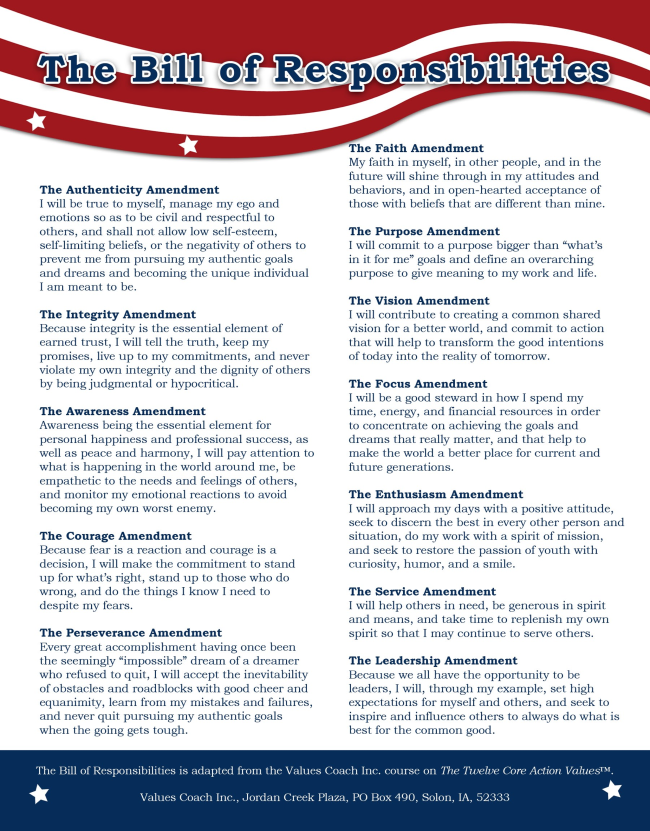
bill of responsibilities

Responsibilities:

“Webster’s Online” defines responsibility as:

1: the quality or state of being responsible: such as

a: moral, legal, or mental accountability

b: RELIABILITY, TRUSTWORTHINESS

2: something for which one is responsible.

Looking at the definition of responsible, I wonder if any of the extremists ever considered the idea of moral or legal accountability?   Obviously no more than they thought of the idea of reliability or trustworthiness with the constitution of the laws of the country they profess to love.  How ironic, that they were chanting USA, USA, as they attempted to tear down the foundations that America is built on.  Nothing is more sacred to American democracy than a free and fair election.  However, these fanatics were willing to follow their deluded leader in his attempt to overthrow an election that was certified free and fair by almost every court in the country. 

Responsibilities do not grow out of power.  Responsibilities are the currency that we use to pay for our rights.  Nothing is free in this world.  Rights come with a price tag.  The price tag is paid for in responsibilities that accrue to our “inalienable” rights.  For instance, I have a personal right to swing my hand.  However, I also have a responsibility to stop swinging it when it interferes with the mobility of another human being.  I can ignore this responsibility, but the consequence can easily be the loss of my own right.  In a society we have many laws which become the responsibility of people to obey.  In return for this responsibility, personal rights are granted for a wide range of endeavors and activities.  This is the quid pro quo of rights and responsibilities. 

Another example is my right to my own opinion.  I may dislike a particular minority.  I may well be prejudiced against another race or ethnic group and believe them to be inferior to my own group.  There is no law against prejudice.  Nevertheless, we have a responsibility while a member of a multi-cultural society to avoid discrimination against other people and groups. 

Discrimination is an overt act and not simply an innate prejudice.  A society can tolerate a great deal of latitude when it comes to the stupidity of prejudice, but that latitude disappears when individuals are subjected to harassment and abuse because of the color of their skin. 

It is sad that everywhere we look today, individuals in America are clamoring for their rights.  Yelling in restaurants, offices, planes, schools, and private businesses that they have rights.  Screaming that the constitution gives them the right to do something without any responsibilities.  They protest that they are going to contact a lawyer and intend to sue someone since their rights were stolen.  None of these people want to recognize much less acknowledge that they have responsibilities.  They want their rights, but they do not want to pay the cost of their rights. 

Conclusions:

we-are-a-nation-of-narcissists-300x198-1What is the solution to the problem that we are facing today?  A poisonous cultural stew of narcissism and entitlement driven by a rights only oriented mentality that thinks they are above responsibilities.  I have reached the point in this essay where it would be easy to say, “Sorry, I don’t have the answer.” Or else, I could now list several bromides which may or may not have much effect.  I have the following solution which I believe in 100 percent.  I doubt that it would be acceptable to Americans as too many people have grown privileged, lazy, and indulgent in this country. 

imagesMy solution is for a National Required Service (NRS) that starts at the age of 18 for every man and woman in America.  Upon finishing high school and before starting college, every American would need to attend the National Required Service.  They would have two options.  The first option would be to choose between a two-year service or a four-year service.  A two-year service would be the minimum.  The advantage of a longer service would lie in the educational benefits that would accrue.  Serve two years and you would receive two years of financial credit towards any public education institution of your choice in the country including vocational education as well as liberal arts.  Choose a four-year tour of service and you would receive four years of financial credit towards the public institution of your desire.

The second choice facing the individual entering the NRS would be which track to join.  The NRS would have two tracks.  A civilian track would involve services like the Peace Corp or the AmeriCorps.  A military track would use the various branches Army, Navy, Coast Guard and Air Force to recruit soldiers from the NRS enrollees. 

Students would not go directly into college or the work force from high school.  Every 18-year-old youth in this country would have a responsibility to give back to the country that sustained him or her. No one except someone with a severe medical or family emergency would be exempted from this service.  No matter how much money you had or how influential your parents were, you would be legally required to attend the NRS.  Many enrollees would benefit from a chance to experience life away from home and to grow up some before entering into college or vocational training.  They would further benefit by having enough monetary credits to pay for their education or training and not to come away from school in debt for the next twenty years of their lives.

This program would convey rights to millions of youths and also a sense of responsibility.  The lingering miasma of entitlement that exists today would be dispelled as American youth learned about their responsibilities to their country.  They would be gratified by the role that they played and proud to have served their country.  We do not need a war to teach people about service to their country and to help them obtain the pride that so many military people have achieved upon completing their tours of duty. 


A Tale of Two Men

download

It is a time of overwhelming greed.  It is a time of underwhelming altruism.  The hoards of poor and destitute and abused are still at the gates but the gates have been replaced by a wall.  The few that have managed to get over the wall or under the wall have found that their dreams of life, liberty and the pursuit of happiness have been replaced by barbed wire fences and security police intent on finding and locking them up in cages.  In truth, there are no streets paved with gold.  The gold has long since been stripped by billionaires and the American dream has been supplanted by a Trickle-Down theory which the billionaires are cynically prophesizing.

trickle-down1

Through the country stride two men.  One man driven by money laden with stocks, bonds, and coupons for a cheap cup of coffee.  The other man driven by compassion with a calendar always full of dates to help someone else out.  One man has plenty of gold, the other man has plenty of time.  No two men could be more different.  One man represents the America that was.  The other man represents the America that could be.  The two men frequently cross paths and to some extent even like each other.  There is no hatred between the two but a mutual inability to understand the other’s motives has always existed.  Each thinks that the other is of unsound mind or to put it another way is “out to lunch.”  This is their story then.  I tell it from a neutral objective.  Strangely, I like both men.

tom

Tom is a white middle class male in his mid-seventies.  Tom is driven by the almighty dollar.  Hardly a day goes by that Tom is not trading or looking at his stock portfolio.  Tom (everyone agrees) is “all about the money.”  Tom is a Trump supporter.  In many respects, he does not fit the typical demographic for a Trumpist.  Tom has gone to college.  He worked at a white-collar job and he has one of the largest houses in the town.  Tom always dresses well, speaks well and never utters a vernacular word.  Tom has never owned a motorcycle and I doubt he has ever shot anything in his life.  He is the epitome of decorum and propriety.  He has kept himself in good shape and looks physically fit.  Indeed, he looks several years younger than his age.  Tom is soft-spoken and is the last person you could think of who would ever get in an actual fight with anyone.  

Tom prides himself on his frugalness, some would say cheapness.  He will buy a coffee at the local coffee shop and when it is time to pay, he will search the internet with his smart phone to find a coupon that will allow him to get 50 percent or so off the cost of an already low-priced cup of coffee.  But greed cannot be measured by cheap cups of coffee.  In some respects, it is difficult to separate greed from fear.  Many a conversation with Tom, I walked away thinking that it is not so much greed that drives Tom as fear.  Fear that the immigrants might take his house away.  Fear that women will take his job.  Fear that minorities will get his share of the America pie.  Fear that LGBTQ people will gain access to his bathroom.

money 1 counter

If it is true that Trump supporters are driven by fear and greed, then Tom (regardless of demographics) is the quintessential Trump supporter.  Tom defies the category of “Trump Deplorable.”  You can have an intelligent and civil conversation with Tom on many a subject.  Nevertheless, he defends Trump no matter what the issue.  Trump is his God and can do no wrong.  Despite Tom’s penny pinching, he is proud enough of his Trump affiliation that he has spent the money to purchase some Trump paraphernalia.  He proudly wears both a Trump hat and a Trump t-shirt.  This always puzzles me. 

Tom has never suffered poverty.  He lives well and has a beautiful lake front home with a mortgage long paid off.  He drives a luxury car with a brand image.  I am sure that neither NAFTA nor Globalism has ever been of undue stress to his finances.   Quite to the contrary, Tom has undoubtedly benefitted from the good that has come out of these policies.  Unlike the white rural blue-collar worker who saw his job and company go overseas, Tom has prospered in the 21st Century economy. 

ron 1

Ron is also a white male in his mid-seventies.  Ron did not go to college.  Ron was a blue-collar electrician until his retirement.  Ron grew up on the wrong side of the tracks.  Ron rides a Harley Davidson and when he was younger went on many a deer and elk hunting trip.  He still proudly has an array of rifles that he seldom now uses.  Ron has even won some rifles and given them away.  Ron can be difficult to talk to.  He is passionate about his position and not always willing to listen to others.  You cannot always describe his discussions with others as civil and polite.  Some people would describe Ron as uncouth.  He cares little about fashion or image.  He usually looks like he needs a good haircut.  If you did not know Ron, you would have no difficulty in putting him down as a Trump supporter.  You would be dead wrong.

Ron is a generous man.  He is one of the most generous persons I know.  Ron is not rich.  He has never purchased a brand-new car and he does not live on a lake.  Ron does not have a great deal of money, but he will often pay for my coffee and the coffee of others at our table.  Ron is most generous with his time.  Never a day goes by that he is not doing a favor for someone.  His generosity extends well beyond his immediate family.  Three years ago. Ron and his wife were given an award as Volunteers of the Year.  If anyone needs something or help with anything, they will call Ron.  I do not think of myself as “ungenerous”, but I am loath to admit that I sometimes think Ron is too generous with his time. 

favor image

Politically, I would describe Ron as an independent thinker.  Ron gets a good pension from his former IBEW union and if there is anything he is proud of and will defend to the nth degree, it is unions.  He despises Trump and the Republican politics of greed and Trickle Down.  However, he does not defend the Democratic party either.  He has said that the Democrats sold too many Americans down the drain with NAFTA and Globalism.  It would have been one thing to pursue these policies if there had been some type of life jacket or safety net for the American workers displaced but the Democrats as well as the Republicans simply ignored the side effects of these policies. 

Ron is no racist, no sexist, no hater of immigrants.  If you talk to Ron about these subjects, you will find a man that is not fearful or belligerent towards others.  Whereas Tom would lock America down, Ron would tear the walls down.  Tom will deplore violent protestors.  Ron will deplore the violence that lead to the protests in the first place.  Ron loves to travel and meet new people.  Tom spends most of his days in the same town that he has always been and traveling the same safe pathways that he has always traveled.  Ron has taken several foreign students into his home on an exchange program and is always eager to hear stories about other people and other places.  Tom has a child who is developmentally disabled that he is a loving and kind father to. 

A tale of two men.  Both men married.  Both with families and children.  Neither man a criminal or drug addict or law breaker.  Both men admired by others in the community.  Both men loved by their families.  Both men with friends who speak and think well of them.  Men who are on opposite sides of any imaginable political spectrum. 

A time in America when the divisions seen to outweigh any points of commonality.  When the divisiveness and polemics drive everyone either right or left.  When disagreement is called evil and rudeness and bullying substitute for politeness and civility.  When you are my enemy if your politics disagree with mine.  When truth is now called a lie and facts are now called fake. 

old men drinking coffee

Ron and Tom still sit down mornings at the coffee shop and talk to each other.  There is often passionate disagreement.  Ron will storm and foam at the mouth.  Tom will quietly state his position and seem somewhat amused at Ron’s vehemence.  I am not sure who has the most difficulty understanding the other but watching Tom and Ron interact is something like watching a TV sitcom.  Are Tom and Ron following a script that the rest of us do not know about?  Perhaps there is a script written somewhere that we are all following.  

“Aspire to decency. Practice civility toward one another. Admire and emulate ethical behavior wherever you find it. Apply a rigid standard of morality to your lives; and if, periodically, you fail ­ as you surely will ­ adjust your lives, not the standards.” ― Ted Koppel

Why Vote for Biden and Harris?

Yes, I know, the Democrats will take our guns away.  They will let the starving hordes of immigrants ravage our country and steal our jobs.  The Democrats will support the killing of unborn children.  They will raise our taxes and prevent us from becoming rich like Trump.  The Democrats will allow unions to take control of our businesses and destroy free enterprise. 

Last week, my wife and I drove to Tomahawk Wisconsin to visit some friends.  We drove via Hwy 8 and returned via Hwy 64.  Just for fun, we decided to count political signs going and coming.  Going we limited our sign counts to 1 sign per home passed.  Most if not all Trump supporters have more than one sign in their yards.  Some have flags and gigantic Trump signs.  We even passed two guys on a street corner waving Trump signs.  When we arrived at Tomahawk the score was Trump signs 41 and Biden signs 21.  On the way back, we counted all signs regardless of how many were on one property.  The score was 219 Trump signs to 25 Biden signs.  Nearly a 10-1 advantage.  Clearly a lot of people in rural Wisconsin like and maybe even love Trump.  Non-Trumpers are confused, perplexed, and bewildered.  What is there to like about Trump they ponder just as many people ponder the heavens and stars?

I have always been an independent.  I vote the person, not the party.  I sometimes call the Dems, the party of Wimps and the Republicans, the party of Greed.  I think of both parties as the Democans and the Republicrats or Tweedle Dee and Tweedle Dum.  What did the Democrats do for the rural white non-college working class older voter?  Support for diversity, Gay marriage, NAFTA, Immigration, climate change and social welfare programs do not hit the mark with people in the hinterlands like Northern Wisconsin. 

So along comes a Savior riding a Mercedes golf cart, living in a Florida mansion befit for a king and supporting a trophy wife, the envy of every male or at least straight male in America.  He will bring jobs back, keep out the ravaging hordes of rapist immigrants, stick it to the Chinese, lower taxes, make everyone rich again, protect our unborn children, keep at least one gun in every house and perhaps most of all “drain the swamp.”  The swamp as we know it is full of college educated brainwashed left-wing pedophiles and socialist bureaucrats.  People who do not really work for a living but are blood suckers thriving on your tax money.  None of your friends, relatives or neighbors live in the swamp.    

So, given all the great things that Donald Trump will do, why will I vote for Biden and Harris?  Simply because character matters.  The ends can never justify the means.  I have no illusions that Biden will drain the swamp or that he does not have his warts and blemishes.  He is no hero to me, nor do I foolishly believe that he will make America great again.  The only thing that will make America great or keep America great is when 100 percent of Americans get off their butts and get involved in the political process.  In the last presidential election, only about 61 percent of Americans took the time and effort to pull themselves away from their TV screens and vote.  We need to make changes in government, but it will only happen when we take the political process out of the hands of the lobbyists and career politicians.

 So why will I vote for Biden and Harris?  Because character does matter.  Morality matters.  Compassion matters.  Concern for people more than money matters.  Appealing to my humanity and not my fears or greed matters.  I loath bureaucracies.  I too want a safe place to live.  I want to see jobs for people that want jobs and I don’t want to see freeloaders given a handout.  But I also believe that Jesus said to feed the hungry and help the poor:  “If anyone has material possessions and sees a brother or sister in need but has no pity on them, how can the love of God be in that person?”  1 John 3:17. I do not think this means only your neighbors or your friends or relatives.  I think it means strangers, foreigners and people who may not be the same color or religion as we are.  I do not think Jesus wanted us to discriminate between Black people, Red people, Brown people or any other people on the face of the earth. 

So why will I vote for Biden and Harris.  I think we made a big mistake four years ago.  The swamp is even bigger now than it was then.  The greed in Washington is ever worse.  The political infighting ensures that nothing gets done.  The lawyers seem to control everything, and corporations have grown richer on the backs of the working people that live in both rural and urban areas.  These fat cat corporations have no loyalty to America but are “International” in scope.  “America First” sounds great to many of us but it is a selfish policy that appeals to our sense of fear and greed.  We need a leader with a vision that embraces humanity and does not demonize people or pit one group against another no matter where they live.  We need a leader that respects all people and not just his base of supporters and the sycophants that in my day were called brownnosers for good reason. 

I have been as disappointed by the Democrats as many of you have over the years.  However, I will vote for Biden and Harris because I get a sense of character and integrity from both of these two candidates.  They are not heroes.  People get the government they deserve.  If you want heroes or heroines, watch the Avengers, or read Marvel comic books.  But character, morality, compassion, and humanity are the only things that have ever made America great.  Vote for who you believe has the right stuff but vote my friend. 

Christians Now Want Trump Removed

114421

“Whether Mr. Trump should be removed from office by the Senate or by popular vote next election—that is a matter of prudential judgment,” said the piece, written by editor in chief Mark Galli. “That he should be removed, we believe, is not a matter of partisan loyalties but loyalty to the Creator of the Ten Commandments.”

Trump Must Go

Galli, who will retire from the magazine Jan. 3, wrote that the facts leading to Wednesday’s impeachment of Trump are unambiguous.

Please share or reprint or repost. 

https://www.christianitytoday.com/ct/2019/december-web-only/trump-should-be-removed-from-office.html?fbclid=IwAR17b4-tkpZTL_smT-vXkmoAk933UO9eyDhzIq7PRvACMYWUYd0WgqT4dAs


Four Things You Should Know About Facebook and the World

I have lost track of how many years I have been using Facebook.  However, I have not lost track of all the times that people say to me “I never use Facebook (FB) because it is etc., etc.”  They then proceed to give me a litany of reasons why they: 1. Have never used Facebook or 2. Why they think Facebook is useless.  I have found the following four beliefs to predominate among the reasons why Facebook has been deemed as either useless or even dangerous.

  1. Facebook is a waste of time. It has too much stupid stuff and trivia.

I would be richer than Mark Zuckerberg if I had a dollar for every time I have heard “What do I care about what people had for breakfast today.”  Great, you don’t want to know where I went, what I did, who I saw and what I eat?  Use your little finger to scroll down or push delete or go to another site.  I have lots of friends who do care and who want to know what I am doing.  I have had many comments on my FB site such as “It was so much fun to follow you on your trip.”  “I love your postings.”  “Thanks for sharing.”

If you think my postings are trivial, meaningless, inane, or asinine, great.  I respect your opinion.  So “Defriend” me.  Go elsewhere for your trivia.  Find your daily dose of bullshit someplace else.  But don’t criticize something you have never tried or condemn others because you find their lives not worth knowing about.

  1. Facebook can’t be trusted. They will sell valuable information about me.

Facebook is a business first and foremost.  How do you think Zuckerberg got so rich?  FB is full of advertising and advertisers want to know everything about you, so they can sell you stuff you don’t think you really need.  They will convince you that you really need it.  This has been going on since Moses convinced Pharaoh to let his people go.

Do I trust FB not to sell my innermost secrets?  Do I trust Zuckerberg not to share information about me with advertisers, political marketers, vendors, pollsters and other information seekers?  No more than I would trust hanging from the Empire State Building with my wife’s sewing thread.  You must either be deaf, dumb or blind if you think you can trust anyone selling you something or giving you something for free not to have some hidden catch or some gimmick to get more money from you.  Did you ever notice that FB is free or has that escaped your attention?  What is free?  Do you really believe it is free?

As far as information privacy goes, observe the following that I tell all my students and you will probably not have much to worry about.  It goes like this: “If you want to protect your privacy, then do not text, tweet, photo, Instagram, email, voicemail or say anything in public that you would not put up on a billboard in downtown New York.”  Period.  That is the only way that you will protect your privacy today and I doubt even this admonition is full proof.

  1. Facebook is full of lies and “false” facts.

So, you want to make decisions based on evidence, data and facts?  Facebook is no doubt full of bullshit, opinions, innuendo, conspiracies, lies and unsubstantiated claims beyond counting.  The lies on FB are more numerous than the stars in the sky or the molecules in the universe.  However, I will tell you a secret. There is no evidence, data or facts that are 100 percent true.  Everything we know about the world is only based on theories buttressed by repetition or replication.  The more our predictions happen, they more confident we are they are accurate.  However, science in like the weather.  You don’t count on the weather forecaster being 100 percent accurate unless you are a fool.

Throughout history, we have seen theories and facts overthrown by newer theories, newer facts and newer evidence that help better match reality with theory.  The world was once flat, then it was round, now it is more elliptical.  Our knowledge of everything keeps evolving and changing.  Some people see it as a search for the TRUTH.  However, the TRUTH does not exist or if it does, it is only like the wind.  It will blow one way today and another way tomorrow.  Facts, data and evidence have a probability of being accurate.  They will never be 100 percent true.  My father used to say, “believe nothing of what you hear and only half of what you see.”  I have found this to be moderately good advice.  It works very well on FB and on the Internet in general.

  1. Facebook should be a social media and not political.

“John, you are too political.”  “I don’t want to hear your rants and raves.”  “Why can’t you keep your politics out of your Facebook site.”  “Facebook is for family and friends and should not be political.”

The splash page on my FB site now shows a picture of Elie Wiesel and a quote by him that reads “To remain silent and indifferent is the greatest sin of all.”  He also said, “We must take sides.  Silence encourages the tormentor, never the tormented.”  Before this, my splash page had a picture of Martin Luther King and a quote by him that read, “Our lives begin to end the day we become silent about things that matter.” “In the end, we will remember not the words of our enemies, but the silence of our friends.”

I believe that living in a society and hence to be social means to be political.  If you live in a society, politics is the coin of the realm that defines the rules and procedures that govern the interactions between human beings.  No one can be apolitical in a society.  To believe so is to lie to yourself.  I put my politics out there.  I don’t care if you like them or if you don’t.  I want others to know that there is someone in the universe who probably feels like they do.

Before Trump was elected, I put up a Hillary sign in my front yard.  My neighbor who was also a Hillary supporter came over to warn me.  She said “John, I would not put that sign up in this town if I were you.  It could be dangerous.”  I decided to talk this over with my wife Karen.  I did not feel that I had the right to jeopardize her safety as well mine.  She said that she supported keeping the sign up.  My decision was sealed by her willingness to risk whatever might happen by putting a sign up in a mostly pro-Trump rural town in Arizona.  A week or so later, one of my good friends who lived nearby saw my sign.  She asked me to if I could get her one.  I did get her a sign and I think we might have had the only two Hillary signs up in our town.

I use FB as a means to share with others who in these rather trying times might have fears of speaking out or who might feel that they are alone.  I want my friends to know that I am political and that I share with some of them the same beliefs, values and ideas that they have.  I firmly believe that we cannot change our present problems or deal with issues by silence.  However, if you don’t like my politics or ideas then you can do as so many others have and simply defriend me.  Frankly, they say we are defined by the company we keep.  I would rather keep company with those who share similar convictions about life, liberty and the pursuit of happiness.

Time for Questions:

Do you use Facebook?  Why or why not

Life is just beginning.

“You should protest about the views of people you disagree with over major moral issues, and argue them down, but you should not try to silence them, however repugnant you find them. That is the bitter pill free speech requires us to swallow.” — Julian Baggini


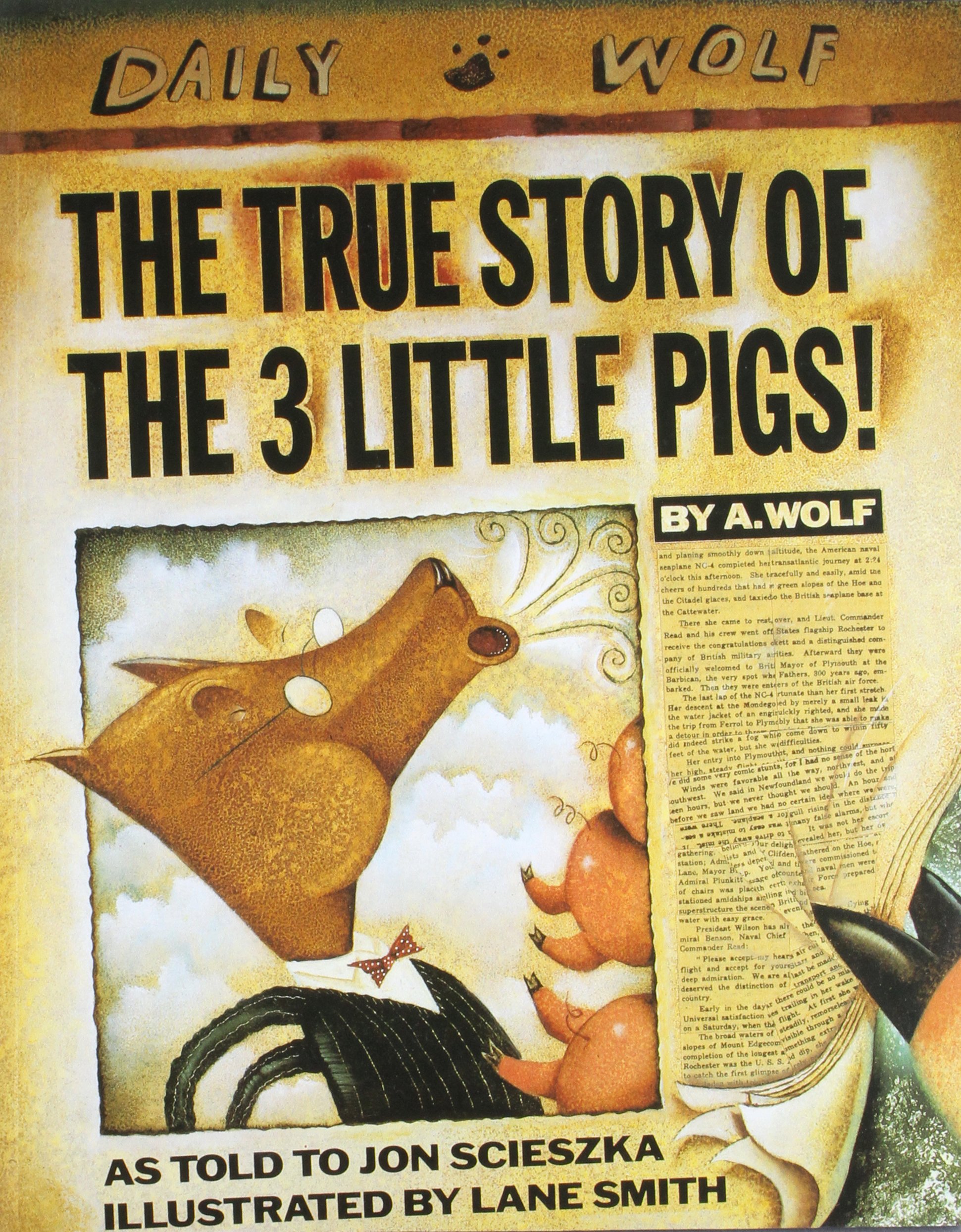
The True Story of the Three Little Pigs:  Well, Not So Little!

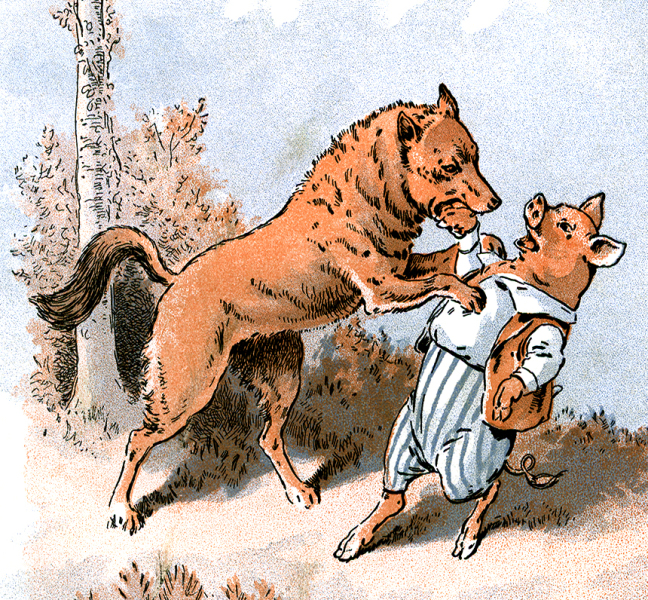
pigs and wolf

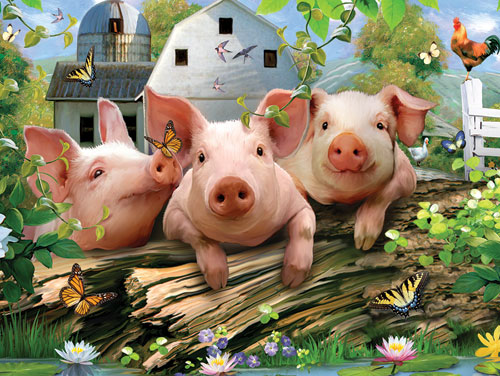
This is the true story of the three little pigs.  Actually, they were not so little at all.  Each of the three pigs weighed at least 400 pounds but that is about average for a real pig.  Now we all know that pigs are very smart and these three were no exception.  Joanne, the youngest had a Ph.D. degree in physics.  Paul, the middle in age had a Ph.D. in world literature and Jayla, the oldest sibling had a Ph.D. degree in philosophy.

866_Three_Little-Pigs (2)

They lived in a beautiful neighborhood and each of them was smart enough not to build their houses with straw or wood.  All had sturdy brick houses that no wolf in the world would have been able to blow down.  Nevertheless, the mean old wolf who lived one block over was always plotting on how he could eat the three “not so little” pigs.

One day the wolf, whose name was Jack, was searching the internet for ways to trap pigs.  He was spending quite some time on Facebook and LinkedIn to search for personal information on Joanne, Paul and Jayla.  He believed that the more he learned about the personal habits of each pig, the more chance he would have to catch them.  The internet was very helpful in his efforts.  He noticed that each of the three pigs loved to play on-line puzzles and word games.  He found that they seldom lost a contest with any other on-line gamers.  They won so many games that they had become very conceited about their intellectual prowess.  This gave Jack an idea.

wolf

Jack thought he could create an intellectual challenge for each pig.  He would trap them when they lost the challenge.  First, he would need to create a fake internet persona and a fake game site.  He had just the idea that he thought would work.  He would call himself “Jack the king of online gaming pigs.”  This arrogance would be sure to annoy the conceited pigs.  He would then issue on on-line challenge but he would only accept the challenge from the three pigs.

He would bet each of them that they could not correctly answer three of his questions.  If they did get all three right, he would work for them for a week for free.  If they missed any one question, they would have to work for him for a week for free.  Of course, when they came to his house to work for him, he would grab each pig and eat them.

wolf eating the pig

A week later, Jack had set up his website and a picture of him that showed a large handsome looking male pig.  His banner had all sorts of pictures of gold coins, silver coins, jewels, exotic cars and exotic locations.  Right in the middle of the banner was the large words “Jack, King of On-Line Gaming Pigs.”  To the right side of the page was the picture of a large flashing gold treasure chest.   Inside the chest, were the words printed in bright colors: “I challenge you.  I know more than you do about anything.  Click on to accept my challenge.”

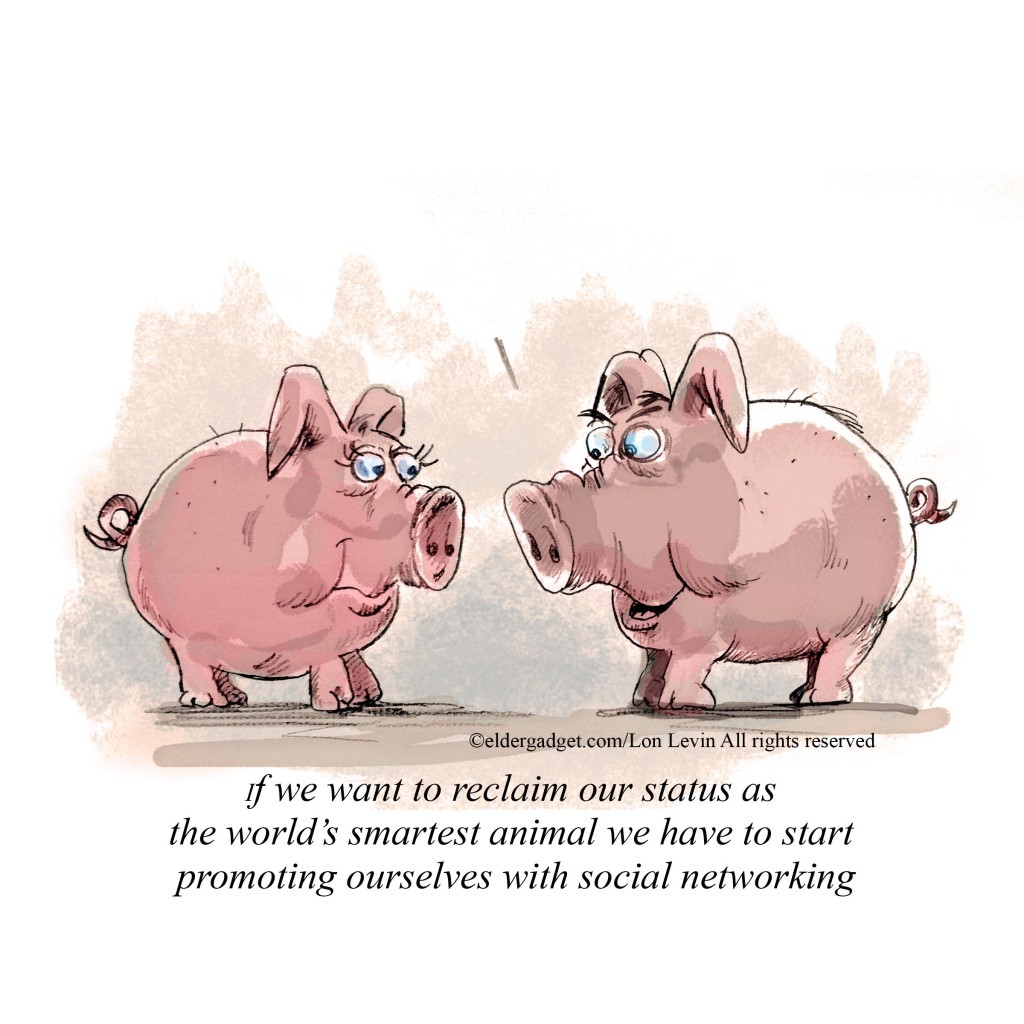
social networking pigs

Upon clicking on the treasure box, the description of the challenge and the rewards were printed.  It was stated very clearly that the challenger would have the right to select the subject matter.  Jack felt that this latter stipulation would insure that the bait would be taken since each pig would be sure to think that no one could be smarter than they were in their specialized area of expertise.  Jayla would no doubt select questions on philosophy while Paul would select questions on world literature and Joanne would select questions on physics.

Joanne was the first one of the three pigs to notice the online challenge.  “What”, she thought, “Who is this arrogant joker that thinks he is so smart.  I will show him.”  She sent back a message which said “I accept your challenge.  The subject is physics.  Send me your questions.”

Jack sent the following questions.  Each question had to be difficult so as not to arouse suspicion but not too difficult.  At least, until the third question.

First Question:  Do heavier objects fall more slowly than lighter objects?”

Joanne’s Answer:  No. If an object is heavier the force of gravity is greater, but since it has greater mass the acceleration is the same, so it moves at the same speed.

Second Question:  What is the difference between energy and power?

Joanne’s Answer:  Power is the rate of energy being generated or consumed.

“Well,” said Jack “you have been correct on the first two questions.”  Now thought Jack, I will give her the most difficult and impossible question to answer since my thought question is a paradox.

Third Question:  We place a living cat into a steel chamber, along with a device containing a vial of hydrocyanic acid. There is, in the chamber, a very small amount of hydrocyanic acid, a radioactive substance. If even a single atom of the substance decays during the test period, a relay mechanism will trip a hammer, which will, in turn, break the vial and kill the cat. Is the cat dead or alive?

Joanne’s Answer:  That’s not fair because it is a paradoxical question.  According to quantum theory, the cat is both alive and dead until I open the box and look.  You cannot know which state the cat is in without opening the box.

Jack’s Reply:  Well, you agreed to the questions and now you must work for me for a week.

Well, Joanne thought, he’s not such a bad looking pig so maybe it will be fun.

She went to the address that Jack gave and knocked on the door.  Just as soon as Jack opened the door he pounced on poor Joanne and in a few bites entirely gobbled her up.

Next to reply to Jack’s challenge was Paul.  Jack had changed the picture on his web site and now presented himself as a young very attractive looking female pig.  He changed his internet name to Jacqueline.  Paul saw the picture and even without the challenge was rather intrigued by the picture of Jacqueline.  Paul replied to Jacqueline’s challenge and requested world literature as the subject for his three questions.

First Question:  Who wrote the book “The Importance of Living”?

Paul’s Answer:  That’s easy.  It was Lin Yutang

Second Question:  How many lines does a Shakespearean sonnet have?

Paul’s Answer:  Another easy one.  It has 14 lines.

Now thought Jack for the paradox question.  Paul thinks he is so smart.  I can hardly wait to have more roast pork for dinner.

Third Question:  This sentence is not a paradox. – True or false

Paul’s Answer:  There is no way I can answer that question.  First, the sentence cannot be false. If it were false, then it would not be a paradox, since any sentence that is a paradox must be true.  But it says that it is not a paradox, so this would mean that what it says is the case, and hence it would be true.  This is a contradiction.

Jack’s Reply:  Well, you played the game and you could not answer all three questions.  So you lost.  When do you want to come over to my house and start working?

Paul thought, well Jacqueline looks pretty cute and I would like to meet her anyway and so he replied “How about I come over to your place tonight and we have dinner together.”

Jack replied “Great, I love the idea.  I will make a wonderful meal for us together.”

That was the last that anyone saw of Jack the pig with a Ph.D. in world literature.

Two more weeks went by and Jack changed his website back to a picture with a handsome young male pig with his own name of Jack.  He felt sure that with the challenge and the picture of a good-looking pig, he would soon entice Jayla to take up the challenge.

Now Jayla had not seen her siblings for the past four weeks.  She knew that they loved to play on-line games and she had not seen them around any of the usual game sites.  She surfed the web each day but could not find any games they were playing.  It appeared that the last game any of them played was at the site of some arrogant guy who billed himself as the King of On-line Gaming Pigs.  Her web skills showed her that both of her siblings had accepted his challenge.  She pondered the coincidence that since accepting the challenge, she had not seen either sibling again.  This raised some suspicions in her mind.  Nevertheless, she decided to accept the challenge but with a bit of caution.   She posted her acceptance on the website and stated her chosen subject field as philosophy.

SmartPIG

Jack was overjoyed.  He loved roast pig and was ready for his third pig of the year.  He would be very cautious and not try to tip his hand so he researched his three questions very carefully.  He was quite sure that the third one would be unanswerable.

First Question:  Do states have moral authority over their citizens?

Jayla’s Answer:  Only over those citizens who make an uncoerced decision to give that authority to their state, which I think is almost never

Jack Replies:  Ok, I will concede that one to you. 

Second Question:  Plato’s definition of knowledge was?

Jayla’s Answer:  Justified true belief.

Jayla had gotten the first two right but Jack was now ready to spring the paradoxical question on her.  There was no way she could get the right answer.

Suddenly, Jack noticed a text that appeared on his computer screen.  Jayla was requesting a short break before the next question.  Jack could not believe his eyes.  Jayla suggested that Jack come over to her house tomorrow night for dinner and bring the third question with him.  This was too good to be true.  He would get a free dinner before he ate his third pig.  He agreed and Jayla texted him her home address.

Now, if you know anything about philosophy, you know that it means the love of wisdom.  Jayla, was the wisest of the three pigs and she had prepared for the unexpected.  Jack the wolf came dressed up in a pig disguise but Jayla saw right through it.  She was not entirely surprised since she had long suspected some treachery was involved.  She invited Jack in.

“Jack,” said Jayla, “can I give you a drink before dinner?”

“Sure” replied Jack.  Jack thought he might as well eat a free meal before he ate Jayla.

Jayla, knowing full well that Jack was a wolf disguised as a pig prepared him a special martini mixed with some knock out drops.  Jack would not know what hit him.

Jack took the drink thinking all the time that this was too good to be true.  The next thing Jack knew he was waking up with a splitting headache.  As he tried to move his muscles, he found that he was tied by all four legs to a sturdy oak chair.  Jayla stood over him with a baseball bat.

We have now come to a tricky point in my story.  We have two dilemmas to solve before we can reach a conclusion.  The first problem is how do we bring Jayla’s two siblings back?  We know the wolf ate both but that is beside the point.  We can’t have a fairy tale where two siblings get eaten and do not return.  It’s just not done.

The second problem is what do we do with the big bad wolf?  Do we kill him, let him go, castrate him or what?  We need to have some type of fitting denouement for Jack the wolf.  Again, since this is a fairy tale, we probably need to rule out killing him or castration but I don’t think we can just let him go.  Not much drama in that anyway.  Well, let’s tackle first problems first.  We will start with getting Jayla’s two siblings back.

Jayla took the bat and whacked the big bad wolf right in the stomach.  Lo and behold, the wolf gave a big burp and out popped Paul.  One more smack to the stomach and out popped Joanne.  The siblings were all so happy to see each other and Jayla that they hugged and hugged for a mighty long time.

Ok, so they were eaten.  It’s a fairy tale and I can do anything as implausible as I desire.  I mean you did not complain when a wolf ate a 400-pound pig, so don’t start nitpicking now. 

Once pleasantries were over, the three pigs sat down to discuss the fate of Jack the big bad wolf.  Paul wanted to cut him into many pieces and scatter him all over the neighborhood.  Joanne wanted to skin him alive and use his fur for a rug.  Jayla cautioned restraint.  “Remember”, she said “This is a fairy tale and we can’t do any such gruesome things to the big bad wolf in a fairy tale.”  Jayla suggested that they all do an internet search and see what kinds of options for dealing with pig eating wolfs they might find.  They would each Google some strategies and then discuss ideas.

A few hours went by and both Paul and Joanne each came up with an idea.  Jayla was still undecided and had not found any that really thrilled her.  Paul suggested that they put Jack in a box and ship him to Antarctica.  Joanne thought that maybe through behavioral modification they could convince Jack that he did not want to eat a pig.  Jayla thought both ideas were not a fitting end to a good fairy tale.  She then had a brainstorm.  We will have a contest.  Here is Jayla’s idea.  Our readers will help us find a fitting conclusion to this story.

Everyone who reads this story is invited to suggest a conclusion.  We need you to take a few minutes to think of what the three pigs can do with Jack the big bad wolf so that we will have a fitting end to this tale.  Put your idea or ideas for an ending in the comments section.  The three “not so little” pigs will select their favorite reader suggested idea.  If your idea for an ending is selected you will win twenty-five US dollars.

If you submit an idea, be sure to include your name, address and/or PayPal box number.  We will send you a check or deposit the money in your PayPal account. 

We look forward to getting your ideas as to what we should do with Jack, the big bad wolf.  We cannot keep him tied up forever, so please write soon.

Time for Questions:

What will we do with the big bad wolf?  Do you remember how this story ended in the original version?  Do you like fairy tales?  Why or why not?  What is the point of a fairy tale?  Is there a point to this story?  What is it?

Life is just beginning.

“If you happen to read fairy tales, you will observe that one idea runs from one end of them to the other–the idea that peace and happiness can only exist on some condition.  This idea, which is the core of ethics, is the core of the nursery-tales.”  ― G.K. Chesterton


Tommy:  A Boy for all Seasons

This is a story about my best friend in high school.  His name was Thomas Donnelly.  This story took place over fifty years ago.  I still think of the influence that these events have had on my life.  Many of you will be repelled by the story that I narrate.  If you can suspend your morality, you might be able to accept that the culture I grew up in made these events very normal even if you do not consider them to be moral.

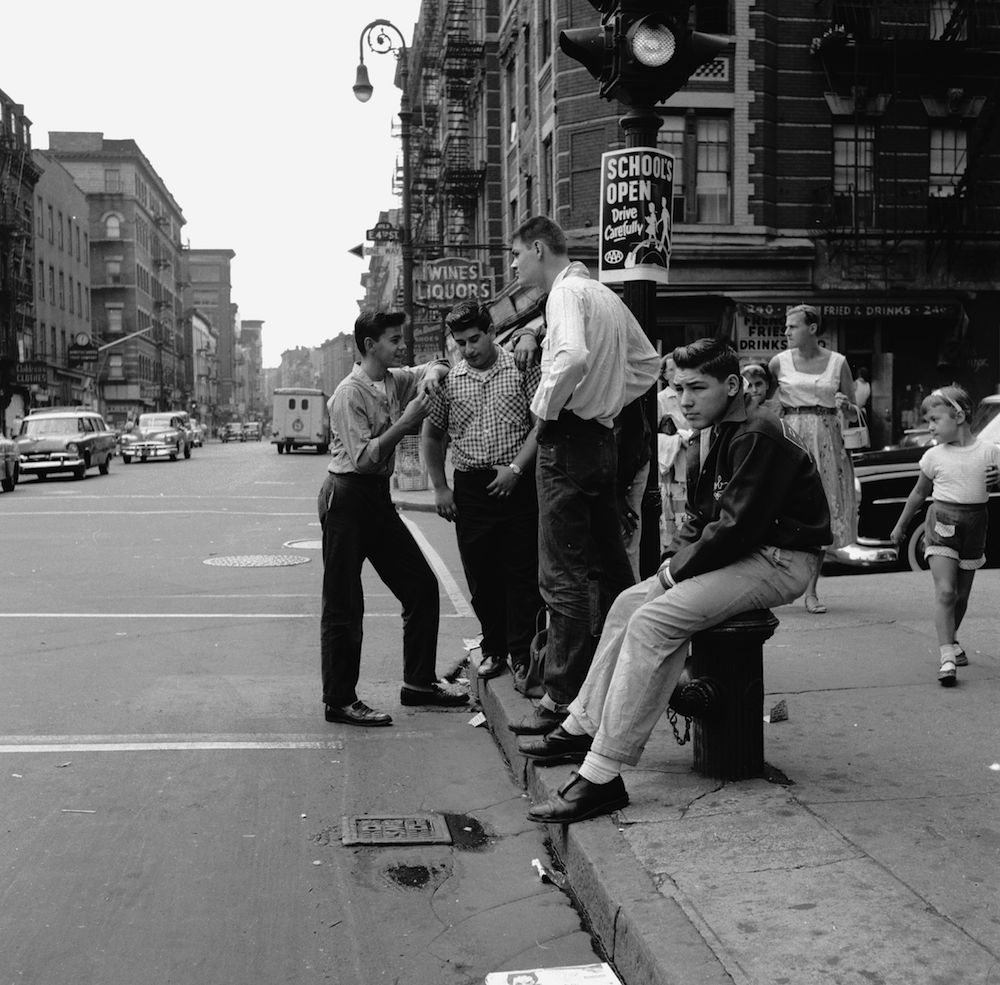
Street Corner Gang

It happened one hot Saturday afternoon in the summer.  I was hanging out on our Manton street corner.  As with all Italian teenagers, we hung out in a certain geographic area and this association led to our identity as the “Manton Gang.”  Manton was a suburb of Providence R.I. and a primarily Italian neighborhood.  My father was Italian and my mother was Irish.  It was just the reverse for my best friend Tommy.  His mother was Italian and his father was Irish.  Nevertheless, anyone with Irish or Italian blood was accepted into our street corner gang.

At fourteen to eighteen years of age, few of us were interested in anything except gambling and sex.  Gambling tended to be a regular event on the corner where we hung out but sex was much more episodic.  Good Italian girls in the sixties still did not have sex outside of marriage.  This left us to find those “bad girls” whose discrimination did not tend towards marriage or even long-term love affairs and who were much less choosy in terms of selecting “affairs of the heart.”

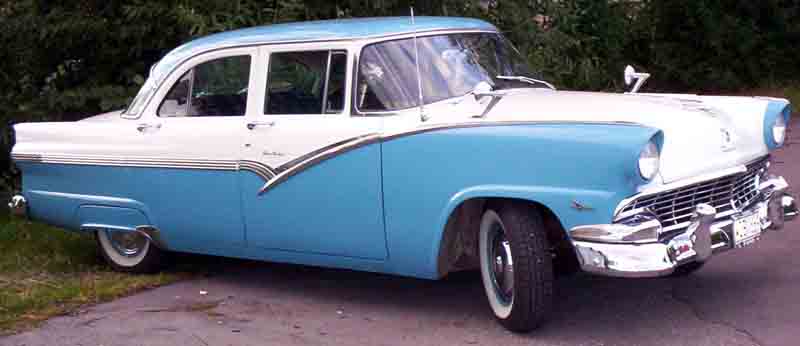
1956_Ford_4-Door_Sedan

Tommy and I were sitting on the corner discussing nothing important when a blue and white 56 Ford four door Fairlane pulled up to the curb and started honking.  At first, we did not recognize anyone in the car.  Two guys were in the front seat and no one was in the back seat.  We finally recognized Dave and Bob.  Dave was an infrequent corner member but Bob was a regular.  We sauntered over to the car.  It was always important to look cool and nonchalant when we were growing up.  As we approached the open window on Dave’s side, he yelled out.  “Hey, you guys want to get laid?”

“What’s up” I said.  Dave replied, “Get in and I will tell you on the way.”  Both Tommy and I jumped in the back seat.  Bob already had shot gun.  Dave gunned the accelerator and off we went.  “Okay, so where are we going” asked Tommy.  Bob said, “Well, there is this chick and she is hot to go with anyone who comes over to her house.”  “You mean she will take all of us?  What’s wrong with her?” I wanted to know.  Bob continued, “Who knows.  She is just really open to more than one guy.”  “Well, where are her parents,” I persisted.   “She lives with her dad who is a police chief” said Dave.  “What, are you crazy” both Tommy and I said in synchrony.  “Don’t worry” said Bob, “her dad will not be home.”

new england houseThe idea of sex in our minds easily overrode any caution or concern about getting caught by her father.  We arrived at her house.  She lived out of town somewhat in Scituate which was a more rural area of R.I. in the sixties.  When we arrived, Bob said “I will go in first and check things out.  If it is okay, you guys can come in.  Bob went inside the small average looking New England Colonial house with two upper dormer windows and came out a few minutes later.  “OK guys” Bob said, “She is willing.”  We all trotted inside the house to the first room which was a kitchen with a small table and four chairs.  Dave, Tommy and I sat on the chairs and Bob headed up a small staircase.  “I will go first” said Bob “and Dave is next.  You and Tommy can decide who goes after Dave.”  “Oh”, said Bob, “her name is Barbara and she likes to be called Barb.”  No one challenged this order of affairs as it was taken for granted that since Bob had set this up, he had first dibs.

Bob went up the stairs while Dave, Tommy and I just sat and kibitzed.  I wondered what was in store for me when I went up the stairs.  Bob came down about twenty minutes later looking quite proud and content.  “She likes to talk a little before” said Bob, “so you have to be a little patient.  But be persistent and she will get on with it.”   It was Dave’s turn next and he wasted no time going up the stair case.  Sometime later Dave came down, also looking very proud and content.

Tommy and I decided that I would go next.  Up the staircase I went and into a small bedroom where I found Barb half-dressed and sitting on the edge of the bed.  She was a very attractive young girl of sixteen or seventeen years of age.  She had long brown hair and a small frame that was nicely curved.  She had a very pretty face and could easily have been a cheerleader.  She was probably about five feet four inches in height but it was somewhat difficult to tell as she was sitting cross legged on her bed.

sad girl on bed

I introduced myself.  We started some small talk and I learned that her mother had left her father some time ago and that she now lived alone with her dad.  She had no other siblings.  Her dad was very strict and would not let her date.  She said that he scared most of her friends away and was very difficult to live with.  I sensed that her escapades today were a chance for her to rebel against her father’s strict sexual codes.  She was willing to go all out and did not care about any side effects.  No birth control or sexual disease prevention even came up as an issue.

We small talked for about a half hour or so and I sensed that I had better get on with the action or she would talk forever.  A real man talks less than he acts and I had talked longer than most real men would have.  I started to lay Barbara down on the bed.  She put up no resistance and meekly laid back against the sheets.  I placed my body down over hers but before starting to remove any of our clothes, I gazed into her eyes.  They were brown and sad.  I stopped to think.  This poor girl is looking for someone to love her and does not really know how to go about it.  I would just be taking advantageous of her.  I can’t do this.  I lifted her back up and quietly left the room.  She never said a word to me and I left without another word.

Feeling very guilty, I walked back down the staircase.  I did not say much when I met Tommy.  Both Dave and Bob had gone back out to the car and were now playing cards in the front seat.  Hi Low Jack was a popular game on the corner and we played it for money whatever chance we had.  I said to Tommy, “It’s your turn.”  Tommy went up the staircase and returned about thirty minutes later.  We silently left the house and went out the front door to the car.  I never saw Barb or that house again.

guys in car

We piled back in the car with Dave and Bob.  There was some minor discussion about Barbara and how hot she was on the way back to the corner but most of it took place between Dave and Bob.  Neither Tommy or I said I word.  Truth be told, I would never have admitted to either Dave or Bob that I did not have sex with Barb.  Tommy and I were dropped back at the Manton Street corner where our friends all hung out and Dave and Bob drove off together.

Tommy and I sat in silence for a while.  I finally broke the silence and asked Tommy “well how did it go?”  Tommy looked very pensive and replied, “I did not do a thing with Barb except to talk to her.”  I was somewhat stunned as I figured that I had wimped out but that Tommy (who was one of the best-looking guys on the corner) would have scored a home run in sixty seconds flat.  I asked Tom “why?”  I did not tell him that I had also struck out.  At the time, that is how I felt.  Like a batter who comes up to the plate, takes three swings and strikes out.

Tommy quietly replied “I did not want to take advantage of her.  She was lonely and scared and needy.  She needed a friend more than she needed getting laid.”  I had felt the same way but many years ago, pride and ego would not allow me to admit that I had also not gone all the way with Barb.  I persisted with Tom “Well, what are you going to tell the other guys.”  Tom then replied with a statement that I have remembered all the rest of my life.  Tommy said, “I don’t care what they think, I have to live with myself.” 

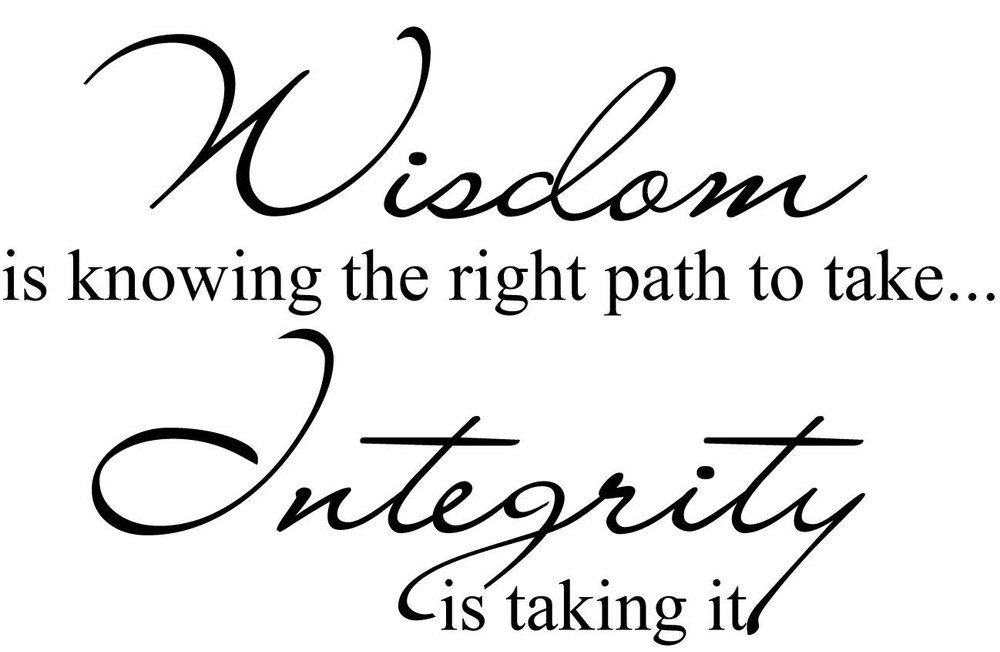
Wisdom-knowing-font-b-Integrity-b-font-Decor-Cute-vinyl-wall-decal-font-b-quote-b

Over the years, I have lost touch with Tommy.  We have traveled very different roads.  Tommy became a minister and works with the poor.  I became an educator and management consultant.  Many years and many different philosophies now separate us.  But I will never forget the lesson that I learned from Tommy that one hot summer afternoon about integrity and being who we are called to be and not who the world wants us to be.

Time for Questions:

Why do I call Tom a “boy for all seasons?”  What does it mean to have integrity?  How do we go about developing integrity?  How do we increase our empathy for other people?  What does it mean to be ourselves?  Are people naturally good or evil?

Life is just beginning.

“That’s what Jamie didn’t understand: it was never just sex.  Even the fastest, dirtiest, most impersonal screw was about more than sex.  It was about connection.  It was about looking at another human being and seeing your own loneliness and neediness reflected back.  It was recognizing that together you had the power to temporarily banish that sense of isolation.  It was about experiencing what it was to be human at the basest, most instinctive level.  How could that be described as just anything?”  — Emily MaguireTaming the Beast

Unbecoming a Victim: Or how to stop complaining and make a difference

Life’s not fair!  I never get any breaks! Other people have all the luck!  The world is crap and there is nothing anyone can do about it!  It’s not my fault. Why did he/she get the job and not me? (Listen to the Power of Responsibility as you read my blog today)  Do-You-Have-a-Victim-Mentality-at-Work

If you have ever made any of the above comments, rest assured, you are probably normal. It is called feeling like a victim or wallowing in self-pity. From time to time, we all engage in victim-hood. However, if your entire life is dominated by feelings of regret, remorse and envy, you are not just engaging in a bout of self-pity, you are embracing full-on victim-hood. We all feel like victims from time to time. That is normal. But if you are thoroughly convinced that you are a victim, you need help. The world has too many too many real victims, it does not need pseudo victim. This blog is about how to avoid embracing a victim mentality and the key factors necessary to overcome such a mentality.

First, let’s look at two key questions:

  1. What is a victim?

As I am describing it here, I am not talking about victims of torture, oppression, starvation, crime, disease, pestilence or any phenomenon that is beyond the ability of an individual to evade. I am talking about a mindset that occurs when we fail to take responsibility for our actions and the consequences of our actions and behaviors on others. You probably know some people who you would describe as having this mentality. My wife Karen says she defines a victim as “someone whose problems are always someone else’s fault. They also seem to need problems and will create them if they don’t have them.”  hero versus victim

“Your complaints, your drama, your victim mentality, your whining, your blaming, and all of your excuses have NEVER gotten you even a single step closer to your goals or dreams. Let go of your nonsense. Let go of the delusion that you DESERVE better and go EARN it! Today is a new day!”  ― Steve Maraboli

We see many people who cannot find any good in the world since they are so busy feeling sorry for themselves that they cannot see the blessings that they have. I find many right-wing Christians to be prime exemplars of this victim mentality. They are so convinced that the world is evil and will end any day. The “anti-Christ” is coming and then the world will be destroyed and all the evil in it. Such people seem to revel in the idea of an apocalypse which will wipe the entire world out and only spare the “good” people. Of course, these right-wing fundamentalist Christians are the “good” people who will be spared.

  1. Why do people choose a victim mentality?

I believe the answer to this question is that it absolves the “victim” of responsibility. They can blame God, the world, other people, nature, the weather or DNA for their failures. Never having to take responsibility is a panacea for those with a victim mentality. It is easier to do nothing when any effort is predestined to fail.

“Life is not compassionate towards victims. The trick is not to see yourself as one. It’s never too late! I know I’ve felt like the victim in various situations in my life, but, it’s never too late for me to realize that it’s my responsibility to stand on victorious ground and know that whatever it is I’m experiencing or going through, those are just the clouds rolling by while I stand here on the top of this mountain! This mountain called Victory!” ― C. JoyBell C.

Overcoming the Victim Mentality:

The antidote to a victim mentality consists of four vaccines. They are as follows:

  • Moral Courage
  • Moral Reasoning
  • Moral Universalism
  • Moral Responsibility

Anyone of these four vaccines can keep you from becoming a whining victim. Taking all four together, will help you to become independent and strong. You will be a winner instead of a victim. We need to give our children these vaccines at an early age, but it is seldom done. It seems as though we must find them on our own later in life or else we flounder through life succumbing to the victim mentality until we find one or more of them.

Moral Courage:

moral courageTo dream the impossible dream, to fight the unbeatable foe, to go where no one has gone before is courage. To stand up for what you believe, to right the unrightable wrong, to boldly speak out against injustice. This is courage. There is physical courage as is manifested in a war or sports or extreme athletic challenges. Moral courage is of the heart and soul. Bothe moral courage and physical courage result in action. One of my favorite quotes is as follows:

“The test of courage comes when we are in the minority. The test of tolerance comes when we are in the majority.”Ralph W. Sockman

Moral courage does not exist by just talking about it or complaining about things. Moral courage is an attempt to make a difference by taking some decisive action. You speak out against prejudice, bigotry, hatred, racism, injustice and stupidity. You do more than read the newspaper and bemoan the sad state of the world. The life of the prophet Mohammed provides many examples of moral courage:

“Before claiming Prophethood, the Prophet Muhammad, upon him be peace and blessings, was well off and had a respected place among his community. However, he had to confront all kinds of hardships and persecutions after Prophethood and spent for his cause whatever he had. His enemies slandered him, mocked him, beat him, expelled him from his homeland and waged war on him. He bore all such cruel treatments and hostilities without complaint and asked God Almighty for the forgiveness of even his enemies.”The Way to Truth 

Moral Reasoning:

devil_angelMoral reasoning occurs when you question right and wrong. Moral reasoning is a cognitive action that takes place when you question standards, conventions, group reasoning, and crowd think. Moral reasoning is the questioning of social and cultural standards. Jesus of Nazereth gave many examples of moral reasoning during his life.

“Woe to you, teachers of the law and Pharisees, you hypocrites! You give a tenth of your spices—mint, dill and cumin. But you have neglected the more important matters of the law—justice, mercy and faithfulness. You should have practiced the latter, without neglecting the former. You blind guides! You strain out a gnat but swallow a camel (Matthew 23:23-24).” 

Jesus is making an important distinction here between convention and morality. We often confuse justice with legality. The inability to understand the difference and its moral relevance is a failure of moral reasoning. Throughout his ministry Jesus gave many examples of moral reasoning.

Moral Universalism:

Hans Kung was a Roman Catholic priest who was stripped of his license to teach theology by the Catholic Church for criticizing the concept of papal infallibility.

“In the early 1990s, Küng initiated a project called Weltethos (Global Ethic), which is an attempt at describing what the world’s religions have in common (rather than what separates them) and at drawing up a minimal code of rules of behavior everyone can accept. His vision of a global ethic was embodied in the document for which he wrote the initial draft:, Towards a Global Ethic: An Initial Declaration.”Wikipedia

responsibilityKung’s life demonstrates a strong moral believe in the universal principles that underlie all religions. My religion is not better than your religion and all of the worlds’ great religions have a core of morality and ethics which are admirable and worth following. When we find one religion fighting with another religion or one advocate maintaining the superiority of their religion over another, we have a counter example of moral universality.

Moral universalism is an important element in overcoming victimhood. One cannot believe that their religion is superior to another religion without eventually succumbing to the rampant persecution complex that seems typical of so many religious people. I was taught when I grew up that I would go to hell if I ever stepped in a Synagogue or Temple.   Karen was taught that as a good Lutheran she should never date a Catholic. Baptists denigrate other Protestants while Muslims and Christians act as though they were worshipping different Gods. Jesus and Mohammed had a deep respect for all religions because they were wise enough to perceive the universality of religion.

Moral Responsibility:

moral responsibilityThe famous poet John Donne is perhaps best known for one of his lines that goes: “Never send to know for whom the bell tolls, it tolls for thee.”   Donne well understood the idea that we are all interconnected and we all have an incomprehensible interdependency such that anyone’s death affects us all. The same is true with morality. A key tenet of Buddhism is the moral responsibility that everyone on the earth faces for social and political actions.

 “Today we have become so interdependent and so closely connected with each other that without a sense of universal responsibility, irrespective of different ideologies and faiths, our very existence or survival would be difficult” – (Dalai Lama, 1976)

Of the four vaccines that are critical for overcoming a victim mentality, it is my opinion that a sense of moral responsibility is the most important. If I could only receive one vaccine, I would choose to be vaccinated with moral responsibility. A sense of moral responsibility allows us to help others who are in need. Charity, love, compassion and kindness are all nurtured by a sense of moral responsibility. As they say: “what goes around comes around.” When we do “good” for others, we do good for ourselves. By identifying with the pain and injustices that others suffer, we forget our own problems and we understand that we can make a difference in the world. No one who believes in their ability to make a difference in the world can suffer from a victim mentality.

Time for Questions:

Are you a victim or a hero? How often do you feel hopeless? What do you do about your feelings of hopelessness? How do you overcome feeling like a victim? Do you think people have a choice of how they feel? Why or why not?

Life is just beginning.

“Most things, even the greatest moments on earth, have their beginnings in something small. An earthquake that shatters a city might begin with a tremor, a tremble, a breath. Music begins with a vibration.”  -― Lauren Oliver


When the TRUTH Will Not Set You Free!  Part 1 of 3 Parts  

Dangerous-LiarsFor the next three weeks, I want to help us find the truth.  Truth has been said to be the most important element in our lives.  Truth is what everyone wants to find.  Thus truth should make a difference in the world, but does it?  We will examine some specific episodes in history in our search for the truth.  I have selected the following ten situations:

  1. The Trial of Socrates
  2. Slavery
  3. The Crusades
  4. The Inquisition
  5. The Extermination of Native and Indigenous Peoples
  6. Reign of Terror
  7. Scottsboro Boys
  8. The Holocaust
  9. The Khmer Rouge
  10. Roman Catholic Sex Abuse Scandals

What do they all have in common?  What does truth have to do with these injustices?  What truths did the perpetrators subscribe to that allowed these travesties of justice to happen?  What truths did the perpetrators fundamentally ignore?  Would the truth even have made a difference?  Are we more liable to listen to “truth” today or is it simply a fiction that we trot out to justify our prejudices, bigotry and murders.  Will it really set us free or is that simply another myth spread by the powerful to emasculate those with less power?  (Listen to in Search of the Truth  by Guy Sweens)

“Historical injustice is ubiquitous in human history. The origins of just about every institution relevant to human political life has a pedigree stained by injustices of various magnitudes. Slavery, genocide, mass expropriation of property, mass internment, indiscriminate killings of civilians and massive political repression are all depressingly familiar features of human history, both in the distant and more recent past.” —- Historical Injustice, Duncan Ivison, University of Sydney in Jon Dryzek, Bonnie Honnig, Anne Philipps (eds) Oxford Handbook to Political Theory (Oxford, OUP, 2006)

I want to briefly explore each of the above injustices.  I apologize for calling these injustices, they deserve a harsher more critical term that that.  For the victims of these “injustices” were slaughtered, maimed, mutilated, tortured, butchered, immolated, hung, gassed, poisoned, executed and stripped of all human dignity.  The words we can use to describe man’s inhumanity to man can never go far enough to convey the “truth.”  I debated whether to start the New Year of 2015 with such a heavy dose of misery and horror but perhaps it is better to start with some thought for creating a better world and recognizing the work that needs to be done.   We are told that all we need is the truth and the world will be a better place. We are constantly urged to seek the truth and to speak the truth.  But what is the truth and what can these injustices tell us about the truth?  Do you dare to see the truth?  Do you have the stomach for the truth?  I have ordered the above list in a rough chronological order.  Let us together examine each one of these horrors to see what truths were behind their execution.  For surely, one fundamental fact is that no human being acts without some truth.  Thus, you may be as curious as I am to see what truths the perpetrators had subscribed to in the implementation of these deeds.  Also, what were the truths that the victims subscribed to?

Keep in mind that we must give perpetrators the benefit of the doubt.  It is possible that they only thought they had the truth and that each of these injustices was not based on actual truth but an incorrect system of beliefs which we shall dutifully avoid calling lies.  Some might say that each of these injustices represented a lapse in truth.  If so, perhaps we can learn the real truth from looking at them more closely and finding out why there was a lapse.

Truth can be stated in a thousand different ways, yet each one can be true.Swami Vivekananda

These ten injustices range from the death of one man to the death of millions of men and women.  They include the deaths of people from every corner of the earth, every tribe that ever existed and every culture that was ever known.  That is a truth.  But I doubt it is the truth that we seek.  Before we proceed with this exploration, let me warn you.  You may find some truths that you do not want to hear.  What if each injustice in this list was the truth?  What would this tell us about human nature?  Could you look at your fellow human beings and live with this truth?  Do not despair yet, for at this point, I have presented no evidence to show that either truth or false beliefs were behind any of these inequities.  Perhaps, we shall find that truth had nothing to do with them.

But I suppose the most revolutionary act one can engage in is… to tell the truth.”  ― Howard Zinn,

The Trial of Socrates:

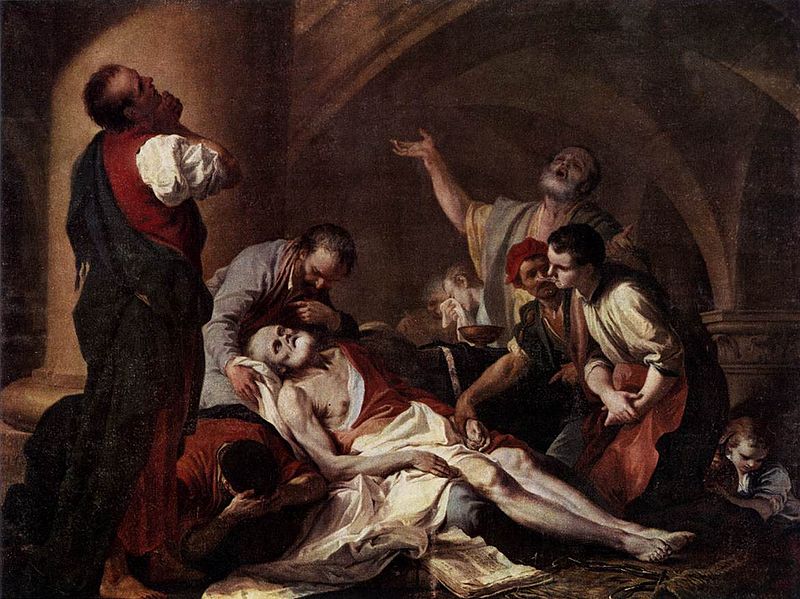
death of socratesSocrates, the wisest man in the world was tried in Athens, the world’s greatest democracy sometime around 400 BCE.  Socrates was tried for corrupting the minds of the Athenian youth.  The truth for Socrates was that he never taught anything (since he did not know anything) but he loved to ask questions to stimulate the thinking of other people.  Socrates was teaching Critical Thinking skills before they were popular.  The truth for his persecutors was that it was too dangerous for the young people of Athens to be questioning their elders.  Socrates did not mount a defense, did not hire canny lawyers, did not plead “not guilty by reason of insanity” and did not blame Athenian society for his plight.

“At first, they’ll only dislike what you say, but the more correct you start sounding the more they’ll dislike you.”   Criss Jami

Much to everyone’s chagrin, Socrates plead guilty as charged.  One might wonder what fears could have brought about the conviction of a man teaching other people to think.  Was it the potential fall of the Athenian Democracy or the current threats that leaders saw mounted to this democracy?  Was Socrates really a threat to democracy?  Is this possibly a truth we have not admitted in our own zeal to export democracy all over the world?  Truth:  Thinking is bad.  Truth:  Following orders is good.  Truth:  He who is in charge decides what is true.

Socrates was given a poison called hemlock and his last words were:  “Crito, we owe a rooster to Asclepius.  Please, don’t forget to pay the debt.”

“Everyone knows perfectly well what truth is – everyone except Pontius Pilate and philosophers.  Truth is the quality of being true, and being true is what some statements are. That is to say, truth is a quality of the propositions which underlie correctly-used statements.” — Bob Stone

Slavery:

slavery in IslamSlavery has existed since time immemorial.  Slavery was known in almost every ancient civilization, and society, including SumerAncient EgyptAncient China, the Akkadian EmpireAssyriaAncient IndiaAncient Greece, the Roman Empire, the Islamic Caliphate, the Hebrew kingdoms in Palestine, and the pre-Columbian civilizations of the Americas.  According to Wikipedia:   “Slavery is officially illegal in all countries, but there are still an estimated 20 million to 36 million slaves worldwide.   Mauritania was the last jurisdiction to officially outlaw slavery (in 1981/2007), but about 10% to 20% of its population is estimated to live in slavery.”

Many distinctions and definitions exist regarding types of slavery and conditions related to how slaves were and are still treated, bought and sold.   According to the U.S. State Department, 600,000 to 800,000 people are trafficked across international borders every year for the purpose of sex, servitude or pornography.  More than 70% are female and half are children.  Without going into the various categories of slavery, anyone with a smidgen of morality can see that all slavery is immoral and cruel.  But that is a truth for the slaves.  What was and is the truth for the slave owners and slave traders?

Truth:  We have a right to their labor and even bodies

Truth:  Slaves are inferior creatures and do not deserve to be treated as we would want ourselves to be treated.

Truth:  If it is my slave, you have no business telling me what I can do with his/her labor.

Truth:  My slaves may have had different ideas regarding these “truths” but their ideas do not count.

Truth:  Money made by slavery is more important than the morality of the trade.

“So our definition of truth needs to be much more flexible than Plato, Descartes and other philosophers claim. I would say that a pragmatic theory of truth is closest: that truth is the ‘thing that works’; if some other set of ideas works better, then it is truer.” — Andrew Warren

Will slavery ever come to an end?  Is there a truth to slavery that will enable all to see the inhumanity of it?  What about the truths that the perpetrators have?  Is their truth less valid than the truth of the slaves?  Does anyone care about the slaves’ truths?  Which truth is truer?  When will the truth arrive to set the slaves free?

“In questions of science, the authority of a thousand is not worth the humble reasoning of a single individual.”  ― Galileo Galilei

The Crusades:

From about 1100 CE to 1300 CE, Europe invaded the Mideast with the purported reason of securing the Holy Land for Christian pilgrims.  Some would say the real reason was conquest while others would say it was purely economic.  According to Wikipedia:

Pope Urban II promised forgiveness of all sins to whoever took up the cross and joined in the war.  While there were additional motivations for taking up the cross—opportunity for economic or political gain, desire for adventure, and the feudal obligation to follow one’s lord into battle—to become a soldier for Christ was to express total devotion to God.”

crusadeWhile I find the arguments for the wars intriguing, I am not as interested in the motives for conquest as I am in the truths that both sides, Muslims and Christians used in their massacres of each other.  As Ulysses S. Grant noted about the southern sharecroppers who supported the Civil War, it is curious that so many Christians could be induced to fighting for goals that had no material or even spiritual advantage for them.  Of course, one could argue that the “forgiveness” of sins was some type of spiritual advantage.  I would counter that there would have been easier ways to attain this goal rather than risking one’s life.  Did not confession as a Catholic sacrament exist in 1100 CE?  No, if there was a real reason for the crusades, I think as usual we will find it in the truths that motivated both sides.

Christians then and now believe that God is our God and not the God of Islam.  Allah is not Jehovah or Yahweh or I Am.  Allah is some foreign and heretical interpretation of the “real” god who belongs to Christians.  “Allah Be Praised” is not the same as “In God We Trust.”  Another truth is that Muslims had no right to the Holy Lands.  God (The Christian God) gave the Holy lands to the Catholics by way of Abraham, David and those other Jews who were known as the Israelites but who no longer existed back in 1100 CE.  Of course, Jews were scattered all over Europe but the world was not yet interested in regaining the Holy Lands for Jews.  In fact, in another one hundred years or so, we would start an institution to get rid of Jews and eliminate the heresy that was associated with Jewish beliefs (More on the Inquisition later).

So what truths motivated the Muslims to risk life and limb to protect the Holy Land and to stop the Infidels from regaining the center of Christian spiritual life?  I think the term “Infidel” easily answers this question.  Translated the word Infidel means:  “A Person who has no religious faith; an unbeliever.”  Thus, to many Muslims then and now, an unbeliever is a Christian or Jew who does not believe in Mohammed or Allah.  That is the Allah of Islam.  The truth to a Muslim is that Christians are unbelievers and not worthy of respect.  Of course, not all Muslims believe this.  Another motivational truth was that many Muslims in 1100 CE thought it was their land.  They were upset that French, Italian and German Knights thought that they somehow had a right to lands that had been occupied by Arabs since Ismael’s time.  The truth that “this is my land and not your land” has always been a powerful motivator for fighting (More will be said about this when we talk about the Extermination of Indigenous Peoples).

“Truth is not constant. Some beliefs which were held to be true are now considered false, and some for which truth is now claimed may be deemed false in the future, and vice versa. Truth is good for helping us decide how to act, because it serves as a standard for making some sort of sense of a world populated also by half-truths and untruths.”  —- Ray Pearce

The Inquisition:

Galloping on through history we now arrive at the Inquisition, another great idea to come from the Roman Catholics.  How can we stamp out lies, heresies and false truths?  Heresy can be defined as:  “My beliefs or truths are different from your beliefs or truths and since you have more power than I do, my beliefs are wrong and punishable.”   Solution:  Let’s inquire as to the beliefs that potential heretics (Jews, Cathars, Protestants, Muslims, Free Thinkers, intellectuals and many others) might have in respect to what are the true beliefs that we know are true.  Any suspects whose thinking deviates from our truth will be punished until they are repentant.

“Wherefore if forgers or money and other evil-doers are forewith condemned to death by the secular authority, much more reason is there for heretics, as soon as they are convicted of heresy, to be not only excommunicated, but even put to death. “Thomas Aquinas

Inquisition_torture_03This simple inquiry or Inquisition process was complicated by the unfortunate fact that people lie.   Solution:  We will need to torture them to tell the truth.  Complication:  people who are tortured will also lie and tell you whatever you want to hear.  (See the current US Senate Report 2014 on Torture).  Thus, the suspect is dammed if he tells the truth and dammed if he does not, since he won’t be believed in either case.  If he does tell his truth and it is not the right truth he will be burnt at the stake for being a heretic.  Solution:  Burn all suspected heretics no matter what they say.   Is it any wonder, so many people finally left the Old World and when they came to the New World wanted nothing to do with religion, the Pope or the Catholic Church?

“Discovering the truth will be a hurtful and painful experience when the facts or realities turn out to be different from what is expected. Yet there ought to be no grounds for despair if we accept that the ideal of truth, like all other virtues, can be approached rather than attained. This ideal truth can be glimpsed if we manage to be skeptical, independent and open-minded when presented with the supposed facts and realities.”  —- Ian Rizzo

The Extermination of Native and Indigenous Peoples:

Aborigines, Mayans, Native Americans (Indians), Eskimos, Tibetans, Incas, Ainus, Daurs, Bushmen.  All indigenous people.  All subjected to murder, famine and extermination by more powerful invaders who wanted their land or resources.  There is not an inhabited continent on earth where the indigenous people were not persecuted and their rights and even lives forfeit to the invaders.  There is not a time in history where such persecutions have not occurred. From the first historical records to the most recent news reports of mass tribal exterminations in various parts of the world, we see the truth.  The truth of the invaders and the truth of the exterminated though are not the same.

I have listed the Holocaust in a separate category of injustice.  Many historians would see the systematic genocide of the Holocaust as perhaps belonging in my category of Extermination.  We can add numerous examples of genocide to the above list.  The Bosnian Serb massacres, the Rwandan murders, the Armenian massacres, the Cambodian massacres might also fit in the Extermination category but in my scheme of things, I would include them in the Holocaust category since I believe and will show that they are based on a different set of “truths.”  The truths for the extermination of indigenous people as defined by the invaders are:

Truth:  They don’t need the land and stand in the way of progress.

Truth:  Might makes right.  Since we are mightier we can simply take their property.

Truth:  They will never fit in with our way of doing things.

This unfortunate race, whom we had been taking so much pains to save and to civilize, have by their unexpected desertion and ferocious barbarities justified extermination and now await our decision on their fate.”Thomas Jefferson

“The Whites, by law of conquest, by justice of civilization, are masters of the American continent, and the best safety of the frontier settlements will be secured by the total annihilation of the few remaining Indians. Why not annihilation? Their glory has fled, their spirit broken, their manhood effaced; better that they die than live the miserable wretches that they are.”L. Frank Baum (Author of the Wizard of Oz)

native_american_indian_six06Looking at the truth from the point of view of those due to be annihilated provides a different perspective on the truth.  We see the White truth that Indians are lazy, barbaric and that their culture stands in the way of progress.  A White truth is that the problems with Indian culture far outweighed any inherent value in their way of life.  They are immoral, cruel and uncivilized and worse they refuse to adopt the “White man’s ways.”  Heck, we gave them reservations, taught them to speak English, sent them to schools to learn to read and write and even sold them booze and now they have casinos.  Truth:  Nothing seems to make them happy.

However, the voices from Native Americans seem to present a different truth:

“Before our white brothers arrived to make us civilized men, we didn’t have any kind of prison. Because of this, we had no delinquents.  Without a prison, there can be no delinquents.  We had no locks or keys and therefore among us there were no thieves.  When someone was so poor that he couldn’t afford a horse, a tent or a blanket, he would, in that case, receive it all as a gift.  We were too uncivilized to give great importance to private property.  We didn’t know any kind of money and consequently, the value of a human being was not determined by his wealth.  We had no written laws laid down, no lawyers, no politicians, therefore we were not able to cheat and swindle one another.  We were really in bad shape before the white men arrived and I don’t know how to explain how we were able to manage without these fundamental things that (so they tell us) are so necessary for a civilized society.”  —John (Fire) Lame Deer, Sioux Lakota – 1903-1976

“I am poor and naked, but I am the chief of the nation. We do not want riches but we do want to train our children right.  Riches would do us no good.  We could not take them with us to the other world. We do not want riches.  We want peace and love.” — Red Cloud

Do Red Cloud’s words sound familiar?  Have you ever heard of a man named Jesus Christ who said:

“Give to everyone who begs from you; and if anyone takes away your goods, do not ask for them again.” — Luke 6:30

“For what shall it profit a man, if he shall gain the whole world, and lose his own soul?”  — Mark 8:36

“A new command I give you: Love one another.  As I have loved you, so you must love one another.” — John 13:34

It would seem like Red Cloud knew more about the “true” teachings of Jesus then the thousands of Christian missionaries who went to Asia, Africa, South America, North America and elsewhere to teach the pagan barbarian primitives how to be good Christians before they were slaughtered.  Much merit to these missionaries since in the Christian theology, you cannot get to heaven unless you are baptized.  It would be simply awful if these indigenous peoples, whom we planned to rape, rob and murder could not get to heaven.  What do you suppose they will say to their murderers when the murderers arrive in heaven?  Egad!  I just had a terrible thought.  What if all the conquerors and murderers are going to hell?

Let’s wrap this up.  Thanks for your patience.  I never thought this blog would get this long. I suddenly realized it was almost beyond too long and I have decided to break it into two parts.  When I started this blog, it was as much an exploration for me as it may have been for you. I truly wondered if I would find the Truth.  I wondered if a clear set of precepts might emerge which would better help me to understand humanity and how we can allow such injustices to occur.

I thought that by exploring the worst injustices or at least a variety of the worst injustices in history, a light would inevitably shine on the Truth.  Everyone talks about the Truth.  Everyone says they are looking for the Truth.  We all know that the “Truth will set us free.”  Free from what though?  I am more confused than ever.  Thus, the search will continue next week.  You deserve the Truth, if you can handle it.  The problem seems to be in finding it.  In my next blog, we will look at the next five atrocities on my list to see if they will shed more light on the Truth.   We have invested too much time to quit our quest now.

“The truth that makes men free is for the most part the truth which men prefer not to hear.”Herbert Agar

Time for Questions:

Have you found the Truth?  What is your Truth?  What keeps us from the Truth?  Is there really a Truth to be found?  How do you know?  What if there was no truth?

Life is just beginning.

“We must pass through the darkness, to reach the light.”   ― Albert Pike

What the Hell Do We Need Morality For?

morals and ethics

This blog is about the subject of morality.  Once upon a time, they taught morality in school and in church.   The first system of morality that many older Americans were exposed to was probably the “Ten Commandments.”   This was a code of rules given to the Israelites by Moses on Mount Sinai.  I have always thought it ironic that a set of morals from the “Old Testament” was supposed to be the foundation for a Christian America.  Even today, advocates of this code of morality want to hang it in town halls, schools, courts and government centers.  This is a part of the Bible that promoted an “eye for an eye” and stoning adulterers.

Jesus did say “Think not that I am come to destroy the law, or the prophets: I am not come to destroy, but to fulfill” (Matthew 5:17).  Jesus added at least one commandment to all others that was even more valuable than the ten TenCommandmentsMoses gave.   Jesus said, “A new commandment I give to you, that you love one another; as I have loved you, that you also love one another” (John: 13:34).  I would be much more in favor of seeing this posted in my neighborhood than the Ten Commandments.

Perhaps even more importantly in terms of a system of morality, Jesus gave a sermon where he proposed what has been called:  The Eight Beatitudes:   (Click here to hear the The Beatitudes Song

Blessed are the poor in spirit, for theirs is the kingdom of heaven.

Blessed are they who mourn, for they shall be comforted.

Blessed are the meek, for they shall inherit the earth.

Blessed are they who hunger and thirst for righteousness, for they shall be satisfied.

Blessed are the merciful, for they shall obtain mercy.

Blessed are the pure of heart, for they shall see God.

Blessed are the peacemakers, for they shall be called children of God.

Blessed are they who are persecuted for the sake of righteousness, for theirs is the kingdom of heaven.  —- Gospel of St. Matthew 5:3-10

It is my opinion that the Eight Beatitudes constitute one of the greatest systems of morality to come out of the Bible.  I would rather see these taught (if we are going to teach a system of morality) than the Ten Commandments.  I would also not mind these being posted in schools and other public places whereas I am sick and tired of those who want to post the Ten Commandments.

I noted that once upon a time, we taught morality in schools and churches.   Actually, we not only taught morality but morality was also imbued in our social fabric by many traditional stories and the media.  Children from an early age were exposed to Fairy tales, Uncle Remus stories, Aesop Fables, and Tales of the Arabian Nights.  These stories were full of morals on how to live and behave properly.  Early TV was also full of morality tales.  Shows like Father Knows Best, Leave It to Beaver and Andy Griffith each week clearly conveyed stories of morality and what was right and what was not right in terms of behavior.

sin-guilt-causes-body-pain-sicknessSomeplace along the way, we started losing our sense of morality.  Some have blamed it on becoming a multi-cultural environment.  Some have blamed it on the decline of religion and church going.  Some have blamed education while still others have blamed progress and a business culture that has no room for strict morality.  I am not sure what the actual cause was.  I am more concerned that it did happen.  Studies have shown that our culture has become more amoral than moral and that narcissism now plays an increasing role in our society.  People are less moral and more self-centered than ever before in the history of this country.  A book by Joel Marks (Ethics without Morals: In Defense of Amorality -Routledge Studies in Ethics and Moral Theory, 2012) is one of several that makes an argument for amorality:

“In clear, plainspoken, engaging prose, Joel Marks presents the case for abandoning belief in morality. Anyone who wants to defend the practice of making moral judgments will have to confront the issues Marks raises, and the alternative to morality he proposes.” – Mitchell Silver, University of Massachusetts, Boston, USA 

In the book “The Moral Fool: A Case for Amorality (2009)” the author Hans-George Moeller advances the following case for amorality:

“Justice, equality, and righteousness—these are some of our greatest moral convictions. Yet in times of social conflict, morals can become rigid, making religious war, ethnic cleansing, and political purges possible.  Morality, therefore, can be viewed as a pathology—a rhetorical, psychological, and social tool that is used and abused like a weapon.”

In an article “Why Is Narcissism Increasing Among Young Americans?”  by Peter Gray in Freedom to Learn (2014), Gray notes the following:

“For the past three decades or a little more, researchers have been assessing both narcissism and empathy using questionnaires developed in the late 1970s.  Many research studies have shown that scores on these questionnaires correlate reliably with real-world behavior and with other people’s ratings of the individuals.  For example, those who score high in narcissism have been found to overrate their own abilities, to lash out angrily in response to criticism, and to commit white-collar crimes at higher rates than the general population.[1]  Those who score low in empathy are more likely than the average person to engage in bullying and less likely to volunteer to help people in need.[2.]

Over the years, these questionnaires have been administered to many samples of college students, and analyses that bring all of the data together reveal that the average narcissism score has been steadily increasing and the average empathy score has been steadily decreasing ever since the questionnaires were developed [3.]  The changes are highly significant statistically and sufficiently large that approximately 70 percent of students today score higher on narcissism and lower on empathy than did the average student thirty years ago.

What accounts for this historical rise in narcissism and decline in empathy?  There is no way to know for sure, based on the data, but there are lots of grounds for speculation.”

I think we have thrown the proverbial baby out with the bath water.  I agree we need to keep the State separate from the Church.  I also agree that we don’t need the Ten Commandments as the foundation for moral thought in America.  Nevertheless, I do believe that we all need a code of morality to live by.  Whether it be Christian, Buddhist, Confucian, Agnostic, Atheist, Islamic, Jewish, Hindu, Baha’i, or other, we need a set of morals as a template and foundation for our behavior.  We need a baseline that each of us can start from so that we can assess what is good and what is right.  We need to have some system of ideas about what is correct behavior and how we should live in a socially interconnected world.

When I was a kid, (somewhere along the way) I was taught the Seven Deadly Sins.  Sometimes they were called the Seven Deadly Vices or the Seven Cardinal Sins.  I assume that since I attended a Catholic school, it went along with the teaching.  The Seven Deadly Sins included the following:

  • Lust
  • Gluttony
  • Greed
  • Sloth
  • Wrath
  • Envy
  • Pride

7 deadly sins

Some of you might think that this list is old fashioned or out of date.  How could this set of implicit moral values make a difference in our society?  They are so old; do they really have any relevance anymore?

Take a close look around you at the world.  You have only to look for a few minutes to persuade yourself that these “sins” are at the top of the list of major problems.  Greed, envy, gluttony and lust appear pervasive in our culture.  (See my series on Gandhi’s Seven Social Sins) TV shows, movies, magazines, radio, supermarkets, superstars, sports, credit services, escort services, pornography, Las Vegas all portray an American brand of materialism that is nothing short of sick.  Get it now, get it fast, and get more and moreMore is better!  Bigger is better!  Shop till you drop!  He who has the most toys wins!

“If necessity is the mother of invention, then surely greed must be the father. Children of this odd couple are named: Laziness, Envy, Greed, Jr., Gluttony, Lust, Anger and Pride.”  ― John R Dallas  Jr.

Black Friday ( The day after Thanksgiving in the USA) is only a small manifestation of the greed, lust and sloth that has infected our society.  How many Americans have a regular exercise schedule?  How many obese citizens can you count on the street each day?  How many Americans spend more each week then they earn?  How many Americans will go in debt this Holiday Season to spend money that they don’t have on gifts and toys?  Where is the self-restraint that is necessary to push oneself away from the table or shut the TV off and say “Enough.”  It barely seems to exist.  Is it any wonder that so many countries have a very negative stereotype of the “average” American?  We appear to be a group of people who have lost our moral compass.

ARTICLE 29 —  The Universal Declaration of Human Rights

  • You have a responsibility to the place you live and the people around you-we all do. Only by watching out for each other can we each become our individual best.

At this point, you well may be asking “What right does he have to be so damn moralistic?”  Didn’t Jesus say “Let he who is without sin cast the first stone?”  “Are you so perfect that you have a right to look down on other people?”  “Who does he think he is, Jonathan Edwards?”  “I don’t need anyone telling me my faults.”  “I get enough negativity from work without having to get it from you.”

Please allow me to clarify a few misconceptions.  In some religious circles we are all sinners.  Since I am agnostic, I don’t subscribe to a religious view of sin.  My use of the terminology is borrowed from the religious sphere since I think that the concept of sin has a very useful connotation if we can free it from some of the pejorative and negative associations with which it is fettered.  First of all, I do not believe that you will go to hell for committing these Seven Sins.  Second, you will not be a bad or evil person because of them.  Third and accentuating the positive, you may be happier and healthier if you are more aware of these “sins” and can do a better job of examining the role that they play in your life.  My bringing these “sins” out is to help us all become more aware of the morality that we have allowed to become obscured in our daily lives.

There are only two mistakes one can make along the road to truth; not going all the way, and not starting.  —-Buddha

We have had a decline in morality that started over one hundred years ago and it still seems to be declining.  More people are worried about their taxes increasing then the poverty facing many people in this country.  More people are worried about their security then the number of people going to jail every day for victimless crimes.  More people are worried about the price of gasoline then the pollution we send into the atmosphere every day.  Self-centeredness has become a dominant fixture of the American landscape.  “Greed is Good” says Ivan Boesky and everyone applauds.

If you look for truth, you may find comfort in the end; if you look for comfort you will not get either comfort or truth only soft soap and wishful thinking to begin, and in the end, despair.   — C. S. Lewis

Why do I think we should care about morality? 

goodevilWithout morality, we are not even as good as animals.  Animals eat, drink, sleep, procreate and fight when they have to.  They do not do it simply to hurt other animals or to wage war against groups or individuals that they cannot tolerate.  Animals care for their young and exhibit many characteristics of moral behavior.  In captivity, animals may display much more aggressive behavior.  For instance, Orcas in the wild have never been observed to kill other Orcas.  This is not the case for Orcas in captivity.  There is no such thing as civilization without a commitment to moral and ethical behavior.  Even animal societies are proof of this.

“I am Envy, begotten of a chimney-sweeper and an oyster-wife. I cannot read, and therefore wish all books were burnt; I am lean with seeing others eat – O that there would come a famine through all the world, that all might die, and I live alone; then thou should’st see how fat I would be! But must thou sit and I stand? Come down, with a vengeance!”  ― Christopher MarloweDoctor Faustus

Without morality, we have no compass to define what is good behavior and what is bad behavior.  We are reduced to the level of opportunists willing to take advantage of anyone and anything that suits our ends.  Listen to the current debate on the use of torture and the recent CIA report and you will find numerous “experts” advocating that the “ends justify the means.”  One man on NPR noted that he thought we should ask the victims of the Twin Trade Towers what they thought about the use of torture to capture Osama Bin Laden.   John McCain (May he Rest in Peace) once said it best when he opined in Congress (12-9-14) that “”Our enemies act without conscience. We must not.”  Nevertheless, he was opposed by his own party in his opposition to torture and in fact to even releasing the CIA Tortmoralityure Report. 

Many Republicans argued against releasing the report, especially as the threat of the Islamic State in Iraq and Syria grew and U.S. intelligence officials had warned that its release could cause backlash from nations and groups hostile towards the nation.   American embassies in the Middle East had been put on heightened security alert for its release.

McCain replied that “This report strengthens self-government and, ultimately, I believe, America’s security and stature in the world.”  (CNN 12-9-14)

Finally, without morality, there is no way to transmit values from one generation to another.  A lack of morality has led to the increase in amorality that is now symptomatic of our society.  Amorality is a set of beliefs which deny the value of morality or at best are indifferent to morality.  A rock is amoral.  It is neither good (moral) or bad (immoral) but may be used for either purpose.  Anything or anyone without a conscience is amoral.  It is a fine line and one that is very easy to trespass between amoral and immoral.  Many people today may think their behaviors are amoral when actually they could better be described as immoral.  Harken back to the Seven Deadly Sins and ask yourself, how many of these vices are amoral?  Are greed, gluttony, lust and wrath amoral?   Can anyone with a good conscience say it is okay to partake in these vices?

“Seven deadly sins,
seven ways to win,
seven holy paths to hell,
and your trip begins

Seven downward slopes
seven bloodied hopes
seven are your burning fires,
seven your desires…”
― Iron Maiden

Time for Questions:

What is your moral code? What are the three most important morals in your life?  Do you think everyone should have an explicit moral code?  Why or why not?  Do you know many amoral people?  What do you think about amorality?  When is it justified?  What do you think the world would be like if everyone was amoral?  Would it be a better world or worse? Why?

Life is just beginning.

“Remember tonight… for it is the beginning of always”  ― Dante Alighieri

Previous Older Entries Next Newer Entries