3609– Friday, June 14, 2019 – Citizens: Dare, Dare Again, Always Dare!

A number of years ago (1998), I was hired by the Metropolitan Council in Minnesota as a Principle Planner II.  My job was to help the various units at the council to improve productivity and service.  I had been an independent Process Improvement consultant for the previous 13 years.  My new job meant a study paycheck and less travel.  It was a good way to get out of consulting and into more regular employment.  The people at the council were hardworking and dedicated.  Nevertheless, as Dr. Deming always said, “hard work guarantees nothing.”
00-lead-jon-stewart

In a short while, I found more waste and useless expenditure of time and taxpayer money than I could have imagined possible.  Even though as a consultant, I had often worked with government agencies from the US Navy to the City of Minneapolis, I was astounded at the staggering amount of fruitless effort throughout the organization and other state agencies.  I had become a liaison for the Metropolitan Council to help coordinate quality improvement agencies for a joint committee that included the Met Council and members of various other state agencies.  I frequently came home and exclaimed to Karen: “My god, if the average citizen saw the waste and stupidity that I see every day, they would grab a rifle or pitchfork and march on City Hall.”  I was dead wrong.

It has been twenty years and the waste and lack of accountability in government is still appalling and “no one is marching on City Hall.”  I often doubt if anyone really cares.  There is an old saying which goes like this:

Businesses get the unions they deserve,

Industries get the regulations they deserve, and

People get the governments they deserve.

 The lack of transparency in government is bewildering.  Transparency and accountability go hand in hand.  However, many cities, states and towns fail to publish their complete financial records on-line.  Yet no one demands to see the records of government spending.

GTY_9-11_responders_02_jef_160909_16x9_992

“Democracy depends on an informed electorate, but due to current practices in both accounting and budgeting, the true financial health of a city can be obscured, and citizens are deceived, or at best misled.  Without access to truthful, timely, and transparent information, how can citizens be knowledgeable participants in their governments?” —  Truth in Accounting

It seems that everyone you talk to is willing to condemn the cupidity and incompetence of most of our political leaders.  Yet, such criticism begs the question: “Not why did we elect these people, but why do we continue to reelect them?”

“Congressional stagnation is an American political theory that attempts to explain the high rate of incumbency re-election to the United States House of Representatives.  In recent years this rate has been well over 90 per cent, with rarely more than 5-10 incumbents losing their House seats every election cycle.”Congressional stagnation in the United States

920x920

These high rates of reelection defy logic since they come at a time when trust in government is at an all-time low.  “We the people” grouse and complain but the fact remains that “we the people” do not demand accountability and we do not enforce accountability.  We elect leaders who soon feel little or no need to represent their constituents but more likely never felt the electorate really mattered in the first place.  Too many of our leaders are fully aware that they owe their first loyalty to the lobbyists and corporations that funded them and not to the “joe or jane” on the street that simply cast a ballot for them.

“Public trust in the government remains near historic lows.  Only 17% of Americans today say they can trust the government in Washington to do what is right ‘just about always’ (3%) or ‘most of the time’ (14%).”  — Public Trust in Government: 1958-2019
Firefighters-Who-Attended-911-Scene-Are-19-More-Likely

I have repeatedly said that we need government.  It would be foolish to think that a community, let alone a nation, could function without a government.  Yet, I can also accept the words of Edmund Burke that “The government that governs best is the government that governs least.”  I do not say throw out government, but I do say “we the people” have to start making our votes and voices heard.  Too many of our so called “silent majority” simply do not give a damn.

If you don’t give a damn, you will get the government you deserve.  It would seem that this bit of wisdom has become a reality for most Americans.

PS:

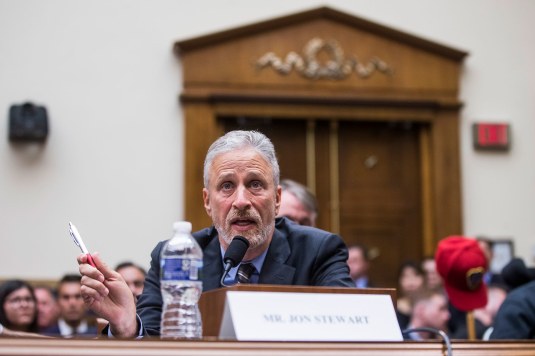
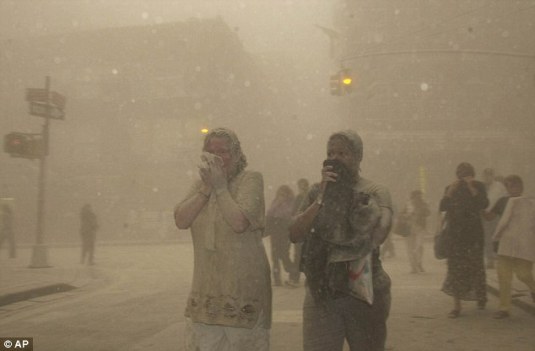
I just watched Jon Stewart’s heroic and passionate speech to the House Judiciary on behalf of 9/11 Responders.  This speech will go down in history as a testimony to the difference citizens can make in government if we dare to speak out.  Stewart echoes my call for accountability in his speech.  See:  https://www.youtube.com/watch?v=Y2QMqsNvWuc

“Sick and dying, they brought themselves down here to speak to no one.  Shameful. It’s an embarrassment to the country and it’s a stain on this institution.  And you should be ashamed of yourselves for those that aren’t here.  But you won’t be because accountability doesn’t appear to be something that occurs in this chamber.” — Jon Stewart


The 3rd of Gandhi’s Seven Social Sins: Knowledge without Character.

Several years ago I became very interested in the question of “Character.”  What is character?  How do we develop character?  Are we losing character in our population and if so, why?  I found a number of books on the subject but the one that most impressed me was called “The Death of Character.”  It was published in 2001 and was written by James Davison Hunter.   The book description is as follows:

The Death of Character is a broad historical, sociological, and cultural inquiry into the moral life and moral education of young Americans based upon a huge empirical study of the children themselves. The children’s thoughts and concerns-expressed here in their own words-shed a whole new light on what we can expect from moral education. Targeting new theories of education and the prominence of psychology over moral instruction, Hunter analyzes the making of a new cultural narcissism.

One of the observations that I drew from reading this book is that as a nation, Americans have moved from a perspective of absolute values to a strong belief in relative values or flexible standards.  Wherein once people could be labeled as moral or immoral based on their behavior, today we have the concept of amorality which does not seem to have existed before the 20th century.   Some definitions might help here:

Moral:  Concerned with the principles of right and wrong behavior and the goodness or badness of human character.

Immoral:  Violating moral principles; not conforming to the patterns of conduct usually accepted or established as consistent with principles of personal and social ethics.

Amoral:  Being neither moral nor immoral; specifically: lying outside the sphere to which moral judgments apply.

Character:  The aggregate of features and traits that form the individual nature of some person.

According to Hunter’s research, the American population has moved from a bipartite arrangement in which people fell between the poles of moral or immoral to a tripartite arrangement in which most people would be classified as amoral, immoral or moral.  The percentage of people in the amoral area has steadily increased while the percentage in the moral area has steadily declined since the early 1900s.

I was teaching in higher education from 1999 to 2015 and one question I  routinely asked my MBA and BA students is “What would you do if you were driving down a lonely dirt road and saw a Wells Fargo money bag lying on the side of the road?  Would you return it?”  I suspect that you would be surprised if I told you that less than 3 students in 30 say they would return it.

However, if I ask them the following question, the numbers change dramatically.  “What would you do if you noticed that upon leaving the classroom, Mary had dropped a twenty dollar bill?  You are the only one who has noticed it. Would you return it?”  The replies are unanimous in that all students say they would return it.  Students regard hurting another person that they know as wrong or immoral, but stealing from Wells Fargo is not considered immoral but is rather considered as amoral.  My own teaching experiences over the years confirm much of what Hunter says in his book.  Amorality is rampant among business students.

So we come to an important question.  Can we have an educated and intelligent population (more people getting degrees and going to school) and less morality?  What if more people are becoming amoral and we have less moral people?  What are the implications?  Well, I think the answer is clear here.  Look at corporate behavior.  You have only to read the story of Enron “The Smartest Men in the Room” to see concrete examples of intelligent behavior without a sense of morality or character.   When we look at amoral behavior in people and organizations, a primary question is how long before the amoral behavior becomes immoral and crosses the line to illegal – as it did with Enron, Worldcom, and Global Crossing.

Gandhi says this about his 3rd Social sin: 

“Our obsession with materialism tends to make us more concerned about acquiring knowledge so that we can get a better job and make more money. A lucrative career is preferred to an illustrious character. Our educational centers emphasize career-building and not character-building. Gandhi believed if one is not able to understand one’s self, how can one understand the philosophy of life. He used to tell me the story of a young man who was an outstanding student throughout his scholastic career. He scored “A’s” in every subject and strove harder and harder to maintain his grades. He became a bookworm. However, when he passed with distinction and got a lucrative job, he could not deal with people nor could he build relationships. He had no time to learn these important aspects of life. Consequently, he could not live with his wife and children nor work with his colleagues. His life ended up being a misery. All those years of study and excellent grades did not bring him happiness. Therefore, it is not true that a person who is successful in amassing wealth is necessarily happy. An education that ignores character- building is an incomplete education.”

In my book, “The New Business Values” one of my chapters was on Information.  I outlined a hierarchy of information as follows: Data>Information>Knowledge>Wisdom.   I described knowledge as a set of beliefs, facts or ideas that contained relevance to some goal, need or desire.  In my model, knowledge cannot become wisdom until it is linked to emotions and feelings for others.  I think Gandhi’s ideas of linking knowledge to character probably hits the mark more accurately.  It was my understanding that knowledge without empathy and compassion for others could never be wisdom.

The world is full of knowledge today since scientific belief has replaced religious belief.   However, science can never develop the sense of empathy and compassion as a central part of character development.  Furthermore, character development even more than knowledge, stands alone as a primary developmental need for any civilized society.  Gandhi wisely noted that we have let our passion for commerce and money outrun our passion for purpose and character.

The famous economist John Kenneth Galbraith wrote in his book Economics and the Public Purpose (1973, Houghton Mifflin) that:

“The contribution of economics to the exercise of power may be called its instrumental function… Part of this function consists in instructing several hundred thousand students each year… They are led to accept what they might otherwise criticize; critical inclinations which might be brought to bear on economic life are diverted to other and more benign fields.” 

Galbreath observed over 35 years ago that we are educating MBA students who have become mindless automatons in a corporate system without a conscience.  Having no conscience is one aspect of amoral behavior.  In today’s society and schools such behavior has become the accepted norm.  It’s the “go along” to “get along” mentality that accepts corporate decisions regardless of their impact on people, the environment or even our nation.  The “diversion” that Galbraith speaks of is easily recognized as sports and media entertainment.  Sports and news create 24/7 hours if mostly inane and benign diversions that keep the public’s mind off of character or moral development.  Indeed watching sports figures and media figures today is evidence of a “vast wasteland” in terms of character development.

So where do we go from here?  The picture appears bleak.  We now accept amorality as a legitimate position on the map of character development.  We ignore the development of true character in our schools and churches; in fact, we supplant the development of character with the requisite amorality needed to get ahead in the business world.  The values of the corporation have supplanted the values needed for a kind and compassionate civilization.  Our schools have become prisons and our prisons overflow.  The USA has some of the highest amounts of incarceration in the world.  Our courts have become three ring media circuses designed to show an endless succession of trials whose main points seem to be to titillate and entertain the masses.  Can we escape from this cycle of destruction that we have built for ourselves?

Time for Questions:

Am I too bleak?  Do you think there is more morality in society than I describe? What do you do to develop your own character?  Do you feel that there is enough emphasis on character development in our churches and schools?  What do you think can be done about it?  How do we start?

Life is just beginning.

“Compassion is the basis of morality.”  ― Arthur Schopenhauer

Where did the Drug Crisis Start?

Where did the “Drug Crisis Start?”  Since 1980 deaths from drug overdoses in the USA have steadily increased every year.  In 1999, the per capita rate of drug deaths (Based on 100,000 people) was 6.1 for all drugs while the rate of deaths from opioids was 2.9.  In 2017, the rate was 21.7 for all drugs and 14.9 percent for opioids.

graph

Why are so many dying from Opioids?

safe_image

This article in the Guardian states that the main reason for the increases was the epidemic created by the pharmaceutical industry in pushing drugs for pain relief for very common problems such as arthritis and back pain. 

Thus, while we arrest drug dealers, the real culprits go scott free and become billionaires on the suffering of the US population. 

Certainly there is a causal link between an aging population, increased obesity, back pain, prescription drugs and drug deaths.  But as we should have clearly seen even twenty years ago, the solution is not more PAIN Killers.”

It should have been obvious to the doctors, pharmaceutical executives, FDA and all of our political leaders.  However, truth and reality are too often forgotten when it comes to making profits.  Greed trumps all other considerations and millions of Americans have become hooked on painkillers to alleviate symptoms that can often be treated with much simpler and more effective solutions.

Politics, Passions, Economics and Care Giving:  What is life really about?

Last week I turned 70 years old.  This was quite a milestone for a guy who once did not think there was any life beyond thirty.  This week, I attended the 52nd Nobel Conference at Gustavus Adolphus College in St. Peter Minnesota.   I would bet Minnesota has more towns named after saints than any other state or perhaps even country in the world.  One wonders why these early Scandinavians who settled in this area of the Midwest needed to pay so much homage to saints.  Knowing as many Lutherans as I do (My spouse belongs to this crazy cult of Christians) I would have thought that they would have named more cities after composers.  We should have dozens of cities with names like: Bach, Beethoven, Brahms, Praetorius, Vulpius, Schein, Schütz and of course Handel.  Is there a Lutheran who has not song the Halleluiah Chorus?  However, I digress.

Monday night this week, Karen and I watched the “Great Debate” live on Facebook or YouTube.  The debate featured the two presidential candidates for the USA in their first head to head confrontation.  The purpose of such debates is to demonstrate the candidates’ positions on key policy issues and to highlight their competency or lack of competency for the job.  However, everyone knew or expected that the debate might deal with everything from sex to gender and even past indiscretions of the candidate’s spouses.  The true wild card (besides Trump) was the moderator.  In the past, the moderators have been unable to control the debaters and this fault was even more egregious with Trump.  Thus this debate had the potential of a no-holds boxing much with no rules that would make an MMA (mixed martial arts) match look tame.

In round one, Hillary came out first and as Trevor Noah noted gave the first lie of the evening.  She said “Donald, it is good to be here with you tonight” or something like that.  The first round was tame with each candidate feeling the other out.  Like two boxers probing each other to see where the weak points were they were both careful to be courteous and to look presidential.

donald-trump-vs-hillary-clinton

Of course, as is now well known and thus shall not be endlessly repeated, the debate went downhill from there, as least as far as Trump was concerned.  If anyone thought that he could “stay on topic” or demonstrate an even rudimentary knowledge of policy and positions, I will be happy to sell them the Brooklyn Bridge.  His supporters must be either delusional or stupid.  Only sycophants or as we used to call them in school “ass kissers” like Giuliani and Christie would have thought that Trump looked anything but the sexist and bigot that he is.

Hillary won every round as Trump made a fool of himself in the following areas:

  • Appearing unprepared
  • Bragging about not paying taxes
  • Bragging about his bankruptcies being smart business
  • Continuing to insult women and call them names
  • Continually interrupting and shouting over the moderator and Hillary
  • Having no concrete plans or ideas that were practical or feasible

Subsequent polls now show Hillary back up by several points and Donald on the decline again.  However, it is too early to declare the game over as there are still too many people out there who flip flop every day and who seem to change their minds depending on which way the wind is blowing.

people-with-passion-can-change-the-world-for-the-better

People with Passion can Change the World for the Better

Traveling down to St. Peter on Tuesday to pick up my friend Vic who was going to the conference with me, I finished another one of the Great Courses by the Teaching Company.  This one was called “The Passions: Philosophy and the Intelligence of Emotions” by Professor Robert C. Solomon.  This was an audio course that you play in your car.  I have completed several of these now and the quality of these courses is very high.  The speakers are outstanding and the lectures are usually quite enthralling.  These courses make long trips much less tedious and as a bonus you learn something about life.  I learned about the importance of emotions and as opposed to my old idea that emotions (like Spock thought) were useless impediments in life.  I now appreciate how much they add to my life.  Life without emotions would be a world without color.

2016-logoOn Tuesday and Wednesday along with my good friend Vic Ward, I attended the 52nd Nobel Conference which was titled:  “In Search of Economic Balance.”  It featured many illustrious and highly respected economists such as:  Dan Ariely, Orley Ashenfelter, Paul Collier, Deirdre McCloskey, John List and several other well-known economists.  After every lecture, there was a panel discussion where the speaker and several of the other economists had a chance to discuss and interact.  Following these discussions, my friend and I debated, discussed and summarized what we thought were the most important points of each lecture.  I attended eight lectures, six panel discussions and numerous discussions each evening with Vic.

jims-apple-farmOn the way back from St. Peter, we stopped Jim’s Apple Farm when we saw a sign that said “Next exit, Minnesota’s largest candy store.”  I bought several treats for Karen and the guys at the library in Frederic. Jim’s lived up to its billing.  It may just be the largest candy store in the US. It is certainly the largest candy store I have ever been in.

I returned home late on Thursday and had a brief respite before traveling out again.  On Friday, Karen and I went to New Richmond to attend the 10th Annual Regional Caregivers Conference at the Wisconsin Indianhead Technical College.  The theme this year was “Finding Hope, Humor and Heart in Caregiving.”  The keynote speaker was Elaine Sanchez, author and co-founder of Caregiverhelp.com.

Karen and I both attended Elaine’s keynote speech and then Karen went to a session on music therapy while I attended a session on “Coping with Anger and Guilt in Caregiving” that was also given by Elaine Sanchez.  I have to say that Ms. Sanchez was one of the best speakers I have ever heard in my life.  The major thrust of the conference this year was dealing with people who are getting old (Karen and I) and how to handle people with conditions such as Dementia, Delirium, Alzheimers and Depression with love and compassion.  My background as you might know has little to do with such medicine.  However, with Karen and I both passing the 7th decade of our lives, the future has an increasing probability that one or the other of us will sooner or later face a debilitating condition that will require the other of us to provide care and support.  Thus, the purpose of attending this conference was for us to better learn the basics of caregiving for the elderly.

2016-conference-banner-for-web_post-conference-version_thin-1024x248Karen having spent thirty years of her life in Home Health Care is much better grounded and infinitely more knowledgeable than I am in this area.  Many of the ideas in the conference sessions were basic for her but for me the opposite was true.  I had my eyes opened and many of my concepts about conditions such as Dementia have now been thrown out the window.  I cannot begin to describe how much I learned at this conference and how valuable the ideas were for me.

Perhaps even more important than the knowledge and theory I learned was the fact that Karen and I are both committed to continuing our journey through life together no matter what obstacles are thrown in our way.  Karen had a mammogram on Monday of this week and when we returned home from the conference on Friday, we found an envelope in the mail from the clinic.  The results were not entirely positive and she now has to go back to the clinic for some follow-up tests.  Karen’s mother died from breast cancer so this is a particularly threatening and scary area for her.  Each day seems to bring good news and bad news and a never ending challenge to stay positive in the face of the difficulties that growing old poses.  I am sorry to tell you but one does not grow old like fine wine at least in the physical domain and often not in the mental domain either.

The week is now coming to a close.  We have visitors from out of town today and Sunday may just be the first day this week where nothing is happening.  But looking back on the week, can anyone tell me what ties these conferences, debates and courses together?  What do the subjects of politics, economics, passions and care giving have in common?  Four seemingly very disparate themes, yet a common thread clearly run through all of them.  Like a mosaic or kaleidoscope, the more I journey through life, the more apparent the interconnectedness of all life is.

Donald Trump will soon be ancient history and like Joe McCarthy will be relegated to the garbage bin of American political life.  His supporters will disappear as the political landscape is placed back into a better equilibrium with life and nature.  Hillary Clinton will become the first woman in American history to be elected president.  The clown that called her a crook and liar will become a laughing stock and an embarrassment to the people that supported him.  Few people will admit that they voted for this bottom feeder.

Life will go on.  Baby Boomers will continue to age.  Many will suffer from some form of Dementia.  The major problem of American life will turn from dealing with economic issues to how we can take care of so many elderly people who have no money and cannot take care of themselves.  It is a question that politicians, economists and caregivers must all have passion about or we will have a national catastrophe of epic proportions.  If we do not pay attention to these issues, we will have a Great Depression but it will not be an economic depression but a Depression of Care and Love for our growing elders.

Time for Questions:

What did you do this week?  Was it a good week or a bad week for you? Did you learn anything new this week?  What did you learn?  Do you enjoy life or find it boring?

Life is just beginning.

I guess we have all heard that tired old bromide “Today is the first day of the rest of your life” but if it is not then what is it?  Today may not be the first day of life for some people, it may just be the last day.


Thinking about Immigration, Part 2: Pros and Cons of a Fair Immigration Policy!

The questions I raised last week on immigration can be summarized very succinctly into one overarching question.  Do immigrants benefit or hurt the USA in today’s global world?  If you believe that they absolutely do no good for our country or our economy than you are anti-immigration.  This is an honest position and a sensible one if your opponents cannot show that immigration on balance does more good than harm for our country.   If you believe that under certain conditions and within certain constraints, it may do some good or perhaps a great amount of good for our country than you are for a fair immigration policy.  There is no in-between on this issue.

history of anti immigrationThere is a big difference between anti-immigration and fair immigration.  Many of the arguments and positions advanced today are anti-immigration.  People like Donald Trump are exploiting fears of terrorism and crime to convince the American public that immigrants are evil and should be kept out of the country.  However, those who are for a fair immigration policy must create a balanced win-win for our nation and for those immigrants who are seeking to become a part of it.  If you are for a fair immigration policy, then you must educate yourself on this issue and demand that those who lead us do all that they can to create such an equitable immigration policy.  To demand any less, is to damage the fabric of this country.  Assuming of course, that you see the benefits immigration can have.

Now some of you may be thinking, well “what about illegal immigration,” where does this fit in.  I think this question needs a blog of its own and next week I will try to address this issue.  Suffice it to say for now, that I am not for allowing anyone to enter this country illegally. However there is a still a big chasm between an anti-immigration policy and a fair immigration policy.   Let’s look at some past comments from anti-immigration people.  This position is not new to the political landscape.  There have been anti-immigration perspectives since this country began.

nativism“The mighty tides of immigration bring to us not only different languages, opinions, customs and principles, but hostile races, religions and interests, and the traditional prejudices of generations with a large amount of turbulence, disorganizing theories, pauperism and demoralization…I freely acknowledge that among such masses of immigrants there are men of noble intellect.  But the number is lamentably small.”  – Garrett Davis

“The real objection to immigration lies in the changed conditions that have come about in the United States themselves. These conditions now dominate and control the tendencies that immigration manifests.  At the present time they are giving to the country a surplus of cheap labor – a greater supply than our industries and manufacturing enterprises need.”– Frank Julian Warne

anti-immigrant“It is an incontrovertible truth that the civil institutions of the United States of America have been seriously affected, and that they now stand in imminent peril from the rapid and enormous increase of the body of residents of foreign birth, imbued with foreign feelings, and of an ignorant and immoral character, who receive under the present lax and unreasonable laws of naturalization, the elective franchise and the right of eligibility to political office.”  Declaration of the Native American National Convention.

I confess I was having a hard time sorting out the arguments for and against immigration until I came upon a series of articles comprising debates for and against immigration that were written in the 1800’s.  Suddenly, I could see the same arguments (in slightly more modern language) that were being used by those against immigration today.  The difference is that we now have the advantage of hindsight to see how much validity they had.  The comment by Santayana that “Those who forget the past are condemned to repeat it” keeps ringing in my mind.”   Let me make this clear.  Take the first quote above.  This is from an article by Garrett Davis “America Should Discourage Immigration” written in 1849.  Garrett was appalled by the number of Germans and Irish that were coming over and sought to persuade the government that we needed to strongly discourage such immigration.  Everyone knew that the Germans and Irish were “mixed up with a large amount of idleness, moral degradation and crime.”  It is not too hard to find people today who still argue that new immigrants from new countries are also prone to such problems.

Close the bordersThe second quote is from Frank Warne and was excerpted from the Immigration Invasion, written by Warne in 1913.  Franks main concern was that all the Italian, Greek and Slavic immigrants coming over would lower wage rates and prevent America from developing the technology it needed to compete globally.  Warne said:  “Immigration tends to retard the invention and introduction of machinery which would otherwise do this rough labor for us.”  Looking back over the period from 1913 to 1990 can anyone find any validity in this argument?  The USA was arguably the most productive nation in the world from at least the early 1900’s to the late 1900’s.

the-hypocrisy-of-anti-immigration-marty-two-bullsThe third quote is from a prominent anti-immigration group and was written in 1845.  According to this group, the USA would decay from within as the new residents would not adjust to the American Way of life.  I think it can be said that from the early Pilgrims right up until the present time, we have not seen the American Way of Life yet corrupted by any successive wave of immigration regardless of what nation they were from.  There is a saying in organization development which goes “put a good person in a bad system and the system will win every time.”  I think the reverse of this saying is also true and it explains the greatness of our nation.

No bordersPut a “bad” or at least a new person in a good system and the system will also win every time.  New immigrants become creative honest hardworking and hard driving Americans. Proud of their new nation and willing to work even harder than the old generation of immigrants which now take their privileges and luxuries for granted.  Can anyone doubt the power of democracy and our constitution?  This leads me to note one fallacy which I think is argued by the liberal-immigration forces.  I regard the liberals as those who would just let everyone in and do not see the need for a fair and equitable immigration policy.  In their naiveté, they think that just leaving things alone or doing nothing will produce such a policy.

The liberal-immigration groups will often argue that the best, brightest and hardest working leave their country to come to America and the rest stay home.  The ones that do not come to our shores are either too lazy or stupid to leave.  This concept is an example of social Darwinism and it is advanced as an argument in favor of immigration and more liberal policies towards it.  However, I see no evidence that the people who stay home are any different from those who come to our shores.  People are people.  The first settlers to come to America were from a wide range of social and economic conditions.  Many in Europe were glad to get rid of them.  We would probably regard many of these first settlers as illiterate, radical and dangerous.  Nevertheless, they built the nation we now call home.  To argue that we should allow more immigration only if they are the best and brightest is self-serving and short sighted.  Short sighted in that it overlooks the power of our nation’s values and ideals to assimilate all who enter this nation.  Self-serving since it suggests that we forsake the downtrodden and oppressed in favor of only those who appear to fit our elite definitions of the “best and brightest.”

New CitizensLet’s all work towards a fair immigration policy.  Let’s give up any anti-immigration rhetoric as incompatible with our American ideals.  Forevermore, history has clearly shown that immigration has helped to make our nation great.  Let’s work together to create a plan to help our nation remain a beacon of light to those who are down trodden and oppressed.  We need a fair immigration policy that becomes further evidence to the world of the Great American Experiment.

Time for Questions:

Can you help create a fair immigration policy?  Can you fight against the prejudice of others to keep our shores open to those in need?  Can you add your voice to those who want a fair immigration policy?

Life is Just Beginning.

“America was indebted to immigration for her settlement and prosperity. That part of America which had encouraged them most had advanced most rapidly in population, agriculture and the arts.” — James Madison

Ecclesiastes: The Wisest Book of All Time?

EcclesiastesI want to write about Ecclesiastes this week.  It is one of the 24 books of the Hebrew Bible.  It is among the canonical Wisdom Books in the Old Testament that can be found in most Christian Bibles.  It has been called by some a book of skepticism.  Others see it as one of the most profound and erudite books that has ever been written.  Much of the writing in this book reminds me of the Shakespeare passage in Macbeth wherein he says:

“Out, out, brief candle!  Life’s but a walking shadow, a poor player that struts and frets his hour upon the stage and is heard no more. It is a tale told by an idiot, full of sound and fury, signifying nothing.”  ― William ShakespeareMacbeth

vanities“Vanity of vanities!  All is vanity,” says the Preacher at the beginning of Ecclesiastes.  In some sense echoing the same sentiments as Macbeth, Ecclesiastes tells us of the folly of wealth, riches, power, fame and even wisdom.  Herein lies the great paradox in EcclesiastesEcclesiastes is a book of wisdom which has the audacity and temerity to decry the power of wisdom.  Whereas most tomes praise the power of wisdom to solve all the evils of the world, to Ecclesiastes, wisdom is also just another vanity.

“I applied my mind to know wisdom and to know madness and folly.  I perceived that this also is but striving after the wind.”  — Ecclesiastes

dissipationIf power, riches, fame and wisdom are folly to pursue, that would seem to leave us with only pleasure left as a goal of life.  A sybaritic existence of hedonistic pursuits measured by the wine, women and song we have endured.  Epicurus said: It is impossible to live a pleasant life without living wisely and well and justly.  And it is impossible to live wisely and well and justly without living a pleasant life.”  The Hedonist position has often been criticized starting with Socrates and Plato who felt that a Hedonist was endorsing a doctrine that was contradictory to right living (see Plato’s Gorgias).

Just when it might seem we have a goal in life that can be mutually satisfying for everyone, Ecclesiastes says:  “I will make a test of pleasure; enjoy yourself.  But behold, this also was vanity.”

Everything is vanity.  If Saint Ignatius was right in proclaiming that “ingratitude” is the fountain of all sins, Ecclesiastes shows us that the other side of the coin is vanity.  Rich or poor, wise man or fool, famous or obscure, death will take us all and care not one whit about our history.  “How the wise man dies just like the fool!” – Ecclesiastes

Another book which I think has a great deal in common with Ecclesiastes was written by Max Stirner and is called “The Ego and Its Own.”  Stirner (a 19th Century German philosopher) has been labeled a nihilist for the pessimism he exudes in this book.  For instance, Stirner says:

Man, your head is haunted; you have wheels in your head! You imagine great things, and depict to yourself a whole world of gods that has an existence for you, a spirit-realm to which you suppose yourself to be called, an ideal that beckons to you. You have a fixed idea!  Do not think that I am jesting or speaking figuratively when I regard those persons who cling to the Higher, and (because the vast majority belongs under this head) almost the whole world of men, as veritable fools, fools in a madhouse.” — (The Ego and Its Own, New York 1907, p. 54)

You may well ask “what is the difference between nihilism and skepticism?”  One answer to this question which I found on the Internet is as follows:

“Skepticism is a critical attitude, orientation or outlook towards a proposition or a thesis.  It typically is characterized by doubt about, or at least dubiousness towards, its substantive truth value.”

nihilism“Nihilism, on the other hand is an attitude, orientation or outlook of indifference towards a proposition or thesis.  The nihilist refuses to engage in an epistemological process of examination, discovery or analysis into its truth value.”

These definitions and more about the differences between these two concepts can be found at http://phenomenologicalpsychology.com/2011/03/what-is-the-difference-between-skepticism-and-nihilism/

Ecclesiastes skepticalTo sum the differences up in my own words, skeptics doubt everything while nihilists do not give a damn about anything.  Some would describe nihilism as extreme skepticism.  Hence, reading the works I noted above might lead you down either path.  You could decide that nothing is worth doing since there is no truth or value in anything we can accomplish so why bother.  Or else you could decide that you simply do not care about the world so why bother with any of its myriad blandishments.  I somehow think both paths might ultimately bring you to the same place.

meaninglessThere are many people who believe that the world is nothing but a mad house and that we are all inmates in one large global asylum.  My father often said that heaven and hell were both on earth and that it was our choice which one we lived in.  As Yoda noted in Star Wars we make a choice whether to go to the dark side or the light side.  Of course, a determinist would say we have no choice, that fate or life has already determined which choice we have to make.  I am constantly at odds with a good friend of mine who has staked this position out for his life and decisions.  In some ways, it is very difficult to refute.  I can refute all of his arguments but at the same time, I can refute all of my arguments against his arguments.  This leads me to the inexorable conclusion that life is more complex than I can explain or understand.  My trying to understand it is my own particular brand of vanity and folly.

“Fear is the path to the Dark Side. Fear leads to anger, anger leads to hate, and hate leads to suffering.” –YODA, (Star Wars Episode I: The Phantom Menace)

If we do have a choice, then I think we have two coins to choose between.  We can choose a coin of ingratitude and vanity, perhaps this is the dark side or we can also choose a coin of gratitude and humility. Is this latter choice, the light side?  Jesus said:

Blessed are the meek,
for they shall inherit the earth.

It is kind of amazing when you think about it how many people today are guilty of unbridled arrogance and hubris.  Does that mean that more people are choosing the dark side than the light side?  My friend would argue that they have no choice.

prideWhen I was young I was taught that “Pride goes before a fall.”  It would seem to be an aphorism that too many of our leaders and people in positions of power have forgotten.  Some people believe that this lack of humility comes because we have forgotten God.  It reminds me of the stories in the Bible about the Israelites in the desert who had to be taught again and again that it was God who was the instrument of their salvation.  As soon as a little time went by, they would forget the help that they had been given and begin to ignore God and act arrogantly.  You don’t have to believe in a God to have this problem.

money is meaninglessWe are all much like the Israelites.  We forget the little people that helped us.  We forget the people that looked out for us or assisted us when we were in need.  We begin to think that we are smarter, stronger, wiser and better than other people.  We develop a mythology that attributes all of our success to our own self-discipline and hard work.  It is true that even Thomas Jefferson believed that luck comes from hard work, but it is also true that all the things that we will ever attain in life can be at least partially attributed to the support we have received from other people.  The Beatles set it well with their song:

I get by with a little help from my friends.  (Click here to hear the entire song)

So what would Ecclesiastes say about the folly of arrogance and pride?  I borrow from my wife’s Revised Standard Version of the Bible dated 1952 for the following:

“In my vain life I have seen everything; there is a righteous man who perishes in his righteousness, and there is a wicked man who prolongs his life in his evil doing.  Be not righteous overmuch and do not make yourself over wise; why should you destroy yourself?  Be not wicked overmuch, neither be a fool; why should you die before your time.”  Ecclesiastes 7:15-17

This passage was from Karen’s confirmation Bible which she received when she was 13 years old.  She still has the Bible and has highlighted, annotated and nearly worn the binding out from much usage.  I am proud to say that my wife is one Christian who reads the entire Bible from Genesis to Revelations and everything in between.  We often have discussions on the meaning of certain passages and I respect her belief in Christianity as she respects my agnosticism.  We both respect Jesus, Mohammed, Moses, Buddha and many other prophets whose wise words have guided us in our lives.

I conclude with some advice knowing full well the old adage “Never give advice. Wise men don’t need it and fools will not heed it.”  Nevertheless, hope springs eternal in my breast and I must break with the aforementioned sage advice to offer the following:

  1. Believe nothing of what you hear and half of what you see. Our senses are deceiving.
  2. Take science and religion both with a grain of salt. Today’s wisdom will be tomorrow’s folly.
  3. Regard both the expert and the idiot with a healthy bit of skepticism.

Time for Questions:

Have you ever read Ecclesiastes?  What is your view of this book?  What wisdom in it do you pay attention to in your life?  What follies do you fall prey to?  Have you found a way to avoid vanity?  How do you do so?  What advice from this book would you give others?

Life is just beginning.

“Nothing in all the world is more dangerous than sincere ignorance and conscientious stupidity.”  — Martin Luther King, Jr.
 

How Could Life Be So Unfair or Why Did Richard Cory Get All the Luck?

Image

I curse the day I was born.  I curse my father.  I curse my mother.  I curse my sisters and I curse my brother.

   Oh, I wish that I could be, 

Oh, I wish that I could be

Richard Cory.

 I curse the life I am living.  I curse my name.  I curse my shame.  I curse the day I came.

 Oh, I wish that I could be,

Oh, I wish that I could be

Richard Cory.

 I curse my poverty.  I curse my mediocrity.  I curse my inability.  I curse my fate and my biology.

 Oh, I wish that I could be,

Oh, I wish that I could be

Richard Cory.

 No doubt many of you will know Richard Cory.  For those who don’t know him formally, I am sure you know him personally.  He is that person we all want to be.  He is rich, famous and good looking.  He is popular, likable and a wonderful human.  He is on everyone’s list of most:  most eligible, most likely to succeed, most likely to be president, most likely to be remembered.  We all know a Richard Cory.  We all have someone we dream we could change places with.

The papers print his picture almost everywhere he goes: 
Richard Cory at the opera, Richard Cory at a show. 
And the rumor of his parties and the orgies on his yacht! 
Oh, he surely must be happy with everything he’s got.

Oh, I wish that I could be, 

Oh, I wish that I could be

Richard Cory.

Why did God forget me?  Why was I not born wonderful, magical and fantastic?  Why does everyone else get the breaks?  What does he/she have that I don’t have?  Why couldn’t I be rich?  How come I am not famous?

 Oh, I wish that I could be, 

Oh, I wish that I could be 

Richard Cory.

Life’s not fair.  It has never been fair.  What did I do to deserve this kind of a life?  Why did I get a bunch of losers for friends and relatives?  If only things had been different.  I never had a chance.  It’s not right.  Everybody was always picking on me.  Even Mom and Dad never really liked me.  I hate everyone.  If only I could start my life over again.  Things would be different.

I curse the heavens above.  I curse the purgatory where I may go.  I curse the hells below.  I curse the places that might exist but none alive will ever know.

 Oh, I wish that I could be, 

Oh, I wish that I could be 

Richard Cory.

 What might I have been if things had worked out differently?  Where did I go wrong?  Why did fate deal me a stacked deck?  Why did so many bad things happen to me?  Why Lord? Why?  Why did thou hate me so much?

 Oh, I wish that I could be, 

Oh, I wish that I could be

Richard Cory.

Maybe you know how this story ends?  I worked in Richard Cory’s factory.  I had a wife who loved me and three young children who grew up healthy and happy.  I lived to a ripe old age.  I died in my sleep one night surrounded by my loved ones and several good friends.  I was never rich in material things but I was blessed with an abundance of spiritual goods.  I did not realize how many blessings I had until the angel took my hand to take me away.  I tried to speak out then and bless everyone for being so kind and loving to me, but it was too late.  The angel said that it was always that way with humans.  We think everyone has it better than us and that the grass is always greener next door.  I only wish I knew then what I know now.  I hope it’s not too late for you.

And he was rich – yes, richer than a king –

And admirably schooled in every grace:

In fine, we thought that he was everything

To make us wish that we were in his place.

So on we worked, and waited for the light,
And went without the meat, and cursed the bread;
And Richard Cory, one calm summer night,
Went home and put a bullet through his head. 

Some of the lyrics above are taken from Simon and Garfunkel’s Richard Cory, while some are taken from the poem “Richard Cory” by the original writer Edwin Arlington Robinson.  This poem was published in 1897.  The lyrics in the song differ from the lyrics in the poem. 

 Time for Questions:

Why did Richard Cory kill himself?  Do you ever covet your neighbor’s wife?  Why?  Have you ever cursed the life you have?  Why?  What blessings have you been given that you most commonly ignore or take for granted?  Why?  Are you happy?  Why or why not?  If not, what would make you happy?

Life is just beginning.

The 4th of Gandhi’s Seven Social Sins: Commerce without Morality.

Several years ago, a movie was made called “The Corporation.”   It is a documentary film written by Joel Bakan, and directed by Mark Achbar and Jennifer Abbott. The film examines the modern-day corporation.   It considers its legal status as a class of person and evaluates its behavior towards society and the world at large as a psychiatrist might evaluate an ordinary person. The films thesis is explored through numerous examples and interviews.  Bakan wrote the book, “The Corporation: The Pathological Pursuit of Profit and Power,” during the filming of the documentary.  I highly recommend this film.  I have shown it in many of my classes and used numerous excerpts from the film to illustrate key points about corporate behavior and the history of the corporate concept.  If you are interested in watching the film, you can do so on YouTube at:  http://www.youtube.com/watch?v=Y888wVY5hzw

Most people do not realize it but the modern corporation and rules governing its behavior were not developed until the middle of the 19th century.  True, there were charters and rules governing businesses since the middle ages, but corporate law as we know it today is only about 150 or so years old.  The main point of the film is that despite not being human beings, corporations, as far as the law is concerned, have many of the same rights and responsibilities as people do.  Corporations can exercise human rights against individuals and the state,and they can themselves be responsible for human rights violations. 

However, while people have hearts, emotions, feelings and consciences, corporations do not.  While human behavior and codes of conduct have been developing since the Stone Age, the codes of conduct for corporations are practically non-existent.  Witness how Enron subverted their entire ethics process to allow the company to pursue almost unlimited degrees of immoral and unethical behavior.  In most corporations, the ethics statements are followed only when convenient and never if they conflict with the prime directive: “Make Money.”   Business schools may teach one class on ethics but seldom do students come away with any true sense that there must be an underlying morality to commerce.  Most students yawn their way through ethics since experience has already shown them that business ethics are expendable.  Noted economist Milton Friedman is famous for his criticism of business ethics and social responsibility for corporations.  According to Christine Travis, Friedman makes two key points in favor of his theory.  The first is that there is no uncontroversial morality.   Business owners are not ethicists and thus are not equipped to make ethical decisions.  Secondly, Friedman argues that maximizing long term self-interests will actually bring out the greater good.  (See Travis’s paper Philosophy: Summary and Explanation of Milton Friedman’s Stockholder Theory” for more depth on Friedman’s perspective.)

It is easy to see that Friedman’s theory has nuances which are valid but that there are gaps in his reasoning that allow too wide latitude of behavior.   If we argue that entrepreneurs, managers and business owners are not ethicists, we may as well allow that most people are not ethicists.  True, there is wide interpretation of what is moral and what is immoral but the same can be said for any system of morality and standards. Nevertheless, we would not want our children to grow up believing that because they were not ethicists they could discard any standards of behavior.  The proof of any theory may be in the pudding.  In this case, we can see the results of 100 years of corporate behavior and I suspect that the results do not portray business people in a very favorable light.  In fact, in terms of most admired and least admired professions, business people usually find themselves ranked among the “sleaziest professions.

20 Sleaziest Ways To Make a Living (http://scientificmarketingandadvertising.com/marketing-articles-least-admired-professions.html)

  1. Drug Dealer (0.61)
  2. Crime Boss (0.99)
  3. TV Evangelist (1.19)
  4. Prostitute (1.24)
  5. Street Peddler (1.45)
  6. Local Politician (1.52)
  7. Congressman (1.58)
  8. Car Salesman (1.59)
  9. Rock Star (1.72)
  10. Insurance Salesman (1.76)
  11. Union Leader (1.89)
  12. Wall Street Executive (1.92)
  13. Real Estate Agent (1.92)
  14. TV Executive (1.94)
  15. Oil Company Executive (1.94)
  16. Lawyer (1.97)
  17. Soap Opera Star (2.00)
  18. Movie Star (2.00)
  19. Broker (2.00)
  20. Prison Guard (2.02)

Real Estate Agent, Wall Street Executive, TV Executive and Oil Company Executive all rank in the list of twenty least admired professions.   If you go to the link above you can also find the 20 most admired professions. There is not one business occupation in the list of 20 most admired.  The article that this list is drawn from explores the question of “What can we learn from this list?”  The answers seems to support the thesis developed by Bakan that businesses do not have an incentive for morality and thus giving them “rights” as human beings poses a threat to our society. 

Let’s take a second to see what the Gandhi Institute says about Commerce without Morality: 

As in wealth without work we indulge in commerce without morality to make more money by any means possible. Price gouging, palming off inferior products, cheating and making false claims are a few of the obvious ways in which we indulge in commerce without morality. There are also thousands of other ways in which we do immoral or unethical business. When profit-making becomes the most important aspect of business, morals and ethics usually go overboard. We cut benefits and even salaries of employees. If possible we employ “slave” labor, like the sweat shops and migrant farm workers in New York and California where workers are thoroughly exploited. Profit supersedes the needs of people. When business is unable to deal with labor it begins to mechanize. Mechanization, it is claimed, increases efficiency, but in reality it is instituted simply to make more money. Alternate jobs may be created for a few. Others will fall by the wayside and languish. Who cares? People don’t matter, profits do. In more sophisticated language what we are really saying is that those who cannot keep up with the technological changes and exigencies of the times do not deserve to live–a concept on which Hitler built the Nazi Party. If society does not care for such people, can we blame them if they become criminals?

One of the key points that I glean from the Gandhi Institute is that Gandhi was against “Profit superseding the needs of people.”  Friedman would argue from the enlightened self-interest perspective that they are the same.  If the corporation takes care of profit, it takes care of people by creating jobs and value for the society.  The proof of value creation is evidenced by the fact that only corporations that make a profit survive.  People are free to choose where and what they spend their money on.  Thus if they support Corporation X over Corporation Y, it is because they perceive more value for their money in doing so.  This argument would have more merit if people had access to perfect information and were perfectly rationale.  However, since people are often deceived and given erroneous information and since Madison Avenue has built up numerous ways to convince people to spend money against their best interests, Friedman’s argument is perpetually, inevitable and indubitably doomed to failure. 

The primary force that protects human existence and all of humankind has been and always will be moral behavior. No amount of police, regulations, lawyers, prisons or inspectors will ever be enough to replace the moral force of human conscience and caring for other human beings.  Corporations have no incentives or mechanism to be kind to anyone unless it somehow provides a path to increased profits.  On the numerous occasions when this is not possible, profit trumps concern for employees, concern for the country, concern for the environment and concern the future of humanity.  The proof of what I am saying has been demonstrated time and time again.  You have only to pick up the morning paper to see yet another example of short-term corporate thinking and focus on greed above the well-being of any other factor.

Just to test my own hypothesis, I turned to CNN Money.  What did the headlines show today?  A list of The Top Twenty Most Profitable corporations in the world!  Would it surprise anyone to find that out of the top ten, there were four oil companies?   The price of gas keeps going up, but our dependency on the gasoline engine driven by the greed of the oil companies insures that there is still a steady stream of profits to the largest oil companies.  Whose well-being is being served by the outlandish incentives that continue to drive the oil industry?  Is the oil industry an example of “corporate morality?”  I doubt few would say yes to this question. 

To conclude, Gandhi believes that Commerce without Morality is a sin or social blunder.  I think it has shown itself to be an unmitigated social evil.  Our present laws do not provide an adequate solution to this problem.  A corporation is not a human being and should not be treated as a human being.  It is time we rethink the laws developed in the 19th century to govern corporate behavior.  It is time to put human well-being as the primary directive for all corporations and not the making of profit.  We cannot be blamed for putting the cart before the horse because we have never really attached the horse to the cart.  There is no mandate for a corporation to be either moral or ethical.  Any statements to the contrary are simply straws in the wind. When the accountants look at the ledgers, profit trumps every other card in the corporation.   Can you imagine if we simply judged people by the same standard?  Those people who made the most money were rated as the most well-adjusted and socially responsible people.  Is this what we want our culture and society to be remembered for?  Simply how much money we made!  I think our Founding Fathers would roll over in their graves at the thought. 

Ok, time for questions:

Do you think the Oil Industry is guided by a set of moral or ethical codes? Should it be?  Do you think corporations have an incentive for ethical behavior?  If so, I would love to hear your comments on this question either way.  Do you think we can change our corporate law to make them more responsible? Should we?  Why or why not?  Would you want the caption on your grave stone “I made a lot of money?”

Life is just beginning.


Next Newer Entries