The Anatomy of the Soul: How Art and Music Unite Truth, Beauty and Goodness — Part 2

When we speak of truth, beauty, and goodness, we often imagine three separate pursuits — the scholar seeking truth, the artist seeking beauty, and the saint seeking goodness.  Yet Pope Francis and the great philosophers before him remind us that these three are not rivals but reflections of the same divine source.  Each reveals a different aspect of reality, and only when all three are in harmony does the human spirit find peace.

Tradition tells us that truth belongs to the intellect, beauty to the heart, and goodness to the will.  Truth teaches us to see, beauty teaches us to feel, and goodness teaches us to choose.  In that triad we discover the anatomy of the soul — knowing, loving, and willing, each distinct yet inseparable.

But there is another path by which these virtues speak: the language of art and music.  Long before we understood moral codes or philosophical systems, humanity painted, danced, and sang.  In rhythm and color, in sound and silence, we expressed truths too deep for logic and too vast for words.  Art and music, properly understood, are not escapes from reality — they are revelations of reality’s depth.

Beauty as the Gateway to the Soul

Beauty is the most immediate of the transcendentals.  Truth demands patience, goodness requires effort, but beauty strikes us like lightning.  It does not ask permission.  A single note, a brushstroke, or a line of poetry can pierce our defenses and open the heart where argument cannot.

This is why great art has moral and intellectual power.  It awakens us from indifference.  The experience of beauty — genuine beauty, not the glamour of surface or sentiment — lifts the soul toward truth and goodness without coercion.  It shows us what could be, and in doing so, reminds us what should be.

Aquinas called beauty “the splendor of truth.” The artist does not invent beauty but unveils it.  Every authentic work of art — whether sacred or secular — is a momentary unveiling of reality’s inner harmony.  It is truth made radiant, goodness made alluring.  Beauty does not lecture; it invites.  It does not command; it beckons.

The Role of the Artist

Artists are translators between the visible and invisible worlds.  They take the raw materials of existence — light, sound, form, gesture — and reveal within them an order we might otherwise overlook.  In doing so, they help us perceive truth through the lens of beauty.

A number of years ago, my first wife left me for another man.  He was also married but decided not to leave his wife.  My wife (Julie) and I reconciled and agreed to first resolve some issues by visiting a councilor.  These efforts did not go very well.  I was angry and hurt.  I did not know what I had done wrong.  My wife was also hurt and angry.  I had always thought that we had a lot in common.  At one of our first counseling sessions, the councilor noted that I did not display any emotions.  I was quite proud of being rationale and not letting feelings get in the way of my world.  In fact, I thought Spock was too emotional despite his public image as being stoic and logical.

The councilor mentioned my lack of emotions to my wife.  Her reply stunned and hurt me very much.  She said, “I always thought everyone had feelings, but I finally came to believe that John has no feelings.”  I left that counseling session resolved to find some of the feelings that I had ignored.  I decided the best way was to try to be more creative and less rationale.  I signed up for art classes and ballet classes and decided to listen to more classical music.  It was another nine months or so before Julie and I finally reconciled.  During this period, I actually participated in a ballet, painted several nature pieces (which I thought were quite good) and spent days at the library listening to as much classical music as possible.

When art forgets truth, it becomes hollow display.  When it forgets goodness, it becomes manipulation.  But when truth and goodness dwell within beauty, art becomes what it was always meant to be: a mirror of creation’s wholeness.  I was looking for my wholeness and my humanity which are also inseparable.

The artist’s vocation, then, is not self-expression alone but world-expression — to make the invisible visible, to translate the ineffable into form.  The true artist is not a manufacturer of objects but a servant of insight.  Their success is measured not by applause but by the awakening they cause in others.  In my case, it was an awakening in myself.  Art and music became the pillars of my salvation.  I rediscovered my humanity in them.

The Music of Being

Among all the arts, music comes closest to expressing the order of the soul.  It moves directly through time, breath, and rhythm — the same elements that animate life itself.  Every heartbeat, every inhalation, every step is a kind of music.  When we listen to or create music, we participate in a pattern that mirrors the pulse of existence.  Martin Luther said “”Next to the Word of God, music deserves the highest praise.”  Karen has this quote framed in our dining room.

Music unites truth, beauty, and goodness in motion:

  • Its structure and harmony express truth — order and proportion.
  • Its melody and color express beauty — emotion and wonder.
  • Its rhythm and purpose express goodness — direction and intention.

That is why even those who cannot explain music are changed by it.  It aligns the intellect’s search for order, the heart’s hunger for beauty, and the will’s longing for purpose.  To make or hear music well is to experience harmony not only in sound but in being.

When I was in the third grade at PS 171 in Brooklyn, NY, the teacher put all of us into a choir or singing group.  She acted as the conductor and started us out singing some song that she had taught us.  I sang along with the rest of the kids until suddenly, my teacher yelled “Who is making that noise?”  “You (she pointed at me), it’s you.” “Don’t sing” she screamed at me.  “Just open and shut your mouth.”  That was 70 years ago and to this day, I do not sing. Oh, people say I should get over it, but they are not living in my shoes.  I listen to music more than most people in the world.  I love all types of music.  But I do not play music, and I do not sing.

Plato believed musical education shaped character because harmony trained the soul toward moral order.  The disordered person, he said, was “out of tune.” Modern psychology would agree that we feel peace when the elements of our life are in rhythm — thought, emotion, and action resonating together like chords in balance.  In this sense, every moral life is a composition, every soul a symphony in progress.  My soul resonates with music, and the music resonates in every fiber of my body.  If I could be born again as anything, I would be a tenor singing in the great opera houses of the world.  I love the passion, drama and lyrics that fuse life into melodies that make time stand still for me.  Somehow the strains of music have a purgative effect on the pains and disappointments that can sometimes fill my life.

The Sacred and the Profane

Not all art is beautiful in the pleasant sense.  Some truths are too painful to adorn.  Yet even tragedy, if it reveals reality faithfully, can serve beauty’s higher calling.  A requiem, a lament, or a poem of grief can be beautiful because it tells the truth of human suffering while still pointing toward transcendence.  It is like watching a sad movie.  We connect to others through the suffering that art and music can convey.  Of course, music often conveys joy and happiness, but these are bonuses in a world today where suffering seems to be the norm.

Sacred art makes this explicit.  It does not flatter the senses but reorders them toward the divine.  The frescoes of Michelangelo, the cantatas of Bach, the icons of the Orthodox tradition — each embodies beauty that leads beyond itself.  Their purpose is not entertainment but transformation.  They invite us to see through the surface of the world into its divine origin.

But even the so-called profane arts can serve the same purpose when they reveal authentic experience.  A rap song, a nursery rhyme, a portrait of a tree, a romantic novel — each can bear truth if it arises from sincerity and respect for life’s depth.  I had an MRI today and as I listened to the banging, clanging, whistling and other sounds, I could hear a melody emerging.  I thought of penning a song called “Melodies in an MRI.” The sacred is not confined to churches; it inhabits every honest act of creation.

The Moral Dimension of Beauty

Beauty’s moral power lies in its capacity to attract us toward goodness.  Moral laws can instruct, but only beauty can enchant.  We are moved to do good not merely by obligation but by love for what is good.  Beauty provides that love.

This is why ugliness — deliberate distortion and cynicism — corrodes the soul.  It teaches us that nothing matters, that form and harmony are illusions.  When culture celebrates ugliness, it signals despair; when it honors beauty, it declares hope.  True beauty does not deny suffering; it gives suffering meaning.

The 20th-century theologian Hans Urs von Balthasar wrote: “We no longer dare to believe in beauty, and we make of it a mere appearance in order the more easily to dispose of it.” He warned that without beauty, truth and goodness lose their persuasive power.  In other words, without art and music, morality becomes sterile, and truth becomes abstract.

Beauty is not the soft edge of morality — it is its living energy.  It whispers to the will, “Choose life, not despair.”

The Soul as an Instrument

If truth belongs to the intellect, beauty to the heart, and goodness to the will, then the soul is the instrument through which they resonate together.  Like a violin, it must be tuned.  The strings of mind, emotion, and desire can each sound discordant when isolated.  Harmony arises only when they are stretched to the right tension and played in unity.

Art and music help tune the soul.  When we create or contemplate beauty, we sense the right relation of parts to whole, of the finite to the infinite.  We remember that life itself is composed — not chaos but cosmos.  In that moment, we are most alive, most human, and perhaps most divine.  The god we seek flames within us at these moments.

That tuning is not limited to artists.  Every person can live artfully.  A kind word spoken at the right time, a well-prepared meal, a garden tended with care — each is a small act of aesthetic and moral order.  In that sense, the moral life and the artistic life are one: both seek to make the world more beautiful and more true.  I find my muse in writing.  I like to think that I am somewhat good at using words.  When I was in high school, other students used to pay me to write their essays for them.  I remember one friend who asked me to write something for him.  I told him that he should do it himself.  He said, “But you are so good at writing.”  He was a musician, and  I challenged him, “Is it possible to be a better musician if you do not practice?”  He agreed practice was essential but said that he would rather practice playing music than practice writing.  I wrote the essay for him.  It was only logical as Spock would say.

The Silence Beyond the Sound

At the heart of music is silence.  Without it, the notes have no shape.  Silence frames beauty the way space frames form.  Likewise, the soul needs silence to perceive truth and goodness.  In our noisy age, we risk losing the capacity for this interior listening.  Yet every deep encounter with art or nature — every moment when beauty stops us — restores that silence within.  I learned to appreciate the beauty of music in my many hours sitting inside that library booth listening to the strains of Mozart, Beethoven, Bach and many other great musicians.  I am fond of saying that I never “met a food that I did not like.”  The same applies to music genres.  There is something in every genre of music that speaks to my heart and my soul hears.

The silence after a great symphony or before a sunrise is not emptiness.  It is presence — the awareness that life itself is music being played through us.  To live in that awareness is to live in gratitude.  Gratitude, in turn, is the purest harmony of truth, beauty, and goodness.  Ingratitude, St. Ignatius said was the “Gateway to all sins.”  How difficult it is to remember this for so many of us including myself.

Conclusion: Living Artfully

Art and music are not ornaments to life; they are its inner logic.  They teach us that creation is not random but composed, that our task is not to control the score but to play our part faithfully.  When truth informs our minds, beauty moves our hearts, and goodness directs our wills, we become participants in the divine symphony rather than spectators.

To live artfully is to live beautifully.  To live beautifully is to live truthfully.  And to live truthfully is to live for goodness. 

In the end, every human life is a work of art in progress — sometimes dissonant, sometimes serene, always unfinished.  Yet even our imperfections can contribute to the greater harmony if we keep tuning ourselves to the eternal themes of truth, beauty, and goodness.  Perhaps this is the greatest truth that we all need to discover.  As Pope Francis said “Truth, beauty and Goodness” are inseparable.

When we do accept this truth, we will find that the music of the soul is already playing, quietly, beneath the noise of the world — waiting only for us to listen.

Author’s Note:

Portions of this essay were developed in collaboration with “Metis,” my AI writing partner powered by OpenAI’s GPT-5.  The ideas, direction, and final reflections are my own, shaped through a dialogue intended to illuminate and refine the themes explored here.

The Sacred Triad: How Truth, Goodness, and Beauty Shape Our Humanity — Part 1

I made my 42nd retreat at the Demontreville Retreat Center in Lake Elmo this past September.  Two strong influences on my life have since passed away who were connected to my retreats.  The first was Father Sthokal S.J.  A man who spent 54 years of his life at this center.  Thirty-four of my retreats were spent with Father Sthokal at the center.  Father Sthokal died in 2020.

This year a new dormitory was built in his memory and named Sthokal Hall.  I was fortunate enough to have a room in this new hall.  With the air conditioning, outside patio and coffee bar it was quite a pleasure.  The memories of the words of Father Sthokal infuse the entire retreat center but perhaps more so in the new hall.

The second great influence on my life was Pope Francis who died in April of 2025 this year.  Cardinal Jorge Mario Bergoglio was ordained Pope in 2013.  When he became Pope, the Catholic Church was facing a major crisis.  I read about the new Pope at my retreat that year and thought “surely they are going to assassinate him.”  He posed a challenge to an established and often corrupt Vatican administration which was mired in the past.  Pope Francis set about to change the order of things at the Vatican.  He did this to a surprising degree.  He was also a profound and prolific writer.

At the retreat center, we have a small library full of books dealing with all aspects of spirituality.  The year that Pope Francis was ordained, I picked out a book that he had written. I could not put it down.  I read it on my walks around the monastery as a means of reflection and contemplation.  Every year when I came back, I found something else that Pope Francis had written.  His writings made a difference on my life.  His thoughts on mercy and justice and social responsibilities still ring in my head.

This year, I went looking for something by the new Pope Leo XIV in the library but could find nothing.  I had read everything by Pope Francis and thought that surely the new Pope would have some writings.  We also have a little kiosk of sorts at Demontreville where you can purchase sundries including rosaries, candy, prayer books and some bathroom items.  While passing by the kiosk, I stopped to look at the prayer books thinking that I had purchased most of them in the past.  Then I saw one that I had not seen before.  It was called “A Year with Pope Francis” and it included a series of daily reflections from his writings.  I purchased it and brought it back to my room.  The day was September 20th and the reflection for that day was “Always remember that truth, beauty and goodness are inseparable.” 

This thought really struck me.  I did not know what it meant.  How could they be inseparable?  How did they fit in with the life that one needed to live to find meaning and purpose?  Following my retreat, I started tracing the etiology of Pope Francis’s thoughts.  As with many subjects, the history of this idea goes back centuries.  In this blog and the one following, I want to share some of the impact that this idea had on me and can have on the lives of all of us.  I have used a combination of my own ideas as well as research and reflections with ChatGPT.  I go back and forth with my AI partner to discover thoughts and ideas and to refine my thinking.  Many of these ideas come from saints, philosophers and other thinkers from the past.  My channel to the past is Pope Francis and AI.

When Pope Francis spoke of Truth, Beauty, and Goodness as inseparable, he was not offering a poetic slogan.  He was reminding us that these three values — long revered since Plato and Aquinas — describe the full stature of the human soul.  When any one of them is lost or diminished, the others soon fade.  Truth without goodness becomes cold and cruel.  Beauty without truth becomes deceptive.  Goodness without beauty becomes joyless duty.

In the modern world, we have grown accustomed to fragmentation.  We analyze without compassion, feel without understanding, and act without reflection.  But life only finds meaning when our thinking, feeling, and doing are woven together — when the mind, heart, and hand move as one.  The harmony of these dimensions is not a luxury for saints or philosophers; it is the quiet work of becoming fully human.

I. Thinking, Feeling, and Doing — Three Dimensions of Being

Human beings are triadic creatures.  We live through three interlocking faculties:

  • Thinking – our capacity to seek truth, to question, to discern what is real.
  • Feeling – our capacity to sense beauty, to be moved, to connect and care.
  • Doing – our capacity to enact goodness, to choose and to build what should be.

The philosopher’s triad (Truth–Beauty–Goodness) and the psychologist’s triad (Thinking–Feeling–Doing) are not two separate models.  They describe the same reality from different directions.  One names the qualities we seek; the other names the faculties we use to reach them.

Thinking without feeling leads to cynicism; feeling without doing leads to sentimentality; doing without thinking leads to folly.  When all three are united, the result is wisdom — not the kind found in textbooks, but the lived wisdom that radiates from people who see clearly, love deeply, and act justly.

II. The 3×3 Matrix of Integration

To visualize their relationship, imagine a simple grid.  Across the top: Truth, Beauty, Goodness. Down the side: Thinking, Feeling, Doing.
In each cell lies a different way of being human — nine ways of aligning the head, heart, and hand.

Truth Beauty Goodness
Thinking Wisdom — understanding reality as it is Wonder — perceiving harmony and meaning Conscience — discerning what ought to be done
Feeling Empathy — sensing truth through others’ eyes Joy — feeling beauty in all things Compassion — feeling goodness as care
Doing Integrity — acting in truth Creativity — embodying beauty through action Justice — realizing goodness in the world

This matrix is not an abstract diagram; it is a mirror. Each of us can find ourselves somewhere within it on any given day.

III. When the Triad Fractures

The modern world often tears these apart.

Truth without goodness becomes sterile knowledge — the scientist who measures everything but values nothing, the pundit who knows every fact but forgets every face.
Beauty without truth becomes vanity — the glossy perfection of advertising or social media, beauty used to manipulate rather than to inspire.
Goodness without beauty becomes moralism — well-intentioned people who do right but radiate no joy, whose kindness feels obligatory rather than free.

Likewise, when our own inner triad splits, we feel lost.
We may think brilliantly but feel numb.
We may feel deeply but never act.
We may act endlessly but without understanding why.
Each imbalance carries its own suffering — confusion, anxiety, or burnout. The cure is not more effort but more integration.

IV. Thinking Aligned with Truth

The first step toward wholeness begins with how we think. Truth asks us to see the world as it is — not as we wish it to be.  Thinking in truth means facing facts, admitting mistakes, and refusing to let ideology replace inquiry.

But truth is not limited to intellectual accuracy. It is also moral clarity — a refusal to lie to ourselves. When we think truthfully, we free ourselves from illusion.  We develop what the ancients called Sophia — wisdom.  Wisdom joins knowledge to humility.  It recognizes that truth is not possessed but pursued.

V. Feeling Aligned with Beauty

Beauty, said Dostoevsky, will save the world. But not the beauty of cosmetic perfection.  True beauty awakens wonder and gratitude.  It is the radiance of harmony — a sunset, a melody, an act of forgiveness.  Feeling beauty means allowing the heart to be touched, even wounded. It calls us to empathy — the ability to enter another’s experience and still see the light within it. In a cynical age, this is an act of resistance.

When feeling is shaped by beauty, life regains texture and meaning.
We begin to notice small miracles: the laughter of a child, the discipline of a craftsman, the resilience of someone who refuses to give up.  These glimpses of beauty soften us.  They remind us that beneath the noise and ugliness of the world, there is still something worth cherishing.

But feeling must not end in sentimentality.  Beauty moves us to love, and love — if it is genuine — demands action.

VI. Doing Aligned with Goodness

Goodness is truth and beauty made visible.
It is what happens when we act from conscience, not convenience.  Doing good is rarely glamorous.  It often means small, consistent acts of courage: listening instead of judging, volunteering when no one notices, speaking truth to power even when afraid.

Goodness without action is merely intention.  To “do” goodness is to give it form — through justice, kindness, and creative service.  A teacher who inspires curiosity in children, a nurse who comforts a frightened patient, a neighbor who plants trees for the next generation — all are artists of goodness.

Goodness is contagious.  One act done well invites another.  In a divided world, each small deed of integrity pushes back against despair.  As Pope Francis reminds us, “Reality is more important than ideas.” The good we do embodies the truths we believe and the beauties we feel.

VII. The Intersections — Where Wholeness Is Born

Each intersection in the matrix is a doorway to transformation.

  • Thinking × Truth → Wisdom
    To think clearly in a confused age is a moral act.
  • Feeling × Beauty → Joy
    To let beauty move us is to say yes to life.
  • Doing × Goodness → Justice
    To act rightly even when inconvenient is the seed of renewal.

But the deeper magic lies in the crossings between columns:

  • Thinking + Goodness (Conscience): we discern what should be done.
  • Feeling + Truth (Empathy): we understand others from the inside.
  • Doing + Beauty (Creativity): we make the world more radiant.

When these elements feed one another, we experience alignment — a state of inner peace that radiates outward. We stop living in fragments and begin living as whole persons.

VIII. Everyday Applications

How might this integration appear in ordinary life?

  1. In Conversation
    Before reacting, we think (truth), we feel (beauty through empathy), and we act (goodness through restraint or honesty). The result: communication that heals rather than divides.
  2. In Work
    Whatever our craft — teaching, building, healing, writing — we can strive for accuracy (truth), care (beauty), and fairness (goodness). Excellence becomes not a competition but a form of love.
  3. In Community
    A society guided by truth builds trust.
    A society that celebrates beauty cultivates joy.
    A society committed to goodness ensures justice.
    When one of these is missing, culture decays. When all three flourish, community becomes communion.

IX. The Spiritual Thread

The unity of Truth, Beauty, and Goodness is not just psychological; it is spiritual.  Each reveals an aspect of the divine image within us.

  • Truth reflects the Mind of God — the eternal Logos, the pattern behind all creation.
  • Beauty reflects the Heart of God — the harmony and joy woven into being.
  • Goodness reflects the Will of God — the self-giving love that sustains the world.

To live these values is to participate in the divine life, whether we use theological language or not.  I am an Atheist but every human being, consciously or unconsciously, seeks these three.  Call their reflections God, or Karma or Goddess or Divinity, they are the compass points of the soul.

X. Reweaving the World

Our age suffers not from lack of knowledge but from disconnection.  We have mastered the science of information but lost the art of integration.  We are clever but not wise, expressive but not empathetic, busy but not good.

Reweaving the world begins with reweaving ourselves. Each time we align our thoughts with truth, our feelings with beauty, and our actions with goodness, we mend a small tear in the fabric of humanity.

Start simply. Ask three questions at the end of each day:

  • Did I think truthfully today?
  • Did I feel beauty and let it move me?
  • Did I do at least one thing that was good?

Over time, these questions become habits, and habits become character. The goal is not perfection but harmony — to be a person through whom truth shines, beauty blossoms, and goodness flows.

XI. Closing Reflection

The poet John Keats once wrote that “Beauty is truth, truth beauty — that is all ye know on earth, and all ye need to know.”  Pope Francis extends that vision: when beauty and truth walk hand in hand, goodness inevitably follows.  The three are not separate paths but a single road leading home.

To think rightly, to feel deeply, and to act justly — this is the trinity of human wholeness. Each of us, in our own small sphere, can live this harmony.  When we do, we not only become better people; we help the world remember what it was always meant to be — a place where truth enlightens, beauty delights, and goodness redeems.

In Part 2 of this blog, I want to weave the relationship between Goodness, Truth, Beauty with Art and Music.  I attended a wonderful workshop/performance a few days ago by Mark Ochu at the Desert Rose Bahai Institute in Eloy Arizona.  Mark is a “Visionary Pianist” who was presenting  “A Listen and Learn” Piano Concert reflecting on the life of Franz Liszt.  Mark weaves in art, history and music to tell the story of Franz Liszt and his relevance to modern music.

Mark combines piano and lecture.  His performance made me realize that in my earlier reflections on Truth, Goodness and Beauty,  I had not included the role that music and art play in life.  In Part 2, I want to weave this into the texture and fabric of the mosaic that I am trying to create.  Much like my wife’s quilts or perhaps the kaleidoscopes that I love, life can be a beautiful tapestry that brings all of us joy and meaning.  We have only to put the elements in place in our lives to bring out the true nature of humanity.  A nature that transcends violence, vengeance, war and retributions.  Watch a concert sometime and look at the peace and harmony that the performers share with each other.  Now imagine that every soldier in the world was carrying a flute or violin or oboe instead of a weapon of destruction.

Author’s Note

Portions of this essay were developed in collaboration with “Metis,” an AI writing partner powered by OpenAI’s GPT-5.  The ideas, direction, and final reflections are my own, shaped through a dialogue intended to illuminate and refine the themes explored here.

Nothing Left to Mourn

What happens when everything you believe in is shattered?  To mourn something means to regret its loss or disappearance.  What happens if your ability to mourn is overwhelmed by the sheer magnitude of the destruction impacting those people or things or ideas that you love?  Does our ability to face life with a positive attitude disappear in the wind?  Are we less able to effect a happy demeanor as we face each new day?  How do we cope when the world around us seems to no longer support anything that we trust in?

I am probably selfish when I ask these questions.  I am still healthy, can pay my bills and have a wonderful spouse.  But after reading the news this morning about still another Supreme Court victory for trump, I felt an overwhelming sense of depression and futility extend over my life.  Karen noticed my attitude and asked if anything was wrong.  I said yes and told her what I had read.  What can I do about it?  How do I help stop a juggernaut that now seems to be tearing our world apart?  I thought it could not get any worse than Covid and Climate Change and now I am trying to cope with a country that I do not recognize.  We have elected a government that seems to support evil, vengeance and extreme injustice.

I know that there are many people who feel the same way that I do.  I try to coach and counsel them with bromides about resistance and the power of one person to make a difference.  But then I look at the futility of my own efforts.  I march.  I write.  I speak out.  Things keep getting worse.  When will the arc of justice bend back towards love and mercy and compassion?  I am old enough now to think that I will see my life ebb away before this country returns to anything that I once believed it stood for.  Every institution in the country seems corrupted by greed or power or some type of anti-human ideology.  We are the greatest.  We are exceptional.  We can do whatever we want to do because we have bigger and more bombs than anyone else.

Perhaps I am just venting here and will rise like the Phoenix tomorrow.  Born again with hope and optimism.  But what if I cannot?  What if there is nothing left to mourn?  What if all my ideals and hopes for a better world are now simply a chimera?  A phantom that only exists in fairy tales and stories told by naïve writers.  Does the world really march towards progress and less iniquity or have we all been sold a childish narrative.  A story of good and evil where the good always wins over the evil.

Lately I find myself watching many of the reruns of old cowboy stories from the fifties and sixties on YouTube.  I watch them because I can’t read or find any good news in books or the media.  In these old cowboy stories, the good guys always win.  My biggest bit of joy these days is watching a person on the side of justice overcome the evil doers who would thwart the rationale rules of law and order.  In the old cowboy stories, the rule of law is always supported by the end of the story.

I have never shunned history or ever idealized the past.  I am too familiar with the barbarism of all the older and ancient empires in history.  The cliche that “Power Corrupts and Absolute Power Corrupts Absolutely” is as true as any of the laws of Physics.  History is a chronology of the powerful taking the rights away from the less powerful.  There has never been and perhaps never will be a humanistic empire.  Every empire that has ever existed has been an entity that has attacked, destroyed, stolen and devoured what belonged to others less powerful.  OSHO thought that humans would always be destructive since war provided a release from the boredom of everyday life.

If you think that wars have become any less violent or barbaric you need to only review your history books.  Modern wars since 1900 have killed more people than most of the ancient wars by the Assyrians, Babylonians, Egyptians, Romans, Huns, or Mongols.  The Spanish, French, British, German and Russian empires were just as brutal as any of the ancient empires.  That leaves the American empire.  The land of the free and the home of the brave.  A country that was fought and died for by patriots.  Patriots that killed millions of indigenous people and tens of millions of Africans shipped over to work in the fields and help build this country on their whipped backs.

The Great Dying:  Some sources suggest that colonization led to the death of around 56 million people, or about 90% of the indigenous population in the Americas between 1492 and 1600, leading to a period termed the “Great Dying”.  Thousands more were killed during the expansion of the US empire and what have been called the “Indian Wars.”  — Wikipedia

The Slave Trade:  During the Transatlantic Slave Trade, approximately 1.8 million Africans are estimated to have died during the Middle Passage, the horrific journey across the Atlantic Ocean.  This represents about 10-15% of the estimated 12.5 million Africans forcibly transported across the Atlantic between 1500 and 1866.

However, it’s important to understand this is just the mortality on the ships. The total number of deaths associated with the slave trade is much higher, including those who died during:

  • The initial capture and forced march to the coast.
  • Confinement in coastal barracoons awaiting shipment.
  • The “seasoning” process upon arrival in the Americas, where they adjusted to a new climate, brutal work routines, and harsh living conditions.
  • Resistance, mutiny, suicide attempts, and forced starvation during the voyage.

For every 100 enslaved people who survived the Middle Passage, another 40 died in Africa or during the voyage itself.  The Equal Justice Initiative reports that nearly two million Africans died during the Middle Passage, nearly one million more than all Americans who have died in every war fought since 1775 combined.  —- Digital History

It is not easy assimilating the truths about the American empire.  An empire that was and is about as bloody as any empire in history.  That is why the “truthtellers” want to eliminate concepts like Critical Race Theory and Diversity, Equity and Inclusion Training.  It is shameful and embarrassing to have to face the truth about a nation billed as the Shining City on the Hill.  Most of us who grew up in this country with any knowledge of history knew many of the facts concerning the American myth of Truth, Justice and Equality.  However, we held onto the idealism that underpinned the founding of this country.

We believed that someday the checks that Martin Luther King said were marked “Insufficient Funds” would be redeemed for their declared value.  We believed that we would move to a society where equality of income and opportunity would become a reality for all citizens.  We believed in the words inscribed inside the Statue of Liberty that we would provide a haven for all people looking for a better life regardless of where they were from.  We believed that democracy would be exported to other countries rather than a rapacious greedy system of corporate capitalism.  We believed that people would want to imitate our country because they would see firsthand a country that practiced the ideals that all people in their hearts cherish.

We never thought that we would see a country where greed had replaced morality and personal virtue as guiding principles. 

Facts, Data, Evidence and the Search for Truth. How do we know what to believe anymore? – Part 1

truth-2

I wrote the following blog in 2016 just before the Presidential elections that year. I am often guilty of too many political rants. I wrote the following blog and four others on the search for Truth and the relevance of facts, data, and evidence in this search. Some of the issues I describe here happened 9 years ago but as you will see, they are just as relevant and pertinent today as they were then. In fact, they are even more so. Regardless of your political persuasion, it is important to understand how Truth can be found and whether or not we are being lied to and conned. The US government has for many years developed a variety of means to obfuscate, ignore and/or stretch the Truth. If we as citizens can see when this is happening than we shall surely be forfeit to any mistreatment that comes down from the Government. I worked for almost 20 years to teach some of these ideas to private business, non-profits, military installations and many levels of government from city to state to federal. This blog is part one of the education I think we all need to deal with what I would call “the Search for Truth.” You will need to read all five parts to get an honorary degree in Truth Seeking and Truth Finding. Following is the start of my blog written in 2016

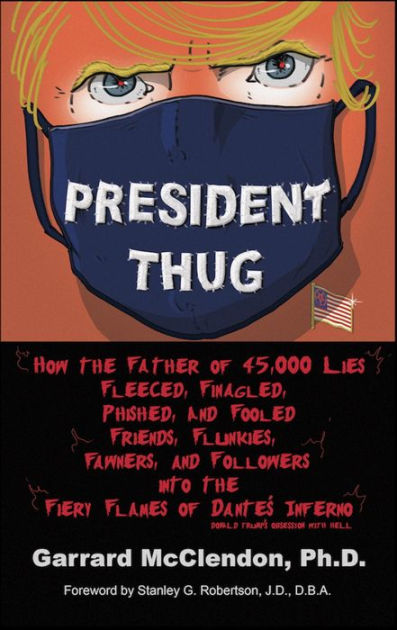
I watched several shows the other day in which Trump supporters were interviewed.  People are as curious about his supporters as they are about Trump.  Given the unquestionable fact that Trump is a greedy sexist racist hate monger, why would anyone support him?  The assumed knowledge is that his supporters are a bunch of ignorant losers:  people who are uneducated or at best semi-literate.  However, the data and demographics do not entirely support this conclusion.  Many Trump supporters are intelligent educated and literate people.  These are also people who believe in the United States of America and care about their country.  What then persuades or convinces them that Trump is the right person for the job of POTUS?  His qualifications pose a questionable proposition that would seem to fly in the face of all known facts in the entire universe.  This dilemma strikes at the heart of the matter.  We do not know what to believe any more.  What is a fact?  What is evidence?  What is objective data?  Where can we find facts that are truthful (not really a redundancy)?

I think about my graduate students at the college where I have taught for many years.  These are students who are working on an MBA and are highly literate, highly educated and highly intelligent individuals.   Many of them already hold very well paying jobs and responsible positions in successful companies.   Nevertheless, the challenge that I continually face is to teach them the difference between facts, data, evidence and truth.  Despite their literacy, few of these students understand the difference.  This is a scary situation.  If these highly educated students do not understand the difference between these concepts, how can we expect the many uneducated members of the general public to understand and comprehend the essential elements of truth finding?  I say essential because facts, data and evidence are the three pillars of truth.  If you do not have these, you cannot find the truth.

lies

Several problems make the issue even more complex.  In academia, we are dealing with a subset of life in which there is much less confusion over the truth since no one is deliberately trying to distort, lie or sell us anything.  There may be stupidity, lack of knowledge and even ignorance by many scientists and professors but the greed motive is much less tangible.  I am not saying it does not exist, but for most of my teaching career, I cannot think of anything I have ever tried to sell to my students and make a profit on.  I can say with some confidence that this is also true of all the instructors whom I have ever known or worked with.  The same situation does not exist outside of academia.  The marketplace is a vicious jungle when it comes to searching for the truth while academia is a tame zoo in comparison.

When we enter the marketplace and even more so in the political arena, the motive to convince us of something relies much less on elucidating the truth than it does on obfuscating the truth in order to sell us something.  Wells Fargo Bank wants you to open a credit account.  They don’t care whether you need it or not.  Volkswagen wants to sell you a car even if they have to hide the truth about pollution levels.  Every politician in America wants you to vote them into office.  They don’t want you to know the real truth about their competition or that they do not have all the answers to the problems facing our country.

Companies and politicians have a vested interest in hiding the truth from you.  Stories like Miracle on 31st Street where Macy’s sent people to Gimbels are few and far between and exist mostly in fantasy.  Similarly, stories about politicians with ethics such as “Mr. Smith Goes to Washington” have become legendary because they depict a reality that seldom exists.  Most politicians will promise you the moon to get your vote and most companies will not tell you the truth about cigarettes, drugs, food or anything else unless forced to do so by some form of government regulation or mandate.  It does not matter whether it will kill you or not as long as you buy it or elect them.

trump-versus-hillary

Finally, we come to perhaps the biggest ruse of all.  If anyone is searching for the truth, they will eventually enter into the Fourth Estate.  This hallowed ground is defined as:  “A societal or political force or institution whose influence is not consistently or officially recognized.  Fourth Estate most commonly refers to the news media, especially print journalism or The Press.” (Wiki).   Thomas Jefferson believed that the two pillars of a democratic society were an educated citizenry and a free press.  Mark Twain was somewhat more skeptical about the power of the press and information to inform people when he noted that:  “If you don’t read the newspaper, you’re uninformed. If you read the newspaper, you’re mis-informed.”  The truth seeker has been taught since early childhood that in the domain of the Fourth Estate is to be found the truth.  Little do they know the quagmire they have entered into or that the role of truth finding in the Fourth Estate no longer exists.

la_verite_par_jules_joseph_lefebvre

Today, the major purpose of the news (whether print or digital or video or audio) is to sell.  Sell, sell, sell, sell and sell some more.  Sell junk, sell drugs, sell expensive credit cards, sell stuff and more stuff.  Stuff you don’t need, won’t need and will probably never need.  The job of the media is to convince you that you do need stuff, that you desire stuff and that you can not possibly live without stuff.

I once thought that journalists were a group to be respected.   This was based on the knowledge that they had often risked their lives and their reputations to bring us the truth.  Today, journalists are little more than pimps for advertisers.  They have sold their souls to the devil, descended into hell and may never come out again.  The measure of a journalist is not how much information they provide to the public but how many advertisements they can sell.  The changing role of journalists has made it even more difficult for people to find the truth.  Nothing in the news is remotely objective or unbiased any more.  Every paper, every station has their spin on things.  The spin is determined by who owns and controls the media.
Take polls for example.  As we go into the final days of the 2016 US presidential election, you can find polls that favor one candidate or the other candidate.  If there are seventy polls, half may favor one candidate and half may favor the other candidate.  There is no truth even in these so called unbiased statistical polls.  Many of my friends have suggested that the news media want the race to be close because this keeps people tuned in.  Much like a sports match, we would rather watch an event that had a pair of evenly matched contestants.  My friends have suggested that the news seems to do its best to insure that first one candidate gets major media attention thus elevating them in the polls and then it switches to the other candidate providing them attention that elevates their poll numbers.  I am not a big conspiracy theorist but this theory does seem to have some merit to it.

78-trump-debate-lies-758x426Regardless of whether the media intentionally want to keep the race close or not, there is no denying that the candidate who is the most obnoxious, the most outrageous and the most sensational will garner the most press.  Trump has been well aware of this and has continually manipulated the media into providing him billions of dollars in free advertising.   The fickle public seems to swing from one candidate to the other depending on who they see in the news.  Trump has undoubtedly benefitted from his ability to keep the press absorbed with his every utterance regardless of how inane they are.  He can tweet at 2AM in the morning and be assured that Fox News will carry his tweet on the 7 AM morning news.
stupid-trump-supporters

How then can we blame the general public, educated or not, of being uninformed or misinformed when most of our society is conspiring against them finding the truth?  It is a trap that I have fallen into when I have railed against the stupid, illiterate and uninformed Trump supporters.  Sadly, they are not to blame for their reliance on Trump to give them the truth.  The have certainly not found it in academia or the Fourth Estate.  I have some solutions to this issue but I do not have the entire answer to it.  I do have part of the answer.  It is quite clear to me that one must understand the difference between facts, data, evidence and the role of these three elements in helping to shape the truth.   In Part 2 of this blog, I will go into the subject of Facts in more depth.  In the following parts, I will cover Data, Evidence and Truth.

Time for Questions:

How do you know what to believe?  Who do you trust to give you unbiased information?  How much do you trust the news?  Are you satisfied with the quality of the information you get from journalists and the news?  What do you think we need to do to improve the quality of information the American public receives?

Life is just beginning.

“There’s a danger in the internet and social media.  The notion that information is enough, that more and more information is enough, that you don’t have to think, you just have to get more information – gets very dangerous.” — Edward de Bono

Writing the Big Lie

johnson.image_2

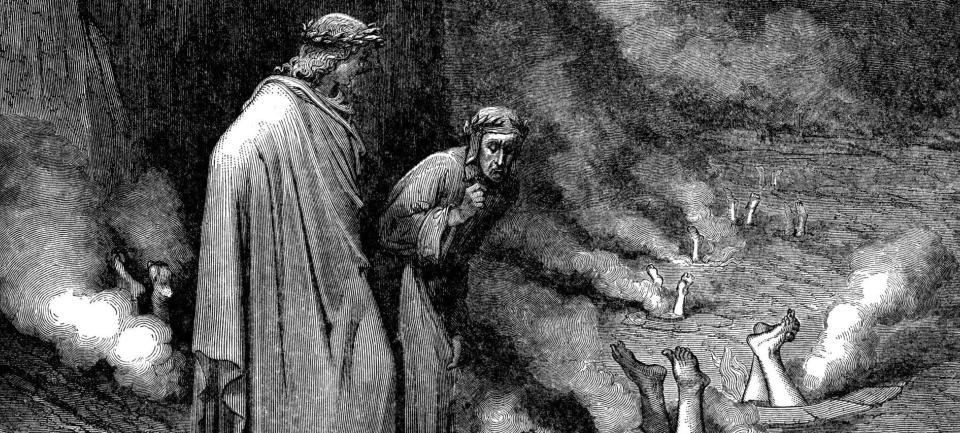
The eighth circle of Hell in Dante’s Inferno is for the sin of fraud. Generally, this includes counterfeiting, hypocrisy, lying, stealing, and more.

 What is the punishment in circle 8?

Circle 8 of Hell in Dante’s Inferno has ten different areas for fraudsters. Dante describes these as separate ditches or trenches within the circle. In the first ditch, demons whip pimps and seducers. In the second, flatterers are buried in sewage and feces. In the third, “simonists” – those who abuse church power – are buried upside down and their feet are burned. In the fourth, sorcerers or fortune tellers are forced to walk around with their heads on backwards. In the fifth, the politically corrupt are buried in boiling tar. In the sixth, religious hypocrites are forced to wear torturously heavy church robes. In the seventh, snakes bind thieves’ hands behind their backs and torture them in various other ways. In the eighth, those who lied for personal gain are turned into living flames. In the ninth, people who sowed division walk in a circle. When they pass a certain demon, it chops their head or limbs off – their wounds slowly heal as they walk around again, and the demon chops them again when they come back around. In the tenth and final ditch, counterfeiters are punished with various afflictions like scabies, itching, or thirst.  —- From Study.Com by Angie Armendariz, Arielle Windham, and Jenna Clayton.                         

Christians believe that everyone is a sinner.  That is why every week at a Christian church you will hear an aisle full of practitioners asking forgiveness for their sins.  The times I accompany my spouse to church, I am reluctant to confess any sins or to ask for any forgiveness.  I can’t help but wonder what I should ask forgiveness for.  Many the day I regret something I have said or done but seldom do I think this makes me a sinner.  When they say that Christ died for my sins, I wonder how he could have known the stupid and sometimes malicious things I actually have done?  Perhaps this is an example of a Big Lie.

Writers all lie.  Some more than others.  There are lies of omission.  There are lies of commission.  There is hyperbole.  There is obfuscation.  Writers of course are not the only ones who lie.  The government lies.  The army lies.  The CIA lies.  Even your parents probably lied to you more than you think.  Sometimes we lie to get our point across.  Sometimes we lie to protect another.  Sometimes we lie to protect ourselves.  Sometimes we lie because of erroneous beliefs, common but false tropes, misinformation, and disinformation.

The media today is one big melting pot of lies.  CNN, MSNBC, FOX News, Breitbart and all the other major networks are cesspools of daily lies.  Left wing, right wing, Democrats, Independents, Republicans, John Birchers all lie.  Studies show that average people also lie fairly regularly.  “Do as I say and not as I do” is one form of lying.  The biggest lies we engage in are lies to ourselves.  Self-talk is full of lies.  “I would never do that.”  “I get better every day.”  “I get enough exercise.”  “I am a follower of Jesus Christ.”  Some studies such as noted below show that the assumption that most people are liars is not exactly true.  Many people are opportunistic liars.

“People also have good and bad lie days, when they tell more or fewer lies than is typical for them, Levine says.  People do not lie for the most part, he says, a few pathological liars aside. Also, for the most part, people do not lie unless they have a reason to.  Our daily communication demands are a big driver for most of us on how honest or dishonest we are,” Levine said.New research shows most people are honestby Shannon Thomason

On the subject of writers as liars, I include advertisers, marketers, political speech writers, media script writers and even blog writers.  We are all guilty of Big Lies.  The following quote is attributed to the Nazis Joseph Goebbels, but it was also written in Hitler’s Mein Kampf:

“If you tell a lie big enough and keep repeating it, people will eventually come to believe it. The lie can be maintained only for such time as the State can shield the people from the political, economic and/or military consequences of the lie. It thus becomes vitally important for the State to use all of its powers to repress dissent, for the truth is the mortal enemy of the lie, and thus by extension, the truth is the greatest enemy of the State.”

Upon reading the above quote, it might give you some pause when it comes to believing anything that comes out of the mouth of a press secretary or any other official State representative.  To repeat “The Truth is the greatest enemy of the State.” My father once said, “Believe nothing of what you hear and half of what you see.”  This might have been the best advice that I have ever received.  This is why all teachers today say that they believe Critical Thinking skills are the most important tools we can teach students.  Unfortunately, this is also a Big Lie.  It is something that might be believed but it is not practiced.

I call a Big Lie something that is truly and wonderfully believed either by the writer or speaker.  Unfortunately, they may not adhere to it in practice or in their daily lives.  They talk and write a good game, but they do not deliver.  As Martin Luther King said about the “Declaration of Independence”,

“When the architects of our republic wrote the magnificent words of the Constitution and the Declaration of Independence, they were signing a promissory note to which every American was to fall heir. This note was a promise that all men — yes, Black men as well as White men — would be guaranteed the unalienable rights of life, liberty, and the pursuit of happiness.  It is obvious today that America has defaulted on this promissory note insofar as her citizens of color are concerned. Instead of honoring this sacred obligation, America has given the Negro people a bad check, a check which has come back marked insufficient funds.”

9780996883252_p0_v1_s1200x630Our Founding Fathers wrote a Big Lie and African Americans have been paying for it ever since.  Women and other minorities were not even mentioned in the Big Lie, but it applied to them as well.  Lies can be committed because people believe things that do not mesh with reality.  Lies are a coverup for many government actions that our politicians do not see as palatable for the public.  The Gulf of Tonkin incident, the overthrow of Salvador Allende, the weapons of mass destruction in Iraq are only a few of the lies that have been fed to the American people.  Of course, our politicians would have us believe it is for our own good.  The really sad part is that the media is always complicit in these lies by reporting them with little or no verification of their truthfulness.  Some of these lies fall into what I call the “Realm of Taboos.”  Taboos are a good place to look for Big Lies.
A Taboo is defined by the Online Oxford dictionary as, “A social or religious custom prohibiting or forbidding discussion of a particular practice or forbidding association with a particular person, place, or thing.”  Taboos arise when reality clashes with Big Lies.   For instance, it is a Big Lie to think that Americans always fight a virtuous war.  Our government wants us to believe that any war we fight is to protect the right to Life, Liberty, and the Pursuit of Happiness.  It would not do any good to let the public know that most of our wars have been wars of aggrandizement.  Wars fought to protect our economic interests.  Thus, we develop Taboos that prohibit subjects from being discussed.  This saves government and politicians from being exposed as Big Liars.

One particularly egregious lie is that someone is never too old to hold public office.  We have a plethora of “old” politicians and judges who would be better retired.  The average age of senators in the 118th Congress is 64 years old.  There are 54 senators older than 65.  I am 77 years old in two weeks and my days have dwindled down to about four to five ENERGY hours per day.  The rest of my day is spent napping, reading, watching TV, or just enjoying a good Bourbon.  Many of the politicians holding office probably cannot say that they could do any better than I could.  But no one has yet disputed their right to run for office.

“American society on the whole fears aging. It is a culture that works overtime to stave off death, even while having one of the lowest life expectancies in the world compared to the amount spent on health care every year. It is considered taboo to bring up age in a variety of contexts, including whether or not someone is still hardy enough for the rigors of public service after more than eight decades on the planet.” — Aug. 31, 2023, by Hayes Brown, MSNBC Opinion Writer/Editor

imagesSo, we tell a Big Lie that age does not matter.  And we have no one willing to challenge that lie.  However, it is not only physical aging that puts people at a disadvantage, but mental aging as well.  Many older people are stuck in a past generation of ideas and values that are no longer relevant today.  Values and cultures change over time and people born in the 40’s and 50’s are less likely to understand and adapt to the changes that daily life brings.  If you can only see the “Good Old Days”, you may be suffering from old age.  The average age of Nobel Prize winners when they conducted their prize-winning research is 44.1 years.  As for writing, “According to experts, we start becoming more creative and prolific in whatever field of art or study we work, around the age of 25.  Most people reach their peak after the age of 35 or in their 40s. This is when they produce their most valuable work.  After the age of 45, most artists’ prolificity starts slowly declining.” — The Adroit Journal
Conclusions:

  • Big Lies are part of reality.
  • People often do not want to know the truth.
  • Politicians believe that people cannot handle the truth.
  • Big Lies are told to conceal realities that will adversely impact governments.
  • We all lie sometimes. Some of us more than others.
  • Writers have a responsibility to tell the truth as much as possible.
  • We cannot always see the culture of lies that we are caught in.
  • Follow my father’s advice: “Believe nothing of what you hear and half of what you see.”
  • When you do not believe something, gain insights from 360 Degree Thinking.

360 Degree Thinking can be defined as, “being cognizant of ideas and insights coming from a variety of sources, both internally and externally, and understanding the critical interconnectedness of these ideas.” It is about your ability to view ideas and information coming from all sides and on all levels in all timeframes (for example, short, medium and long-term priorities).   —- Ideas for Action

The Four Most Important Searches in Our Lives — The Search for Authenticity

authenticity2

Authenticity is being true to yourself.  It is being who you really are versus who others want you to be.  It is being true to a set of values, morals or principles that define a good life.  It is defining oneself and not letting others define you.  “In existentialism, authenticity is the degree to which a person’s actions are congruent with their values and desires, despite external pressures to social conformity.”Wikipedia

What do you want your life to be like?  What will you stand up for?  What is worth living for and dying for?  These questions frame a Search for Authenticity which will continue our entire lives.  It is not that we never find authenticity, it is that as our roles change in life, the meaning of authenticity will change.  We must continually redefine ourselves in terms of being authentic.

It will not matter whether you are rich or poor, whether you are educated or uneducated.  It will not matter who you know or what you know.   Authenticity comes from the heart and soul and not from the brain.  You cannot buy authenticity.  You cannot acquire authenticity by fame or fortune.  Knowing celebrities and being a celebrity are no guarantees of authenticity.  You cannot go to school and get a degree in authenticity.  Think for a minute.  Who is the most authentic person you know?  What makes them authentic?

authenticity-2

Two things have escaped me in my life.  When I was young, I wanted to be rich and famous.  Often, I still dream of it.  Not an unusual desire given American values.  Over the years, I have read many books about famous people.  I have read most of the great philosophers.  I studied a Harvard Business course on the histories of the richest entrepreneurs like Getty, Rockefeller, Carnegie, and Mellon.  These were the predecessors of Gate, Musk, and Buffett.  The results would show that I am nowhere near successful in my twin goals.  Neither fortune nor fame has cast its shadow over my life.  Perhaps I am blessed because of this.  Knowing how immature and ungrateful that I have often been, either the money or fame would have been squandered or it would have destroyed me.

Today, I am happier than I have ever been.  I have more than some people and less than others.  I have good friends and a loving wife and sister.  My ex-relationship with my daughter is not wonderful but it is no longer on rocky grounds.  What does my life have to do with authenticity?  Why my story here?  Well, over the years I have pondered the reasons that my goals of fame and fortune were never attained.  My answer lies in what it means to be authentic.

I have never chosen money over knowledge.  Money has never been as important to me as learning and education.  I would sooner spend an afternoon in a library as in an office.  I have never chosen money over ethics.  My clients always knew that I would tell them the truth, even if it was not always tactfully done.  I never dreamed of getting ahead in business by developing a network of influential friends or meeting clients on the golf course.  In fact, I purposely never learned to play golf.  I wanted to be respected for what I knew and not who I knew.  This is a major mistake in the world of commerce.  When my boss at the consulting firm asked me where my list of contacts was for networking, I was befuddled.  I had to go back into his office and ask him to explain networking to me.

Being a rich successful businessperson was not in my genes.  I came to accept that fact over time.  The answer for how you get to Carnegie Hall is “Practice, practice, practice.”  I was never willing to take the time to be a businessperson.  I would rather do other things like travel and meet new people, see new places and explore new ideas.  I would not practice the skills needed to succeed in business.  I valued time more than money.

I also was not willing to take the risks needed to be an entrepreneur.  I remember reading a biography of the great African American entrepreneur John Johnson who founded Ebony Magazine.  When he needed money to meet a deadline for publishing an issue of Ebony, he pawned his mom’s furniture.  He had already invested his last cent in the business.  It would be interesting to know what his mom said when she came home and found her furniture gone.  I was never a risk taker when it came to money.  I still have never bought a lottery ticket.  I cannot imagine hocking my furniture much less my mom’s furniture.

download

Being authentic means being true to who you are in spirit.  Integrity and authenticity go hand in hand.  Integrity is upholding those unique values and virtues that make you authentic.  Oxford Online dictionary defines integrity as: “the quality of being honest and having strong moral principles; moral uprightness.”  If you say that you value honesty, then you must practice honesty.  If you say that you value truth, then you must practice truthfulness.  If you say that you value democracy, then you must support democratic values and principles.  First though, you must ask yourself what it is that makes you alive?  What makes you human?  What is truly meaningful to you?  The answers to these questions will determine your integrity.  People with little or no integrity can be authentic.  There are authentically “bad” people.  However, I believe that authenticity must always be allied with good character development and that means authenticity must meld with integrity.  Unfortunately, it seems that sometimes the two do not find each other.

Today we are faced with a tsunami of public figures who seem to have no integrity.  Lawyers lie and spin devious schemes to protect their clients and themselves.  Politicians take oaths and contributions from PACs which ensure that they will ignore the will of the majority.  Sports figures use their influence to take advantage of others.  Celebrities have no qualms about ethics and will do anything to continue their celebrity status.  So called journalists are more interested in advertising revenue than in the veracity or merits of any news.

Being authentic only has merit if you also have integrity.  Father Stokhal of Demontreville used to say that if you do bad actions, you can tell yourself all day long that you are a good person, but you will never be good until you stop the bad actions.  If you have grievous character defects such as lying and cheating others, being true to yourself has no merits or value to the world.  Jesus said that if the salt loses its flavor, what good is it.  Socrates believed that the ultimate goal of human existence was not just to live but to live a good, meaningful, and virtuous life.  A good life was guided by virtue and moral principles.  Being authentic means to find the virtues and morals that will help you to lead a good life.  Integrity is sticking to those virtues and morals that you believe in through thick and thin.  You do what is right regardless of what others may think or how much you may or may not profit by your actions.  Here is an example of the lack of authenticity and integrity that plagues politics today.  This concerns the upcoming Republican debate.

KNDebates

Yesterday, I was reading the following story on several different news outlets.  One headline on the N.Y. Times read “Defend Trump and ‘Hammer’ Ramaswamy: DeSantis Allies Reveal Debate Strategy.”  The principal points that the coaches suggested to DeSantis were as follows:

  • Take a sledgehammer to Vivek Ramaswamy, the political newcomer who is rising in the polls.
  • Defend Donald Trump when Chris Christie inevitably attacks the former president.
  • Attack Joe Biden and the media no less than three to five times.

If the guidance above does not smell to you as garbage, then I apologize.  But please don’t tell us that “Well, this is politics.”  I hope we all expect more of our politicians than people who ignore authenticity and integrity to score cheap points in a debate.  Nevertheless, this is what politics in America has become.  Now there always was and always will be devious and unethical methods used to get elected.  Study the history of Thomas Jefferson and you can see the media at work two hundred and fifty years ago to smear his name because of his alleged affair with a slave named Sally Hemings.  But if we don’t start expecting more, when will things change?

We may be at a crossroads in America.  A large percentage of people no longer respect politicians and lawyers (they seem to go together).  Many people are clamoring for less government.  Governmental agencies have lost a great deal of their former influences due to the actions of our leaders.

A study on respect for government found the following:

A Pew Research Center survey finds that just 20% of Americans say they trust the federal government just about always or most of the time. — Dec 5, 2021

Two studies on feelings towards lawyers in the USA found:

In a Gallup poll from 2015, only 4% of respondents rated the “honesty and ethical standards” of lawyers as “very high.” In that same poll, more than one-third (34%) rated attorneys’ honesty and ethical standards as low (25%) or very low (9%).

A landmark study for the American Bar Association found even harsher truths underlying the popular perception of attorneys:

74% of those surveyed agreed that “lawyers are more interested in winning than in seeing that justice is served.”

69% believed “lawyers are more interested in making money than in serving their clients.”

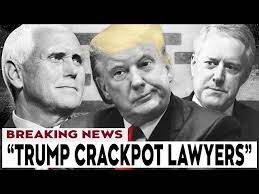
These studies were done eight years ago.  I would bet you a 100 to 1 that feelings towards lawyers today are even worse than they were eight years ago.  Former Vice President Pence recently referred to “Trump’s gaggle of crack pot lawyers.”  Trump and eighteen other cohorts have now been indicted in respect to his scheme to overthrow the 2020 presidential election.  Seven of those indicted were lawyers.  If you ever believed that lawyers follow a “Code of Ethics” you may well wonder where Trump’s lawyers went to school.

download (1)

You might wonder if authenticity and integrity are just for the average person.  It certainly seems that “above” average people including the rich and famous do not subscribe to the same playbook that is recommended for the rest of us.  Why then worry about a “Search for Authenticity?”  Will it keep you happy?  Will it make a difference in your life?  Here is what some other people and religions have to say about it.

“Authenticity is a collection of choices that we have to make every day. It’s about the choice to show up and be real. The choice to be honest. The choice to let our true selves be seen.”  ― Brene Brown, The Gifts of Imperfection

“If you don’t know who you truly are, you’ll never know what you really want.”  ― Roy T. Bennett

“Only the truth of who you are, if realized, will set you free.”  ― Eckhart Tolle

“But above all, my brothers, do not swear, either by heaven or by earth or by any other oath, but let your “yes” be yes and your “no” be no, so that you may not fall under condemnation.” — James 5:12 ESV

“The objective of Islamic ethics is to illuminate the virtues that enable a person to perfect his or her humanity.” — Omar Qureshi, Finding the Authentic Self

“In Buddhism, living authentically means living with honesty and being willing to look at your own illusions and self-deceptions. It also means questioning your self-images and self-limiting identities, and examining the stories you weave about yourself.” — Tricycle, The Buddhist Review

Conclusions:

  • Do not believe what I am telling you. Search for your own authenticity.
  • Find out what it means to “Be Yourself.” What is yourself?
  • Find a mentor, partner or someone who will be honest with you. Do an authenticity check with them every so often.  Ask them if you are an authentic person.
  • Who do you most admire? Are they authentic?  Do they have integrity?  If not, why do you admire them?
  • Are you voting for and supporting people who are authentic and have integrity? Why not?
  • What barriers exist in your life to being authentic?

Next week we will look at Man/Woman’s Search for Love.

I doubt that a person ever existed who did not want or search for love.  Love is older than the Greek gods, older than the Bible, older than the universe.  Everyone knows what love is and no one knows what love is.  Everyone wants love but few really know how to give love.  Love may be the most frequently used word in any language.   It is probably the most frequently misused word in any language as well.  We search for love and many of us will never find it.  Some of us will find it at a very old age and some will find it while very young.  No amount of arguing will ever stop anyone from looking for love.

  1. Arabic: حب (habb)
  2. Chinese: 爱 (ài)
  3. Filipino: Pag-ibig
  4. Swahili: upendo
  5. Hindi — मोहब्बत (mohabbat)
  6. Indonesian: cinta
  7. Japanese: 愛 (ai)
  8. Persian: عشق (ishq)
  9. Punjabi: ਪਿਆਰ (pyaar)
  10. Russian: любовь (lyubov’)
  11. Spanish: Amor

PS:

At the first Republican debate Wednesday night, Seven of the eight Republican presidential candidates on the debate stage raised their hands to confirm that they would support former President Trump as the 2024 GOP nominee, even if Trump is convicted in a court of law. Former Arkansas Gov. Asa Hutchinson was the only candidate to keep his hand down.  Some readers have commented that one or the other of these candidates have set themselves apart from Trump and are no longer sycophants.  I think these raised hands are enough evidence to prove that there is little or no integrity in the Republican Leadership today. 


Free Speech in the Public Arena

free speech

This is part 4 of my series on Free Speech.  In my third part, I talked about the issue of free speech in academia.  Here I would like to discuss how I see the First Amendment playing out in the public sector.  By public sector, I am referring to the street, store, bank, airplane, bus, park, library or any public building or public office space, where you might find yourself standing or sitting.  The First Amendment provides that:

“Congress make no law respecting an establishment of religion or prohibiting its free exercise.  It protects freedom of speech, the press, assembly, and the right to petition the Government for a redress of grievances.”

downloadAs with any of the constitutional amendments there is a certain, indeed I would say “high” degree of ambiguity as to the limits of what the Founding Fathers meant by their words.  We know for instance that they did not mean that you could slander or libel anyone with your words.  We know that they did not mean that you could yell “fire” in a crowded theater.  We also know that there are many instances of what the Founding Fathers did not have a clue would become an interpretation for “Free Speech.”  For instance, the Citizens United decision by the US Supreme Court says that the right to make political contributions is a form of free speech.  This will probably go down in history as one of the most egregious interpretations of what the Founding Fathers meant.  The only interpretations that seem more egregious concern several earlier court decisions regarding slavery and the buying and selling of human beings.

Another famous saying is a parody of the “Golden Rule.”  This parody says that “He/She who has the gold makes the rules.”  In terms of free speech, this parody is quite apt.  Corporations have a lot of money, so they decide what free speech is and is not.  The more money or power you have, the more free speech you can ostensibly command.  If you are a US Senator, you will have a greater audience willing to listen to you than you or I would have.

Bernadette Dohrn, the now retired law professor and once upon a time leftist radical, said that “In America, you can say anything you want, until someone starts listening to you.”  This truism seems to have become aggravated by the sheer numbers of lawyers and courts that are willing to hear any type of case regardless of what it is about.  Don’t think for a second that they are doing this to further truth, justice, and the American way of life.  If you have enough money, you can get your day in court.  If you do not, you better have a case that the media finds “sensational.”  Have you ever wondered why some cases get tried much sooner than others?  High profile politicians have the right to a speedy access in appeal courts and even the US Supreme Court considerably faster than you or I ever would.

The Sixth Amendment to the US Constitution says that Americans have the right to “fair and speedy” trial.

“In all criminal prosecutions, the accused shall enjoy the right to a speedy and public trial, by an impartial jury of the State and district wherein the crime shall have been committed,”

imagesRecently, I read of the case of an eleven-year-old convicted of killing his stepmother.  His appeal took three and a half years to come to court and then found him not guilty.  On the other hand, Kari Lake, the big lie advocate and loser in the Arizona Governor’s race this past year had appeal after appeal and each one seemed to take less than two or three weeks.  It takes three and a half years to get justice for an eleven-year-old wrongly convicted of murder, but Lake got trial after trial for her baseless and politically motivated claims that they “stole” the election from her.  This same scenario has played out repeatedly in the past few years.  Poor people with no money wait years to get a “fair hearing” while rich bottom feeders like Lake walk in and out of court on an almost daily basis.

This is an excerpt from a talk that Chris Hedges gave on April 4th at the Independent National Convention in Austin, Texas.  He called it “Reclaiming our Country.”

“It is one of the great ironies that the corporate state needs the abilities of the educated, intellectuals and artists to maintain power, yet the moment any begin to think independently they are silenced.  The relentless assault on culture, journalism, education, the arts and critical thinking, has left those who speak in the language of class warfare marginalized, frantic Cassandras who are viewed as slightly unhinged and depressingly apocalyptic.  Those with the courage to shine a light into the inner workings of the machinery, such as Noam Chomsky, are turned into pariahs, or, like Julian Assange, relentlessly persecuted.”

It does not really take much to run afoul of those who want to stifle free speech and free expressions in America.  Here are some examples from my own life.  I give these modestly because they are nowhere near as egregious as some.

  • Told while working for the Metropolitan Council in Minnesota that I had better back the Democratic candidate for Governor or my career would be short-lived. I backed Jesse Ventura instead.
  • Told by the VA Director while working for the VA as a Claims Examiner 7 that I would need to shave my beard off, or that I would never get a promotion.
  • Apparently, a complaint (from someone unknown) about my teaching a unit on current social issues necessitated a security person from the school to burst into my classroom, demanding to see my lesson plans, and wanting to know “who approved these plans?” I informed him that they were part of the regular curriculum, to which he ordered me to not pursue these lesson plans any further.  This happened in a local high school about 4 years ago when I was filling in for the regular teacher who was out for the week.

FH_FOTP2017_WhoTHreatensThePress_infographic_titles_subs_FINAL_1000px-1024x777

In recent years, we have seen more and more examples of speech being stifled by both right and left-wing extremists.  Each side does not want the other side to have a right to speak their piece.  A key cornerstone of our democracy has become so politicized today that agitators feel they have the right to speak but you and I do not.  Lawyers twist the words and definitions to fit the needs of corporations and rich clients but not to find truth and justice.  As Humpty Dumpty said to Alice:

humpty-dumpty-on-wall-with-alice-martin-davey

“When I use a word,’ Humpty Dumpty said in rather a scornful tone, ‘it means just what I choose it to mean — neither more nor less.’

’The question is,’ said Alice, ‘whether you can make words mean so many different things.’

’The question is,’ said Humpty Dumpty, ‘which is to be master — that’s all.”

Gold makes the rules, and the Master defines the words.  He who has both the gold and the power decides what is the truth and what lies may be told.

“I can walk into a bookshop and point out a number of books that I find very unattractive in what they say.  But it doesn’t occur to me to burn the bookshop down. If you don’t like a book, read another book.  If you start reading a book and you decide you don’t like it, nobody is telling you to finish it.”   — Salman Rushdie

Libraries, once a bastion of intellectual thought and free speech, have come under attack all over the USA.  State legislatures governed by Republican majorities have drawn up lists of hundreds of books to be removed from public libraries, school libraries and college libraries.  In one state a high school principal was recently fired for allowing a teacher to use a textbook for art appreciation which depicted the famous statue of David.  Book bans have occurred in 138 school districts in 32 states. These districts represent 5,049 schools with a combined enrollment of nearly 4 million students.  — Banned in the USA: Rising School Book Bans Threaten Free Expression and Students’ First Amendment Rights (April 2022),

School-Book-Bans-by-State-e1663182860955

Truth is now routinely perverted by both the media and the so-called justice system in America.  The narratives that you are bombarded with every day and that deign to pass as Free Speech are seldom anything but gross distortions of reality.  Think of the documents you sign for an insurance policy or a mortgage or buying a new car.  Dozens of pages of legal sounding words that have no meaning to the average person.  Even a lawyer would be hard put to explain what you are about to sign.  There is a good chance that you will later find that they covered every loophole needed to protect themselves at your expense.  I give you one example from many in my life.

A few years ago, I purchased a new RV.  The dealer talked me into signing an extended warranty policy for about 2000 dollars.  In less than ten thousand miles, a wheel broke off.  It did not come off because of loose nuts.  The hub and brake assembly all broke off with part of the axel.  It tore through the underbody of the RV causing almost 7000 thousand dollars of damage.  When I called the warranty company, they told me I had no claim.  Their policy covered “defect” not “damage” and that I should read page 32 for an explanation.  Every auto person I talked to said it was a defective hub and wheel.  “NO” said the warranty company.  If I did not agree, I could hire a lawyer, but they added they had fought this battle many times and they “would win.”

I am sure that everyone reading this can find a similar example of signing some long legal sounding document and later finding that the words were crafted to “give you the shaft.”  These legal distortions further the ends of an elite that does not believe in Democracy.  They are like wolves in sheep’s clothing.  Their façade keeps the public passive until they are ready to pounce.  There are many in America today for which Democracy is nothing but a convenient façade.  It is brought out when needed to further their ends.  Ends which as my good friend Dick always said you will find when you “follow the money.”

“Goebbels was in favor of free speech for views he liked.  So was Stalin.  If you’re really in favor of free speech, then you’re in favor of freedom of speech for precisely the views you despise.  Otherwise, you’re not in favor of free speech.”  — Noam Chomsky

kaliedscope

Free speech is like anything else that someone tells you is free.  It is never free.  There are no free lunches.  If you understand that “Freedom” is never free but is always purchased with the blood of heroes and martyrs, what makes you think that Free Speech is “FREE.”  Free Speech is purchased with the courage to pursue convictions, speaking up when in the minority, and most of all an acceptance of hearing things you don’t want to hear and understanding that truth is like a kaleidoscope.  Each twist of a kaleidoscope brings a different reality into view.

free-speech-week-logo-main

Consider participating in “Free Speech Week” this October 16-22, 2023

FREE SPEECH WEEK

Created in 2005 and originally called National Freedom of Speech Week, Free Speech Week (FSW) takes place the third week of October annually.  Its purpose is to raise public awareness of the importance of freedom of speech and of a free press in our democracy – and to celebrate that freedom.  This non-partisan, non-ideological event is intended to be a unifying celebration.

PS:  Check out the latest Jim Hightower Thoughts on Book Banning.

https://open.substack.com/pub/jimhightower/p/how-perverse-is-the-gops-book-banning?r=zfnvi&utm_campaign=post&utm_medium=email

Can a Lying Elected Politician Keep Their $174,000 dollars a Year Job? 

  santos

‘Twas several nights after Christmas and a few nights before the New Year of 2023 when I first heard the news about George Santos.  A recently elected Representative from NY to a very narrow Republican Majority in the US House of Representatives.  Santos has been caught in a series of lies regarding his background and credentials.  Tulsi Gabbard conducted an interview with him on the Tucker Carlson show this past Tuesday night (12-27-22).  The transcript of this interview was published in “The Hill” by Emily Brooks on 12-27-2022.  I would like to add my commentary to the views that were published regarding this interview.  First, I must give my congratulations to Ms. Gabbard for her interview.  She asked some hard questions and literally kept the lying Santo’s feet to the fire. 

tulsi-gabbard-george-santos-republicans-lies-congress

My prologue to this interview is simply this.  Lying starting with Trump has become endemic in the Republican Party.  They seem to have no qualms or shame when it comes to telling lies.  They will do little or nothing to sanction Santos for two reasons.  First, because lying is the norm for Republicans today, and it is not illegal.  Second, because they do not want to risk losing Santo’s seat in the house.  With this preliminary insight out of the way, I want to add my comments to the following transcript.  I shall try to make my comments obvious by bolding my opinions and viewpoints.

I have one caveat to make before I start.  I am not kicking a sleeping dog.  This dog refuses to stop biting.  He is not giving up his seat and he refuses to accept any responsibility for his lies.  Instead, he says he is ready to serve his constituents and wants the world to just forget his transgressions. 

Tulsi Gabbard tears into George Santos during Fox interview: ‘Do you have no shame?’  —  BY EMILY BROOKS – 12/27/22 9:38 PM ET

Former Rep. Tulsi Gabbard (D-Hawaii) ripped into Rep.-elect George Santos (R-N.Y.) over his embellishments and fabrications about his background, asking him point-blank, “Do you have no shame?”

“If I were one of those in New York’s 3rd District right now, now that the election is over, and I’m finding out all of these lies that you’ve told, not just one little lie or one little embellishment — these are blatant lies — my question is, do you have no shame?” Gabbard asked while filling in for Fox News host Tucker Carlson in an interview with Santos on Tuesday evening. “Do you have no shame? And the people who are now, you’re asking to trust you to go and be their voice for them, their families and their kids in Washington?”

“Tulsi, I can say the same thing about the Democrats,” Santos responded. “Look at Joe Biden. Joe Biden has been lying to the American people for 40 years. He’s the president of the United States.  Democrats resoundingly support him.  Do they have no shame?”

Here we have the time-honored way of deflecting the blame by attacking someone else.  It is a version of the philosophical “Ad Hominem” fallacy, where you attack another person to avoid taking any responsibility for your own problems.  Santos attacks Biden and avoids answering the question regarding his lack thereof of any shame.  If he was going to mention a President who lied, he should have mentioned Trump who undoubtedly broke all records for lying to the American people. 

Gabbard interjected, saying that her question was not about the Democrats.

Three cheers for Gabbard who stepped on his strategy.

Santos has emerged from days of silence following reports from The New York Times and other outlets this month that revealed misrepresentations, fabrications and lies about his personal background.

In various interviews with the New York Post and elsewhere this week, Santos has admitted to “embellishing” his resume, including saying that he did not graduate from college and that he did not work directly for financial giants Citigroup and Goldman Sachs.

I love this.  He did not graduate from college.  He did not work for one of the major financial giants.  But he just calls adding these lies to his resume an “embellishment”.  I wonder if you went in for a job interview with lies like this on your resume whether the interviewer would see it as a simple embellishment?   If they found out after you were hired, do you think they would keep you on the job?  Where else in the world can you lie repeatedly and keep your job except for the US House of Representative and US Senate.  The present salary for a US Representative is $174,000 a year.  

Santos says a poor choice of words led to confusion about his work history, insisting that he did business with both companies and helped make “capital introductions” through “limited partnerships.” He relayed some of that explanation in the interview with Gabbard.

I did not lie says Santos, I merely chose my words poorly.  Like me saying that Santos is a lying sack of putrid excrement instead of a lying sack of shit.  Sorry, I just chose my worlds poorly.  I hope I did not offend anyone.  I promise I will choose my words more carefully in the future.

He has also come under fire for representing himself as an “American Jew” and saying that his maternal grandparents fled Europe during World War II, even though reports have emerged that those grandparents were born in Brazil before the war.

This is truly unbelievable.  He is on record and on video as lying to a Jewish assembly about his religion and heritage.  He claims he is culturally Jewish but was raised as a Catholic.  I was raised as a Catholic but was culturally Italian since my father was Italian.  I cannot see how any Catholic could be culturally Jewish.  As many Jewish people will tell you, for many years, Catholicism treated Jews as “Those killers of Christ.”  I remember being told that it was a mortal sin to step into a synagogue.  I am sure my Catholic priest would have had a heart attack if he found out that I attended a “Seder” or Passover rite with some Jewish friends.   

Gabbard pressed Santos on those points.

“My heritage is Jewish. I’ve always identified as Jewish. I was raised as a practicing Catholic,” Santos said. “Not being raised a practicing Jew, I’ve always joked with friends and circles, even within the campaign, I’d say, guys, I’m ‘Jew-ish.’ Remember, I was raised Catholic.”

This sounds like some sort of Orwellian Double Speak.  “Don’t you see that the whole aim of Newspeak is to narrow the range of thought? In the end we shall make thoughtcrime literally impossible, because there will be no words in which to express it.” — George Orwell. 1984. Part 1, Chapter 5. 

Santos uses some convoluted thought to try to convince us that deep down he is Jewish.  I suppose if he were running in Alabama, he would be a Baptist and in Utah, he would be a Mormon. 

“So, look, I understand everybody wants to nitpick at me. I’m gonna reassure this once and for all. I’m not a facade. I’m not a persona. I have an extensive career that I worked really hard to achieve. And I’m going to deliver from my experience because I remain committed in delivering results for the American people,” Santos said.

Boohoo.  Please feel sorry for me.  Santos must have picked this shtick up from Nixon.  He needs a small dog in his lap while giving us this speech before I can feel sorry for him.  Yes, I know he has a mother who loves him. 

“Congressman-elect Santos, we’ve given you a lot of time. I think the time that is owed is to the people of New York’s 3rd. It’s hard to imagine how they could possibly trust your explanations when you’re not really even willing to admit the depth of your deception to them,” Gabbard said.

This coming from a Tucker Carlson show host really surprised me.  Gabbard skewered him mercilessly.  She must have forgotten that she switched parties and was now a Republican.  I would not be surprised to see a rebuttal from the Republican party concerning her remarks. 

Gabbard is the second former Democratic member of Congress to interview Santos this week. He also spoke with former Rep. Anthony Weiner (D-N.Y.), who resigned in 2011 after the revelation of sexually explicit messages he sent to a minor, on WABC radio this week.

My guess is that Weiner and Santos have a lot in common and it is not their Jewishness.  You might remember Weiner as the man who sent a picture of his penis through a text to one of his girl friends while he was married.  Birds of a feather flock together. 

I have nothing more to add folks.  As they say, actions speak louder than words.  When are we going to demand some level of truthfulness in our politicians and trouble them for their lying ads and words?  Even now, I hear people saying “Well, he did not do anything illegal.”  Whatever happened to unethical and immoral?  Are we willing to tolerate deceit and falsehoods regardless of the circumstances because they are not illegal. 

There is a difference between justice and the law.  Justice demands that people we elect are honest and ethical and moral.  Any less should disqualify a person from holding a public office.

How Do You Know if You Know Anything?

truthHow do you know if you know anything?  You have two paths to answer this question.  The first path involves your belief that you do know something.  You can choose this path if you are fairly certain that you know something.  It may surprise you, but this is not a path of science.  This is a Faith-Based path.  No matter what anyone tells you, science relies on faith almost as much as religion relies on faith.

Consider the Heisenberg Principle of Uncertainty and Gödel’s Incompleteness Theorems.  Both theories show that ultimately, we can never be certain of anything, and that the fundamental bedrock of even science must then be a degree of faith.  Formulated by Werner Heisenberg, Nobel Prize winning physicist in 1927, the Uncertainty Principle states that we cannot know both the position and speed of a particle, such as a photon or electron, with perfect accuracy; the more we nail down the particle’s position, the less we know about its speed and vice versa. 

Godel’s first incompleteness theorem states that “No consistent system of axioms whose theorems can be listed by an effective procedure (i.e., an algorithm) is capable of proving all truths about the arithmetic of natural numbers.  For any such consistent formal system, there will always be statements about natural numbers that are true, but that are unprovable within the system.  The second incompleteness theorem, an extension of the first, shows that the system cannot demonstrate its own consistency.” — Wikipedia

trust

Let me provide a simple example of what these theories tell us.  For instance, you may say, “I know the earth is round.”  I challenge you to prove this.  The only way that you can prove it is by relying or trusting on the wisdom of experts who say that the earth is round.  Even if you have a picture of the round earth, how do you know that it is real?  In essence, you are relying on faith.  It is your faith in someone you trust whom you believe has more knowledge than you do.  You cannot prove the earth is round so your belief is based on faith.  This explains why climate change deniers are so difficult to argue with.  They refuse to accept any evidence from experts on climate whom they disagree with.  Instead, they find the inevitable expert who disagrees with many other scientists.  Most of us have faith in the majority.  But history has countless examples of where the majority were wrong. 

8d0e042d12f274260bd38c8f1d0bebeb

The second path you can take is what I call the Path of the Atheist.  In this path, you accept what Socrates did that you know nothing.  Socrates was called the wisest man in the world because he believed that “I know that I know nothing.”  The atheist does not believe anything unless it can be proved to them personally.  Since it is impossible that anyone can ever prove anything to you beyond a shadow of a doubt, you must conclude that knowledge (like God) is impossible to know or prove.  The atheist concludes that all possibility of ever conclusively proving anything is impossible.  Thus no one can really know anything. 

The Path of the Atheist diverges from the Faith Based path since with faith we believe things.  We believe that there are facts and there is an ultimate truth.  Even if we cannot find them ourselves.   The scientist’s belief is tempered by realistic probabilities based on experiments and history.  The Path of the Atheist does not believe that there is any ultimate truth.  Truth is only a process that gets us closer to some approximation that we are finally willing to settle for.  The Atheist says, “Show me an ultimate truth that is unvarying and that you can prove will be forever true.”  You might argue that the sun will come up tomorrow, but you only have history to rely on for this.  The dinosaurs might have believed that they would live forever but all it took was one large asteroid to wipe out millions of years of evolution. 

As we go through life, we sometimes choose one path and sometimes the other.  Given whatever circumstances we are confronted with, we select the path that provides the most comfort and certainty for us.  Even the Path of the Atheist is comforting since the atheist does not expect any irrefutable truth.  This gives the atheist the ability to ignore whatever fads and foibles society is following in search of a truth that does not exist, or at least for the atheist does not exist.   

truth as factual

What is the meaning of all this?  Are we arguing about how many angels can dance on the head of the pin?  Are we engaging in the same logic that Bishop Berkeley did.  A man who denied that there is a reality of matter apart from what the mind perceived.  Some philosophers have argued that we cannot prove or ever know if we are living or dreaming.  I would guess that most of you reading this blog persist in the idea that you are truly alive and not dreaming now. 

What then is the value of discussing truth?  In this age of misinformation, disinformation, false facts, and fake news, it is a matter that we all need to take more seriously.  For generations and centuries, humans have searched for the truth.  We are told that the “Truth will set us free” and that truth is a value even more important than honesty.  But as Sara Gran said ““Most people wouldn’t know the truth if it bit them in the ass and paid for the privilege.”  Could it be that to paraphrase Colonel Nathan R. Jessup in a “Few Good Men”, “You don’t want the truth because you can’t handle the truth.” 

truth will set you free

Truth is a great deal more complicated than we realize.  It is one of those “holy grails” which if we find may give us eternal life.  Problem is that no one has found either the Holy Grail or the Truth.  It is said that you have your truth and I have my truth.  Dr. Deming, an expert on quality insisted that nothing could be accomplished without an operational definition of any concept that was going to be studied.  He said “An operational definition is a procedure agreed upon for translation of a concept into measurement of some kind.”   The science of an operational definition lay in the measurement of the concept but the starting point for measurement lay in the agreement between two “reasonable” people as to what measurement procedure would be used.  Without an agreement there was no starting or ending point. 

We may meet someone on the street or at a party or it may be a friend or relative and they advance some theory or ideas which contradicts the facts as we know them.  A popular controversy these days among some is whether Trump really won the election and if it was not stolen from him.  If you believe it was stolen, you will have a set of ideas about what constitutes a “fair” election. 

trumpThe Faith Based Path could lead one to accept that hundreds of systems across America could not all have been wrong and that the tallies were accurate because someone you trust told you they were.  If you do not trust the poll counters, you will reject the decisions made by election boards and cling to the idea that Trump was cheated by liars and scoundrels.  Either way it is a matter of faith.

If you follow the Path of the Atheist, you may reject the vote tallies because you do not believe any voting procedure could be foolproof.  You accept that there is error in any system and the deciding factor for you lies in the degree of error that you are willing to accept.  Given your proclivity to accept a certain amount of error, you will either accept of reject any election results based on the voting tallies.

I chose the Faith Based path and accepted that fifty state election boards cannot all be wrong.  On the other hand, I followed the Path of the Atheist since I know that error exists in any procedure, and I do not trust that any election process can rule out all the errors in the system.  I accept the errors in life just as I accept the risk of dying on the road tomorrow when I drive someplace.  It is not a matter of faith; it is a matter of statistical probability.  Tallies like life will never be perfect.

truth 2

What do we do?  First stop looking for an ultimate truth.  Truth is like beauty and is in the eye of the beholder.  Second, ask others what they base their truth on.  See if you can come up with an operational definition for establishing truth that you are both willing to accept.  Third, agree on a way to measure the outcome of whatever you are measuring or looking at.  Accept that error will always exist and that predictability for any ultimate truth is near zero. 

The best we can achieve in life is a “useful” truth that we may find to make life easier and happier for all of us.    


Let’s All Kill Buddha!

download

Years ago, I spent some time studying Zen Buddhism.  Some of this was the “fad” of the day during the sixties and seventies.  Zen was so different than the Christianity or Catholicism that I had grown up with.  Zen spoke in koans and paradoxes.  A koan is a paradoxical anecdote or riddle, used in Zen Buddhism to demonstrate the inadequacy of logical reasoning and to provoke enlightenment.  For instance, “what is the sound of one hand clapping?”  Christianity has its parables and well renowned truths, but Zen teaches one to be skeptical of everything.   

Perhaps the most famous “truth” of Christianity is that Jesus was God incarnate.  In other words, Jesus was born a man but was actually a God.  This claim is indisputable among followers of Christianity.  Buddha never claimed to be a God.  Buddha never claimed to have any absolute truths.  One of the most famous lines that I have used many times was “If you meet the Buddha on the road, Kill Him!”  This message might seem bizarre to some people, but it makes absolute sense to many Zen followers.  Even Buddha’s message is not to be taken as “gospel” truth but instead examined and questioned with an open mind. 

quote-question-everything-learn-something-answer-nothing-euripides-9-13-07

I think about “Killing Buddha” quite frequently.  In this day of lies, misinformation, disinformation, and deliberately confusing legalese, we see more and more people taking sides about issues that they have seldom spent much time thinking or questioning about.  Emotions rule conversations today rather than facts, data, or logic.  We believe doctors, salespeople, lawyers, reporters, and politicians despite the fact that they have a vested interest in making money off of us.  Doctors with their often-needless surgeries, reporters more interested in advertising revenue than the truth, politicians trying to be reelected for life, lawyers with few or no ethics dedicated to winning at all costs, and salespeople trying to make as much money as they can on each sale.  They all want you to think that they know the absolute truth.  Jesus said, “The Truth will set you free”, but where will you find the truth?  Ask a politician.  Ask a doctor,  Ask a lawyer.  Only if you are delirious.

maxresdefault

Can you imagine if I said, “When you meet a politician or lawyer on the road, kill him or her.”  On the contrary, the public keeps re-electing politicians to office.  It does not seem to matter to people that Congressional approval ratings are some of the lowest they have been in history; they keep electing the same liars back to office.  The reelection rate of incumbents is nearly ninety percent.

Congressional stagnation is an American political theory that attempts to explain the high rate of incumbency re-election to the United States House of Representatives.  In recent years this rate has been well over 90 per cent, with rarely more than 5-10 incumbents losing their House seats every election cycle.”Wikipedia

207579

We have some very interesting challenges ahead of us.  Climate change, excessive militarization, corporate capitalism, assaults on democracy and the obfuscation of legitimate information in favor of bias and distortion.  I have not even mentioned sexism, homophobia, racism, xenophobia and the decline of education and the media.  Many of the people I know think that these problems are insurmountable and that they herald the decline of America.  Some believe that they represent the decline of humanity and civilization.  Optimist or pessimist or realist, I doubt very much that we can overcome these problems if we do not have the will or desire to start dialogues that question everything.  A quote by Einstein that I much admire goes:

“We cannot solve our problems with the same level of thinking that created them.”

EintsteinQuestionEverythingI have often been accused of being a pessimist but there is nothing about this quote that is pessimistic.  It is simply a fact that we must use our imaginations to see a different world and to believe that a different world can exist.  As long as we are stuck in the same thinking that generated our problems, we are not free to consider alternative realities.  We need more thinking about possibilities and the future.  We are bogged down with what Dr. Deming called the “problems of today.”  Deming said, “We must balance the problems of today with the problems of tomorrow.”

What if we taught our children in school to “Kill Buddha?”  What would tests look like?  What would a successful student look like?  What would schools look like?  Can you imagine students going around and killing Buddhas all over the place?  Imagine for a second if all the lawyers, doctors, politicians, and salespeople were challenged.  I suppose there are many who would be horrified at this idea.  Isn’t the role of education to teach facts and knowledge?  How would students get a job if all they knew how to do was “kill” Buddha? 

maxresdefault (1)

Hope springs eternal in the human breast.  But what is hope without a plan?  We need positive direction from our leaders, but we also need more transparency and innovation on the part of our leaders.  Supporters and leaders should be in a dance together.  A dance of rhythm and harmony.  Leaders must be open and honest with their supporters and supporters must be willing to challenge their leaders at every turn and nuance that life puts forward.  There is too little dancing together today.  Demagoguery is not dancing nor are spell binding speeches excoriating the opposition. 

One has only to watch or read the political advertising to see the worst of American politics.  Political ads one after another spewing lies and misinformation about the opposition.  No one can tell what any politician stands for or what their plans are because they are so busy bashing their opponents.  Benjamin Franklin once said, ”We must, indeed, all hang together or, most assuredly, we shall all hang separately.”  I will paraphrase Franklin by saying, “Either Americans will all join together to destroy the problems facing us or we will all be destroyed together by these problems.”   That is the simple truth. 


Previous Older Entries