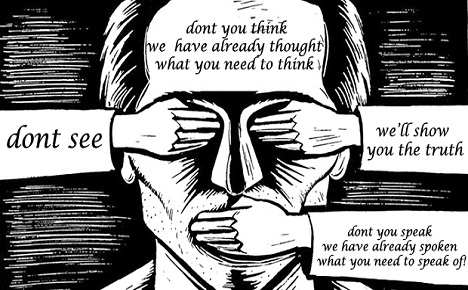
What does it mean to be brainwashed? When I was growing up in the days of the Cold War and the specter of nuclear disaster, the term brainwashed was associated with Communism. We all knew that anyone who believed in Communism had been “brainwashed” by Stalin and his minions. Brainwashed people could not think for themselves. To be brainwashed, meant to be a mindless zombie. People who are brainwashed have undying fealty to an impossible dream. Communists want a system where everyone shares equally in the production of society. Communists will fight and die for this dream.
“Communism, my friend, is more than Marxism, just as Catholicism is more than the Roman Curia. There is a mystique as well as a politick. Catholics and Communists have committed great crimes, but at least they have not stood aside, like an established society, and been indifferent. I would rather have blood on my hands than water like Pilate.” – Graham Greene
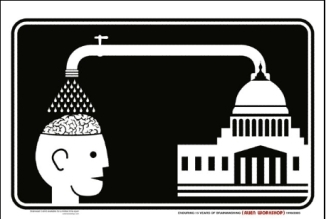 As Americans, we pride ourselves on being the exact opposite of Communists. In America, we have a democracy. To live in a democracy, means that you are “free” to think for yourself. No one living in a democracy can possibly be brainwashed. In America, “the land of the free and the home of the brave” you will only find people who believe in the truth. The truth is that democracy is the holy grail of political systems. It supports everything that is good about life. In a democracy, all men and women are created equal. In a democracy, everyone can succeed if they only have the right desire. Americans will fight and die for this dream.
“We hold these truths to be self-evident, that all men are created equal, that they are endowed by their Creator with certain unalienable Rights, that among these are Life, Liberty and the pursuit of Happiness.” – The Declaration of Independence
It never occurred to me that Americans could be brainwashed until I started teaching MBA students both at St. Thomas College and Metro State University in Minnesota. Enrollment in MBA programs soared during the nineties as more and more students gravitated to business occupations and away from such occupations as teaching and social work. Many of my students had obtained non-business undergraduate degrees and become tired of the lack of money associated with such career fields. With an MBA degree, you could easily make three or four times per year what you could with a Masters degree in Education.
I really enjoyed teaching in the business field because my students were smart, motivated and challenging. Most of them had been working for several years and brought considerable life experience to their classes. Very few of my students had simply finished an undergraduate program right out of high school and then gone on to get an MBA degree.
Since I had spent many years as a management consultant, I brought industry experience to my classes. I had learned along the way that critical thinking and the ability to question the status quo were essential to continuous improvement and systems change. I tried to incorporate these insights into my curriculum and classroom instruction. I soon found that this task was easier said then done.
An eye opener for me was when I tried to use the documentary film called: “The Corporation (2003)” in some of my business ethics classes. The Corporation is a Canadian documentary film critical of the modern-day corporation. It was directed by Mark Achbar and Jennifer Abbott and written by Joel Bakan. The film has numerous examples of corporate behavior that walk a fine line between criminal and immoral behavior. The film shows that many of the behaviors of modern corporations are immoral although not illegal. However, there are numerous examples in the paper every day wherein executives and corporate leaders have crossed the line.
“Again and again we have the problem that whether you obey the law or not is a matter of whether it’s cost effective. If the chance of getting caught and the penalties are less than it costs to comply, people think of it as just a business decision.” – Robert Monks.
Much to my surprise, many of my students did not see anything wrong with such immoral behavior. Their standards were set on what was expedient and legal rather than what was moral and ethical. Repeatedly, I found that modern business students believe in an amoral system of ethics rather than a moral system. In an amoral system, right and wrong is defined by what works and what does not work. If you are within the law, you may conduct your business with little concern for the residual effects on either society or citizens. The first law of business trumps all other concerns. That law is to make a profit.
No amount of persuasion or argument could sway my students from their steadfast believe in the value of capitalism and its sanctity as an economic system. Students were not persuaded by the iniquities in the system, by the inherent racism in the system, by the inherent sexism in the system or by the unequal distribution of wealth in a system that has become increasingly dysfunctional.
“What we should admit to begin with, if we can, is that good socialism is better than bad capitalism. The logic of the statement is really inescapable. It is only when capitalism fails that people and nations resort to alternative forms of political economy.” – Jude Wanniski
How can anyone as bright and experienced as these MBA students not see the obvious flaws in America’s belief system? An excellent book (The Structure of Scientific Revolutions) by Thomas Kuhn talks about the nature of scientific and paradigmatic change. Kuhn found that even scientists could not see the truth behind a new theory because their old paradigms blinded them to the new reality.
In the same way, it has been gospel for many years now that America is an “exceptional” nation. Americans are smarter, tougher, harder workers, more courageous, more creative and more ambitious then workers from any other country in the world. Since it is believed that America is built on Capitalism and Democracy, these two ideologies have become sacred tenets of American life. To cast doubt or aspersions on the value and efficacy of these systems is to suggest that America and hence Americans are not exceptional. Trying to talk students into seeing the flaws in either of these systems is about as effective as asking them to describe a Martian. If you have no foundation for seeing a new reality, you can only describe familiar objects in your current reality.
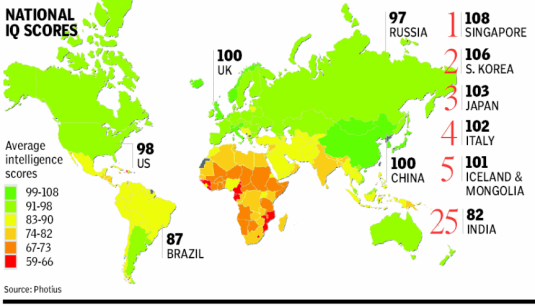
Business students today are not critical thinkers nor or they creative thinkers when it comes to politics or economics. Most of them have been brainwashed. When I use this term, I mean it to signify someone who cannot think out of a box of concepts that has become their dominant world view. Just as I suppose a die hard Communist would find compelling reasons to defend communism, die hard Americans can always find compelling reasons to defend America. A brainwashed person cannot see another reality or even begin to envision what might be wrong with their weltanschauung.
“This is what economics now does. It tells the young and susceptible (and also the old and vulnerable) that economic life has no content of power and politics because the firm is safely subordinate to the market and the state and for this reason it is safely at the command of the consumer and citizen. Such an economics is not neutral. It is the influential and invaluable ally of those whose exercise of power depends on an acquiescent public.” John K. Galbraith, (Power and the Useful Economist, 1973)
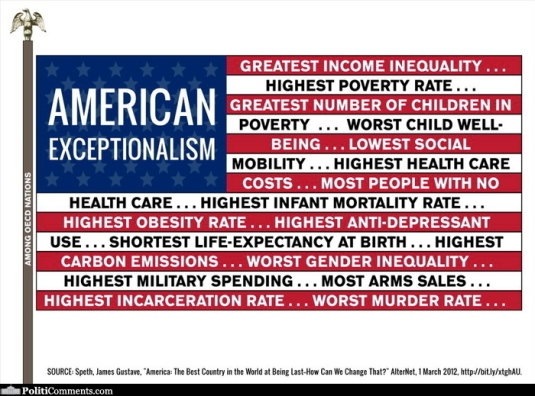
So, what am I getting at? What is my point? To find it, we need to return to the thesis of this article: Are Americans brainwashed? If we define what it means to be brainwashed as: “One who persists in the belief of something despite apparent evidence and facts to the contrary,” then I would suggest that the evidence points beyond a doubt to the fact that Americans are some of the most brainwashed people on the face of the earth. It has little to do with experience in business, innate intelligence or amount of degrees accumulated.
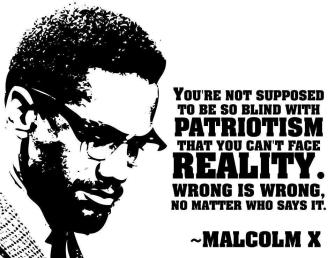

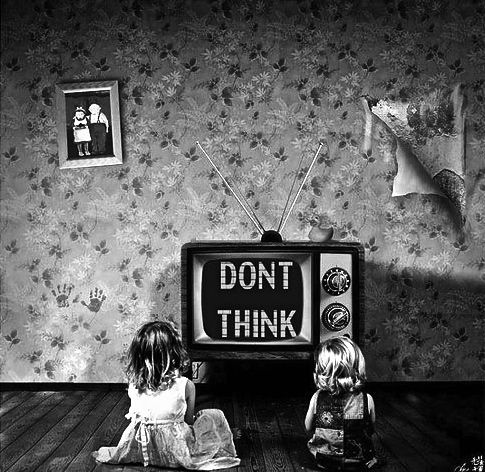
A red herring in our acceptance of my conclusion is the common belief that brainwashing is forced. Too often, we have the picture of an individual strapped to a chair being made to listen to propaganda or watch propaganda films. The fact of the matter is that brainwashing can be covert and subdued. I suggest another picture for brainwashing that is just as effective as “forced” brainwashing. Picture the average American watching four or five hours or television every day.
Television Statistics. According to the A.C. Nielsen Co., the average American watches more than 4 hours of TV each day (or 28 hours/week, or 2 months of nonstop TV-watching per year). In a 65-year life, that person will have spent 9 years glued to the tube.
During the average day, an American will have seen or heard between 300-700 marketing messages per day, including messages from the Internet and video gaming. – (Source: Phil Barden, “Decoded: The Science Behind Why We Buy”, 2013). Much of the research on the role that advertising plays in consumer purchases suggests that it is mostly informative rather than persuasive. In other words, it appears that consumers use the information to choose between products but are not necessarily persuaded by the advertising to buy any particular product.
As a business instructor and former retail store manager, I am skeptical of the consumer research. My firsthand experience in regard to the power of these marketing messages does not agree with the research findings. Students and customers will repeatedly deny that advertising messages play any overt role in their purchasing decisions. However, any observation of the buying habits of Americans will easily demonstrate a disconnect between what people spend their money on and rational economic sense.
Furthermore, when we look for the messages that “brainwash” many Americans we must look beyond Madison Avenue. We have a cornucopia of messages bombarding Americans every day that serve to instill mythical beliefs in American exceptionalism, American patriotism, American heroism and American capitalism. Let us look briefly at some of the beliefs that I noted earlier.
Americans are the hardest working people in the world:
The U.S. ranks 17 out of 38 countries in terms of average hours worked each year, according to the OECD, while Mexico, where labor laws cap the work week at 48 hours, ranks no. 1. Workers in Costa Rica and South Korea work the second and third longest hours, respectively – Sept 2, 2016
Americans are the most creative and innovative people in the world:
In this area Americans do rank exceptionally high. The Martin Prosperity Institute ranks 82 countries on a scale for creativity based on technology, talent and tolerance for new ideas. Overall, America ranks second behind Sweden. Note however that we are not number one in any category.
-
 UNITED STATES
Technology Rank: 3
Talent Rank: 8
Tolerance Rank: 8
Global Creativity Index: 0.902
Americans are the toughest people in the world:
This is a very ambiguous category and an allegation that is difficult to attack or defend. How do we define tough? Is our military the most powerful in the world? The answer would be yes. Are our athletes the best in the world? An all-time medal table for all Olympic Games from 1896 to 2016, including Summer Olympic Games, Winter Olympic Games, and a combined total of both shows that America has clearly dominated the Olympic games. The top three countries in medal totals are:
America: Total Medals: 2,804
Russia: Total Medals – 1,204
Great Britain: Total Medals – 875

But if we define tough as a measure of resilience to strife and turmoil, we find that Americans are not in first place. The FM Global Resilience Index ranks and scores countries across nine factors, illuminating their supply chain resilience and resilience in general. Across political risk, exposure to natural hazards, and infrastructure quality, the index quantifies a nation’s ability to withstand a disruption and bounce back, so products can get to where they need to go.
“The latest version of the ranking, which comes from a Rhode Island-based insurance company, has Switzerland in first place, followed by Norway, with Ireland, Germany, Luxembourg, the Netherlands, the central United States, Canada, Australia, and Denmark counting out the top 10 places.” – Fast Company
Conclusions:
If Americans belief in the above ideas is false but we continue as a nation to keep repeating them ad nausea, does that mean we are brainwashed? Or are we simply delusional? I submit that the causality behind these beliefs is less important than the arrogance and hubris that they demonstrate to the rest of the world. How can we expect to be respected and admired when we waltz around treating the rest of the world as though they are second class citizens?
“This unchallenged faith in American exceptionalism makes it harder for Americans to understand why others are less enthusiastic about U.S. dominance, often alarmed by U.S. policies, and frequently irritated by what they see as U.S. hypocrisy, whether the subject is possession of nuclear weapons, conformity with international law, or America’s tendency to condemn the conduct of others while ignoring its own failings. Ironically, U.S. foreign policy would probably be more effective if Americans were less convinced of their own unique virtues and less eager to proclaim them.” – Foreign Affairs: The Myth of American Exceptionalism, Stephen M. Walt, 2011
Time for Questions:
Do you think many Americans are brainwashed? Why or why not? Do you think there are many beliefs that we as Americans hold that are false? If so, where do you think they come from? What do we need to do to see the truth? How do we overcome mythologies that are constantly reinforced by special interest groups?
Life is just beginning.
“The conservative version of American exceptionalism has become a password of sorts for candidates who want to prove their credentials to a right-wing America.” – Russ Feingold



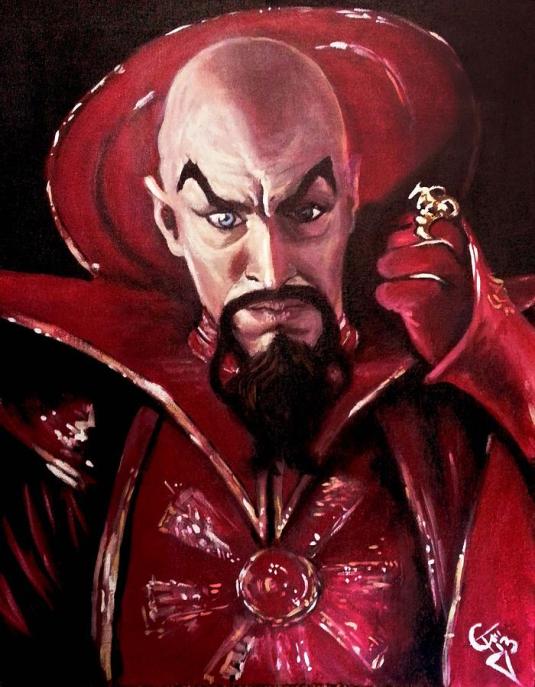 My first real hero was Ming the Merciless. He had all the primary characteristics of an evil genius. He was a megalomaniac who wanted to rule the world. He was always smarter than Flash Gordon. He had dozens of minions who followed his every order. He obeyed no rules except his own. And finally, he lusted after Dale Arden who was a pretty hot babe for the time. Dale had wonderful blond curls, a great figure and was into bare midriff before it became popular in the 90’s. Flash was a wimp when it came to Dale but Ming the Merciless knew what he wanted and really went after it. I suppose tying women up today would not be proper but if you are an evil genius it is simply part of the expectations.
 My second Hero was Dr. Fu Manchu. A character created by the writer Sax Rohmer. Fu was as evil as they came. He was a brilliant megalomaniac. He obeyed no rules or laws except his own. He was alleged to hold doctorates from four Western universities. Unlike the wimpy college professors who one associates with a Ph.D. degree, there was nothing wimpy about Dr. Fu Manchu. He would not hesitate to murder anyone who got in his way. In the 1932 film, The Mask of Fu Manchu, Fu tells an assembled group of his minions that they must “kill the white men and take their women.” Evil geniuses have a knack for thinking big and ignoring the normal bonds of propriety and civility.
 As is usual with evil geniuses, Moriarty was always one step ahead of Sherlock. Perhaps because it was still the Victorian age, Moriarty did not have much to do with lusting after women. There was no kidnapping, tying women up or forced kissing in any of the Moriarty tales. However, Sherlock was not much better in the womanizing category and seemed to be a confirmed bachelor. His main relationship with a woman was with his housekeeper Mrs. Hudson which always stayed platonic.
 Von Doom. You must love someone with a name like that. Dr. Doom was evil and ruthless and a certified genius. He had many gadgets and inventions that enabled him to defeat an entire pantheon of superheroes. When it came to bad, he took a back seat to no one. Imagine, someone who would let his childhood sweetheart be savagely sacrificed so that he could gain the power to rule the world. Yes, like most other evil geniuses, Dr. Doom was also a megalomaniac who wanted to rule the world.
 I have not had time to describe all the evil geniuses whom I have loved and admired. I have given you only a few of the ones who have punctuated my life. I do not have the space to do justice (sic) to some of my other heroes such as Lex Luther, the Kingpin, The Joker, Green Goblin and of course Sauron. By the way, recently we had a female megalomaniac out to destroy the world. It was quite refreshing to see how Hela kicked Thor’s butt from one end of Asgard to the other. But to bring you up to the present, I have now found perhaps the most evil genius in history. He has all the truly great characteristics of evilness. He is also a genius.



 publish their lists of the most beautiful people in the world. Beautiful people marry other beautiful people and are constantly in the news. The Kardashians would seem to have few talents except their almost incredible beauty. Rich men marry beautiful women. Beautiful actresses marry NFL football players. Beautiful heiresses marry rock stars while beautiful rock stars marry record producers.

 I once asked my MBA students whether they would rather be smart or beautiful. They almost unanimously selected beautiful. I was very surprised but the more I have observed about life, the more it would seem that beauty will get you further than brains. Brains can get you some things but being nerdy is not one of the things that most people aspire to. Anti-intellectualism is a fact of American life as noted by Richard Hofstadter in his famous book: “Anti-intellectualism in American Life, 1963.”
 As we both have aged, the process of deterioration taking place in our bodies is clear in the more wrinkled, wizened and paunchy body shapes we now exhibit. While neither of us was ever beautiful by societies standards, we never had any chance of making any top ten beautiful lists before and certainly not today. Nevertheless, when I see my spouse in her pajamas or in the shower or when she cuddles up in bed with me, I can’t help but think how beautiful she is and how much I love her. While I still see the shades of societies standards of beauty in the many young models punctuating my daily life, the beauty I see in my wife is something I cannot describe. It is a beauty that comes from who she is and not how she looks. I only know she is more beautiful to me today than she was 35 years ago when we first started dating.
 You can claim as you grow older that you either have regrets or you have no regrets. I have had at least one friend who on his deathbed made the claim that he had no regrets. I admired his attitude very much. I wanted to emulate this attitude as I grew older, but try as I might it has escaped me. I can tell you I have no regrets, but it would be a big lie. I have enough regrets to write a book about. One of my regrets is that I am shorter than my father was. He was six feet four inches
  tall and I barely make five feet eight inches. Mostly though, I wonder what it would have been like to have been born handsome. To have had the looks of Paul Newman, Sean Connery, Brad Pitt or Robert Redford. Would I have used my looks to achieve fame and fortune or would I have simply squandered it away on wine, women and song? How much different would my life have been if I had been a “beautiful” person?
 I understand and fully believe that like ingratitude, (Please read my blog on


 John: I prefer voluptuous.
 Alexa: Mary has some questions for you John.
 John: Alexa!
 John: Alexa! Where is the best place to get a pizza in Casa Grande for Saturday night?






 There have been many theories proposed for the policies held by Trump and his Republican supporters. They include “Greed Theory.” The Republicans are held to be greedier than most people and only want to accumulate as much money as they can. Another is “Hate Theory.” This theory holds that since most Republicans are White European in ancestry, they loath and detest any people who are different then they are. This includes Asians, Blacks, Indians, Latinos and any immigrants not from Europe.

 About a week later, I was substitute teaching in a Casa Grande High School. I drew an eleventh-grade social studies class. The teacher had left an assignment wherein the students had to find certain terms and concepts associated with the second industrial revolution and write definitions for each of them. Included among such terms as: robber barons, corporations, patents and trusts was the term “Social Darwinism.” One of the students asked me to explain it beyond the simple definition she found on line. I tried to recall my ideas relating to this concept from many years ago. I gave her my explanation and then later I looked up the definition at Wikipedia. I was struck at how well my memory had served me. It was at that point that the proverbial light bulb or blinding light of inspiration hit me. I suddenly realized that the Republican Party was not just trying to create elite systems but they were also trying to build on the theories of Herbert Spencer. The following excerpt explains this theory very well as it applies to many current concepts such as: trickle down theory, privatization, corporate welfare and tax reform.
 So, there you have it. Trump and the Republican Party are not greedy, hateful or fearful of others, they simply do not believe that you have a right to anything unless you are also rich and successful and White like they are. Based on the concepts of Social Darwinism, they have the right to whatever you have if they can find a way to take it away from you. If you cannot keep it, that means you are inferior. If you are inferior, you have no right to life, liberty and the pursuit of happiness. According to Social Darwinism, the elite will eventually Trump the poor because they are stronger, smarter and more fit. This will eventually result in a society wherein everyone is fit, and everyone is trying to screw everyone else.
 ays every American citizen has Freedom of Expression. Thus, we are just expressing our free rights as American citizens to beat up on people we don’t like.”
 “Look, said Tattoo Guy, we voted for Donald Trump and he respects our Freedom of Expression rights. We are sick and tired of the PC shit you pussies and commies have been spreading in this country for years. We are tired of watching what we say and do because we might be called rednecks or bigots or even racists. It’s a new day for America. We are going to make our country great again.”
 “You are more or less on the right track” says Tattoo Guy. “Used to be you could tell some nigger jokes, put up pinups of nude girls, even grab a few pussies once in a while and no one bothered you. Then, all this PC stuff started and before you knew it, you had to watch what you said and did. A White person’s Freedom of Expression went down the drain. Well, no more PC now. So can we please get back to beating the shit out of this nigger?”
 “Well, what if I told you that I had a Glock Model 40 10mm in my pocket and that if you hit this man one more time, I will take it and blow your fucking brains out. What would you think of that” I replied indignantly.


