What is the One Thing that is Hardest to Find in Life? 

What is the one thing that we all want in life but that we can’t buy or pay for?  We can live a life without it but we will end up feeling like we only lived a shell of a life.  We can chase all over the world for it but we will sometimes end up finding it in our back yard.  We can live a life with security and comfort and never find it.  We can settle for the mundane but we will regret that we did not have the courage to grab it when it was in our reach.  Sean John says “Life without passion is unforgiveable.”  You can buy his cologne for fifty dollars an ounce but it will not give you passion.  Most of us will never have passion in our lives.  We might think a one night stand or our favorite team winning the Super Bowl or taking a trip to some exotic land is passion but deep down inside of us we know that these activities are only surrogates for passion.

“The saddest people I’ve ever met in life are the ones who don’t care deeply about anything at all. Passion and satisfaction go hand in hand, and without them, any happiness is only temporary, because there’s nothing to make it last.” ― Nicholas Sparks

You can climb Mount Everest.  You can dive to the bottom of the Mariana Trench.  You can get a Ph.D. degree but you can never get passion simply by accomplishing things.  Passion is not a fad or a commodity.  You can’t buy it in Walmart or find it on top of the Empire State building.  Most of us do not grow up with a desire for passion.  We do not even know that it is missing in our lives.  Passion gets smothered in us when we are very young.  It is extinguished before it can be ignited.  Passion scares people.  Authorities and parents both fear passion.  The passionate person is a juvenile delinquent.  Early on, parents, teachers and others wage a campaign to destroy the roots of passion in children.

“Sex is the consolation you have when you can’t have love” ― Gabriel Garcí­a Márquez

Someplace deep inside all of us, the embers of passion still burn.  We go through life thinking that there must be more to it then what we are experiencing.  We look for God.  We look for Ghosts.  We look for love.  We look for things but still they do not bring us the passion that we crave.  Some spark must be ignited in us to rekindle our passion.  When they speak of quality, they say that you will know it when you see it.  However, you can’t see passion.  You have to feel passion.   We know it exists because from time to time, we can get a glimpse of it in others.  The passion that we sometimes see in others thrills us to the bone and leaves a certain degree of incredulity in its wake.  We know we are missing something that seems unfathomable to us.  Greatness and passion seem to comingle.  Does greatness produce passion or does passion produce greatness?

“I want to know what passion is. I want to feel something strongly.”  ― Aldous Huxley, Brave New World

Hollywood is perhaps the most frequent purveyor of passion.  We get our impressions of passion from our Hollywood idols and movie stars.  Passion is pervasive in Hollywood.  From superheroes saving the world to unrequited love romances to tales of great daring, we glimpse a world where passion is the norm.  A world where passion is as common as grass.

“There is no passion to be found playing small – in settling for a life that is less than the one you are capable of living.” — Nelson Mandela

Looking at passion from a theoretical perspective, (something rarely done) we can see that there are three areas in which we can inspire passion.   These conform to our three life components.  We can be passionate about ideas or thinking.  We can be passionate about doing or activities and we can be passionate about feelings.  What about things you may be asking?  I will argue that we cannot really be passionate about things.  Hard core motorcycle riders usually care more about riding their bikes than they do looking at them.  Trophies, money and even fame are ephemeral and rarely suffice to infuse passion in anyone’s life.

“Maybe the bike is more dangerous, but the passion for the car for me is second to the bike.”  — Valentino Rossi

People who are passionate about ideas are intriguing.  We find that they have a love for the mind and all things cerebral.  We may not understand their theories and concepts, but we are fascinated by the premises and hypotheses that they can spin out.  History has shown that a key element of progress lies in the intellect that a civilization can bring to its culture.  The Jews, the Greeks and the Chinese each stand out in our minds with their history of great thinkers from Abraham and Maimonides to Socrates and Plato to Confucius and Lao Tzu.  These cultures had a deep respect for the ideas and philosophies of its great thinkers.

Some of us are passionate about books, education, museums, history, biographies, TED talks, documentaries and other intellectual activities.  We would rather read a good book then go to the Eiffel Tower or the beach.  Our ideal life is of the mind and not of the body.  We no sooner finish one book then we are off to another.  Our dream of heaven is one vast library with no late charges.

“You have to be burning with an idea, or a problem, or a wrong that you want to right. If you’re not passionate enough from the start, you’ll never stick it out.”  — Steve Jobs

Some people are passionate about their activities.  Great explorers like Marco Polo, James Cook and Zheng He lived for the adventure and excitement of finding new places and new civilizations.  For such adventurers the risk was hardly a consideration given their dreams and desires for discovery.  One cannot imagine anyone undertaking the hazards and deprivations that met these men without a true love for action and doing.  People like this cannot be content in an arm chair reading a good book or sitting in front of a fire place with a family watching TV.

Some of us are passionate about our work or our sports.  We love what we do so much that we would pay our employers to let us do the work that they are paying us to do.  This is what passion means.  To love something so much that you would pay someone to let you do it.  We live for the activity whether work, traveling, sports or a hobby.  Our dream of heaven is an activity that allows us to become intimately involved with the act of creation or the challenge of overcoming some obstacle or the chance to exceed some goal.

“If you don’t love what you do, you won’t do it with much conviction or passion.”  — Mia Hamm

Our final passion involves the realm of feelings.  We usually think of passion as connected to sex.  We have watched the all night love affair of two Hollywood stars as they undress and ravage each other in a fit of what one might call sexual frenzy.  We marvel at their physical dexterity.  Two bodies engaged in positions that would challenge the authors of the Kama Sutra or even tax a painters abilities to portray.  And to think, that after they are done, they start over again until the sun begins to dawn on another day.

“When I touched her body,
I believed she was God.
In the curves of her form
I found the birth of Man,
the creation of the world,
and the origin of all life.”
― Roman Payne

But sex is only a small part of what emotional passion can be.  Passion can involve feelings of all sorts.  People who are deeply passionate about their emotions feel things that the rest of us do not.  They feel the joy and pain and sorrows of other human beings.  They experience the highs and lows of existence.  They live a roller coaster of feelings that range from happiness to sadness.  They do not let the pain of empathy discourage them from identifying with the feelings around them.  Perhaps the greatest fear that people of feelings have is the fear of apathy or indifference.  People who are passionate about their feelings live for harmony and rapport with others.

People who live a life of passionate feelings dream of a heaven that will be populated by all the people that they have known in their lives.  They want to see all their old friends, relatives and loved ones.  They dream of making amends for the wrongs that they have done to some and sharing their love and compassionate hearts with all others for infinity.

Time for Questions:

What are you passionate about?  Do you have enough passion in your life?  How could you have more passion? What would happen if you tried to live a more passionate existence?

Life is just beginning.

“My mission in life is not merely to survive, but to thrive; and to do so with some passion, some compassion, some humor, and some style.”  — Maya Angelou

Happy New Year:  Welcome to 2016  The Best Year in the History of the Human Race!

New-Years-ResolutionsToday is the day when we make new resolutions and promises galore.  A time to begin over and to make dreams and wishes come true that did not work out the year before.  We bring in the New Year as a new born baby, full of promise and youth.  Some skeptics might look at the trail of broken commitments from bygone years and laugh at the efforts of others.  Such cynics ignore the profound possibility of hope and change.   (Listen to the Hope Song by Lata, it will inspire you more than my words ever could)

“True wisdom is less presuming than folly. The wise man doubteth often, and changeth his mind; the fool is obstinate, and doubteth not; he knoweth all things but his own ignorance.”   — Akhenaton

your-dream-doesnt-have-an-expiraiton-date-take-a-deep-breath-and-try-again-kt-witten-inspirational-quote-julie-flyagre-narcolepsy-bloggerYes, there is injustice and inhumanity in the world.  Yes, there is poverty and disease.  Yes, there are natural disasters and misery.  But there is also happiness and love.  There is compassion and charity.  There is a world of people who are trying to create a better world and are willing to put their lives on the line to do it.  Wherever we look there are heroes and heroines who will sacrifice themselves in an effort to create a world full of joy and love.

“Let our New Year’s resolution be this: we will be there for one another as fellow members of humanity, in the finest sense of the word.” — Goran Persson

sisyphus1Yes, I do not doubt it for one second.  We will be better this year than we were last year.  We will continue to grow and change.  We will continue to overcome the folly of yesterday and of our past lives.  We will overcome the mistakes we have made and do better this year than last year.  Hope, they say, springs eternal in the human breast and what would we be without it?  We need to try again and when we fail, try again.  The only failure is when we stop trying.  So disregard the naysayers, go ahead and make some new goals and new dreams.  Make some New Year resolutions.  Stretch your vision and your horizons.  People do not perish because of their dreams; they perish because of a lack of dreams.

“Make New Year’s goals.  Dig within, and discover what you would like to have happen in your life this year. This helps you do your part.  It is an affirmation that you’re interested in fully living life in the year to come.”  — Melody Beattie

ReachingOurGoals042610Time for Questions:

Only one question today, “What are you going to do this year to make the world a better place.”

Life is just beginning.

There is no going back.  Let the past go.  It is time to start fresh.

Happy Days Are Here Again?

happy-days-logo-1I like to think that my writing falls in the category of political and social satire.  I suppose I am giving myself more credit than I deserve since it is not easy to be a good satirist.  My spouse is always saying that my satire often misses the mark.  Nevertheless, I aspire that at least someday my writing can be compared to Mark Twain or perhaps Kurt Vonnegut.  I will have to leave it to my readers or at least posterity to find out if I ever achieve this lofty aspiration.  Who can judge the quality of their own writing without a large degree of prejudice?  (To hear the “Happy Days Are Here Again” song, click here.)

One element that seems typical of good satire (be it Mark Twain or Jon Stewart) is the ability to evoke humor in ones writings and ideas.  To make people laugh at the same time that you are getting them to see the absurdity of their viewpoints or society’s viewpoints.  You can have “dark” satire or “light” satire and in my opinion they form a continuum.  I think of Joseph Heller and Kurt Vonnegut as falling on the darker side of this continuum and Mark Twain and Jon Stewart as falling on the lighter side.

pollyanna-glad-game-quote One of my goals is to keep a balance on my perspectives that helps me to fall more in the middle of this continuum.  I see being repeatedly on the light side as too comical or humorous.  I do not want to be thought of as a comic or entertainer.  I concede that these people can make a difference in the world as one of my early heroes was Lenny Bruce.  I think Lenny was a great comic and a great social satirist.  However, I do not see my nature as capable of embracing a very high degree of humor in some of the evil and stupidity I see in the world.  I have never been very Pollyannish.  I want to stay away from embracing a view of the world that resembles the “Happy Days” syndrome.  All is good, nothing is wrong, everything will be all right.  Just sit back and watch TV.  This attitude can lead to the pitfalls of complacency and neutrality.

6836-do-you-look-at-life-through-rose-coloured-glasses-i-crushedGetting repeatedly too close to the position of “dark” humor on this continuum also has its pitfalls. I think I have lost many friends along the path of life because I have sometimes become too critical and carping on the evils and stupidity of the world.  You start condemning evil and stupidity and before you know it, you are attacking people.  It is easy to start associating individuals with policies, ideas and positions that you loath.  Soon, you are surrounded by former friends who are all stupid and evil.  The final stage in this process is to see nothing but a world that is evil and stupid populated by evil stupid people.  Everyone in the world becomes your enemy.  The exact opposite of Pollyanna becomes your gestalt.

happiness in moderationI do not choose to follow either extreme.  I want to follow the Greek “Golden Mean.”  In ancient Greece the Golden Mean meant to pursue moderation in all things.  I don’t really want to hate all Republicans despite the fact that today I can see little good in the Republican Party.  Nor do I want to love all things associated with the Democratic Party.  In some ways, the Democrats have helped to create the Tea Party and Right-Wing extremists in the Republican Party. Though I doubt many Democrats would either see or confess to their culpability in this matter.  There has always been and there always will be excesses and vices in both parties.  Politicians of either stripe have more in common with each other than they do with the average middle class worker in this country or any country.

death of socrates book“I was really too honest a man to be a politician and live.” —  Socrates (Ancient Greek Philosopher, 470 BC-399 BC)

Things do not seem to have changed much in respect to politics since Socrates was executed for his anti-political beliefs.  Socrates openly expected the youth of Athens to challenge and question authority.  This stance was no more valued in ancient Greece then it is in 21st Century America.

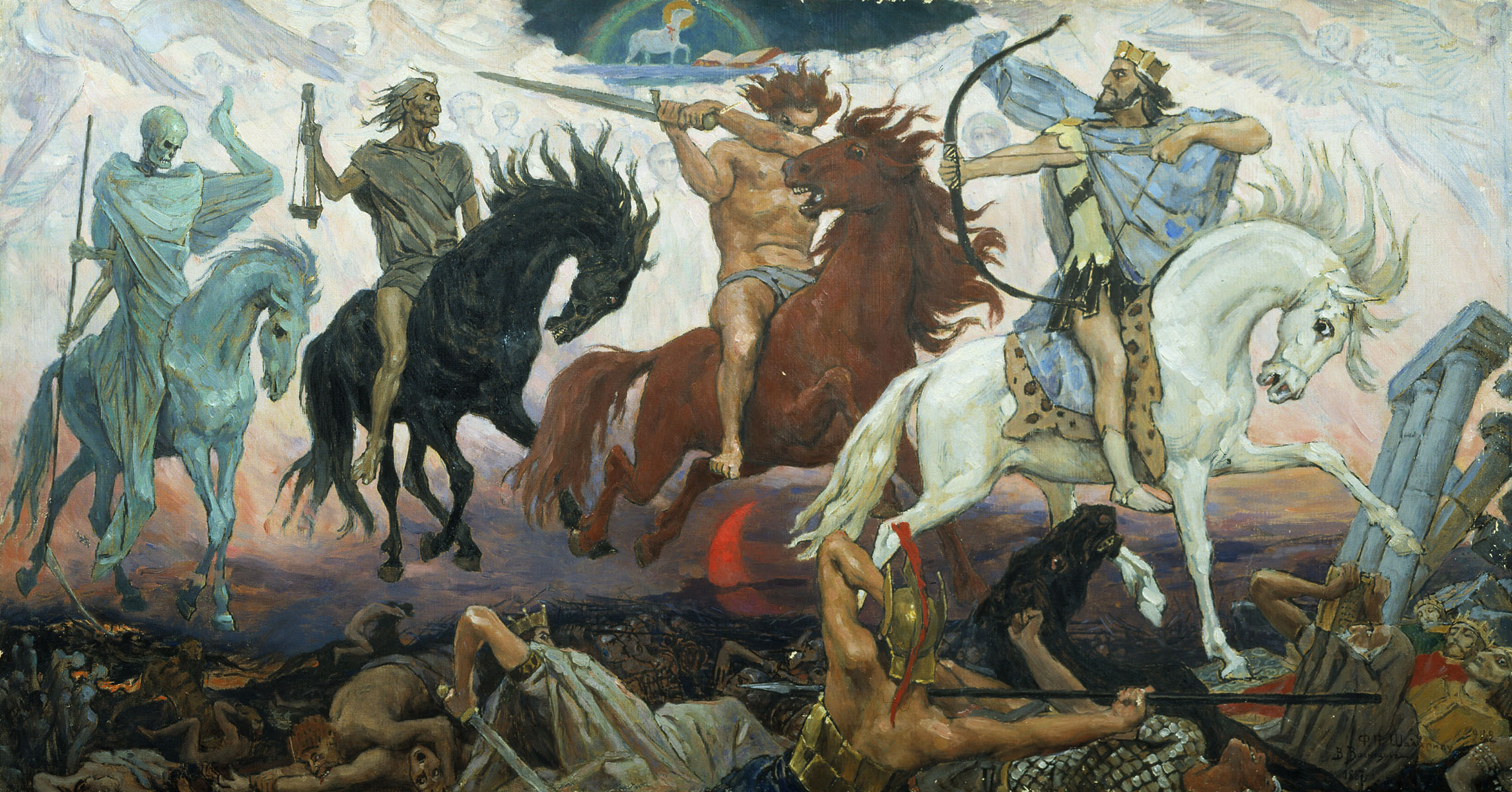
Apocalypse revelationsThe title of my blog this week was meant to be somewhat humorous and somewhat satirical.  Hence the question mark on the end of the title is not an accident.  I know many people who think that the world has never been in a worse state.  One of my ex-friends kept reading Revelations to me and telling me that the world was going to end about a year or so ago.  Our friendship ended but the world did not.  I have other friends who say “Obama has ruined this country.”  Many Americans say that the USA is in decline and that the end days are near.  I don’t understand this negativity.  I understand that much of the world economy is coming out of a bad recession.  I truly see that the world has more problems than anyone can count on two hands.  We have poverty, war, famine, drought, global warming, disease, inequality, injustice, tyranny, evil of all sorts and a great deal of stupidity and ignorance.  Is there a silver lining in this maelstrom of disasters?

good_old_days_specials_magazineSome people believe that if we can only go back to the “good old days” that everything will be all right.  I don’t want to say too much about this option since I think it is a fantasy.  Only in the movies, can you go back in time.  Time marches forward and waits for no one.  Either get on the train or they will bury you where you stand.  We are not going to go back to pre-cellphone days, pre-internet days, pre-abortion days, pre-global warming days, pre-nuclear power days or pre-any other days.  We can only go forward.  We can embrace many of the old values that made our countries great but we must pay them forward.  We must embrace new values and blend the old and the new together in a modern version of the Golden Mean.  This is not an easy task.

I published a book about fifteen years ago that I called “The New Business Values for the 21st Century.”  The book did not become a best seller but it had several good chapters which IMHO have stood the test of time.  The basic idea for this book was based on a model that I called the “Five I Model.”  My mentor Dr. Gary N. McLean told me to always work from a model.  I tempered his advice with the advice of Dr. George Box that “All models are wrong but some are useful.”  My Five I’s included the following:

  1. Informationnew business values
  2. Improvement
  3. Innovation
  4. Inclusion
  5. Incentives

The premise of my book was that new organizations must revolve around these five key elements which I had elevated to the status of values.  I think these same five elements or values also pertain to building a great nation or great country.  I do not want to repeat what was in my book; you may still be able to find it on Amazon or E-Bay if you are interested.  However, one element that I think has significant relevance to this blog today is the 4th Value of Inclusion.

Inclusion is a value that embraces diversity and working together in a win-win fashion rather than working in opposition.  Inclusion abhors a culture or position of divisiveness such as we see in politics today.  In fact, many of the conflicts in the world today are caused by the divisiveness that is the enemy of inclusiveness.  Inclusion is a friend of immigration and not an enemy of immigration.  I have a T-shirt that reads “We need a fair immigration policy and not an anti-immigration policy.”  Too many of our politicians today are preaching a divisiveness that borders on hatred and bigotry.  I do not need to mention names here.  All you have to do is read the newspapers or listen to the TV to see the politicians that are preaching exclusion rather than inclusion.

We cannot go backwards into “happy days.”  We can only go forward.  To do so we must practice the old values that made our nations great alongside of the new values that have become critical to success in the new millennium.  My book addresses at least five of these new values.  Do doubt there are others.  I am not certain of what they are, but I am certain of what they are not.  They are not values that foster:

  • Exclusivity
  • Divisiveness
  • Inequality
  • Anti-intellectualism
  • Anti-immigration
  • Bigotry, racism, sexism or discrimination of any kind

There is a major US election coming up in the next fourteen months.  No doubt the news will be full of “trending” stories concerning the pros and cons of various candidates.  It will be easy for many of us to take sides.  He is a Democrat.  She is a Republican.  They are independents.  He belongs to the Tea Party.  She belongs to the Coffee Party.  Such identification can and will only lead to more divisiveness, more intolerance and a greater inability to understand the arguments that are often critical to a comprehensive solution that can result in a win-win.  There is an antidote to this problem.

I suggest we look at all of the candidates running for office and ask ourselves “Will they bring our country together?”  “How do they rank in terms of the new values?”  “How do they compare in terms of the negativity values in my list above?”   I offer that we need to care less about party affiliations and more about the values that we see our candidates espousing.  We are no longer a “New nation conceived in liberty and dedicated to the proposition that all men are created equal.”  The USA is nearly 250 years old now.  We can remain true to the values of our founding fathers only by realizing that it is now the 21st century and that there are new values that must be added to the old values that made our nation great. This truth applies to every country in the world.  The path forward can be to a future that will be a happier world for all of us to live in.  As Jesus said:

“No one, after putting his hand to the plow and looking back, is fit for the kingdom of God.”  — Luke 9:62

Time for Questions:

What can we do to help create a better world for everyone, not just those in our country?  Which of the USA candidates for president do you think will most care about people?  Are you picking your candidate out of fear or distrust of the future?  What candidates will do the best to be inclusive, ethical and moral?  Are you supporting these candidates?  Why or why not?

Life is just beginning.

“Nothing brings me more happiness than trying to help the most vulnerable people in society. It is a goal and an essential part of my life – a kind of destiny. Whoever is in distress can call on me. I will come running wherever they are.”   — Princess Diana

Pain and Suffering:   Can We Still Be Happy?  

(The Suffering Song by the Willard Grant Conspiracy)  A great song to listen to while you read my blog today.

pain-logoI want to talk about pain and suffering.  These are subjects that are not addressed in most Western schools or colleges.  In fact, they are hardly even addressed in Western theology.  No one gives you the real scoop on pain and suffering.  They seem to be taboo subjects in Western Culture.  In “On Death and Dying,” Elizabeth Kubler Ross talked about the stages of grief that we confront when faced with the loss of a loved one.  This was a revolutionary book.  The subject of death seems to go along with pain and suffering.  However, while we now have grief counselors and bereavement counselors who are sectarian as well as secular in orientation, the medical profession seems to leave pain and suffering to the religious realm.  Most pronouncements about suffering from the theological domain seem to reflect such thoughts as follows:

“Suffering is no longer viewed as God’s divine lightning bolt intended to punish or curse the afflicted, but is understood as a divine context that is intended to radiate the glory of His love and mercy. As this reality crystallizes in the heart, people’s view of God changes. Where their Gospel-void interpretation once influenced their conclusion of God as the arbiter of pain as a means to justice, they now understand their pain as a means to understand His infinite grace resulting in the freedom to genuinely conclude He is truly a God that is good. They realize His mercy flourishing through suffering in that they were desperate in their weakness for the imputed righteousness of Christ, and that God was eager to offer it as a means to magnify His infinite love for them as they endure life in a fallen world.”  — How the Mercy of God Flourishes in Suffering

Perhaps such sentiments help the true believers, but they do little or nothing to slake my pain.  Maybe that is why Oxycodone and Percocet are more widely reached for these days than the Bible.  Pious sentiments notwithstanding, when I am in pain, I want relief.

Let’s back up a minute or a mile though.  If you are under thirty, you are probably asking “What is he talking about.”   I understand the sentiment.  Before I started to deal with pain more frequently in my life, I ignored these subjects just as I ignored the subject of aging or getting old.  When you are young and healthy, why think about pain and suffering?

Here is my answer.

There are several good reasons to address these issues but the primary one concerns your ability to keep joy and happiness in your life along with the inevitable pain and suffering you are going to experience.  The only question about the issue of pain is whether it will be over in a microsecond (as in a sudden heart attack or a car accident) or whether you will experience pain and suffering for many years of your life.

When I talk about pain and suffering there are three types or categories that you can experience.  You can experience any of these at any time in your life but you will most likely experience them as you get older.  The three areas in which we all experience pain and suffering are:

  • Cognitive or mental suffering
  • Emotional suffering
  • Physical suffering

Mental suffering concerns the thoughts, expectations and ideas that you have about life.  Pessimists suffer more in this area than optimists.  People with great faith may find their faith misplaced and suffer real anguish over their doubts.   The suffering and pain in this area is caused by our belief systems and how we define the world and reality.  You can change your belief system but you will always have some system that is subject to challenge and disconfirmation.

[As an aside here, I hate those snake oil sales people that ask you to “Defy your age.”  Check into their pitches and they will tell you that you can defy the aging process but of course it will cost you about $3000 dollars for their initial evaluation and about $1500 dollars per month thereafter in supplements.   My experience is that you can accomplish the same thing with a $30 dollar per month gym membership, an annual physical and depending on your needs maybe $100 dollars a month in supplements.]

Nevertheless, hormones, weight training, body building, aerobics and boot camps are not going to prevent pain and suffering.  They are not going to prevent physical or mental or emotional suffering.  This is THE simple fact that needs to be repeated and understood.

The second type of pain and suffering is emotional.  The death of a loved one.  Unrequited love.  Failure to accomplish our goals.  Disappointment with your favorite football team.  There are hundreds of sources out there that instill emotional pain in our lives. This was one reason that Buddhism is absolutely on the mark and addresses a subject that is seldom taught in Western culture.  This is the centrality of suffering and pain in our lives from the time we are born until the time we die.

Alone among the world’s religions, Buddhism locates suffering at the heart of the world. Indeed according to Buddhism, existence is suffering (dukkha). The main question that Guatama (c.566 BC – c.480 BC), the traditional founder of Buddhism, sought to answer was: “Why do pain and suffering exist?” — Buddhism

figure skating fallThe third type of pain and suffering is physical.  We know as we get older that we get more aches and pains.  Athletes start at an early age experiencing the pain of broken bones, sprained muscles, torn ligaments and sometimes worse.  Many people work in dangerous professions where the risk of physical injury is a daily part of their lives.  Several diseases which cause great pain do not differentiate between old age and youth.  Nevertheless, the specter of pain and suffering is much more evident for those of us who have passed sixty.  Whether it is a relative who has died or a friend who has died in a car accident, it hardly seems that a week goes by without someone either Karen or I knows who is now in the hospital or morgue.

While I don’t want to belabor the point.  I had surgery to have my prostate removed over a year ago now and then subsequently (perhaps because of the weakened tissue), I had to go in for hernia surgery.  Both of these were very painful but nowhere near as painful as the infection I had from a tooth implant which for some reason my body rejected. Thus, for the past two years, I have had an uncomfortable level of pain and suffering on a daily basis.  I have also watched my lover and best friend get more aches and pains as each day goes by.

There are those who describe “old age” in glowing terms: “Sageing not Aging”, “Growing old like a fine vintage wine” or “Positive Aging.”   There are dozens of books out there touting us to grow older and wiser or older and more graceful or older and more fulfilled.  There are a growing number of books promoting the new theory of “anti-aging.”  If these pundits are trying to put a shine or marketing spin on growing old, they are doing us a grave disservice.

Jan-88-The-Old-Age-of-an-Eagle-is-Better-than-the-Youth-of-a-Sparrow-copyAging is not a positive experience nor is it fun or painless.  Aging is a process of gradually losing both mental and physical capabilities.   At young womansome point in the aging process, you will experience increasing levels of pain and suffering.  You will not become a fine wine but more likely will be like an overripe orange or an overripe banana.  You will become shrunken and shriveled.  Your body will ache more in the mornings and after moderate exercise and just before you go to bed.  Physical infirmities that once took only a day to recover from will now takes weeks, assuming you will ever recover from them.   You will suffer increasing cognitive decline as you become more forgetful and you will eventually experience some degree of dementia or worse Alzheimer’s disease.  You will suffer emotional pain as your friends and loved ones depart the earth before you do.  Karen and I have now set up a funeral budget to cover donations and costs associated with deaths that are becoming a routine part of our lives.

Please accept what I have said as the truth.  The truth will liberate you.  Only the truth here will set you free.  By accepting the truth about aging, you will be free to find the joy and happiness that perhaps you have never found in your life.   By accepting death, you can liberate yourself from fear and worry.   My Aunt Mary Leone will be 101 this coming year.  She had a wonderful 100th birthday party last year.  She was recently asked “How old do you feel?”  She replied:  “I only feel about 85 or so.”

I want to tell you the following story about her. 

One Christmas Eve eight or nine years ago, My Aunt Mary was 92 years old and was having dinner with my sister, myself and some other family members.  After dinner, I was sitting with my aunt, who is also my godmother, and I asked her what she was going to do on Christmas Day.  She replied “I am going to help serve dinner to the elderly people at the Senior Center.”  I thought this was really funny and I replied:  “Aren’t you elderly Aunt Mary?”  She thought about this question for a few seconds and replied “Gee, I never think of myself as elderly.”

My Aunt has lost all of her siblings, her husband, most of her friends from childhood and two children.  Yet, she has more friends now than I do.  When I queried her about how she does this, she simply stated “Well, I like people and just continue to need them in my life.”  Her friends are now “elderly” who are younger than she is but old by many definitions.

One of my favorite magazines is the International Travel News.  This is simply the best news magazine for serious travelers in the world.  I was first told about this magazine by my good friend Dr. Hana Tomasek over 20 years ago.  It has helped me to plan trips to over thirty different countries and each trip was better than the last one.   I still get this magazine and peruse it monthly for ideas on new trips and exciting places and events to visit.  This month’s edition had an article that caught my eye called:  Learning Mandarin at 76.  I quote from the article:

“After attempting to learn Spanish and Portuguese in many countries in Central and South America and taking a crack at Russian in Ukraine; I decided it was time to try Chinese, specifically Mandarin.  I knew that, at age of 76, it would be a challenge, but what the heck?  You are only young once.”  —- Ralph McCuen

Mr. Ralph McCuen went to China where he studied for a month at a Chinese language school.  Costs of transportation, food, lodging, flights and all incidentals were less than $5,000 dollars.  Judging from the article, he had a fantastic vacation, learned to speak some Chinese and acquired a great deal of understanding about Chinese culture.  He sums the article up by stating:

“They (The Chinese) want the same things Americans want:  Peace, plus an opportunity for them and their children to create a better word.” 

Ralph is (in my mind) an older man who is living and not dying.  We die when we stop living.  We stop living when we are too afraid to try new ideas or adventures.  We are already dead when all we want to do is sit on the porch until we expire or become too senile to move.

My original conjecture was “Can we grow older and still have joy and happiness along with our inevitable pain and suffering?”  I have offered two examples of individuals who are enjoying life along with their pain and suffering as evidence that this is possible.  I am sure that both my Aunt Mary and Mr. McCuen have had their share of pain.  However, it has not stopped them from enjoying life and continuing to face its challenges.

examine-quotes-5I ask you to think of others who exemplify the principles I am promoting here and post them in the comments section.  I know that there must be thousands of people out there like my Aunt Mary and Ralph who are not letting the pain of aging take away their joy of living.  I think such stories are very inspirational and in the long run they will go further than hormone therapy to help us stay happy.  I can only hope that I will be able to emulate such role models as I get older.  I already think it is very funny that I get a senior discount at the movies and some other venues when I am only 68.  How many more perks await as I get older?

I will conclude this blog with some advice from Osho on the nature of pain in our lives and how to deal with it.

“It is very simple — pain is there because pleasure is there.  Pleasure cannot exist without pain.  If you want a life that is absolutely painless, then you will have to live a life that is absolutely pleasureless; they come together in one package…..Pain makes you very alert and pain makes you compassionate, sensitive to others’ pains too.  Pain makes you immense, huge, big.  The heart grows because of pain.  It is beautiful, it has its own beauty.  I am not saying seek pain; I am only saying that whenever it is there, enjoy that too.” —-Fear by Osho

One final story to end on.  Two years ago while with Karen at Kentucky Music week, I stopped by a local Wal-Mart to pick up some snacks from their deli department.  I particularly like the Southern Wal-Marts because some of them will carry fried chicken livers and gizzards in their deli departments.  I know these are not heathy but I have no desire to live forever and will occasionally indulge in such delicacies.  Longevity be damned.

main-qimg-772143a82f19373444e6cbb23a98a544Anyway, there was a young man who came to the deli counter and asked me what I wanted.  I told him a ½ lb. of the fried gizzards and a ½ lb. of the fried chicken livers.  I asked him how he was doing and he said “great.”   I replied “Yep, it’s always a great day if you can put two feet on the side of the bed when you get up and not have any pain.”   His response surprised me.  He replied “It’s a good day anyway.”  I went away thinking what a positive attitude to life this young man had.  Much more wisdom then I had at his age.  He was absolutely right.  Life is good anyway, regardless of all the pain and suffering. 

Time for Questions:

How do you cope with the pain and suffering in your life?  How have you prepared your children to deal with the pain and suffering that they will experience?  Do you agree that we can still experience joy and happiness regardless of our pain and suffering?  Do we have to deny reality to accomplish this?

Life is just beginning.

“Should you shield the canyons from the windstorms you would never see the true beauty of their carvings.” ― Elisabeth Kübler-Ross


“And Now Abides Faith, Hope and Love”  — Does Anyone Really Give a Damn!

Faith-Hope-LoveI like to think my major theme as a blogger is “Social and Political Commentary and Satire.”  However, I often talk about justice, equality, respect, diversity, values and a whole range of subjects that can come across as religious, theological or at least speaking of morals from a high bully pulpit.  Many times, my writing of these subjects has helped to clarify in my own mind what they mean to me and what relevance they have or could have in my life.  (Listen to the Song “Lullaby” by SIA as you read my blog this week. The lyrics are wonderful as is her voice).

If you attend some church or temple or synagogue or mosque, you have probably been told more times than you can count how important virtues, morals, grace, ethics, and values really are.  If so, my blogs may seem repetitious and like preaching to the choir.  You know everything I have to say.  Why is he telling me these things? Who does he think he is?  My answer is simply this:

“I am a former atheist, now agnostic, taking a look at some presumptions given by others on how best to live our lives.”  Any value or insights I can offer on these subjects comes from looking at them through (I Hope) a different lens.  I reject most orthodoxy and usually identify with the radical elements of theory and reality.  My goal is to bring more mindfulness to the world and I think we can only do that by discussing subjects that we think we understand or in many cases that we are certain we understand.  My subjects for my next three blogs fit this description very well.

For the next three weeks starting today, I would like to look at the three most often described theological virtues in the world.  I suddenly realized that I don’t know what they mean.  It seems they should be more prominent in my life but often I only pay lip service to them.  Probably like many people, I hear the words but do not know the meanings.  Or I read the meanings but do not assimilate the importance in my actions and daily activities.

The three theological virtues I am referring to include:

What do these three virtues mean to an agnostic?  What do they mean to a world that grows less and less religious every day?  What do they mean if you are not religious but view yourself as spiritual?  Are they simply a remnant of Christian thinking or are they important for everyone?  Come along with me as I take a journey to investigate each of these virtues and see what if any relevance they might have for the world today.  By the way, if you think that these are common virtues and that everyone has Faith, Hope and Love, simply look at the newspaper today and see how many of these virtues are implicit or explicit in the actions of our leaders and “role models.”

I want to start with Hope:

Why you may ask start with Hope?  Answer:  I have often thought that Hope was a futile wasted effort.  A fiction placed on us by spiritual leaders and politicians to help keep us docile and obedient.

  • Hope you will win the lottery. Buy lottery tickets!
  • Hope you will get a better job. Vote for me!
  • Hope you will make it big. Go to the casino!
  • Hope your cancer will be cured. Pray to the lord and put your donations in the box!
  • Hope the world will be a safe place for you and your children. Pay your taxes!

Hope, in my mind has been a pacifier.  It keeps you running in the rat race and paying homage to those who want your Hope.  God wants your Hope. Your religion wants your Hope. Your country wants your Hope. Everyone wants a piece of your Hope.

  • “Let’s keep hoping things will be better.”
  • “Let’s vote for Hope.”
  • “Let’s run Hope for office.”
  • “Let’s have the audacity to Hope.”

“Once again Hitler reduced his demand to a formal profession of faith that would be binding upon me: ‘If you could at least Hope that we have not lost!  You must certainly be able to Hope … that would be enough to satisfy me.’   I did not answer.” 

Speer, Inside the Third Reich: Memoirs by Albert Speer, R. Winston & C. Winston (trans.) (London: Weidenfeld & Nicolson, 1971), 452–3.

It has been said that “Patriotism is the last refuge of a scoundrel.”  Perhaps Hope is the tranquilizer that our leaders (both political and spiritual) regularly inject us with to insure our compliance and submissiveness.

What good does Hope do if all around us things are going to hell? 

Do I sound skeptical?  Were you expecting a plethora of exhortations to Hope, Hope, and Hope some more?  We are hemorrhaging and they ask us to have Hope. Keep hoping until you bleed to death.  “Hope for the best” they keep saying.  Did you expect me to give you “Ten GOOD Reasons to Have Hope?”  “Never give us Hope.”

To rephrase Shakespeare:  I have taken here some liberty with his words.

“Friends, Romans, countrymen, lend me your ears;
I come to praise Hope, not to bury her.”

statue of hopeDid you know that the three virtues are usually depicted as women?  Why do you think that is?

  • Faith – cross, pointing upward, staff and chalice, lamp, candle, hands together with fingers extended together
  • Hope – anchor, harp, flaming brand, palm, hands with fingers closed interdigitated
  • Love – flaming heart, with children, gathering fruit, hands crossed over heart

Actually, I tell you the truth.  I have come to praise the role of Hope and not to bury yours.  My caveat however will be evident in this dialogue.  It is simply this:

“Hope without action is futile.  Action without Hope is pointless.”  —- J. Persico

Yes, I quote myself.  Nevertheless, let us examine my quote in more detail.

“Hope without action is futile.”

A comment that I have used a great deal is “pray to the Lord but row for the shore.”  Intent without action is meaningless and hopeless.  The purpose of Hope is to give us something to strive for.  Hoping for success, happiness, wealth, good health or better politicians without being willing to work for these things is the ultimate in laziness, naiveté and stupidity.  Have you noticed that good things come to those who are willing to work for them?  Thomas Jefferson said: “The harder I work, the luckier I get.” 

laziness_a834e2_1332585The concept of entitlement (much used to describe today’s workers) suggests that somehow our birthright or DNA entitles us to such things as money, good health, happiness and success.  However, the Founding Fathers did not say we were entitled to any of these things nor does Jesus in the New Testament suggest that we are.  The Declaration of Independence says we are “entitled” to life, liberty and the pursuit of happiness.  It does not say anything about an education, health care, money or success.  It also uses the word “Pursuit” and not something stronger.  If you want happiness, you must pursue it.  This means you can Hope for happiness, but you must work for it.

The apostle James says:  “What good is it, my brothers and sisters, if someone claims to have faith but has no deeds? Can such faith save them?”  James 2:14

James might just as well have substituted the word Hope for faith.  Hoping for salvation, nirvana, satori, enlightenment or any other spiritual awakening is useless if you do not take action on your Hopes and dreams.

“Action without Hope is pointless.”

energizer-bunnyHave you ever seen the energizer Bunny?  He or she is an example of action without Hope.  Hope kindles in us a possibility for better things.  It is a dream of something that transcends our daily existence and offers us the possibility of a better tomorrow.  Hopes and dreams are complimentary ideas. Few of us Hope for a worse reality than the one we may currently face.  We Hope for things that we do not have. We Hope for happiness. We Hope for good health for our loved ones.  We Hope for a world where people will be safe and secure.

Many people are busy everyday but they do not know why.  We multitask.  We shop till we drop.  We watch TV nonstop on the weekends.  We fight hours of daily traffic to get to our jobs.  We keep moving at work to insure we will seem busy and productive.  We tell everyone we know how busy we are.  We retire and we become busier than ever.  Once retired we are so busy we cannot figure out how we once had time for work.  We have NO TIME.  We even have had a song that immortalized this problem by the Guess Who:  No Time . One song I particularly like that also describes this problem is by Alabama called:  “I’m in a Hurry.”   The following are the lyrics for the song:

I’m in a hurry to get things done
Oh I rush and rush until life’s no fun
All I really gotta do is live and die
But I’m in a hurry and I don’t know why.

no timeDon’t know why
I have to drive so fast
My car has nothing to prove
It’s not new
But it’ll do 0 to 60 in 5.2

Can’t be late
I leave plenty of time
Shaking hands with the clock
I can’t stop
I’m on a roll and I’m ready to rock

I hear a voice
That say’s I’m running behind
I better pick up my pace
It’s a race
And there ain’t no room
For someone in second place.

As we rush pointlessly about our lives, the pointlessness of our endeavors suggests that we have really nothing to do of any potential importance but we rush anyway.  What some might say is that we rush to prevent our inevitable appointment with death.

“In Osho’s library, there is a book open at a page where Osho has written, in big letters, ‘The journey itself is the goal’. I used to pass that book every day, always busy with some object to be achieved. Certainly too busy to take the words in. Then one day, the meaning just hit me. Like a sledge hammer. I realized that I had spent my whole life obsessively active, always aiming for a goal, whether completion of some project, or finding a solution to some problem.” — Anando

Hope is like the temper to the steel. The blade is no good unless it is tempered. We need Hope in our lives to point us to something more than just rushing around doing things.  Spending energy without focus or purpose is just what the Energizer Bunny is doing until he finally winds down.

My Conclusions:

quote-what-i-would-say-to-the-young-men-and-women-who-are-beset-by-hopelessness-and-doubt-is-that-they-abbe-pierre-145752It should be clear “I Hope” that I am not against Hope. I am for dreams and a better world. I am for looking to things as we would dream they could be and not as they are.  However, I am against idle dreaming without action to help bring about the fruition of our Hopes.  It has been said that you can measure a human by the breath of their dreams.  I think we can also measure someone by the breadth and depth of their Hopes.  Who among us simply wants to accept the reality that is and not have Hope for another world with more peace, justice, equality and happiness for everyone.

Time for Questions:

What are your biggest Hopes and dreams?  What Hopes have you had come true for you or your loved ones?  What do you do about your Hope to help make them a reality?  Do agree that Hopes and action must go together? Why or why not?

Life is just beginning.

“Hope can be a powerful force. Maybe there’s no actual magic in it, but when you know what you Hope for most and hold it like a light within you, you can make things happen, almost like magic.”   ― Laini Taylor, Daughter of Smoke & Bone


December 29th, 2014

We have 3 kerry roper time waits for no mandays to contemplate the year of 2014 before we begin a New Year.  Perhaps, it might be useful to think of the time we have lost in arguments, grudges, misunderstandings and not wanting to say “I am sorry.”  We go on with feuds and squabbles and time keeps fleeing.  We think that perhaps we can make up for lost time, but making up for lost time can be bittersweet at best and at worst an impossibility.  Time waits for no one.  (Forgiveness song by Matthew West)

“Yesterday is gone. Tomorrow has not yet come.  fWe have only today. Let us begin.”  ― Mother Teresa

I have a daughter who has not talked to me for many years now.  I think of the time that has gone by and how we could have spent it together doing things we could never have afforded to do when she was younger.  I think of how as adults we could and should have become good friends with talks by the fireplace and walking in the woods.  She is over forty now and I am nearing 70 and the clock keeps ticking and ticking.  I think of the minutes, hours, days, weeks, months and years that keep moving on by, each moment lost forever to us as this blanket of silence and anonymity shrouds our lives.

“They say time heals all wounds, but that presumes the source of the grief is finite”  ― Cassandra Clare

time_waits_for_no_man___tattoo_design_by_mortar_girl-d67o35cTime is lost forever, or can it be made up?  What if she suddenly decided that she wanted to have a relationship with me?  Could we make up the lost time?  If we started today to try to get to know each other; imagine the events that have changed our lives, the places we have been to, the books we have read, the movies we have seen, the funerals and weddings we have been to, the jobs and careers we have changed, the grandchildren we have helped raise.  So much that has changed each of us.  Could be ever bridge the gulf that now separates us?  Would it be possible to be close to each other or even love each other?

“Unfortunately, the clock is ticking, the hours are going by. The past increases, the future recedes.  Possibilities decreasing, regrets mounting.”    ― Haruki Murakami

It is difficult to imagine making up lost time, nevertheless, few of us would not try if given the opportunity.  It is an opportunity full of promise but also anguish.   We think we can go back to where we wanted to be years ago but while we are trying to make up the lost time, forgive1we feel anger at the waste of time that could and should have been prevented.  It might be water under the dam, but it will always seem like a useless expenditure of time and energy.  I have known brothers and sisters, parents and siblings and former friends who did not talk to each other for over fifty years.  Unfortunately, some of them died and there went any possibility to make up for lost time.  There are no guarantees in life and if you choose to waste time or lose time, perhaps you will never be able to make it up.  It might be too late when you finally realize your mistake and ask yourself WHY?  You will be left with regrets about what might or could or should have been.

“Any time not spent on love is wasted.”   ― Torquato Tasso

Perhaps you have no control over your lost time.  Time spent in jail, time spent recovering from an accident, and time spent in a relationship that was wrong may all constitute lost time.  Lost time is time away from ForgiveHeart-Jessica_Keylife that could have been lived much differently.  It is time that could have been spent more productively and happily.  Can this time be made up?  Better to not lose it in the first place.  But if you have lost it, then do your best to get on with your life.  Live each day the best you can.  As they say with money, don’t throw good money after bad.  Do not throw good time after bad.  The lost time is over and you have the rest of your life to live.  If you can live each day the best you can, you will be able to put the lost time behind you and perhaps even forget it someday.  Then again, maybe the time that was lost was a lesson and you needed to hear the message it was sending.  A good friend of mine was fond of saying: “There are no mistakes in life only lessons to be learned.”  I think of this comment often.  It is a good lesson to remember.

Time for Questions:

Do you have any lost time to make up?  Are you currently losing time that you should not be losing?  Have you thought about how you can stop losing this time? What can you do today to make it up?  What might you feel regrets about someday if you do not change your life today?

Life is just beginning.

Start now.  Don’t wait.  Tomorrow may never come.


What the Hell Do We Need Morality For?

morals and ethics

This blog is about the subject of morality.  Once upon a time, they taught morality in school and in church.   The first system of morality that many older Americans were exposed to was probably the “Ten Commandments.”   This was a code of rules given to the Israelites by Moses on Mount Sinai.  I have always thought it ironic that a set of morals from the “Old Testament” was supposed to be the foundation for a Christian America.  Even today, advocates of this code of morality want to hang it in town halls, schools, courts and government centers.  This is a part of the Bible that promoted an “eye for an eye” and stoning adulterers.

Jesus did say “Think not that I am come to destroy the law, or the prophets: I am not come to destroy, but to fulfill” (Matthew 5:17).  Jesus added at least one commandment to all others that was even more valuable than the ten TenCommandmentsMoses gave.   Jesus said, “A new commandment I give to you, that you love one another; as I have loved you, that you also love one another” (John: 13:34).  I would be much more in favor of seeing this posted in my neighborhood than the Ten Commandments.

Perhaps even more importantly in terms of a system of morality, Jesus gave a sermon where he proposed what has been called:  The Eight Beatitudes:   (Click here to hear the The Beatitudes Song) 

Blessed are the poor in spirit, for theirs is the kingdom of heaven.

Blessed are they who mourn, for they shall be comforted.

Blessed are the meek, for they shall inherit the earth.

Blessed are they who hunger and thirst for righteousness, for they shall be satisfied.

Blessed are the merciful, for they shall obtain mercy.

Blessed are the pure of heart, for they shall see God.

Blessed are the peacemakers, for they shall be called children of God.

Blessed are they who are persecuted for the sake of righteousness, for theirs is the kingdom of heaven.  —- Gospel of St. Matthew 5:3-10

It is my opinion that the Eight Beatitudes constitute one of the greatest systems of morality to come out of the Bible.  I would rather see these taught (if we are going to teach a system of morality) than the Ten Commandments.  I would also not mind these being posted in schools and other public places whereas I am sick and tired of those who want to post the Ten Commandments.

I noted that once upon a time, we taught morality in schools and churches.   Actually, we not only taught morality but morality was also imbued in our social fabric by many traditional stories and the media.  Children from an early age were exposed to Fairy tales, Uncle Remus stories, Aesop Fables, and Tales of the Arabian Nights.  These stories were full of morals on how to live and behave properly.  Early TV was also full of morality tales.  Shows like Father Knows Best, Leave It to Beaver and Andy Griffith each week clearly conveyed stories of morality and what was right and what was not right in terms of behavior.

sin-guilt-causes-body-pain-sicknessSomeplace along the way, we started losing our sense of morality.  Some have blamed it on becoming a multi-cultural environment.  Some have blamed it on the decline of religion and church going.  Some have blamed education while still others have blamed progress and a business culture that has no room for strict morality.  I am not sure what the actual cause was.  I am more concerned that it did happen.  Studies have shown that our culture has become more amoral than moral and that narcissism now plays an increasing role in our society.  People are less moral and more self-centered than ever before in the history of this country.  A book by Joel Marks (Ethics without Morals: In Defense of Amorality -Routledge Studies in Ethics and Moral Theory, 2012) is one of several that makes an argument for amorality:

“In clear, plainspoken, engaging prose, Joel Marks presents the case for abandoning belief in morality. Anyone who wants to defend the practice of making moral judgments will have to confront the issues Marks raises, and the alternative to morality he proposes.” – Mitchell Silver, University of Massachusetts, Boston, USA 

In the book “The Moral Fool: A Case for Amorality (2009)” the author Hans-George Moeller advances the following case for amorality:

“Justice, equality, and righteousness—these are some of our greatest moral convictions. Yet in times of social conflict, morals can become rigid, making religious war, ethnic cleansing, and political purges possible.  Morality, therefore, can be viewed as a pathology—a rhetorical, psychological, and social tool that is used and abused like a weapon.”

In an article “Why Is Narcissism Increasing Among Young Americans?”  by Peter Gray in Freedom to Learn (2014), Gray notes the following:

“For the past three decades or a little more, researchers have been assessing both narcissism and empathy using questionnaires developed in the late 1970s.  Many research studies have shown that scores on these questionnaires correlate reliably with real-world behavior and with other people’s ratings of the individuals.  For example, those who score high in narcissism have been found to overrate their own abilities, to lash out angrily in response to criticism, and to commit white-collar crimes at higher rates than the general population.[1]  Those who score low in empathy are more likely than the average person to engage in bullying and less likely to volunteer to help people in need.[2.]

Over the years, these questionnaires have been administered to many samples of college students, and analyses that bring all of the data together reveal that the average narcissism score has been steadily increasing and the average empathy score has been steadily decreasing ever since the questionnaires were developed [3.]  The changes are highly significant statistically and sufficiently large that approximately 70 percent of students today score higher on narcissism and lower on empathy than did the average student thirty years ago.

What accounts for this historical rise in narcissism and decline in empathy?  There is no way to know for sure, based on the data, but there are lots of grounds for speculation.”

I think we have thrown the proverbial baby out with the bath water.  I agree we need to keep the State separate from the Church.  I also agree that we don’t need the Ten Commandments as the foundation for moral thought in America.  Nevertheless, I do believe that we all need a code of morality to live by.  Whether it be Christian, Buddhist, Confucian, Agnostic, Atheist, Islamic, Jewish, Hindu, Baha’i, or other, we need a set of morals as a template and foundation for our behavior.  We need a baseline that each of us can start from so that we can assess what is good and what is right.  We need to have some system of ideas about what is correct behavior and how we should live in a socially interconnected world.

When I was a kid, (somewhere along the way) I was taught the Seven Deadly Sins.  Sometimes they were called the Seven Deadly Vices or the Seven Cardinal Sins.  I assume that since I attended a Catholic school, it went along with the teaching.  The Seven Deadly Sins included the following:

  • Lust
  • Gluttony
  • Greed
  • Sloth
  • Wrath
  • Envy
  • Pride

7 deadly sins

Some of you might think that this list is old fashioned or out of date.  How could this set of implicit moral values make a difference in our society?  They are so old; do they really have any relevance anymore?

Take a close look around you at the world.  You have only to look for a few minutes to persuade yourself that these “sins” are at the top of the list of major problems.  Greed, envy, gluttony and lust appear pervasive in our culture.  (See my series on Gandhi’s Seven Social Sins) TV shows, movies, magazines, radio, supermarkets, superstars, sports, credit services, escort services, pornography, Las Vegas all portray an American brand of materialism that is nothing short of sick.  Get it now, get it fast, and get more and more.  More is better!  Bigger is better!  Shop till you drop!  He who has the most toys wins!

“If necessity is the mother of invention, then surely greed must be the father. Children of this odd couple are named: Laziness, Envy, Greed, Jr., Gluttony, Lust, Anger and Pride.”  ― John R Dallas  Jr.

Black Friday ( The day after Thanksgiving in the USA) is only a small manifestation of the greed, lust and sloth that has infected our society.  How many Americans have a regular exercise schedule?  How many obese citizens can you count on the street each day?  How many Americans spend more each week then they earn?  How many Americans will go in debt this Holiday Season to spend money that they don’t have on gifts and toys?  Where is the self-restraint that is necessary to push oneself away from the table or shut the TV off and say “Enough.”  It barely seems to exist.  Is it any wonder that so many countries have a very negative stereotype of the “average” American?  We appear to be a group of people who have lost our moral compass.

ARTICLE 29 —  The Universal Declaration of Human Rights

  • You have a responsibility to the place you live and the people around you-we all do. Only by watching out for each other can we each become our individual best.

At this point, you well may be asking “What right does he have to be so damn moralistic?”  Didn’t Jesus say “Let he who is without sin cast the first stone?”  “Are you so perfect that you have a right to look down on other people?”  “Who does he think he is, Jonathan Edwards?”  “I don’t need anyone telling me my faults.”  “I get enough negativity from work without having to get it from you.”

Please allow me to clarify a few misconceptions.  In some religious circles we are all sinners.  Since I am agnostic, I don’t subscribe to a religious view of sin.  My use of the terminology is borrowed from the religious sphere since I think that the concept of sin has a very useful connotation if we can free it from some of the pejorative and negative associations with which it is fettered.  First of all, I do not believe that you will go to hell for committing these Seven Sins.  Second, you will not be a bad or evil person because of them.  Third and accentuating the positive, you may be happier and healthier if you are more aware of these “sins” and can do a better job of examining the role that they play in your life.  My bringing these “sins” out is to help us all become more aware of the morality that we have allowed to become obscured in our daily lives.

There are only two mistakes one can make along the road to truth; not going all the way, and not starting.  —-Buddha

We have had a decline in morality that started over one hundred years ago and it still seems to be declining.  More people are worried about their taxes increasing then the poverty facing many people in this country.  More people are worried about their security then the number of people going to jail every day for victimless crimes.  More people are worried about the price of gasoline then the pollution we send into the atmosphere every day.  Self-centeredness has become a dominant fixture of the American landscape.  “Greed is Good” says Ivan Boesky and everyone applauds.

If you look for truth, you may find comfort in the end; if you look for comfort you will not get either comfort or truth only soft soap and wishful thinking to begin, and in the end, despair.   — C. S. Lewis

Why do I think we should care about morality? 

goodevilWithout morality, we are not even as good as animals.  Animals eat, drink, sleep, procreate and fight when they have to.  They do not do it simply to hurt other animals or to wage war against groups or individuals that they cannot tolerate.  Animals care for their young and exhibit many characteristics of moral behavior.  In captivity, animals may display much more aggressive behavior.  For instance, Orcas in the wild have never been observed to kill other Orcas.  This is not the case for Orcas in captivity.  There is no such thing as civilization without a commitment to moral and ethical behavior.  Even animal societies are proof of this.

“I am Envy, begotten of a chimney-sweeper and an oyster-wife. I cannot read, and therefore wish all books were burnt; I am lean with seeing others eat – O that there would come a famine through all the world, that all might die, and I live alone; then thou should’st see how fat I would be! But must thou sit and I stand? Come down, with a vengeance!”  ― Christopher Marlowe, Doctor Faustus

Without morality, we have no compass to define what is good behavior and what is bad behavior.  We are reduced to the level of opportunists willing to take advantage of anyone and anything that suits our ends.  Listen to the current debate on the use of torture and the recent CIA report and you will find numerous “experts” advocating that the “ends justify the means.”  One man on NPR noted that he thought we should ask the victims of the Twin Trade Towers what they thought about the use of torture to capture Osama Bin Laden.   John McCain (May he Rest in Peace) once said it best when he opined in Congress (12-9-14) that “”Our enemies act without conscience. We must not.”  Nevertheless, he was opposed by his own party in his opposition to torture and in fact to even releasing the CIA Tortmoralityure Report. 

Many Republicans argued against releasing the report, especially as the threat of the Islamic State in Iraq and Syria grew and U.S. intelligence officials had warned that its release could cause backlash from nations and groups hostile towards the nation.   American embassies in the Middle East had been put on heightened security alert for its release.

McCain replied that “This report strengthens self-government and, ultimately, I believe, America’s security and stature in the world.”  (CNN 12-9-14)

Finally, without morality, there is no way to transmit values from one generation to another.  A lack of morality has led to the increase in amorality that is now symptomatic of our society.  Amorality is a set of beliefs which deny the value of morality or at best are indifferent to morality.  A rock is amoral.  It is neither good (moral) or bad (immoral) but may be used for either purpose.  Anything or anyone without a conscience is amoral.  It is a fine line and one that is very easy to trespass between amoral and immoral.  Many people today may think their behaviors are amoral when actually they could better be described as immoral.  Harken back to the Seven Deadly Sins and ask yourself, how many of these vices are amoral?  Are greed, gluttony, lust and wrath amoral?   Can anyone with a good conscience say it is okay to partake in these vices?

“Seven deadly sins,
seven ways to win,
seven holy paths to hell,
and your trip begins

Seven downward slopes
seven bloodied hopes
seven are your burning fires,
seven your desires…”
― Iron Maiden

Time for Questions:

What is your moral code? What are the three most important morals in your life?  Do you think everyone should have an explicit moral code?  Why or why not?  Do you know many amoral people?  What do you think about amorality?  When is it justified?  What do you think the world would be like if everyone was amoral?  Would it be a better world or worse? Why?

Life is just beginning.

“Remember tonight… for it is the beginning of always”  ― Dante Alighieri

What if We Can Accomplish the Impossible Dream?  

(Please click on the Song “The Impossible Dream” and listen to it while you read my blog)

“The Impossible Dream” –  MAN OF LA MANCHA (1972).   Music by Mitch Leigh and lyrics by Joe Darion

dream-the-impossible-1-9To dream the impossible dream.  To have goals that no one believed you could reach.  To have a purpose in life that was divine.  To strive for more than you thought you deserved.  To challenge convention and defy the experts who told you that you could not do it.  To live the life that you believed in and to find the passion that touched your heart.  To die with no regrets because you lived the life you chose.

To fight the unbeatable foe.  To challenge those worth defying. To upset the status quo when it is wrong.  To battle authority and convention when it is immoral.  To rage against injustice and immorality wherever and whoever is involved. To protect the little person and stand up for right and fairness.  To be a human and champion humanity against injustice and greed.

To bear with unbearable sorrow.  To suffer the slings and arrows of injustice and ingratitude.  To become a pariah among others.  To endure insults and calumny.  To be shunned by friends and family alike because of your beliefs.  To be the minority in face of an outraged majority.  To be different when everyone else is going along.

To run where the brave dare not go.  To go where all say is foolish.  To challenge Goliath. To standup to the system that cannot be beat.  To believe that you can when all say you cannot.

To right the unrightable wrong.  To have no chance to win but to try anyway.  To choose your battles based on dreams_quote_2right and not possibilities.  To strive when all say it’s over.  To persevere in the face of sure defeat.

To love pure and chaste from afar.  To love right more than life. To love unconditionally. To love without reciprocity.  To care for others when they despise and revile you.  To believe in fairness and justice when they seem impossible.  To return hurt with kindness. To return meanness with love.

To try when your arms are too weary.  To find strength when you are exhausted. To pick yourself up when you are down.  To make one more effort when you have given up.  To push that last ounce of effort you did not think you had.  To make one more attempt when everyone said to give up.  To get off the mat, when the crowd says “stay down.”

To reach the unreachable star.  To reach for the heavens when you were told to stick to the earth.  To dream beyond fantasies.  To surpass expectations that chained you by birth.  To strive for the sublime instead of the mundane.

This is my quest
To follow that star
No matter how hopeless
No matter how far

fallow your dreamsWhat will my life matter if I do not reach for what I believe in?  What value will I leave the world, if I do not try to change things?  Can I go through life simply doing what others expect and never exceeding their expectations?  Is this what I want from life?  Do I have the courage to expect more and to follow my passions and dreams?  Will I let others pull me back to the safety and security of the masses?  How far will I go to make a difference and to stand up for what I believe?

To fight for the right
Without question or pause
To be willing to march into Hell
For a heavenly cause

Do I have the will to die for my ideals?  Would I take the hemlock like Socrates to live my beliefs?  Would I suffer crucifixion like Jesus to make amends for the wrongs of the world?  Am I willing to risk being a martyr for the right cause?  What will I put my life on the line for?  Will I die for my family and friends if needed?

And I know if I’ll only be true
To this glorious quest
That my heart will lie peaceful and calm
When I’m laid to my rest

Do I realize that there are no guarantees in this world?  Can I live with only the certainty of my death?  Will I sacrifice the goal of security for the ideal of integrity?

And the world will be better for thisdreams_with_dolphins_by_dolcecaramella-d70to9l
That one man, scorned and covered with scars
Still strove with his last ounce of courage
To reach the unreachable star

What will humanity be if we give up our dreams in favor of reality?  What if we have no passions?  What if the profane takes precedence over the sacred?  What will we become if we sacrifice ideals for practicality?  What if all we strove and died for was what we could buy now on credit?

Time for Questions:

I think I have already asked enough questions in this blog but perhaps allow me one final one.  “What will you stand up for or die for to make the world a better place?”

Life is just beginning.

scary-optical-illusion-12“Too much sanity may be madness.  And maddest of all, to see life as it is and not as it should be.”   ― Miguel de Cervantes Saavedra, Don Quixote


The Twelfth Greatest Mystery of all Time:  Can We Solve All the Mysteries of Existence?

The-Mystery Well, we have come to the end of my Greatest Mysteries of All-Time Series.  So far, I have solved ten of the eleven.  This last one is the easiest of all.  Yes, we will solve all the mysteries of existence except for one.  Why do people do what they do?  I submit we will never satisfactorily solve this question.  Thus, I might as well say that the answer to this last mystery is NO!  We will not solve all the mysteries.  There will always be more mysteries.  As long as people are curious and unpredictable, life will be one long stream of continuous and never-ending mysteries.  Mysteries are like the stars in the universe. They are beyond counting and beyond measure.  They are as infinite as humanity’s quest for answers.  (Click here to listen to the Mystery of Existence Song by Farzin Darabi Far)

“Although there are several ‘schools of thought’ relating to why God allows mental, emotional, and physical afflictions, it essentially remains a mystery” — R. Alan Woodslatmosphere_metereologie_populaire_camille_flammarion2

How many times have you picked up the newspaper, read a headline and asked yourself: “Why would anyone do that?”  Why would anyone do that? What were they thinking?  I once listened to a series of interviews with serial killers thinking I might find an answer to this question, instead, all I found were more questions.  The killers themselves did not know why they did what they did.  Yesterday, on one of the CNN vignettes on my IPAD, I found an article that started out as follows:  Inside the mind of a serial killer .  It featured an interview with Forensic psychiatrist Helen Morrison who has interviewed over 135 serial killers.  When asked by interviewer Brooke Burke “Why do serial killers continue to kill over and over?”; Dr. Morrison replied “I wish I knew.  It is still a big mystery of why.”   Here are some recent headlines that were in the news on CNN as I write this blog:


If you are like me, you probably look at several of these headlines, shake your head and ask “Why would anyone do that.”  Why?  Why? Why?

As I get older and presumably wiser, I find myself less able to come up with answers to this question:  “Why did he do that?”  “Why did she do that?”  “How could anyone do that?”  “What were they thinking?”  Is it just me?  Karen says she is amazed that I am almost constantly rendered speechless by the things that other people do: “Why would anyone vote Republican?  Why would anyone vote Democrat?

godsshadowHow come people put large ugly tattoos all over their bodies?  Why would anyone pay $300 dollars for faded ripped jeans?  How could anyone marry someone like that? Why would anyone let themselves be treated like that?”

 

“All is mystery; but he is a slave who will not struggle to penetrate the dark veil.” — Benjamin Disraeli


Mystery after mystery confronts my daily existence.  My best efforts to solve the mysteries of life are worthless in the face of this continuous barrage of mysteries.  While I may solve one or two great mysteries each day, one hundred others seem to pop up to take their place.  Solving my mysteries, I feel like a rat running on the tread mill and staying in the same place.  I apply genius, innovation, creativity, determination, perseverance, fortitude, patience, discipline and still the mysteries of life continue to multiply and accumulate faster than I can dispose of them.

“The most beautiful thing we can experience is the mysterious. It is the source of all true art and all science. He to whom this emotion is a stranger, who can no longer pause to wonder and stand rapt in awe, is as good as dead: his eyes are closed.”– –Albert Einstein

Do mysteries have some inestimable place in our daily existence?  Are they like vitamins and minerals a necessary part of our daily diet?  Can we live without all the perplexity and confusion that these numerous mysteries provide us?  Or without them, would we gradually wither away and die of sameness and complacency?

I know not what course others may take; but as for me, give me mysteries or give me death! — John Persico Jr.

Time for Questions:

What are your greatest mysteries?  What makes a mystery for you?  What do you find most curious or interesting about life?  How do you go about solving your own mysteries?  Do you regard mysteries as fun and entertaining or challenging and provocative?  Do you hate mysteries?  Why?

Life is just beginning.

“Every woman that finally figured out her worth, has picked up her suitcases of pride and boarded a flight to freedom, which landed in the valley of change.”  ― Shannon L. Alder

Grow Old Along with Me

We think of growing old and we think of aged people, old people, retired people, elderly people, nursing home people and dying people.  When we think of growing old, we don’t think of babies, teenagers, young people and college students.  Ironic in a way, since everyone from birth to death is growing old or is at least growing older.  Perhaps that is the difference.  Growing old seems to Imagemean aged.  Growing older is a process while growing old denotes a physical condition.    Old means droopy skin, failing health, difficulty walking and a general decline in one’s ability to be mobile.  To some, old is a state of being or as others would say a state of mind.  Call old what you will, but none can deny the physical deterioration that comes with growing older.

In the Velveteen Rabbit, as the stuffed toy rabbit grows older, he becomes more and more worn and raggedy.  Despite his aging, the rabbit becomes more and more loved by the boy who has become his constant companion through the years.  The love of the boy eventually makes the ImageVelveteen Rabbit “real.”  Regardless of the rabbit’s becoming threadbare, torn and disfigured, the Velveteen Rabbit gains a persona that can only be understood by someone who values longevity, companionship and friendship.

Of course, we all value companionship and longevity; many people in our lives are like the Velveteen Rabbit.  Our sisters and brothers, our grandfathers and grandmothers, our mothers and fathers and our good friends and spouses; will all become older and older and older.  Eventually, they all become aged, misshapen, wrinkled and decrepit.  But if they have been good companions through the years, we are blind to their aging process.  We only see the love and caring that they have shown us.  We are blind to their difficulty with hearing and their inability to keep up with us.  We only see the person who was kind and thoughtful to us.  We are blind to their infirmaries and disabilities.  We only see the person who took care of us and helped us in our time of need.

I sometimes look at my spouse Karen who has put on pounds and wrinkles and walks slower than she used to.  Over the years, she has become more and more beautiful.  Looking back, I am not sure Karen was real to me when we were first dating and even married.  It has taken nearly 30 years of togetherness for Imageme to more fully appreciate the person that she is and it is still a process that is evolving.  The commitments that she makes to others often go beyond my understanding.   The kindness and compassion that she shows to those who are in need is more than touching.  The many ways she sacrifices what she wants so that she can help me get what I want have all made Karen real to me.

One of the saddest things, you hear at funerals, is the comment “I wish I had spent more time with them.”   It is probably inevitable that we feel this way.  Having pondered this comment over many wakes and funerals, I wonder if more time would really have made a difference.  I rather think it would be the “quality” of time we spent with others.  You may think that I am simply citing a cliché “quality of time?”  What is this elusive quality of time?  Some examples from my own life with Karen illustrate this concept for me.  Perhaps for you it will be different:

  • Sharing meals together
  • Going to hospital visits together
  • Sharing back rubs and massages
  • Reading together
  • Traveling together
  • Shopping together
  • Spending quiet time together
  • Being concerned with each other’s work
  • Helping each other whenever we can
  • Checking in each day to see how the other is doing
  • Always hugging and greeting each other when going or coming
  • Taking care of each other when sick

My list might seem trivial to you.  Your list might be very different.  Nevertheless, what if we spent the time with our loved ones that enabled all of us to say when they are no longer with us that:  “I am glad I spent the time with them that I did.”   Is the time we spend watching TV or football or golfing, or fishing so precious that we could not have spent a little more time growing older with our loved ones?

Image

We are inundated with emails, text messages, advertisements, news, news and more news.  Our minds and brains are saturated with people beseeching us to buy, sell, rent, borrow, donate, loan or vote.  The rest of our time, we are numbed by media depictions of trivia, deprivations and horror.   We are fascinated by Hollywood, Bollywood and royalty.  For many of us, Princess Kate is more real than our own brother or sister.

When Princess Diana was killed, I remember seeing a co-worker who had a shrine in her cubicle for the Princess.   Princess Diana was one of the most popular people in the world.  She was real for many because they lived her life with her.  Recent polls show ImagePrincess Kate is now as popular as Diana once was.  The media is making Kate real for us just as it once did for Diana.  The sad part of this is not that we identify with and make these people real, it is that we fail to make the truly important people in our lives real.  How much do you know about the lives, wishes, hopes, dreams and fears of the really important people in your life?  Do you get as much news about and with them as you get about Princess Kate?

GROW old along with me!   (From Rabbi Ben Ezra by Robert Browning)

The best is yet to be,

The last of life, for which the first was made:        

Our times are in His hand    

Who saith ‘A whole I planned,                 

Youth shows but half; trust God: see all, nor be afraid!’

I think we fail to teach our children the value of time.  We teach the value of money, but we neglect to teach the value of time.  It might be argued that money and time are valued according to their scarcity.  To the young, time is plentiful and money is scarce.  To the old, time is scarce and money is (if not plentiful) at least often more abundant.  If this argument is correct, then it would be a waste of time trying to teach the value of either time or money.  Their value is fixed according to age.  I disagree with this argument.

ImageI think if you look closely, many older people have never valued time as much as they still value money.  And many young people fully understand the value of time and would readily put it over the lure of more and more money.  If this is so, then it suggests that the value of each is not fixed by age but by some mental process perhaps not fully understood.  If a mental concept or construct is at work here, it can be modified or changed by reason and logic.   I may be justified in thinking that young children need to be told that time is valuable and that in many cases it is not fungible.  You can never replace or substitute money or goods for the time that you did not spend with your family, friends or loved ones.

Time has every right to be as respected a discipline as the study of money.  In capitalism, money becomes King, money is good. We pervert nature by upending the true value of things. Tangibles become more important than intangibles.  Goods become more important than services.  Greed becomes more important than charity.  Youth becomes more important than experience.

Aristotle was right in his use of the Golden Mean concept to show how to create a balance that was harmonious with the world.  ImageAnything taken to extremes becomes evil or distorted.  Time and money are the pivots upon which the world rotates.  They must be kept in harmony.  We have lost our balance though and let money become the sacred source of happiness and success.  Perhaps the really wealthy people are the ones with more time.  Why wait until retirement to become truly wealthy?

Time for Questions:

Do you have a balance in your life between time and money?  Do you keep the really important things in your life in proper perspective?  Do you value time as much as you value money?  Do you think we need to do more to help have a balance in our country?  Are you willing to share your time with others?  How about your money?

Life is just beginning. 


Previous Older Entries Next Newer Entries