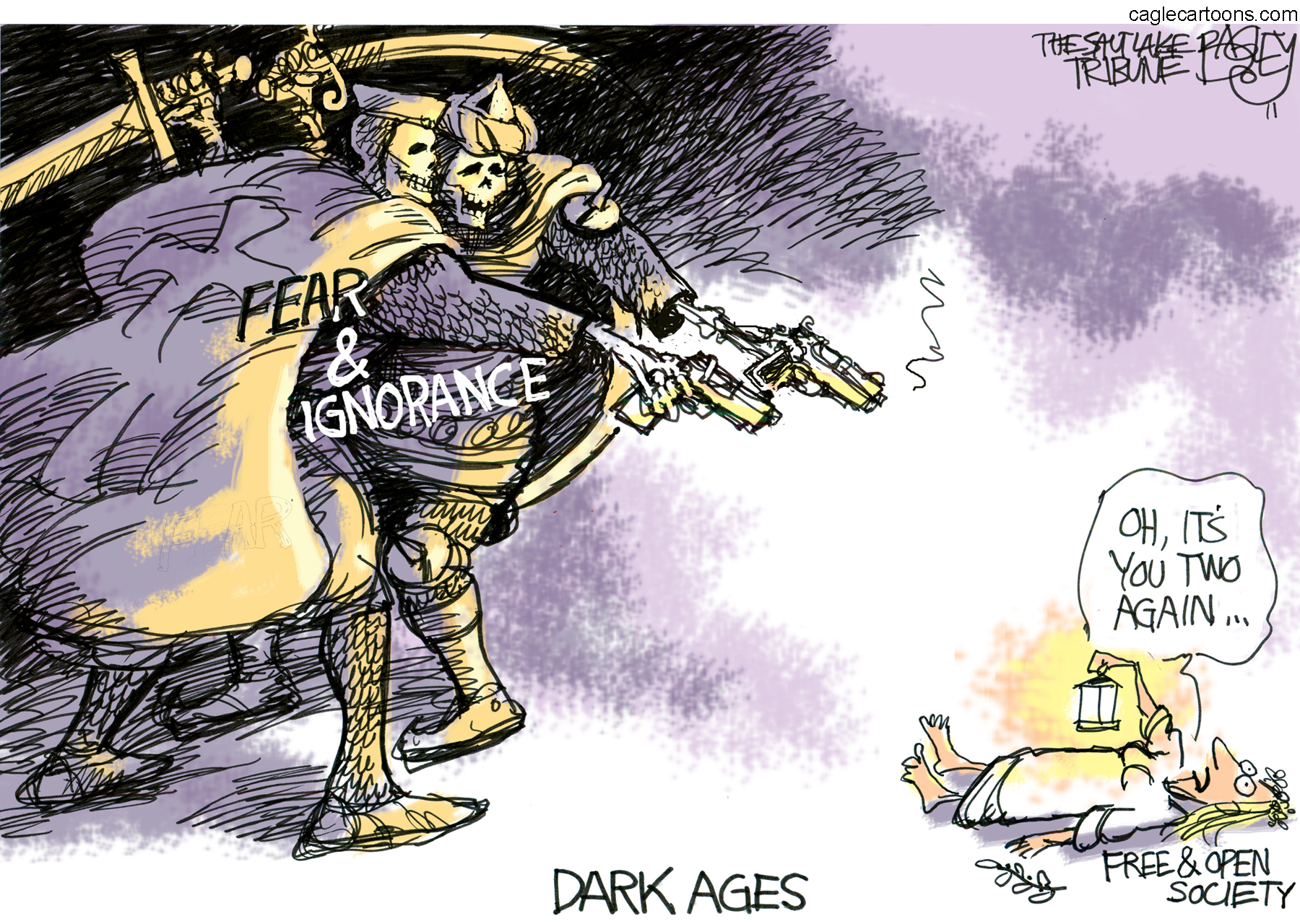
The Tragic Deaths of Ananias and Sapphira:  What This Story Tells Us about the Decline and Fall of Religion.

ANANIAS_AND_SAPPHIRA1.280200851_stdIn the Acts of the Apostles (part of the New Testament) Chapter 5, there is the story of two members of the early Christian church which was thought important enough to merit inclusion in the Bible.  To summarize the story:  these two members (Ananias and Sapphira) sold some property which they owned and instead of contributing 100 percent of the proceeds, they elected to keep some of it aside for themselves.  This may have been in violation of a sense of community and common property that the early Church was fostering since the story seemed important enough to put down in text.  (You may enjoy listening to the following song while reading this blog “The Ballad of Ananias and Sapphira”)

After being confronted by the apostle Peter, both Ananias and his wife Sapphira died on the spot.  What I find most interesting about this story is the significance and interpretation that is given by many Christian leaders to this event.  I think these interpretations may tell us more about religion and why people are backing away from churches then any of the more common reasons given for the decreasing numbers of people who now belong to an organized church.  For instance, many theorists say that the lack of religion today is due to or at least correlated with a more highly educated work force. Others say, the lack of religious affiliation has to do with the sexual emancipation of men and women, thus freeing them from the demands and control of an organized church.  I think there are more fundamental reasons and this story illustrates them very well.  I would like to contrast my “heretical” view of what this story means with a common view espoused by one religious leader in an article called  “5 THINGS GOD TEACHES US IN THE TRAGIC DEATHS OF ANANIAS & SAPPHIRA” by  Pastor J.D. on November 20, 2013

Pastor J.D.

  1. In the church, there are two kinds of people, and it’s nearly impossible to distinguish them from the outside.

On the outside, Ananias and Sapphira look just like another church member named Barnabas (introduced in Acts 4). Barnabas had just sold his property and brought the money to the apostles, and to the casual observer, Ananias and Sapphira were doing the same thing.

But deep in their heart lingered a love of money and a desire for people’s praise.  So they conspired together to present a portion of their money while passing it off as the entire amount. This is worlds apart from the attitude of Barnabas, but looks very similar.

John’s Interpretation: 

ananisas gravesYou mean that there are only two kinds of people in church?  One good and the other bad?  Why are the bad people going to church anyway if they are bad?  How is the church helping these “bad” people?  People who have a love of money and a desire for praise are bad?  That means about 95 percent of the human race are bad.  If all that religion can do is condemn “bad” people, why bother to go to church?  To be “Good,” you must tithe, build churches, give large donations and upon your death leave large grants to your church.

Pastor J.D.

  1. We cannot hide from God.

It may be difficult for us to distinguish between a truly repentant heart and a seasoned faker, but nothing is hidden from God. The Holy Spirit knows our thoughts as if they were being played through a loudspeaker or being displayed on a screen.

That is why despite fooling everyone else, Ananias and Sapphira were still found out. There are no locked doors or hidden closets for the Holy Spirit.

John’s Interpretation:

god sees everythingGod is even worse than big brother. Big brother can be hacked and still has blind spots in his/her surveillance techniques.  God sees all and knows all.  Do not try to hide anything from God.  God has nothing to do but spy on us night and day.  24/7 God is spying.  Do not do anything that would offend God or he/she will know and your secrets will be shared with the universe.  Since your church is your organized representative of God on earth, you should not try to hide anything from your church.  Be sure to send copies of your annual tax returns to your local parish or pastor.

Pastor J.D.

  1. The closer we are to grace, the greater the offense of sin.

Not everyone who lies gets struck down immediately for their sin. So why did Ananias and Sapphira? A couple of reasons:

First, their deaths—like much in Acts—serve as a sign. God takes something that is true in the kingdom of God and puts it on physical display. We see this most often through the healing miracles, but it is equally true of this judgment.

God doesn’t do this with everyone who lies to the Holy Spirit today. But that should not cover up the fact that this death is a picture of how God feels about it. It is a glimpse of the future judgment for all who share in the heart of Ananias and Sapphira.

Second, Ananias and Sapphira had seen the activity of the Holy Spirit so closely that the seriousness of the sin increased. Think of it like the temple: the closer you are to the holy place, the more significant is every blemish.[1]

These people had seen the mercy of God firsthand. Ananias’ name, in fact, means, “God is merciful.” They had likely been witness to the death of Christ itself! And yet despite being recipients of such great grace, they spurned it for the praise of men. Do not take holy things lightly!

John’s Interpretation:

lying tonguesDon’t bother trying to be better; you can never be good enough. Furthermore, it is worse to screw up if you are better than if you had not even tried.  Whatever happened to forgiveness of sin?  In this story, it seems there is no room for repentance.  Tolerance is non-existent.  No one mourns the deaths of Ananias and Sapphira.  Where is the compassion and forgiveness that Jesus preached?  It would seem that even at this early date, the newly formed Christian church has soon forgotten the key messages of Jesus.

Pastor J.D.

  1. Fear is a part of worship.

Unsurprisingly, these dramatic deaths caused a great deal of fear (Acts 5:5, 11). But we may be shocked to see that even in light of this, “more and more people believed in the Lord” (Acts 5:14). Fear is an integral part of worship.

For those of us familiar with the idea of an infinitely loving God, this is a jarring realization.  But God’s love only makes sense when we know the magnificence of his glory and the might of his power. That is why John Newton wrote, “Tis grace that taught my heart to fear.”  As the fear of God increases, so does the sense of his love, because we understand more fully what we have been saved from.

My favorite definition of the fear of God is awe mixed with intimacy.  We are invited into the closest possible relationship with God, but this intimacy must never overshadow the majesty of who God is.

John’s Interpretation:

god_hates_lies_button-p145912936367763508t5sj_400Wow, this is really hard to understand much less accept.  Fear is a part of God?  God wants us to be afraid of him/her because we are more likely to be saved if we are afraid?  As I am more afraid of God, he will love me more? What kind of crazy mixed up logic is this?  Where did Jesus preach this or say anything close to this?  What is it we will be saved from if only we are afraid?  Maybe, this is why psychopaths commit crimes that are so heinous? They have no fear so why should they give a damn?  If you are fearless, you have no problem with God.  This sounds like a good prescription for a fascist dictatorship.  Just keep the people scared and they will stay in line.  God and fascism according to the Christian church must have a lot in common.  No wonder most religions hate communism so much.  Ironic, that so many communist regimes have also used fear to keep people in line. What ever happened to the saying that “You catch more flies with honey then you do with vinegar?”  What many religions seem to be saying is that if you scare people to death, they will donate more to the church.

Pastor J.D.

  1. Sin is a deadly serious matter to God.

If we’re honest, many of us find God’s actions here offensive—but that merely reveals our ignorance of our sin and God’s holiness.  We shouldn’t ask the question, “Why did they die?” Instead we should wonder, “Why do we remain alive?”

Yes, God is patient with us and slow to anger.  But as R.C. Sproul says, we forget that God’s patience is designed to lead us to repentance, not to become bolder in our sin.  If Jesus really went through the tormenting hell of the cross to redeem us, and we neglect that in pursuit of our sin, what will it be like to stand before God? “How shall we escape if we neglect such a great salvation?”(Hebrews 2:3)

 John’s Interpretation:

Sinner ParkingGod hates sin and hate sinners?  In this case, he/she hated sin enough to kill two members of the church whose sin was keeping back some of their money and lying about it.  Wow, this is really scary.  If God can just strike any of us dead for such a trivial offense, imagine what he/she will do to most of us for the daily offenses we make. When you think of the Ten Commandments or Eight Beatitudes, you should be really scared.  Any second now, most of the human race will be struck dead for failing to comply or live up to these standards.  When you think about how many people covet their neighbor’s property, commit adultery, or lack humility or charity, you may wonder that anyone on earth is still alive.

Conclusions:

Well, you may and will draw your own conclusions but my conclusions are to ask why anyone would belong to any organized religion that subscribed to a single one of the beliefs that were noted by Pastor J. D.  If you want to look for reasons why people are less church going or less religious today, you have simply to look at these five beliefs about God and sin that Pastor J.D. has noted.  Who in their right mind, would want to belong to any group that felt this way about humanity and sin?

By the way, these five beliefs noted are not atypical or unique.  When I was researching the symbolism and meaning of the story of Ananias and Sapphira, I found many similar interpretations by other religious leaders.  (See Dan Stevers – The Grim Tale of Ananias & Sapphira)

Most of the interpretations support the idea of an intolerance that was in the early Christian church from the very beginning.  This is not to say that all religions do not share similar intolerances.  My best guess is that any system of organized belief is by its very nature “intolerant” of competing or contradictory belief systems.   One can only hope that we are not all killed instantly for our failures to comply with whatever belief system we are associated with.  Most systems other than religion find it more expedient to kill by innuendo and ostracism then to have God strike you dead immediately.  You lose less members that way.

Time for Questions:

What is sin?  Who are the real sinners in the world?  Do you know any sinners? Are you a sinner?  What do you do to atone or repent for your sins?  There are three things we must do for forgiveness:

  1. Sincerely admit, apologize and show regret for our sins
  2. Listen to the pain and misery that our sins have caused.
  3. Make appropriate amends for our sins to the victims.

Life is just beginning.

If you think that anything under the sun is new, you have only to compare the story of Ananias and Sapphira to this recent headline about churches that plunder their parishioners:

How passing the plate becomes the ‘Sunday morning stickup’” by John Blake, CNN, June, 14, 2015

Who the Hell is Haroon Moghul?

Haroon MoghulNow I am going to confess that I do not know Mr. Moghul.  I have never talked to Mr. Moghul.  I have never emailed Mr. Moghul.  I have never even seen Mr. Moghul until this morning when I found some comments he made on line about the shooting last week in Texas at the cartoon contest for caricatures of Muhammed.   Here are the comments that Mr. Moghul made:

I am Muslim, and after attacks like these, folks always ask, “Do you condemn terrorism?” Or they throw up their hands and say, “Where are the Muslims!” Well, to be blunt: Not at the event. In fact, every major mosque in the Garland, Texas, area not only shrugged off the anti-Islam event happening in their backyard, but also declined to exercise their equal right to peacefully protest it. It appears from early reports that the suspects were not currently involved with a mosque. This is because American Muslims — our mosques and our leadership — reject radicalism out of hand. — (Don’t be fooled by Pamela Geller By Haroon Moghul)

pamelagellerPamela Geller as you may or may not know is the radical anti-Islamist from the East Coast who sponsored the “Free Speech” shindig in Texas.  What could be more American than a free speech contest?  Who could be more American than someone wanting to uphold our First Amendment rights?  Where else in the world would you find a contest proving to the world that Americans are willing to denigrate the beliefs of a large religious following except in Texas?   And I am not talking about the beliefs of Baptists either.

Of course the followers of Ms. Geller immediately launched a reply to Mr. Moghul some of which is as follows:

The clearest indication that Haroon Moghul is a jihad terror-enabling charlatan is the fact that after jihadis attempt to commit mass murder at a free speech event, he doesn’t write a piece defending free speech and explaining why Muslims must accept it, or a piece condemning the Islamic jihadis and explaining why Islam’s death penalty for blasphemy must not be carried out in the modern age, or a piece calling for reform of the teachings and doctrines that Islamic jihadis use to justify violence and supremacism. ­­–  (Don’t be fooled by Haroon Moghul by Robert Spencer)

ExtremistsWho do I believe? Whose logic do I choose: The Jihadist Moghul or the Pro-American anti-Islamist Pam Geller?  This is a tough choice.  My background does not help.  I grew up as a Roman Catholic in an Italian neighborhood in New York.   Jews were evil because they killed Christ.  Protestants were misguided because they rejected the Pope and the Blessed Virgin Mary.  Muslims were bad because they killed a lot of Christians during the Holy Wars and because they thought Muhammed was a better prophet then Jesus.  Hindus were weird because they had too many gods and Buddhists did not believe in God so they could not even be counted as a real religion.  I grew up with a father who was a WW II decorated combat veteran and who hated communists.  The French were not much better than communists to my dad since De Gaulle kicked us out of France shortly after the war was over.  Thus, my religious world was divided into good and bad.  Good= Roman Catholic.  Bad= All other religions or quasi-religions including kooky sects with make believe TV ministers.

ExtremistsSo now we are in this “War on Terror” started by the evil Jihadists.  A war that Europe and America had no responsibility for since all we wanted from the Arabs=Jihadists=Bad, was their oil and a place to send the Jews after the war so that we could expunge our guilt from having let so many of them die in Hitler’s ovens.  Ironic that so much of the Right Wing in America which proclaims to be against Islam also loves the Nazi swastika and anything connected with Heir Adolph.  This is a conundrum.  Nevertheless, I fear the Arabs, or Jihadists putting a bomb on the next plane I take or worse attacking my village in Frederic Wisconsin.  Despite the prevalence of 2nd Amendment rights people up here we might not have adequate munitions to ward off a full scale Islamist attack.  And besides that, we have enough laws already without my having to learn Sharia law.

Thus, I found myself wondering how great the possibility of another 911 was.  How much did I have to fortify my home?  How many rifles, pistols and RPG’s did I need to protect my turf from the evil Arabs?   There were other voices telling me that my fears were misguided.  Indeed, some were saying that I had more to worry about from the Pamela Gellers of the world than from the Ayatollahs.   The Southern Poverty Law center in their recent report on terrorism and hate groups cited the following study in their report in which they seconded the conclusion:

A survey last year of state and local law enforcement officers listed sovereign citizen terrorists, ahead of foreign Islamists, and domestic militia groups as the top domestic terror threat.  The survey was part of a study produced by the University of Maryland’s National Consortium for the Study of Terrorism and Responses to Terrorism. [CNN, 2/20/15]

Freedom of speechAs you know, a study of history is often the best way to understand the current problems we face. As the great philosopher Santayana said “Those who forget the past are condemned to repeat it.”  I therefore decided to undertake some historical research into the present animosity that we seem to have toward Arabs and Muslims in this country.  I wanted to see if Mr. Moghul was right or if Ms. Geller was right.  Is it simply a matter of “Free Speech” which those evil Arabs do not understand or is there a larger issue at play here.

Islamist ExtremistsOn the matter of “Free Speech”, it has been noted by some that all speech is not really free.  Some examples of proscribed free speech would include the classic “yelling fire in a crowded theater” but also such examples as burning a cross in your Black neighbor’s yard, telling your attractive co-worker how nice her boobs were, calling 911 on a joke or telling the Judge to go “F” herself.  Nevertheless, it is remarkable that Pam Geller has the guts to stick it to those evil Arabs by ridiculing their holy patriarch.  Somewhat ironic, since the religious right has never been a big supporter of free speech particularly when it comes to anti-war protests or criticizing Christianity.

“Usually, defending free speech rights is much more of a lonely task. For instance, the day before the Paris murders, I wrote an article about multiple cases where Muslims are being prosecuted and even imprisoned by western governments for their online political speech – assaults that have provoked relatively little protest, including from those free speech champions who have been so vocal this week.” —  In Solidarity with a Free Press: More Blasphemous Cartoons, by Glenn Greenwald

Fear-Ignorance1A source of my information was a book by Edward W. Said published in 1981 titled “Covering Islam: How the Media and the Experts Determine How We See the Rest of the World.”  This book was published nineteen years before 911 and eight years before the first Gulf war.  At this point in American history, most of us did not even know any evil Arabs and there was no War on Terror since it would be 8 years or so before the War on Godless Communists would end with the fall of the Berlin Wall.  We had plenty of other evil people to deal with and did not have to have any evil Arabs.  Most of us had never even had any falafel, hummus or baklava.

So I presumed that what Mr. Said said about the evil Arabs in 1981 might be a somewhat unbiased and as yet uncontaminated view of how Americans viewed Arabs way back over thirty years ago.  Here is what Mr. Said had to say about America’s view of Arabs in 1981:

The modern Western media, says Said, does not want people to know that in Islam both men and women are equal; that Islam is tough on crime and the causes of crime; that Islam is a religion of knowledge par excellence; that Islam is a religion of strong ethical principles and a firm moral code; that socially Islam stands for equality and brotherhood; that politically Islam stands for unity and humane governance; that economically Islam stands for justice and fairness; and that Islam is at once a profoundly spiritual and a very practical religion. Said claims in his book that untruth and falsehood about Islam and the Muslim world are consistently propagated in the media, in the name of objectivity, liberalism, freedom, democracy and progress.This summary is from Wikipedia.

I was startled and amazed by his conclusions.  The evil Arab portrayed in the press in 1981 is the same Evil Arab=Muslim=Jihadist portrayed in the American press today.  Fox News (Sic) commentator Lt. Col Ralph Peter has made the following comments about Islam:

“We do not have an Islamophobia problem in the United States; we have an Islamophilia problem – which places Islam above all criticism. And until we hold Islam to the same standards as every other religion, ethically and behaviorally, terrorism wins.”

Salon Magazine commenting recently about the role of Fox News in promoting Anti-Arab sentiment in America had this to say about the treatment of Arabs and Islam:

“The Islamophobia industry also goes to great lengths to sell its message to the public. The difference, though, is that in many cases the very networks that spread their product are themselves participants in the ruse to whip up public fear of Muslims. This is not a relationship of buyer and seller, where various characters that peddle panic purchase slots on major television networks to plug their merchandise. Rather, it is a relationship of mutual benefit, where ideologies and political proclivities converge to advance the same agenda.

Fox News, the American television station that brands itself as “fair and balanced,” is the epitome of this relationship.  It has been, for the better part of the last decade, at the heart of the public scare-mongering about Islam, and has become the home for a slew of right-wing activists who regularly inhabit its airwaves to distort the truth to push stereotypes about Muslims.” —  www.salon.com  

The comment in Salon was made in 2012 nearly thirty years after Said noted that there was a major effort in the US News to distort the teaching and canons of Islam.  Of course there will be those who note the following:

  • Islamic beheadings
  • Stoning of women guilty of adultery
  • Islamic persecutions of Christians in Arab countries
  • Islamic persecutions of Jews and other minorities

When these problems and atrocities are faithfully reported and repeated ad nausea in the news, it has the effect of distorting and even hiding the threats from other terrorists particularly Right-Wing and religious fanatics.  We see or hear of one Muslim related terror attack such as the Charlie Hebdo killings and we hear of news related items to this event for over two weeks.  In the meantime, other atrocities not related to Islam go unreported and virtually ignored.  Nevertheless,

A Homeland Security report produced in coordination with the FBI in 2014 counts 24 violent sovereign citizen-related attacks across the U.S. since 2010.  The government says these are extremists who believe that they can ignore laws and that their individual rights are under attack in routine daily instances such as a traffic stop or being required to obey a court order. DHS Intelligence Report

So let us return to the Patriot or Evil Jihadist (depending on your perspective) Mr. Moghul.  Here was a man who would apparently agree with Mr. Said.  Muslims are not evil people nor are all Muslims good people.  That’s right.  There are “Bad” Muslims. There are also many evil Christians but no one disparages all Christianity even though few people seem to actually practice the teachings of Jesus Christ.

goingtohellIn my home town, the religious right has managed to put up a billboard with the Ten Commandments on it.  I fail to see how this billboard promotes Christianity.  Christ gave us the Eight Beatitudes not the Ten Commandments.  The Ten Commandments are Old Testament.  The Eight Beatitudes are Christian through and through. I have asked many people why they did not put the Beatitudes up and why they put the Ten Commandments up.  I had much rather see Christians follow the Eight Beatitudes today and say they are for Compassion and Love.  Instead, I see too many so-called Christians who are for Hate and Intolerance.  Where did Jesus ever call for Hate or Intolerance?

“At the exhibition ‘Caricatura VI – The Comic Art – analog, digital, international’ in Kassel in Germany, a cartoon created by cartoonist Mario Lars has been removed after protests that it hurt people’s religious feelings.  The drawing depicts Jesus suffering on the cross and a speech bubble, which apparently contains words from God, who says: “Ey… you… I fucked your mother.” The caricature was displayed not only in the exhibition itself, but was also reproduced on a large advertising poster outside the building of Caricatura Gallery.  Barbara Heinrich, the city dean of the Evangelical Church in Kassel, said the caricature crossed a line of what is acceptable.” — Arts Freedom, August 29, 2012.

extremism-cartoonjpg-ff44d0d8e227b4c0I may not like your religion.  I may not like your Gods or your prophets.  But as long as your religion respects the rights of others, I will respect your religion.   I do not see the vast majority of Muslims as a threat to my way of life.  I see Muslim extremists as dangerous and misguided but I view them the same as I view Christian extremists.  Both categories include narrow minded zealots who pose a threat to other people because of their failure to deal with adversity through kindness and love.

Thus, I say that those who profess to be Christians and follow the word of Jesus have no precedent to denigrate, humiliate or ridicule the teachings of Muslims, Hindus, Buddhists or any other religion that they do not agree with.  Jesus would not have ridiculed or persecuted anyone.  Can you imagine Jesus holding a contest to see who could create the best caricature of a prophet named Muhammed?

Time for Questions:

Are you a Christian?  Do you understand and support the rights of other religions to practice their faiths?  Do you stand up to bullies and zealots who would ridicule and malign other religions?   What will it take for America to become a country that truly is a melting pot and tolerates racial and religious diversity?

Life is just beginning.

“Think for yourself and let others enjoy the privilege of doing so too.”  ― Voltaire

“Christian, Jew, Muslim, shaman, Zoroastrian, stone, ground, mountain, river, each has a secret way of being with the mystery, unique and not to be judged”  ― Rumi

God, Guns and Gays

Have you noticed the increase in guns in the USA?  The increase in concealed carry laws and the increase in handguns sold seems to be paralleled by the increase in Gay marriage laws and the increase in Gay rights.  I bet most of you did not notice this fact.  I think it suggests something very obvious:  Gays are pushing for more guns on the streets because “Handguns lead to more Gay rights.”  That’s right folks, those people pushing for more permissive gun laws are the same people pushing for more Gay rights.  Fags want guns so that we will become powerless when they take over the USA.  (Listen to “Probably Gay, the Homophobia Song”)    alg-gay-marriage-jpg

“Any person 21 years of age or older, who is not prohibited possessor, may carry a weapon openly or concealed without the need for a license….A political subdivision may not enact any ordinance, rule or tax affecting the ownership, transportation, possession, purchase, transfer or use of firearms or ammunition.  In addition, a political subdivision of this state shall not require or maintain a record, list or database containing the personally identifying information of the person who buys, sells, leaves for repair or consignment or leaves for temporary storage, any weapon owned by that person.”  —- Arizona Gun LawNRA -ILA

That’s right!  It’s a plot by homosexuals (people who have only one sex) to subvert the USA and turn us into a country dominated by Gays who will have all the guns.  I will bet you did not notice that the guy you just saw walking around with the big Glock strapped to his belt was a Fag!  I have noticed that down here in Arizona with the most permissive gun laws in the USA that Gay men all have guns.  I am worried that I will be forced to suck cock by a Gay male with a big gun and thereby turned into a raving homosexual.  It is really scary.  I no longer feel safe on the street at night.  And did you know that it is all because of the religious right?

1 Corinthians 6:9-11
“Don’t you realize that those who do wrong will not inherit the Kingdom of God? Don’t fool yourselves. Those who indulge in sexual sin, or who worship idols, or commit adultery, or are male prostitutes, or practice homosexuality, or are thieves, or greedy people, or drunkards, or are abusive, or cheat people-none of these will inherit the Kingdom of God.” 

GAY MARRIAGE OPPONENT HOLDS SIGN IN PROTEST OUTSIDE STATEHOUSEThat’s right!  The religious right is behind Gay rights.  The religious right have created this problem with all their pompous ravings about God hating fags.  Now all the fags are getting guns to protect themselves from Gay hating gun toting Christians.  “When guns are allowed only Gays will have guns.”  More and more we keep hearing about how God has condemned Gays to a barren-less existence.  Gays cannot go to heaven.  Gays will be punished.  Gays cannot propagate.  Gays cannot spread the word of God or at least create more Gays or something like that.

After thinking and worrying about this problem for some time, I have decided to go right to the source of the problem.  That’s right, God!  If my pastor, priest, rabbi, swami, minister, shaman, or imam all say that God hates Fags, then I am going to find out why.  What has got God’s drawers all wadded up about Gays?  Was God molested by a Fag when he was young?  Or is God a closet Fag who has a subliminal hatred towards Gays because he/she (God just might be a Lesbian Fag) cannot admit his own sexuality.  Which way does God roll?   I have invited God down for an interview.  She/he graciously accepted.  The following is our conversation. TheInterviewWithGod

JohnThank you God for accepting my invitation to come down and talk to us today.

God:  No problem John.  I was just creating a few more universes.  Something I do in my spare time.

John:  Sounds like fun. I will bet that keeps you really busy.

God:  Not as busy as you might think. It only takes about six days and then I rest on the seventh.

John:  Well, I invited you here today to clarify a few points.  The major point is about homosexuals, fags, lesbians and Gays.

God:  Happy to answer any questions you have John.

John:  Well, there are many people who believe that the Bible is your word and in the Bible are many references to your hatred and animosity towards Gay people.

God:  Look John, I don’t deny that I gave some guidance to you people down here when it came to how to live a proper life, but you know as well as I do how screwed up communication can get.  “He said, she said, I said” and before you know it “God is against Gays.”  This Bible you talk about is not a very consistent book and much of what is in there is folklore or comes from your own twisted human interpretations of what I told the prophets.

John:  Let me give you a quote directly from the Bible:

gay men“If there is a man who lies with a male as those who lie with a woman, both of them have committed a detestable act; they shall surely be put to death. Their bloodguiltness is upon them.” — Lev. 20:13

God:   Did not your prophet Jesus say that I was a God of Love?  Why would I want anyone to be put to death?  You people down here have a penchant for killing.  I gave you all free will and you use it to maim, attack, hurt, malign, and murder with any number of rationales for your actions.  I created some people who are Gay and some who are straight.  Do you not think that I who have the power to create Heaven and Earth could have simply not created Gay people?

John:  Do you mean to say God that you could have just created all straight people and not put any Gay people on the planet Earth?

God:  What do you think John? I have created stars, galaxies, planets and universes beyond your imagination.  I created the first plants, animals and humans.  Could I not have simply created a planet with all Gay people or all straight people?  Did I need to let you have sex organs to populate your small planet?  Could I not have simply created six billion humans with no penchant or ability for sexual activity?

John:  Ah! I am glad you raised the issue of sexuality.  Can you tell me “why did you make us sexual creatures?”

God:  Isn’t the answer obvious John?  Look at all the fun you have with sex!  Sex is your biggest recreational activity.  And sometimes you get children out of these unions and sometimes you don’t.  Sex is fun anyway.  It says in your Bible that sex is for procreation but millions of you have sex every night with no intention of procreation.  In fact, from where I view the Earth, millions of you have sex every night with people whom you are not even married to and this when many of you are already married.

John:  Why create the possibility of recreating ourselves?  You could have simply made us immortal or simply replaced each of us as we died.  This would have saved a lot of problems for the human race.

God:  Have you not noticed how many of you love children?  I wanted to make life interesting for you.  What would your lives be without the children that many of you have?  Your children make you into mini-gods.  Parents are the gods to their children, like I am the parent to you.  I am your God and I am your parent.  But I never said that everybody would have children nor that there would not be many children without parents. There are good parents and bad parents.  That is the free will that I created for humanity.

John:  Well, Gays cannot have children through the natural birth process.

God:  So what!  Are there not many people who give up their children or children who do not have parents?  Many of you humans are not fit to be parents.

John:  Sounds like you are saying that you don’t have anything against homosexuality.

God:  I created homosexuals, bisexuals, heterosexuals, asexuals and many other kinds of sexuals. These are all my creations.  What is it your Bible says about God’s Creations?

“He has made everything appropriate in its time. He has also set eternity in their heart, yet so that man will not find out the work which God has done from the beginning even to the end. I know that there is nothing better for them than to rejoice and to do good in one’s lifetime.”Ecclesiastes 3:11

I did not say I made anything ugly or anything without a purpose.  You might never understand my reasons or purposes because they are beyond human understanding.

Think-about-it-gay-rights-33482870-430-336John:   Well God, we have a lot of people down here speaking in your name that are preaching hatred for Gays as well as preaching many other types of hatreds.

God:   I sent Jesus to straighten this all out but you simply crucified him.  Nailed him to a cross.

John:  Could you send someone else down to tell all these would be Christians to leave Gay people alone and let them live their own lives?

God:  Look around and you will see that I already have.  You humans have hard hearts unless of course one of your own is Gay and then that seems to change everything.  I may have made a mistake when I gave you all free will because you seem to use it mostly for doing evil rather than doing good.

John:  Would you send another flood or perhaps a large earthquake or meteor to destroy the world and start over?

God:  Perhaps, but only if I thought things were so hopeless here and that everything you were doing was evil.  I still see a great deal of potential in humanity.  There are many good people among you who spread love and not hate.  Many of you who are not Gay haters or religious bigots or racists or zealots. I would never destroy your world when there are so many good people trying to make my world a better place.

John:  Then to summarize.  You don’t hate Gays?

god loves everyoneGod:  I have no concept of the word “hate.”  You are all my creatures.  Everything that crawls, digs, walks, swims or flies is something that I created and something that I love. 

John:  Thank you God for taking the time to meet with us today and give us your thoughts. 

Time for Questions:

Do you hate Gays? Why?  Do you think Gays should not be allowed to marry? Why? If you do not hate Gays, what do you do to help them in their fight against prejudice and discrimination?  You cannot sit on the fence and do nothing.

Life is just beginning.

“Perhaps we should worry less about judging people for being Mormon or Baptist or Muslim or gay or straight or black or white or Latino or by their religious or political brands and worry more about electing thoughtful, serious and ethical politicians on both sides of the political isle who are willing to work together for progress.” —- Charity Sunshine Tillemann-Dick

“I believe marriage is between a man and a woman. I am not in favor of gay marriage. But when you start playing around with constitutions, just to prohibit somebody who cares about another person, it just seems to me that’s not what America’s about. Usually, our constitutions expand liberties, they don’t contract them.” —- Barack Obama


December 30th 2014

the-end-of-the-world-2012Are we getting close to the “end of time” or just the end of this year?  Will the universe and everything in it end on December 31st, 2014 this year?  Are you ready if it does?  Have you ever really thought about when time will end? Will time end only when the world and the universe end?  Or maybe time will just quit, like a watch that stops running.  Some religions believe that time ends on judgment day.  Do you think that there are any clocks in Heaven?  What about Hell?  Does the Devil track time for us?  What about in Purgatory?  (Click to hear The End of Time by Beyoncé)  Do you think we will get to hear Beyoncé dance and sing for free in Heaven?

“Purgatory (Lat., “purgare”, to make clean, to purify) in accordance with Catholic teaching is a place or condition of temporal punishment for those who, departing this life in God’s grace, are, not entirely free from venial faults, or have not fully paid the satisfaction due to their transgressions.”  (New Advent Catholic Encyclopedia, http://www.newadvent.org/cathen/12575a.htm ).

The Catholic Church teaches that we need to spend time in Purgatory only for certain offenses.  If you are really bad, Purgatory is not an option.  It is only for those who screw up but not really in a very bad way.  You screw up really bad, you go to Hell.  Thus Purgatory would be a stopping point for just about everyone in the human race who is not going to Hell.  Since the punishment is temporal and not eternal, do you suppose they have clocks in Purgatory?  Who do you suppose winds them up?  Can you imagine spending 500 years in Purgatory and watching the clock until you are released?

old-clocksPerhaps, time will simply wear out when we get tired of keeping time. People have been thinking about and tracking time since the first human beings walked the earth.  Time seems to be part of the human psyche.  If humans did not have time, they would certainly have created it.  It is hard to imagine any place where we would not mark time.  Heaven qualifies as one place though where there would seem to be no reason to mark time.  Why keep track of time when everything is eternal and unchanging?  Heaven should be a place where there are no goals, no accomplishments, no meetings, no places to get to, no tasks to complete, no projects due, no emails to answer and no shortage of time.  If any of these things existed in heaven, then we would need to track time.

children playingSo what do we do in Heaven?  We all seem to want to get there, but what do we do with our “time” when we are there?  I guess we just play all day since play does not require us to track time.  Play is by definition devoid of timeliness.  You do not have to be on time to play.  Little children would not have invented time.  Children do not seem to worry about time anywhere near as much as adults.  Maybe that is why Jesus said you must be like little children to enter into heaven.   Adults would be bored in heaven in less than a day.  As adults we become more and more fixed on the idea of time and the limitations that time places on our lives. Perhaps if we could just play all day, then time would end and we would all have less stress in our lives.

Maybe we should create a “holiday” each year where time stops.  A day when you do not have to keep track of time or when time does not matter.  It is difficult to think of living a single day when we are not keeping track of time.  I guess we will just have to wait until we get to heaven for time to stop.  Do you suppose anyone wears watches in heaven?

Time for Questions: 

What if we played more and worked less?  Could we cut time down some?  Can you “end time” when it is just play time?  When was the last time, you were able to forget about time?  How long did it last?  What does it take for you to forget about time?

Life is just beginning.

“Year’s end is neither an end nor a beginning but a going on, with all the wisdom that experience can instill in us.”  — Hal Borland

What the Hell Do We Need Morality For?

morals and ethics

This blog is about the subject of morality.  Once upon a time, they taught morality in school and in church.   The first system of morality that many older Americans were exposed to was probably the “Ten Commandments.”   This was a code of rules given to the Israelites by Moses on Mount Sinai.  I have always thought it ironic that a set of morals from the “Old Testament” was supposed to be the foundation for a Christian America.  Even today, advocates of this code of morality want to hang it in town halls, schools, courts and government centers.  This is a part of the Bible that promoted an “eye for an eye” and stoning adulterers.

Jesus did say “Think not that I am come to destroy the law, or the prophets: I am not come to destroy, but to fulfill” (Matthew 5:17).  Jesus added at least one commandment to all others that was even more valuable than the ten TenCommandmentsMoses gave.   Jesus said, “A new commandment I give to you, that you love one another; as I have loved you, that you also love one another” (John: 13:34).  I would be much more in favor of seeing this posted in my neighborhood than the Ten Commandments.

Perhaps even more importantly in terms of a system of morality, Jesus gave a sermon where he proposed what has been called:  The Eight Beatitudes:   (Click here to hear the The Beatitudes Song

Blessed are the poor in spirit, for theirs is the kingdom of heaven.

Blessed are they who mourn, for they shall be comforted.

Blessed are the meek, for they shall inherit the earth.

Blessed are they who hunger and thirst for righteousness, for they shall be satisfied.

Blessed are the merciful, for they shall obtain mercy.

Blessed are the pure of heart, for they shall see God.

Blessed are the peacemakers, for they shall be called children of God.

Blessed are they who are persecuted for the sake of righteousness, for theirs is the kingdom of heaven.  —- Gospel of St. Matthew 5:3-10

It is my opinion that the Eight Beatitudes constitute one of the greatest systems of morality to come out of the Bible.  I would rather see these taught (if we are going to teach a system of morality) than the Ten Commandments.  I would also not mind these being posted in schools and other public places whereas I am sick and tired of those who want to post the Ten Commandments.

I noted that once upon a time, we taught morality in schools and churches.   Actually, we not only taught morality but morality was also imbued in our social fabric by many traditional stories and the media.  Children from an early age were exposed to Fairy tales, Uncle Remus stories, Aesop Fables, and Tales of the Arabian Nights.  These stories were full of morals on how to live and behave properly.  Early TV was also full of morality tales.  Shows like Father Knows Best, Leave It to Beaver and Andy Griffith each week clearly conveyed stories of morality and what was right and what was not right in terms of behavior.

sin-guilt-causes-body-pain-sicknessSomeplace along the way, we started losing our sense of morality.  Some have blamed it on becoming a multi-cultural environment.  Some have blamed it on the decline of religion and church going.  Some have blamed education while still others have blamed progress and a business culture that has no room for strict morality.  I am not sure what the actual cause was.  I am more concerned that it did happen.  Studies have shown that our culture has become more amoral than moral and that narcissism now plays an increasing role in our society.  People are less moral and more self-centered than ever before in the history of this country.  A book by Joel Marks (Ethics without Morals: In Defense of Amorality -Routledge Studies in Ethics and Moral Theory, 2012) is one of several that makes an argument for amorality:

“In clear, plainspoken, engaging prose, Joel Marks presents the case for abandoning belief in morality. Anyone who wants to defend the practice of making moral judgments will have to confront the issues Marks raises, and the alternative to morality he proposes.” – Mitchell Silver, University of Massachusetts, Boston, USA 

In the book “The Moral Fool: A Case for Amorality (2009)” the author Hans-George Moeller advances the following case for amorality:

“Justice, equality, and righteousness—these are some of our greatest moral convictions. Yet in times of social conflict, morals can become rigid, making religious war, ethnic cleansing, and political purges possible.  Morality, therefore, can be viewed as a pathology—a rhetorical, psychological, and social tool that is used and abused like a weapon.”

In an article “Why Is Narcissism Increasing Among Young Americans?”  by Peter Gray in Freedom to Learn (2014), Gray notes the following:

“For the past three decades or a little more, researchers have been assessing both narcissism and empathy using questionnaires developed in the late 1970s.  Many research studies have shown that scores on these questionnaires correlate reliably with real-world behavior and with other people’s ratings of the individuals.  For example, those who score high in narcissism have been found to overrate their own abilities, to lash out angrily in response to criticism, and to commit white-collar crimes at higher rates than the general population.[1]  Those who score low in empathy are more likely than the average person to engage in bullying and less likely to volunteer to help people in need.[2.]

Over the years, these questionnaires have been administered to many samples of college students, and analyses that bring all of the data together reveal that the average narcissism score has been steadily increasing and the average empathy score has been steadily decreasing ever since the questionnaires were developed [3.]  The changes are highly significant statistically and sufficiently large that approximately 70 percent of students today score higher on narcissism and lower on empathy than did the average student thirty years ago.

What accounts for this historical rise in narcissism and decline in empathy?  There is no way to know for sure, based on the data, but there are lots of grounds for speculation.”

I think we have thrown the proverbial baby out with the bath water.  I agree we need to keep the State separate from the Church.  I also agree that we don’t need the Ten Commandments as the foundation for moral thought in America.  Nevertheless, I do believe that we all need a code of morality to live by.  Whether it be Christian, Buddhist, Confucian, Agnostic, Atheist, Islamic, Jewish, Hindu, Baha’i, or other, we need a set of morals as a template and foundation for our behavior.  We need a baseline that each of us can start from so that we can assess what is good and what is right.  We need to have some system of ideas about what is correct behavior and how we should live in a socially interconnected world.

When I was a kid, (somewhere along the way) I was taught the Seven Deadly Sins.  Sometimes they were called the Seven Deadly Vices or the Seven Cardinal Sins.  I assume that since I attended a Catholic school, it went along with the teaching.  The Seven Deadly Sins included the following:

  • Lust
  • Gluttony
  • Greed
  • Sloth
  • Wrath
  • Envy
  • Pride

7 deadly sins

Some of you might think that this list is old fashioned or out of date.  How could this set of implicit moral values make a difference in our society?  They are so old; do they really have any relevance anymore?

Take a close look around you at the world.  You have only to look for a few minutes to persuade yourself that these “sins” are at the top of the list of major problems.  Greed, envy, gluttony and lust appear pervasive in our culture.  (See my series on Gandhi’s Seven Social Sins) TV shows, movies, magazines, radio, supermarkets, superstars, sports, credit services, escort services, pornography, Las Vegas all portray an American brand of materialism that is nothing short of sick.  Get it now, get it fast, and get more and moreMore is better!  Bigger is better!  Shop till you drop!  He who has the most toys wins!

“If necessity is the mother of invention, then surely greed must be the father. Children of this odd couple are named: Laziness, Envy, Greed, Jr., Gluttony, Lust, Anger and Pride.”  ― John R Dallas  Jr.

Black Friday ( The day after Thanksgiving in the USA) is only a small manifestation of the greed, lust and sloth that has infected our society.  How many Americans have a regular exercise schedule?  How many obese citizens can you count on the street each day?  How many Americans spend more each week then they earn?  How many Americans will go in debt this Holiday Season to spend money that they don’t have on gifts and toys?  Where is the self-restraint that is necessary to push oneself away from the table or shut the TV off and say “Enough.”  It barely seems to exist.  Is it any wonder that so many countries have a very negative stereotype of the “average” American?  We appear to be a group of people who have lost our moral compass.

ARTICLE 29 —  The Universal Declaration of Human Rights

  • You have a responsibility to the place you live and the people around you-we all do. Only by watching out for each other can we each become our individual best.

At this point, you well may be asking “What right does he have to be so damn moralistic?”  Didn’t Jesus say “Let he who is without sin cast the first stone?”  “Are you so perfect that you have a right to look down on other people?”  “Who does he think he is, Jonathan Edwards?”  “I don’t need anyone telling me my faults.”  “I get enough negativity from work without having to get it from you.”

Please allow me to clarify a few misconceptions.  In some religious circles we are all sinners.  Since I am agnostic, I don’t subscribe to a religious view of sin.  My use of the terminology is borrowed from the religious sphere since I think that the concept of sin has a very useful connotation if we can free it from some of the pejorative and negative associations with which it is fettered.  First of all, I do not believe that you will go to hell for committing these Seven Sins.  Second, you will not be a bad or evil person because of them.  Third and accentuating the positive, you may be happier and healthier if you are more aware of these “sins” and can do a better job of examining the role that they play in your life.  My bringing these “sins” out is to help us all become more aware of the morality that we have allowed to become obscured in our daily lives.

There are only two mistakes one can make along the road to truth; not going all the way, and not starting.  —-Buddha

We have had a decline in morality that started over one hundred years ago and it still seems to be declining.  More people are worried about their taxes increasing then the poverty facing many people in this country.  More people are worried about their security then the number of people going to jail every day for victimless crimes.  More people are worried about the price of gasoline then the pollution we send into the atmosphere every day.  Self-centeredness has become a dominant fixture of the American landscape.  “Greed is Good” says Ivan Boesky and everyone applauds.

If you look for truth, you may find comfort in the end; if you look for comfort you will not get either comfort or truth only soft soap and wishful thinking to begin, and in the end, despair.   — C. S. Lewis

Why do I think we should care about morality? 

goodevilWithout morality, we are not even as good as animals.  Animals eat, drink, sleep, procreate and fight when they have to.  They do not do it simply to hurt other animals or to wage war against groups or individuals that they cannot tolerate.  Animals care for their young and exhibit many characteristics of moral behavior.  In captivity, animals may display much more aggressive behavior.  For instance, Orcas in the wild have never been observed to kill other Orcas.  This is not the case for Orcas in captivity.  There is no such thing as civilization without a commitment to moral and ethical behavior.  Even animal societies are proof of this.

“I am Envy, begotten of a chimney-sweeper and an oyster-wife. I cannot read, and therefore wish all books were burnt; I am lean with seeing others eat – O that there would come a famine through all the world, that all might die, and I live alone; then thou should’st see how fat I would be! But must thou sit and I stand? Come down, with a vengeance!”  ― Christopher MarloweDoctor Faustus

Without morality, we have no compass to define what is good behavior and what is bad behavior.  We are reduced to the level of opportunists willing to take advantage of anyone and anything that suits our ends.  Listen to the current debate on the use of torture and the recent CIA report and you will find numerous “experts” advocating that the “ends justify the means.”  One man on NPR noted that he thought we should ask the victims of the Twin Trade Towers what they thought about the use of torture to capture Osama Bin Laden.   John McCain (May he Rest in Peace) once said it best when he opined in Congress (12-9-14) that “”Our enemies act without conscience. We must not.”  Nevertheless, he was opposed by his own party in his opposition to torture and in fact to even releasing the CIA Tortmoralityure Report. 

Many Republicans argued against releasing the report, especially as the threat of the Islamic State in Iraq and Syria grew and U.S. intelligence officials had warned that its release could cause backlash from nations and groups hostile towards the nation.   American embassies in the Middle East had been put on heightened security alert for its release.

McCain replied that “This report strengthens self-government and, ultimately, I believe, America’s security and stature in the world.”  (CNN 12-9-14)

Finally, without morality, there is no way to transmit values from one generation to another.  A lack of morality has led to the increase in amorality that is now symptomatic of our society.  Amorality is a set of beliefs which deny the value of morality or at best are indifferent to morality.  A rock is amoral.  It is neither good (moral) or bad (immoral) but may be used for either purpose.  Anything or anyone without a conscience is amoral.  It is a fine line and one that is very easy to trespass between amoral and immoral.  Many people today may think their behaviors are amoral when actually they could better be described as immoral.  Harken back to the Seven Deadly Sins and ask yourself, how many of these vices are amoral?  Are greed, gluttony, lust and wrath amoral?   Can anyone with a good conscience say it is okay to partake in these vices?

“Seven deadly sins,
seven ways to win,
seven holy paths to hell,
and your trip begins

Seven downward slopes
seven bloodied hopes
seven are your burning fires,
seven your desires…”
― Iron Maiden

Time for Questions:

What is your moral code? What are the three most important morals in your life?  Do you think everyone should have an explicit moral code?  Why or why not?  Do you know many amoral people?  What do you think about amorality?  When is it justified?  What do you think the world would be like if everyone was amoral?  Would it be a better world or worse? Why?

Life is just beginning.

“Remember tonight… for it is the beginning of always”  ― Dante Alighieri

The Eleventh Greatest Mystery of All Time:   Where is the Arc of the Covenant?

The Arc of the Covenant is the repository for the commandments given by Yahweh to Moses on Mount Sinai.  Precise descriptions for the repository were given by Yahweh to Moses.  The Book of Exodus gives detailed instructions on how the Ark is to be constructed.   (Listen to the Arc of the Covenant Song by the Congos)  Ark-of-covenant-God-face-to-face-1-

Ark of the Covenant from Exodus 25:10-22 New American Standard Bible (NASB)

10 “They shall construct an ark of acacia wood two and a half cubits long, and one and a half cubits wide, and one and a half cubits high. 11 You shall overlay it with pure gold, inside and out you shall overlay it, and you shall make a gold molding around it.12 You shall cast four gold rings for it and fasten them on its four feet, and two rings shall be on one side of it and two rings on the other side of it. 13 You shall make poles of acacia wood and overlay them with gold. 14 You shall put the poles into the rings on the sides of the ark, to carry the ark with them. 15 The poles shall remain in the rings of the ark; they shall not be removed from it. 16 You shall put into the ark the testimony which I shall give you.

17 “You shall make a mercy seat of pure gold, two and a half cubits long and one and a half cubits wide. 18 You shall make two cherubim of gold and make them of hammered work at the two ends of the mercy seat. 19 Make one cherub at one end and one cherub at the other end; you shall make the cherubim of one piece with the mercy seat at its two ends. 20 The cherubim shall have their wings spread upward, covering the mercy seat with their wings and facing one another; the faces of the cherubim are to be turned toward the mercy seat. 21 You shall put the mercy seat on top of the ark, and in the ark you shall put the testimony which I will give to you. 22 There I will meet with you; and from above the mercy seat, from between the two cherubim which are upon the ark of the testimony, I will speak to you about all that I will give you in commandment for the sons of Israel.

The precision of the construction of the Arc is remarkable.   Those who dispute the Bible as a historically accurate document should read it more carefully.  No doubt there are many historical inaccuracies in the Bible but only a fool could ignore the incredible detail that is contained in many Biblical narratives.  The Arc disappeared sometime after the destruction of Solomon’s temple and there are numerous claims as to what happened to it and where it is now located.

8 Alleged Resting Places of the Ark of the Covenant

To date there is no evidence that any of the present claims have any veracity.  If you think about it, the potential presence of the Arc is a powerful tool arc picture of waterfor bringing followers to whatever brand of theocracy one is selling.  It makes sense to keep the memory of the Arc alive and in good shape.  To many of the Jewish faith it is a sacred icon with enormous religious significance.  The possibility that it exists has profound implications for many of the more conservative religious faithful throughout the world.  As they say, “hope springs eternal in the human breast.”

Unfortunately, history provides many unpalatable lessons.  One lesson is the amount of grave robbing, tomb destruction and artifact desecration that has gone on since before written records.  This has taken place both in the name of greed and in the pursuit of fame.   Tomb robbers have been mainly motivated by greed while scientists have been mainly motivated by fame.  Imagine being the man or woman who finds the “Lost Arc” or the “Treasure of King Solomon” or Noah’s Arc?

“You and I are very much alike. Archeology is our religion, yet we have both fallen from the pure faith. Our methods have not differed as much as you pretend. I am a shadowy reflection of you. And it would take only a nudge to make you like me, to push you out of the light.”       — From Indiana Jones and the Raiders of the Lost Arc.”

Nevertheless, up until present times, archeology (if you can call it that) was dominated by tomb raiders.  For a tomb raider, the question is not fame, but how much money can the artifact bring.  As it relates to the Arc of the Covenant, this is the sad part.  Sad, because the gold and cherubim were undoubtedly worth a great deal more melted down then they would have been still attached to the Arc.  The wood most likely rotted away centuries ago and the gold would have been the only thing of value left.  The two stone tablets with the Ten Commandments inscribed on them were probably indecipherable to the tomb raiders and most likely became part of a rock pile.

Conclusion: 

947563-ark3Don’t waste your time looking for the Arc of the Covenant.  It no longer exists.  The gold in your earrings or wedding ring or coins may be part of the original Arc.  The rocks in your back yard may have some Hebrew inscriptions which if you look closely at are actually letters from the original Ten Commandments.  Fortunately, we have the remarkable description of the Arc that has been passed down in the Bible for over 5500 years now to describe what it once looked like.

Plato was right in that ideals never die.  Forms, structures, buildings will all eventually decay and wither away, but the ideas, beliefs, hopes and aspirations of humanity will go on as long as there is one person alive to remember them.  The Arc of the Covenant represents the hopes of a people for a system of law and morality that was created twenty seven hundred years before the Magna Carta and one thousand years before the Law of the Twelve Tables.  Based as it were on a set of religious beliefs, the Ten Commandments provided a set of ideas and principles for living with others in peace and harmony.

Time for Questions:

Where do you think the lost Arc is?  Do you agree with my conclusions?  Why are why not?

Life is just beginning.

“Nothing is predestined. The obstacles of your past can become the gateways that lead to new beginnings.”    ― Ralph H. Blum

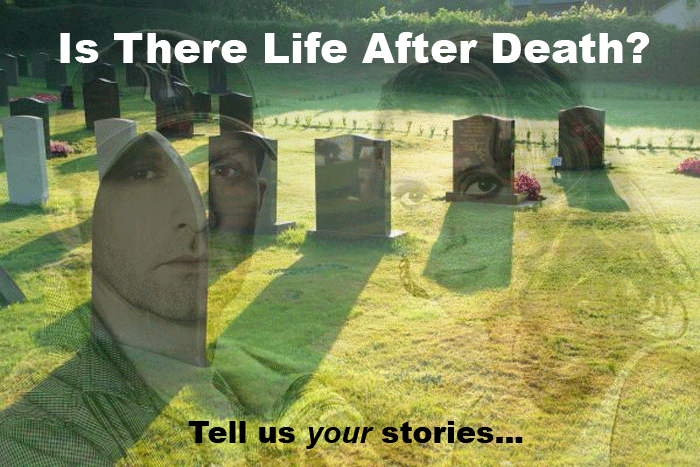
The Third Greatest Mystery of All Time – Is There Life After Death?

No one or at least hardly anyone wants to die.  Suicides included, no one really wants to die earlier than they expect to.  We don’t choose death, we chose life.  We want immortality.  We want to live forever and ever.  Ideally, we would like to live forever in a young, healthy and happy state, surrounded by our friends and loved ones.  Let all our enemies perish and if there is a hell, let them go there, while we go to heaven.

“Surely God would not have created such a being as man, with an ability to grasp the infinite, to exist only for a day! No, no, man was made for immortality.” — Abraham Lincoln

lifeafterdeath.headThe question that we all ask at some point in our lives is: “What’s next?”  After this life, is there another life?  Some like Houdini said he would come back if he could.  There is no reported evidence that he managed to succeed.  Thus, even the great Houdini himself could not manage the feat!  Two years ago, I attended a séance in Kentucky.  There were about 20 of us at this séance and two young girls were the intermediaries or mediums.  We were at the old Wickland mansion in Bardstown Kentucky where a young slave woman had once lived along with three former Kentucky governors.  Somehow, these two young local women had found a “channel” to this former slave and were able to converse with her.  We were all there with the expectation that the “channel” could be opened and we could somehow share in this supernatural experience.

This blog is best read while listening to Jonas Frisk sing Wings of Eternity (click on link)

Lights flickered, candles glowed, one of the young girls (they were twins) seemed to go into a trance.  Pretty soon, her interlocutor (an older woman who communicated with the young girls when they were communicating with the former slave) told us that Sally (I am using fictitious names here) was now in touch with Anna the former slave woman.  Sally appeared to be talking to Anna.  Our interlocutor asked if we had any questions that we wanted to ask Anna.  Several people volunteered questions and Sally gave replies that Anna told her in response to the questions.  The séance went on for about an hour with each person taking turns to ask questions and communicate with the dead.  After Anna went back to wherever dead souls go, we all adjourned to the upstairs dining room for coffee and snacks.

“If you were to destroy the belief in immortality in mankind, not only love but every living force on which the continuation of all life in the world depended, would dry up at once.” — Fyodor Dostoevsky

I would guess about half of the attendees felt they had communicated with the dead while half of us thought it was mostly entertainment and acting.  Perhaps the life-after-deathsisters really believed that they were talking to the dead, but believing and reality are two different things.  I saw no evidence of any dead person talking or of any real communication with the hereafter.  Thus, the question “is there life after death.”  The evidence all suggests no. No life. No immortality. No heaven. No hell. No coming back. No eternity no ever after.

“I sent my Soul through the Invisible,
Some letter of that After-life to spell:
And by and by my Soul return’d to me,
And answer’d: ‘I Myself am Heav’n and Hell”
― Omar Khayyam

But what if we have the wrong conception of life after death?  What if we think that life after death is going to be some continuation of life as we have conceived it on earth.  Whether we return sentience or we morph into frogs or some other species, we are all basing our ideas of the hereafter on concepts we are familiar with.  We are thinking about “life after death” as strictly a continuation of life on earth.  Some of us think we will be sitting at the right hand of God and listening to his or her speeches on ethics.  Some of us think we will be playing around with 20 vestal virgins.  Some us think, Jesus Christ will be walking around and talking about faith, hope and charity with us.  Some of us think, we will be reunited with our loved ones. (If this latter case is true, I feel sorry for Mickey Rooney who had 8 wives).  Some us think we will born again as a prince or frog depending on the life we lived on earth.  Each of these conceptions is a continuation of our ideas of life as we know it now.  But what if there is another type of sentience?

life after death 1We all know that as humans we can only hear and see a small spectrum of the sound and light frequencies.  There are frequencies both above and below our normal hearing ranges.  What if the same was true of our thought ranges?  What if there were ranges of thought well above what we can think and perhaps well below?  Ideas and concepts that are hidden to us because they are out of our ability range.  We cannot fathom what it would mean to think differently because we think as rational human beings.

“I would love to believe that when I die I will live again, that some thinking, feeling, remembering part of me will continue. But as much as I want to believe that, and despite the ancient and worldwide cultural traditions that assert an afterlife, I know of nothing to suggest that it is more than wishful thinking.” ― Carl Sagan

What if there was some other type of thought besides rational thought?  Let me give an example of what this might mean.  Let us go back to Houdini and his inability to communicate after death.  Houdini dies with the desire to commune back to earth if possible.  However, upon death, his thought patterns become vastly different from anything we can conceive of.  Houdini’s life force lives on but his rational thought has been replaced by something else.  Houdini’s new thought processes see no value or reason or desire to communicate with human beings.  We cannot conceive of thought patterns like this because they are beyond our range of understanding.

“There is no such thing as magic, supernatural, miracle; only something that’s still beyond logic of the observer.” — Toba Beta

If such thought patterns can exist, perhaps sentience after the death of our mortal lives on earth can go on.  However, it will not be anything that we long for or 1251950806_Life-after-deathdream of today.  We will not become angels or born again as frogs or toads.  If life after death does exist, it must be something totally alien and foreign to any conception that we have of it now.  Present conceptions of heaven and hell notwithstanding, I believe that  life will go on and must go on, but any continuation of life in terms of immortality and eternity seems well beyond either our desires or ability to understand.   I love the idea that I will meet up with Socrates and Plato and Aristotle and be able to discuss philosophy and ethics with them.  However, I cannot put much faith in such a possibility.  Desires of humans often seem to trump logic.  We all want immortality, but it is either reserved for the gods or life as we cannot begin to comprehend it.

“Oh how wrong we were to think immortality meant never dying” — ― Gerard Way

Time for Questions:

Do you believe in life after death? What kind of life do you think exists after death? How did you arrive at this perspective?  What if someone convinced you that there was no life after death? How would this change your life? Why?

Life is just beginning.

The Death of a Loved One.

I have been asked to write a blog dealing with the death of a loved one. As I have grown older, I have suffered the loss of many a friend and relative. That is a price that we pay for living too long. There are other prices but perhaps none as steep as this one. A friend of mine has joked about my rather cavalier attitude towards death. She has summed up my comments as “Well, we are all going to die sometime.” I realize that my comment and attitude is not very consoling. However, for me it has been a convenient shortcut to simply acknowledging death and moving on. I have also noted that it seems hardly a week has gone by in my last twenty years that I have not witnessed the death of someone who has been a friend or relative. I doubt whether my life is much different than others unless I am a more astute observer of death or unless I am simply less caring.

I read the book “On Death and Dying” many years ago. The stages of grief that were identified as something we all go through upon the loss of a loved one are perhaps interesting and even useful but in some ways are very similar to my comment in that knowing the stages may not be very consoling. It is one thing to have an intellectual knowledge of death but an altogether different thing to have a personal emotional experience of death. For instance, despite all the deaths I have witnessed including my parents many friends and most of my relatives, I have never experienced the death of a life partner. I have gone through a divorce after 16 years but a divorce is not the same as death. True, it encompasses a degree of pain and loss and suffering but I cannot quite equate that with dealing with the loss of a close personal partner that one has lived with for most of their life. I think this would be a very different experience. Whether or not it was expected or unexpected would have some influence on how one dealt with it but maybe less than one would think. The aspect of “expectedness” is another intellectual concept which does not deal with the emotional relevance of death.

One day I was coming in to see Karen, my spouse who loves to sleep late. She is normally a very late sleeper and I am not usually too concerned when she sleeps in. However, it grew quite a bit later than usual and I decided to “peek” in to see how she was doing. When I looked at her prone body, she did not appear to be breathing. I immediately put my head to hers to see if I could detect any breath. I could not. My immediate reaction was to panic and shake her. I started crying. Suddenly she turned over and asked “What was wrong.” I was beyond relief. In that single moment of thinking she had passed away, I had experienced a degree of pain, sorrow, suffering and loss that I have never emotionally experienced before. Karen and I have been living together since 1989 and going together since 1983. I know that someday we will part and on an intellectual basis, I have accepted the inevitability of it. However, I suddenly found that I have not accepted the inevitability on a personal emotional basis and I wonder now if I ever will be able to.

I have to say I do not cry very much but I did that morning. I seldom cry at funerals but I cried at my Dad’s funeral, Sister Giovanni’s funeral and a few friends whose services touched me quite a bit. I have cried every time I have read or seen a production of the “Little Match Girl.” I have cried over the song “Sometimes I feel like a motherless child.” There is something that evokes sorrow in me that has more to do with loneliness than death. I have never seen any scales of loneliness related to the death of a loved one but I might assume that some correlation did exist. I have a 98 year old Aunt and God-Mother who is one of the most positive older people I know. She has lost two of her three sons and her husband of over 60 years. She continues to love life and other people. I asked her three years ago how she keeps such an attitude when she has seen almost all of her friends and loved ones pass away. Her reply was that she simply makes new friends. I am sure she loved her sons and husband as much as the next wife and mother but she simply chooses to move on. I contrast this with a comment that I heard about Thomas Jefferson who felt that at the 50th anniversary of the Declaration of Independence he was no longer a part of this life. The following is a quote by Jefferson on aging:

1815 February 5. (to John Vaughn). “…nothing is more incumbent on the old, than to know when they should get out of the way, and relinquish to younger successors the honors they can no longer earn, and the duties they can no longer perform.”

I see a vast difference between Jefferson’s attitude on aging and my Aunt’s attitude (at least as reflected in this quote.) My Aunt has not gotten out of the way. She still performs duties and tasks to help others. Indeed, that Christmas when I was talking to her, she was leaving after dinner to serve meals to the elderly at an “Old Folks Home.” I jokingly asked her if she was not “Old” and she pensively replied “Why I guess I am, I just never think about it.” She lives in the present and maybe that is the elusive secret of happiness or satisfaction. Osho says that for too many of us the only thing that exists is the Past or Future. We are either so busy trying to recapture memories of “better” times or else we create possible futures that we hope will bring us “better memories” than we had. I have noticed that all of the great religious leaders have stressed the importance of living in the present. Jesus said:

“Therefore I tell you, do not worry about your life, what you will eat or drink; or about your body, what you will wear. Is not life more than food and the body more than clothes? 26 Look at the birds of the air; they do not sow or reap or store away in barns, and yet your heavenly Father feeds them. Are you not much more valuable than they? 27 Can any one of you by worrying add a single hour to your life?” Matthew 6:25-34

Buddha noted: “Do not dwell in the past, do not dream of the future, concentrate the mind on the present moment.” I could give writings upon writings that speak of the need to live in the present but would this help you deal with the loss of a close personal partner? Good advice seldom deals with emotions. What then to say to anyone who suffers a loss of someone they have lived with, loved with and known for most of their lives? Perhaps nothing! Maybe this is just the time to be with this person. I would suspect that the feelings of loneliness would be almost overpowering. Is it any wonder so many people seem to die shortly after the death of a long term partner? What can you really say in the face of what this person is going through? Almost anything will sound cold or trite. Just feel for a second what this person must now be feeling.

Most of what we desire in life can summed up as: Fame, fortune or power. We strive to accomplish as much wealth, attention or power as we can. We think these three goals will bring us the happiness and security that we all seek. Deep down inside we are all insecure insignificant beings who feel that somehow money, fame or power will bring us the significance that assuages our sense of loneliness and inadequacy. But it never does. The nearest anything ever comes to doing this for us, short of an emotional and spiritual awakening is the love of a close personal partner.

I would not trade all the fans, all the Facebook friends, all the media glory, all the TV fame, all the money in the world or the highest office in the world for the love of my partner Karen who intimately knows me and cares about me. Karen brings me coffee, bandages my cuts, asks me how I am doing and what is wrong, cuddles with me for no reason, walks with me, consoles me when I am feeling inadequate, supports my stupidity, tolerates my quirks and even my sometimes meanness and poor dispositions. How many of the Rich and Famous have anyone in their lives like I do? Those of you who have or had had a long time personal partner or loved one know what I am talking about. How to lose such a partner and go on with life? I am sorry if I do not know the answer or the secret. Give up or trudge on? Can you make a difference for others? Can you help share the pain and help others deal with the pain you are now feeling? What can you leave the world after your partner leaves you?

If you have had a partner like I have, you have experienced the greatest gift in the world. That this gift will someday be taken away from you is inevitable. That it will cause you great pain and sorrow is perhaps also inevitable. In the end, we come back to the beginning. Life goes on. You were loved and you were needed. There are others who are not loved and who could benefit from your love. There are others who are not needed and who could benefit from being needed by you. The biggest gift we can ever give others is the gift of ourselves. When a gift has been taken away from us perhaps it is time for us to find a way to give a gift of ourselves.

Time for Questions:

What is your experience with death and dying? How have you handled the death of a loved one? How have you helped others who are going through this pain? What will you need when you lose your partner or a close loved one? Can you share any experiences with others who might benefit from your experience?

Life is just beginning.

Gandhi’s Sixth Social Sin: Worship Without Sacrifice

I find it surprising that I am writing about Gandhi and his ideas.  Surprising in that while growing up I was as far from a non-violent philosophy as anyone could be.  Sometimes it seemed like my whole life was violence, anger and fighting.  I joined the military out of high school and hoped to kill as many “commies” as I could.  I continued my violent ways for many years and to be honest I am still no pacifist.  I would not turn the other cheek once if you hit me, never mind 40 times. I am still on the border line about capital punishment.  One day I think Capital Punishment is terribly useless institution made even worse by its ineffectiveness at deterring crime. The next day I read of some horrendous crime that I feel can only be rectified by punishments that go well beyond the heinousness of legal murder.  If Gandhi were my father, he would surely disown me. 

Gandhi is one of those heroic icons who cannot be ignored.  Whether you believe in his ideas or not, you cannot deny that he tried to live according to his beliefs.  More important was that he lived to help others have a better life.  Everything Gandhi did paid evidence to his ideology that humans could be better than they were.  I know many people who think that educators, psychologists, social workers and other “human service” workers are just a waste of taxpayer money.  These same people are continually on the front line for more prisons and more military hardware.  It is evident to such people that humans can not improve and thus the only betterment of humanity lies in more weapons, more police, more military and more guns.  Gandhi would have professed the exact opposite and worked to create a world that was non-violent and where disputes could be resolved by civil discourse.

Years ago, I dropped my belief in God and in religions.  I came to the conclusion that the first did not exist and the second was evil. It seemed to me that much of the misery on the earth came from one or the other of the major religions.  The crusades, the inquisition, the Protestant Catholic wars, the wars against “Pagans” all showed me conclusively that religions did more harm than good. When I joined the military, I would not speak to any clergy and when they came around; I always avoided them.  I was even rude to them at times as I regarded them as hypocrites.  My first wife and I did not practice any religion together but I did bring my daughter around to several different religious venues as I wanted to at least expose her to them.  My second marriage was to a more deeply religious woman who practices her faith regularly by participating in church affairs and helping out at many church functions.  I often kid her about some of these events but I have come to a different point in my life regarding their benefit to the world.  I am somewhat less judgmental about religions and people then I was in my younger days. 

What does this mean for me about religions and how I regard them today?  I can say with sincerity that I still see much evil that comes out of religion, not to mention its ongoing hypocrisy (for instance where were all the churches and ministers when we invaded Iraq both the first and second times?).  However, I also see many good things that they now do, from supporting health care for poor people to championing efforts to feed people both domestically and abroad.  There are many other examples of good things that are done by churches and religious leaders.  So what does Gandhi mean by “Worship without Sacrifice?”  Is Gandhi against organized religion?  Here is the description from the Gandhi Institute for Nonviolence that summarizes Gandhi’s ideas in respect to his Sixth Social Sin: 

“Worship without Sacrifice: One person’s faith is another person’s fantasy because religion has been reduced to meaningless rituals practiced mindlessly. Temples, churches, synagogues, mosques and those entrusted with the duty of interpreting religion to lay people seek to control through fear of hell, damnation, and purgatory. In the name of God they have spawned more hate and violence than any government. True religion is based on spirituality, love, compassion, understanding, and appreciation of each other whatever our beliefs may be — Christians, Jews, Hindus, Muslims, Buddhists, Atheists, Agnostics or whatever. Gandhi believed whatever labels we put on our faith; ultimately all of us worship Truth because Truth is God. Superficially we may be very devout believers and make a tremendous public show of our worship, but if that belief, understanding, compassion, love and appreciation is not translated into our lives, prayers will have no meaning. True worship demands sacrifice not just in terms of the number of times a day we say our prayers but in how sincere we are in translating those prayers into life styles. In the 1930’s many Christian and Muslim clergy flocked into India to convert the millions who were oppressed as untouchables. The Christian clergy stood on street corners loudly denouncing Hinduism and proclaiming the virtues of Christianity. Months went by without a single convert accepting the offer. Frustrated, one priest asked Grandfather: After all the oppression and discrimination that the ‘untouchables’ suffer under Hinduism, why is it they do not accept our offer of a better life under Christianity? Grandfather replied: When you stop telling them how good Christianity is and start living it, you will find more converts than you can cope with. These words of wisdom apply to all religions of the world. We want to shout from roof-tops the virtues of our beliefs and not translate them into our lives.”

Gandhi’s words remind me of a comment by Sitting Bull. When asked what he thought of Christianity he replied:   “From what I have read it is an admirable religion, however I do not see any white people practicing it.”  From a Native American perspective, the only thing the conquerors religions offered was a destruction of their habitats and lifestyles.  Witness the coming of the Spanish to the “New World” and the systematic destruction of the culture and religions that already existed by the Spanish military and their allied missionaries.  The genocidal destruction of indigenous peoples throughout the world is full of pompous and pretentious efforts to “convert” and save them from their evil ways.  In reality, religion only provided an expedient excuse to separate them from their lands and gold.  We have in much of the history of organized religion a clear example of what Gandhi meant by Worship without Sacrifice.

Perhaps surprising to some though, true Christianity is firm that Worship without Sacrifice is worthless: 

“What good is it, my brothers and sisters, if someone claims to have faith but has no deeds? Can such faith save them? Suppose a brother or a sister is without clothes and daily food.  If one of you says to them, “Go in peace; keep warm and be well fed,” but does nothing about their physical needs, what good is it?  In the same way, faith by itself, if it is not accompanied by action, is dead.


But someone will say, “You have faith; I have deeds.”

Show me your faith without deeds, and I will show you my faith by my deeds.  


You believe that there is one God. Good! Even the demons believe that—and shudder.


You foolish person, do you want evidence that faith without deeds is useless?  Was not our father Abraham considered righteous for what he did when he offered his son Isaac on the altar?  You see that his faith and his actions were working together, and his faith was made complete by what he did.  And the scripture was fulfilled that says, “Abraham believed God, and it was credited to him as righteousness, and he was called God’s friend.  You see that a person is considered righteous by what they do and not by faith alone.”

                    James 2:14-26- New International Version

Abraham was willing to sacrifice his son for his religious beliefs. This is Worship with Sacrifice.  Going to church on Sunday or simply reading the Bible is Worship without Sacrifice.  When Jesus said that the two most important Commandments were Love God and Love Everyone, he meant you had to practice your faith by helping others who were less fortunate.  This has made it very difficult for most of humankind to be his followers in deed as well as in professed belief.  It is far easier to say “I am a Christian, then to “Sell your belongings and give to the poor, and you will have treasure in heaven. Then come, follow me.”  It is much easier to pray, worship, and read the Bible than to actually practice what Jesus was saying.  Think for a minute what it would mean if all would be Christians really practiced the “Love Everyone Commandment?  A short list of the consequences of this would mean:

  • No religious wars
  • No Jihads
  • No terrorism
  • No murders
  • No rapes
  • No assaults
  • NO WARS PERIOD

Can you imagine a world without these problems?  This is the world we would have if everyone practiced their religions by deeds and not just words.  However, this would require sacrifice and too many people are not really willing to sacrifice for their religion, for Jesus or for God.  Sacrifice means giving up something to help others, not giving up something to gain something for you.  Those who blow up their bodies to attain paradise with 40 vestal virgins are not sacrificing for others; they are simply trying to take a shortcut to attain what other greedy people already have.  Any religion that terrorizes others in the name of “whoever” or “whatever” is evil regardless of what it calls itself.  This raises the question that might be phased as “What is the purpose of religion.”  Searching the web it is easy to find that many have condemned organized religion because of the atrocities associated with it. Great thinkers from Plato to Thomas Jefferson to Bertrand Russell have had little good to say about religions.  However, I like the following comment from WaheguruNet regarding what positive role religion could and indeed should play in society:

“Religion has and continues to impact almost every aspect of human civilization in both positive and negative ways. The great spiritual masters from all traditions have taught that we need to adopt and develop higher qualities of love, mercy, generosity, kindness and so on. These higher qualities are a natural byproduct of developing a deeper connection with our spiritual nature and so in this respect religion can be thought of as a vehicle to support our spiritual development and our re-connection with divinity.  In this way, human beings will be better at working together to create a better and more harmonious world.”

You will notice that in this purpose there is nothing mentioned about doom and destruction  or about going to hell and suffering for the rest of your life or about your neighbor who is a hypocrite and unlike you is destined for fire and brimstone.  The purpose of religion is to help us become better people. To help us find our connection to our inner spirit and to help guide us in living a more just and moral life.  This purpose must be followed by actions and deeds as well as pious readings and professed beliefs. There is no room Gandhi’s religion or Jesus’s religion for bigotry, discrimination, prejudice, hatred, intolerance and destruction of others or their belief systems.   

Time for Questions:

What can we do to practice good deeds as well as good thoughts? What sacrifices are you willing to make to help others?  Are we making a true sacrifice by telling others how hard we worked and that they can be what we are if they only try?  Should we simply tell others to pull themselves up by their boot straps?  Are all people really created equal in the sense that everyone has an equal chance at health and happiness?  Can we help make it so by sharing what we have with others?  

Life is just beginning.


Jesus Starts a Facebook Page

Hi, I need to apologize.  I should be doing Gandhi’s third Social Sin but I got sidetracked by two recent news reports which have taken me down a different path for this blog.  I decided to do this blog on the subject of Jesus and Facebook.  I wonder what Jesus would do with Facebook if he were alive today?  I want to speculate a bit on what the current emphasis on social media would or could possibly do to enhance Jesus’s message and mission.  I will return to Gandhi next week. 

A few years ago, I remember seeing a science fiction movie wherein the value of a person in the future was directly related to how popular they were.  I cannot remember the name of the movie, so if you are familiar with it, I would appreciate your sending me a comment or email. I vaguely remember it being a Stallone movie but the only sci-fi movies I remember him in were Demolition Man and Judge Dredd and I do not think that either of these were the right movies.   In this future time, each citizen was given some sort of a number or code that showed how popular they were. The more popular they were the more successful and wealthy they were. Your value as a human being rested in your popularity regardless of how you may have achieved this popularity.  I have thought about this issue many times since then.  What once seemed like science-fiction now seems like daily reality.

Today we actually do value the worth of a person or their endeavors by how popular they are. Their popularity rating is based on a variety of measures.  How many followers do they have on Facebook?  How many hits do they get on their Blog?  How many calls do they get to be on game shows or other Hollywood Media?  How many books have they sold?  How many downloads did they get?  How many people did they kill?  Popularity sells newspapers, movie rights, stories, advertisements and TV space.  We have an entire set of people who are called celebrities who owe their lifestyles to some bizarre excuse for fame that the public has latched on.  Donald Trump, Lady Gaga, Psi, Kate Middleton, and dozens others routinely grace our newsstands and command maximum space in the media.  Wikipedia defines celebrity as:

A celebrity is a person who has a prominent profile and commands some degree of public fascination and influence in day-to-day media. The term is often synonymous with wealth (commonly denoted as a person with fame and fortune), implied with great popular appeal, prominence in a particular field, and is easily recognized by the general public.

Celebrities are the superstars of today’s world. Celebrities ban together at parties, galas, shindigs and anywhere the rich, successful or famous go to hang out. I noticed that during President Obama’s most recent White House Correspondents Dinner on April 27th that the audience was filled with not only news reporters but many of the rich and famous referred to as Hollywood’s A-List.  This A-List also included many of the politicians in this country since they were well represented at this dinner. It did not matter whether or not they supported Obama.  Right Wing, Left Wing, Conservative, Republican, Democrat, Liberal were all conspicuous at this dinner.  One can see Conan O’Brien, at the podium sharing some jokes at Bill O’Reilly’s expense on some of the videos posted on You-Tube.  For one brief night, Obama and O’Reilly had more in common than any of the common people (Are we B or C list?) on the face of the earth.  Regardless if the event is a Superbowl, Wimbledon Championship. PGA Major Event, or a funeral of some important dignitary, the “Celebrities” will all be invited.  Popularity is the coin of the realm today and the holy graile that we all seek. Today, it is more important to be famous and well known that it is to be kind, decent or good at least if you want to be a celebrity.

I noticed a Facebook posting on my web site from George Takei (AKA Sulu) of Star Trek fame.  He is now being hailed as a social media expert since his Facebook site has over four million followers and is one of the most popular sites on the Internet.  I had to admit to some curiosity so I went to check out his site to see what is behind his popularity. It seems his new found recognition is now translating into a renewed interest in his career and endeavors.  I will say that I was a big Star Trek fan and read most if not all of the bios of the lead actors from the series. I even went to the very first Star Trek convention in New York City.  I declined an invitation though to attend the second one.  I can only take nostalgia so far. I was most struck by the reported animosity between Takei and Captain Kirk.  It seems they did not get along too well off set although several other characters also found Shatner overbearing and egotistical. But then this seems to go with stardom.  Takei stuck to his guns though and was well liked by all members of the cast. 

Looking at Takei’s website, I was struck by the randomness of his site. Humor, short human interest stories, lots of pictures alluding to Star Trek and many liberal causes which Takei supports. I found it a fun and interesting site, but still left amazed that 4,000,000 people a week go to this site. To give you some perspective, when I started my www.timeparables.blogspot.com website it took me almost three years to go from 50 hits per month to nearly 3000 hits per month.  I confess, I routinely scrutinized the figures and sometimes felt obsessed with my “numbers.”  I did not want to fall into the trap of equating the value of what I had to say with the numbers of people who hit my site, but I found it hard not to feel bad on those days when I would publish what I thought was a very thought provoking blog and hardly anyone would logon.  Many times I felt disillusioned at the interest in my writings and was on the verge of stopping. Almost every time I got to this point, I would receive a comment or email indicating how much my blog meant to someone and how it had really made a difference in their life. I determined to keep writing as long as I had even one reader out there. I did not and still do not want to measure my value by my popularity but it’s not an easy task. 

One day a good friend of mine and I were in a coffee shop in Stillwater, Minnesota. We had both set down with our coffees and suddenly a man about our age appeared at the counter.  I could not help but think I knew him but I could not place where I knew him from.  I decided to go up to ask him.  I inquired whether we had met in the motorcycle club I belonged to and he said “No.”  I started to return to my seat but out of curiosity I persisted.  I said “Dam, you look very familiar, have we met someplace before?”  He again replied “No.”  I tried again.  “Are you in the movies or papers?”  “Yes”, he replied.  May I ask your name?  He answered “Sam Shepard.”   Suddenly, I was rather embarrassed and tongue tied. I admired many of his movies, writings and plays but did not know what to say.  I did not want him to think I was a celebrity seeker or one of the people who hound celebrities just to get their autograph or a piece of them.  I quickly ended the one-sided conversation with “Well, I like your movies, have a great day.”  That was the end of it. No further reply and Sam just walked off.

I realize there are many celebrity hunters out there. In fact, what would a celebrity be without a celebrity hunter? I also realize that many people who have achieved fame and recognition would rather not be celebrities. I suspect Sam was one of them.  An extremely accomplished actor, playwright and film director, he could stand on his own without “fame” or fortune.  However, fortune and fame does follow people who are very successful.  This is one of the payments for being able to do things that other people envy, admire or want to associate with.  Probably that is part of the reason we associate celebrity status with something desirable.  To become a celebrity means to become rich, famous and liked by millions.  We average people seldom see the downsides of celebrity status.  Thus, I am left to reflect on the curious juxtaposition of Jesus and Facebook.

If we can fast forward to Jesus of Nazareth to the 21st Century and imagine him having a Facebook site, how many followers would Jesus have today?  Let us assume for the sake of this hypothesis that Jesus was just starting out his ministry and was relatively unknown except for 12 rather flighty and fickle followers (AKA Disciples).  So Jesus puts up his Facebook site and starts posting parables and stories.  One story Jesus tells is as follows:  Matthew 18:23-34 — Unmerciful Servant

Therefore, the kingdom of heaven is like a king who wanted to settle accounts with his servants. As he began the settlement, a man who owed him ten thousand talents was brought to him. Since he was not able to pay, the master ordered that he and his wife and his children and all that he had be sold to repay the debt. “The servant fell on his knees before him. ‘Be patient with me, he begged, and I will pay back everything.’  The servant’s master took pity on him, canceled the debt and let him go.”

“But when that servant went out, he found one of his fellow servants who owed him a hundred denarii. He grabbed him and began to choke him. ‘Pay back what you owe me!’ he demanded.  His fellow servant fell to his knees and begged him, ‘Be patient with me, and I will pay you back.’  But he refused. Instead, he went off and had the man thrown into prison until he could pay the debt. When the other servants saw what had happened, they were greatly distressed and went and told their master everything that had happened.  Then the master called the servant in. ‘You wicked servant,’ he said, ‘I canceled all that debt of yours because you begged me to. Shouldn’t you have had mercy on your fellow servant just as I had on you?’ In anger his master turned him over to the jailers to be tortured, until he should pay back all he owed.” 

What is the moral of this story?  There are many that could be derived from this parable.  Love others as you are loved?  Do unto others as you would have done unto you?  What goes around comes around?  Share kindness not unkindness.  Jesus taught with the use of such parables and today he is the most famous person in history with more followers than even Donald Trump.  However, if Jesus were alive today would he get hits on his website by posting such parables?  Or would Jesus have to “get” with the times and become more contemporary?   Would he get himself executed again by the civil authorities for preaching discontent and unrest?  Would Jesus be a Republican or a Democrat?  Would he be a Liberal or a Conservative?  My mind reels with all the questions that this fantasy of a 21st Century Jesus holds for me.

I suppose I am losing you at this point.  My good friend Carrie Classon keeps her postings to 600 words and I am almost at 2000.  I am not sure I have made my point yet.  The moral I have been trying to explore here is “When does celebrity become hollow and mindless?”  There is fame that comes from accomplishing something of worth and value to the human race. There is also fame that comes from trivial meaningless endeavors or worse destroying lives and ideas that hold value for others.  One type of fame should be admired but the other type should be denigrated. Unfortunately, it looks like the media and too many people today do not distinguish between the two types of fame.  I see many news pundits who make their living preaching hate and intolerance and not love and kindness.  I see talk shows, radio and TV with mindless sycophants talking much but saying little.  I see a vast wasteland of entertainment with putdowns and innuendos making fun of other people.  I see millions of watchers who feel they must live their lives vicariously through others because they don’t have the ability or opportunity to do otherwise. Is this the value of Fame?

I conclude with a poem by Emily Dickenson: 

Fame is a Fickle Food

Fame is a fickle food

Upon a shifting plate

Whose table once a

Guest but not

The second time is set.

Whose crumbs the crows inspect

And with ironic caw

Flap past it to the Farmer’s Corn –

Men eat of it and die.

Ok, time for questions:

Are we too concerned with being popular?  Do you think more people should look inward or worry more about what others think?  Do you worry too much about what others think?  What if you cared less?  What would your life be like?  Can someone be too popular?  Should popularity be a goal for anyone?  Why or Why not?

 Life is just beginning.


Next Newer Entries