In Part 1, I discussed the difficulty with finding the Truth. It is a quest complicated by the amount of information that we are inundated with on a daily basis. It is further complicated in that much of the information we find is either erroneous or outright lies. The average person has never studied information theory in school and is ill equipped to sort through the morass of Data, Evidence and Facts that are presented to them. In Part 2, I tried to break down the concept of what a Fact is to help people better understand its role in truth finding. In Part 3, I will try to break down the second pillar of truth finding and look at what Data is and is not and the difficulties with collecting objective and valid Data.

What is Data?
I hope to dispel some of the confusion over the concept of Data and make it easier for people to see the pros and cons of using Data. We have too many people in business, religion, government and the military who do not understand what Data is and who misuse it by quoting statistics and numerical information incorrectly. One negative result is to confuse people over what is true and what is not true. An even more insidious result of the misuse of Data is incorrect decision making. During the Vietnam War, the inflated enemy kills and deflated enemy troop levels led to a total lack of ability to plan strategically for the war. Thousands of people were killed on both sides by the negligent and criminal misuse of Data and statistics on the part of the military and defense department.
“Former CIA analyst Sam Adams told a federal jury here Monday that Army Gen. William C. Westmoreland caused a “massive falsification” of intelligence during the Vietnam War by imposing a ceiling upon the numbers of enemy troops.” — Westmoreland Blamed for Faulty Troop Reports : Witness for CBS Testifies General’s Policy Caused ‘Massive Falsification’ — January 15, 1985, RUDY ABRAMSON
 When I started working with Process Management International in 1986 after completing my doctorate degree at the University of Minnesota, I met the famous quality improvement expert and renowned statistician, Dr. W. E. Deming. Over the next seven years, he had the most profound influence on my life in terms of helping me to understand process improvement, statistics, quality and the use of Data to improve everything from widgets to health care. Under the influence of Dr. Deming, our company adopted his motto “In God we trust, all others bring Data.” Dr. Deming also said “Without Data, you’re just another person with an opinion.” So what is Data? Merriam Webster dictionary defines Data as: “Facts or information used usually to calculate, analyze, or plan something.” This definition is very misleading and inaccurate.
In the first place, Data is not necessarily a Fact. Data is unorganized bits of numbers and calculations which by themselves do not add up to a Fact. For instance, here is some Data: 3, 4, 7, 15 and 12. Individually, these numbers do not mean a thing. As an example, take the English alphabet, which is composed of 26 letters. Each letter by itself means little or nothing. Data by itself usually has no meaning or significance. It must be organized before it will have any meaning or usefulness.
Secondly, Data is not information. A letter by itself does not provide information of anything nor does a single display of numbers or statistics provide any information. You must put them together to mean something. When they are put together in some form of a relationship, they can then be called information. For example, 2+2= 4 constitutes bits of Data put into an equation that gives me the sum of the individual bits of Data. Data aggregated in some type of meaningful form becomes information.
“Look beyond the numbers you see to what they mean and understand how the numbers presented may not fully capture the important details you need to consider.” — Statistics Abuse and Me by Jay Mathews:
 If we understand what Data is, you have now entered the deep forest. However, we have a long way to go before we can get out of the forest. There are numerous obstacles along the way. Referring again to the concepts of validity and reliability, we must ask ourselves the same questions we asked about our Facts. Is our Data reliable and valid? How did we collect the Data? What method did we use to collect the Data? Are we taking a few samples each day for several weeks or are we taking a few samples for only a few days? Are we using a random sample or a stratified random sample? Different methods of collecting Data will lead to different results. And we are not even talking about interpreting the Data yet. For instance, when I worked at W.T. Grants cutting shades back in the late 60’s, I was told to make sure I took my measurements with a metal tape measure and not a cloth or plastic measure. The reason given was that it was easier to stretch a cloth tape measure and get a false result. This would lead to cutting a shade that was too large and would not fit.
The process of measuring something must also match the purpose or objective. Dr. Deming frequently used the example of cleaning a table to discuss measurement problems. Dr. Deming emphasized the need to know “why” something was needed to be done. If a person is asked to clean a table, how can the person understand the level of cleanliness required without first understanding why they are performing the job in the first place? If the table is to be used as a workbench, it would require a different level of cleanliness then if it were to be used as a lunch table. Even more different if it was to be used as an operating room table. Understanding why we are doing something is critical to determining the appropriate measurement process. The measurement process will influence the Data we obtain.
Here are several other problems that are commonly encountered when collecting Data:
- Irrelevant or duplicate Data collected
- Pertinent Data omitted
- Different measures of the same object by those collecting the data
- Erroneous collected
- Too little Data acquired
- Insufficient time to collect the Data properly
- Poor methods of storing or archiving Data
- Lack of a systematic method for collecting Data
If we have addressed all of the above problems, we are still not out of the forest, in fact, we are probably only about one half way through the forest. We now face the most daunting and difficult task of all. We must attempt to interpret the Data and catalog the Data without bias. A number of movies have been made which illustrate the difficulty of presenting Data or information without bias. They are all based on what has been labeled as the Rashomon Effect. 
“This is a term used to describe the circumstance when the same event is given contradictory interpretations by different individuals involved. The term derives from Akira Kurosawa‘s 1950 film Rashomon, in which a murder involving four individuals (suspects, witnesses, and surviving victims) is described in four mutually contradictory ways. More broadly, the term addresses the motivations, mechanism, and occurrences of the reporting on the circumstance, and so addresses contested interpretations of events, the existence of disagreements regarding the Evidence of events, and the subjects of subjectivity versus objectivity in human perception, memory, and reporting.” — Wikipedia
It is inevitable that any observations we make in life are biased by the prior experiences we have. Our senses are not infallible measures of sight, smell, taste, hearing and touch. Each of our senses is infused with the Data that they have already been exposed to. The prior Data that each of us has already experienced will influence our future perceptions. Similarly, our brains are also biased by prior ideas and experiences. We cannot get away from bias. Sadly, extreme bias leads to a lack of credibility and objectivity. (We will discuss the concepts of objectivity and credibility in more depth when we discuss Truth in Part 5 of this article.)
I noted earlier that there is no solution or at least I have not found one to our central problem in terms of searching for the truth. It is no easy matter to find Data, organize Data and interpret Data in such a way that we eliminate bias and insure objectivity. The scientific method is one system for collecting and organizing Data to test a theory or hypothesis that is invaluable. The method can be summarized as follows:
- Make an observation
- Propose a theory or hypothesis
- Design and perform experiments to test the hypothesis
- Collect Data from the experiments
- Determine if the Data, Facts and Evidence support the hypothesis
There are millions of scientific experiments that have been conducted since the founding of the scientific method. The results of these experiments have helped us to develop civilization and many of the modern conveniences we now have. Science has added to our health, safety and longevity in so many ways that are beyond dispute. Without science, we would still be living in caves, dying in our twenties and eating cold meat. The scientific method is the single most important method for identifying the truth that has ever been developed.
 Unfortunately, the scientific method is not infallible. It is subject to bias and disagreement over Data and interpretations. Even more problematic is that the scientific method is not a strong method when it comes to testing subjective theories that cannot be verified by Fact. For instance, “Is the Mona Lisa beautiful?” As stated, this is a subjective question that each individual will hold a different opinion on. However, if I asked: “Is the Mona Lisa the most beautiful painting in the world?” I could attempt to answer that question with a bit more objectivity. I could conduct a survey to see what percentage of people think it is the most beautiful. Subjective studies are not as strong as objective studies since they usually lead to results that follow a bell shaped curve. Thus, if we conducted the above survey, we would probably find that a certain percentage of people thought it was the most beautiful painting and a certain percentage did not. As in politics, opinions of beauty would be all over the place. This is why politics is so much more difficult to “Fact check” than issues like the atomic mass of hydrogen. Politics is a very subjective field that resists efforts to test and Fact check. Some examples that would be difficult to test with the scientific method would include:
- Who will make the best President or Leader?
- What is the best way to deal with ISIS in the Mideast?
- Should we support the UN more strongly in its peace keeping role?
- What is the best way to create jobs and stimulate the economy?
Each of the above questions could be stated as a theory, but each would be difficult if not impossible to prove due to the difficulty of collecting objective Data. By objective, I mean Data that is not biased. In Fact, it would be difficult to even collect accurate Data to prove any of the above questions.
Where does the above discussion leave us? I fear the outcome of this discussion will not be satisfactory to anyone looking for some full proof means to find, catalog and interpret Data that is 100 percent accurate, reliable, valid and objective. The closest we will come to such a process is the scientific method. Alas, even this method is not full proof and as we all know, science is subject to a great deal of bias and distortion, at least in areas where Data is more subjective than objective. However, even in areas such as Global Warming where one would think the Data could be found that is objective and reliable, we still find a great number of people who argue that Global Warming does not exist. This raises the final and most difficult problem to solve before we are out of the forest and that is the problem of denial and delusion. I will defer this discussion to Part 5.
 Finally, if I have left you with some understanding of the difficulty with interpreting Data, I will have felt successful. The first step to knowledge is awareness of our cognitive limitations. We also need to be more skeptical when people present us with Facts and Data. My father used to say “Believe nothing of what you hear and half of what you see.” I still consider this good advice. There are too many fools and charlatans out there trying to convince us of things for a multitude of reasons that will benefit them and not us. Just as we would not walk down a dark alley in an unknown city by ourselves, we need to exercise caution when presented with Data and Facts. The more we understand the limits of Data and Facts, the more prepared we will be to make decisions based on Data and Facts that have a higher degree of validity and reliability. If the Data, Facts and Evidence that you base your knowledge on are not accurate than everything you think you know will be at best a half truth and at worst a total lie.
Next week in Part 4, we will look at the concept of Evidence and the how this concept informs our search for the truth.
Time for Questions:
Do you understand what Data is? Do you know what a Bell Shaped Curve is? Do you trust the Data you see in the news? Do you trust what your local political leaders tell you? How accurate do you think the news is when reporting information? What do you think biases your own interpretations of Data and events? How do you try to be more objective when studying a problem?
Life is just beginning.
“Any time scientists disagree, it’s because we have insufficient Data. Then we can agree on what kind of Data to get; we get the Data; and the Data solves the problem. Either I’m right, or you’re right, or we’re both wrong. And we move on. That kind of conflict resolution does not exist in politics or religion.” — Neil deGrasse Tyson


 “The prosecution had expert witnesses that testified that the Evidence was often mishandled. Photos were taken of critical Evidence without scales in them to aid in measurement taking; items were photographed without being labeled and logged, making it difficult, if not impossible, to link the photos to any specific area of the scene. Separate pieces of Evidence were bagged together instead of separately causing cross-contamination; and wet items were packaged before allowing them to dry, causing critical changes in Evidence.”
  A validity error is when we are not measuring the right thing. IQ tests have been repeatedly criticized for not really measuring the intelligence of a human being or for being biased by many cultural Factors. Thus opponents of IQ tests argue that they are not valid measures of intelligence. A reliability error is when our measures are not consistent. The scale example given above illustrates the problem with reliability. Most people use a scale to weight themselves and most scales have problems with reliability. However, if you tried to equate your weight with your health, you would be assuming that the scale could also measure health and this would be a problem with validity. Scales cannot measure health although health might be correlated to some degree with appropriate height and weight.
 Before we move on to looking at the concept of Data, we will look at two more problems with the concept of Facts. These are distortion and bias. Distortion relates to twisting the meaning of something. This can happen by taking something that someone has said out of context. For instance, I might be talking at a conference and say something in sarcasm such as “Yeah, I will definitely vote for Trump.” My words could be repeated verbatim and it would sound like I was endorsing Trump. It is difficult to detect sarcasm. To most people reading or hearing my words second hand, it will sound like I am a strong Trump supporter. Slick politicians and advertisers will often distort a Fact to make it sound like the Fact is supporting their position.
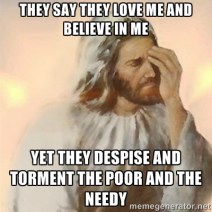 Production Manager: Jesus Christ, you are fired. I have told you repeatedly that your job is to help us make a profit, not to take care of the sick and needy. I am sorry but I am going to have to let you go. I wish I could give you a good reference but you just don’t belong in the business world.
 Advertising Manager: Jesus Christ, you are fired. You can’t tell people the truth about our client’s products. Your job was to make this stuff look good. But no, you kept telling people the truth. You are too honest and you will never make a good marketing person. I suggest you find another outlet for your talents.
 Employment Counselor: Well, Jesus, if you were asked about your future plans and what you wanted to aspire to, could you maybe forget about the sacrifice thing and just talk about how hard you can work?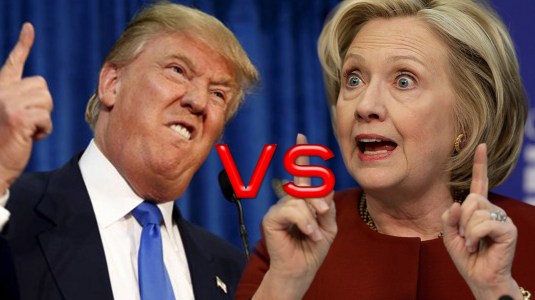

 On Tuesday and Wednesday along with my good friend Vic Ward, I attended the 52nd Nobel Conference which was titled: “In Search of Economic Balance.” It featured many illustrious and highly respected economists such as: Dan Ariely, Orley Ashenfelter, Paul Collier, Deirdre McCloskey, John List and several other well-known economists. After every lecture, there was a panel discussion where the speaker and several of the other economists had a chance to discuss and interact. Following these discussions, my friend and I debated, discussed and summarized what we thought were the most important points of each lecture. I attended eight lectures, six panel discussions and numerous discussions each evening with Vic.
 On the way back from St. Peter, we stopped Jim’s Apple Farm when we saw a sign that said “Next exit, Minnesota’s largest candy store.” I bought several treats for Karen and the guys at the library in Frederic. Jim’s lived up to its billing. It may just be the largest candy store in the US. It is certainly the largest candy store I have ever been in.
 Karen having spent thirty years of her life in Home Health Care is much better grounded and infinitely more knowledgeable than I am in this area. Many of the ideas in the conference sessions were basic for her but for me the opposite was true. I had my eyes opened and many of my concepts about conditions such as Dementia have now been thrown out the window. I cannot begin to describe how much I learned at this conference and how valuable the ideas were for me.
 I ponder at a quote by the author Stephen King in which he notes that Donald Trump will never get elected but “he has certainly exposed the ugly underbelly of conservatives in America today.” I think about this comment because (by recent polls) Trump has a large percentage of voters in his camp who qualify for the “Deplorables” label than Clinton so recently used. Ironic that the King of Insult and Slander now says “anyone who makes such comments about Americans is not fit to be president.” The truth is that anyone who fits into this underbelly or “deplorables” category is not fit to be an American. They share nothing in common with the values that our Founding Fathers had for this country.
 Today, we now know (thanks to Trump) that we have at least ten million US citizens who think that Donald Trump could deliver on such promises as noted above. This latter fact simply astounds the rest of us (180,000,000) registered voters who would sooner drown ourselves than see Donald Trump as president. The majority of US voters know that Trump is a buffoon and a bigot playing on the heart strings and delusions of a minority of people who have no clue what the USA stands for or what our Founding Fathers envisioned for this country.
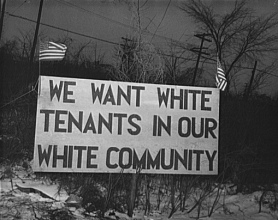 I am not worried about Trump. King is right. He will never be elected. I am worried about the disillusioned and hapless people who are supporting him. These people are the real threat to America not Donald Trump. Cast out by an economic system that rewards the most competitive, the Trump supporters are the least competitive and most hard hit by the recent economic recession. Statistics tell us that Trump’s supporters make up a large segment of the population who are unemployed and unemployable. I should say unemployable at a wage sufficient to support a family. Just like in Germany during the recession, it was this same type of people who were most attracted to Hitler. They were the unemployed, uneducated and people who felt life had been unfair to them. When Hitler came to power, they became his willing disciples and minions. The parallels between the hate and xenophobia espoused by both Hitler and Trump would be uncanny, if not for the fact that it is and always will be predictable. The formula to create such hate and bigotry has been the same for four thousand years.
 Leaders throughout history have used the above formula to incite their followers to acts of hatred which have taken such forms as the inquisition, pogroms, mass deportations, genocide and the Holocaust. It has always been the same formula and it has always worked. The hapless, ignorant and hopeless are lured by the sirens of revenge and retribution to take action against a targeted minority group who are portrayed as having stolen their hopes and dreams. The solution is to eradicate the despicable group and thereby restore the future that was stolen from the hapless and ignorant.
 One would have thought that most of the Neanderthals who succumb more easily to bigotry and hatred would be on the decline. Instead, in the last few years throughout much of the world, it seems as though the fanatics, racists, and bigots are on the incline. Witness the rise of ISIS and its supporters all over the world. What is happening? Was Darwin wrong? Is the world witnessing a devolution instead of an evolution? Donald Trump and his followers seem to be evidence that not all of the population has been evolving according to Darwin’s Laws. A sizable portion of US citizens seem to be going from intelligent thinking rationale Homo sapiens to stupid unthinking racist bigoted Homo rednecks. Where will this end and what will we do with these Neanderthals?
 Most of the US is supportive of the idea of destroying foreign Muslim terrorists. But what of domestic right-wing terrorists? What about the home grown nutcases, terrorists, Nazis and extremists in the USA? If we assume that the KKK, racists and sexists in the USA are of the same ilk and just as dangerous to liberty and freedom as Islamic terrorists, then when do we wage war on our domestic terrorists? When will we enlist the Army, National Guard, police and other liberty protectors to jail and wipe out these home grown extremists? Should we allow American Neo-Nazis the right of free speech and the right to vote, when we lost nearly a half a million citizens in a war to save the world from the Nazis and Japanese warlords only seventy years ago?
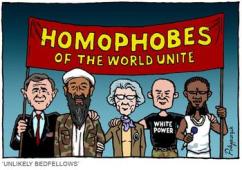 Why are we tolerating groups wearing swastikas, Nazi armbands and Hitler slogans? Groups parading around against immigrants. Groups who make a mockery of the values that this country was built on. This tolerance is a disgrace to the Founding Fathers. It is a disgrace to the Union soldiers who fought for the freedom and equality of African Americans. It is a disgrace and affront to the soldiers that lost their lives fighting the Fascists. It is a disgrace to the people in this country who are first and second generation Americans. Finally, it is a disgrace to all people who believe in the idea of “liberty and justice for all” which is a part of the Pledge of Allegiance to our country.
 The only way it will change is for good people to speak out. Speak out against racism. Speak out against sexism. Speak out against homophobia. Speak out against intolerance. Speak out against injustice and discrimination. You don’t know what to say? It’s simple. WWJD? A meme that I see on a lot of t-shirts provides one reply that all Christians should endorse. If you are not a Christian, simply practice the Golden Rule or some other rule that shows respect and love for others who are not like you. That’s what Jesus, Gandhi, King and many other great leaders would do.


 Aging Capriciously